
If you would like to give to support this ministry please go to:
https://secure.etransfer.com/Equipnet/JeremyDerby.cfm
For More Information: Calendly for Jeremy Derby
If you would like to give to support this ministry please go to:
https://secure.etransfer.com/Equipnet/JeremyDerby.cfm
For More Information: Calendly for Jeremy Derby
BSF Lesson 27 Expanded Lecture Notes:
Lesson 27 Notes
Nehemiah 11–13
Dedication to Home – Nehemiah 11:1–12:26
Leading the Way – 11:1-2
While the Israelites were in exile for 70 years, Jerusalem lay in ruins. The returned exiles rebuilt the temple, but without walls, Jerusalem remained defenseless and desolate. Few desired to live in the vulnerable capital city, which remained the vital heart of the Holy Land. So the people built their homesteads outside Jerusalem.
Focus Verse
“Remember me for this, my God, and do not blot out what I have so faithfully done for the house of my God and its services.”
(Nehemiah 13:14)
Outline
Engage
When have you sought or embarked upon a fresh start? Perhaps you developed a list of resolutions at the dawn of a new year to make the next 12 months better than the past. Maybe in the wake of a drastic mistake, you humbly expressed your sorrow, asked for forgiveness, and vowed to do better. Or you may have entered a fresh season of life—a new job, school, city, or relationship—and celebrated a new opportunity for growth. We all yearn for new beginnings. But what—or who—motivates us?
Reality inevitably falls short of our vision, hopes, and dreams. When we depend on our own efforts or set worldly goals, we often emerge with even less hope than before. As residents of this fallen world, we continue to falter. However, God remains committed to His people. What causes us to turn to Him? How can we commit to Him and allow Him to mature us through our challenges? Nehemiah led the Israelites to rebuild Jerusalem’s wall, respond to God’s Word, and dedicate their lives to Him. Despite these victories, the people easily slipped back into their former ways. Consistent commitment to God requires persistent dependence on Him and His restorative grace. Devotion to God requires dedicating every aspect of life to Him.
Historically, the strength of a nation rests in its capital city. This was especially true for Jerusalem, considering its unifying spiritual and eternal significance.¹ Home to the temple, the Holy City stood at the heart of Jewish worship.² The future new Jerusalem—whether symbolic or physical—will also be central in the new heaven and earth to come.
Returning Jewish leaders sought to stabilize and rebuild the Holy City for all God’s people. To repopulate Jerusalem, specific families needed to sacrifice everyday comforts and settle there. The people cast lots to discern the Lord’s will regarding who would move to the city.³ Some also volunteered, feeling a sense of privilege and duty as if called to battle.⁴ Whether chosen by lot or acting on personal choice, the people commended the tangible obedience, willingness, and sacrifice of all who volunteered to honor God’s will and seek His blessing as they lived in Jerusalem.
Leaders of Jerusalem – 11:3-24
Introduction (11:3-4a)
Some current residents of Jerusalem, along with priests, Levites, temple servants, and descendants of Solomon’s servants, led these pioneers. The apparently selective list of Jerusalem’s leaders recorded by Nehemiah parallels the list of Jerusalem’s first returned residents in 1 Chronicles.⁵ This bears witness to God’s providence over the details of His people.
Judah and Benjamin (11:4b-9)
The tribes of Judah and Benjamin comprised the Southern Kingdom⁶ that had been exiled to Babylon. God remembered His people and called them home—back to Himself. “Men of standing” (11:6, 14) means “men of valor.” A military inference, the designation of a “chief officer” (11:9, 14, 22) acknowledges the defensive posture required for rebuilding the Holy City.
Priests (11:10-14)
The Old Testament prominently records the genealogies of priests.⁷ Only those descending from Aaron, Moses’s brother, could serve in the crucial role of priest.⁸ Those who could not prove their Aaronic lineage were disqualified from the priesthood.⁹
Levites (11:15-18)
Descendants of Levi¹⁰ attended to worship and care of the temple. Nehemiah’s list includes two groups responsible for “outside work of the house of God.” This probably involved providing materials for temple upkeep. Jerusalem’s new residents included leaders focused on prayer and thanksgiving, one of whom descended from Asaph, who led the temple choirs in David’s day.¹¹
Gatekeepers (11:19)
While the priests attended to the spiritual well-being of the people, the gatekeepers kept them physically secure. Mentioned 16 times in Nehemiah and Ezra, gatekeepers guarded the city,¹² the temple,¹³ and the temple’s treasuries.¹⁴
Beyond the Walls (11:20)
As Jerusalem’s population became established, the rest of the people reinhabited their “ancestral property.” These God-granted inheritances reached back generationally to before the exile.¹⁵ The priests and Levites served all God’s people throughout the land.
Other Responsibilities (11:21-24)
Nehemiah included the temple servants, who diligently rounded out the responsibilities for maintenance of the temple and encouragement of the people. Uzzi, a descendant of Asaph and chief officer of the Levites, served specifically as leader of the temple singers. Pethahiah likely acted as a liaison between Israel’s leaders and the Persian king’s court.
Further Settlements – 11:25-36
Settlements of Judah (11:25-30)
Under Joshua’s leadership, the Israelites had first entered the promised land and grown roots there.¹⁶ Returning from Babylonian exile with Jerusalem virtually uninhabitable, the people resettled in surrounding villages that had been established generations earlier. The expanse of land “from Beersheba to the Valley of Hinnom” stretched south of Jerusalem. Beersheba was the southernmost city, and the Valley of Hinnom bordered the southern edge of Jerusalem.
Settlements of Benjamin (11:31-36)
The tribe of Benjamin established their towns to the north and west of Jerusalem. Prior to exile, Levites had been assigned settlements throughout Israel and Judah.¹⁷ Their mention here likely establishes that the Levites did not exclusively serve the tribe of Judah.
Priests and Levites – 12:1-26
The first half of chapter 12 lists the priests and Levites who served during the time Zerubbabel led the first group of people to return to the Holy Land. Despite persistent opposition, the priests and Levites continued to serve the Lord and His people through the years.
From First Return (12:1-9)
Joshua, the high priest, joined Zerubbabel in the first wave of exiles returning to Jerusalem. Also mentioned in Zechariah’s vision,¹⁸ Joshua was responsible for the priests listed in verses 1-7 and the Levites.
Since Joiakim (12:10-24)
Joshua’s son Joiakim succeeded him as high priest. The book of the annals stored in the temple recorded these names.¹⁹ Through King David, a man after God’s heart,²⁰ the Lord had established and appointed divisions of priests and Levites to lead worship.²¹ God deserves all the glory, honor, and praise of His people.
Gatekeepers (12:25-26)
The list closes with Israel’s gatekeepers and one of the few explicit references to Israel’s two most prominent leaders—Nehemiah and Ezra. In unity, these faithful men of God led Israel through a challenging season to encourage, guide, and protect God’s people for His glory. A right view of God enabled each person listed to fulfill a specific role that maintained the sanctity of His people.
Dedication of the Wall – Nehemiah 12:27-47
Nehemiah understood that all aspects of civic life, not only the temple, should be dedicated as holy to the Lord—the wall, city, and its people. The wall’s completion and the people’s commitment to the Lord culminated Nehemiah’s work as governor.
Preparation and Purification – 12:27-30
To properly dedicate the wall, Nehemiah called the Levites and musicians from the surrounding communities. The people celebrated the Lord’s holy work with glee.²² This joyful and right posture reminds us of the celebration at the temple’s completion.²³
The Levites joined the priests in purifying themselves as they prepared for worship. Personal purification may have included washing their bodies and clothes, giving a sin offering, fasting, and sexual abstinence. This purification of the people, gates, and wall reflected a desire for sanctity in the Lord’s presence. Jerusalem, home to the temple, represented a place of reverence and worship.
Pomp and Procession – 12:31-43
Nehemiah orchestrated a procession of priests, Levites, musicians, and leaders flowing in opposite directions atop Jerusalem’s reconstructed wall. Each group of singers, accompanied by an orchestra of cymbals, harps, and lyres, sang songs of praise and thanksgiving to God.
Ezra’s Choir (12:31-37)
Ezra led one large, music-bathed group that began southwest of Jerusalem and moved counterclockwise around the city.²⁴ This path followed Nehemiah’s early scouting route before the wall’s reconstruction.²⁵ Now, with a rebuilt wall estimated to be 9 feet (2.7 m) wide, musicians could walk in columns of three.
Nehemiah’s Choir (12:38-39)
Nehemiah led the second procession, which started northward and went clockwise around the wall. The two groups flowing in opposite directions both proceeded toward the temple as their ultimate destination. Worship enveloped God’s Holy City. Imagine the intense joy of such a day! Surely the people experienced deep and glorious emotions when, after extreme difficulty and opposition, this significant work had been accomplished.
Worship at the Temple (12:40-43)
When the procession’s tour completed the circuit of the rebuilt Holy City and met at the temple, they united to lift their voices in thanks to God. There would be no wall without God’s enabling. As a means of prescribed purification, “they offered great sacrifices.” Animal sacrifices pointed to the work of Christ. His perfect sacrifice on the cross carried sin’s weight of guilt for all who trust Him for salvation. Christ’s atoning sacrifice allows our work to be acceptable in God’s sight as an expression of our faith in Him.
Promise of Provision – 12:44-47
With a high view of God bolstered afresh by joyous worship, Nehemiah turned to the practical matters of temple maintenance. Doing God’s continued work within a city, church, home, or life often incorporates careful planning. Nehemiah established clear priorities regarding offerings and provisions for the Levites. The people contributed to the practical needs of God’s servants, whose sacred duties left no opportunity for them to earn a living.
Dedication to Reforms – Nehemiah 13
Reformation calls for but does not guarantee holiness. With the temple and wall rebuilt and a community reestablished, Jerusalem began forging ahead in day-to-day routines. Though reminded of God’s will through His Word and promising to live according to His ways, the weeds of sinful human nature found a way to germinate within the wheat of the faithful. God’s faithful correction progressively hones His people to righteousness that honors Him.
Remembering the Law – 13:1-3
Some time after the wall’s dedication, the people listened to a reading of the Book of the Law, customary in a religious ceremony. The reading included the prohibition of Ammonites and Moabites within the assembly.²⁶ Centuries earlier, the king of Moab had followed Balaam’s advice and caused Israel to fall into idolatry by enticing Israelite men through alliances with Moabite women.²⁷ The disastrous result required unusually drastic actions.²⁸ Nehemiah did not want this situation repeated.
Corruption and Renewal of the Temple – 13:4-9
The Problem (13:4-5)
In a vacuum created by the absence of godly leadership, sin seeps in and fills the void.²⁹ Nehemiah’s completed mission in Jerusalem had taken more than a dozen years, and he had been called back to the Persian court in Babylon. While he was away, the people fell back into compromise with the secular world. They needed a leader willing to admonish and correct a series of misdeeds.
The first issue again involved Nehemiah’s nemesis, Tobiah. Ironically, this man who had earlier taunted Nehemiah over the sorry condition of Jerusalem’s wall now considered the temple storerooms worthy to house his possessions. Space originally designated for storing provisions for worship and the temple staff³⁰ became Tobiah’s personal warehouse.
Sin is a pervasive and persistent part of fallen human nature. Tobiah’s actions illustrate the resilience of God’s enemy and his duplicity in seeking any weakness in the armor of God’s people. In this case, the enemy’s foothold was Tobiah’s association with the priest, Eliashib, who allowed God’s holy house to be desecrated by selfish pursuits.
The Solution (13:6-9)
The holiness of God leaves no room for compromise. God’s people must remain constantly on guard against the enemy’s corrupting schemes. Nehemiah secured permission to return to Jerusalem, where he learned of Tobiah’s alliance. He promptly rid the large storeroom of the defiling goods, purifying and restoring the space to God’s intended purpose.
Corruption and Renewal of Responsibility – 13:10-14
The Problem (13:10)
The next corrective measure involved the people’s delinquency in providing for temple operations as God commanded. The sin of greed had reared its head earlier during Jerusalem’s reconstruction.³¹ Long before God gave the law to Moses, the practice of giving one-tenth of one’s possessions had been practiced.³² The Levites could not earn a living through normal means and spend their time and energy working in the temple. The people’s withheld tithes forced the Levites to return to their fields for survival, which left God’s work neglected.
The Solution (13:11-14)
Nehemiah sternly called the Levites and musicians back to their stations and reinstituted the people’s commitment to tithing. He assigned trustworthy men to oversee the storerooms and the distribution of supplies to the Levites. With a heart consistently focused on loyalty and gratitude to God, Nehemiah lifted a prayer of praise and remembrance. Grateful believers praise God not for their own achievements but for His intervention in their lives.
Corruption and Renewal of the Sabbath – 13:15-22
The Problem (13:15-16)
The people’s promise to keep the Sabbath³³ clashed with secular pressure to maintain trade on every day of the week. Nehemiah especially indicted people from Tyre who led the way, among other nations, in merchant relationships with Israel.³⁴ God commanded one day a week to be set aside exclusively to honor Him. The Sabbath day of rest reminded God’s people of their covenant with God,³⁵ His creation,³⁶ and their redemption.³⁷
The Solution (13:17-22)
Nehemiah reminded the nobles, who most likely benefitted the most from trade alliances, of the consequences of violating God’s Sabbath command. With Israel’s exile and Jerusalem’s destruction in their recent history, these Israelites should have known better.³⁸ They and the entire nation had much to lose—not just material wealth, but God’s favor.
Nehemiah did his best to protect his people from sin. He literally shut the doors to temptation and threatened to arrest merchants camped outside the gate. He commanded the Levites to purify themselves and guard the gates, maintaining the city’s holy state. He prayerfully pleaded with God for His loving protection and mercy. Resisting sin is not a passive exercise. Maintaining holiness requires vigilance, intentionality, and accountability within the sacred community.
Corruption and Renewal of Unity – 13:23-28
The Problem (13:23-24)
Nehemiah revisited the problem of intermarriage, which was forbidden in the Mosaic law.³⁹ God designed people from all nations for devotion to Him. The law’s prohibition did not universally forbid marriage crossing ethnic borders but sustained the identity and sanctity of God’s people.⁴⁰ Marriages to spouses mired in idolatry impugned the identity of the Israelites, weakened devotion in the home, and confused the Hebrew language.
The Solution (13:25-28)
Nehemiah’s violent response reflected the gravity of the crisis. He reminded the people that even a highly respected, renowned, and wise leader such as Solomon could sin grievously and lead a nation into moral decay through marriage that compromised faith and godly conviction.⁴¹ Solomon amassed 700 wives and 300 concubines, including women of Moabite, Ammonite, Edomite, Sidonian, and Hittite heritage. Solomon followed his father David’s footsteps in building a mighty kingdom. However, he also set forth a trajectory of sin, rebellion, division, devastation, and eventual exile from which Israel had just begun to emerge. Nehemiah feared that if God had banished Israel from the land for unrepentant sin, why would He not do it again?
Amplifying his concern, Nehemiah cited a marriage of a son from the high priest’s family to the daughter of another nemesis of Israel, Sanballat.⁴² Mosaic law prohibited the high priest from marrying a foreigner.⁴³ For the sake of the community’s holiness, this unnamed priest was driven away.
Renewal of Purity – 13:29-31
As his narrative closed, Nehemiah recorded his purification of the priests and Levites. He had assigned them specific duties and provided for their needs. He sought God’s favor in all his work. God answered Nehemiah’s last prayer, “Remember me with favor, my God.” His work for the Lord encourages leaders to this day. Many find courage by listening to Nehemiah’s counsel and following his example. When people work to honor God, the fruit of their labor leaves a legacy of faithfulness. Devotion to God requires dedicating every aspect of life to Him.
Saved by Grace, Empowered by God
The Doctrine of Works
As impressive as the rebuilding of the wall and the sacrificial repopulation of Jerusalem seem to us, they did not earn the Israelites right standing with God. The history of God’s people confirms how we persistently falter and fall far short of God’s perfect standards. “There is no one righteous, not even one,” God proclaimed through Paul.¹ Only God, who is perfect in all He does, can declare a person righteous. What, then, is the purpose of trying to act righteously?
The people of God are saved by grace through faith.² In Nehemiah’s day, the people’s faith was embedded in the promised sacrificial redemption of the Messiah. Their ritual sacrifices and worship pointed to Jesus Christ. Because redemption is God’s gift, the works of His people rise as a grateful, worshipful response, giving glory and honor to their Savior. Christians today do not earn God’s favor by what they do but worship God through loving commitment and obedience empowered by His Spirit. Faith, then, is professed not just in words but in actions that demonstrate God’s grace.³
Dependence on works to earn God’s favor results in ongoing frustration and failure. Unable to measure up to God’s perfect standards, people reject the idea that their actions even matter. They may even wrongly believe they’re good enough as long as the good outweighs the bad.
Trusting Christ for salvation brings contentment. Knowing they remain in God’s grasp and care, believers are eternally secure—despite their ongoing struggle with sin. As believers grow in faith in Christ, their desire to serve God matures. God’s Spirit increasingly frees them from self-focused pursuits. Maturing believers progressively and rightly realize that everything belongs to God. He deserves our devotion in everything we do and our dedication of everything we own. God blesses and empowers every work that glorifies Him.⁴
References
Take to Heart
Hold Fast
As Nehemiah’s story draws to a close, Jerusalem’s community was not yet reestablished within its rebuilt wall. The people cast lots to determine who would sacrificially move from nearby settlements into the desolate confines of the Holy City. As the chosen were commended and accounted for, Nehemiah and Ezra organized a procession led by two large choirs that encircled the city atop the reconstructed wall. They celebrated the monumental achievement and dedicated their work to the God they believed, trusted, and proclaimed.
However, in their leader’s absence, the reason for celebration faded and the people receded into sin. The temple grounds endured desecration and tithes were withheld. The Sabbath became just another day of business, and pagan impurity infiltrated marriages. When Nehemiah returned, he reinstituted reforms with righteous anger. He reminded the Israelites that their holy God required the holiness of His people. In prayer, petition, admonishment, and dedication, Nehemiah continued the necessary work of returning the peoples’ devotion to God—who created, restored, and loved them.
Apply It
With lots cast to determine which Israelites would settle in Jerusalem, mixed feelings undoubtedly permeated the chosen. Some may have felt honored, while others likely lamented the loss of a more familiar and comfortable life. How do you respond when God’s call for your next step becomes clear?
Throughout Scripture and today, God’s path for His people—individually and corporately—often weaves together overwhelming challenges with blessings. What helps you look beyond the tangible difficulties of following God to grasp the blessings of obedience? To what do you foolishly cling when God calls you forward? How do you encourage others as they respond to God? God will guide, guard, and bless those who walk with Him. Wherever God calls you, He will go before you and always be with you.
How do you determine what is menial and what really matters? Everything we do on earth, from the mundane to the monumental, should be dedicated to the Lord. God’s people completed Jerusalem’s wall with incredible expediency, coordination, and collaboration—in only 52 days! Yet, they did not herald their noteworthy accomplishment with self-centered pride. Instead, they dedicated their work to honor their God. Whether we deem our contributions as small or great, we do nothing that counts for God in our own strength. As we trust God with everything before us, we realize our utter dependence on His power and provisions. How will you dedicate yourself to the Lord and His service?
Even a life dedicated to the Lord must navigate the day-to-day routines and challenges of earthly existence. Relentless pressure to conform to the ways of the world tempts us to violate God’s will and ways. A desire to honor God should permeate every aspect of our lives. How do you honor God in your marriage? Are you supporting God’s work through your church by investing your time, talent, and financial resources? Do you honor God in your workplace and neighborhood? The work of our hands expresses the reality of our faith. As we surrender to the Lord, our lives reflect the holiness of the God we worship.
Footnotes / Cross References
Extremely Expanded Expositional Biblical Commentary
Lesson 27 Notes — Nehemiah 11–13
Dedication, Renewal, and the Ongoing Need for Holiness
Introduction to Nehemiah 11–13
Nehemiah 11–13 forms the closing movement of the book. By this point, the wall has been rebuilt, the people have heard the Law, confession has been made, covenant commitments have been renewed, and the visible marks of restoration are in place. Yet the final chapters make plain that physical restoration is not identical to spiritual perseverance. The city may be rebuilt, but the people must still be ordered, sanctified, guarded, corrected, and continually recalled to covenant faithfulness. That emphasis is reflected throughout your notes, especially in the repeated theme that “devotion to God requires dedicating every aspect of life to Him.”
From a conservative interpretive standpoint, Nehemiah is both historical narrative and theological history. It recounts real post-exilic events under Persian rule, but it does so in a way that reveals God’s covenant faithfulness, human weakness, and the need for both outward reform and inward transformation. These chapters are not miscellaneous appendices. They are the Spirit-inspired conclusion to the book’s burden: God restores His people, but His people must live as holy people in the place He restores.
A conservative reading also sees these chapters as part of the larger redemptive-historical flow of Scripture. Jerusalem matters because of the temple, the covenant people, and the promises of God. Yet Nehemiah also leaves the reader looking beyond itself. The walls stand, but the hearts of the people still drift. Reform happens, but decay returns. That tension prepares the way for the longing fulfilled only in the new covenant and in Christ.
I. Dedication to Home — Nehemiah 11:1–12:26
Your notes rightly begin this section by connecting Jerusalem’s vulnerability and underpopulation to the need for sacrificial relocation and renewed covenant order.
Nehemiah 11:1–2
The Repopulation of Jerusalem
Text: The leaders live in Jerusalem, and the rest of the people cast lots to bring one out of ten to dwell in Jerusalem, while the people bless those who willingly offer to live there.
Expositional Commentary
This passage is more theologically significant than it may first appear. A city is not truly restored merely because its wall stands. It must also be inhabited. Nehemiah 7:4 already noted that the city was wide and large, but the people within it were few. So Nehemiah 11 addresses not a side issue, but a central requirement of covenant restoration: God’s holy city must be filled with God’s people.
The leaders dwelling in Jerusalem is appropriate. Those who govern should share the burdens and risks of the city they oversee. But the rest of the population had to be distributed by lot. This implies both necessity and reluctance. Jerusalem, though holy, was still vulnerable, less convenient, and probably less economically attractive than settled rural life. The willingness required here was therefore sacrificial.
The blessing of those who volunteered reveals the moral beauty of costly obedience. The people recognized that relocation to Jerusalem was not merely a civic inconvenience but an act of covenant service. This fits the burden of your notes, which stress the people’s willingness and sacrifice.
Original Language Notes
The Hebrew phrase for “cast lots” uses gôral (גוֹרָל), a term associated with allotment, inheritance, and providential distribution. In the Old Testament, lots are not treated as random chance in a secular sense, but as subordinate to divine sovereignty.
The expression that the people “blessed” those who willingly offered themselves uses a verb from the brk root (ברך), often associated with blessing, praise, or speaking favor. The community publicly honored sacrificial obedience.
Conservative Commentary
A conservative reading takes this as a real historical administrative act under Nehemiah’s governorship. Yet it also sees theological significance: God’s people must be where God wills them to be, even when obedience is costly. This passage teaches providence, corporate responsibility, and the nobility of sacrificial service.
Pastoral Application
Many believers want the blessings of restoration without the burdens of participation. But here the restored city required real people to step into real difficulty. God’s work often advances because some are willing to leave comfort and embrace costly faithfulness.
Nehemiah 11:3–24
The Leaders and Ordered Life of the Holy City
Your notes organize this section under leaders, Judah and Benjamin, priests, Levites, gatekeepers, and other responsibilities. That structure is exactly right because the point is not merely who lived there, but how the covenant community was ordered.
Nehemiah 11:3–4a
Introduction to the Inhabitants
This introductory statement establishes that Jerusalem included not only lay residents, but also priests, Levites, temple servants, and descendants of Solomon’s servants. In other words, the city was not just politically repopulated; it was liturgically and covenantally repopulated.
From a conservative perspective, these lists are not filler. They testify to continuity. God did not preserve a vague spiritual movement; He preserved an identifiable covenant people with structured worship, ordered service, and traceable lines of responsibility.
Original Language Notes
The names and classifications reflect the covenant community as a structured body. Even where etymological detail is not central, the Hebrew narrative style underscores particularity and memory. God knows households, lines, and roles.
Theological Significance
The post-exilic community is fragile, but not rootless. Its identity is anchored in remembered lines, remembered offices, and remembered covenant obligations.
Nehemiah 11:4b–9
Judah and Benjamin
Your notes observe that Judah and Benjamin comprised the Southern Kingdom and that “men of standing” can imply men of valor. That is a keen observation. These verses present not only genealogy but resilience. The Southern Kingdom had been judged and exiled, yet now its heirs are back in Jerusalem.
Expositional Commentary
The city is not repopulated generically. It is repopulated covenantally. Tribal identity still matters, not as a source of pride, but as evidence that God remembers His people. The return is not an accident of politics but the continuation of covenant history.
The reference to “men of valor” also reminds the reader that restored holiness still exists in a threatened world. Jerusalem needs not only worshipers but protectors. The holy city is still a city in history, surrounded by potential hostility.
Original Language Notes
The phrase often rendered “men of valor” reflects אַנְשֵׁי־חַיִל (’anshê-chayil), literally “men of strength,” “men of capacity,” or “men of valor.” Depending on context, chayil can speak of military strength, capability, substance, or worth. Here it likely carries at least an undertone of readiness and strength.
Conservative Commentary
Conservative interpreters generally see these designations as both social and military. Jerusalem was a worshiping city, but not a naïve one. Faithfulness required both devotion and vigilance.
Nehemiah 11:10–14
Priests
Your notes rightly emphasize that priestly genealogy mattered and that only Aaron’s descendants could serve as priests.
Expositional Commentary
Priestly legitimacy is central because worship is central. The priesthood was not open to personal ambition or religious creativity. God had already appointed the line of priestly mediation through Aaron. This is a profound theological principle: the approach to God is not self-invented.
The restored city therefore requires more than enthusiasm. It requires lawful worship ordered according to divine revelation. That is why genealogies matter here. If the temple stands but priesthood is corrupted, covenant life is endangered.
Original Language Notes
The Hebrew for priest, kōhēn (כֹּהֵן), denotes one who ministers in sacred service. Its significance is covenantal and cultic. In the Old Testament, the priest is not merely a religious teacher but one who stands in a designated role related to sacrifice, purity, and mediation.
Conservative Commentary
Conservative commentary underscores the objective nature of priestly qualification. The priesthood was not democratized under Old Testament law. That historical reality also prepares the way for Christ, the final and perfect High Priest, who fulfills what the Aaronic priesthood anticipated.
Pastoral Application
Modern readers are often impatient with ordered worship. But these verses remind us that God cares deeply how He is approached. Reverence is not optional.
Nehemiah 11:15–18
Levites
Your notes note the Levites’ responsibility for temple care and “outside work,” as well as prayer and thanksgiving, including descendants of Asaph.
Expositional Commentary
The Levites embody the breadth of sacred service. They are not priests, yet they are indispensable. They maintain, assist, organize, support, and lead in designated dimensions of worship life. This is an important theme in Nehemiah: holiness requires infrastructure.
The mention of Asaph’s descendants is especially instructive. Worship is not improvised. Musical and liturgical leadership are part of the covenant order. Thanksgiving and praise are not sentimental extras but built-in dimensions of the community’s life before God.
Original Language Notes
The tribe name Levi (לֵוִי) likely carries the sense of attachment or joining from the root lwh. While etymological sermons should be used carefully, the Levites do indeed function as those attached to sacred service.
The references to thanksgiving likely relate to terminology from yādâ (ידה), the Hebrew root often associated with praise, confession, or thanksgiving.
Conservative Commentary
A conservative view honors the distinction between priest and Levite without flattening them. Not every sacred office is the same, but all are necessary. This has analogical significance for church life: different callings and functions all matter within the people of God.
Nehemiah 11:19
Gatekeepers
Your notes emphasize that gatekeepers guarded the city, temple, and treasuries.
Expositional Commentary
This is a striking picture of practical holiness. Worship is not protected by pious sentiment alone. It requires watchfulness. The gatekeepers serve as a reminder that sacred life requires boundaries.
In biblical thought, gates are places of entry, judgment, commerce, and vulnerability. To guard a gate is to protect the community from intrusion, disorder, and desecration. Therefore the gatekeeper’s role is deeply theological. The city of God must not be treated as morally porous.
Original Language Notes
“Gatekeeper” often reflects terms from the šōʿēr family, connected to guarding or keeping watch. This vocabulary underlines custody, vigilance, and entrusted responsibility.
Conservative Commentary
Conservative interpreters often note that these roles, though less dramatic than priestly service, were vital to the covenant order. God’s work includes visible and invisible forms of faithfulness.
Pastoral Application
Some believers are called to visible ministry; others to hidden vigilance. Scripture honors both.
Nehemiah 11:20–24
Beyond the Walls and Other Responsibilities
Your notes note the ancestral properties, temple servants, singers, and a Persian court liaison.
Expositional Commentary
The people beyond Jerusalem are not outside God’s concern. The covenant community extends beyond the capital. Yet Jerusalem remains central because of the temple and its symbolic role. This balance matters: centralization of worship does not erase the broader people of God.
The temple servants remind the reader again that holy life depends on many forms of humble labor. The mention of a royal liaison also shows that God’s people still live under imperial structures. Restoration has occurred, but not full political independence. The people are restored, yet still under Persian oversight. This keeps the narrative realistic and theologically humble.
Conservative Commentary
This mixed reality is important. Post-exilic restoration is genuine, but partial. The promises of God are being advanced, but not yet consummated.
Nehemiah 11:25–36
Settlements of Judah and Benjamin
Your notes carefully track the geography of Judah and Benjamin and the spread of the Levites.
Expositional Commentary
These settlement lists emphasize continuity, inheritance, and breadth. The land still matters. The covenant community is not detached from geography, memory, and tribal history. The restoration is not abstract spirituality; it is embodied and historical.
The distribution of the Levites also highlights that sacred ministry is not confined to a single local zone. God’s people in the wider land need priestly and Levitical presence as well.
Theological Reflection
The Holy City is central, but the covenant people are broader. This anticipates a biblical pattern later seen more fully in the new covenant: a centeredness in God’s presence that nevertheless extends outward to the whole people.
Nehemiah 12:1–26
Priests and Levites Across Generations
Your notes rightly stress continuity from Zerubbabel and Joshua through later generations, along with annals, Davidic ordering, and unified leadership with Ezra and Nehemiah.
Expositional Commentary
This section is about more than names. It is about succession, continuity, and memory. God’s work is not confined to one charismatic moment or one heroic leader. He preserves generations. Priests and Levites serve through years of opposition and transition. This underscores a deeply conservative biblical principle: faithfulness is meant to endure through ordered transmission.
The mention of David is important. The worship structures of post-exilic Jerusalem do not emerge from novelty but from patterns rooted in earlier revelation and godly order. David’s arrangements are remembered not because David was flawless, but because God had established ordered worship through him.
Original Language Notes
The repeated naming structure reflects memorialization. Biblical genealogy is often theological narrative in compressed form. Names are testimonies of continuity.
Conservative Commentary
Conservative interpreters reject the idea that these lists are late, meaningless editorial additions. They serve the theological purpose of establishing continuity, legitimacy, and covenant memory.
II. Dedication of the Wall — Nehemiah 12:27–47
Your notes highlight the dedication as extending holiness beyond the temple into civic life, culminating Nehemiah’s governorship.
Nehemiah 12:27–30
Preparation and Purification
Expositional Commentary
The dedication begins with gathering and purification. This is essential. Celebration in Scripture is not casual or careless. It is joyful, but consecrated. The people do not treat the wall dedication as secular pageantry. They understand that God’s work must be honored in God’s way.
The wall itself is dedicated because all of covenant life belongs to God. This is one of Nehemiah’s most powerful theological insights. The city wall is not an altar, but it is still part of the life of a holy people. Thus civic order too is brought under divine lordship.
Original Language Notes
The Hebrew behind “dedication” is commonly linked to ḥănukkâ (חֲנֻכָּה), the idea of dedication or consecration. The concept includes setting apart for sacred purpose.
“Purify” reflects forms of ṭāhēr (טהר), meaning to cleanse, purify, or make ceremonially clean. This language is central to priestly and worship contexts.
Conservative Commentary
A conservative reading resists reducing purification here to mere symbolism. It had real covenantal significance under the Mosaic order. At the same time, conservative Christian interpretation sees such purification as typological, pointing forward to the fuller cleansing accomplished in Christ.
Pastoral Application
Believers rightly celebrate what God has done, but celebration should not be severed from reverence, holiness, and gratitude.
Nehemiah 12:31–43
The Processions and Worship
Your notes vividly describe the two choirs, the route around the city, the instrumentation, and the climactic temple worship.
Expositional Commentary
This is one of the grand liturgical scenes in the Old Testament. Two great companies move atop the rebuilt wall in opposite directions, meeting finally at the temple. The effect is theological drama. The very structure that once symbolized reproach now becomes the path of praise.
The wall is wide enough for choirs to process upon it, which emphasizes the tangible reality of the restoration. This is no metaphorical wall. God has done something in history. Yet that historical reality becomes the platform for doxology.
The climax is in verse 43, where the joy is specifically attributed to God: God had made them rejoice with great joy. That statement is crucial. The people rejoice because God has acted. Joy is not mere human exuberance; it is grace-induced worship.
Original Language Notes
The Hebrew for joy and rejoicing here comes from roots like śāmaḥ (שמח), expressing gladness, joy, and delight. The repetition intensifies the picture.
“Thanksgiving” language often draws from tôdâ (תּוֹדָה), which can denote thanksgiving, praise, or thank-offering. Worship in Nehemiah is both verbal and sacrificial.
Conservative Commentary
Conservative commentators rightly highlight both the historical and typological dimensions. Historically, this was the dedication of a real wall. Typologically, the sacrifices and purification foreshadow Christ, while the joy anticipates the ultimate rejoicing of God’s redeemed people.
Pastoral Application
A congregation that sees God’s hand in His works should not be embarrassed by deep joy. But biblical joy is rooted in truth, holiness, and remembrance.
Nehemiah 12:44–47
Promise of Provision
Your notes stress the practical care for temple workers and the planning required for God’s ongoing work.
Expositional Commentary
The chapter does not end with music alone. It ends with administration, provision, and support. This is profoundly realistic and profoundly spiritual. Worship must be sustained by structures of faithfulness. The Levites and priests cannot remain at their sacred service if the people neglect material provision.
This reminds the reader that devotion is not less spiritual when it becomes practical. Stewardship, giving, and organization are not interruptions to worship; they are expressions of it.
Conservative Commentary
Conservative interpretation affirms the continuity of principle even where covenant forms differ. Under the new covenant, the exact Levitical system is fulfilled, but the principle that God’s people should support those who labor in ministry remains valid.
III. Dedication to Reforms — Nehemiah 13
Your notes begin this section with a powerful sentence: reformation calls for but does not guarantee holiness. That captures the burden of the chapter exactly.
Nehemiah 13:1–3
Remembering the Law
Your notes connect this with Deuteronomy 23 and the earlier Moabite seduction of Israel.
Expositional Commentary
The reading of the Law leads to reform. This is a recurring pattern in Nehemiah: the Word of God exposes what sentiment and routine can conceal. The prohibition concerning Ammonites and Moabites must be read in covenant context. The issue is not ethnic superiority but covenant protection. These nations had historically opposed and corrupted Israel in ways tied to idolatry and covenant hostility.
Original Language Notes
The “assembly” language evokes the gathered people of covenant identity. Exclusion in this context is about preserving the sanctity of the covenant community under Old Testament law.
Conservative Commentary
Conservative interpreters emphasize that this must not be read through modern racial categories. The issue is theological and covenantal, not ethnocentric in the sinful sense. The concern is preservation from idolatry and corruption.
Nehemiah 13:4–9
Corruption and Renewal of the Temple
Your notes rightly identify the vacuum of absent leadership, Tobiah’s intrusion, and Nehemiah’s decisive cleansing.
Expositional Commentary
This is one of the most shocking passages in the book. Tobiah, long an enemy of the work, has now been given a large chamber in the temple precincts. The symbolism is devastating: the enemy has not merely attacked from outside; he has been accommodated inside.
This happened through Eliashib’s compromise. Leadership failure made room for desecration. That principle remains sobering. When leaders fail to guard holy things, corruption enters quickly.
Nehemiah’s response is forceful because the offense is grave. He throws Tobiah’s furniture out and purifies the chambers. The narrative does not rebuke Nehemiah for excessive zeal. It presents his action as necessary.
Original Language Notes
The language of “evil” in Nehemiah’s reaction is morally charged. He does not view this as a questionable judgment call but as clear desecration.
Again, “purified” draws from ṭāhēr, underscoring that the issue is ceremonial and moral holiness.
Conservative Commentary
Conservative commentators often note parallels with Christ cleansing the temple. The situations are not identical, but the principle of zeal for the holiness of God’s house clearly resonates.
Pastoral Application
There are times when believers must not merely disapprove of compromise inwardly but actively remove what defiles.
Nehemiah 13:10–14
Corruption and Renewal of Responsibility
Your notes emphasize the neglect of tithes, greed, and Nehemiah’s restoration of order.
Expositional Commentary
The withholding of support reveals that compromise is not only doctrinal or ceremonial; it is also material. The Levites had to leave their service because the people were not sustaining them. This meant that worship itself suffered.
Nehemiah’s correction includes rebuke, reappointment, and trustworthy oversight. He understands that good intentions are insufficient. Structures must be repaired.
Original Language Notes
The tithe concept is tied to the “tenth,” a defined covenant practice rather than vague generosity. Though Christian application requires covenantal care, the Old Testament principle is concrete and structured.
Conservative Commentary
Conservative readers distinguish between the Mosaic tithe system and new covenant giving while preserving the broader principle that God’s people should give faithfully and support ministry.
Pastoral Application
Financial disorder often reveals spiritual disorder. How a people give says much about how they value the worship of God.
Nehemiah 13:15–22
Corruption and Renewal of the Sabbath
Your notes carefully explain the Sabbath as tied to covenant, creation, and redemption, along with Nehemiah’s practical enforcement.
Expositional Commentary
The Sabbath was not a minor ceremonial custom. It was a covenant sign. To disregard it was to deny in practice that God rules time, labor, rest, and trust. Trading on the Sabbath meant living as though economic necessity outranked divine command.
Nehemiah therefore acts concretely. He shuts the gates. He threatens persistent merchants. He appoints guards. This is practical holiness. He knows that temptation often enters through open gates, so the gates must be closed.
Original Language Notes
“Sabbath” comes from šabbāt (שַׁבָּת), rooted in cessation or rest. Biblically, Sabbath is not mere inactivity; it is consecrated cessation under God’s command.
Conservative Commentary
Conservative Christian interpretation varies on the exact continuity of Sabbath observance under the new covenant, but conservative commentators broadly agree that the moral principle of sacred time, worship, and God-centered rest remains weighty.
Pastoral Application
Many modern believers want holiness without boundaries. Nehemiah teaches that some temptations must be shut out, not merely managed.
Nehemiah 13:23–28
Corruption and Renewal of Unity
Your notes carefully clarify that the issue in intermarriage was allegiance to God, not ethnicity as such.
Expositional Commentary
The intermarriage crisis is covenantal, not racial. The problem is that these unions compromised devotion to God, weakened covenant identity, and confused the next generation. The inability of the children to speak the language of Judah is emblematic. Spiritual inheritance is eroding.
Nehemiah’s appeal to Solomon is especially powerful. If the wisest king could be led astray by covenantally disobedient marriages, then no one should presume immunity.
The priestly marriage to Sanballat’s daughter intensifies the crisis. When corruption touches the high priestly line, the issue reaches the heart of covenant leadership.
Original Language Notes
The language of defilement and covenant compromise is central here. The issue is not mere social mixture but spiritual corruption.
Conservative Commentary
Conservative interpretation insists that these texts cannot be weaponized for sinful ethnic prejudice. The biblical principle is about shared allegiance to the true God and protection from idolatrous compromise. In Christian application, the closest analogy is the New Testament prohibition against being unequally yoked spiritually.
Pastoral Application
Relationships shape worship more than many admit. Covenant compromise in marriage can have generational consequences.
Nehemiah 13:29–31
Renewal of Purity and Nehemiah’s Final Prayer
Your notes end here with Nehemiah’s purification of the priests and Levites, his provision for their duties, and his prayer to be remembered with favor.
Expositional Commentary
Nehemiah ends as he has lived in the book: reforming, organizing, praying. He is not self-congratulatory. He repeatedly entrusts his work to God’s remembrance. This is one of the most beautiful marks of godly leadership. He does not place his hope in applause, permanence, or visible success, but in divine favor.
The book’s ending is both strong and unresolved. Reform has happened, but the chapter itself has shown how quickly corruption can return. That tension is intentional. It leaves the reader grateful for Nehemiah, but longing for more.
Original Language Notes
“Remember me” uses the Hebrew zākar (זכר), a covenantally rich verb. In Scripture, divine remembrance is not passive recollection but active regard shaped by covenant faithfulness.
Conservative Commentary
Conservative readers see here both the nobility and limitations of Nehemiah. He is a faithful governor, but not the final answer. The people still need deeper inward renewal.
IV. The Doctrine of Works — Conservative Biblical Commentary
Your notes include a doctrinal section titled “Saved by Grace, Empowered by God,” which is excellent and theologically important.
Expositional Commentary
This section guards against a serious misreading of Nehemiah. One could wrongly conclude that the book teaches salvation by performance, reform by moral intensity, or righteousness by national obedience. Your notes correctly reject that. The rebuilding of the wall and the repopulation of Jerusalem did not earn right standing with God.
A conservative biblical theology insists that salvation has always been by grace through faith, though administered across covenant history in progressively unfolding form. In the Old Testament, believers trusted in God’s promises and in the sacrificial system He provided, which anticipated the Messiah. In the New Testament, the fullness of that promise is revealed in Christ.
Thus the works in Nehemiah are not meritorious grounds of salvation but grateful responses of covenant faith. They matter deeply, but not as the basis of justification. This harmonizes with the broader canonical witness: Paul rejects works as the ground of justification, while James insists that living faith necessarily bears obedient fruit.
Original Language Notes
In the New Testament, “grace” is charis (χάρις), “faith” is pistis (πίστις), and “works” is erga (ἔργα). Conservative theology insists these terms be handled contextually, but never in a way that contradicts the gospel of grace.
Conservative Commentary
This doctrinal frame is essential. Nehemiah is not about earning God’s favor through reform. It is about the life of a restored people learning to live as restored people by the enabling grace of God.
V. Take to Heart — Conservative Pastoral Synthesis
Your notes close with “Hold Fast” and “Apply It,” emphasizing sacrificial obedience, the danger of drift, everyday dedication, and holiness across marriage, church life, work, and neighborhood.
Expositional Commentary
This is exactly how Nehemiah 11–13 should press upon the conscience. The book does not allow holy devotion to remain abstract. It descends into residence, music, gatekeeping, tithing, Sabbath-keeping, marriage, administration, and prayer. In other words, it forces the reader to confront a central biblical truth: holiness is comprehensive.
Conservative exposition does not flatten these chapters into bare moralism, nor does it spiritualize them into irrelevance. Instead, it honors both the historical specificity of Old Testament covenant life and the enduring principles that remain instructive for God’s people.
Major Conservative Theological Conclusions
God cares about where His people dwell and how they order their communal life.
God cares about lawful worship and the purity of sacred service.
God cares about structures, boundaries, and practical faithfulness.
God’s people are always prone to drift without vigilant submission to His Word.
Outward reform is necessary, but not sufficient to solve the deeper problem of the heart.
Nehemiah’s faithful leadership points beyond itself to the need for the greater covenant renewal accomplished in Christ.
Final Conclusion
Nehemiah 11–13 is theologically rich, pastorally searching, and deeply realistic. It shows a restored city that must be inhabited, a rebuilt wall that must be dedicated, a worshiping people that must be supported, and a covenant community that must be continually reformed. It also reveals the persistent weakness of fallen humanity. Even after renewal, drift returns. Even after dedication, compromise creeps back in. Even after great leadership, the people remain dependent on God’s continued mercy.
From a conservative biblical perspective, these chapters teach that God’s people must be:
And the final prayer, “Remember me, O my God,” captures the posture of faithful service. Nehemiah labored vigorously, but his hope was not in his own achievements. It was in the God who sees, judges, purifies, preserves, and remembers.
That is where the book leaves us: grateful for reform, sobered by human weakness, and longing for the greater work of God that reaches not only walls and cities, but the human heart itself.
Nehemiah 11:1–13:31
Extremely Detailed Verse-by-Verse Academic Commentary
Conservative Expositional Commentary with Hebrew Notes
INTRODUCTION TO THE FINAL SECTION OF NEHEMIAH
Nehemiah 11–13 closes the book by showing that covenant restoration is not complete when a wall is built. A rebuilt city must be inhabited. A restored people must be ordered. A worshiping community must be supported. A renewed covenant must be guarded. And a holy people must be repeatedly corrected when compromise returns.
These chapters are therefore not anticlimactic appendices. They are the theological payoff of the book. They show that true reformation must touch space, worship, leadership, economics, time, marriage, and public holiness. At the same time, they reveal the limits of external reform. Even after worship, covenant renewal, and public dedication, the people still drift. This tension is central to a conservative biblical reading of Nehemiah: the book affirms the goodness of reform while also exposing the continuing need for deeper heart transformation.
NEHEMIAH 11
Nehemiah 11:1
“Now the leaders of the people lived in Jerusalem. And the rest of the people cast lots to bring one out of ten to live in Jerusalem the holy city, while nine out of ten remained in the other towns.”
Commentary
This verse addresses a major unresolved issue from earlier in the book: Jerusalem had walls, but not enough residents. Nehemiah 7:4 already emphasized that the city was spacious but underpopulated. Here the leaders set the pattern by dwelling in Jerusalem themselves. This is significant. Leadership is not detached administration; it shares the burdens of the city.
The casting of lots indicates that repopulation was not left merely to preference or convenience. In Old Testament theology, lots are not expressions of impersonal chance but means by which God’s providence is acknowledged. The practice does not sanctify superstition; rather, it recognizes that final disposition belongs to the Lord.
Jerusalem is called “the holy city”, a title that reminds the reader that this is not just a capital but the covenant center of worship, temple service, and redemptive expectation.
Hebrew Notes
Conservative Interpretation
This is real post-exilic civic policy, but also covenant theology in action. God’s city must be inhabited by God’s people under God’s ordering.
Nehemiah 11:2
“And the people blessed all the men who willingly offered to live in Jerusalem.”
Commentary
This verse shows that not everyone chosen came only by lot. Some volunteered. That willingness is publicly honored. The people bless those who accept the inconvenience and danger of living in Jerusalem. Obedience here is both sacrificial and communal.
This fits a larger biblical principle: some callings are visibly costly, and the community of God should recognize and honor such faithfulness.
Hebrew Notes
Conservative Interpretation
This verse affirms that divine sovereignty and willing obedience are not opposites. God orders; people respond.
Nehemiah 11:3
“These are the chiefs of the province who lived in Jerusalem; but in the towns of Judah everyone lived on his property in their towns: Israel, the priests, the Levites, the temple servants, and the descendants of Solomon’s servants.”
Commentary
This verse distinguishes Jerusalem from the surrounding towns while showing that both are part of the restored community. The mention of priests, Levites, temple servants, and descendants of Solomon’s servants emphasizes the social and liturgical complexity of the restored people.
“Province” reflects Persian imperial administration. Judah is restored, but not fully sovereign. This keeps expectations realistic: the return from exile is genuine restoration, but not the final consummation.
Hebrew Notes
Conservative Interpretation
The return did not erase imperial realities. God’s people can genuinely live as His people even under foreign rule.
Nehemiah 11:4
“And in Jerusalem lived certain of the sons of Judah and of the sons of Benjamin…”
Commentary
The naming of Judah and Benjamin is covenantally significant. These tribes comprised the Southern Kingdom, the remnant that returned from Babylonian exile. The continuity of tribal identity shows that God has not forgotten His people.
Conservative Interpretation
Biblical restoration is concrete, genealogical, and historical. This is not symbolic spirituality detached from covenant history.
Nehemiah 11:5
“and Maaseiah the son of Baruch… the son of Perez;”
Commentary
Perez, son of Judah, is mentioned to establish legitimate tribal descent. These genealogical lines are theological testimony: God preserves households and covenant continuity across judgment and exile.
Hebrew Notes
Nehemiah 11:6
“All the sons of Perez who lived in Jerusalem were 468 valiant men.”
Commentary
The returnees are called “valiant men,” suggesting strength, capacity, and possibly military usefulness. Jerusalem is holy, but still vulnerable. The restored city requires men of capability.
Hebrew Notes
Conservative Interpretation
Worship and defense coexist. Holiness does not eliminate the need for strength and vigilance.
Nehemiah 11:7
“And these are the sons of Benjamin…”
Commentary
Again, the emphasis is continuity. Benjamin, though historically small, remains part of the covenant people. The repopulation of Jerusalem is not random resettlement but tribal restoration.
Nehemiah 11:8
“and after him Gabbai, Sallai: 928.”
Commentary
The numbers underscore the real scale of the resettlement. This is not merely symbolic representation. Families and clans are being restored in identifiable fashion.
Nehemiah 11:9
“Joel the son of Zichri was their overseer; and Judah the son of Hassenuah was second over the city.”
Commentary
The city requires administration. Spiritual restoration does not abolish the need for governance. Oversight is part of covenant order.
Hebrew Notes
Conservative Interpretation
Good leadership is not anti-spiritual. It is one of God’s means of preserving His people.
Nehemiah 11:10
“Of the priests: Jedaiah the son of Joiarib, Jachin,”
Commentary
The priests are named next because priesthood is central to the life of Jerusalem. The city’s identity is inseparable from temple worship.
Conservative Interpretation
Worship structures must be legitimate and ordered according to God’s appointment, not human improvisation.
Nehemiah 11:11
“Seraiah the son of Hilkiah… ruler of the house of God,”
Commentary
This priestly genealogy is extended in detail because priestly legitimacy matters. The “ruler of the house of God” refers to temple oversight, a crucial role in maintaining purity and order.
Hebrew Notes
Nehemiah 11:12
“and their brothers who did the work of the house, 822…”
Commentary
Priestly life is not ornamental. It is labor. The temple requires work, discipline, and sustained service.
Pastoral Application
Sacred ministry is real work, not romanticized prestige.
Nehemiah 11:13
“and their brothers, heads of fathers’ houses, 242…”
Commentary
Family heads matter because covenant order passes through households. The text honors structured responsibility, not merely individual spirituality.
Nehemiah 11:14
“and their brothers, mighty men of valor, 128…”
Commentary
The language of strength reappears. Sacred service and practical strength remain linked in Jerusalem’s life.
Nehemiah 11:15
“And of the Levites…”
Commentary
The Levites now come into view as those responsible for support, care, song, and broader temple service.
Nehemiah 11:16
“Shabbethai and Jozabad… over the outside work of the house of God;”
Commentary
This verse shows that holy worship depends on logistical support. “Outside work” likely refers to practical responsibilities beyond inner liturgical tasks.
Conservative Interpretation
The sacred life of God’s people requires visible and invisible service alike.
Nehemiah 11:17
“and Mattaniah… the leader of the thanksgiving, who gave thanks…”
Commentary
Thanksgiving is institutionally embedded into temple life. Worship includes ordered praise, not just sacrifice and ritual administration.
Hebrew Notes
Nehemiah 11:18
“All the Levites in the holy city were 284.”
Commentary
The Levites are fewer than some other groups, but their function is disproportionately important. Numbers matter, but calling matters too.
Nehemiah 11:19
“The gatekeepers, Akkub, Talmon and their brothers, who kept watch at the gates, were 172.”
Commentary
Gatekeepers are essential guardians of covenant order. Gates are both practical and symbolic thresholds. Protecting entry points protects holiness.
Hebrew Notes
Conservative Interpretation
This is a clear biblical model for vigilance in sacred life.
Nehemiah 11:20
“And the rest of Israel, and of the priests and the Levites, were in all the towns of Judah, every one in his inheritance.”
Commentary
Jerusalem is central, but not the whole story. The covenant people dwell across the land. Inheritance remains meaningful, showing continuity with pre-exilic identity.
Nehemiah 11:21
“But the temple servants lived on Ophel…”
Commentary
Specific zones are designated for specific service groups. This reflects the administrative ordering necessary for temple life.
Nehemiah 11:22
“The overseer of the Levites in Jerusalem was Uzzi… of the sons of Asaph, the singers…”
Commentary
The singers are traced back to Asaph, anchoring their ministry in Davidic worship tradition. Song is not decorative; it is institutional and theological.
Nehemiah 11:23
“For there was a command from the king concerning them, and a fixed provision for the singers…”
Commentary
Persian royal support intersects with covenant worship. God can use pagan authority to sustain His people’s sacred life.
Conservative Interpretation
Divine providence often works through unlikely political channels.
Nehemiah 11:24
“And Pethahiah… was at the king’s side in all matters concerning the people.”
Commentary
This liaison role shows that the restored people still live under imperial structures. Nehemiah’s world is one of covenant faithfulness within political limitation.
Nehemiah 11:25
“And as for the villages, with their fields…”
Commentary
Attention now shifts from Jerusalem to surrounding settlements. Restoration includes agrarian and regional life, not just the capital.
Nehemiah 11:26
“in Jeshua, in Moladah, in Beth-pelet,”
Commentary
These place names root the narrative in the geography of Judah. The people are not merely returned in spirit; they are re-established in land.
Nehemiah 11:27
“in Hazar-shual, in Beersheba and its villages,”
Commentary
Beersheba marks the southern extent of settled Judah. The text emphasizes breadth and rootedness.
Nehemiah 11:28
“in Ziklag, in Meconah and its villages,”
Commentary
These settlements show the practical reality of life after return: villages, fields, and inherited local identity.
Nehemiah 11:29
“in En-rimmon, in Zorah, in Jarmuth,”
Commentary
The continued naming reinforces territorial continuity.
Nehemiah 11:30
“Zanoah, Adullam and their villages… from Beersheba to the Valley of Hinnom.”
Commentary
This summary line describes the span of Judahite resettlement. The restored people once again occupy meaningful covenant geography.
Nehemiah 11:31
“The people of Benjamin also lived from Geba onward…”
Commentary
Benjamin’s resettlement north and west of Jerusalem complements Judah’s presence and reinforces the dual-tribe identity of the returned Southern Kingdom.
Nehemiah 11:32
“in Anathoth, Nob, Ananiah,”
Commentary
The geography continues to testify to historical rootedness.
Nehemiah 11:33
“Hazor, Ramah, Gittaim,”
Commentary
Again, these are not filler. They are evidence of real restoration.
Nehemiah 11:34
“Hadid, Zeboim, Neballat,”
Commentary
The pattern continues: named towns, real land, covenant continuity.
Nehemiah 11:35
“Lod, and Ono, the valley of craftsmen.”
Commentary
The mention of craftsmen suggests economic and occupational organization as part of the restored life of the community.
Nehemiah 11:36
“And certain divisions of the Levites in Judah were assigned to Benjamin.”
Commentary
The Levites serve across tribal boundaries, demonstrating that sacred ministry is for the whole covenant people.
NEHEMIAH 12
Nehemiah 12:1
“These are the priests and the Levites who came up with Zerubbabel…”
Commentary
This chapter begins by reaching back to the first return under Zerubbabel and Jeshua. That backward glance establishes continuity. Nehemiah’s generation stands within an ongoing history of restoration.
Nehemiah 12:2
“Seraiah, Jeremiah, Ezra,”
Commentary
The list continues the memorializing function of the chapter. Leadership across generations matters.
Nehemiah 12:3
“Amariah, Malluch, Hattush,”
Commentary
The names remind readers that faithful service is often carried by men otherwise unknown to later history but fully known to God.
Nehemiah 12:4
“Shecaniah, Rehum, Meremoth,”
Commentary
The priestly lines are preserved because worship continuity matters.
Nehemiah 12:5
“Iddo, Ginnethoi, Abijah,”
Commentary
This preserves priestly succession.
Nehemiah 12:6
“Mijamin, Maadiah, Bilgah,”
Commentary
Again, continuity and order.
Nehemiah 12:7
“Shemaiah, and Joiarib, Jedaiah…”
Commentary
These were “chiefs” among the priests. Worship requires leadership structures.
Nehemiah 12:8
“And the Levites: Jeshua, Binnui, Kadmiel…”
Commentary
The Levites are now listed alongside their liturgical responsibilities, especially thanksgiving and praise.
Nehemiah 12:9
“And their brothers stood opposite them in the service.”
Commentary
This likely reflects arranged liturgical correspondence in worship, possibly responsive or division-based structure. Worship is ordered, not chaotic.
Nehemiah 12:10
“And Jeshua was the father of Joiakim…”
Commentary
Now the chapter moves from the first return generation into later priestly succession. Time has passed; continuity remains.
Nehemiah 12:11
“and Joiada the father of Jonathan, and Jonathan the father of Jaddua.”
Commentary
The genealogical chain reaches forward, showing that God sustained priestly lines beyond the initial restoration.
Nehemiah 12:12
“And in the days of Joiakim were priests, heads of fathers’ houses…”
Commentary
This verse marks succession by linking priestly houses to generations. Covenant service is transgenerational.
Nehemiah 12:13
“of Ezra, Meshullam; of Amariah, Jehohanan;”
Commentary
These lists preserve priestly legitimacy.
Nehemiah 12:14
“of Malluchi, Jonathan; of Shebaniah, Joseph;”
Commentary
The pattern continues. The point is continuity, not narrative drama.
Nehemiah 12:15
“of Harim, Adna; of Meraioth, Helkai;”
Commentary
Names function here as covenant memory.
Nehemiah 12:16
“of Iddo, Zechariah; of Ginnethon, Meshullam;”
Commentary
The post-exilic community is not spiritually rootless.
Nehemiah 12:17
“of Abijah, Zichri; of Miniamin… of Moadiah, Piltai;”
Commentary
Again, continuity.
Nehemiah 12:18
“of Bilgah, Shammua; of Shemaiah, Jehonathan;”
Commentary
The priestly order remains intact.
Nehemiah 12:19
“of Joiarib, Mattenai; of Jedaiah, Uzzi;”
Commentary
This links the living generation to its priestly past.
Nehemiah 12:20
“of Sallai, Kallai; of Amok, Eber;”
Commentary
The preserved line matters because worship is covenantally regulated.
Nehemiah 12:21
“of Hilkiah, Hashabiah; of Jedaiah, Nethanel.”
Commentary
The closing of the list reinforces priestly succession.
Nehemiah 12:22
“In the days of Eliashib, Joiada, Johanan, and Jaddua, the Levites were recorded as heads of fathers’ houses…”
Commentary
The recording of names in official annals shows the seriousness with which sacred service was preserved. Written memory protects legitimacy.
Nehemiah 12:23
“The sons of Levi, heads of fathers’ houses, were written in the Book of the Chronicles…”
Commentary
Written recordkeeping reflects covenant consciousness. The community is not improvising identity; it is preserving it.
Nehemiah 12:24
“And the chiefs of the Levites… stood opposite one another, to praise and to give thanks, according to the commandment of David…”
Commentary
The appeal to David is important. Worship order is not an arbitrary later invention. It is rooted in earlier covenant patterning.
Conservative Interpretation
This verse supports the continuity of ordered worship in Israel’s life and validates reverent liturgical structure.
Nehemiah 12:25
“Mattaniah, Bakbukiah, Obadiah, Meshullam, Talmon and Akkub were gatekeepers…”
Commentary
Gatekeepers reappear because protection of holy space remains essential.
Nehemiah 12:26
“These were in the days of Joiakim… and in the days of Nehemiah the governor and of Ezra the priest and scribe.”
Commentary
Ezra and Nehemiah are here joined in unified leadership. Word and governance, priestly teaching and civic reform, work together.
Nehemiah 12:27
“And at the dedication of the wall of Jerusalem they sought the Levites… to celebrate the dedication with gladness…”
Commentary
This begins one of the book’s most joyful scenes. The wall is dedicated not as a secular civic project but as part of the holy life of the people. Gladness is not incidental; it is commanded and fitting.
Hebrew Notes
Nehemiah 12:28
“And the sons of the singers gathered together…”
Commentary
Musicians are summoned from surrounding areas. Worship is prepared for intentionally.
Nehemiah 12:29
“and from Beth-gilgal, and from the region of Geba and Azmaveth…”
Commentary
The singers’ gathering from multiple locations shows the corporate scope of the celebration.
Nehemiah 12:30
“And the priests and the Levites purified themselves, and they purified the people and the gates and the wall.”
Commentary
Purification precedes celebration. This is one of the clearest biblical reminders that joy and holiness belong together. Even the gates and wall are symbolically purified because the whole civic-religious life belongs to God.
Hebrew Notes
Conservative Interpretation
The purification is covenantally real, not mere pageantry, and typologically anticipates fuller cleansing in Christ.
Nehemiah 12:31
“Then I brought the leaders of Judah up onto the wall…”
Commentary
Nehemiah’s personal voice reappears. The leaders go first, emphasizing representative and ordered participation.
Nehemiah 12:32
“and after them went Hoshaiah and half of the leaders of Judah,”
Commentary
The procession is not chaotic; it is arranged.
Nehemiah 12:33
“and Azariah, Ezra, Meshullam,”
Commentary
Named leadership reinforces public accountability and representative praise.
Nehemiah 12:34
“Judah, Benjamin, Shemaiah, and Jeremiah,”
Commentary
The inclusion of leading figures gives the ceremony covenantal weight.
Nehemiah 12:35
“and certain of the priests’ sons with trumpets…”
Commentary
Trumpets signal sacred celebration, procession, and public acknowledgment of God’s work.
Nehemiah 12:36
“and his brothers… with the musical instruments of David the man of God…”
Commentary
Davidic continuity is again stressed. The worship is rooted in established covenant tradition.
Nehemiah 12:37
“At the Fountain Gate they went up straight before them by the stairs of the city of David…”
Commentary
The route matters because the city matters. The topography is real, and the procession transforms the rebuilt wall into a pathway of praise.
Nehemiah 12:38
“The other choir… went to the left…”
Commentary
The second choir completes the city-circling symbolism. Worship surrounds the holy city.
Nehemiah 12:39
“and over the Gate of Ephraim… and by the Sheep Gate…”
Commentary
Specific gates highlight that the entire city is enveloped in dedicated praise.
Nehemiah 12:40
“So both choirs of those who gave thanks stood in the house of God…”
Commentary
The processions culminate in the temple. That is the theological center. The city’s restoration terminates in worship.
Nehemiah 12:41
“and the priests Eliakim, Maaseiah…”
Commentary
Named priests emphasize ordered participation in the final act of praise.
Nehemiah 12:42
“and Maaseiah, Shemaiah… and the singers sang…”
Commentary
The singing is corporate, loud, and joyful, but still ordered.
Nehemiah 12:43
“And they offered great sacrifices that day and rejoiced, for God had made them rejoice with great joy…”
Commentary
This is the theological summit of the chapter. God is explicitly credited with the people’s joy. Their rejoicing is grace-enabled. The women and children are included, emphasizing corporate, whole-community celebration.
Hebrew Notes
Conservative Interpretation
Biblical joy is not manipulative emotionalism. It is God-given delight in God’s work.
Nehemiah 12:44
“On that day men were appointed over the storerooms…”
Commentary
After joy comes structure. Worship must be sustained. Offerings, firstfruits, and tithes are organized.
Nehemiah 12:45
“And they performed the service of their God…”
Commentary
Priests, Levites, singers, and gatekeepers together carry out ordered service. Holiness continues after the festival.
Nehemiah 12:46
“For long ago, in the days of David and Asaph…”
Commentary
Again Davidic continuity is emphasized. Post-exilic worship is not novelty but recovery.
Nehemiah 12:47
“And all Israel in the days of Zerubbabel and in the days of Nehemiah gave the daily portions…”
Commentary
This summary underscores continuity across generations of restoration. Faithful support of worship is part of covenant obedience.
NEHEMIAH 13
Nehemiah 13:1
“On that day they read from the Book of Moses…”
Commentary
Once again, reform begins with the public reading of Scripture. The Word exposes compromise. Covenant renewal is always text-driven, not mood-driven.
Nehemiah 13:2
“For they did not meet the people of Israel with bread and water, but hired Balaam…”
Commentary
The historical memory of Moabite and Ammonite hostility is theological. Hostility to God’s people and seduction into sin matter in covenant evaluation.
Nehemiah 13:3
“As soon as the people heard the law, they separated from Israel all those of foreign descent.”
Commentary
This response must be read in covenant context. The issue is preserving the covenant community from corrupting mixture, not promoting sinful ethnic prejudice.
Conservative Interpretation
The separation is theological and historical, not racial in the modern ideological sense.
Nehemiah 13:4
“Now before this, Eliashib the priest… was appointed over the chambers…”
Commentary
Eliashib’s compromise is especially severe because he is priestly and responsible for sacred space.
Nehemiah 13:5
“prepared for Tobiah a large chamber…”
Commentary
This is scandalous. Space intended for offerings and sacred support is turned into quarters for an adversary.
Nehemiah 13:6
“While this was taking place, I was not in Jerusalem…”
Commentary
Nehemiah’s absence is historically relevant and theologically instructive. In the vacuum of faithful leadership, compromise spreads.
Nehemiah 13:7
“and I learned of the evil that Eliashib had done for Tobiah…”
Commentary
Nehemiah calls it evil, not merely imprudent. The moral evaluation is unambiguous.
Nehemiah 13:8
“And I was very angry, and I threw all the household furniture of Tobiah out of the chamber.”
Commentary
His anger is righteous because it is anchored in the desecration of holy space. The cleansing is decisive.
Nehemiah 13:9
“Then I gave orders, and they cleansed the chambers…”
Commentary
Nehemiah restores the room to its sacred purpose. Reform is not only negative removal but positive restoration.
Nehemiah 13:10
“I also found out that the portions of the Levites had not been given to them…”
Commentary
Neglect of giving had practical consequences: the ministers left their work. Worship suffers when covenant generosity collapses.
Nehemiah 13:11
“So I confronted the officials and said, ‘Why is the house of God forsaken?’”
Commentary
This question cuts to the heart. Financial negligence is spiritual negligence.
Nehemiah 13:12
“Then all Judah brought the tithe…”
Commentary
Reform leads to restored provision. The people respond when confronted.
Nehemiah 13:13
“And I appointed as treasurers…”
Commentary
Nehemiah knows reform requires trustworthy administration.
Nehemiah 13:14
“Remember me, O my God, concerning this…”
Commentary
Nehemiah’s first remembrance prayer here reveals his heart. He seeks divine approval above human praise.
Hebrew Notes
Nehemiah 13:15
“In those days I saw in Judah people treading winepresses on the Sabbath…”
Commentary
Sabbath violation is public and economic. This is covenant disobedience in ordinary life.
Nehemiah 13:16
“Tyrians also, who lived in the city, brought in fish…”
Commentary
Foreign merchants intensify the temptation. The issue is not commerce itself but commerce overruling covenant obedience.
Nehemiah 13:17
“Then I confronted the nobles of Judah…”
Commentary
Nehemiah correctly addresses the leadership class, who likely profited most.
Nehemiah 13:18
“Did not your fathers act in this way, and did not our God bring all this disaster…?”
Commentary
He interprets present behavior through historical judgment. The exile should have taught them.
Nehemiah 13:19
“As soon as it began to grow dark… I commanded that the doors should be shut…”
Commentary
Nehemiah enforces holiness practically. He closes the gates before Sabbath begins.
Nehemiah 13:20
“Then the merchants… lodged outside Jerusalem once or twice.”
Commentary
Temptation lingers even when access is blocked.
Nehemiah 13:21
“But I warned them… If you do so again, I will lay hands on you.”
Commentary
His warning is forceful. Holiness sometimes requires strong boundary enforcement.
Nehemiah 13:22
“Then I commanded the Levites… to guard the gates…”
Commentary
The Levites are enlisted to preserve the sanctity of time and space. Nehemiah then prays again for mercy, showing that zeal and dependence go together.
Nehemiah 13:23
“In those days also I saw the Jews who had married women of Ashdod, Ammon, and Moab.”
Commentary
The crisis shifts from sacred time to sacred allegiance. Marriage is now the front line of covenant compromise.
Nehemiah 13:24
“And half of their children spoke the language of Ashdod…”
Commentary
This is more than a linguistic issue. It symbolizes covenant confusion and generational erosion.
Nehemiah 13:25
“And I confronted them and cursed them and beat some of them…”
Commentary
Nehemiah’s actions are severe and historically situated. They express the gravity of covenant crisis under Old Testament theocratic conditions. Description here is not a simple model for all later leaders, but it does show the seriousness of the offense.
Conservative Interpretation
A conservative reading neither excuses the verse away nor flattens it into a direct pastoral pattern for the church. It must be read in redemptive-historical context.
Nehemiah 13:26
“Did not Solomon king of Israel sin on account of such women?”
Commentary
Solomon is the paradigmatic warning. Wisdom and privilege do not immunize against compromise.
Nehemiah 13:27
“Shall we then listen to you and do all this great evil…”
Commentary
Nehemiah frames the matter plainly: this is great evil because it is covenant unfaithfulness.
Nehemiah 13:28
“And one of the sons of Jehoiada… was the son-in-law of Sanballat…”
Commentary
Now the compromise has penetrated the high priestly family. That intensifies the danger dramatically.
Nehemiah 13:29
“Remember them, O my God, because they have desecrated the priesthood…”
Commentary
This remembrance prayer is imprecatory in tone. Nehemiah appeals to divine justice against priestly corruption.
Nehemiah 13:30
“Thus I cleansed them from everything foreign…”
Commentary
This summarizes Nehemiah’s reforming work: cleansing, ordering, assigning duties. Holiness must be guarded institutionally as well as personally.
Nehemiah 13:31
“and I provided for the wood offering… Remember me, O my God, for good.”
Commentary
The book ends with provision and prayer. Nehemiah remains practical to the last, yet his final trust rests not in his reforms but in God’s favorable remembrance.
Hebrew Notes
Conservative Interpretation
Nehemiah is a faithful governor and reformer, but the ending remains intentionally incomplete. The people still need more than external order. They need lasting inward renewal.
FINAL THEOLOGICAL CONCLUSION
Nehemiah 11:1–13:31 teaches that God’s people must be:
A conservative reading sees these chapters as historical, covenantal, and forward-looking. They are historical because they describe real post-exilic events. They are covenantal because they revolve around the holiness of God and the ordered life of His people. They are forward-looking because their very incompleteness points beyond Nehemiah to the greater work of God in Christ.
The wall is rebuilt, but sin returns. The city is dedicated, but compromise reappears. The governor reforms, but still must pray, “Remember me, O my God.”
That final prayer is the right ending. It teaches that even the most faithful human reformer cannot be the ultimate hope of God’s people. Their final hope rests in the God who remembers, cleanses, preserves, and brings His people at last to the true holy city.
BSF Lesson 27 Cross References:
Nehemiah 11 — Repopulating Jerusalem and the List of Residents
Nehemiah 11:1–2
The leaders live in Jerusalem; others are chosen by lot; the people bless those who volunteer
Cross references:
Nehemiah 11:3–24
The heads of the province settle in Jerusalem; priests, Levites, gatekeepers, temple servants
Cross references:
Nehemiah 11:25–36
The villages of Judah and Benjamin
Cross references:
Nehemiah 12 — Priests, Levites, Dedication of the Wall, and Temple Support
Nehemiah 12:1–9
Priests and Levites who came up with Zerubbabel and Jeshua
Cross references:
Nehemiah 12:10–11
High priestly genealogy: Jeshua to Jaddua
Cross references:
Nehemiah 12:12–26
Heads of priestly houses and Levites in later generations
Cross references:
Nehemiah 12:27–43
Dedication of the wall with rejoicing, choirs, thanksgiving, procession
Cross references:
Nehemiah 12:44–47
Men appointed over storerooms; portions given for priests, Levites, singers, gatekeepers
Cross references:
Nehemiah 13 — Reforms Under Nehemiah
Nehemiah 13:1–3
Reading from the Book of Moses; exclusion of Ammonites and Moabites because of their hostility
Cross references:
Nehemiah 13:4–9
Eliashib gives Tobiah a chamber in the temple; Nehemiah removes Tobiah’s household goods
Cross references:
Nehemiah 13:10–14
Levites had not been given their portions; they fled to their fields; Nehemiah restores support
Cross references:
Nehemiah 13:15–22
Sabbath violations; commerce in Jerusalem on the Sabbath; Nehemiah enforces holiness
Cross references:
Nehemiah 13:23–29
Intermarriage with foreign women; children unable to speak the language of Judah; appeal to Solomon’s failure
Cross references:
Nehemiah 13:28
A grandson of the high priest married Sanballat’s daughter; Nehemiah drives him away
Cross references:
Nehemiah 13:30–31
Nehemiah purifies the people, establishes duties, and prays, “Remember me, O my God, for good”
Cross references:
Major Themes Across Nehemiah 11–13
1. Jerusalem repopulated and restored
2. Order in worship and temple service
3. Dedication with praise and thanksgiving
4. Holiness through separation and obedience
5. Sabbath faithfulness
6. Leadership reform and covenant accountability
Especially Important Cross References for Teaching or Homiletics
If you want the most important core passages to pair with Nehemiah 11–13, these are the ones I would prioritize:
Verse-by-Verse Study Sheet
Nehemiah 11–13
Nehemiah 11
The People Settle in Jerusalem
Nehemiah 11:1–2
Text theme: Jerusalem is repopulated by leaders, selected families, and willing volunteers.
Key cross references:
Study insight:
Repopulation was not merely a civic measure; it was an act of covenant restoration. God’s city needed God’s people.
Nehemiah 11:3–9
Text theme: The sons of Judah settle in Jerusalem.
Key cross references:
Study insight:
These names emphasize continuity. The restored community is not disconnected from Israel’s past; it stands in covenant succession.
Nehemiah 11:10–14
Text theme: Priests dwelling in Jerusalem.
Key cross references:
Study insight:
The city needed not only citizens, but spiritual leaders. Worship and holiness remain central to national restoration.
Nehemiah 11:15–18
Text theme: Levites in Jerusalem.
Key cross references:
Study insight:
Levites embodied ordered service. The restored people required structure in worship, teaching, and temple support.
Nehemiah 11:19
Text theme: Gatekeepers in Jerusalem.
Key cross references:
Study insight:
Even the guarding of gates was sacred duty. In Scripture, ordinary responsibilities become holy when rendered unto God.
Nehemiah 11:20–24
Text theme: The remainder of Israel, temple servants, and royal oversight.
Key cross references:
Study insight:
God’s people still lived under imperial structures, yet His covenant purposes continued. Divine sovereignty is not hindered by foreign political rule.
Nehemiah 11:25–30
Text theme: Villages of Judah.
Key cross references:
Study insight:
The restoration extended beyond Jerusalem. God’s work reaches both center and countryside.
Nehemiah 11:31–36
Text theme: Villages of Benjamin.
Key cross references:
Study insight:
Judah and Benjamin together reflect the continuing preservation of the covenant people despite exile and judgment.
Nehemiah 12
Priests, Levites, and the Dedication of the Wall
Nehemiah 12:1–7
Text theme: Priests who came with Zerubbabel and Jeshua.
Key cross references:
Study insight:
The names link Nehemiah’s day back to the first wave of return. Restoration is a long obedience across generations.
Nehemiah 12:8–9
Text theme: Levites overseeing praise and thanksgiving.
Key cross references:
Study insight:
Thanksgiving is not incidental to worship; it is one of its chief expressions.
Nehemiah 12:10–11
Text theme: Priestly genealogy from Jeshua to Jaddua.
Key cross references:
Study insight:
Genealogies confirm covenant continuity and legitimate priestly service.
Nehemiah 12:12–21
Text theme: Heads of priestly families in the next generation.
Key cross references:
Study insight:
The covenant community required faithful succession, not merely dramatic beginnings.
Nehemiah 12:22–26
Text theme: Levites and priests recorded in the days of Eliashib, Joiada, Johanan, and Jaddua.
Key cross references:
Study insight:
Records matter because faithfulness across generations matters.
Nehemiah 12:27–30
Text theme: Preparation for the dedication of the wall; purification.
Key cross references:
Study insight:
Dedication begins with cleansing. Celebration in God’s presence must be joined to consecration.
Nehemiah 12:31–37
Text theme: One thanksgiving procession goes upon the wall.
Key cross references:
Study insight:
The very structure once broken and mocked becomes the path of praise.
Nehemiah 12:38–43
Text theme: The second procession joins in rejoicing; great joy in Jerusalem.
Key cross references:
Study insight:
God turns reproach into rejoicing. The sound of Jerusalem’s joy was heard far away because the Lord had made them rejoice.
Nehemiah 12:44–47
Text theme: Provision for priests, Levites, singers, and gatekeepers.
Key cross references:
Study insight:
Worship cannot be sustained if God’s people neglect the support of God’s servants.
Nehemiah 13
Nehemiah’s Final Reforms
Nehemiah 13:1–3
Text theme: The Law is read; Ammonites and Moabites are excluded from the assembly.
Key cross references:
Study insight:
The reading of Scripture exposes compromise. Revival is sustained by renewed submission to God’s Word.
Nehemiah 13:4–9
Text theme: Tobiah is given a chamber in the temple; Nehemiah throws him out and cleanses the rooms.
Key cross references:
Study insight:
What openly opposed God’s work from outside had now been welcomed inside. Internal compromise is often more dangerous than external hostility.
Nehemiah 13:10–14
Text theme: Levites neglected because their portions were withheld; Nehemiah restores order.
Key cross references:
Study insight:
Neglect of giving leads to neglect of worship. Spiritual disorder often reveals practical disobedience.
Nehemiah 13:15–18
Text theme: Sabbath profaned by work and trade.
Key cross references:
Study insight:
The Sabbath was not a minor ceremonial issue; it was a covenant sign reflecting trust, obedience, and holiness.
Nehemiah 13:19–22
Text theme: Nehemiah shuts the gates and stations guards to preserve Sabbath holiness.
Key cross references:
Study insight:
Conviction must be joined to action. Holiness is protected not only by belief, but by disciplined boundaries.
Nehemiah 13:23–24
Text theme: Intermarriage has compromised covenant identity, even affecting language.
Key cross references:
Study insight:
Covenant compromise eventually affects the next generation’s spiritual fluency.
Nehemiah 13:25–27
Text theme: Nehemiah rebukes the people and cites Solomon’s downfall.
Key cross references:
Study insight:
Even the wisest king was not immune to corruption through disobedient relationships.
Nehemiah 13:28–29
Text theme: A priestly descendant allied by marriage with Sanballat; Nehemiah drives him away.
Key cross references:
Study insight:
When priestly leadership becomes corrupted, the covenant community is endangered from the top down.
Nehemiah 13:30–31
Text theme: Final purification, appointed duties, provision for offerings; Nehemiah prays for remembrance.
Key cross references:
Study insight:
Nehemiah ends not in self-congratulation, but in prayer. Faithful leadership ultimately entrusts its labor to God’s remembrance.
BSF-Style Cross-Reference Handout
Nehemiah 11–13
This version is arranged more like a study handout for lesson work, teaching notes, or group discussion.
Nehemiah 11
Jerusalem Refilled, Ordered, and Strengthened
Main themes:
Key cross references:
Teaching emphasis:
Jerusalem was not rebuilt merely to stand empty. God restores a people to dwell in His place, serve in His presence, and carry out His worship in ordered faithfulness.
Application emphasis:
Nehemiah 12
Covenant Continuity, Worship, and Joyful Dedication
Main themes:
Key cross references:
Teaching emphasis:
Dedication is not only about walls; it is about worship. The rebuilt city becomes a place of thanksgiving, holiness, order, and joy.
Application emphasis:
Nehemiah 13
Reform, Separation, Sabbath, and Covenant Purity
Main themes:
Key cross references:
Teaching emphasis:
Reformation must continue even after major victories. A rebuilt wall does not guarantee a holy people. The community of God must continually return to Scripture, remove compromise, and renew obedience.
Application emphasis:
Condensed Chapter-by-Chapter Quick Reference
Nehemiah 11
Core passages:
Nehemiah 7:4; 1 Chronicles 9:2–34; Proverbs 16:33; Joshua 18:10; Zechariah 8:4–8; Numbers 3; Numbers 18; Joshua 15; Joshua 18; Jeremiah 32:43–44
Nehemiah 12
Core passages:
Ezra 2:1–2; Ezra 3:2, 10–13; Ezra 6:16–22; Haggai 1:1; Zechariah 3; 1 Chronicles 6; 1 Chronicles 24–25; Psalm 48; Psalm 95; Psalm 100; Psalm 122; Psalm 147; Numbers 18; Nehemiah 10:35–39; Malachi 3:8–10
Nehemiah 13
Core passages:
Deuteronomy 23:3–6; Numbers 22–24; Nehemiah 10:28–31; Nehemiah 2, 4, 6; 2 Chronicles 29; Numbers 18:21–24; Malachi 3:8–10; Exodus 20:8–11; Jeremiah 17:19–27; Isaiah 58:13–14; Exodus 34:11–16; Deuteronomy 7:1–4; Ezra 9–10; 1 Kings 11:1–8; Leviticus 21:6–15; Hebrews 6:10
Suggested BSF Discussion / Reflection Questions for Nehemiah 11–13
Nehemiah 11
Nehemiah 12
Nehemiah 13
One-Page Ministry Summary
Nehemiah 11–13 shows that restoration is not complete when the wall is built.
The city must be filled, worship must be ordered, dedication must be offered, compromise must be removed, Sabbath must be honored, leaders must act courageously, and the people must continually return to the Word of God. These chapters remind us that spiritual renewal requires more than a dramatic beginning; it requires sustained faithfulness, practical holiness, and ongoing reform under Scripture.
BSF Lesson 27 Lecture Summary:
Bible Study Fellowship: People of the Promise – Exile and Return
Lesson 27: Dedication and Renewal
Date: April 1, 2026
Focus Verse
Nehemiah 13:14
“Remember me for this, my God, and do not blot out what I have so faithfully done for the house of my God and its services.”
Main Topics Discussed
1. The Desire and Challenge of New Beginnings
2. Division 1: Dedication to Home (Nehemiah 11:1 – 12:26)
2.1 Repopulating Jerusalem
2.2 Organization and Roles
3. Division 2: Dedication of the Wall (Nehemiah 12:27–47)
3.1 Civic Dedication as Sacred
3.2 Dedication Ceremony
3.3 Ongoing Provision and Service
3.4 Reflections on Grace and Works
4. Division 3: Dedication to Reforms (Nehemiah 13)
4.1 Reformation’s Limits and Necessity
4.2 Specific Areas of Reform
Extended Reflections and Application
Action Items
Follow-Up
Summary Statement:
The lesson from Nehemiah’s time is clear: God’s people are called to wholehearted, practical, and persistent dedication in every aspect of life. Renewal is possible not by our works, but by God’s grace. We are to remain vigilant, pursue holiness, and support one another as we follow God’s call.
Structured Summary of BSF Lecture: People of the Promise, Exile and Return – Lesson 27
Date: April 1, 2026
Passages Covered: Nehemiah 11:1–13:31
Introductory Context
Main Topics Discussed
1. Willing Devotion (Nehemiah 11:1 – 12:26)
Summary:
2. Worship-Filled Devotion (Nehemiah 12:27–47)
Summary:
3. Watchful Devotion (Nehemiah 13:1–31)
Summary:
Key Principles and Truths
Action Items
Follow-up
Bible Study Fellowship — People of the Promise: Exile and Return
Lesson 27 — Dedication and Renewal
Main Topics Discussed
1. Reflection on God’s Goodness and Faithfulness (Based on Lesson 26 Notes & Lecture)
2. The Call to Repentance and Freedom
3. Repopulation of Jerusalem (Nehemiah 11:1–12:26)
4. Dedication of Jerusalem’s Wall (Nehemiah 12:27–47)
5. Nehemiah’s Corrective Actions (Nehemiah 13:1–14)
6. Final Reforms in Israel (Nehemiah 13:15–31)
7. Concluding Reflections (Nehemiah 11–13)
8. Homiletics and Next Steps
Additional Sections
Dates Mentioned
Action Items / Follow-Ups
This lesson structure encourages a comprehensive approach to spiritual renewal, practical holiness, and wholehearted dedication as seen through the leadership and reforms of Nehemiah.
Bible Study Fellowship — People of the Promise: Exile and Return
Lesson 27 — Dedication and Renewal
Main Topics Discussed
1. Reflection on God’s Goodness and Faithfulness (Based on Lesson 26 Notes & Lecture)
2. The Call to Repentance and Freedom
3. Repopulation of Jerusalem (Nehemiah 11:1–12:26)
4. Dedication of Jerusalem’s Wall (Nehemiah 12:27–47)
5. Nehemiah’s Corrective Actions (Nehemiah 13:1–14)
6. Final Reforms in Israel (Nehemiah 13:15–31)
7. Concluding Reflections (Nehemiah 11–13)
8. Homiletics and Next Steps
Additional Sections
Dates Mentioned
Action Items / Follow-Ups
This lesson structure encourages a comprehensive approach to spiritual renewal, practical holiness, and wholehearted dedication as seen through the leadership and reforms of Nehemiah.
Bible Study Fellowship — People of the Promise: Exile and Return
Lesson 27 — Dedication and Renewal
Date: April 1, 2026
Focus Verse
Nehemiah 13:14
“Remember me for this, my God, and do not blot out what I have so faithfully done for the house of my God and its services.”
Commentary
This focus verse is deeply revealing, not only of Nehemiah’s actions, but of his heart. Throughout Nehemiah 13, he is not portrayed as a man driven by vanity, self-display, or political ambition. Rather, he is a leader whose deepest concern is whether his labor has been pleasing in the sight of God. His repeated prayer, “Remember me,” is not a plea for ego-driven recognition, but a covenantal appeal to the God who sees, judges, and rewards rightly.
In the Old Testament, the language of divine remembrance is rich with covenant significance. When God “remembers,” He does not merely recall information, as though something had slipped His mind. Rather, His remembrance means He acts faithfully in accordance with His covenant promises. Thus, when Nehemiah asks God to remember him, he is entrusting his work to the righteous evaluation of the Lord. This is especially striking because human leadership often goes misunderstood, resisted, or forgotten. Nehemiah’s confidence is that faithfulness before God matters more than applause from men.
This also points forward to the believer’s hope. The New Testament echoes this principle in passages such as Hebrews 6:10, which declares that God is not unjust to forget the work and love shown in His name. Nehemiah therefore stands as a model of servant leadership: vigorous in reform, bold in obedience, and humble enough to leave the final verdict with God.
Main Topics Discussed
1. Reflection on God’s Goodness and Faithfulness
Original Content
Expanded Biblical Commentary
The lesson begins appropriately not with duty, but with God. This is important. Biblical renewal always begins with a fresh vision of who God is before it moves into what His people are called to do. Nehemiah 11–13 may outwardly appear to be about census lists, processions, reforms, and civic enforcement, but underneath all of those visible actions lies a deeper theological truth: God has been faithful to preserve a people for Himself.
The return from exile itself is a monument to divine faithfulness. Jerusalem had been judged, the people scattered, the temple ruined, and the covenant community humiliated. Yet God had not abandoned His promises. He brought the remnant back. He stirred kings. He preserved genealogies. He restored the wall. He revived worship. He raised up leaders like Zerubbabel, Ezra, and Nehemiah. Every step in the restoration narrative testifies that God remains steadfast even when His people are unstable.
This reflection is not merely historical. It is intensely practical. The lesson asks how these truths reinforce daily life, and rightly so. Scripture repeatedly teaches that remembering God’s faithfulness strengthens present obedience. The believer does not persevere by raw willpower alone, but by rehearsing the character of God. When one sees that God has been faithful in covenant, patient in discipline, generous in restoration, and holy in correction, then daily obedience becomes not mere religious performance, but grateful response.
The attached lesson notes emphasize that renewal is possible not by human effort, but by God’s grace. That theme is essential. Human beings often crave “new beginnings,” yet apart from grace, even our noblest resolutions unravel. The post-exilic community itself demonstrates this. They could rebuild walls, organize settlements, and host great worship ceremonies, yet they still drifted unless God continued to sustain them. This reality humbles us. Spiritual life cannot be maintained through momentum, personality, or event-driven enthusiasm. It must be renewed again and again by the faithfulness of God.
2. The Call to Repentance and Freedom
Original Content
Expanded Biblical Commentary
Repentance is often misunderstood as mere sorrow, embarrassment, or punishment. But biblically, repentance is a grace. It is one of God’s liberating gifts to His people. In Nehemiah 13, repentance is not presented in sentimental terms, but in active, decisive, communal terms. Wrong is exposed. Sin is named. Corruption is removed. Boundaries are restored. Worship is corrected. Covenant identity is clarified.
This is freedom, though at first glance it appears severe.
The modern heart often associates freedom with the removal of restrictions. Scripture, however, presents true freedom as release from the bondage of sin in order to live joyfully under the good rule of God. The reforms of Nehemiah are not the harsh whims of an overbearing religious leader; they are attempts to bring the people back into alignment with the life-giving order of God. When Tobiah is cast out from the temple chamber, when the Sabbath is protected, when tithes are restored, when intermarriage is confronted, the deeper goal is not bare legal control, but covenant health.
Genesis 4:6–7 is especially appropriate here. Sin is pictured there as a crouching beast, desiring mastery over a human life. Luke 22:31 likewise portrays Satan as a sifter. Ephesians 2:1–3 describes humanity as naturally enslaved to the world, the flesh, and the devil. And 2 Timothy 2:25–26 speaks of repentance as a means by which people escape the snare of the devil. The lesson is therefore correct to connect repentance with freedom. Repentance is not bondage; refusing to repent is bondage. Repentance is the doorway through which God’s people return to fellowship, peace, and renewed usefulness.
There is also a pastoral wisdom here. The freedom of repentance is not merely individual. Communities need it. Churches need it. Families need it. Nations need it. Nehemiah does not confine holiness to private spirituality. He understands that communal life also must be reformed under God’s Word. That makes this lesson deeply relevant for present-day believers who often think of repentance in exclusively personal terms. Scripture shows that whole communities may drift and must be called back to ordered obedience.
3. Repopulation of Jerusalem
Nehemiah 11:1–12:26
Original Content
Expanded Biblical Commentary
At first glance, Nehemiah 11 can seem like a long administrative record. Yet this chapter is theologically rich. The repopulation of Jerusalem is not merely an exercise in urban planning. It is a declaration that the city of God will not remain empty. The restoration of walls would be hollow if no covenant people dwelt within them. Therefore, the resettling of Jerusalem signifies the visible re-establishment of God’s covenant order among His people.
The use of lots is important. Numbers 26:55 and 1 Samuel 10:20–21 show that casting lots in Israel was not gambling in a modern secular sense, but a method of submitting decisions to God’s providential rule. This meant that even the assignment of residence in Jerusalem was understood as a matter under divine sovereignty. At the same time, Nehemiah 11:2 commends those who willingly offered themselves. This pairing is beautiful: God’s sovereign ordering and human willing obedience operate together. The people are not passive pieces on a board; they actively offer themselves, yet their placement remains under God’s hand.
The costliness of the move must also be appreciated. To dwell in Jerusalem was an honor, but also a sacrifice. The city, though fortified, still represented risk, change, and inconvenience. Those leaving rural holdings or familiar towns to settle there were choosing the good of the covenant community over personal comfort. This has abiding spiritual relevance. Many forms of Christian obedience require precisely this kind of costly willingness: stepping into places of need, instability, or obscurity because God’s purposes call for it.
The lesson notes rightly connect Jerusalem with New Testament realities in Galatians 4, Hebrews 12, and Revelation. These passages lift the meaning of Jerusalem beyond geography into theology. The earthly city in Nehemiah becomes a type and anticipation of the heavenly Jerusalem, the city of the living God, the bride adorned for her husband. Thus, the repopulation of Jerusalem foreshadows the ultimate gathering of God’s redeemed people into His eternal dwelling place. The earthly city was fragile and imperfect; the heavenly city is glorious and secure. Yet the pattern is already present: God gathers a people, assigns them a place, orders their life, and dwells among them.
The different groups listed in Nehemiah 11–12 further reinforce that God values order, diversity of calling, and covenant continuity. Priests, Levites, gatekeepers, musicians, officials, and ordinary families all appear. This is not accidental. The restored people of God are not a shapeless crowd, but an ordered community. Worship requires priests and Levites. Security requires gatekeepers. Public life requires leaders. Genealogies matter because continuity matters. Roles matter because service matters. The kingdom of God has always involved both unity and distinction.
This also speaks powerfully into contemporary Christian life. Many believers are tempted to undervalue their place if it seems small, routine, or uncelebrated. Yet Nehemiah 11 refuses such categories. In the covenant community, every faithful role matters. The gatekeeper is not less meaningful than the singer; the one who relocates is not less useful than the one who leads. God’s people honor Him not only in dramatic callings, but in faithful presence where He appoints them.
The attached lesson notes highlight that the recounting of tribes and families mirrors divine organization and faithfulness. That is a wise observation. The lists are not dead material; they testify that God knows His people, orders His people, and preserves His people across generations. He is not merely restoring a wall. He is rebuilding a people.
4. Dedication of Jerusalem’s Wall
Nehemiah 12:27–47
Original Content
Expanded Biblical Commentary
The dedication of the wall is one of the most joyful scenes in Nehemiah. It marks the convergence of labor, worship, memory, and hope. The wall had once lain broken in shame. Its ruins symbolized the judgment and humiliation of Jerusalem. Now, after hardship, opposition, prayer, labor, and perseverance, the wall stands complete—and the people do not respond with prideful self-congratulation, but with praise.
This is profoundly instructive. The people understand that the wall is not merely a military asset or civic success. It is a testimony to the faithfulness of God. The dedication ceremony therefore transforms a public structure into a public act of thanksgiving. That is why the lesson notes wisely say that Nehemiah consecrated not only the temple, but the civic sphere. All of life belongs to God. The city wall, though not an altar, still falls under the claim of divine holiness because it serves the life of the covenant people.
The purification preceding the celebration is also crucial. The priests, Levites, people, gates, and walls are purified before the processions begin. This shows that joy in God’s presence is not casual. Biblical celebration is not detached from holiness. In Scripture, thanksgiving and consecration belong together. The people rejoice not as a crowd reveling in a civic triumph, but as a covenant people gathered before a holy God.
The processions themselves are rich in symbolism. Two great choirs move upon the wall in opposite directions and unite at the temple. The scene visually dramatizes what God has done: He has enclosed, established, and gathered His people. The wall that once represented loss now becomes the pathway of praise. This is a wonderful biblical pattern. God often takes the very arena of former shame and turns it into testimony. The place of brokenness becomes the place of worship.
Nehemiah 12:43 is especially important: “God had made them rejoice with great joy.” The text is explicit that the joy was not self-generated. The people rejoiced because God caused them to rejoice. This guards us from reducing worship to emotional performance. True joy in worship is a response awakened by grace. The people sang loudly because they had seen the hand of God. Their joy was covenantal, historical, and theological.
Psalm 90:16–17 adds another beautiful dimension: “Let your work be shown to your servants, and your glorious power to their children. Let the favor of the Lord our God be upon us, and establish the work of our hands.” This prayer harmonizes perfectly with Nehemiah 12. God shows His work; then He establishes the labor of His servants. Likewise, Ephesians 2:8–10 reminds believers that salvation is by grace through faith, not by works, yet believers are created for good works prepared beforehand by God. The wall dedication therefore illustrates a broader theological truth: God’s grace does not abolish effort; it gives rise to rightly ordered effort. Works do not earn covenant standing, but they do display covenant gratitude.
The final verses of the chapter, dealing with provisions for priests, Levites, singers, and gatekeepers, demonstrate that dedication must continue beyond the ceremony. Worship is not sustained merely by one grand celebration. It requires structures of faithfulness, giving, administration, and communal support. Joyful dedication must become organized endurance. This is one of the most neglected lessons in Christian life. Many love the moment of revival, but fewer embrace the regular disciplines that preserve it. Nehemiah insists that both are necessary.
5. Nehemiah’s Corrective Actions
Nehemiah 13:1–14
Original Content
Expanded Biblical Commentary
Nehemiah 13 is intentionally sobering. After the grandeur of chapter 12, the narrative plunges almost immediately into compromise, neglect, and corruption. This is not a literary accident. It is theological realism. Scripture refuses to flatter human nature. Even after covenant renewal, public confession, signed commitments, and glorious worship, the people remain vulnerable to drift.
One of the first signs of decline is the reappearance of compromised boundaries. The reading of the Law exposes the people’s need to separate from those nations historically associated with hostility, idolatry, and covenant corruption. This is not ethnic pride or tribal superiority. It is covenant protection. The issue is spiritual fidelity. Throughout the Old Testament, Israel’s greatest danger from the nations is not mere political conflict, but religious seduction.
Then comes the shocking episode of Tobiah in the temple storerooms. Tobiah has long been an enemy of the work of God, yet during Nehemiah’s absence he is granted space within the temple complex through priestly compromise. The symbolism is devastating. What openly opposed God from outside has now been welcomed inside. This is how compromise often works. External opposition, if not heeded carefully, may later be normalized internally through convenience, relationship, or carelessness.
Nehemiah’s reaction is intentionally forceful. He throws Tobiah’s belongings out and purifies the chambers. His zeal can feel abrupt to modern readers, but the text clearly presents it as appropriate to the seriousness of the corruption. Holiness requires decisive action. One does not negotiate with sacrilege.
The neglect of tithes reveals another form of drift. The Levites had returned to their fields because the people were no longer supporting temple service. This shows that financial negligence is never merely financial. It has theological consequences. Worship suffers when God’s people cease to sustain the means by which ordered ministry continues. Nehemiah’s solution is again practical and firm: rebuke, restoration, trustworthy oversight, and prayer.
The lesson notes rightly frame these developments as evidence of the cycle of compromise and renewal. Human beings do not drift toward holiness by default. They drift toward convenience, accommodation, and forgetfulness. That is why Genesis 4:6–7 remains so relevant: sin crouches. It is active, predatory, and patient. Luke 22:31 warns of sifting. Ephesians 2 reminds believers of their former bondage. Second Timothy 2 portrays repentance as escape from captivity. Together these texts show that vigilance is not legalistic anxiety, but spiritual realism.
Practically, Nehemiah 13:1–14 calls believers to take compromise seriously before it hardens into structure. Small accommodations become institutionalized disorders if left unchecked. One chamber given to Tobiah becomes a sign of a wider priestly collapse. One neglected tithe becomes the weakening of temple worship. Sin multiplies if not confronted. The lesson for daily life is clear: the believer must not only celebrate God’s work, but continually guard it.
6. Final Reforms in Israel
Nehemiah 13:15–31
Original Content
Expanded Biblical Commentary
The final reforms focus on two highly visible areas of covenant compromise: Sabbath violation and intermarriage. In both cases, the concern is not superficial conformity, but identity, allegiance, and holiness.
Sabbath Violation
The Sabbath was no minor custom. It was a covenant sign. To profane it was to declare by action that economic activity, marketplace urgency, and ordinary productivity mattered more than trustful obedience to God. In Nehemiah 13, the people are again conducting trade on the Sabbath, and foreign merchants are lingering around Jerusalem to facilitate it. This is deeply significant: when the rhythms God ordains are surrendered, covenant identity erodes into assimilation.
Nehemiah responds by shutting the gates, stationing guards, and warning merchants away. This is one of the clearest examples in Scripture of practical holiness. Nehemiah does not merely preach ideals; he establishes boundaries. This is often necessary. Many people claim to desire holiness while refusing to structure their lives in ways that support it. Nehemiah understands that if the gates remain open, compromise will continue. Therefore the gates must be closed.
This has abiding relevance. While Christians debate the exact continuity of Sabbath observance under the new covenant, the underlying principle remains powerful: the people of God must resist allowing commerce, busyness, and worldly urgency to consume the space meant for worship, rest, and remembrance. Holy rhythms do not arise accidentally. They require intention.
Intermarriage
The issue of intermarriage, like earlier in Ezra, is often misunderstood. The biblical concern is not race, ethnicity, or cultural difference as such. The concern is covenant fidelity. Deuteronomy 7:3–4 is explicit: such unions were dangerous because they turned hearts away from the Lord. Nehemiah observes that children of these unions cannot even speak the language of Judah. This is not merely a linguistic complaint. It symbolizes covenant erosion from one generation to the next. The children are growing up detached from the spiritual heritage of the people.
Nehemiah’s appeal to Solomon is especially piercing. If even Solomon, beloved and wise, was led astray through forbidden relationships, then no one should treat such compromise lightly. The strongest among God’s people are still vulnerable when they ignore God’s warnings.
Nehemiah’s Zeal
The lesson’s comparison to John 2:13–17 is apt. In both Nehemiah and Jesus, zeal for God’s house expresses itself not in vague sentiment, but in disruptive action against corruption. This zeal must be understood rightly. It is not uncontrolled temper, but holiness in action. It is love for God’s honor made visible through costly confrontation.
Intentional Holiness
These reforms call the believer toward intentional holiness. Holiness is not sustained by vague aspiration. Families, churches, and individual believers must ask what patterns, relationships, habits, and compromises are undermining covenant faithfulness. The lesson’s application is strong here: proactive steps are needed. Gates must sometimes be shut. Storerooms must sometimes be cleansed. Support for worship must sometimes be restored. Harmful alliances must sometimes be broken. Such actions feel severe only until one sees the gravity of spiritual compromise.
7. Concluding Reflections
Nehemiah 11–13
Original Content
Expanded Biblical Commentary
The broad message of Nehemiah 11–13 is that dedication to God must be comprehensive. The city is dedicated. The wall is dedicated. Worship is organized. Resources are directed. Relationships are examined. Time itself is guarded. The lesson is unmistakable: no sphere of life lies outside God’s claim.
This is one of the most helpful correctives to modern compartmentalized spirituality. It is easy to reduce dedication to church attendance, private devotion, or occasional moral seriousness. Nehemiah will not allow such fragmentation. Home, work, worship, civic life, leadership, giving, rest, family, and public identity all belong to God. Dedication is not a thin religious layer laid over ordinary life. It is the consecration of ordinary life itself.
Nehemiah’s zeal therefore should not merely impress the reader; it should examine the reader. Where have we tolerated small compromises because they seem administratively convenient? Where has worldly busyness eaten into worship? Where have relationships dulled spiritual clarity? Where has generosity toward the work of God become secondary? Where have we mistaken visible success for lasting holiness?
Yet Nehemiah’s zeal must also be read through the wider biblical story. He is a faithful reformer, but he is not the final answer. His reforms are real, necessary, and good, but they do not produce permanent inward transformation. The people still drift. The cycle still repeats. That prepares the reader for the need of a greater Nehemiah, one who not only clears out temple rooms, but cleanses hearts; one who not only shuts gates, but writes the law within; one who not only restores order temporarily, but secures eternal renewal. In that sense, Nehemiah’s labor points beyond itself to the work of Christ.
8. Homiletics and Next Steps
Original Content
Expanded Biblical Commentary
A homiletics section focused on Nehemiah 11–13 should emphasize that these chapters are not merely administrative appendices to a dramatic story. They are the theological completion of the book’s message. The wall is rebuilt, yes—but the deeper issue is whether the people within the wall will live as a holy people belonging to God.
A strong homiletical movement through these chapters could follow this pattern:
God restores a people to dwell in His place
Nehemiah 11 shows God gathering and arranging His covenant community.
God deserves joyful, visible, public praise
Nehemiah 12 shows dedication, thanksgiving, and celebration rooted in grace.
God’s people must remain vigilant against spiritual drift
Nehemiah 13 shows how quickly compromise can return and how necessary reform remains.
Outward renewal alone is not enough
The end of Nehemiah leaves the reader longing for deeper transformation.
That final point is especially important. The book ends with prayer, reform, and unresolved tension. The structures are in place, but the human heart remains unstable. This is not a flaw in the narrative. It is part of its theological power. The Old Testament repeatedly prepares us to long for the promised new covenant, for a Shepherd-King who can secure what governors, priests, and scribes could only partially preserve.
Additional Sections
Dates Mentioned
Original Content
Commentary
This range of references is important because it shows that Nehemiah 11–13 should not be read in isolation. The themes of inheritance, lots, covenant boundaries, holy worship, separation, vigilance, and final dwelling place stretch across the canon. The Old Testament provides the immediate covenant framework; the New Testament reveals the fulfillment and greater horizon.
Jerusalem in Nehemiah is historical, but Hebrews lifts it to the heavenly city. The purification rituals of chapter 12 are real, but John and Hebrews direct us to Christ’s superior cleansing. Nehemiah’s reforms are necessary, but Ephesians reminds us that salvation itself is by grace, not works. Revelation then takes the city theme to its consummation: the new Jerusalem, where God dwells forever with His people.
Thus, the lesson is canonically rich. It teaches not only historical restoration, but redemptive trajectory.
Action Items / Follow-Ups
Original Content
Expanded Biblical Commentary
These action steps are fitting, but they become stronger when framed theologically:
Read the assigned passages in Nehemiah not merely to gather facts, but to observe the pattern of God’s dealings with His people: restoration, joy, drift, correction, and renewed dependence.
Reflect and answer the study questions not as academic exercises alone, but as acts of spiritual self-examination. Nehemiah 11–13 presses every reader to ask: Where am I placed? What am I dedicating? What compromise am I tolerating? What must be cleansed? What must be restored?
Listen to the accompanying lecture as a means of further meditation, allowing the themes of willingness, worship, and watchfulness to settle more deeply into heart and practice.
And the final summary is exactly right: this lesson urges spiritual renewal, practical holiness, and wholehearted dedication. Yet even here, Scripture keeps our feet planted in grace. The people are not renewed because they performed impressively. They are renewed because God remained faithful. Their obedience matters greatly, but their hope remains ultimately in Him.
Expanded Theological Summary of Lesson 27
Lesson 27 presents a mature and realistic portrait of the life of God’s people. It does not flatter them, nor does it leave them hopeless. It shows that God’s grace truly restores, that worship can be deeply joyful, that obedience can be costly and beautiful, and that leadership matters immensely. But it also shows that sin persists, compromise returns, and vigilance remains necessary.
Nehemiah 11 teaches that God assigns His people their place and honors willing sacrifice.
Nehemiah 12 teaches that God’s work should be publicly celebrated with purified joy, thankful worship, and faithful support of ministry.
Nehemiah 13 teaches that spiritual health cannot be assumed simply because there has been prior success. Holiness must be guarded. Worship must be maintained. Boundaries must be honored. Sin must be confronted.
And the whole section teaches that every part of life belongs to God.
Cleanly Formatted Version of Your Original Content with Commentary Embedded
Bible Study Fellowship — People of the Promise: Exile and Return
Lesson 27 — Dedication and Renewal
Main Topics Discussed
1. Reflection on God’s Goodness and Faithfulness
Original text:
Participants are prompted to consider new insights about God’s goodness and faithfulness gained from the lecture. Focus on how these reflections reinforce understanding and practical application of the scripture in daily life.
Commentary:
All true renewal begins with the character of God. Before the people can understand their calling, they must remember God’s covenant faithfulness in restoring them from exile and preserving them for His purposes.
2. The Call to Repentance and Freedom
Original text:
Participants reflect on how the notes encourage a deeper desire for the freedom that comes through repentance.
Commentary:
Repentance is not merely sorrow over wrongdoing; it is the God-given path back into freedom, fellowship, and covenant health. The reforms of Nehemiah show that turning from sin restores spiritual order and joy.
3. Repopulation of Jerusalem (Nehemiah 11:1–12:26)
Original text:
Commentary:
Jerusalem could not remain merely a repaired city; it had to become again a lived-in covenant center. The use of lots shows divine sovereignty, while volunteering shows human obedience. The many roles listed reveal that God values ordered, diverse, faithful service among His people.
4. Dedication of Jerusalem’s Wall (Nehemiah 12:27–47)
Original text:
Commentary:
The wall dedication shows that all of life, not only temple ritual, belongs to God. The people purified themselves, sang with joy, and publicly acknowledged that their accomplishments came from God’s enabling grace rather than human strength.
5. Nehemiah’s Corrective Actions (Nehemiah 13:1–14)
Original text:
Commentary:
Even after great renewal, compromise quickly returns when vigilance fades. Tobiah’s intrusion into the temple and the neglect of tithes show how easily holiness decays when boundaries are ignored and worship is no longer prioritized.
6. Final Reforms in Israel (Nehemiah 13:15–31)
Original text:
Commentary:
These reforms reveal that covenant life must be protected in time, relationships, and worship. The Sabbath guarded holy rhythm; marriage guarded covenant faithfulness. Nehemiah’s zeal reflects a holy seriousness about anything that endangers the people’s devotion to God.
7. Concluding Reflections (Nehemiah 11–13)
Original text:
Commentary:
Nehemiah refuses compartmentalized religion. Home, work, worship, giving, time, and relationships all belong under the lordship of God. Dedication is comprehensive because God’s claim is comprehensive.
8. Homiletics and Next Steps
Original text:
Commentary:
These chapters are well-suited for teaching because they show both the beauty and fragility of spiritual renewal. They also point beyond Nehemiah to the greater need for heart transformation that only God can fully provide.
Final Pastoral Conclusion
Nehemiah 11–13 teaches that the people of God must be willing, worshipful, and watchful. They must be willing to go where God places them, worshipful in celebrating what God has done, and watchful against the compromises that so easily return. Yet the final note of the passage is not self-confidence, but prayer: “Remember me, O my God.” That is where faithful study should leave us too—not trusting in our own reforms, but resting in the God who sees, restores, and remembers His people.
Bible Study Fellowship — People of the Promise: Exile and Return
Lesson 27 — Dedication and Renewal
Combined Expanded Resource
Formal Handout + Devotional Commentary + Homiletics
Date: April 1, 2026
Focus Verse
Nehemiah 13:14
“Remember me for this, my God, and do not blot out what I have so faithfully done for the house of my God and its services.”
Devotional Commentary
Here at the close of Nehemiah’s labor, we do not find a man boasting in monuments, nor resting in the applause of men, nor measuring success by visible outcomes alone. We find instead a servant lifting his eyes heavenward and entrusting his work to the remembrance of God.
That prayer is simple, but it is not small. It gathers within it the burden of leadership, the loneliness of reform, the weariness of vigilance, and the hope of covenant mercy. Nehemiah knows what all faithful servants eventually learn: human beings forget, misunderstand, resent, distort, or only partially perceive what was done and why. But God sees all things clearly. God remembers rightly. God judges justly. And God is never unjust to forget the labor offered in His name.
Thus the focus verse sets the tone for the whole lesson. Dedication is not ultimately validated by immediate results or public admiration. It is validated by whether it is remembered with favor by the Lord.
Lesson Aim
To understand how God calls His people to wholehearted, practical, and persistent dedication in every area of life, and how renewal requires both joyful worship and vigilant holiness.
Main Themes of Lesson 27
Part I — Formal BSF Lesson Handout
1. Reflection on God’s Goodness and Faithfulness
Lesson Content
Participants are prompted to consider new insights about God’s goodness and faithfulness gained from the lecture. Focus is placed on how these reflections reinforce understanding and practical application of Scripture in daily life.
Handout Commentary
The proper beginning of renewal is not first a command, but a remembrance. Before the people are asked to examine their failures, reform their habits, or rededicate their lives, they must first behold the God who has remained faithful throughout ruin, exile, return, rebuilding, and reform.
The story of Nehemiah is not finally the story of human perseverance. It is the story of divine fidelity. Jerusalem had been judged, yet not abandoned. The people had been scattered, yet not forgotten. The walls had lain in rubble, yet not forever. The Lord had preserved a remnant, stirred pagan rulers, sustained leaders, and restored a people to their place.
This means that every call to obedience in Nehemiah 11–13 rests on a prior foundation of grace. God’s people are not asked to rebuild in order to make Him faithful. They rebuild because He already has been faithful. That distinction matters. It preserves the lesson from becoming moralism. Renewal flows from grace remembered.
Key Reflection Question
How has seeing God’s faithfulness in the restoration of Jerusalem strengthened your trust in His faithfulness in your own unfinished places?
2. The Call to Repentance and Freedom
Lesson Content
Participants reflect on how the notes encourage a deeper desire for the freedom that comes through repentance.
Handout Commentary
The language of repentance often sounds heavy to modern ears, but in Scripture repentance is a mercy before it is a burden. It is the path by which the soul leaves bondage and returns to freedom. In Nehemiah 13, repentance is not an abstract feeling; it is a concrete turning. Wrong must be named. Corruption must be removed. Holy boundaries must be re-established. Worship must be restored. Practical obedience must follow conviction.
Repentance is freeing because sin is enslaving. Sin crouches, masters, deceives, hardens, and entangles. Repentance is the grace by which God breaks those chains and calls His people back into covenant order. Thus this lesson encourages not mere regret over sin, but longing for the freedom that comes when sin is confessed and forsaken.
Key Reflection Question
Is there an area of compromise in your life that you have treated as manageable, though God is calling you to decisive repentance?
3. Repopulation of Jerusalem
Nehemiah 11:1–12:26
Lesson Content
Handout Commentary
Jerusalem had walls again, but walls alone do not make a city live. A restored city without an inhabited people would be a shell. So Nehemiah 11 reveals that restoration requires presence, structure, sacrifice, and ordered community.
The lot was used to determine which families would move into Jerusalem. This is significant because it reflects trust in divine providence. The people believed that even where they lived fell under the hand of God. Yet the text also honors those who willingly offered themselves. Here divine sovereignty and human obedience stand side by side.
To move into Jerusalem was not merely a privilege. It was a sacrifice. The city was important, but it was also a place of vulnerability and adjustment. Those who relocated did so for the good of the covenant community. This is a powerful image of kingdom service: sometimes God’s call takes His people into places less comfortable, less predictable, and less personally advantageous, but more necessary for His purposes.
The long lists of priests, Levites, gatekeepers, singers, officials, and families reveal something precious about the heart of God: He values ordered, diverse, faithful service. Not every person leads. Not every person sings. Not every person guards. But every person has a place. The people of God are not a random mass. They are a covenant community with holy structure.
Key Truth
God’s placement of His people is purposeful, and faithful presence in one’s appointed place is itself an act of worship.
4. Dedication of Jerusalem’s Wall
Nehemiah 12:27–47
Lesson Content
Handout Commentary
The dedication of the wall is one of the most radiant scenes in the book. The city once broken now resounds with praise. The people gather musicians, organize choirs, purify themselves, ascend the walls, and offer sacrifices with joy. This was not civic pageantry detached from theology. It was covenant thanksgiving.
The wall mattered because it represented more than security. It signified the public re-establishment of God’s people in the city of promise. The dedication therefore was a declaration that the work belonged to God and the city belonged to God.
Especially beautiful is Nehemiah 12:43, which says that “God had made them rejoice with great joy.” Their joy was not self-manufactured triumphalism. It was grace-awakened rejoicing. The people did not congratulate themselves into joy; God gave them joy as they recognized His hand in the work.
Just as important, worship in this chapter extends beyond music. The people also arrange regular provisions for priests, Levites, singers, and gatekeepers. This teaches that devotion is not sustained by celebration alone. Worship must be supported, structured, and embodied in giving and service.
Key Truth
Wholehearted worship is not a strategy for earning God’s favor, but a grateful response to His grace.
5. Nehemiah’s Corrective Actions
Nehemiah 13:1–14
Lesson Content
Handout Commentary
Nehemiah 13 is startling precisely because it follows chapter 12. The joyful dedication has scarcely faded before the narrative exposes decay. This is not cynical storytelling. It is biblical realism. Spiritual highs do not eliminate the need for vigilance.
First the Law is read and the people are reminded of holy distinctions. Then the shocking corruption of Tobiah’s presence in the temple storerooms is uncovered. This episode reveals how compromise works: what once stood outside as obvious opposition can, through neglect and relationship, be ushered inside as tolerated familiarity.
Nehemiah’s response is sharp because the offense is grave. He throws Tobiah’s goods out and purifies the rooms. Then he addresses the neglect of tithes, which had forced the Levites to abandon their service and return to the fields. This shows that practical disobedience always has spiritual consequences. When God’s house is neglected, the whole worshiping life of the community suffers.
Key Truth
Spiritual renewal must be guarded, because compromise does not rest simply because prior victories were won.
6. Final Reforms in Israel
Nehemiah 13:15–31
Lesson Content
Handout Commentary
These final reforms focus on two areas where covenant identity was visibly eroding: sacred time and sacred allegiance.
The Sabbath mattered because it embodied trust. To trade on the Sabbath was not merely to break a rule; it was to live as though economic pressure outranked covenant obedience. Nehemiah therefore shuts the gates and stations guards. He does not merely preach principle; he establishes protective boundaries.
Intermarriage is likewise addressed because the issue was covenant fidelity. Scripture’s concern was not ethnicity, but spiritual allegiance. Foreign marriages had repeatedly led Israel into compromise and idolatry, and the effects were now visible in the next generation.
Nehemiah’s zeal is rooted not in temperament, but in holiness. He burns because God’s honor matters. In this way he anticipates, in a limited and imperfect form, the zeal later seen in Christ cleansing the temple.
Key Truth
Intentional holiness requires practical steps. Gates must sometimes be shut if covenant faithfulness is to be preserved.
7. Concluding Reflections
Nehemiah 11–13
Lesson Content
Handout Commentary
Nehemiah 11–13 teaches that dedication is not confined to one sphere of life. Cities, walls, storehouses, giving, leadership, marriage, time, and worship all come under the claim of God. Dedication is therefore comprehensive. God does not ask for one corner of life while leaving the rest untouched. He lays claim to all.
Key Truth
True devotion to God is practical, public, communal, and comprehensive.
8. Next Steps
Lesson Content
Handout Commentary
These steps are fitting, because Nehemiah 11–13 should not be hurried past. They require meditation. Their themes cut into the present tense of life: vocation, family, worship, leadership, finances, rhythms, vigilance, and holiness.
Part II — Tolkien-Style Devotional Commentary
On Nehemiah 11–13
And it came to pass, after the toil of stone and mortar, after watchings in the night and prayers breathed beneath burdened skies, that the people of God stood within walls newly raised, looking upon a city not yet glorious, yet no longer forsaken. Jerusalem, long desolate, scarred by judgment and haunted by memory, began once more to stir with covenant life. Yet the tale of Nehemiah in these latter chapters is not merely the tale of stones set in order. It is the tale of hearts summoned to dedication, of worship lifted like banners upon the wind, and of holiness guarded as a lamp in an age of dimming lights.
For many desire beginnings. Few desire continuance. Many rejoice when walls are built. Few remain watchful when gates must be guarded. And herein lies one of the chief wisdoms of these chapters: that restoration, though wondrous, is not the same as perseverance; and dedication, though declared in song, must be proved in daily obedience.
The Filling of the Holy City
The city had walls, but walls alone do not make a people whole. A shell may be shaped, and yet remain hollow. Therefore the people were gathered and ordered, some by lot, others by willing offering, to dwell in Jerusalem. This was no light matter. To leave one’s accustomed ground, one’s family arrangements, one’s established securities, and come into the city was both honor and burden. Yet blessed were those who offered themselves freely, for they understood that to be placed where God wills is greater treasure than to remain where comfort beckons.
So too for the saints in every age. There are callings that glitter, and there are callings that burden. There are places of ease, and there are places of necessity. Often the Lord appoints His servants not where they would have chosen, but where their faith may become fruitful. And the soul that says, “Place me where You will, only let me be Yours,” has learned a noble obedience.
Nor are the lists of names barren things. They are garlands of remembrance. Priests, Levites, singers, gatekeepers, rulers, servants, households—all are named before God. The world prizes only the visible and the celebrated, but the kingdom of God records the faithful. The doorkeeper is not forgotten. The singer is not overlooked. The one who stands watch is not beneath the one who leads the procession. Each has his place. Each bears a burden. Each matters in the ordering of the holy city.
The Joy Upon the Wall
Then came the dedication of the wall, and here the book seems almost to sing. Two companies, with music and thanksgiving, walked atop that which had once lain broken. Mark this well: the place of former ruin became the path of praise. Such is often the way of God. He does not merely erase shame. He transforms it into testimony. He does not only mend what was broken. He causes that which was broken to declare His faithfulness.
The people purified themselves. This mattered greatly. Their joy was not the noise of the careless, but the gladness of the consecrated. Their song rose not from civic pride, but from holy gratitude. And the Scripture says that God had made them rejoice with great joy. That is the secret beneath all true worship. Joy is not manufactured by human strain. It is awakened by grace. When God opens the eyes of His people to behold His faithfulness, the heart answers in thanksgiving.
And yet devotion did not end in the song. Storehouses had to be tended. Portions had to be given. Priests and Levites had to be sustained. Thus the chapter teaches that great worship and steady support belong together. It is a poor devotion that sings loudly for an hour and neglects the means by which the house of God is sustained through the week. The truly grateful heart not only celebrates what God has done; it orders its resources around the continuation of His work.
The Return of Compromise
But alas, as in many tales beneath the sun, the high song is followed by the testing of the heart. For when Nehemiah returned after absence, he found not steady faithfulness everywhere, but cracks appearing once more in the life of the people. This is one of the truest things in all Scripture: that one victory does not end the war; one dedication does not guarantee enduring purity; one season of faithfulness does not abolish the need for watchfulness.
Tobiah, enemy of the work, had been given a chamber in the courts of God. Think on this sorrow. That which had openly mocked the wall was now sheltered within the holy place. So often sin first shouts from without, and if not sufficiently hated, later settles quietly within. There are many who would never bow to open rebellion, yet slowly make room for compromise under gentler names: convenience, relationship, diplomacy, fatigue, pragmatism. Thus evil, if not resisted, comes bearing the furniture of familiarity and makes itself at home in places once consecrated.
Nehemiah did not negotiate with it. He cast the goods out. He cleansed the chambers. There are hours in spiritual life when discussion is too weak and delay too dangerous. Not every battle can be solved by slow sentiment. Some evils must be expelled.
Likewise the neglect of tithes had emptied the strength of the temple service. Levites had gone back to the fields because the people no longer upheld them. And thus we learn that practical disobedience always bears spiritual consequence. Where giving withers, worship weakens. Where the house of God is treated lightly in material things, it will soon be treated lightly in all things.
The Gates and the Covenant
Then came the matter of the Sabbath, and here Nehemiah shines as one who understood that holiness must be guarded not merely in principle, but in practice. Trade was active. Merchants lingered. The rhythms God had ordained were being consumed by appetite and commerce. So Nehemiah shut the gates.
This is a word needed in every age. Many desire holy lives while refusing holy boundaries. They ask for purity while keeping every gate open. They ask for peace while entertaining every merchant of distraction. But the people of God must sometimes close gates if they wish to preserve sacred time, sacred attention, and sacred allegiance. Not all openness is virtuous. There is a faithfulness that knows when a door must be barred.
And afterward came the matter of intermarriage, where the next generation itself began to show the erosion of covenant life. The children no longer spoke in the language of Judah. This is no minor note. It signifies the fading of identity, the thinning of memory, the weakening of inheritance. What parents tolerate in one generation often becomes confusion in the next.
Nehemiah remembered Solomon, wisest among kings, and how even he fell through such compromise. Thus no saint should suppose himself too wise to be harmed by disobedience. What God forbids, He forbids not to diminish joy, but to preserve holiness.
The Prayer of the Faithful Servant
And so the book closes not with a grand imperial resolution, nor with a final earthly triumph, but with prayer. “Remember me, O my God.” It is the cry of one who has labored much and knows still that the final reckoning belongs to heaven. There is humility in it, and relief, and hope. For though leaders may reform, they cannot finally renew the heart. Though walls may stand, souls may yet wander. Though ceremonies may resound, sin may still crouch near.
Thus the end of Nehemiah leaves us longing. It is a faithful ending, but not a finished one. It teaches that we need more than a governor with courage, more than a scribe with the Law, more than a purified chamber or shut gate. We need a Redeemer who can do what stone walls never could: make the heart a dwelling place of God and write holiness within.
And thanks be to God, such a Redeemer has come.
Tolkien-Free Summary of the Devotional Commentary
Nehemiah 11–13 teaches that God’s people must be willing to serve where God places them, joyful in worship for what God has done, and vigilant against compromise after seasons of renewal. The repopulation of Jerusalem shows purposeful placement and diverse service. The dedication of the wall shows that worship is a grateful response to God’s grace. Nehemiah 13 shows how quickly spiritual decline can return when vigilance fades, especially in worship, stewardship, sacred rhythms, and relationships. The book ends with Nehemiah asking God to remember him, which highlights both faithful leadership and the need for deeper, lasting heart transformation that ultimately points to Christ.
Part III — Homiletics for Group and Administrative Leaders
Nehemiah 11–13
Title
Dedication and Renewal: A Holy People in a Restored City
Big Idea
God calls His restored people to wholehearted dedication in every sphere of life, but lasting renewal requires continual vigilance and ultimately points to the need for deeper heart transformation.
Fallen Condition Focus
Even after visible progress, joyful worship, and sincere commitments, God’s people are still prone to drift, compromise, and neglect unless they remain watchful and dependent on His grace.
Textual Outline
I. Dedication to Home
Nehemiah 11:1–12:26
God’s people are gathered, ordered, and placed.
Preaching emphasis:
Faithful presence where God places you is part of covenant devotion.
II. Dedication of the Wall
Nehemiah 12:27–47
God’s work is celebrated with purified, public joy.
Preaching emphasis:
Celebrate what God has done, but remember that worship must also be sustained in practical ways.
III. Dedication to Reform
Nehemiah 13:1–31
God’s people must remain vigilant against recurring compromise.
Preaching emphasis:
Renewal is not self-sustaining. Holy reforms must be guarded or compromise will return.
Key Theological Themes
1. Grace Before Duty
The people are not rebuilding to become God’s people. They rebuild because God has already remembered them in covenant mercy.
2. Holiness Is Comprehensive
Worship, residence, leadership, giving, time, and family all come under God’s rule.
3. Worship Is Both Celebration and Structure
Great joy and steady provision belong together.
4. Compromise Often Returns Quietly
Nehemiah 13 warns that visible victory does not eliminate inward vulnerability.
5. The Old Covenant Community Still Needed More
Even with strong leadership, reform remained incomplete. This points toward the need for the greater work of Christ.
Christ-Centered Connections
Christ as the Greater Nehemiah
Nehemiah restores walls, reforms practices, and confronts compromise. But Christ goes deeper. He purifies not only temple rooms, but hearts. He does not merely order a city; He builds His church. He does not only defend sacred space; He makes His people a holy temple.
Jerusalem and the Heavenly City
The repopulated Jerusalem points beyond itself to the heavenly Jerusalem, the city of the living God, and ultimately the new Jerusalem descending from heaven.
Purification and Sacrifice
The ceremonial purification and sacrificial joy of Nehemiah 12 anticipate the greater purification accomplished through the finished work of Christ.
The Limits of External Reform
Nehemiah’s reforms were necessary, but temporary and incomplete. Christ brings the promised deeper renewal by giving a new heart and writing the law within.
Major Cross References for Teaching
For Repopulation and Covenant Placement
For Worship and Dedication
For Vigilance and Reform
Suggested Sermon/Teaching Movement
Introduction
Many people desire a fresh start, but fewer understand what it takes to sustain renewal. Nehemiah 11–13 teaches that restored people need dedication, worship, and vigilance.
Point 1
God places His people with purpose.
Nehemiah 11 shows that where we live, serve, and remain faithful matters in God’s kingdom.
Point 2
God deserves public, joyful, wholehearted worship.
Nehemiah 12 shows that what God restores should be celebrated.
Point 3
God’s people must guard what God restores.
Nehemiah 13 shows that drift returns quickly when holiness is not intentionally protected.
Point 4
External reform is not enough.
These chapters leave us longing for deeper transformation that only God can provide through Christ.
Teaching Applications
Personal
Family
Church
Leadership
Discussion Questions for Group Leaders
Closing Homiletical Exhortation
Do not mistake a rebuilt wall for a fully renewed people. Do not confuse one great celebration with lasting holiness. God calls His people not only to begin well, but to remain watchful, worshipful, and wholly His. Yet let no one leave Nehemiah merely resolved to try harder. Leave instead with deeper gratitude for the God who restores, and deeper hunger for the Redeemer who alone can secure final renewal.
Unified Final Conclusion
Lesson 27 is a rich and searching portion of Scripture. Nehemiah 11–13 shows a people restored by grace, ordered for service, gathered for joyful worship, and then tested by the return of compromise. It shows how beautiful public dedication can be, how fragile spiritual momentum can prove, and how necessary faithful leadership remains. Yet it also shows the limits of external reform. Even after walls are rebuilt and vows are renewed, the human heart still needs deeper transformation.
So the lesson calls us to three enduring postures:
Willing devotion — to dwell where God places us and serve as He appoints.
Worship-filled devotion — to celebrate His work with joy, gratitude, and sacrificial support.
Watchful devotion — to guard against compromise and keep every part of life under His lordship.
And through it all, we are taught to say with Nehemiah:
“Remember me, O my God.”
BSF Lesson 27 Questions:
Dedication and Renewal
Nehemiah 11–13
Lesson 27 Questions
First Day: Read the Lesson 26 Notes.
The notes and lecture fortify the truth of the passage for understanding and application to daily life.
1. What new thoughts did the lecture give you about God’s goodness and faithfulness toward His people?
One strong thought the lecture and notes give me is that God’s goodness and faithfulness are not fragile, reactionary, or dependent on human consistency. Instead, God remains steadfast toward His people even across generations of rebellion, weakness, forgetfulness, and failure. The notes trace Israel’s history from creation to Abraham, from the exodus to the wilderness, from the promised land to exile, and then to restoration, and in every stage the same truth emerges: God remained faithful even when His people were not.
That is deeply humbling. The people had not merely made small mistakes; they had repeatedly resisted God’s commands, forgotten His works, turned to idolatry, rejected His prophets, and brought judgment on themselves. Yet God still pursued them. He still heard their cries. He still preserved them. He still fulfilled His promises. He still brought them home. That gives me a fuller view of divine faithfulness. God’s faithfulness is not just seen when life is going well or when His people are obedient. It is seen even more clearly in His patient, covenantal mercy toward those who have no claim on His kindness except His own gracious character.
Another new thought is that God’s faithfulness is active, not passive. He did not simply endure Israel; He acted for them. He created, called, chose, covenanted, rescued, guided, provided, disciplined, preserved, and restored. The notes repeatedly show God moving toward His people in mercy: He called Abraham, delivered Israel from Egypt, fed them in the wilderness, gave them His law, led them by His Spirit, judged them when needed, and finally orchestrated their return from exile. That means God’s faithfulness is not merely a character trait to admire; it is a living reality that shapes history and redeems sinners.
I also see more clearly that God’s goodness includes both mercy and discipline. The exile itself was not proof that God had abandoned His people, but proof that He was faithful even in judgment. The notes explain that God had promised judgment for disobedience and then fulfilled that promise, not because He had ceased to love His people, but because He was sanctifying them and calling them back to Himself. That helps me understand His goodness in a more mature way. God’s faithfulness does not mean He overlooks sin; it means He deals with His people in truth and mercy for their restoration.
Finally, the lecture and notes deepen my awareness that God’s Word is one of the clearest expressions of His faithfulness. The people gathered for hours to hear the Law, confess sin, and worship. God’s faithfulness was not only seen in historical events but also in the fact that He continued to speak, reveal Himself, and call His people back through His Word. That challenges me, because it reminds me that when God confronts, convicts, and redirects His people through Scripture, that too is an act of covenant love.
So the main new thoughts I receive are these:
2. How have the notes stirred your desire to receive freedom through repentance?
The notes stir my desire to receive freedom through repentance by showing that repentance is not merely about admitting wrong; it is about turning away from slavery and back toward the God who forgives, restores, and gives life. The section on “Turning Back to God” is especially powerful because it explains repentance as involving conviction, contrition, and conversion — not just feeling bad, but actually turning from sin to God and receiving His forgiveness.
What especially stirs me is the way the notes describe the cost of refusing repentance. They explain that when people do not repent, they ignore the Holy Spirit’s prompting, carry guilt instead of surrendering it to Christ, and remain trapped under sin’s tyranny. That is a sobering picture. It reminds me that unrepented sin is never harmless. It burdens, enslaves, and distorts. Repentance, then, is not humiliation for humiliation’s sake. It is the gracious doorway out of bondage.
The notes also stir my desire for repentance because they frame it as freedom already purchased by Christ. They say that when we confess and repent, we immediately experience the deliverance Christ won for us on the cross. That is deeply encouraging. It means repentance is not me trying to save myself by feeling sorry enough. It is me coming back into the light of what Christ has already accomplished. It is receiving what grace has made available rather than staying trapped in guilt, self-justification, or spiritual paralysis.
Another reason the notes stir this desire is that they show repentance as part of spiritual maturity rather than spiritual failure. Sometimes people think repentance means they are doing badly in the Christian life. But the notes show that the Holy Spirit continues to reveal specific sins to believers out of love, so that they can grow and reflect Christ more clearly. That makes repentance feel less like a crushing sentence and more like a gracious invitation.
I was also stirred by the picture of Israel in Nehemiah 9. The people did not hide behind excuses or rewrite their history to make themselves look better. They stood honestly before God, remembering both their sin and His faithfulness. That is freeing, because it shows I do not have to protect my image before God. I can confess fully because His mercy is greater than my failure. The notes’ repeated emphasis that God’s people are compelled by His Word to confess sin, repent, and obey makes repentance seem not like a miserable burden, but like the necessary path back into fellowship, peace, and restored obedience.
So the notes stir my desire for freedom through repentance in these ways:
In that sense, the notes make repentance feel like a gift. They remind me that when God exposes sin, He is not pushing me away; He is opening the way back to freedom.
Second Day: Read Nehemiah 11:1–12:26.
Nehemiah led the effort to bolster Jerusalem’s population and commitment to worship.
3. a. How did the people determine who would settle in Jerusalem? (See also Numbers 26:55 and 1
Samuel 10:20-21.)
The people determined who would settle in Jerusalem by casting lots. Nehemiah 11:1 says that the leaders already lived in Jerusalem, but the rest of the people cast lots so that one out of every ten would live in the city, while the others remained in their towns. In addition to those chosen by lot, some volunteered willingly, and the people blessed them for doing so.
In Scripture, casting lots was not viewed as blind chance in the modern sense. Rather, it was a recognized means by which God’s people sought the Lord’s sovereign direction in matters where human preference could easily dominate. In Numbers 26:55, the land was divided by lot, showing that inheritance and placement ultimately came from the Lord. In 1 Samuel 10:20–21, Saul was identified through the casting of lots, again demonstrating that God could reveal His choice through that process.
So in Nehemiah 11, the people were not merely making an administrative decision. They were submitting the repopulation of Jerusalem to the providence of God. This mattered because moving into Jerusalem would involve sacrifice. The city, though now walled, was still exposed, demanding, and likely less comfortable than the surrounding villages. Thus those who went there did so either by God-governed lot or by willing offering of themselves.
This also reveals something important spiritually: sometimes God assigns His people to places of greater responsibility, visibility, or difficulty not because those places are most comfortable, but because they are most needed for His purposes.
The people determined who would settle in Jerusalem through casting lots, selecting one out of every ten to live in the city while nine out of ten remained in other towns. (Neh 11:1) This method reflected a broader biblical practice where the Lord employed the lot as the method by which to make His will known, with the principle that “The lot is cast into the lap, but its every decision is from the LORD.”[1]
The parallel passages you referenced show how consistently this decision-making approach functioned throughout Israel’s history. In Numbers 26:55, land was divided by lot according to tribal names, while in 1 Samuel 10:20–21, Samuel used lots to identify first the tribe of Benjamin, then the clan of the Matrites, and finally Saul himself as king. These examples demonstrate that casting lots served multiple purposes—from determining tribal inheritances to selecting leaders—all grounded in the conviction that God directed the outcome.
The Jerusalem situation had practical urgency behind it. Although some families volunteered to move to the city, there were insufficient volunteers, so the rest had to be chosen by lot, suggesting that living in Jerusalem was not attractive because the city lay in ruins.[1] By using lots, Nehemiah deflected blame for forcing people to relocate—their fate was presented as God’s will rather than the governor’s decision.[1] This approach legitimized an unpopular but necessary policy through appeal to divine selection rather than administrative authority.
[1] Israel Loken, Ezra & Nehemiah, Evangelical Exegetical Commentary (Bellingham, WA: Lexham Press, 2011). [See here, here, here.]
b. Why was populating Jerusalem important? (See also Galatians 4:26-28; Hebrews 12:22-24; and Revelation 3:12; 21:2, 10.)
Populating Jerusalem was important because Jerusalem was not just another city. It was the center of covenant life, the location of the temple, the focal point of worship, and the symbolic heart of the people’s identity before God. A rebuilt wall around an empty or thinly populated city would have left Jerusalem weak, unstable, and incomplete. The city needed people committed to dwell there, defend it, and maintain its worshiping life. Your lesson notes emphasize that the Holy City stood at the heart of Jewish worship and carried unifying spiritual significance for all God’s people.
Jerusalem’s importance also stretches beyond the immediate historical setting.
In Galatians 4:26–28, Paul speaks of “the Jerusalem above”, identifying the people of promise with a heavenly, covenantal reality. This means earthly Jerusalem pointed beyond itself to God’s redemptive purpose.
In Hebrews 12:22–24, believers are said to have come to Mount Zion, to the city of the living God, the heavenly Jerusalem. The writer of Hebrews shows that Jerusalem ultimately symbolizes the gathered people of God in His presence.
In Revelation 3:12 and 21:2, 10, the imagery culminates in the New Jerusalem, the holy city coming down out of heaven from God. There Jerusalem becomes the final dwelling place of God with His redeemed people.
So populating Jerusalem in Nehemiah’s day mattered on at least three levels:
First, it mattered historically, because the city needed to function again as the center of national and spiritual life.
Second, it mattered covenantally, because Jerusalem embodied the restored identity of God’s people after exile.
Third, it mattered typologically, because Jerusalem pointed forward to the ultimate dwelling of God with His people.
Thus the repopulation of Jerusalem was not only about housing; it was about restoration, worship, belonging, and hope.
Populating Jerusalem held multiple layers of significance for Nehemiah’s community. On the immediate level, the city was physically depleted, with few inhabitants and houses left unbuilt (Neh 7:4), making repopulation essential for the city’s basic functioning and security. Yet the deeper importance extended far beyond practical necessity.
The ark’s relocation to Jerusalem established it as the central cultic sanctuary for all Israel, making the city’s spiritual condition a barometer of the nation’s spiritual health[1]. Restoring Jerusalem’s population meant revitalizing the worship center that held theological weight for the entire covenant community. As both the political and religious center of Israel’s life, Jerusalem housed the kings and the temple that symbolized the people’s unity and faith[2].
The New Testament passages you referenced reveal how this earthly restoration foreshadowed an eschatological reality. All that Jerusalem had been as a political and religious center in sacred history foreshadowed what God intended to accomplish, with that perfect future world center spoken of as the new or heavenly Jerusalem[2]. The Jerusalem above stands as free and as believers’ mother (Gal 4:26–28), while the heavenly Jerusalem represents the assembly of the firstborn enrolled in heaven, gathered around God and Jesus the mediator of a new covenant (Heb 12:22–24). The holy city descends from heaven as a bride adorned for her husband, embodying God’s dwelling place with humanity where He dwells with His people as their God (Rev 21:1–3).
Nehemiah’s work of repopulation, therefore, participated in a larger theological narrative—restoring a tangible sign of God’s presence and covenant faithfulness while pointing toward the ultimate restoration when God would dwell permanently with His redeemed people.
[1] Verlyn D. Verbrugge, “Ἰερουσαλήμ,” in New International Dictionary of New Testament Theology, Abridged Edition (Grand Rapids, MI: Zondervan, 2000), 266.
[2] Lawrence O. Richards, in New International Encyclopedia of Bible Words: Based on the NIV and the NASB (Grand Rapids, MI: Zondervan Publishing House, 1999), 359–360.
4. a. What groups of people do you see in this week’s passage?
In Nehemiah 11:1–12:26, we see a wide variety of groups, including:
This is one of the striking features of the passage. It is full of names, roles, and categories that may seem repetitive at first, but together they paint a picture of a restored covenant community that is structured, purposeful, and interconnected.
The passage identifies several distinct groups inhabiting Jerusalem and Judah: the leadership class, priests, Levites, temple servants, and descendants of Solomon’s servants (Neh 11:1–12:26). Beyond these official religious and administrative roles, the text also mentions inhabitants from the tribes of Judah and Benjamin (Neh 11:1–12:26).
The enumeration that follows reveals the social stratification within the city’s population. Members of the Judahite clan of Perez are listed with specific genealogies, numbering 468 valiant men (Neh 11:1–12:26). The Benjaminites are similarly catalogued, totaling 928 men of valor (Neh 11:1–12:26). The priestly contingent is subdivided into multiple family groups, with individual priests named alongside their brothers who served in the temple, numbering 822 in one group and 242 in another, plus 128 additional mighty men (Neh 11:1–12:26).
What emerges is a carefully structured community organized by tribal affiliation, religious function, and military capability. The text notes that some residents had “willingly offered” to settle in Jerusalem (Neh 11:1–12:26), suggesting a distinction between volunteers and those selected by lot. The repeated emphasis on genealogies, numerical counts, and designations like “valiant men” and “mighty men of valor” indicates that Jerusalem’s repopulation was not simply about filling empty houses—it required a cross-section of society capable of defending the city, maintaining religious observance, and providing administrative leadership. The passage thus presents Jerusalem as a microcosm of Israel’s social and religious order, with each group contributing essential functions to the restored community.
b. As you scan your list, what do you learn about God and what He desires for His people?
As I scan that list, I learn several important truths about God and His desires for His people.
1. God desires an ordered people, not a chaotic people.
This passage is highly structured. God is not rebuilding Jerusalem as a vague spiritual movement with no shape or accountability. He is restoring a people with roles, responsibilities, worship patterns, leadership structures, and covenant continuity. This shows that God values order, faithfulness, and design.
2. God values every kind of faithful service.
Not everyone in the passage is a priest or governor. Some are singers. Some are gatekeepers. Some are temple servants. Some are family heads. Some live in villages. Some oversee specific responsibilities. This teaches that God’s people are not all called to the same task, but all faithful service matters. God does not honor only the most visible roles.
3. God desires worship to remain central.
The repeated mention of priests, Levites, singers, and temple servants shows that worship is not a side issue. God was not merely restoring a city politically; He was restoring a worshiping people spiritually. His desire was not just that Jerusalem be inhabited, but that it be holy.
4. God desires His people to live in covenant continuity.
The genealogies and family lines show that God remembers generations. He preserves His people across time. The names may feel long to us, but they testify that God does not lose track of those who belong to Him. His covenant faithfulness stretches across generations.
5. God desires willingness, sacrifice, and shared responsibility.
Some people were chosen by lot, but others volunteered. That matters. God’s people are called not only to submit to His will, but to embrace it willingly. He desires hearts that are ready to serve, not merely reluctant compliance.
6. God desires holiness in both worship and daily life.
This section is about housing, leadership, worship, and settlement. In other words, God’s concern is comprehensive. He cares where His people live, how they worship, how they are led, and how they function together. He desires a people whose whole life is ordered around Him.
Taken together, the passage teaches that God desires a people who are holy, ordered, worshipful, willing, and faithful.
Scanning the groups in this passage reveals several profound truths about God’s character and His intentions for His people.
First, the lists themselves testify to God’s faithfulness to His covenant promises[1]. The promises God made to Abraham—that he would have many descendants who would become a great nation, living in their own land and enjoying God’s blessing and rule—were still being worked out in Nehemiah’s day[1]. God’s commitment to His people endures across generations, even through exile and devastation.
Second, God desires a people willing to make sacrifices for His purposes. A tenth of the returned exiles were chosen to live in Jerusalem, and it would have been costly for them to do so, as the city was derelict and houses needed rebuilding; yet these people were willing to move there, demonstrating what happens when God’s Word is at work in His people—they are willing to make sacrifices[1].
Third, God values both spiritual leadership and the community that supports it. The repopulation was spiritually motivated, as seen in the emphasis given to recording the presence of priests, Levites, and other temple officers, who would now be supported by the tithes the people pledged to give, reflecting God’s plan for spiritual leaders to devote their time to spiritual matters[2].
Finally, God desires His people’s total subservience to His will, with about five thousand of Nehemiah’s contemporaries prepared to subject themselves and their whole future to the unfolding of God’s sovereign will, understanding that what they preferred was secondary to what God desired[3]. The God revealed in these lists calls His people to surrender, sacrifice, and submission—not as burdens, but as the pathway to blessing and covenant fulfillment.
[1] Carrie Sandom, Jenny Salt, and Kathleen Nielson, “Celebrating! A Moment of Joy in Jerusalem,” in God’s Word, Our Story: Learning from the Book of Nehemiah, ed. D. A. Carson and Kathleen B. Nielson (Wheaton, IL: Crossway, 2016), 126–127.
[2] Tommy C. Higle, Journey into Renewal: A Study of Nehemiah, The Journey Series (Marietta, OK: Tommy Higle Publishers, Inc., 2005), 49.
[3] NIV Bible Speaks Today: Notes (London: IVP, 2020), 650.
5. How do you seek to honor God wherever you are in this season of your life?
In this season of my life, I seek to honor God by remembering that where I am is not accidental. Just as the people in Nehemiah’s day were placed in Jerusalem or in the surrounding towns according to God’s purpose, I want to live with the conviction that God has me where I am for a reason. That means I should not measure faithfulness only by whether my circumstances feel ideal, but by whether I am serving God obediently within them.
I seek to honor God by trying to be faithful in the ordinary places of life — in my home, my responsibilities, my relationships, and my worship. Nehemiah 11 reminds me that God values not only dramatic acts of leadership, but also steady, committed service. Whether a person was a priest, Levite, singer, gatekeeper, or resident, each role mattered because it contributed to the life of God’s people. In the same way, I want to offer my current season to the Lord rather than waiting for some future season to become more meaningful.
I also seek to honor God by keeping worship central. The passage shows that Jerusalem’s restoration was inseparable from the restoration of worship. That challenges me to ask whether my life is actually arranged around God’s presence and priorities, or whether I am merely trying to fit Him into the margins. Honoring God in this season means choosing habits of prayer, Scripture, obedience, and gratitude even when life feels busy or uncertain.
Finally, I seek to honor God by being willing. The volunteers in Nehemiah 11 were blessed because they willingly embraced sacrifice for the good of God’s purposes. I want to have that kind of heart — one that says yes to God not only when His calling is easy, but also when it stretches me. In this season, honoring God means trusting Him with my place, my purpose, and my obedience.
Third Day: Read Nehemiah 12:27-47.
Nehemiah led a ceremony to dedicate Jerusalem’s wall.
6. a. Describe the dedication of Jerusalem’s wall.
The dedication of Jerusalem’s wall was a large, public, joyful, worship-filled ceremony led by Nehemiah after the wall had been completed. It was not treated as a merely civic celebration or political achievement. Instead, Nehemiah intentionally presented the wall, the city, and the people as belonging to the Lord. Your notes make this point clearly: Nehemiah understood that all aspects of civic life, not only the temple, should be dedicated as holy to the Lord.
The ceremony began with preparation and purification. Nehemiah gathered the Levites and musicians from the surrounding areas, showing that this was meant to be a carefully arranged act of worship, not a spontaneous festival. The priests and Levites purified themselves, and they also purified the people, the gates, and the wall. This purification likely included ceremonial washing, offerings, and other acts of consecration. The point was that this dedication was to take place in a spirit of holiness, reverence, and readiness before God.
Then Nehemiah arranged two great choirs or processional companies to move in opposite directions along the top of the wall. Ezra led one group, and Nehemiah led the other. One company moved counterclockwise and the other clockwise, with both processions eventually converging at the temple. The scene was rich with music, singing, thanksgiving, cymbals, harps, and lyres. It was a visible and audible declaration that God had enabled the rebuilding of Jerusalem. The very wall that once symbolized ruin and disgrace had now become the pathway of praise.
When the processions met at the temple, the people offered great sacrifices and gave thanks to God. Nehemiah 12:43 emphasizes that the joy of the people was great and that God had made them rejoice with great joy. The celebration was so profound that the joy of Jerusalem could be heard far away. This was not a muted or merely private moment. It was a corporate, wholehearted, God-centered celebration of His faithfulness.
After the ceremony, the people also made practical arrangements for the support of the priests and Levites. This is important because it shows that the dedication was not just emotional or symbolic. It carried forward into responsible stewardship and sustained support for the work of worship.
So overall, the dedication of the wall was:
The dedication ceremony began with Levites summoned from throughout the region to Jerusalem, where they celebrated with gladness, thanksgiving, and singing accompanied by cymbals, harps, and lyres. (Neh 12:27–47) Musicians gathered from surrounding villages, as singers had established settlements around Jerusalem. (Neh 12:27–47)
Before the ceremony commenced, ritual purification took place, with priests and Levites purifying themselves first, then the people, and finally the walls and gates.[1] The purification of religious leaders likely included ritual washings, abstinence, laundering of clothing, and sacrifices, while the laity washed their clothes and bodies, and the walls were probably cleansed through symbolic actions such as water sprinkling.[1]
Nehemiah appointed two great choirs to mount the walls and encircle the city in opposite directions, meeting near the Temple.[2] The first choir, led by Ezra, traveled counterclockwise and was accompanied by Hoshaiah, half the leaders of Judah, priests with trumpets, and musicians with instruments.[2] The second choir proceeded clockwise, followed by Nehemiah, half the officials, priests with trumpets, and singers.[2]
The two choirs met at the Temple area where priests offered many sacrifices, and the occasion was marked by great rejoicing in view of what God had accomplished.[2] Many sacrifices were offered and all present, including women and children, rejoiced so loudly that the sound could be heard far away, with joy and variations of “rejoice” appearing four times in the account.[1] The dedication ceremony was particularly significant because it represented the culmination of Nehemiah’s mission and signaled victory over enemies, with security finally assured and shame and humiliation removed.[1]
[1] Weanzana wa Weanzana Nupanga, “Nehemiah,” in Africa Bible Commentary, ed. Yacouba Sanon, Elizabeth W. Mburu, and Nathan Chiroma, Africa Bible Commentary Series (Carlisle, Cumbria; Grand Rapids, MI: Hippo Books; Zondervan Academic, 2025), 648.
[2] J. Carl Laney, Ezra/Nehemiah, Everyman’s Bible Commentary (Chicago, IL: Moody Press, 1982), 114.
b. Why do you think this dedication ceremony was important?
This dedication ceremony was important for several reasons.
First, it publicly acknowledged that the completion of the wall was God’s work, not merely human achievement. The people had labored, organized, and persevered, but Nehemiah knew there would have been no wall without God’s protection, provision, and enabling. The ceremony redirected attention away from self-congratulation and toward worship. In that sense, the dedication guarded the people from pride.
Second, the ceremony was important because it marked the restoration of Jerusalem as a holy city. The wall was not only a defensive structure; it represented stability, identity, and the renewed life of the covenant community. Dedicating it to the Lord declared that this restored city belonged to Him and was to be used for His glory.
Third, it was important because it reinforced the truth that worship belongs at the center of restoration. The city had not been rebuilt merely so people could feel secure or prosperous. It had been rebuilt so the people of God could live again as the people of God, with worship, holiness, and covenant life at the center. The ceremony reminded everyone that physical rebuilding without spiritual dedication would be incomplete.
Fourth, the dedication strengthened the community’s shared memory and identity. The people had endured opposition, fear, exhaustion, and hardship during the rebuilding process. A ceremony like this gave them a chance to stop, remember, rejoice, and recognize together what God had done. It became a communal testimony. The wall was not just standing stone; it was now attached to a story of divine faithfulness.
Fifth, the ceremony was important because it connected joy with holiness. The people were purified, and then they rejoiced. That order matters. Biblical joy is not shallow excitement detached from God’s presence. It is the gladness of a people who know they belong to Him and who rejoice in what He has done.
Finally, the dedication mattered because it led into ongoing obedience. The chapter does not end with singing alone; it moves into provisions for the priests and Levites. That shows that real dedication does not end in a single emotional high point. It produces sustained commitment, generosity, and ordered worship.
So the ceremony mattered because it was:
The dedication ceremony held profound significance on multiple levels. It fulfilled Jeremiah’s prophecy that God would restore Jacob’s tents and dwellings, with the city rebuilt on her ruins and songs of thanksgiving and rejoicing emanating from it.[1] This wasn’t merely a civic celebration—it marked the restoration of Jerusalem as a sacred space where God’s covenant promises were being realized.
The parade around the walls designated Jerusalem as the particular location where the Lord and His people could live out their covenant relationship.[1] The elaborate celebration declared that this was God’s city, where Yahweh’s name is made known, where His law is followed, and where worship of God occurs.[2] By consecrating the wall through procession and sacrifice, the community was essentially reclaiming Jerusalem’s spiritual identity after decades of devastation.
Beyond its theological meaning, the ceremony served as a capstone to the entire restoration project. The people’s exuberant joy was heightened by remembrance of their troubles, labors, and the victory they had won over enemies.[3] The wall dedication allowed the community to celebrate the entire process of God’s restoration following exile, with God having given them great joy throughout the arduous journey.[1]
Critically, the ceremony wasn’t merely symbolic—it catalyzed practical commitment. The community expressed their joy through processions, singing, sacrificing, and caring for the temple, with the latter becoming a lifestyle commitment as they determined to adequately resource the temple’s operations through contributions, firstfruits, and tithes.[1] The dedication transformed gratitude into sustained action, proving that their worship was authentic.
[1] Jim Edlin, Ezra and Nehemiah: A Commentary in the Wesleyan Tradition, ed. Alex Varughese, Roger Hahn, and George Lyons, New Beacon Bible Commentary (Kansas City, MO: Beacon Hill Press, 2017), 239–241.
[2] James M. Hamilton Jr. et al., Exalting Jesus in Ezra-Nehemiah (Nashville, TN: Holman Reference, 2014), 207.
[3] T. Campbell Finlayson, Nehemiah: His Character and Work: A Practical Exposition (London: Religious Tract Society, 1880), 142.
7. As you think about this ceremony, particularly the description in Nehemiah 12:43, what do you learn about what wholehearted dedication and holiness look like in believers’ lives? (See also Psalm 90:16-17 and Ephesians 2:8-10.)
Nehemiah 12:43 teaches that wholehearted dedication and holiness are marked by joyful gratitude, God-centered worship, visible obedience, and humble recognition that all fruitful work comes from the Lord.
One of the most striking parts of Nehemiah 12:43 is that the text says “God had made them rejoice with great joy.” That means wholehearted dedication is not cold, lifeless, or merely dutiful. It is not the begrudging performance of religious obligation. It is a life that has been so shaped by the awareness of God’s grace and faithfulness that joy naturally rises in response. Holy people are not meant to be joyless people. True holiness is not grim; it is full of reverent gladness.
This verse also teaches that wholehearted dedication is God-centered rather than self-centered. The people did not celebrate themselves as great builders. They celebrated God as the One who had carried them through. So holiness in a believer’s life includes the willingness to direct honor back to the Lord instead of taking credit for what He has enabled.
The earlier part of the ceremony also teaches that wholehearted dedication includes purification. Before the people celebrated, they purified themselves, the gates, and the wall. This shows that holiness involves preparation, consecration, and seriousness about belonging to God. A wholehearted life is not just enthusiastic; it is also set apart.
Psalm 90:16–17 adds another layer:
“Let your work be shown to your servants, and your glorious power to their children. Let the favor of the Lord our God be upon us, and establish the work of our hands.”
This passage reminds us that wholehearted dedication means recognizing that any lasting work comes from God’s favor and power. The people in Nehemiah’s day could dedicate the wall because they understood it was ultimately the Lord who had established the work of their hands. In believers’ lives today, holiness includes offering our work back to God and asking Him to make it fruitful for His glory.
Ephesians 2:8–10 is also deeply important here. It teaches that we are saved by grace through faith, not by works, but that we are created in Christ Jesus for good works, which God prepared beforehand for us to walk in. This means wholehearted dedication is not an attempt to earn God’s love. It is the grateful response of those who already live under His grace. Holy living is not self-salvation. It is grace-shaped obedience.
So from these passages, I learn that wholehearted dedication and holiness look like:
In other words, holiness is not merely avoiding sin. It is a whole life joyfully offered to God because He has already been gracious.
The Jerusalem celebration reveals that wholehearted dedication emerges when God creates joy in His people’s hearts (Neh 12:43)—their exuberant response wasn’t manufactured obligation but genuine delight in what God had accomplished. This reveals a fundamental truth: authentic holiness flows from gratitude, not mere compliance.
Believers are saved by grace through faith as God’s gift, not through works, yet they are His workmanship created in Christ Jesus for good works He prepared beforehand (Eph 2:8–10). This paradox shapes what dedication looks like. Spiritual wholeness means giving all that you know of yourself to all that you know of God, with the critical factor being quality of dedication rather than quantity of knowledge[1]. The ceremony demonstrated this: the people’s joy and their subsequent commitment to sustaining temple worship showed that their dedication wasn’t a one-time emotional peak but a reorientation of their entire lives toward God’s purposes.
Godly dedication involves devoting all you are and possess to God through wholehearted seeking and obedience at all costs[2]. This means loving God with all your heart, soul, and mind[3]—not compartmentalizing faith into religious moments but allowing it to reshape daily choices and relationships. The root of truly Christian behavior is wholehearted dedication to God, and where this dedication exists, habits of holiness will form that enable a person to live increasingly in spiritual wholeness[1].
Holiness, then, isn’t about achieving perfection but about being holy in all conduct because the One who called you is holy (1 Pet 1:15–16). The Jerusalem dedication ceremony models this: the people’s willingness to sacrifice, their joyful participation across generations, and their commitment to maintaining the temple’s operations all flowed from recognizing that God had restored them. Their dedication was the grateful response of people who understood themselves as recipients of divine mercy, now living to honor the God who had made restoration possible.
[1] Jim Wilhoit, Christian Education and the Search for Meaning (Grand Rapids, MI: Baker Academic: A Division of Baker Publishing Group, 1991), 69.
[2] Carl Barrett and Gregory Jantz, God’s Generation of Hope: A Guide Through Deuteronomy (Eugene, Oregon: Resource Publications, 2024). [See here, here.]
[3] Bruce B. Barton, David Veerman, and Neil S. Wilson, Romans, Life Application Bible Commentary (Wheaton, IL: Tyndale House Publishers, 1992), 125.
8. In what ways do you celebrate what the Lord has done through you, around you, and in the world?
I celebrate what the Lord has done by intentionally pausing to recognize His hand rather than moving too quickly past His faithfulness. Nehemiah 12 challenges me because the people did not simply finish the wall and move on. They stopped, gathered, worshiped, gave thanks, and publicly acknowledged that God was the One who had brought them through. I need that reminder, because it is easy to finish something, notice the next responsibility, and fail to celebrate the grace of God in the process.
I celebrate what the Lord has done through me by thanking Him for any strength, wisdom, or fruit He has given rather than assuming it came from me alone. When I see growth, endurance, answered prayer, or opportunities to serve, I want to return that praise to Him.
I celebrate what the Lord has done around me by thanking Him for His work in other people’s lives — for changed hearts, faithful service, provision, healing, restored relationships, and the quiet ways He sustains His people. Sometimes celebrating God’s work means rejoicing in blessings that are not directly about me at all.
I celebrate what the Lord has done in the world through worship, prayer, gratitude, generosity, and testimony. When I hear of people coming to faith, churches being strengthened, truth being proclaimed, or God’s mercy being shown in hard places, those are reasons to praise Him. Even in a broken world, He is still building, saving, preserving, and preparing His people for the New Jerusalem.
Practically, I celebrate the Lord’s work by:
This passage reminds me that celebration is not an extra part of faith; it is part of faithful response. If God has worked, then He is worthy to be thanked.
Fourth Day: Read Nehemiah 13:1-14.
Nehemiah took corrective action in response to people’s sin.
9. a. According to today’s passage, what happened in the absence of Nehemiah and his leadership?
In Nehemiah’s absence, the people drifted back into compromise and disorder, showing how quickly visible reform can weaken when vigilant leadership and obedience to God’s Word are neglected. Your notes put it well: “In a vacuum created by the absence of godly leadership, sin seeps in and fills the void.”
Several specific things happened.
First, after the Book of the Law was read, the people were reminded that the Ammonites and Moabites were not to be mixed into the covenant assembly because of their historic hostility and corrupting influence on Israel. This showed that boundaries of covenant holiness still mattered. Yet even with that reminder, compromise had already taken root.
Second, the most shocking problem was that Eliashib the priest, who had oversight of the temple chambers, had aligned himself with Tobiah, one of Nehemiah’s long-standing enemies. Tobiah was given a large room in the temple storerooms — a place that had originally been set apart for offerings, grain, incense, temple vessels, and provisions for the Levites and priests. In other words, sacred space that belonged to the worship of God had been repurposed for the convenience of a man hostile to the work of God. This was not a small administrative oversight; it was a serious act of desecration and compromise.
Third, the people had also neglected their responsibility to support the Levites and temple ministry. The portions that should have been given to the Levites were not being provided, so the Levites and singers had left their duties and returned to their fields in order to survive. This meant that worship was being weakened because the people had failed in practical covenant obedience. Their greed and neglect had real spiritual consequences.
So, in Nehemiah’s absence:
This passage shows that the people were not immune to backsliding simply because they had once experienced revival, covenant renewal, and joyful dedication. The wall had been built, the city had been dedicated, and the people had worshiped — but sin still found a foothold when vigilance lapsed.
During Nehemiah’s absence, the people returned to their former ways, led by the High-Priest Eliashib.[1] The deterioration manifested across multiple dimensions of community life.
Eliashib allied with Israel’s enemy for personal gain and took it to such an extreme as to desecrate the house of God.[2] Specifically, in order to accommodate Tobiah, they had moved the articles of the house of God from their rightful place and put idols in the temple courts.[2] This profanation of the temple represented a fundamental breach of covenant commitment.
The spiritual infrastructure collapsed as well. By neglecting the tithe, the people failed to support the Levites. Consequently, they had to abandon their responsibilities in the house of God and perform field labor in order to survive.[2] What had been carefully established during Nehemiah’s first term—the financial support system for temple worship—unraveled when his leadership was absent.
They went against their previous covenant by violating the Sabbath.[2] On the Sabbath day, work in the fields went on as usual; produce was carried to the market in Jerusalem; and the Tyrian merchants sold fish and merchandise on that day.[3]
Additionally, both the priests and the people had married pagans of the land in violation of the Mosaic Law, the earlier reforms of Ezra, and their own covenant.[2] Even the grandson of the high priest sinfully married a daughter of Sanballat.[2]
The pattern reveals a sobering reality: without sustained leadership and accountability, the community’s commitment to God’s law eroded rapidly across every area—temple sanctity, financial support for worship, Sabbath observance, and marriage practices.
[1] John MacArthur Jr., ed., The MacArthur Study Bible (Nashville, TN: Word Pub., 1997), 678.
[2] John F. MacArthur Jr., The MacArthur Bible Commentary (Nashville: Thomas Nelson, 2005). [See here, here, here, here, here, here, here.]
[3] L. W. Batten, “NEHEMIAH,” in A Dictionary of the Bible: Dealing with Its Language, Literature, and Contents Including the Biblical Theology, ed. James Hastings et al. (New York; Edinburgh: Charles Scribner’s Sons; T. & T. Clark, 1911–1912), 3:509.
b. What corrective actions did Nehemiah take?
Nehemiah responded with swift, decisive, practical, and God-centered corrective action.
First, when Nehemiah returned and discovered what Eliashib had done for Tobiah, he recognized it as evil. He did not excuse it as a complicated relationship issue or a political compromise that could be tolerated. He acted directly by throwing Tobiah’s household goods out of the temple chamber. Then he ordered the rooms to be cleansed and purified, and he restored them to their proper purpose by returning the temple vessels, grain offerings, and incense to their rightful place. This was a forceful act of cleansing and restoration. He removed defilement and reestablished holiness.
Second, when he learned that the Levites had not been supported and had returned to their fields, Nehemiah rebuked the officials and asked why the house of God had been neglected. He then gathered the Levites and singers back to their posts, restoring them to the work they had been called to do.
Third, he reinstated the people’s commitment to tithing, so the resources needed for worship and ministry were again provided. This was not merely a symbolic correction. It addressed the practical root of the problem.
Fourth, Nehemiah appointed trustworthy men to oversee the storerooms and distribution of resources. This is an important detail. He did not only remove corruption; he also put reliable structures in place to help prevent recurrence. His reforms were both moral and administrative.
Finally, Nehemiah responded in prayer, asking God to remember him and not blot out what he had faithfully done for the house of God. That prayer shows that his actions were not driven merely by frustration, but by covenant concern and a desire to be faithful before the Lord.
So Nehemiah’s corrective actions included:
Nehemiah’s first intervention addressed the desecration of the temple. When he discovered that Tobiah the Ammonite had occupied a storeroom reserved for offerings and tithes with the high priest’s approval, Nehemiah removed Tobiah’s possessions, purified the room, and restored it to its proper function by restocking it with grain offerings and incense.[1]
Second, Nehemiah confronted the financial collapse of temple operations. Learning that tithes and offerings designated for priests and Levites had not been collected or had been diverted, he rebuked the responsible officials and appointed trustworthy men to both receive and distribute the tithes.[1]
Third, Nehemiah addressed Sabbath violations. When he found that merchants were conducting business on the Sabbath and people were working their fields, he rebuked the nobles and took decisive action to halt the merchandising.[1] Specifically, he ordered the gates of Jerusalem shut at sundown Friday and kept closed until the Sabbath ended, stationed his own administrative assistants at each gate to enforce the order, threatened merchants camping outside the city, and assigned Levites permanent responsibility for guarding the gates each Sabbath.[2]
Fourth, Nehemiah became incensed at intermarriage between Jewish men and women from surrounding peoples, demanding they cease imitating Solomon’s behavior, which had brought tragic consequences to the nation.[1] Finally, he purified the priestly office itself, which had been defiled through such intermarriage.[1]
Nehemiah understood that Jerusalem’s security depended more on covenant fidelity than on fortified walls and gates.[1]
[1] Don N. Howell Jr., Servants of the Servant: A Biblical Theology of Leadership (Eugene, OR: Wipf & Stock Publishers, 2003), 127.
[2] Martha Bergen, Ezra & Nehemiah, Shepherd’s Notes (Nashville, TN: Holman Reference, 1999), 94.
10. What does this passage show you about the pervasiveness of sin and the necessity of holiness? (See also Genesis 4:6-7; Luke 22:31; Ephesians 2:1-3; and 2 Timothy 2:25-26.)
This passage shows that sin is persistent, invasive, deceptive, and ready to return even after real spiritual progress, which means holiness must be guarded deliberately and continuously.
One of the clearest lessons of Nehemiah 13:1–14 is that sin does not disappear simply because a person or community has experienced a powerful spiritual moment. The people had heard God’s Word, confessed sin, renewed covenant commitments, rebuilt the wall, and celebrated with great joy. Yet compromise returned. That is one of the sobering truths of Scripture: spiritual victories are real, but they do not remove the ongoing reality of indwelling sin and external temptation.
Genesis 4:6–7 helps explain this. God warns Cain that sin is crouching at the door, desiring to master him. That image is vivid and helpful here. Sin is not passive. It stalks, waits, and looks for openings. In Nehemiah 13, that opening came through compromised leadership, neglect, and perhaps the gradual normalization of what should have been rejected. Tobiah did not merely burst into the temple violently; he was given room there. That is often how sin works. It enters through tolerated accommodation.
Luke 22:31 adds another dimension. Jesus tells Peter that Satan has asked to sift him like wheat. This reminds us that the spiritual life includes real opposition. There is an enemy who desires to unsettle, weaken, and exploit God’s people. Nehemiah 13 reflects this reality in a communal sense. The people were vulnerable to spiritual sifting when vigilance diminished.
Ephesians 2:1–3 teaches that apart from grace, people are dead in sin and naturally follow the world, the flesh, and the devil. Even believers, though redeemed, still live in a world marked by those pressures. That is why holiness cannot be treated lightly. Without God’s grace and the active work of obedience, people drift.
2 Timothy 2:25–26 speaks of repentance as God’s means of helping people come to their senses and escape from the snare of the devil. That fits Nehemiah 13 well. Nehemiah’s reforms were not arbitrary harshness; they were efforts to wake the people up, to free them from compromise, and to restore them to God-honoring order.
So this passage teaches that sin is pervasive because:
And it shows the necessity of holiness because:
Holiness, then, is not an optional extra for especially serious believers. It is necessary because sin is real, active, and destructive.
Nehemiah 13 reveals a sobering reality about sin’s persistent grip on human nature and the constant vigilance holiness demands. Even after God’s people had been restored and reforms implemented, they remained deeply flawed, requiring ongoing correction and opposition to sinful practices that contradicted God’s commands.[1] The rapid deterioration during Nehemiah’s absence demonstrates that sin isn’t something conquered once and then forgotten—it resurfaces relentlessly whenever accountability weakens.
The biblical passages you’ve referenced illuminate why this pattern persists. Sin crouches at humanity’s door, waiting for opportunity (Gen 4:6–7), and even in believers’ lives, sin lurks like an outlaw hidden within the soul, plotting and fighting to regain dominion.[2] Satan actively works to ensnare people through deception (Luke 22:31; 2 Tim 2:25–26), and humans in their natural state remain dead in sin, enslaved to desires and impulses (Eph 2:1–3). This explains why the Jerusalem community couldn’t sustain their reforms without persistent leadership—the gravitational pull toward compromise is constant.
Yet this passage also reveals why holiness remains essential. While God’s people fell short of holiness requirements, Jesus Christ—the Holy One—met the standard through his sacrifice that no fallen human can achieve.[3] Though holiness remains a command in the new covenant and we are made holy by faith in Christ, we must emulate God’s character in every aspect of our lives out of love and loyalty to him.[3] The necessity of holiness isn’t burdensome legalism but the natural response of those who’ve been transformed by grace—a continuous turning from sin’s hidden schemes toward the character of the God who has redeemed us.
[1] Jon Nielson, God’s Great Story: A Daily Devotional for Teens (Wheaton, IL: Crossway, 2023), 169.
[2] Charles Spurgeon, 300 Sermon Illustrations from Charles Spurgeon, ed. Elliot Ritzema and Lynnea Smoyer (Bellingham, WA: Lexham Press, 2017). [See here, here.]
[3] Thomas Petter, “Protecting the Sanctity of Zion: Worship in Nehemiah,” in Biblical Worship: Theology for God’s Glory, ed. Benjamin K. Forrest, Walter C. Kaiser Jr., and Vernon M. Whaley, Biblical Theology for the Church (Grand Rapids, MI: Kregel Academic, 2021), 307.
11. a. What lessons do you learn from Nehemiah’s actions?
I learn several important lessons from Nehemiah’s actions.
1. Spiritual problems must be faced honestly.
Nehemiah did not minimize what had happened. He called it evil and treated it seriously. One lesson here is that compromise should not be softened with vague language. What dishonors God must be recognized for what it is.
2. Holiness sometimes requires decisive action.
Nehemiah did not only feel troubled; he acted. He removed Tobiah’s goods, cleansed the room, restored the temple items, and confronted those responsible. There are moments when delay only deepens corruption. Faithfulness may require prompt and uncomfortable action.
3. Leadership matters.
The passage makes clear that when strong, godly leadership is absent, compromise can spread. Nehemiah’s return brought clarity, courage, and correction. This teaches that leadership is not merely administrative; it is morally and spiritually weighty.
4. Sacred things must not be treated casually.
The temple storeroom may have looked like a useful room to repurpose, but it belonged to God’s worship. Nehemiah understood that what is set apart for God must be handled with reverence. That principle still matters in how believers treat worship, doctrine, ministry, and the life of the church.
5. Practical negligence can become spiritual decline.
The failure to support the Levites may have seemed like a practical issue, but it caused the work of worship to suffer. Nehemiah teaches that spiritual health is often revealed in practical obedience — generosity, stewardship, responsibility, and follow-through.
6. Reform requires both removal and restoration.
Nehemiah did not just remove Tobiah. He also purified the room and restored the temple provisions. He did not just rebuke the officials; he also reestablished giving and appointed reliable overseers. This teaches that godly correction is not only about tearing down what is wrong, but also rebuilding what is right.
7. Faithful action should be accompanied by prayer.
Nehemiah ends by asking God to remember him. He acted boldly, but he remained dependent on God. That balance is important. Faithfulness is not self-reliance.
Nehemiah’s actions demonstrate several critical leadership principles rooted in covenant fidelity and spiritual accountability. When Nehemiah returned to Jerusalem after an absence, he discovered the community had abandoned their earlier commitments[1], and his response reveals how effective reform operates.
First, Nehemiah understood that leadership requires sustained presence and vigilance. Israel’s spiritual relapse occurred during his absence from Jerusalem, and he was probably away for several years before returning to implement reforms[2]. This teaches that spiritual health cannot be delegated indefinitely—leaders must maintain ongoing oversight and accountability.
Second, Nehemiah acted with decisive clarity rooted in God’s Word. After the people heard God’s law read aloud regarding the exclusion of Ammonites and Moabites[1], they understood the covenant violation. Rather than debating or compromising, Nehemiah moved swiftly to correct violations—removing Tobiah’s possessions, purifying the temple, and restoring proper financial support for worship.
Third, Nehemiah demonstrated strategic wisdom in appointing trustworthy leaders. He appointed Shelemiah, Zadok, Pedaiah, and Hanan to positions of authority over the treasuries because each was regarded as trustworthy, and their variety of occupations ensured impartiality as they distributed donations[3]. Effective reform requires placing responsibility in capable hands rather than attempting to control everything personally.
Finally, Nehemiah’s reforms consistently ended with remembrance prayers requesting God’s mercy and summarizing what he had accomplished for God and his people[1]. This reveals that authentic leadership motivation flows from accountability to God rather than personal credit—Nehemiah sought divine recognition, not human acclaim, for his faithfulness.
[1] Joseph Too Shao and Rosa Ching Shao, Ezra and Nehemiah, ed. Federico G. Villanueva et al., Asia Bible Commentary Series (Carlisle, Cumbria; Manila, Philippines: Asia Theological Association; Langham Global Library, 2019), 201.
[2] John F. Brug, Ezra, Nehemiah, Esther, The People’s Bible (Milwaukee, WI: Northwestern Pub. House, 1985), 146.
[3] Israel Loken, Ezra & Nehemiah, Evangelical Exegetical Commentary (Bellingham, WA: Lexham Press, 2011). [See here.]
b. How might you apply these lessons to your daily life?
I might apply these lessons by asking where compromise may have quietly entered areas of life that should belong fully to God. Tobiah’s presence in the temple is a powerful picture of how something ungodly can be given space where it does not belong. In daily life, that could mean habits, attitudes, distractions, relationships, or priorities that slowly take up room in the heart and crowd out devotion to the Lord. One application is to be honest enough to identify those things and willing enough to remove them.
I can also apply this passage by taking holiness more seriously in ordinary routines. The neglect of tithes affected temple worship, which means daily decisions about money, responsibility, and follow-through have spiritual weight. So I should not separate “practical life” from “spiritual life.” How I use time, money, attention, and influence all reflects whether I honor God.
Another application is to practice vigilance. This passage warns me not to assume that past spiritual growth guarantees present faithfulness. I need regular Scripture, prayer, repentance, and accountability because drift can happen subtly.
I can also apply Nehemiah’s example by responding to problems with both courage and wisdom. If there is an issue that needs to be addressed in my own life, family, or responsibilities, it may not be loving to ignore it. Nehemiah teaches that real love for God and His people sometimes requires honest confrontation and clear action.
Finally, I can apply this passage by combining obedience with dependence on God. Nehemiah worked hard, corrected boldly, and organized wisely, but he still prayed. That reminds me that holiness is not accomplished by willpower alone. I need God’s help to discern sin, reject compromise, restore what is broken, and remain faithful.
So in daily life, I might apply this by:
Fifth Day: Read Nehemiah 13:15-31.
Nehemiah instituted final reforms in Israel.
12. What problems did Nehemiah confront concerning the following, and how did he handle them?
The Sabbath (See also Exodus 20:8-11 and Nehemiah 10:31.)
Nehemiah confronted the problem that the people were treating the Sabbath like an ordinary business day instead of a holy day set apart to the Lord. In Nehemiah 13:15–16, he saw people in Judah treading winepresses, bringing in grain, loading donkeys, and selling goods in Jerusalem on the Sabbath. He also saw merchants from Tyre bringing fish and other wares into the city for sale. This showed that the covenant commitment the people had previously made in Nehemiah 10:31 was being ignored. Your notes explain that the people’s promise to keep the Sabbath had clashed with secular pressure to maintain trade every day of the week.
This was serious because the Sabbath was not merely a cultural custom. According to Exodus 20:8–11, the Sabbath was rooted in God’s own pattern at creation. It was a command to remember, keep holy, cease from ordinary labor, and acknowledge God as Lord over time, work, and rest. It also reminded Israel of redemption and covenant relationship with God. So when the people treated the Sabbath as just another business opportunity, they were not merely breaking a rule; they were showing that economic activity had become more urgent to them than obedience, trust, worship, and holy remembrance.
Nehemiah handled this problem decisively.
First, he rebuked the nobles of Judah, holding leadership accountable. He reminded them that their ancestors’ disobedience had contributed to judgment and disaster, and he warned that they were bringing more wrath upon Israel by profaning the Sabbath.
Second, he took practical action: he ordered that the gates of Jerusalem be shut before the Sabbath began and kept closed until it ended. This prevented merchants and goods from entering the city on the holy day.
Third, he stationed some of his servants at the gates and later directed the Levites, after they had purified themselves, to guard the gates as well. This was a concrete measure to protect holiness, not just preach about it.
Fourth, when merchants lodged outside the city hoping to resume trade, Nehemiah warned them strongly and told them he would lay hands on them if they returned again. After that, they stopped coming on the Sabbath.
So the Sabbath problem was:
And Nehemiah’s response was:
This shows that Nehemiah understood holiness required not only conviction, but structure and discipline.
The people had violated their covenant commitment to honor the Sabbath by engaging in work and commerce on that sacred day[1]. Farmers were processing grapes at winepresses, merchants and farmers were transporting goods to Jerusalem for sale, and people from Tyre were selling fish and other merchandise[2]. Nehemiah understood this violated the very law that had caused their captivity, warning that such disobedience would again bring God’s judgment upon them[1].
Nehemiah implemented a comprehensive response. First, he rebuked everyone involved—government officials, merchants, and the general population—charging them with perverting the holy day set aside for rest and worship, and warning that this same sin had caused their earlier captivity[1]. Second, he ordered the city gates shut right before the Sabbath began and kept them closed until it ended, immediately stopping the transport of products in and out of Jerusalem[1]. Third, he stationed his own guards at the gates to ensure no merchandise could be brought into the city, since the earlier guards had apparently been bribed to allow business traffic[1]. When merchants camped outside the gates hoping to tempt people to buy and sell, Nehemiah issued stern warnings that they would be arrested if they continued, and they stopped coming on the Sabbath[1]. Finally, he commanded the Levites to purify themselves and assigned them to guard the gates permanently in order to keep the Sabbath day holy[3].
[1] Leadership Ministries Worldwide, Ezra, Nehemiah, Esther, The Preacher’s Outline & Sermon Bible (Chattanooga, TN: Leadership Ministries Worldwide, 2004), 214.
[2] Gary V. Smith, Ezra-Nehemiah & Esther, Cornerstone Biblical Commentary (Carol Stream, IL: Tyndale House Publishers, Inc., 2010), 5b:206.
[3] Knute Larson and Kathy Dahlen, Holman Old Testament Commentary – Ezra, Nehemiah, Esther, ed. Max Anders (Broadman & Holman Publishers., 2005), 274.
Intermarriage with unbelieving foreigners (See also Deuteronomy 7:3-4 and Ezra 9-10.)
Nehemiah also confronted the problem of intermarriage with foreign women who did not share covenant allegiance to the Lord. In Nehemiah 13:23–24, he observed that many Jews had married women from Ashdod, Ammon, and Moab, and that their children could not speak the language of Judah properly. Your notes explain that this was not mainly an issue of ethnic difference, but of spiritual identity and devotion. The danger was that marriages shaped by idolatrous influence weakened the sanctity of God’s people, confused the home, and compromised covenant faithfulness.
This concern is rooted in Deuteronomy 7:3–4, where Israel was warned not to intermarry with the surrounding nations because such relationships would turn their children away from following the Lord to serve other gods. So the core issue was allegiance. This is why the problem also appeared so forcefully in Ezra 9–10, where intermarriage was treated as a serious covenant breach.
Nehemiah saw several dimensions of the problem.
First, these marriages threatened spiritual purity. When a covenant people binds itself closely to those committed to idols, the danger is not neutral coexistence but spiritual erosion.
Second, these marriages threatened the next generation. The children’s inability to speak the language of Judah symbolized more than a linguistic problem; it pointed to a weakening of covenant identity, teaching, and continuity.
Third, the problem had reached even into the priestly line. One of the grandsons of the high priest had married the daughter of Sanballat, one of the major enemies of the work of God. That meant compromise had penetrated leadership at the highest level.
Nehemiah handled this matter passionately and severely.
He confronted the offenders, rebuked them, and called them to account under oath. He reminded them of Solomon, whose marriages to foreign women turned his heart away and led Israel into sin and eventual disaster. If even Solomon could fall through such compromise, then the people should have known the danger.
He also drove away the priestly offender whose marriage had joined the high priest’s family to Sanballat. This shows Nehemiah’s determination to protect the holiness of the community and priesthood.
So the intermarriage problem was:
And Nehemiah’s response was:
Jewish men had married foreign women, reversing an earlier pledge not to marry inhabitants of the surrounding lands.[1] This problem had developed during Nehemiah’s absence in Susa, despite the people’s recent covenant commitment against such unions.[2] The concern extended beyond mere cultural assimilation—loss of Hebrew language threatened social and religious identity, preventing children from understanding Scripture or participating meaningfully in worship.[1]
Nehemiah’s response differed markedly from Ezra’s earlier intervention. Ezra had focused internally, leading the community through mourning and confession, ultimately resulting in forced divorces.[1] Nehemiah’s approach was more autocratic and external—he administered physical punishment and pulled out hair, a practice expressing public humiliation.[1] Rather than requiring divorce of foreign wives already married, Nehemiah forced citizens to swear oaths that their children would not intermarry and that they themselves would refrain from future unions.[3]
Nehemiah used Solomon as his interpretive lens, pointing out that even this divinely blessed king, who loved the Lord yet also loved many foreign women including Moabites and Ammonites, began worshiping their gods—an act of spiritual adultery resulting in kingdom division.[1] The issue was theological, not ethnic or racial prejudice.[2] While Nehemiah objected to families failing to teach their children Hebrew, he recognized that deeper stakes existed: inability to learn the language of worship and Torah could lead to idolatry or syncretism.[3]
When the high priest Eliashib’s grandson married Sanballat’s daughter—violating Levitical law forbidding priests to marry anyone except virgin Israelite women—Nehemiah simply expelled him from the community.[3] This action against the high priest’s family sent an unmistakable message about the seriousness of covenant violation.
[1] W. Brian Aucker, Eric Ortlund, and Douglas Sean O’Donnell, Ezra–Job, ed. Iain M. Duguid, James M. Hamilton Jr., and Jay Sklar, ESV Expository Commentary (Wheaton, IL: Crossway, 2020), 4:234–235.
[2] Gary V. Smith, Ezra-Nehemiah & Esther, Cornerstone Biblical Commentary (Carol Stream, IL: Tyndale House Publishers, Inc., 2010), 5b:207.
[3] Ralph W. Klein, “The Books of Ezra & Nehemiah,” in New Interpreter’s Bible, ed. Leander E. Keck (Nashville: Abingdon Press, 1994–2004), 3:849.
13. Why do you think Nehemiah responded to and addressed these problems so passionately? (See also John 2:13-17.)
Nehemiah responded so passionately because he had a deep zeal for the holiness of God, the purity of God’s people, and the integrity of covenant worship.
He understood that these were not minor administrative irregularities or harmless personal choices. The Sabbath and intermarriage both struck at the heart of Israel’s covenant identity.
The Sabbath issue mattered because it declared whether the people truly trusted God enough to obey Him in their rhythms of work and rest. If they treated the Sabbath as expendable, they were effectively saying that business, profit, and pressure ruled them more than God did.
The intermarriage issue mattered because it threatened devotion in the most intimate sphere of life — the home. It endangered the next generation and made compromise normal. Nehemiah knew from Israel’s history that such disobedience had already contributed to national downfall. He was not reacting to theoretical risks; he was confronting patterns that had already once helped lead to exile.
His passion came from several places.
1. He knew how destructive sin really is.
Nehemiah had watched God’s people labor to rebuild what sin had helped destroy. He understood that compromise is never small when it works against holiness and worship.
2. He loved God’s honor.
Nehemiah was not mainly defending his own preferences or reputation. He was concerned that God’s name, house, commands, and people be treated with reverence.
3. He understood leadership responsibility.
Because he was responsible for the people’s welfare under God, he could not treat their drift casually. Love for the people required correction.
4. He knew history.
He repeatedly appealed to the past because Israel had already suffered judgment for similar sins. His passion was not impulsive; it was informed by Scripture and memory.
The connection to John 2:13–17 is very helpful. When Jesus cleansed the temple, His disciples remembered the words, “Zeal for your house will consume me.” In both passages, holy zeal is expressed against corruption that dishonors God. Nehemiah is not Christ, of course, and his actions are those of an Old Testament governor under the Mosaic covenant. But the resemblance is real: both men were consumed by the conviction that what belongs to God must not be profaned.
So Nehemiah’s passion came from:
Nehemiah’s passionate response stemmed from his profound understanding that covenant violation threatened the spiritual foundation of God’s people. He exercised righteous indignation, and it was good and right for him to respond this way.[1]
At the deepest level, Nehemiah recognized that the problems he confronted—desecration of the temple, neglect of worship support, Sabbath violations, and intermarriage—all represented a pattern of abandoning God for practical advantage. When officials neglected God’s house, they apparently believed they needed Tobiah’s resources and would gain security through that alliance. Nehemiah’s answer would have been that the Lord provides for those who prioritize His worship and trust Him.[1] This wasn’t merely institutional maintenance; it was a question of ultimate allegiance.
His intensity regarding intermarriage particularly reveals his theological convictions. Chief among the duties God gave to fathers was training their children in the faith, and Nehemiah’s reaction was intense because children who learned only their mothers’ foreign languages could not understand God’s Word when read aloud.[2] Nehemiah’s knowledge of Scripture extended to Solomon’s reign, and he comprehended not just facts but lessons from Scripture—that faithfulness to God matters more than social or economic advancement through foreign marriage.[2]
Your reference to John 2:13–17 captures something crucial: Nehemiah foreshadowed the One who would come to the temple and find it had become a place for traders. That man made a whip, overturned tables, and drove people out—and what Nehemiah did here was Christlike.[1] Both leaders burned with zeal because God’s honor and His people’s covenant faithfulness were at stake, not personal power or preference.
[1] James M. Hamilton Jr. et al., Exalting Jesus in Ezra-Nehemiah (Nashville, TN: Holman Reference, 2014), 219–220.
[2] Andrew E. Steinmann, Ezra and Nehemiah, Concordia Commentary (Saint Louis, MO: Concordia Publishing House, 2010), 611.
14. What intentional measures do you take to maintain holiness in your personal life, your home, and your church?
I try to maintain holiness by remembering that it does not happen accidentally. Nehemiah teaches that God’s people must be intentional, because compromise enters easily when vigilance is weak. In my personal life, I try to maintain holiness through regular prayer, time in Scripture, repentance, and self-examination. I need God’s Word to expose attitudes, habits, and compromises that I might otherwise ignore. I also try to be honest before God about sin rather than excusing it or letting it settle in quietly.
In my home, I want holiness to be reflected in the priorities we keep, the conversations we encourage, and the influences we welcome. That means trying to make room for worship, biblical truth, prayer, and encouragement rather than allowing the home to be shaped entirely by distraction, busyness, or worldly values. It also means paying attention to the relationships and patterns that shape the next generation, because Nehemiah 13 shows how easily covenant identity can weaken in the home.
In the church, I try to maintain holiness by honoring worship, supporting the work of ministry, and taking seriously the responsibility to encourage faithfulness in the body of Christ. Holiness in the church includes more than private devotion; it includes reverence, sound teaching, accountability, generosity, and willingness to address problems instead of pretending they do not exist.
Some intentional measures I try to take are:
Nehemiah challenges me to see that holiness must be protected. Gates sometimes need to be closed. Wrong influences sometimes need to be removed. Priorities sometimes need to be restored. So maintaining holiness means not only wanting to honor God, but also taking real steps that help keep my life, home, and church set apart for Him.
Sixth Day: Review Nehemiah 11–13.
Devotion to God requires dedicating every aspect of life to Him.
15. How does Nehemiah’s passion encourage you to address areas of your life you have not fully dedicated to the Lord?
Nehemiah’s passion encourages me because it shows that wholehearted devotion to God is not vague, passive, or partial. Nehemiah did not treat dedication as a feeling or a one-time spiritual high. He understood that if God is Lord, then every part of life must come under His rule — where people live, how they worship, how they use resources, how they structure time, how they guard holiness, and how they respond when compromise appears. That theme is woven all through the lesson notes: devotion to God requires dedicating every aspect of life to Him.
What especially challenges me is that Nehemiah was not satisfied with outward progress alone. He did not look at a rebuilt wall and assume everything was fine. He understood that a city could be restored externally while compromise still worked internally. That encourages me to ask whether there are places in my own life that look respectable on the outside but are not fully surrendered to the Lord on the inside. It pushes me to examine not just obvious sins, but also neglected areas — priorities, habits, fears, attitudes, comforts, and patterns that I may have left outside of God’s full authority.
Nehemiah’s passion also encourages me because he responded to compromise promptly and concretely. When he found corruption in the temple, he did not merely feel disappointed; he removed it. When worship was neglected, he restored order. When the Sabbath was being profaned, he shut the gates. When intermarriage threatened covenant faithfulness, he confronted it. His example reminds me that dedication to God often requires more than conviction; it requires action. There may be things in my life that I already know need to change, but I have tolerated them because addressing them would be uncomfortable. Nehemiah’s zeal calls me to stop delaying obedience.
At the same time, Nehemiah’s passion is not mere harshness. It is rooted in love for God’s holiness and concern for God’s people. That matters to me because it reframes dedication. Fully surrendering areas of my life to the Lord is not about losing joy, identity, or freedom. It is about being restored to the order, purity, and purpose for which God made me. The same God who called Jerusalem to holiness is the God who had already restored His people by grace. In the same way, the Lord calls me to surrender not in order to crush me, but to make my life increasingly reflect His goodness and holiness.
Nehemiah also encourages me by showing that holiness must be intentional. The people drifted when vigilance weakened. That warns me that areas not actively yielded to God will not stay neutral; they tend to become vulnerable to compromise. So his example pushes me to ask:
Personally, Nehemiah’s passion encourages me to dedicate to the Lord not only the obviously “religious” parts of my life, but also the ordinary ones — my schedule, my work, my speech, my habits, my relationships, my resources, and my home. It reminds me that God does not ask for fragments of my life. He asks for all of it, because all of it already belongs to Him.
So Nehemiah’s passion encourages me in three main ways:
First, it calls me to honest self-examination.
Second, it calls me to decisive obedience.
Third, it calls me to comprehensive surrender.
His life reminds me that true devotion is not merely saying I belong to God, but actually ordering my life as though that is true.
Homiletics for Group and Administrative Leaders: Nehemiah 11–13
Homiletics for Group and Administrative Leaders: Nehemiah 11–13
Passage
Nehemiah 11–13
Title
Dedication and Renewal: A Holy People in a Restored City
Theme
God calls His restored people to dedicate every aspect of life to Him, yet their ongoing struggle with compromise shows the continual need for vigilance, holiness, and God’s sustaining grace.
Text Truth
The rebuilding of Jerusalem’s wall was not the end of God’s work among His people. The city had to be inhabited, worship had to be ordered, the wall had to be dedicated, and compromise had to be confronted. Nehemiah 11–13 shows that devotion to God is comprehensive and must touch home, worship, leadership, stewardship, time, relationships, and communal holiness.
Gospel/Grace Truth
The people’s rebuilding, dedication, and reform did not earn God’s favor. Their efforts were responses to His covenant faithfulness. The passage therefore calls believers not to self-salvation through effort, but to grace-enabled obedience. Your lesson notes make this explicit in the “Saved by Grace, Empowered by God” section: God’s people are saved by grace through faith, and their works arise as a grateful response to His redeeming mercy.
Central Idea of the Passage
A restored people must live as a holy people, and devotion to God requires intentional dedication in every area of life.
Fallen Condition Focus
Even after visible spiritual progress, God’s people are prone to drift, compromise, neglect worship, and allow the world’s influence to reclaim areas that should belong wholly to the Lord.
Homiletical Outline
I. Dedication to Home
Nehemiah 11:1–12:26
God’s people must be willing to live where He places them and serve as He appoints them.
II. Dedication of the Wall
Nehemiah 12:27–47
God’s work should be celebrated with holiness, thanksgiving, and public joy.
III. Dedication to Reforms
Nehemiah 13:1–31
God’s people must remain vigilant and confront compromise wherever it threatens holiness.
I. Dedication to Home
Nehemiah 11:1–12:26
Key Idea
The restoration of Jerusalem required more than rebuilt walls; it required people willing to dwell there, worship there, and serve there.
Exposition
Jerusalem was the holy city, the center of worship, and the visible heart of covenant life. Yet after the wall was rebuilt, the city was still underpopulated. So the leaders lived there, the people cast lots to determine who would move there, and some willingly volunteered. This shows that devotion to God often requires sacrifice, inconvenience, and willingness to embrace a place or responsibility for the good of the covenant community.
The long lists of Judah, Benjamin, priests, Levites, gatekeepers, singers, temple servants, and leaders reveal that God desires an ordered people. The restored city is not a shapeless crowd. It is a holy community with designated roles and responsibilities. Worship, protection, prayer, thanksgiving, and service all matter. The names remind us that God values both visible and hidden faithfulness.
Leadership Insight
Group leaders should help participants see that these lists are not boring interruptions in the narrative. They show that God knows His people, places His people, and values faithful service in every role.
Application Questions
II. Dedication of the Wall
Nehemiah 12:27–47
Key Idea
God’s work should be celebrated openly, joyfully, and reverently, with worship that is both heartfelt and ordered.
Exposition
Nehemiah gathered the Levites and musicians for a great dedication ceremony. The priests and Levites purified themselves, the people, the gates, and the wall. Two processions moved in opposite directions along the top of the wall and converged at the temple. The city once marked by shame became the setting of praise. This was not secular pride over a completed project; it was sacred thanksgiving for what God had accomplished.
Nehemiah 12:43 is central: “God had made them rejoice with great joy.” Their joy was not self-generated triumph. It was grace-awakened delight in the Lord’s work. This teaches that wholehearted dedication is not grim or joyless. Holiness and gladness belong together.
The final portion of the chapter shows that worship extends beyond singing into stewardship and support. Offerings and provisions were organized so that priests and Levites could continue their ministry. Thus dedication is not only emotional celebration; it is sustained commitment.
Leadership Insight
Leaders should emphasize that true worship is not merely expressive but also structured, reverent, and practical. Celebration and stewardship belong together.
Application Questions
III. Dedication to Reforms
Nehemiah 13:1–31
Key Idea
Spiritual renewal must be guarded, because compromise quickly returns when holiness is neglected.
Exposition
The final chapter is sobering. After the joy of chapter 12, Nehemiah 13 reveals how quickly the people drifted in his absence. The Law was read, and the people were reminded of holy boundaries. Yet serious corruption had already emerged.
Tobiah had been given space in the temple storerooms through Eliashib’s compromise. The Levites were neglected because the people withheld support. The Sabbath was treated like an ordinary business day. Intermarriage with unbelieving foreigners threatened covenant identity and confused the next generation. Even the priestly line had been compromised.
Nehemiah responded decisively:
This chapter teaches that holiness must be guarded intentionally. Sin is pervasive and opportunistic. If one area of life is left unguarded, compromise will seek entrance there.
Leadership Insight
Leaders should help participants see that Nehemiah’s zeal was not personal irritability. It was covenantal passion rooted in the holiness of God and the welfare of God’s people.
Application Questions
Major Theological Themes
1. God Desires Comprehensive Devotion
Nehemiah 11–13 shows that God’s claim extends over residence, worship, administration, offerings, time, marriage, and leadership. Dedication is not partial.
2. God Values Ordered Worship and Community Life
The lists of names and duties show that God cares about structure, continuity, and roles within His people.
3. Joy and Holiness Belong Together
The dedication of the wall shows that true holiness does not eliminate joy; it deepens and purifies it.
4. Sin Is Persistent and Compromise Is Subtle
Nehemiah 13 demonstrates that even after reform, sin remains active and must be confronted.
5. Grace Precedes Obedience
The people’s actions did not earn salvation; they were responses to God’s covenant mercy and restoring grace.
6. Leadership Matters
Nehemiah’s absence exposed how deeply communities need courageous, godly, corrective leadership.
Christ-Centered Connections
1. Jerusalem and the Greater City
Jerusalem in Nehemiah is the restored holy city, but it points forward to the heavenly Jerusalem and ultimately the New Jerusalem where God will dwell fully with His people.
2. Purification and Christ
The purification rituals in Nehemiah 12 and the cleansing actions in Nehemiah 13 point beyond themselves to the deeper cleansing believers receive through Christ.
3. Zeal for God’s House
Nehemiah’s passion for holiness finds a later echo in Jesus’ cleansing of the temple in John 2:13–17. Both show that what belongs to God must not be profaned.
4. The Limits of External Reform
Nehemiah can restore order, but he cannot permanently fix the human heart. That unresolved tension points forward to the need for the new covenant, where God writes His law on the heart.
Big Idea for Teaching
God’s restored people must be wholly devoted to Him in every area of life, but such devotion requires both joyful worship and vigilant holiness.
Suggested Teaching Movement
Introduction
Many people want new beginnings, but fewer understand what it takes to remain faithful after renewal. Nehemiah 11–13 shows that rebuilding is not enough. God’s people must live as God’s people.
Movement 1
God places His people with purpose.
The repopulation of Jerusalem shows that God’s people must dwell where He appoints them and serve as He assigns them.
Movement 2
God deserves public, joyful, holy praise.
The wall dedication shows that what God restores should be consecrated and celebrated.
Movement 3
God’s people must guard what God restores.
Nehemiah 13 shows that compromise returns quickly if vigilance is lost.
Movement 4
External reform is good, but incomplete.
The passage leaves us grateful for Nehemiah’s faithfulness, but also aware that deeper transformation is needed — the kind only God can accomplish in the heart.
Discussion Questions for Group Leaders
Closing Exhortation for Leaders
Do not teach Nehemiah 11–13 as though the story simply ends with a good administrator cleaning up problems. Teach it as the Spirit gives it: as a call to comprehensive devotion, as a warning about spiritual drift, and as a testimony to both the necessity and the limits of reform. The wall may be rebuilt, the city may be filled, and worship may be restored, but unless God continually works among His people, compromise returns. That truth should both humble us and drive us to grateful dependence on the Lord.
Concise Ministry Summary
Nehemiah 11–13 teaches that:
Homiletics for Group and Administrative Leaders
Nehemiah 11–13
In the Voice of Tolkien
Title
The Holy City, the Joyful Wall, and the Watchful Heart
Text
Nehemiah 11–13
Theme
God calls His restored people not merely to build for Him, but to belong wholly to Him in every place, practice, and pattern of life.
Central Truth
The wall may be rebuilt, the city may be repopulated, and worship may be renewed, yet unless the people remain wholly devoted to the Lord, compromise will again creep through the gates. Therefore, devotion to God requires the dedication of every aspect of life to Him.
Fallen Condition Focus
Even after moments of spiritual renewal, God’s people are prone to drift, to neglect holy things, and to welcome compromise where once they had pledged obedience.
Gospel Emphasis
The people’s labor did not earn God’s favor. Their rebuilding, worship, and reforms were responses to the covenant mercy of the God who had remembered them, restored them, and sustained them. So too believers today do not strive for holiness to earn grace, but because grace has first laid hold of them.
Homiletical Outline
I. A City Must Be Filled, Not Merely Fortified
Nehemiah 11:1–12:26
Jerusalem had walls, but walls alone do not make a people whole. A city may stand in stone and still be hollow in spirit. Thus the people cast lots, and some willingly offered themselves, that the Holy City might once again be inhabited. Here we learn that restoration is not finished when the work looks complete from afar. God desires not empty structures, but a living people dwelling in His presence and ordered beneath His hand.
The lists of Judah, Benjamin, priests, Levites, singers, gatekeepers, and servants are not dry dust of forgotten names. They are the woven threads of covenant faithfulness. Each one, whether highly placed or scarcely noticed, belonged to the great ordering of God. Thus the Lord shows that He delights not only in mighty deeds but in faithful stations. The keeper of the gate, the singer in the sanctuary, the priest at the altar, the family in the village—all are remembered before Him.
Leadership application: Help your group see that God values faithful placement. Some are called to visible tasks, others to hidden burdens, but all belong to His ordering.
II. A Wall Must Be Dedicated, Not Merely Completed
Nehemiah 12:27–47
Then came the day when the wall, once broken and mocked, became the pathway of praise. Priests purified themselves. Levites gathered. Singers lifted their voices. Two great companies moved upon the wall in opposite directions until they met in the house of God. The city that had known shame now rang with thanksgiving.
This scene teaches that true accomplishment must be returned to God in worship. The people did not glorify their own cleverness, endurance, or organization. They rejoiced because God had made them rejoice. This is the secret of holy gladness: it is not self-created triumph, but grace-awakened joy.
And yet the dedication did not end in song alone. Provisions were made for the ongoing support of the priests and Levites. Thus worship was shown to be more than a moment; it was a sustained life. Holy joy must flow into holy stewardship.
Leadership application: Call your group not only to celebrate God’s work, but to support it faithfully in practical, ongoing ways.
III. A People Must Be Guarded, Not Merely Gathered
Nehemiah 13:1–31
But alas, as often happens under the sun, the song of dedication was followed by the shadow of decline. In Nehemiah’s absence, compromise entered quietly where enemies had once stood openly. Tobiah found room in the chambers of God’s house. Levites were neglected. The Sabbath was profaned. Marriages blurred covenant faithfulness. The people, though restored, proved still vulnerable.
Nehemiah returned not with indifference, but with holy zeal. He cast out defilement, restored order, shut the gates, rebuked the nobles, and contended for the sanctity of God’s people. His actions remind us that holiness must be guarded with intention. Gates do not keep themselves. Storerooms do not purify themselves. Hearts do not remain steadfast by accident.
And yet even Nehemiah’s zeal leaves us longing. He can rebuke, cleanse, order, and pray—but he cannot finally cure the human heart. Thus the close of the book points beyond itself. We need more than a governor who can shut gates; we need a Redeemer who can make the heart a temple fit for God.
Leadership application: Teach your group that vigilance is not legalism. It is love expressed in holy attentiveness.
Key Teaching Themes
God cares where His people dwell.
God cares how His people worship.
God cares what His people tolerate.
God cares whether holy joy becomes holy living.
God’s people need both celebration and correction.
Outward reform is good, but inward renewal is essential.
Christ-Centered Connections
Nehemiah fills a city, but Christ gathers a people.
Nehemiah dedicates a wall, but Christ sanctifies His church.
Nehemiah throws defilement from the temple, but Christ cleanses the heart.
Nehemiah shuts the gates against corruption, but Christ secures His people eternally.
Nehemiah prays, “Remember me, O my God,” but Christ stands forever as the remembered and beloved Son through whom His people are accepted.
Questions for Group and Administrative Leaders
Where has God placed you in this season, and are you serving there willingly?
What “walls” has God helped build in your life that you need to return to Him in praise?
What compromise have you tolerated because it entered quietly rather than violently?
What gates in your life, home, or ministry need guarding?
How does Nehemiah’s unfinished reform make you long more deeply for Christ?
Full Lesson Manuscript
By The Reverend Professor Jeremy Derby
On Nehemiah 11–13
In the Voice of Tolkien
My dear friends, fellow pilgrims, watchmen upon the walls, and stewards in the courts of the living God, come now and let us walk together through these latter chapters of Nehemiah, where the tale draws toward its close, though not yet toward its final rest. For here we behold no mere ending to a civic enterprise, no simple ledger of names, nor only the after-matters of administration. Rather, here the Spirit of God sets before us a vision both glorious and sobering: a city restored, a people arranged, a wall dedicated, and yet a heart still prone to wander.
And in this there is much wisdom for us. For many delight in beginnings. Many are stirred by first victories, by the laying of stones, by vows renewed, by tears of confession, by songs lifted high in bright hours of hope. But fewer understand the stern and holy truth that what is begun in grace must be guarded in grace, that what is built for God must be dedicated to God, and that what is dedicated to God must remain under His lordship in all things.
So let us begin where Nehemiah begins in these closing movements: not with the wall alone, but with the city.
I. The City Must Be Inhabited
Jerusalem, once laid waste, now had walls. The breaches were repaired. The gates were hung. The enemies had been withstood. Yet still a great want remained. A city can be enclosed and still remain empty. It can appear strong from without while lacking the life that ought to fill it from within. Thus the leaders dwelt in Jerusalem, and the people cast lots, and some willingly offered themselves to dwell in the Holy City.
This is a matter of no small importance. The city of God is not meant to stand as a shell. God does not delight merely in restored structures. He desires a people. He desires a living community ordered around His presence. Thus the repopulation of Jerusalem reveals that divine restoration is not content with appearances. It aims at inhabited holiness.
Now consider the cost. To dwell in Jerusalem was an honor, yes, but also a burden. The city was vulnerable. The comforts of familiar fields and villages lay elsewhere. Yet some were chosen, and some volunteered, and the people blessed those willing souls who offered themselves for the good of all. Here is a pattern the saints should remember: God often appoints His servants not to the easiest places, but to the needful ones. The call of God does not always lead to comfort; often it leads to costly faithfulness.
And what of those long lists—Judah, Benjamin, priests, Levites, singers, gatekeepers, temple servants, overseers? Many in our age are quick to skim such lines as though they were dry stones on the roadside, but they are not. They are witnesses. They proclaim that God knows His people in detail. He remembers names, households, lines, duties, stations, and generations. The world praises only the prominent, but the kingdom records the faithful. The gatekeeper matters. The singer matters. The priest matters. The servant matters. Each belongs to the order of the holy city.
This is of great comfort. We are not all called to the same labor. Some rebuild, some sing, some guard, some teach, some provide, some pray, some bear hidden burdens known only to God. Yet all who belong to Him and serve where He appoints are woven into the life of His people. Therefore let none despise small faithfulness. The Lord of covenant memory does not.
II. The Wall Must Be Dedicated
Then the tale rises like music upon the wind, for Nehemiah gathered the Levites and the singers, and the priests purified themselves, and the people, and the gates, and the wall. Do not pass lightly over that word: purified. For the people did not treat the completion of the wall as mere civic pride. They did not say, “See what our hands have done,” and then lift a cup to human triumph. No. They purified themselves because they understood that the work belonged to God and must be returned to Him in holiness.
Then two great companies went up upon the wall. What a sight it must have been! The very wall that had once lain broken in reproach became the road of rejoicing. One choir moved one way, the other the other way, until they came at last to the house of God. And the city, once a byword of ruin, was encircled with praise.
Mark the beauty of this. God often takes the place of former shame and makes it the stage of thanksgiving. He does not merely repair what was ruined; He causes the repaired thing to speak of His faithfulness. The wall becomes witness. The city becomes testimony. The people become a choir.
And then comes that most precious word: God had made them rejoice with great joy. Here is the heart of holy worship. The joy of the people was not self-manufactured, not the noisy boasting of those drunk on success, but the gladness granted by God to those who recognized His hand. True worship is always this: the soul seeing what God has done, and answering in thanksgiving.
Yet the chapter does not end with song alone. Provisions are arranged. Storerooms are ordered. Portions are assigned for priests and Levites. Why? Because true dedication is not sustained by emotion alone. Worship that is real must take material shape. Joy must flow into stewardship. Thanksgiving must become structure. A people who sing loudly but neglect the servants of God do not yet understand the fullness of dedication.
III. The Drift After the Song
And here, dear friends, the Scripture proves again its truthfulness, for it does not flatter the people of God. After the height of chapter 12 comes the grief of chapter 13. The song fades, and compromise steals in.
How quickly it happens. That is among the saddest and most instructive things in this book. The people had seen the wall rise. They had heard the Law. They had pledged obedience. They had rejoiced with great joy. And still, in Nehemiah’s absence, they drifted.
Tobiah, enemy of the work, found room in the chambers of God’s house. The Levites were neglected. The Sabbath was profaned. Intermarriages multiplied. The children no longer spoke fully in the language of Judah. Even the priestly line became entangled with the enemies of the covenant people.
This is the realism of Scripture. Spiritual highs do not remove the need for vigilance. Great worship does not make watchfulness unnecessary. A rebuilt wall does not mean an unconquered heart. Sin does not retire because God has granted one victory. It crouches, as the Lord warned Cain. It seeks occasion, as our Lord warned Peter. It entangles, as the apostles testify. Thus a people who would remain holy must remain watchful.
Nehemiah’s response is swift, stern, and burning with zeal. He throws Tobiah’s furniture out. He cleanses the chambers. He confronts the officials. He restores provision for the Levites. He shuts the gates before the Sabbath. He warns the merchants. He rebukes the people over unlawful marriages. He remembers Solomon’s ruin. He drives out priestly compromise.
Some may feel the sharpness of his actions, yet we must understand their root. Nehemiah burns because holiness matters. He loves the God whose house has been dishonored. He loves the people whose compromise will ruin them if left unchecked. He has seen what sin has already cost this nation. He knows what exile looks like. He knows what desecration breeds. Therefore he does not toy with corruption.
There is here an echo, though not yet the fullness, of the zeal later seen in our Lord when He cleansed the temple. Holy love is not softness toward desecration. It is goodness armed against what destroys.
IV. The Great Lesson: Dedication Must Be Comprehensive
What then is the great lesson of Nehemiah 11–13? It is this: devotion to God requires the dedication of every aspect of life to Him.
Not the temple only, but the wall.
Not the wall only, but the city.
Not the city only, but the homes.
Not the homes only, but the storerooms.
Not the storerooms only, but the offerings.
Not the offerings only, but the calendar.
Not the calendar only, but the marriages.
Not the marriages only, but the next generation.
Not the visible things only, but the hidden things.
All must be brought beneath the lordship of God.
This is the word our age needs greatly. Many are content with partial religion. They would give God an hour, a hymn, a prayer, a profession, perhaps even a ministry role—yet keep for themselves their schedules, ambitions, comforts, relationships, possessions, and quiet compromises. But Nehemiah allows no such divided life. The God of the covenant claims the whole city, the whole people, the whole pattern of their living.
Therefore each of us must ask: What in my life has not yet been fully dedicated to the Lord? What chamber have I allowed Tobiah to occupy? What gate stands unguarded? What rhythm has commerce or distraction devoured? What relationship has dulled devotion? What holy thing have I neglected not by open rebellion, but by slow indifference?
These are not light questions. But they are merciful questions, because the God who asks them is the God who restores.
V. The Hope Beyond Nehemiah
And yet, beloved, if we read well, we must see one more thing. Nehemiah is faithful, courageous, vigilant, and godly—but even he is not enough. He can rebuild a wall, but he cannot finally secure a people against drift. He can throw defilement from a chamber, but he cannot remove forever the tendency of the heart to invite it back. He can shut gates, but he cannot by that act alone make the soul love holiness. He can pray, “Remember me, O my God,” but his very prayer reveals that the final issue rests with God.
Thus the end of Nehemiah leaves us grateful, but also longing. It teaches us to honor reform, but not to idolize it. It shows us the goodness of godly leadership, but also the limits of external order. It sends us onward, looking for the One who can do more than govern a city—looking for the One who can make His people new.
And thanks be to God, that greater One has come. Christ Jesus is the builder of the true house, the purifier of the true temple, the guardian of the true people, and the Lord of the true Jerusalem. He does not merely command holiness from afar. He grants it by grace, cleanses by His blood, seals by His Spirit, and prepares even now the New Jerusalem for all who belong to Him.
So then, let us learn from Nehemiah. Let us be willing where God places us. Let us rejoice where God has worked. Let us guard what God has restored. Let us not make peace with compromise. Let us dedicate all things to Him.
And when we have labored, reformed, prayed, repented, sung, given, guarded, and obeyed as best we may in His grace, let us end where Nehemiah ends—not in pride, but in humble appeal:
Remember me, O my God, for good.
Tolkien-Free Summary
Nehemiah 11–13 teaches that restoration is not complete when a wall is built. Jerusalem had to be repopulated, worship had to be ordered, the wall had to be dedicated, and compromise had to be confronted. Nehemiah shows that devotion to God must affect every area of life: home, worship, stewardship, time, relationships, and leadership. The dedication of the wall demonstrates joyful, holy, public worship centered on God’s work. Nehemiah 13 shows how quickly compromise returns when vigilance is lost. Nehemiah’s reforms are necessary and faithful, but they also reveal the limits of external reform and point forward to the deeper renewal found in Christ.
For group and administrative leaders, Nehemiah’s example provides a comprehensive model of effective leadership grounded in spiritual conviction. His deep dependence on God stands as his most important quality[1], manifested through consistent prayer and leading others in prayer[1]. This spiritual foundation enabled him to navigate the complexities of organizational leadership.
Nehemiah understood that successful projects require delegation—he entrusted responsibility for each section of the wall to capable co-workers who then recruited partners committed to working wholeheartedly[2]. Yet delegation alone proved insufficient; when problems arose, he demonstrated adaptive creativity by developing comprehensive solutions, including local protection squads, spiritual reminders, team reorganization, mobile response brigades, and continuous security measures[2].
Nehemiah enlisted colleagues with moral integrity and spiritual commitment—people who feared God rather than seeking to please others, and who remained trustworthy despite materialistic temptations[2]. Equally important, he anticipated future challenges by planning for adequate defense and population growth, demonstrating how effective leaders think ahead to identify difficulties and develop fresh opportunities[2].
For contemporary leaders, Nehemiah illustrates how God strategically positions servants in influential positions—those who are passionate for their people, faithful in prayer, and knowledgeable in God’s Word can accomplish God’s purposes through marketplace witness[3]. Finally, his ultimate objective extended beyond the wall itself to revitalizing people and restoring their covenant relationship with God, which is why he transferred management to local leaders rather than creating dependency on his own leadership[4].
[1] Wallace P. Benn, Ezra, Nehemiah, and Esther: Restoring the Church, ed. R. Kent Hughes, Preaching the Word (Wheaton, IL: Crossway, 2021), 137–138.
[2] Raymond Brown, The Message of Nehemiah: God’s Servant in a Time of Change, ed. J. A. Motyer and Derek Tidball, The Bible Speaks Today (England: Inter-Varsity Press, 1998), 23–24.
[3] J. I. Packer, Wayne Grudem, and Ajith Fernando, eds., ESV Global Study Bible (Wheaton, IL: Crossway, 2012), 650.
[4] Earl D. Radmacher, Ronald Barclay Allen, and H. Wayne House, Nelson’s New Illustrated Bible Commentary (Nashville: T. Nelson Publishers, 1999), 591.
Homiletics for Group and Administrative Leaders
Nehemiah 11–13
Theme: A Holy People Must Live as a Distinct People Under the Word of God
Big Idea
God calls His people not merely to rebuild structures, but to renew covenant life through willing obedience, joyful worship, faithful leadership, and continual reform.
Central Spiritual Burden
Nehemiah 11–13 shows that true restoration is not complete when walls are built, cities are populated, or ceremonies are held. Restoration must reach into the habits, loyalties, worship, stewardship, relationships, and daily conduct of God’s people. The Lord desires a people set apart for Himself in every sphere of life.
Background and Context
Nehemiah 1–10 has brought us through burden, prayer, opposition, rebuilding, confession, covenant renewal, and public commitment. Nehemiah 11–13 now shows what covenant faithfulness looks like in practice.
These chapters answer a vital question:
What does life look like after revival, repentance, and covenant renewal?
The answer is deeply practical:
These chapters are therefore invaluable for leaders, because they show that spiritual health requires both celebration and vigilance.
Literary Flow of Nehemiah 11–13
Nehemiah 11
The people settle Jerusalem and surrounding towns. The holy city must be inhabited by willing, devoted people.
Nehemiah 12:1–26
A record of priests and Levites establishes continuity, legitimacy, and covenant faithfulness across generations.
Nehemiah 12:27–47
The wall is dedicated with rejoicing, thanksgiving, singing, order, and generosity.
Nehemiah 13:1–14
Nehemiah confronts temple defilement and restores proper stewardship.
Nehemiah 13:15–22
Nehemiah reforms Sabbath violations.
Nehemiah 13:23–31
Nehemiah addresses intermarriage and spiritual compromise.
Homiletical Outline
Title
Restored, Dedicated, and Guarded
Text
Nehemiah 11–13
Fallen Condition Focus
Even after seasons of spiritual renewal, God’s people are prone to drift into compromise, neglect worship, tolerate impurity, and forget covenant commitments.
Proposition
Because God has graciously restored His people, they must live distinctly, worship joyfully, and guard faithfully against compromise.
Interrogative
What marks a truly restored people of God?
Transition
Nehemiah 11–13 reveals at least five marks of a people genuinely restored by God.
I. A Restored People Will Willingly Offer Themselves to God’s Purposes
Nehemiah 11:1–24
Jerusalem had walls, but a city is not secured merely by stone. It must be inhabited by people devoted to God. The leaders lived in Jerusalem, and one out of ten others were chosen by lot to live there. Yet the text especially highlights those who willingly offered themselves.
Key Verse
“The people blessed all the men who willingly offered to live in Jerusalem.” (Nehemiah 11:2)
Exposition
Jerusalem was not simply another city. It was the covenant center, the place associated with God’s name, worship, temple life, and national identity. Yet many may have preferred the comfort of inherited towns over the demands of life in the holy city.
Living in Jerusalem likely required sacrifice:
Yet some offered themselves willingly.
This is spiritually significant. God’s work advances through those who do not merely admire restoration from a distance, but who offer themselves personally for it.
Leadership Principle
A healthy ministry does not flourish merely because systems exist. It flourishes because people willingly offer themselves to costly service.
Application
For leaders:
For groups:
Cross References
Homiletical Emphasis
Revival is proven not just by tears of repentance, but by willing consecration.
II. A Restored People Will Value Orderly Worship and Covenant Continuity
Nehemiah 11:25–12:26
These lists of priests, Levites, gatekeepers, singers, and settlements may appear, at first glance, merely administrative. But in Scripture, such records are deeply theological.
Why These Lists Matter
They show:
The priests and Levites were not incidental figures. They upheld temple worship, instruction, thanksgiving, song, and holiness. Their presence revealed that restored worship required faithful servants set in place according to God’s design.
Leadership Principle
Spiritual vitality and godly order are not enemies. Strong worship life requires faithful structure, clear roles, continuity, and accountability.
Exposition
These verses remind us that God cares about:
This is especially important for leadership. There is a temptation in ministry either to idolize structure or to despise it. Nehemiah teaches neither extreme. Lists, assignments, and organization become sacred when they support the worship of God.
Application
For leaders:
For the church or group:
Cross References
Homiletical Emphasis
Where God is renewing His people, He also establishes patterns that preserve worship, truth, and continuity.
III. A Restored People Will Celebrate God’s Work with Joyful, Public Worship
Nehemiah 12:27–47
This is one of the high points in the book. The wall is dedicated with thanksgiving, purification, singing, instruments, processions, sacrifices, and overflowing joy.
Key Verses
“At the dedication of the wall of Jerusalem they sought the Levites in all their places, to bring them to Jerusalem to celebrate the dedication with gladness, with thanksgivings and with singing, with cymbals, harps, and lyres.” (Nehemiah 12:27)
“And the joy of Jerusalem was heard far away.” (Nehemiah 12:43)
Exposition
The wall had been built amid ridicule, danger, fatigue, and spiritual struggle. Now God’s people pause not merely to admire their accomplishment, but to dedicate the work to the Lord.
This is essential. God’s people must not confuse successful labor with self-glory. The proper response to grace-enabled accomplishment is worship.
Two great choirs proceed on the wall in opposite directions, eventually joining at the house of God. The imagery is powerful:
Important Themes
1. Purification precedes celebration
Verse 30 notes purification of priests, Levites, people, gates, and wall. Joy is not detached from holiness.
2. Worship is communal
This is not private gratitude alone. The whole community gathers.
3. Worship is audible
The joy was heard far away. True joy in God is difficult to hide.
4. Worship leads to ongoing support
The people gave portions for the singers and gatekeepers. Worship was not merely emotional; it translated into practical support.
Leadership Principle
Faithful leaders help God’s people stop and celebrate His faithfulness, not merely move from one task to another.
Application
For leaders:
For believers:
Cross References
Homiletical Emphasis
A restored people are not silent. They rejoice in public because grace has made their sorrow sing.
IV. A Restored People Must Guard Worship from Neglect and Defilement
Nehemiah 13:1–14
After the heights of dedication comes the painful reality of human inconsistency. Nehemiah returns after a period away and finds compromise.
One of the most shocking offenses involves Eliashib the priest, who had prepared a large chamber in the temple courts for Tobiah.
Tobiah was an enemy of the work earlier in the book. Yet now he is given privileged space in the house of God.
Key Verses
“I was very angry, and I threw all the household furniture of Tobiah out of the chamber.” (Nehemiah 13:8)
“Remember me, O my God, concerning this, and do not wipe out my good deeds that I have done for the house of my God and for his service.” (Nehemiah 13:14)
Exposition
This was not a small administrative lapse. It was a theological scandal:
Neglect and compromise travel together. When holy things are treated casually, corruption enters the house of God.
Nehemiah’s response is decisive:
Leadership Principle
Godly leadership must confront corruption directly and restore proper worship practically.
Application
For leaders:
For the church or group:
Cross References
Homiletical Emphasis
What begins as tolerated compromise can become entrenched corruption unless courageous leadership intervenes.
V. A Restored People Must Honor God in Time, Relationships, and Daily Life
Nehemiah 13:15–31
This section shows that covenant faithfulness is not confined to temple ceremonies. It extends into economics, schedules, marriage, family, language, and identity.
A. Honoring God in Time: The Sabbath
Nehemiah 13:15–22
Nehemiah sees people treading winepresses, carrying loads, and trading on the Sabbath. Merchants camp outside Jerusalem waiting for business opportunities.
Exposition
The issue is not mere rule-keeping. The Sabbath represented covenant trust:
By violating the Sabbath, the people were not simply busy. They were returning to the same covenant carelessness that had helped bring judgment on their nation.
Nehemiah responds strongly:
Leadership Principle
If leaders do not protect sacred priorities, urgent worldly pressures will consume them.
Application
For leaders and believers:
Cross References
Homiletical Emphasis
A holy people do not let the market dictate their worship.
B. Honoring God in Relationships: Intermarriage and Spiritual Compromise
Nehemiah 13:23–31
Nehemiah confronts Jews who had married women from Ashdod, Ammon, and Moab, and their children could not even speak the language of Judah.
Exposition
This is not an ethnic issue but a covenant issue. The concern is spiritual allegiance. The Law had long warned Israel against marriages that would turn hearts away from God.
The mention of children unable to speak the language of Judah signals more than vocabulary loss. It symbolizes covenant erosion. If the next generation cannot speak the language of the people of God, the spiritual inheritance is being lost.
Nehemiah recalls Solomon:
if even he was led into sin by foreign wives, no one should presume immunity.
His response is severe because the threat is severe. A people restored from exile cannot lightly repeat the very sins that contributed to exile.
Leadership Principle
Leaders must take seriously whatever slowly erodes covenant identity in the next generation.
Application
For leaders:
For believers:
Cross References
Homiletical Emphasis
A people who do not guard covenant identity in one generation may lose it in the next.
Major Theological Themes
1. Holiness Must Shape Everyday Life
Nehemiah 11–13 teaches that holiness is not confined to prayer meetings, ceremonies, or moments of confession. It governs housing, leadership, giving, schedules, commerce, and marriage.
2. Restoration Requires Ongoing Vigilance
Even after great revival in chapters 8–10, compromise returns. This reminds us that spiritual renewal must be maintained through watchfulness.
3. Worship Must Be Both Joyful and Ordered
These chapters beautifully hold together structure and celebration. God’s people rejoice deeply, yet their worship is also organized and supported.
4. Leadership Requires Courage
Nehemiah is not passive. He acts. He confronts, cleanses, restores, commands, and prays. Leadership is not merely inspiration; it is holy resolve.
5. God Deserves a Distinct People
The central issue throughout is that God’s people belong to Him. Their city, temple, time, relationships, and resources must reflect that they are His.
Christ-Centered Connections
Though Nehemiah is an Old Testament leader, these chapters point beyond themselves to Christ.
1. Jesus Builds and Purifies His People
Nehemiah rebuilt walls and cleansed temple chambers. Christ builds His church and purifies His people more deeply still.
2. Jesus Is the Greater Reformer
Nehemiah confronted external compromise, but Christ cleanses both outward conduct and inward corruption.
3. Jesus Creates a Holy City
Jerusalem in Nehemiah required population and protection. In Christ, God is building a heavenly Jerusalem made of redeemed people.
4. Jesus Secures True Covenant Faithfulness
Nehemiah could reform behavior, but only Christ transforms the heart by the Spirit.
5. Jesus Is Our True Sabbath Rest
Nehemiah guarded the Sabbath day; Christ fulfills the deeper rest to which Sabbath pointed.
Key Leadership Lessons for Group and Administrative Leaders
1. Willing service is precious
Do not overlook or fail to honor those who willingly step into difficult places for the good of God’s people.
2. Administration can be sacred
Lists, schedules, assignments, and systems are not secondary when they support worship and faithfulness.
3. Celebration matters
Leaders should deliberately help people mark God’s faithfulness with gratitude and joy.
4. Compromise must be confronted
Spiritual drift never corrects itself. Holy courage is necessary.
5. What is neglected becomes vulnerable
When giving, worship, doctrine, accountability, and godly boundaries are neglected, corruption soon finds entry.
6. Guard the next generation
Covenant identity must be taught, protected, and embodied so that children inherit truth, not confusion.
7. Reform is ongoing
No season of revival excuses later complacency.
Suggested Teaching Outline for a Lesson or Talk
Introduction
Many people think the hard part is getting started. Nehemiah 11–13 shows that the hard part is often staying faithful after success. The wall is built, the covenant renewed, and the city functioning—but now the deeper challenge emerges: will the people continue living as God’s holy people?
Main Movements
1. God’s people must offer themselves willingly (ch. 11)
2. God’s worship must be ordered and sustained (12:1–26)
3. God’s faithfulness should be celebrated joyfully (12:27–47)
4. God’s house must be protected from compromise (13:1–14)
5. God’s covenant must govern everyday life (13:15–31)
Conclusion
Walls alone do not make a holy people. Public worship alone does not make a holy people. Written commitments alone do not make a holy people. God seeks hearts and communities continually shaped by His Word, protected from compromise, and joyfully devoted to Him.
Application Questions
For Personal Reflection
For Group Discussion
For Leaders Specifically
Concise Homiletical Statement
God restores His people not merely so they may survive, but so they may live distinctly, worship joyfully, and guard holiness faithfully in every sphere of life.
Possible Sermon/Teaching Conclusion
Nehemiah 11–13 leaves us with both joy and warning. Joy, because God truly restores His people. Warning, because even restored people are prone to drift. The answer is not despair, but continual return to God’s Word, courageous leadership, heartfelt worship, and renewed obedience. The Lord who rebuilt Jerusalem’s people is still at work building a holy people for His own name. Therefore let us not be content with repaired walls and religious moments. Let us be a people wholly given to God.
Optional One-Paragraph Summary
Nehemiah 11–13 shows that the true goal of restoration is not merely rebuilt walls or resumed routines, but a holy people living under God’s Word. The chapters emphasize willing service, orderly worship, joyful dedication, courageous reform, and daily obedience in matters of stewardship, Sabbath, and relationships. Nehemiah demonstrates that spiritual renewal must be guarded continually, because compromise can quickly return. For leaders and believers alike, the passage calls for lives fully devoted to God in both public worship and ordinary daily choices.
BSF Lesson 26 Expanded Lecture Notes:
Lesson 26 Notes
Nehemiah 9–10
From Confession to Commitment – Nehemiah 9
Nehemiah recorded another holy day that played an integral part in rebuilding a community of faith among his people. Before moving forward, the Israelites needed to remember their history, recognize God’s design, and realize their own disorder. God’s sustaining and redeeming devotion pursued them despite their worst efforts. God’s Word must remain central to the lives of His people. Through Scripture we can know God more fully, understand His will, and center our worship on Him. On this day, Israel would receive a panoramic view of God’s glory, humanity’s wickedness, and the Lord’s incalculable grace.
Focus Verse
“They stood where they were and read from the Book of the Law of the Lord their God for a quarter of the day, and spent another quarter in confession and in worshiping the Lord their God.”
(Nehemiah 9:3)
Outline
Engage
Honestly recalling our personal history or family’s genealogy never reveals a perfect or pristine past. Embarrassing missteps, indelible gaffes, secret sins, arrogance, habitual harm, rebellion, and injustice deeply pockmark our unique timelines and family trees. We often forge or revise much of our life story. We learn from our frequent mistakes and live with sin’s consequences. Our paths, carved through a swamp of our own iniquity, have damaged our lives and harmed others. Yet, a more horrifying fact remains: We sin directly against God Himself.
God never turns His back on His people. In mercy and grace, He calls us home. Consistent and caustic sinfulness led the Israelites to 70 years of exile. However, God fulfilled His promise. He orchestrated their return and the rebuilding of their homeland. God’s people, chastened and stripped of arrogant pride, had to trust God for every stone laid while they reconstructed Jerusalem’s temple and the city wall. Hungering for God’s Word, the people listened, turned back to God, and promised to obey Him. They recalled their past sins and the Lord’s consistent faithfulness. The people rededicated their lives to the God who created, redeemed, and restored them. God’s Word compels His people to confess sin, repent, and obey God.
Bible Study Fellowship | 315
Commitment to Confess – 9:1–2
After reestablishing and celebrating the Feast of Tabernacles for seven days, a solemn assembly convened on the eighth day.¹ The people regathered in Jerusalem for deliberate repentance. Undoubtedly gratified by their monumental success in rebuilding Jerusalem’s protective wall, the people committed time to remember and reflect. They realized nothing would have been accomplished without God’s grace, guidance, and mercy. Israel’s past revealed the people’s consistent waywardness—before, during, and after their exile. The people needed to recognize their stark rebellion against their holy God—their Creator, Lord, and Redeemer. After Ezra’s prayerful edict, the people separated themselves from the influence, worship, and detestable practices of their unbelieving neighbors.²
Turning Back to God
The Doctrine of Repentance
The Israelites faced decades of persecution as they returned to the holy land to rebuild their lives. A reflective community of Israelites gathered to sincerely and publicly confess their collective sin. Turning their backs on God had taken them down a dark and deadly road. Only after generations upon generations of stumbling in a spiritual wilderness did the Israelites come to grips with the depths of their depravity. Humbled, the people turned to their only hope—the God who created, called, chose, guided, and saved them. Fasting in sackcloth and ashes symbolized their sincere remorse. The people repented of their sin.
Repentance involves turning away from sin and to God, accepting His forgiveness, and living in freedom from sin’s penalty and power. Repentance includes conviction of sin,¹ contrition for sin (sorrow),² and conversion from sin (turning away).³ Believers continue to struggle with sin while living on this earth—until they die or Jesus returns. The Holy Spirit lovingly continues to extend grace, revealing specific sin to believers. When we confess and turn from our sin, we grow in spiritual maturity and better reflect God’s Son, the only sinless one.
Failure to repent means ignoring the Holy Spirit’s prompting and refusing to yield to God. This is costly. We may falsely believe we are strong enough to clean up the damage caused by our sin, which merely buries the problem or makes matters worse. When we do not repent, we carry the guilt of our sin rather than allowing Jesus to pay sin’s debt on our behalf. Jesus died to set us free from sin’s tyranny. Without repenting and seeking His forgiveness, we remain slaves to sin.
Repentance from sin brings new freedom in Christ. The Holy Spirit reveals specific sin we need to acknowledge and address as we walk through life. God’s Word opens our eyes to recognize the many ways our desires and actions do not align with God’s righteous standards. When we confess and repent from our sin, we immediately experience the deliverance Christ won for us on the cross. We are no longer paralyzed in sin’s deadly trap, awaiting deserved judgment. Instead, we share in Jesus’s resurrection and victory over sin and death. Repentance demonstrates God’s kindness to us.⁴
References
316 | Lesson 26
Remembering God – 9:3–4
Ezra may have been the designated leader who guided the people to listen for three hours to reading from the Book of the Law. For another three hours, they confessed corporate sin and then responded with corporate worship. Recognizing God’s order in worship, appointed Levites led the people in prayer acknowledging their eternal, sovereign God. God remains faithful to His children from generation to generation, century to century, and millennium to millennium, even when they turn their backs on Him. From the beginning of time, God has called His people back to Him.
Remembering Genesis – 9:5–8
The Levites began their proclamation where our Bible begins—in Genesis. They acknowledged God as the sole creator of the richness and diversity displayed in His majestic universe. God is the author of life.³ From angels to sea turtles, all that has been made comes from God and is designed to give Him glory.⁴ Because God is our creator, all are accountable to Him.
After celebrating God’s work in creation, the people praised God for choosing Abram, calling him from his homeland to an unknown territory, transforming him, and changing his name to Abraham. Through His covenant with Abraham, God promised to raise up a holy people who would become a nation, live in a holy land, and bless the entire world.⁵ Jerusalem—the very place where these worshippers now stood—would become the heart of this promised land.
Called as God’s people, the Israelites enjoyed their renewed commitment to Him. They would reflect God’s righteous⁶ character as they remained holy and distinct from other nations. With lives transformed through faith in Jesus Christ, God’s people today reflect His goodness, grace, and power to a watching world.⁷
Remembering the Exodus – 9:9–21
A people relatively fresh from exile would naturally relate to their ancestors’ exodus from Egypt.⁸ Like the shackles of Babylonian captivity, the centuries of Egyptian bondage were woven into the fabric of every Israelite’s heritage. Even while incarcerated in a foreign land, God’s people experienced His compassion, empathy, and mercy. God preserved His people and heard their cry for help.
Through His servant Moses, God displayed His supernatural power multiple times to Pharaoh. God also provided a miraculous escape route; He parted the Red Sea and freed His people from slavery. Four hundred thirty years of captivity in Egypt⁹ gave way to Israel’s 40 years of wandering in the parched desert wilderness.¹⁰ God led His people by day with a pillar of cloud and by night with a pillar of fire “to give them light on the way they were to take.”¹¹ God not only provided direction but also spoke His law to Moses on Mount Sinai. He gave the people commands defining righteousness and Sabbath rest. Every day, God gave them manna, “bread from heaven,” to eat.¹² He quenched their thirst with water from a rock¹³ and provided durable clothes.¹⁴ Despite their wandering hearts, God led His people toward His promised land.¹⁵
This entire passage contrasts God’s consistent goodness to His people with their sinfulness. The Israelites hearing this message reflected not only the heritage of their ancestors but also their chronic hard-heartedness. Their self-centered pride and stiff necks persistently refused to bow to God. They frequently grumbled while in the desert. They fearfully resisted moving forward and rebelled against God’s leadership. The Israelites habitually turned their backs on God, forgot His wonderful works, and failed to obey His commands. Yet, God remained faithful to the people He loved even when their idolatrous hearts led them to fashion and worship a golden calf.¹⁶
God sustained His people in the wilderness despite their unreasonable demands to return to slavery in Egypt.¹⁷ God’s enduring presence gave the Israelites all they needed to reach Canaan’s border. His Spirit spoke through Moses and led His people through the wilderness. God empowered Ezra and Nehemiah to restore Jerusalem. And by His grace, the same Holy Spirit speaks to and leads God’s people today.
References
2. Separation: Ezra 9–10
3. Author of life: Genesis 1–2; Exodus 20:11; Isaiah 40:12
4. Creation worships God: Psalm 148
5. Covenant: Genesis 12:1–3, 7; 13:14–17; 15:4, 13–21; 17:1–14
6. Righteous: Deuteronomy 32:4; Psalm 119:137
7. Reflect Christ: 2 Corinthians 1:20–22; Ephesians 1:3–14
8. Exodus from Egypt: Exodus 2–15
9. Egyptian captivity: Exodus 12:40
10. Wilderness wandering: Numbers 32:13; Deuteronomy 8:2; Joshua 5:6
11. Pillars: Exodus 13:21–22
12. Manna: Exodus 16:4–5, 14–36
13. Water: Exodus 17:1–7
14. Clothes: Deuteronomy 8:4
15. Near the land: Deuteronomy 11:31; 34:1–5
16. Golden calf: Exodus 32:4–6; Acts 7:39–43
17. Pleas to return: Exodus 16:3; 17:3; Numbers 14:2; 20:3
Bible Study Fellowship | 317
Remembering the Promised Land – 9:22–28
Israel’s history continued to unfold as the people recalled Joshua’s conquests and the occupation of Canaan. God’s people refused to step out in faith and move into the land under Moses’s leadership.¹⁸ But four decades later, God would raise up a new generation led by Joshua into the fertile promised land.¹⁹ This nation would grow in population, territory, and power as they looked toward God and obediently followed Him.
The people rebuilding Jerusalem recalled their nation’s bondage to sin. Israel had repeatedly received God’s abundant and undeserved provision. They repaid God with blasphemous rebellion. Desiring to rule themselves and live independently from God, the stiff-necked Israelites killed God’s prophets²⁰ in idolatrous hedonism. Alongside His promise of provision,²¹ God had also cautioned His people regarding sin’s consequences.²² God fulfills all His promises, including those that speak of judgment. Israel’s history repeatedly cycled through rebellion, judgment, repentance, and deliverance.
Remembering the Exile – 9:29–31
Israel’s cycle of sin escalated through a cascade of kings who led the divided nation into eventual exile.²³ Asherah poles, false prophets, and marriages to pagan queens littered the history of God’s people, whom He anointed as ambassadors of His holiness. Assyria took the northern 10 tribes of Israel captive. The remaining southern remnant of Judah and Benjamin was transported into captivity in Babylon.²⁴
These dramatic events did not surprise God. Rather, the Lord had promised and orchestrated this necessary judgment to sanctify His people.²⁵ The Israelites did not yet fully realize their desperate need to obey their loving heavenly Father. While God would temporarily separate His people from His land, He would never abandon them.²⁶ God persistently and patiently pursues and woos sinners to return to Him.
References
18. Refusal to enter the land: Deuteronomy 1:19–46
19. Fruitful land: Deuteronomy 8:7–10
20. Killed prophets: 1 Kings 19:10, 14; 2 Chronicles 24:20–22; Jeremiah 26:20–23; Matthew 23:31; Acts 7:52
21. Promise of provision: Deuteronomy 6:10–11; 8:7–10
22. Consequences: Deuteronomy 6:12–15; 8:11–20
23. Israel’s kings: 1 Kings; 2 Kings
24. Exile: 2 Kings 17; 24–25
25. Promised judgment: Deuteronomy 30:16–18
26. God’s faithfulness: 2 Chronicles 36:22–23
318 | Lesson 26
Remembering God’s Faithfulness – 9:32–37
Fully reminded of God’s faithfulness and Israel’s penchant for rebellion through the generations, the people of Nehemiah’s day surrendered to God’s covenant of love. They did not ask Him to forget their evil ways or the hardship they brought upon themselves. Rather, echoing Ezra’s prayer,²⁷ God’s people appealed to His righteousness, goodness, and mercy and yielded to Him.
Though released from exile, Israel remained a nation under the yoke of Persian rule. They recalled their nation’s bondage to Egypt, Assyria, and Babylon. Although they were back in their land, they had not yet experienced the harvest of their fruitful homeland as their own. Recognizing they remained under the fickle mercy of a worldly ruler, they appealed to the faithful mercy of the eternal King, who rules all creation.
Similarly, the world today remains in bondage to Satan, who rules over all who have been born into sin.²⁸ Except for those set free through faith in Christ,²⁹ the global population remains in allegiance to the evil one. Satan’s domination will end in the last days. One day, Jesus will reign without rival and eternally condemn all who have not turned to Him. God’s Son—our Savior—will introduce and reign over His eternal kingdom, which includes all who have declared Jesus Christ as their Lord.³⁰
Remembering Commitment – 9:38
In transparent admission, repentance, and surrender, the people recommitted themselves to a covenantal relationship with God. By name, Israel’s leaders personally sealed their promise of commitment to God. Their intentional pledge foreshadows the personal commitment through faith in Jesus Christ that brings people into a renewed, eternal relationship with God.³¹
Rebuilding a Life of Faith – Nehemiah 10
Affixing Their Promise – 10:1–29
Promises mean little without a commitment to stand behind them. Like a binding contract, the people responded to their confession and the law’s exhortation by affixing their names to their promises. Beginning with their leader, Nehemiah, and cascading through the priests, Levites, and leaders, these 84 recorded names represent a nation committed to honoring God with their hearts and actions.
By name and vocation, the people sealed their promise to abide in God’s holy ways as revealed in His holy Word. They would forgo their sinful ways and trust God to guide them through their days, according to the Mosaic law. They bound themselves to “a curse and an oath to follow the Law of God” and acknowledged they would deserve judgment if they rebelled.³²
History reveals the imperfect allegiance of God’s faltering people to this “binding agreement” and “seal.” However, God’s declaration of righteousness upon His redeemed people remains perfectly binding and sealed for eternity. Through faith in Jesus Christ, God justifies His people, seals them with His Spirit, and promises them an eternity with Him.³³ Saved believers still sin and receive the Lord’s correction.³⁴ Even so, God’s people belong to Him eternally. He will never remove them from His promises and favor. Their names are forever etched in the Lamb’s Book of Life.³⁵
Marriage – 10:30
Like his contemporary Ezra, Nehemiah stressed God’s true and timeless standard of oneness in faith within marriage.³⁶ Then and today, God’s people are not to conform to the world’s patterns but to be transformed through faith as they surrender to the one true God.³⁷ No child of God can experience full unity with a spouse if they are not of one mind concerning the things of God.³⁸ When this command is disobeyed and a believer marries an unbeliever, confusion and challenges follow—sometimes with disastrous results. Yet, in God’s grace and through the Holy Spirit’s work, a spouse who comes to faith can win over the unbelieving spouse and family through their winsome witness of the Lord’s radiance.³⁹
Sabbath – 10:31
God’s people were to remain distinct from the world around them as they interacted with those not associated with God. God’s command for His people to keep the Sabbath made the Israelites different from their neighbors and signified His covenant with them.⁴⁰ Honoring the Sabbath not only provided a day of rest but also brought God’s people joy and delight.⁴¹
Engaging in commerce on all seven days was tempting.⁴² Obedience to God’s command led the Israelites to promise to refrain from trade on the Sabbath or any holy day, trusting His provision, not their efforts. They also committed to allowing their land to rest every seventh year,⁴³ trusting God to provide during the year of no cultivation and canceled debts.
Temple Tax – 10:32–33
Mosaic law included an atonement offering that supported the place and practices of worship prescribed by God.⁴⁴ Because service in God’s house required support, the people assumed responsibility to financially support their worship, festivals, and ceremonial offerings, as well as duties within the temple.
Bible Study Fellowship | 319
Temple Work – 10:34
Although no specific law required a tax for the contribution of wood, Leviticus required a continual fire on the altar.⁴⁵ Therefore, Nehemiah ensured the needed supply of wood through a rotation system determined by casting lots.
Tithing – 10:35–39
This chapter’s closing verses summarize the law’s requirement to supply the land’s produce for the priests and temple servants.⁴⁶
Honoring the temple and those who worked there reflected the people’s honor, respect, and reverence toward their God. People who had rebelled against God were redeemed by Him. They would offer a portion back to God out of the blessings He gave. Their painful journey involved remembering His law, recounting and repenting of their sin, and rebuilding a devastated temple, wall, and city. Most importantly, the Lord sustained and guided them. God fulfills His promises, protects His people, and calls them home. God’s Word compels His people to confess sin, repent, and obey God.
References
27. Ezra’s prayer: Ezra 9:5–15
28. Satan’s rule: 2 Corinthians 4:4
29. Saved from darkness: Ephesians 2:1–3; Colossians 1:13–14; 2 Timothy 2:22–26
30. Eternal reign: Revelation 21–22
31. Personal commitment: Acts 2:38–41
32. Consequence of rebellion: Jeremiah 24:8–10; Ezekiel 20:13
33. Sealed: Ephesians 1:13–14
34. Lord’s discipline: Hebrews 12:7–11
35. Lamb’s Book of Life: Revelation 21:27
36. Marriage to unbelievers: Ezra 9–10; Nehemiah 13:23–27; Malachi 2:10–16; 2 Corinthians 6:14–18
37. Transformed: Romans 12:1–2; 2 Corinthians 3:18; Philippians 3:20–21
38. Unequally yoked: 2 Corinthians 6:14–18
39. Witness to an unbelieving spouse: 1 Peter 3:1–7
40. Sabbath: Genesis 2:1–3; Exodus 20:8–11; Deuteronomy 5:12–15
41. Delight of the Sabbath: Isaiah 58:13–14
42. Temptation: Nehemiah 13:16–22
43. Sabbath year: Leviticus 25:2–7
44. Atonement offering: Exodus 30:11–16
45. Burnt offering: Leviticus 6:12–13
46. Offerings: Exodus 23:19; 34:26; Numbers 18:12–13; Deuteronomy 26:1–11
47. Firstfruits: Jeremiah 2:3; Romans 8:29; 11:16; 1 Corinthians 15:20, 23; 2 Thessalonians 2:13; James 1:18; Revelation 14:4
48. Redeemed: Exodus 13:13; 34:20; Numbers 3:46–47; 18:15–18; Deuteronomy 12:5–6; 15:19–23
49. Tithes: Numbers 15:20–21; 18:21–24; Deuteronomy 18:4
320 | Lesson 26
Take to Heart
Hold Fast
The Israelites celebrated God’s faithfulness through the weeklong Feast of Tabernacles. Appropriately stripped of self-righteous and self-sovereign pride, the people sought another opportunity to devote themselves to the God who had delivered them. They fasted in sackcloth and ashes and confessed their sin as they remembered God’s faithfulness throughout the generations. The people recalled their wickedness while they remembered God’s holiness, righteous judgment, and loving redemption. The people must have winced at their rebellion and wept with joy at God’s gift of redemption.
In response to God’s faithfulness, the Israelites pledged their allegiance to the God who saves. Remembering the Mosaic law, they promised to obey God in purity of heart. They would remember the Sabbath and worship as He commanded. They would joyfully give back to God, who had provided for them so abundantly generation after generation. They promised to no longer “neglect the house of our God.” The people of Jerusalem embarked on the road to recovery.
Apply It
As the Israelites celebrated God’s goodness, they mourned their sin and confessed the ways they had failed as a nation to honor God. This conscious awareness did not bring debilitating paralysis but an opportunity to repent and move forward in obedience. The sacrifices practiced by God’s people foreshadowed the sacrifice of the perfect Lamb to come. Jesus Christ’s death on the cross provides salvation from sin’s bondage and penalty for all who believe in Him. The Holy Spirit activates truth within God’s Word and awakens us to recognize our need for God’s intervention. When sinners turn from sin and to Christ for salvation, God frees them from sin’s guilt and empowers them to rebuild their lives in His strength. How has recognizing your own debt of sin led you to look to Christ for salvation? Repentance demonstrates a faith-filled response to God’s kindness, grace, and authority to forgive our sin. If you have not turned to Christ, why not today?
God’s provision of salvation in Christ makes repentance a welcome posture for God’s children. A believer’s spiritual growth requires an ongoing battle with personal sin. As believers walk through life, the Holy Spirit’s sanctifying work combats sin’s residual appetites lodged in the heart and mind. While this seemingly ceaseless struggle often feels discouraging, recognizing and repenting from specific sins reveals God’s grace. Confessing sin regularly allows us fresh experiences with God’s compassion and unconditional love. As you reflect on your past sin, do you wallow in regret or confess, repent, receive, and accept God’s offer of forgiveness? Do you view repentance as a painful necessity or a gracious blessing? When God reveals your specific sins against Him and others, how readily do you repent? God longs for us to forsake our sin and seek Him.
Living a redeemed life means being set free to live for God, not self. Right standing with God, facilitated through repentance, empowers and stirs a believer’s desire to follow Christ and obey God. The Bible reveals God’s will, ways, and plan for His creation and children. The Bible is not a book of rules for people to follow to earn God’s favor but God’s revelation of Himself to the people He created. If you have been redeemed through faith in Jesus Christ, ask your Lord to guide you through His Word. In what ways are you experiencing the joy of a redeemed life through salvation in Christ? Whether through your BSF study, personal devotions, church community, or Christian fellowship, unpack God’s personal charge to you through His perfect, unchanging, life-giving Word. Follow what He says. The Holy Spirit, who indwells all believers, makes this possible.⁵⁰ Obeying God brings freedom to experience a flourishing, satisfying life, serving others and glorifying God.
Reference
50. Work of the Spirit: Romans 8:3–8
Bible Study Fellowship | 321
Lesson 26 Expanded Expositional Commentary
Nehemiah 9–10
From Confession to Commitment
Nehemiah 9–10 stands as one of the great covenant-renewal passages in all of Scripture. The wall has been rebuilt, the people have been regathered, the Law has been read, the Feast of Booths has been observed, and now the community must answer the deepest question of all: What kind of people will they be now that God has restored them? The answer is not merely political stability, social order, or ceremonial continuity. The answer is repentance leading to covenant fidelity. This is why Nehemiah 9 is dominated by confession and historical recollection, while Nehemiah 10 is dominated by oath, obligation, and public commitment. Conservative commentators consistently read these chapters as a decisive spiritual turning point: the people are not only rebuilding Jerusalem; they are being called to rebuild a life ordered by the Word of God.
A crucial feature of the passage is that Israel’s renewal does not begin with self-esteem, national ambition, or military preparedness. It begins with humiliation before God. The sequence matters. In chapter 8 the people hear the Law. In chapter 9 they confess sin. In chapter 10 they bind themselves to obedience. Word, repentance, covenant. Revelation, contrition, commitment. This order is profoundly biblical. God speaks first; His people answer. Grace precedes obedience; obedience does not create grace. Even in this old covenant setting, the pattern reveals a truth fulfilled more fully in Christ: the people of God are restored only as God addresses them, exposes them, and reclaims them for Himself.
Nehemiah 9:1–2
Commitment to Confess
The chapter opens with fasting, sackcloth, and earth on the head. These are not ornamental religious gestures. They are embodied signs of grief, humility, and self-abasement before the holy God. The text says the people assembled “with fasting and in sackcloth, and with earth on their heads” (Neh. 9:1). The Hebrew here is stark and physical. צֹום (tsom, fasting) marks self-denial; שַׂקִּים (saqqim, sackcloth) signals mourning and humiliation; dust or earth on the head dramatizes frailty and disgrace before God. This is covenant sorrow, not image management. The people are not curating spirituality. They are submitting to exposure. Conservative commentators note that this follows the revival generated by the reading of the Law, showing that true awakening is marked not merely by emotion but by repentance.
Verse 2 adds that “the Israelites separated themselves from all foreigners and stood and confessed their sins and the iniquities of their fathers.” The key verb is וַיִּבָּדְלוּ (vayyibbadelu), from בדל (badal), “to separate,” “to set apart.” In the Old Testament this verb often carries holiness overtones. The point is not ethnic vanity, nor xenophobic nationalism, but covenant distinction. Israel is being reconstituted as a holy people under the Torah. In context, the separation concerns pagan influence, syncretistic compromise, and covenant impurity, not biological superiority. Conservative readings are right to stress that the concern here is spiritual and covenantal, matching the same burden seen in Ezra 9–10 and later in Nehemiah 13.
The confession is also corporate: they confess “their sins and the iniquities of their fathers.” This does not mean each individual is personally punished for ancestral guilt in a simplistic sense. Rather, the community recognizes its historical solidarity in rebellion. The same covenant-breaking spirit that marked previous generations is present still. This is one of the most important theological instincts in the chapter: repentance tells the truth about continuity with past sin. Israel does not flatter itself by saying, “They failed, but we are different.” Instead, the people say, in effect, “Their rebellion lives in us also.” That is one reason the prayer in this chapter has such unusual moral force.
This is where your lesson’s doctrine of repentance is exactly right. Biblically, repentance involves at least three elements. First, conviction: the heart is pierced by God’s truth. Second, contrition: there is grief over sin as sin against God. Third, conversion: a turning from sin toward the Lord. In Hebrew thought repentance is often captured by שׁוּב (shuv), “to turn,” “to return.” Repentance is not merely feeling bad; it is returning to covenant fellowship and covenant obedience. In Nehemiah 9, the people’s posture, prayer, and public confession all show that this turning has begun.
Nehemiah 9:3–4
Remembering God Through the Book
Verse 3 is astonishing: for a quarter of the day the people read from the Book of the Law, and for another quarter they confessed and worshiped. In other words, half the day is given over to Word-shaped repentance and worship. The verse joins together three inseparable realities: revelation, confession, and adoration. The Hebrew for “confessed” comes from ידה (yadah), which can carry the sense of confessing, praising, or giving thanks depending on context. That verbal range is revealing. In Scripture, to confess rightly is already to honor God; to praise God rightly includes agreeing with Him about our sin.
The people do not generate repentance by introspection alone. They listen to the Book. Their grief is text-governed. Their worship is revelation-driven. This is a point worth underscoring pastorally: many modern people want spiritual experience without doctrinal exposure, catharsis without commandment, worship without revelation. Nehemiah 9 will allow none of this. The people stand under the written Word of God for hours because only God’s speech can correctly interpret their history and expose their hearts. This is why every genuine reform movement in Scripture is marked by the restoration of God’s Word to the center.
The Levites then “cried with a loud voice to the LORD their God” (v. 4). This is not detached liturgy. It is corporate pleading. The phrase “their God” is covenantal. He is not merely “God” in the abstract. He is YHWH, their covenant Lord. Real confession is never vague spirituality; it is personal return to the God who has bound Himself to His people.
Nehemiah 9:5–8
Remembering Genesis: Creator, Elector, Covenant Lord
The Levites begin where Scripture begins: with God Himself. “Stand up and bless the LORD your God from everlasting to everlasting” (v. 5). The prayer opens doxologically, not anthropologically. Before Israel speaks of sin, exile, or suffering, Israel speaks of God. This is the right theological order. Sin can only be understood against the backdrop of divine holiness and glory.
Verse 6 is among the great creation confessions in the Old Testament: “You are the LORD, you alone. You have made heaven, the heaven of heavens… the earth and all that is on it… and the host of heaven worships you.” The repeated אַתָּה־הוּא יְהוָה לְבַדֶּךָ (attah-hu YHWH levaddekha)—“You alone are the LORD”—is polemically monotheistic. Israel’s restoration begins by reasserting that the God of the covenant is also the God of creation. He is not a tribal deity among other gods; He is the sole Creator and Sustainer. Conservative evangelical commentators emphasize this opening as foundational: the prayer frames Israel’s history inside God’s universal sovereignty.
Then the prayer moves from creation to election. “You are the LORD, the God who chose Abram” (v. 7). The verb “chose” is בָּחַר (bachar), the classic covenant-election term. Israel exists because God elected Abram. The initiative is divine from the beginning. He called him out of Ur, changed his name, found his heart faithful, and made covenant with him. Verse 8 says, “You have kept your promise, for you are righteous.” That is one of the great sentences of the chapter. God’s righteousness here is not merely punitive justice; it is His covenant fidelity. He is righteous because He does what He says. He keeps promise. He does not fail His word.
Notice what Israel is learning: their identity is not grounded in recent progress, rebuilt walls, or Persian permission slips. Their identity reaches back to the sovereign grace of God in Abraham. This is vital for post-exilic Israel. They are small, weak, and politically dependent. But covenantally they stand in a line that begins with divine election, not imperial tolerance.
Nehemiah 9:9–21
Remembering the Exodus: Redemption, Guidance, Law, Provision
The prayer next moves to the Exodus, the decisive redemption event of the Old Testament. God “saw the affliction of our fathers in Egypt and heard their cry” (v. 9). These are covenant verbs of compassion. The Lord is not indifferent to His people’s misery. He sees. He hears. He acts. The Exodus proves that the God of Abraham is not only a promiser but a redeemer.
Verses 10–11 recount the signs against Pharaoh and the Red Sea deliverance. The text says God made “a name for yourself, as it is to this day.” Deliverance displays divine glory. Salvation is never merely about human relief; it is about God making His name known. That same theological logic carries through the whole canon: God saves for His name’s sake.
Verse 12 recalls the pillar of cloud and pillar of fire. Verse 13 recalls Sinai and the giving of “right rules and true laws, good statutes and commandments.” The Hebrew language here is rich:
The law is not represented as oppressive burden but as gracious revelation. God redeemed His people and then instructed them. That sequence matters. Torah is given to the redeemed, not to create redemption but to order redeemed life.
Verse 14 highlights the Sabbath. The Sabbath was not only about rest; it was a covenant sign. It taught Israel that life depends on God’s provision, not ceaseless striving. In a world of slavery and anxiety, Sabbath was a theological declaration: “We are not Pharaoh’s labor force anymore. We belong to the LORD.”
Verse 15 celebrates manna and water from the rock. God feeds, leads, and preserves His people. Verse 21 says, “Forty years you sustained them in the wilderness, and they lacked nothing.” The verb behind this sustaining language carries the sense of provision and support. Even their clothes did not wear out and their feet did not swell. The point is unmistakable: Israel’s survival is an act of covenant mercy from first to last.
Yet these same verses contain one of the most painful contrasts in the chapter. God was faithful; Israel was stubborn. Verse 16: “But they and our fathers acted presumptuously.” The Hebrew וַיָּזִידוּ (vayyazidu) comes from זיד (zid), to act proudly, arrogantly, insolently. Verse 17 says they “stiffened their neck.” This is classic covenant rebellion language, evoking an ox that refuses the yoke. Israel is obstinate, resistant, self-directed.
And then comes one of the most beautiful confessional lines in the Old Testament:
“You are a God ready to forgive, gracious and merciful, slow to anger and abounding in steadfast love” (v. 17).
This echoes Exodus 34 and grounds Israel’s hope in God’s own character. The Hebrew “ready to forgive” points toward God’s forgiving disposition; “gracious” is חַנּוּן (channun), “merciful” is רַחוּם (rachum), and “abounding in steadfast love” is רַב־חֶסֶד (rav-chesed). That word חֶסֶד (chesed) is crucial. It signifies loyal love, covenant mercy, steadfast devotion. Nehemiah 9 is saturated with the theology of divine chesed.
Even after the golden calf (v. 18), God did not forsake them (v. 19). That phrase is a thunderclap of grace. The covenant people are preserved not because their repentance is immediate or complete, but because God is faithful to His own covenant mercies.
Verse 20 adds another profound note: “You gave your good Spirit to instruct them.” This is not a fully developed New Testament pneumatology, but it is a remarkable Old Testament affirmation that the Spirit of God actively instructed and sustained the covenant community. Your lesson is right to connect this to the Spirit’s work today. The same God who taught Israel by His Spirit sanctifies and instructs believers through the Spirit under the new covenant.
Nehemiah 9:22–28
Remembering the Promised Land: Gift, Fullness, Rebellion
The prayer moves from wilderness to conquest. God gave kingdoms, multiplied their children, and brought them into the land promised to their fathers. Verse 25 is almost overwhelming in its fullness: fortified cities, rich land, houses full of good things, cisterns, vineyards, olive orchards, fruit trees. They “ate and were filled and became fat and delighted themselves in your great goodness.”
The danger of blessing is forgetfulness. Israel received abundance and answered with rebellion. Verse 26 is blunt: “Nevertheless, they were disobedient and rebelled against you and cast your law behind their back and killed your prophets.” The expression “cast your law behind their back” vividly pictures contempt. The Torah was not merely neglected; it was thrown away. This is the anatomy of apostasy: abundance without gratitude, possession without holiness, prosperity without obedience.
The killing of the prophets is especially serious because the prophets were covenant prosecutors. To reject them was to reject the Lord who sent them. Thus the cycle of Judges reappears in compressed form: rebellion, oppression, distress, crying out, deliverance, relapse. Verse 28 summarizes it painfully: “After they had rest they did evil again before you.” Sin is not a surface misstep; it is a recurring heart condition.
Still, the Lord repeatedly gave them saviors and deliverers. Conservative commentators highlight that the prayer is not merely an exercise in historical recollection but a theological reading of history: Israel’s story is a long record of human faithlessness answered by divine patience.
Nehemiah 9:29–31
Remembering the Exile: Judgment as Covenant Faithfulness
These verses are crucial because they explain exile not as divine failure but as covenant judgment. God warned them “by your Spirit through your prophets” (v. 30), but they would not listen. Eventually He gave them into the hands of the peoples of the lands. The exile, therefore, was not random geopolitics. It was the outworking of covenant sanctions long announced in the Law.
This is a difficult but necessary doctrine: God’s judgment on His people can itself be an expression of covenant faithfulness. He keeps not only promises of blessing but warnings of discipline. That is why verse 33 later says, “You have been righteous in all that has come upon us.” The people are finally agreeing with God’s moral assessment of their history.
Yet verse 31 guards against despair: “Nevertheless, in your great mercies you did not make an end of them or forsake them.” Again mercy triumphs over deserved destruction. The language of “great mercies” underscores abundance: not a thin thread of compassion, but vast, preserving mercy. Even exile was not annihilation. God disciplined in order to preserve a remnant.
Nehemiah 9:32–37
Remembering God’s Faithfulness in Present Distress
Now the prayer turns from recited history to present appeal. “Now therefore, our God, the great, the mighty, and the awesome God, who keeps covenant and steadfast love…” The address combines transcendence and covenant intimacy. He is majestic, yet relational. He is “the God who keeps covenant and chesed.”
The people do not minimize their guilt. Verse 33 is one of the purest confessional statements in Scripture: “You have dealt faithfully and we have acted wickedly.” Here confession reaches maturity. The heart of repentance is not self-justification but agreement with God. Real repentance stops litigating against the Lord.
Verse 36 is especially poignant: “Behold, we are slaves this day.” Though returned from exile, they are still under Persian rule. They are back in the land, but not yet in full covenant freedom. Theologically this is important. External restoration is not the same as consummate redemption. The post-exilic community is restored, but still waiting. The land is theirs and yet not fully theirs. The harvest comes, but foreign kings receive much of the produce. This unresolved tension prepares the reader for a deeper redemption yet to come.
That is why these chapters quietly generate eschatological longing. If restored Israel still says, “We are slaves this day,” then a greater deliverance is needed. The old covenant community, even in partial restoration, still awaits the Messiah, the new covenant, and the final kingdom.
Nehemiah 9:38
Remembering Commitment
The chapter ends with decision: “Because of all this we make a firm covenant in writing.” The phrase often rendered “make a sure covenant” has the force of establishing a binding arrangement. Guzik notes that the language connects to the biblical idea of “cutting” a covenant, emphasizing solemnity and cost.
This is important: the people do not respond to conviction with vague inspiration. They make concrete commitments. Public repentance leads to public obligation. Their leaders, Levites, and priests seal it. This is not salvation by document; it is covenant accountability. They are taking the truth they have confessed and pressing it into communal structure.
Nehemiah 10:1–29
Affixing Their Promise
The long list of names can appear tedious, but in fact it is spiritually weighty. Repentance has names attached to it. Leaders go first. Nehemiah, priests, Levites, and civic rulers sign. Then the wider people join in. This demonstrates that covenant renewal is both representative and communal. It is led by public figures but embraced by the whole congregation.
Verse 28 emphasizes inclusion: priests, Levites, gatekeepers, singers, temple servants, wives, sons, daughters, “all who have knowledge and understanding.” Covenant faithfulness is not for an elite class. The whole covenant community is being summoned into obedience.
Verse 29 says they entered “into a curse and an oath.” This is solemn language. To swear an oath under covenant is to invoke divine judgment if one rebels. It recognizes that disobedience is not trivial. Conservative commentators rightly note the seriousness of this moment: the people are not promising casually; they are putting themselves under the sanctions of the covenant they affirm.
The larger theological point is that grace does not eliminate obligation. It creates it. Because God has restored them, they must walk in His Law. In new covenant terms, we would say obedience is the fruit, not the root, of redemption. But it is still necessary fruit.
Nehemiah 10:30
Marriage and Covenant Purity
The first explicit commitment concerns marriage: “We will not give our daughters to the peoples of the land or take their daughters for our sons.” This is often misunderstood. The concern is not racial purity but covenant fidelity. The issue is mixed-faith union that invites idolatry and compromise. Ezra and Nehemiah repeatedly treat intermarriage as a theological crisis because marriage binds hearts, homes, and children into one spiritual direction. Conservative commentators consistently stress this covenantal reading rather than an ethnic one.
The principle is enduring. Marriage is not merely romantic compatibility or social partnership. Biblically it is covenant union before God. To marry outside the fear of the Lord is to invite divided allegiance into the center of life. That is why your lesson’s application to spiritual oneness is sound. The New Testament develops this same principle in terms of being “unequally yoked.”
There is also a pastoral note here. Scripture never treats marriage as spiritually neutral. Homes either become places where God’s covenant is reinforced or where covenant fidelity is steadily eroded. Nehemiah understands this. So should the church.
Nehemiah 10:31
Sabbath, Commerce, and Trust
The second explicit commitment concerns Sabbath and economic conduct. They will not buy from the peoples of the land on the Sabbath or on a holy day, and they will forego the seventh year’s produce and release of debts. This is striking because it locates holiness inside economics. Faithfulness is not limited to temple songs and solemn prayers; it extends to market behavior, calendars, and profit motives.
The Sabbath command required trust. Refusing commerce one day in seven looked economically inefficient. Letting the land rest in the seventh year looked agriculturally risky. Releasing debts looked financially costly. But that is precisely the point: obedience tests whether Israel trusts God’s provision more than human calculation.
The Hebrew notion of Sabbath, שַׁבָּת (shabbat), speaks of cessation, rest, interruption. The Sabbath reorients time around God. It tells the people that they are creatures, not masters; recipients, not self-sustainers. A restless economy easily becomes an idol. Nehemiah 10 insists that covenant people must resist building life around endless acquisition.
This has searching application. Every age has Sabbath temptations, even if the exact Mosaic form is not carried over identically for the church. We are perpetually tempted to treat work, profit, productivity, and hustle as saviors. Nehemiah reminds us that obedience sometimes looks economically irrational to the world and yet profoundly wise before God.
Nehemiah 10:32–34
Temple Tax and Temple Work
The people bind themselves to provide one-third of a shekel yearly for the service of the house of God. They also organize the wood offering. These details may seem administrative, but they matter greatly. Worship requires ordered support. The house of God cannot be honored with sentiment alone.
This section teaches that devotion must become structure. People often say they love worship, value ministry, or cherish the people of God, but covenant faithfulness asks: will you support the actual practices, rhythms, and costs by which corporate worship is sustained? Israel answers yes.
There is a deeper theological point here as well. The restored community understands that neglect of God’s house was never a small issue. To dishonor worship was to disorder the whole covenant life of the nation. Thus practical support for the temple becomes an act of reverence.
Nehemiah 10:35–39
Firstfruits, Firstborn, Tithes, and the House of God
These closing verses move from general support to the specifics of firstfruits, firstborn, contributions, and tithes. The repeated logic is simple: God must receive the first and best.
The firstfruits principle is profoundly theological. To bring firstfruits is to acknowledge that the whole harvest comes from God. It is an act of trust, gratitude, and consecration. One does not wait to see whether enough remains; one gives first because God is first.
The firstborn principle has similar force. The first issue of womb and herd belongs to the Lord because He redeemed Israel’s firstborn in the Exodus. The community’s whole life is marked by remembrance of redemption. Their giving is not arbitrary generosity; it is covenant memory enacted materially.
Verse 38 adds that the Levites themselves must tithe the tithes. Even those supported by sacred service are not exempt from honoring the Lord with what they receive. No one stands above worshipful stewardship.
Then comes the climactic resolution: “We will not neglect the house of our God.” This is the practical summary of the whole chapter. The Hebrew carries the idea of forsaking or abandoning. Israel is saying, in effect, “We will not drift away from the worship of the LORD again. We will not treat His dwelling, His service, His honor, as peripheral.”
Conservative commentators see this as the culmination of the covenant terms: relationships, business, and worship are all being reordered under the Law of God.
Major Hebrew Theological Threads
1. שׁוּב (shuv) — Return / Turn
Though the exact verb is not dominant in every verse here, the whole chapter embodies biblical repentance as return. Israel is turning back to the covenant Lord. This is the essence of repentance throughout the prophets.
2. חֶסֶד (chesed) — Steadfast Love
God’s covenant love stands behind every preservation in the chapter. Israel survives because the Lord abounds in chesed. Without that steadfast love, the prayer would collapse into despair.
3. בָּחַר (bachar) — Choose
God chose Abram. Election precedes Israel’s existence. Their identity is rooted in God’s sovereign initiative, not in their moral worthiness.
4. בְּרִית (berit) — Covenant
Everything in Nehemiah 9–10 is covenantal: God’s promises, Israel’s obligations, judgment, mercy, oath, and restoration. The people are not improvising spirituality; they are reentering covenant accountability.
5. תּוֹרָה (torah) — Law / Instruction
Torah is not merely legislation; it is divine instruction. The Law exposes sin, orders life, and defines covenant holiness. It is central to restoration.
Expositional and Christological Reflection
Nehemiah 9–10 is magnificent, but it is also tragic in an important sense. The people confess truly, promise sincerely, and bind themselves solemnly. Yet the rest of Nehemiah shows that these commitments, though real, are not sufficient to cure the human heart. The chapter therefore teaches both the necessity of repentance and the inadequacy of mere external covenant renewal to produce final righteousness.
That is where the passage points beyond itself.
Israel needs more than a restored wall.
It needs more than a revived temple economy.
It needs more than signed names and sworn oaths.
It needs a new heart.
The old covenant can command, expose, and structure; it cannot finally transform. The post-exilic community’s plight anticipates the promise of Jeremiah and Ezekiel: a new covenant, a new heart, the Law written within, the Spirit given to cause obedience. In that sense, Nehemiah 9–10 is both glorious and preparatory. It is a true moment of renewal, but it also intensifies longing for the Messiah.
In Christ, the themes of the chapter reach their fullness:
So the practical burden of Nehemiah 9–10 for believers is not legalistic moralism. It is this:
Let the Word of God expose you. Let the holiness of God humble you. Let the mercies of God melt you. Let the covenant faithfulness of God draw you into repentance, obedience, and worship.
Pastoral Conclusion
Your original lesson rightly ends with the truth that God’s Word compels His people to confess sin, repent, and obey God. Nehemiah 9–10 shows that this obedience must touch every sphere:
The people remembered their worst while beholding God’s best. That is why they could move from despair to devotion. They saw that their history was ugly, but God’s mercy was greater. They saw that judgment was deserved, but God had not forsaken them. They saw that obedience was costly, but covenant fellowship with God was worth more than comfort, profit, or social ease.
That remains true now.
Repentance is not the enemy of joy.
Repentance is the doorway back into it.
Confession is not the collapse of hope.
It is the death of illusion so grace may reign.
And covenant commitment is not bondage for the redeemed.
It is the fitting answer of a people whom God has loved, preserved, and called home.
Part I
Verse-by-Verse Conservative Expositional Notes on Nehemiah 9–10
With Hebrew Word Studies
Nehemiah 9:1
The chapter opens on the twenty-fourth day of the same month, after the Feast of Booths in chapter 8. The people assemble with fasting, sackcloth, and dirt on their heads. This is not theatrical religion; it is covenant grief. The Hebrew verb for “were assembled” comes from אָסַף (asaph), the ordinary but weighty idea of gathering together. Repentance in Scripture is often personal, but here it is unmistakably corporate. The visible signs of humility show that the people understand sin as something grievous before God, not merely unfortunate for themselves. Conservative commentators treat this as evidence of genuine awakening produced by the reading of the Law in chapter 8.
Nehemiah 9:2
Israel “separated themselves from all foreigners” and confessed both their own sins and the iniquities of their fathers. The key Hebrew verb is בָּדַל (badal), “to separate,” “to divide,” “to set apart.” In this context it is covenantal, not racial. The concern is not blood pride but holiness, worship, and the rejection of syncretism. Ezra 9–10 and Nehemiah 13 confirm that the issue is mixed-faith compromise, pagan practice, and erosion of covenant loyalty. Their confession of “the iniquities of their fathers” shows corporate solidarity with the sins of previous generations; they are not pretending that the current generation is spiritually better than those before them.
Nehemiah 9:3
For a quarter of the day they read the Book of the Law, and for another quarter they confessed and worshiped. This verse reveals the shape of true renewal: Word, confession, worship. The reading of Scripture is not ornamental. It drives conviction. The worship is not disconnected from truth. It is a response to truth. The interlinear text preserves the sense that they “stood in their place” and read, confessed, and worshiped. Conservative exposition often stresses this as a model of sustained, serious engagement with Scripture rather than impulsive spirituality.
Nehemiah 9:4
The Levites stand and cry out with a loud voice to the LORD their God. The movement from reading to prayer is crucial. Scripture read rightly leads to Godward address. They do not merely discuss the Law; they answer the Lawgiver. This also shows ordered worship: leaders help the congregation articulate response, confession, and praise.
Nehemiah 9:5
The Levites summon the people: “Stand up and bless the LORD your God from everlasting to everlasting.” Repentance is not merely sorrowful; it is doxological. Their confession begins with the greatness of God, not the misery of man. This is sound biblical order. Sin is understood most clearly only in the light of God’s holiness. Conservative commentaries repeatedly note that the prayer is one of the great historical confessions of the Old Testament.
Nehemiah 9:6
“You are the LORD, you alone.” Here the prayer starts with creation. The Hebrew text emphasizes exclusivity: לְבַדֶּךָ (levaddekha), “you alone.” God is not one regional deity among many. He is the sole Creator of heaven, the heaven of heavens, earth, seas, and all their host. The interlinear also shows the preserving action: He “keeps them alive.” Creation is not only made by God but sustained by God. The host of heaven worships Him, placing Israel’s prayer inside a cosmic liturgy. This is a foundational conservative theological point: redemption history rests on creation theology. The covenant God is the Creator God.
Nehemiah 9:7
God is identified as the One who chose Abram and brought him out of Ur. The key verb is בָּחַר (bachar), “to choose.” Israel’s story begins not with human initiative but divine election. Abram was called; he did not found the covenant by his own insight. That truth humbles the post-exilic community: their restoration is rooted in God’s sovereign grace, not their recent successes.
Nehemiah 9:8
God found Abraham’s heart faithful, made covenant with him, and kept His promise “for you are righteous.” The Hebrew בְּרִית (berit), covenant, is central here. God’s righteousness in this verse is not limited to punitive justice; it includes covenant fidelity. He is righteous because He keeps His word. Conservative expositors often emphasize this: divine righteousness includes promise-keeping integrity.
Nehemiah 9:9
The Lord saw the affliction of their fathers in Egypt and heard their cry at the Red Sea. Biblical repentance remembers not only sin but deliverance. Israel’s identity is formed by a God who sees and hears. These are covenant compassion verbs. Their current sorrow is interpreted in light of earlier redemption.
Nehemiah 9:10
God performed signs and wonders against Pharaoh and made a name for Himself. The text explicitly says He knew that the Egyptians acted arrogantly. Judgment is never blind. God sees the proud and answers oppression with righteous power. Salvation also displays divine glory: He made a name for Himself. Israel’s rescue was about more than relief; it was about the manifestation of God’s renown.
Nehemiah 9:11
The Red Sea crossing is retold as decisive deliverance. Their pursuers were thrown into the depths “as a stone into mighty waters.” Israel’s history is interpreted theologically: impossible rescue came from God alone. This keeps post-exilic Judah from thinking their future depends finally on political cunning. The God who split the sea still governs history.
Nehemiah 9:12
The pillar of cloud by day and fire by night reveal that God not only redeems His people; He guides them. Redemption without direction would leave them wandering. God’s presence is practical, visible, and sustaining.
Nehemiah 9:13
At Sinai God gave “right rules and true laws, good statutes and commandments.” This is important for biblical theology. The Law is described positively. It is not treated as evil or capricious but as holy instruction. The Hebrew תּוֹרָה (torah) carries the sense of instruction, teaching, guidance. Conservative exposition rightly insists that the problem was never the Law; the problem was the sinful heart standing under it.
Nehemiah 9:14
God made known the holy Sabbath. Sabbath was covenantal, not merely practical. It testified that Israel’s life depended on God’s provision rather than endless labor. Rest was an act of faith. In a people recently restored from servitude and subjugation, Sabbath also testified that they were not merely economic units under empire. They belonged to the LORD.
Nehemiah 9:15
God gave bread from heaven and water from the rock. He provided for hunger and thirst alike. Divine provision in the wilderness forms a key memory in Israel’s prayer because it magnifies the contrast between God’s goodness and the people’s distrust.
Nehemiah 9:16
“But they and our fathers acted presumptuously.” The Hebrew behind this arrogant action reflects insolence and pride. Scripture does not sanitize the covenant people’s past. The prayer repeatedly says, in effect, God was faithful and we were stubborn. Real repentance tells the truth.
Nehemiah 9:17
They refused to obey and were not mindful of God’s wonders, but God is described as “ready to forgive, gracious and merciful, slow to anger and abounding in steadfast love.” This is classic Exodus 34 theology. The mercy terms are vital: חַנּוּן (channun, gracious), רַחוּם (rachum, compassionate/merciful), and חֶסֶד (chesed, steadfast covenant love). Verse 17 is one of the interpretive centers of the chapter. Israel survives because God’s character is merciful. Conservative commentators center the chapter here: ongoing repentance is sustained by the abundance of divine mercy.
Nehemiah 9:18
Even after making the golden calf, the people provoked God greatly. The prayer does not downplay idolatry. It names it. Corporate confession requires candor. Yet the next verse immediately magnifies mercy over destruction.
Nehemiah 9:19
In God’s “great mercies” He did not forsake them in the wilderness. The plural idea of mercies underscores abundance. The continuity of the pillar of cloud and fire means God remained present even after shocking rebellion. This does not minimize sin; it magnifies grace.
Nehemiah 9:20
“You gave your good Spirit to instruct them.” This verse is especially significant. The interlinear preserves the phrase “your good Spirit.” The Spirit’s ministry here is instructional and sustaining. The Old Testament already presents the Spirit as active in leading and teaching the covenant people. Conservative commentators often note that this anticipates fuller new-covenant pneumatology without collapsing the distinctions.
Nehemiah 9:21
For forty years God sustained them, and they lacked nothing. Their clothes did not wear out and their feet did not swell. The point is not merely miracle-reporting; it is covenant faithfulness under prolonged testing. The wilderness did not expose divine insufficiency. It exposed human unbelief.
Nehemiah 9:22–25
These verses move into conquest and settlement. God gave kingdoms, multiplied their children, brought them into the land, subdued enemies, and filled them with good things. They possessed houses, cisterns, vineyards, olive orchards, and fruit trees. The abundance is unmistakable. This section proves that God’s covenant faithfulness did not stop at deliverance; it extended to inheritance and fullness.
Nehemiah 9:26
“Nevertheless they were disobedient and rebelled.” The contrast is devastating. Fullness did not cure rebellion. The people cast God’s Law behind their back and killed His prophets. This is not accidental drift but brazen covenant treachery. Conservative readings rightly stress that prosperity can become spiritually dangerous when detached from gratitude and obedience.
Nehemiah 9:27
Therefore God gave them into the hands of enemies, but when they cried out He heard and gave deliverers. Judges is compressed into a single verse: rebellion, oppression, crying out, rescue. The Lord’s mercy does not erase discipline, and His discipline does not cancel His mercy.
Nehemiah 9:28
After rest they again did evil. This verse reveals the cyclic pattern of sinful humanity. External relief does not produce lasting righteousness. The heart remains the issue. This prepares the reader to sense the need for something deeper than momentary reform.
Nehemiah 9:29
God warned them to return to His Law, yet they acted presumptuously and would not listen. The pattern of prophetic warning and human resistance becomes a major theme. Sin is not ignorance alone; it is often stubborn refusal.
Nehemiah 9:30
God bore with them “many years” and warned them “by your Spirit through your prophets.” Again the Spirit is active in covenant administration. Exile was not a sudden divine overreaction. It came after prolonged patience and repeated prophetic appeals.
Nehemiah 9:31
Yet in God’s great mercies He did not make an end of them or forsake them. This verse is one of the chapter’s great anchors. Judgment fell, but annihilation did not. Why? Because God is gracious and merciful. Remnant theology rests on divine character, not human merit.
Nehemiah 9:32
The prayer turns from recitation to appeal: “Now therefore, our God, the great, the mighty, and the awesome God, who keeps covenant and steadfast love…” The vocabulary combines transcendence and covenant intimacy. Again berit and chesed stand together: God binds Himself and keeps loyal love.
Nehemiah 9:33
“You have been righteous in all that has come upon us, for you have dealt faithfully and we have acted wickedly.” This is mature repentance. They justify God and condemn themselves. Ezra 9 carries the same instinct. Conservative commentaries repeatedly highlight this as the heart of biblical confession: agreement with God’s judgment.
Nehemiah 9:34–35
Their kings, princes, priests, and fathers did not keep the Law even when living amid God’s great goodness. Leadership failure is named without hesitation. Spiritual collapse in Israel was not confined to the margins; it reached the highest levels.
Nehemiah 9:36–37
The people confess that even after return they remain “slaves” in the land because the produce goes to foreign kings. This is a profoundly important post-exilic tension. They are restored, but not fully free. They are back, but not yet complete. This creates eschatological longing. Conservative biblical theology often sees here a sign that the post-exilic restoration was real but partial, still awaiting the fuller messianic kingdom.
Nehemiah 9:38
Because of all this, they make a firm covenant in writing and seal it. Repentance becomes public obligation. Their confession is not merely emotional release. It results in formal commitment. Guzik stresses the solemnity of this covenant language and the seriousness of binding themselves to obedience.
Nehemiah 10
Nehemiah 10:1–8
Nehemiah, priests, and other leaders place their seals on the covenant. The interlinear highlights the passive participle idea: those who “placed their seal” on the document. Leadership goes first. This is significant. Spiritual renewal requires public accountability from those in visible responsibility.
Nehemiah 10:9–27
Levites and leaders of the people are named. These lists are not dead space. They show that covenant commitment is historical, communal, and embodied. God deals with real people, not abstractions. The community is taking ownership of obedience.
Nehemiah 10:28
The rest of the people join the covenant: priests, Levites, gatekeepers, singers, temple servants, wives, sons, daughters, all who have knowledge and understanding. Renewal is not confined to officials. It reaches the whole community. The phrase “separated themselves” again reinforces holiness and covenant distinction.
Nehemiah 10:29
They enter into “a curse and an oath” to walk in God’s Law. This is solemn covenant language. They are effectively saying that disobedience deserves judgment. Grace does not make obligation light; it makes obedience fitting. Conservative commentaries note that they accepted covenant sanctions upon themselves if they rebelled again.
Nehemiah 10:30
They promise not to give daughters or take daughters in marriage from the peoples of the land. The burden is spiritual fidelity, not ethnic chauvinism. Ezra 9–10 and Nehemiah 13 make this clear. Marriage is understood as covenantally powerful: it shapes allegiance, worship, and the spiritual formation of generations.
Nehemiah 10:31
They promise not to buy goods on the Sabbath or holy days and to observe the seventh-year release. Holiness extends into commerce. Economics is placed under covenant lordship. Sabbath trust means believing that provision comes from God, not nonstop trade. This was countercultural and costly. Nehemiah 13 later shows how tempting Sabbath compromise remained.
Nehemiah 10:32–33
They take responsibility for the service of the house of God through an annual contribution. Worship is not sustained by sentiment alone. It requires concrete support. Their repentance affects finances and structure, not just feelings.
Nehemiah 10:34
The wood offering is organized. Levitical worship required practical provision. Even seemingly mundane logistics matter in ordered worship. God is honored not only by grand declarations but by faithful administration.
Nehemiah 10:35
They bring the firstfruits of ground and trees. Firstfruits theology teaches that the first and best belong to God because the whole harvest comes from Him. Giving first is an act of trust.
Nehemiah 10:36
The firstborn sons and cattle belong to the Lord according to the Law. This continues the memory of redemption from Exodus. What is first belongs to the God who redeemed Israel’s firstborn.
Nehemiah 10:37
The people bring dough, contributions, fruit, wine, oil, and tithes. The worship of God is not detached from material life. The whole produce of the land falls under covenant stewardship.
Nehemiah 10:38
A priest, a son of Aaron, is to oversee the Levites when they receive tithes, and the Levites themselves bring the tithe of the tithes. Even spiritual workers are not exempt from honoring God in giving. The interlinear confirms the “tithe of the tithes” expression.
Nehemiah 10:39
The chapter closes with the summary vow: “We will not neglect the house of our God.” This is the practical heart of the covenant renewal. They will not abandon worship, support, or reverence. Their restored identity must center on God’s dwelling, God’s service, and God’s honor.
Key Hebrew Themes Across Nehemiah 9–10
בָּדַל (badal) — separate, set apart
Used to express holiness and covenant distinction from pagan compromise.
תּוֹרָה (torah) — instruction, law
The Law is treated as gracious, true, good instruction from God.
בְּרִית (berit) — covenant
The entire passage is covenantal: promise, failure, mercy, oath, obedience.
חֶסֶד (chesed) — steadfast love, covenant loyalty
God’s preserving mercy toward Israel rests on His covenant love, not their worthiness.
שַׁבָּת (shabbat) — Sabbath, cessation, rest
The Sabbath marks trust, covenant identity, and delight in God rather than endless striving.
Nehemiah 9–10
“From Ruins to Renewal, From Confession to Covenant”
Beloved students, travelers upon the long road of the Lord’s dealings with His people, come now and stand upon the high places of remembrance, where ancient voices rise again from the dust of Jerusalem, and where the stones of a battered city bear witness to both the stubbornness of men and the steadfastness of God. For in Nehemiah 9 and 10 we do not merely read a chapter of Israel’s life, nor a record of civic reform, nor a mere liturgy of national grief. Rather, we are invited into one of the most searching and majestic scenes in all Holy Scripture: a people standing beneath the light of God’s Word, remembering their history, confessing their sin, beholding the covenant mercy of the Lord, and binding themselves anew to walk in His ways.
This chapter is like the sounding of a great bell over the valley after battle. The wall has been rebuilt. The breaches have been closed. The gates stand in their places. Yet outward restoration is not enough. A city with walls but no holiness is still in peril. A people with a temple but no repentance are yet in exile in their souls. Thus the Spirit of God leads the returned remnant beyond architecture into adoration, beyond civic order into covenant renewal, beyond relief into repentance. This is one of the great lessons of Scripture: the deepest ruins are never merely in stone; they are in the heart. And so the Lord, who had already enabled His people to raise walls with trowel and sword, now calls them to the harder labor of tearing down pride, uprooting rebellion, and rebuilding their life around His Word.
The people gather, fasting, clothed in sackcloth, with earth upon their heads. The image is severe, almost as if the people themselves had become part of the dust from which Adam was first formed. They do not come adorned in triumph, though triumph might have been claimed, for the wall stood finished. They come instead stripped of pretense. The Hebrew text speaks of assembly, fasting, and visible abasement, and here already we learn that true repentance is not self-congratulation with a pious tone laid over it. It is the heart laid bare before God. It is the soul ceasing to justify itself. It is the sinner agreeing with heaven that sin is foul, grievous, and worthy of judgment. Israel does not celebrate its survival without first mourning its rebellion. What a needed word for every generation that would like restoration without confession, blessing without holiness, and nearness to God without the death of pride.
Then the text says that the seed of Israel separated themselves from foreigners and confessed their sins and the iniquities of their fathers. Here we must tread carefully, lest we mistake covenant holiness for fleshly boasting. The separation is not the sneer of superior blood. It is the renunciation of pagan compromise. The issue is worship, allegiance, and spiritual contamination, not ethnic vanity. The people are acknowledging that they cannot walk with idols and with the living God. They cannot share covenant identity while giving their hearts to alien gods. And more than this, they confess not only their own sins but the iniquities of their fathers. What humility is here. They do not say, “We are the good generation, unlike those before us.” No, they see themselves inside a long sorrowful river of rebellion. Their fathers sinned, and the seed of that same rebellion yet lived in them. That is how true repentance speaks. It does not flatter the present by condemning only the past. It says, “Their disease is ours too.”
And then comes one of the most extraordinary statements in all the Old Testament: for a quarter of the day they read from the Book of the Law of the LORD, and for another quarter they confessed and worshiped. Half the day was spent under the searching gaze of divine revelation and the answering cry of repentant worship. See how renewal comes. Not by spectacle. Not by novelty. Not by sentiment detached from truth. It comes through the Book. The Word is read, and the people are pierced. The Word is heard, and the nation is interpreted. The Word is received, and history itself is re-read in the light of God’s holiness. Here is a pattern for every true awakening: revelation first, then confession, then worship. The heart will never repent rightly until the Word names its sin. The lips will never praise rightly until the soul has bowed beneath the truth.
The Levites cry out with a loud voice to the LORD their God, and their prayer begins not with Israel but with God. This is the right beginning of all theology, all devotion, all recovery. “You are the LORD, you alone.” Before Israel recounts slavery, rebellion, kings, prophets, exile, and shame, Israel beholds the Lord in His uniqueness. In the Hebrew there is emphasis on His aloneness. He alone is LORD. He alone made the heavens, the heaven of heavens, the earth, the seas, and all their host. He alone preserves them. The host of heaven worships Him. Thus before the prayer descends into the valley of human sin, it ascends first to the mountain of divine glory. For sin can only be measured rightly when seen against the brightness of God. If God is small in our sight, sin will seem small also. But if God is the Creator, Sustainer, and sole Lord of all, then rebellion against Him is exposed as monstrous folly.
The prayer then traces the path of grace back to Abram. God chose him, called him from Ur, changed his name to Abraham, found his heart faithful, and made covenant with him. Here covenant history begins in election, not achievement. Israel did not invent herself. She was summoned into being by the choosing God. The Hebrew Scriptures never permit the covenant people to imagine that their story rests on their own greatness. Their origin is grace. Their existence is mercy. Their promises are gifts. And God “kept His promise, for He is righteous.” What a precious sentence. Divine righteousness here shines not merely in judgment but in fidelity. He is righteous because He keeps covenant. He does what He says. He remains true when men fail. Thus the prayer teaches the returned exiles that their identity does not depend on Persian tolerance, recent morale, or completed masonry. It rests on the God who chose Abram and keeps His word through ages and empires.
From Abraham the prayer moves to Egypt. The God of covenant is the God who sees affliction and hears cries. He is not a distant architect of the universe who leaves His creatures in chains. He sees. He hears. He acts. Against Pharaoh He displayed signs and wonders, and at the Sea He overthrew oppressors and made a name for Himself. Thus redemption is not merely rescue for Israel; it is revelation of the Lord. He saves so that His glory may be known. And what must this have meant to a people recently emerged from another captivity. The returned exiles are taught to look at Babylon and Persia through the older and greater lens of Egypt and the Exodus. Their circumstances may shift, but their God does not. The One who once split the sea remains the Lord of nations.
He led them by cloud and fire. He came down on Sinai. He gave right rules, true laws, good statutes, and commandments. Consider how the prayer speaks of the Law: not as tyranny, but as truth and goodness. The problem was never the Torah. The problem was the heart that would not submit to it. The Sabbath too is remembered, not as arbitrary restraint, but as holy gift and covenant sign. God taught His people to rest, to cease, to remember that their lives are upheld by His provision rather than by anxious labor. In this the Sabbath shines like a jewel of trust set into the weekly rhythm of Israel’s life. It said to the people, “You are no longer slaves under Pharaoh’s lash, nor are you self-made masters. You belong to the LORD.” How often do fallen men flee such holy rest, preferring the illusion of control to the delight of dependence.
Then the prayer recalls manna and water from the rock. Bread from heaven. Water from stone. Garments unconsumed. Feet un-swollen. Forty years sustained by a God who does not abandon His own. Yet against this radiant thread of divine faithfulness the black thread of human rebellion is repeatedly woven. “But they and our fathers acted presumptuously.” They stiffened their neck. They refused to obey. They forgot His wonders. They made the golden calf. They longed to return to bondage. Such is the madness of sin. It would rather have Egypt with idols than wilderness with God. It would rather remember chains with garlic than freedom with holiness. And still the Lord did not forsake them. Here the prayer glows with one of the Bible’s most tender confessions of divine character: He is ready to forgive, gracious and merciful, slow to anger, and abundant in steadfast love. Here stand the rich covenant words: gracious, merciful, and abounding in chesed, that loyal love by which the Lord binds Himself to an undeserving people. Israel’s hope has never been Israel. It has always been the character of God.
And what a wonder that the prayer includes the Spirit: “You gave your good Spirit to instruct them.” Even in the wilderness, amid manna and murmuring, the people were not left without divine teaching. The Spirit was active, good, instructing. Thus the Lord’s care for His people was not only external provision but inward guidance. He fed them, led them, warned them, and taught them. This deepens the tragedy of their rebellion. They sinned not in darkness but against light. Yet it also deepens the comfort of the faithful. The same God who taught Israel by His Spirit has not ceased to instruct His people. Under the new covenant, the Spirit indwells believers, convicts, illumines, sanctifies, and leads. The continuity is glorious, though the fullness is greater in Christ.
The prayer then turns to the Promised Land. God gave kingdoms and peoples, multiplied their children as the stars, subdued enemies, and filled them with good things. Houses they had not built, cisterns they had not dug, vineyards and olive orchards and fruit in abundance. They ate and were filled and delighted themselves in God’s great goodness. What generosity shines here. The Lord is no miser. He delights to do good to His people. Yet this very abundance became a proving ground in which Israel’s sin was exposed anew. For “nevertheless they were disobedient.” They cast God’s Law behind their backs. They killed His prophets. They chose self-rule over holy gratitude. And here we are reminded of a bitter truth: prosperity does not cure the sinful heart. It often reveals it. Men imagine that more ease, more fullness, more possession will make them faithful, yet many have learned to forget God more easily in gardens than in deserts.
So the cycle unfolds through the years like a dark wheel: rebellion, oppression, distress, crying out, deliverance, and then rebellion again. The book of Judges is condensed into the prayer like a storm compressed into a single black cloud. And after rest they did evil again. This is the tragedy of humanity east of Eden. External rescue cannot by itself create inward holiness. Better circumstances do not make better hearts. Without divine transformation, men return to the same old idols by new roads. Thus even as Nehemiah 9 celebrates repentance, it also whispers of insufficiency. The people can confess. They can sign. They can promise. But can they endure? The rest of the book will show how fragile mere external covenant reform remains. The chapter therefore not only celebrates renewal; it awakens longing for a deeper work of God.
Then the prayer reaches the sorrow of the monarchy and exile. God warned them by His Spirit through the prophets, but they would not listen. For many years He bore with them. What patience shines in that phrase. He bore with them. The exile was not some impulsive thunderbolt hurled from heaven. It came after generations of warning, pleading, delay, and prophetic appeal. Assyria, Babylon, the collapse of kingship, the desolation of the land: all these were covenant judgments long foretold. Yet even here the people of Nehemiah’s day do not accuse God. Rather, they confess that He has been righteous in all that has come upon them. This is mature repentance indeed. It does not place God in the dock. It does not say, “Why were You harsh?” It says, “You were faithful; we were wicked.” Such confession is rare because pride dies hard. Yet wherever it appears, grace is already at work.
And still there is mercy. He did not make an end of them. He did not forsake them. The remnant lives because mercy outlasted judgment. The line of promise was not extinguished. Though the people were driven from the land, the covenant God did not vanish into silence. He stirred Cyrus. He brought exiles home. He raised Ezra. He raised Nehemiah. He rebuilt temple and wall and worship. But even now, in the land, the people confess, “Behold, we are slaves this day.” What a haunting sentence. They are restored, but not yet free. Back, but not yet home in the fullest sense. Living in the land, yet still under foreign rule. This is one of the great tensions of the post-exilic age. It tells us that the return from Babylon, for all its mercy, was not the final answer. A greater deliverance was yet required. A deeper Exodus was coming. A fuller kingdom still waited beyond the horizon.
Because of all this, the people make a firm covenant in writing. See the wisdom here. They do not let conviction evaporate into vague pious feeling. They bind themselves. Nehemiah and the leaders affix their seals. Priests, Levites, nobles, and people together come under solemn oath. Public repentance leads to public obligation. This is no attempt to earn grace. It is the rightful answer to grace. The Lord restored them; therefore they must walk in His ways. If the wall was built stone by stone, their renewed life must likewise be built statute by statute, obedience by obedience, vow by vow.
And what do they promise? First, they promise covenant purity in marriage. They will not give their daughters to the peoples of the land nor take their daughters for their sons. This is not the snobbery of ethnicity but the seriousness of worship. Marriage is no light thing in Scripture. It is covenant union, heart-union, home-shaping union. If the heart of the household is divided over the living God, then the spiritual future of the family is imperiled. Ezra had seen this. Nehemiah sees it too. The matter is not tribal vanity, but the fear that idolatry enters the covenant household through the nearest door. Even now the principle abides: a house divided at its altar cannot know deep unity.
Then they promise Sabbath faithfulness. They will not buy on the Sabbath or holy days. They will observe the seventh-year release. Here holiness enters the marketplace. The Lord lays claim not only to hymns but to commerce, not only to prayers but to calendars. Every age is tempted to treat economic necessity as the final law of life. Yet Sabbath faith says otherwise. It says that provision comes from God, not endless striving. It says that rest is holy. It says that men are creatures, not engines. It says that profit must bow before obedience. How strange this must have seemed to surrounding nations, and how difficult it must have felt to a vulnerable post-exilic people. Yet precisely here faith was tested: would they trust the LORD more than the market?
They promise support for the house of God. Temple tax. Wood offering. Firstfruits. Firstborn. Tithes. The details may seem to some as dry as ledgers stored in a dusty chamber, yet they are the warm proof that repentance has reached the practical life. A people may speak grand words of devotion, but where there is no support for worship, no ordering of gifts, no provision for God’s service, devotion remains a mist. The restored community understands this. The Lord deserves not leftovers but firstfruits, not neglected scraps but consecrated best. The first and the best belong to Him because all things come from Him. Thus stewardship becomes theology enacted in grain, wine, oil, silver, livestock, and labor.
The chapter’s final vow rings with noble simplicity: “We will not neglect the house of our God.” There lies the heart of Nehemiah 10. Not neglect. Not drift. Not casual forgetting. Not practical atheism under religious language. They have seen what neglect yields: ruin, exile, shame, and spiritual starvation. Now they pledge the opposite. They will remember. They will order life around worship. They will honor the place where God’s name dwells among them. And yet, beloved friends, even while we admire their sincerity, we know by the wider witness of Scripture that the old covenant community could not ultimately be healed by signatures on parchment. Something more was needed. Not merely a written covenant outside them, but the Law written on the heart. Not merely vows renewed, but hearts made new. Not merely the memory of sacrifice, but the Lamb of God Himself.
So Nehemiah 9–10 stands like a mighty bridge between old covenant remembrance and new covenant hope. It is glorious, true, holy, and necessary. Yet it also intensifies longing for Christ. For who alone remembered perfectly? Who obeyed without fail? Who kept covenant from the human side with unswerving righteousness? Who bore the curse invoked by oath-breakers? Who secured by His blood what Israel could not secure by its vows? It is Jesus Christ, the true and better Israel, the true obedient Son, the faithful covenant keeper, the greater temple, the greater rest, the great High Priest, the Redeemer greater than Moses, the King greater than Nehemiah. In Him the story of confession and commitment finds its fulfillment. In Him mercy and righteousness meet without contradiction. In Him sinners are not merely called to sign; they are made alive. In Him the Spirit is given not only to instruct from without but to dwell within.
Therefore let the church hear Nehemiah 9–10 not as ancient relic alone but as living summons. Let us remember our sin honestly. Let us read the Book with trembling. Let us stop defending ourselves and instead justify God. Let us confess that He has dealt faithfully and we have acted wickedly. Let us adore the God who is gracious, merciful, slow to anger, and abounding in steadfast love. Let us order our homes, our time, our work, our giving, and our worship under His lordship. Let us not neglect the house of our God, now understood in the fuller light of Christ and His church. And when we feel the frailty of our own promises, let us flee not into despair but into the mercy of the Savior, whose covenant blood is stronger than our weakness, whose Spirit is greater than our wandering, and whose kingdom shall at last bring the exiles all the way home.
Tolkien-Free Summary
Nehemiah 9–10 shows a restored people moving from hearing God’s Word to confessing sin and then publicly committing themselves to obedience. Nehemiah 9 is a corporate prayer that retells Israel’s history from creation, Abraham, and the Exodus through the wilderness, conquest, rebellion, monarchy, and exile. The repeated point is that God has been faithful at every stage while His people have repeatedly rebelled. The prayer especially emphasizes God’s character as gracious, merciful, patient, and full of steadfast covenant love. Nehemiah 10 then shows the people making specific covenant commitments involving marriage, Sabbath, financial support for worship, firstfruits, and tithes. The passage teaches that real repentance is shaped by Scripture, honest about sin, grounded in God’s mercy, and expressed in concrete obedience. It also points beyond itself to the need for a deeper heart transformation ultimately fulfilled in Christ and the new covenant.
BSF Lesson 26 Cross References:
Cross References for Nehemiah 9
Nehemiah 9:1
“Now on the twenty-fourth day of this month…”
Nehemiah 9:2
“The seed of Israel separated themselves from all strangers…”
Nehemiah 9:3
“They read in the book of the law… and confessed…”
Nehemiah 9:4
The Levites crying with a loud voice
Nehemiah 9:5
“Stand up and bless the LORD your God for ever and ever…”
Nehemiah 9:6
God as Creator; host of heaven worships Him
Nehemiah 9:7
God choosing Abram
Nehemiah 9:8
Covenant with Abraham and gift of the land
Nehemiah 9:9
Affliction in Egypt
Nehemiah 9:10
Signs and wonders against Pharaoh
Nehemiah 9:11
Red Sea deliverance
Nehemiah 9:12
Pillar of cloud and fire
Nehemiah 9:13
Law given at Sinai
Nehemiah 9:14
The holy sabbath made known
Nehemiah 9:15
Bread from heaven and water from the rock
Nehemiah 9:16
“But they and our fathers dealt proudly…”
Nehemiah 9:17
God ready to pardon, gracious and merciful
Nehemiah 9:18
Golden calf
Nehemiah 9:19
God did not forsake them in the wilderness
Nehemiah 9:20
Good Spirit instructed them
Nehemiah 9:21
Forty years sustained in the wilderness
Nehemiah 9:22
Kingdoms and nations given to them
Nehemiah 9:23
Children multiplied as the stars
Nehemiah 9:24
Conquest of Canaan
Nehemiah 9:25
They delighted themselves in God’s great goodness
Nehemiah 9:26
Rebellion, disobedience, persecution of prophets
Nehemiah 9:27
Delivered into the hand of enemies; saviors raised up
Nehemiah 9:28
After rest they returned to evil
Nehemiah 9:29
Warnings by prophets; they would not hear
Nehemiah 9:30
Longsuffering through the Spirit in the prophets
Nehemiah 9:31
Yet for great mercies’ sake Thou didst not utterly consume them
Nehemiah 9:32
“Our God, the great, the mighty, and the terrible…”
Nehemiah 9:33
God just in all that has come upon them
Nehemiah 9:34
Kings, princes, priests, fathers did not keep the law
Nehemiah 9:35
They served not God in their kingdom and abundance
Nehemiah 9:36
“Behold, we are servants this day…”
Nehemiah 9:37
Increase belongs to foreign kings because of sin
Nehemiah 9:38
A sure covenant made and sealed
Cross References for Nehemiah 9
Nehemiah 9:1
“Now on the twenty-fourth day of this month…”
Nehemiah 9:2
“The seed of Israel separated themselves from all strangers…”
Nehemiah 9:3
“They read in the book of the law… and confessed…”
Nehemiah 9:4
The Levites crying with a loud voice
Nehemiah 9:5
“Stand up and bless the LORD your God for ever and ever…”
Nehemiah 9:6
God as Creator; host of heaven worships Him
Nehemiah 9:7
God choosing Abram
Nehemiah 9:8
Covenant with Abraham and gift of the land
Nehemiah 9:9
Affliction in Egypt
Nehemiah 9:10
Signs and wonders against Pharaoh
Nehemiah 9:11
Red Sea deliverance
Nehemiah 9:12
Pillar of cloud and fire
Nehemiah 9:13
Law given at Sinai
Nehemiah 9:14
The holy sabbath made known
Nehemiah 9:15
Bread from heaven and water from the rock
Nehemiah 9:16
“But they and our fathers dealt proudly…”
Nehemiah 9:17
God ready to pardon, gracious and merciful
Nehemiah 9:18
Golden calf
Nehemiah 9:19
God did not forsake them in the wilderness
Nehemiah 9:20
Good Spirit instructed them
Nehemiah 9:21
Forty years sustained in the wilderness
Nehemiah 9:22
Kingdoms and nations given to them
Nehemiah 9:23
Children multiplied as the stars
Nehemiah 9:24
Conquest of Canaan
Nehemiah 9:25
They delighted themselves in God’s great goodness
Nehemiah 9:26
Rebellion, disobedience, persecution of prophets
Nehemiah 9:27
Delivered into the hand of enemies; saviors raised up
Nehemiah 9:28
After rest they returned to evil
Nehemiah 9:29
Warnings by prophets; they would not hear
Nehemiah 9:30
Longsuffering through the Spirit in the prophets
Nehemiah 9:31
Yet for great mercies’ sake Thou didst not utterly consume them
Nehemiah 9:32
“Our God, the great, the mighty, and the terrible…”
Nehemiah 9:33
God just in all that has come upon them
Nehemiah 9:34
Kings, princes, priests, fathers did not keep the law
Nehemiah 9:35
They served not God in their kingdom and abundance
Nehemiah 9:36
“Behold, we are servants this day…”
Nehemiah 9:37
Increase belongs to foreign kings because of sin
Nehemiah 9:38
A sure covenant made and sealed
Cross References for Nehemiah 10
Nehemiah 10:1
Those who sealed the covenant
Nehemiah 10:2-8
Priests who signed
Nehemiah 10:9-13
Levites who signed
Nehemiah 10:14-27
Chief of the people
Nehemiah 10:28
Separation from the peoples of the lands to the law of God
Nehemiah 10:29
Enter into a curse and an oath to walk in God’s law
Nehemiah 10:30
No intermarriage with surrounding peoples
Nehemiah 10:31
Sabbath observance and release of debts
Nehemiah 10:32
Third part of a shekel for temple service
Nehemiah 10:33
Bread, continual offering, sabbaths, new moons, holy things
Nehemiah 10:34
Wood offering for the altar
Nehemiah 10:35
Firstfruits brought to the house of the LORD
Nehemiah 10:36
Firstborn sons and cattle
Nehemiah 10:37
Firstfruits, dough, offerings, tithes to Levites
Nehemiah 10:38
Priest with Levites when tithes received; tithe of tithes
Nehemiah 10:39
“We will not forsake the house of our God.”
Thematic Cross References for Nehemiah 9–10
These help tie the whole section together.
1. Confession of Sin
2. God’s Covenant Faithfulness
3. Israel’s Rebellion
4. God’s Mercy
5. Separation and Holiness
6. Covenant Renewal
7. Support for Worship and the House of God
Summary of the Flow of Cross References
Nehemiah 9 centers on:
Nehemiah 10 centers on:
Nehemiah 9–10 Cross-Reference Study Sheet
Nehemiah 9
Nehemiah 9:1
Public fasting, mourning, humility before God
Nehemiah 9:2
Separation from foreigners; confession of sin
Nehemiah 9:3
Reading the Law and confessing sin
Nehemiah 9:4
The Levites cry to the Lord
Nehemiah 9:5
Blessing the Lord forever
Nehemiah 9:6
God the Creator; heaven worships Him
Nehemiah 9:7
God chose Abram
Nehemiah 9:8
God’s covenant with Abraham
Nehemiah 9:9
God saw Israel’s affliction in Egypt
Nehemiah 9:10
Signs and wonders against Pharaoh
Nehemiah 9:11
Crossing the Red Sea
Nehemiah 9:12
Pillar of cloud and fire
Nehemiah 9:13
The giving of the Law
Nehemiah 9:14
The Sabbath made known
Nehemiah 9:15
Manna and water from the rock
Nehemiah 9:16
The fathers acted proudly
Nehemiah 9:17
God is ready to pardon
Nehemiah 9:18
The golden calf
Nehemiah 9:19
God did not forsake them
Nehemiah 9:20
God’s good Spirit instructed them
Nehemiah 9:21
Forty years of provision
Nehemiah 9:22
Victory over kingdoms
Nehemiah 9:23
Children multiplied as the stars
Nehemiah 9:24
The conquest of the land
Nehemiah 9:25
The people enjoyed God’s goodness
Nehemiah 9:26
Rebellion and rejection of the prophets
Nehemiah 9:27
God gave them into enemy hands, then raised deliverers
Nehemiah 9:28
After rest, they sinned again
Nehemiah 9:29
God warned them, but they would not hear
Nehemiah 9:30
God bore with them through the prophets
Nehemiah 9:31
God did not utterly consume them
Nehemiah 9:32
The great, mighty, covenant-keeping God
Nehemiah 9:33
God is righteous in judgment
Nehemiah 9:34
Leaders failed to obey
Nehemiah 9:35
They did not serve God in prosperity
Nehemiah 9:36
“We are servants this day”
Nehemiah 9:37
Foreign kings rule over them because of sin
Nehemiah 9:38
A covenant is made and sealed
Nehemiah 10
Nehemiah 10:1
Those who sealed the covenant
Nehemiah 10:2–8
Priests who signed
Nehemiah 10:9–13
Levites who signed
Nehemiah 10:14–27
Leaders of the people who signed
Nehemiah 10:28
Separation unto the Law of God
Nehemiah 10:29
An oath to walk in God’s Law
Nehemiah 10:30
No intermarriage with surrounding peoples
Nehemiah 10:31
Sabbath keeping and release of debts
Nehemiah 10:32
Temple tax / support for the house of God
Nehemiah 10:33
Provision for offerings and worship
Nehemiah 10:34
Wood offering for the altar
Nehemiah 10:35
Firstfruits to the Lord
Nehemiah 10:36
Firstborn sons and animals
Nehemiah 10:37
Offerings and tithes
Nehemiah 10:38
The tithe of the tithes
Nehemiah 10:39
“We will not forsake the house of our God”
Key Themes in Nehemiah 9–10
1. Confession of Sin
2. God’s Covenant Faithfulness
3. Israel’s Rebellion
4. God’s Mercy
5. Separation and Holiness
6. Covenant Renewal
7. Support for the House of God
Short Teaching Outline for Nehemiah 9–10
Nehemiah 9
Nehemiah 10
Compact Printable Version
Nehemiah 9
Nehemiah 10
BSF Lesson 26 Lecture Summary:
Bible Study Fellowship: People of the Promise – Exile and Return
Lesson 26 Notes
Date: March 26, 2026
Main Focus: Confession and Obedience
Key Passage: Nehemiah 9:3 (“…they stood where they were and read from the book of the Law of the Lord their God for a quarter of the day and spent another quarter in confession and in worshiping the Lord their God.”)
Table of Contents
1. Opening Reflections & Context
2. Main Topics Discussed
A. From Confession to Commitment (Nehemiah 9)
1. Historical and Liturgical Setting
2. Reading and Confession
3. Collective Memory and God’s Involvement
4. Recalling the Promised Land
5. The Exile
6. God’s Faithfulness and Covenant Renewal
7. Recommitment (Nehemiah 9:38)
B. Rebuilding a Life of Faith (Nehemiah 10)
1. Sealing the Covenant
2. Specific Commitments Highlighted
3. Significance
3. Extended Discussions
A. The Doctrine and Practice of Repentance
1. Post-Exilic Context
2. Repentance Process
3. The Ongoing Struggle with Sin
4. The Cost of Not Repenting
5. Repentance and Spiritual Growth
B. Ongoing Relevance and Application
1. Gospel Foreshadowing
2. Practicing Repentance Today
3. Reflective Questions
4. Action Items
5. Follow-up
Detailed Summary of BSF Lesson 26 Lecture: People of the Exile
Date: March 26, 2026
Speaker: [Unstated, official Bible Study Fellowship material]
Overview
The lecture for BSF Lesson 26 centers on the Israelites’ return from exile, their spiritual renewal under Nehemiah, and the timeless call for God’s people to embrace repentance and obedience. The text covers Nehemiah chapters 9 and 10, offering deep reflection on the Israelites’ historical setbacks and triumphs, their recommitment to God, and the core principles of the Christian faith.
Main Topics Discussed
1. Post-Victory Reflection: “What Now?”
2. Transition from Celebration to Solemn Repentance
3. Nehemiah 9: The Call to Repentance
4. Faith in God Requires Repentance (First Principle)
5. Nehemiah 10: The Promise of Obedience
6. Faith in God Results in Obedience (Second Principle)
7. Living After the Spiritual “Victory”
Action Items
Follow-up
Key Dates and Figures Referenced
Concluding Exhortation
Main Topics Discussed
1. Bible Study Focus
2. Reflection and Application Questions
Day 1: Review of Previous Lesson (Lesson 25)
Day 2: Nehemiah 9:1–21
Day 3: Nehemiah 9:22–38
Day 4: Nehemiah 10:1–29
Day 5: Nehemiah 10:30–39
Day 6: Review (Nehemiah 9–10)
3. Homiletics & Next Step
Key Dates, Passages, and Figures Referenced
Action Items / Follow-Ups
Essence
This week’s Bible study centers on Nehemiah chapters 9–10, guiding participants through daily Scripture readings and reflective questions focused on confession, obedience, repentance, God’s faithfulness, and the importance of spiritual commitment. The structure encourages both personal and group application, aiming to deepen understanding and foster a renewed dedication to God’s word and community.
Bible Study Fellowship: People of the Promise – Exile and Return
Lesson 26 Notes
Date: March 26, 2026
Main Focus: Confession and Obedience
Key Passage: Nehemiah 9:3
“They stood where they were and read from the Book of the Law of the Lord their God for a quarter of the day, and spent another quarter in confession and in worshiping the Lord their God.”
Table of Contents
1. Lesson Overview
Series: People of the Promise – Exile and Return
Lesson 26 Title: Confession and Obedience
Biblical Focus: Nehemiah 9–10
This lesson centers on the Israelites’ spiritual renewal after exile and return, especially their movement from corporate confession to covenant commitment. After the rebuilding of Jerusalem’s wall and the celebration of the Feast of Tabernacles, the people were confronted with the deeper question: What now? Their outward success could not substitute for inward renewal. God’s people needed to remember their history, confess their sins, repent sincerely, and recommit themselves to obedience.
The major lesson theme is clear:
God’s Word moves His people to confess, repent, and obey.
This lesson also highlights how Israel’s story points beyond itself to Christ, whose life, death, and resurrection provide the ultimate basis for forgiveness, renewal, and obedience.
2. Opening Reflections and Context
The study began by reflecting on the imperfection of personal and family histories. No person or family line is without failure, sin, regret, and consequence. Embarrassing mistakes, repeated sins, rebellion, injustice, and painful outcomes leave their marks on every life story.
Yet the lesson stresses that God does not abandon His people. In mercy and grace, He calls them back to Himself.
This truth is illustrated in Israel’s history:
The lesson emphasizes that restored relationship with God requires:
3. Main Topics Discussed
A. From Confession to Commitment (Nehemiah 9)
1. Historical and Liturgical Setting
After the completion of Jerusalem’s wall and the public reading of God’s Law, the Israelites gathered again. This time the gathering focused not on celebration alone, but on confession, repentance, and worship.
The setting includes:
The community had experienced victory, but the lesson asks the critical question:
What happens after the victory?
Like a championship celebration that gives way to ordinary life, Israel had to decide how to live faithfully after the visible success had passed.
2. Reading, Confession, and Worship
The people devoted themselves to God’s Word and prayer in a striking way:
Ezra likely functioned as a key leader in the public reading, while the Levites led the people in prayer and worship.
This order is deeply significant:
The Law exposed both God’s righteousness and the people’s sinfulness. It reminded them that they could not save themselves and needed God’s mercy.
3. Collective Memory and God’s Involvement
Nehemiah 9 recounts Israel’s history as an act of worshipful remembrance. The people review God’s mighty acts and their own repeated rebellion.
Creation
The Levites begin with Genesis, acknowledging God as Creator of all things. Because He made all things, all people are accountable to Him.
Abrahamic Covenant
God chose Abram, called him out, renamed him Abraham, and established covenant promises involving:
Exodus
The people remember God’s compassion and deliverance from Egypt:
Wilderness Provision and Rebellion
Even as God provided everything they needed, the people repeatedly responded with:
Yet God remained faithful.
4. Recalling the Promised Land
The people remember Joshua’s generation entering Canaan and the blessings God gave in the land. But even after receiving abundance and rest, Israel fell back into sin.
The recurring pattern became:
rebellion → judgment → repentance → deliverance
The lesson highlights that God’s provision did not eliminate the people’s tendency toward rebellion. Blessing did not automatically produce faithfulness.
5. The Exile
Israel’s sin deepened over generations, particularly under ungodly kings.
The exile was both:
Even in exile, God did not abandon them. He remained faithful and continued calling them back.
6. God’s Faithfulness and Present Tension
Although the people had returned to Jerusalem and seen restoration, they still lived under Persian rule. This created a tension in the lesson:
So the people appealed to God’s mercy and covenant faithfulness, recognizing that present circumstances had not yet caught up with the fullness of God’s promises.
This tension also points forward to the deeper and fuller redemption found in Christ.
7. Recommitment (Nehemiah 9:38)
The chapter ends with a renewed covenant commitment. The leaders and people personally seal their promise to obey God.
This recommitment is portrayed as:
The lesson also notes that this commitment foreshadows the more personal and permanent commitment found through faith in Jesus Christ.]
B. Rebuilding a Life of Faith (Nehemiah 10)
1. Sealing the Covenant
Nehemiah 10 records the people’s written and signed commitment to obey God’s Law.
This shows that true repentance produces more than emotion; it results in concrete commitments.
2. Specific Commitments Highlighted
Marriage (Nehemiah 10:30)
The people commit to avoiding intermarriage with unbelieving peoples in order to guard covenant faithfulness and prevent spiritual compromise.
The lesson applies this to the importance of faith-based unity in marriage.
Sabbath (Nehemiah 10:31)
The people promise to honor the Sabbath by:
This reflects trust in God’s provision.
Temple Tax (Nehemiah 10:32–33)
The people assume financial responsibility for maintaining temple worship, sacrifices, festivals, and priestly service.
Temple Work (Nehemiah 10:34)
A system is established for providing wood for the altar, demonstrating practical responsibility for worship.
Tithing and Firstfruits (Nehemiah 10:35–39)
The people commit to bringing:
Even the Levites are required to tithe.
Temple Commitment (Nehemiah 10:39)
The chapter culminates in the pledge:
“We will not neglect the house of our God.”
3. Significance
These commitments show:
The people acknowledge their past failure, but their hope now rests in God’s mercy and redemption.
4. Extended Discussion
A. The Doctrine and Practice of Repentance
1. Post-Exilic Context
Generations of spiritual drift, rebellion, discipline, and exile led the people to a place of deeper reflection. Their suffering forced them to reckon with the seriousness of sin and their need for God.
2. The Process of Repentance
Repentance includes several elements:
The external signs of repentance in Nehemiah 9 included:
3. The Ongoing Struggle with Sin
The lesson explicitly notes that believers still struggle with sin while living on this earth. Repentance is not a one-time act only, but an ongoing posture of dependence upon God.
The Holy Spirit continues to:
4. The Cost of Not Repenting
Failure to repent carries serious consequences:
True freedom is found only through repentance and Christ’s sacrifice.
5. Repentance and Spiritual Growth
Regular confession and repentance deepen spiritual maturity. They help believers reflect Christ more faithfully and receive afresh the grace and compassion of God.
The story of Israel continually points forward to Jesus, whose final sacrifice accomplishes what the Old Testament system foreshadowed.
B. Ongoing Relevance and Application
1. Gospel Foreshadowing
The lesson emphasizes that Old Testament sacrifices and covenant patterns point ahead to Christ.
2. Practicing Repentance Today
Repentance should be understood not merely as painful duty but as a gracious invitation from God.
Practical Christian growth requires:
3. Faith in God Requires Repentance
One major principle highlighted in the lecture is:
Faith in God requires repentance
Faith is a gift of grace, not earned by works. But true faith includes recognition of God’s holiness and our sinfulness. Genuine faith turns to God in repentance.
4. Faith in God Results in Obedience
A second major principle is:
Faith in God results in obedience
Obedience is not the cause of salvation, but its fruit. God reshapes the desires and behavior of His people through grace and the work of the Holy Spirit.
5. Living After Spiritual “Victory”
The lesson draws a contrast between:
Believers are called to live not merely in celebration of past grace, but in daily patterns of:
5. Reflection and Application Questions
Daily Focus and Readings
Day 1 – Review of Previous Lesson (Lesson 25)
Questions included:
Day 2 – Nehemiah 9:1–21
Focus: Israel confesses sin and praises God’s faithfulness.
Questions included:
3A. Why did the people gather in sackcloth and ashes and separate from foreigners?
3B. From what worldly practices should Christians personally separate?
4A. What historical events are recalled, and what spiritual truths do they teach?
4B. Why is remembering biblical history important? (Romans 15:4)
5. How do personal sin, repentance, forgiveness, grace, and freedom connect in your life?
Day 3 – Nehemiah 9:22–38
Focus: Israel remembers rebellion and God’s grace.
Questions included:
6A. What contrast appears between God’s provision and Israel’s rebellion in the Promised Land?
6B. Which attributes of God’s care are most compelling?
7A. Why do the people lament even after returning from exile (vv. 36–37)?
7B. What parallels exist between Israel’s distress and the world today?
8. What does God’s persistent grace reveal in light of humanity’s rebellion?
Day 4 – Nehemiah 10:1–29
Focus: Israel’s leaders sign the covenant.
Questions included:
9A. Why are the leaders’ names recorded?
9B. How do you personally express commitment to God?
10. What are the consequences of failing to keep God’s laws?
11. How does Israel’s sealing of the covenant compare to how Christians are sealed today?
Day 5 – Nehemiah 10:30–39
Focus: Marriage, Sabbath, and temple support.
Questions included:
12A. Why were separation in marriage and Sabbath observance important?
Day 6 – Review of Nehemiah 9–10
Summary statement:
God’s Word moves His people to confess, repent, and obey.
Question 15:
Additional Reflective Questions
6. Action Items
Participants were encouraged to respond practically in the following ways:
Continued Study
Self-Examination
Commitment to Obedience
Support of God’s Work
Ongoing Worship
Community Accountability
Follow God’s Word
7. Follow-Up
Homiletics and Leader Guidance
8. Key Dates, Figures, and Scripture References
Key Dates and Historical Figures
Major Biblical Contexts Recalled
Scripture References Mentioned
9. Concluding Exhortation
This lesson closes with a strong and clear call:
Faith in God is distinctively marked by repentance and obedience.
God’s people are called to be:
The lesson emphasizes that daily life should be shaped by:
The Israelites’ story teaches that even after great victories, the deeper question remains: Will God’s people walk faithfully with Him?
For believers today, the answer is found not in self-effort, but in God’s enduring grace, the convicting and sustaining work of the Holy Spirit, and the redemption accomplished by Christ.
BSF Lesson 26 Questions:
Confession and Obedience
Nehemiah 9–10
Lesson 26 Questions
First Day: Read the Lesson 25 Notes.
The notes and lecture fortify the truth of the passage for understanding and application to daily life.
1. How did the lecture show God’s guidance, provision, and care for His people and His worthiness of our worship?
The lecture showed God’s guidance, provision, and care by tracing how He led His people through every stage of Jerusalem’s restoration. God empowered Nehemiah and the returned exiles to complete the wall in only 52 days despite opposition, threats, lies, and intimidation. Their success was not presented as human strength alone, but as evidence of God’s power, sovereignty, and prayer-fueled support. God also guided Nehemiah in choosing trustworthy leaders like Hanani and Hananiah to protect the city, showing that God’s care included wise leadership and discernment, not just dramatic miracles.
The lecture also emphasized God’s provision in practical ways. He stirred Nehemiah’s heart to conduct a census, preserving the identity of His people and preparing for Jerusalem’s repopulation. He moved the people to give generously for temple service, showing that God provided for worship through the willing response of His people. Most importantly, He provided His Word at the center of their restored life. Ezra read and explained the Law, and the Levites helped the people understand it. Through this, God cared not only for their physical safety and national future, but for their spiritual nourishment.
God’s worthiness of worship was shown in how He had faithfully protected, restored, provided for, and spoken to His people. The people’s response to hearing the Law was worship, repentance, joy, and celebration. The Feast of Tabernacles reminded them that God had guided and sustained their ancestors in the wilderness, and their renewed celebration testified that He remained faithful in their own generation as well. The lecture made clear that God is worthy of worship because He is sovereign, faithful, gracious, and the giver of both daily provision and eternal hope.
2. In what ways did the notes help you appreciate the importance of hearing, knowing, and understanding God’s Word?
The notes highlighted that hearing God’s Word is essential because it reorients God’s people to Him. Once the wall and temple were in place, the true center of the community had to be restored: the Law of God. The people did not merely want success or safety; they longed to hear God’s Word. That shows that spiritual renewal depends on more than outward restoration. It requires listening to what God has revealed.
The notes also showed that understanding God’s Word matters just as much as hearing it. Ezra read the Law publicly, and the Levites moved among the people to explain it so everyone could understand. Since many of the people likely spoke Aramaic while the Law was written in Hebrew, explanation was necessary. This helped me appreciate that Scripture is not meant to remain distant or unclear. God wants His people to hear, know, and understand His Word so they can respond rightly.
The notes further demonstrated that God’s Word produces real spiritual effects when it is understood. The people wept because the Law exposed their sin, but they also rejoiced because God’s grace met them there. They celebrated, obeyed the Feast of Tabernacles, and were united in worship because they understood what God had said. That helped me appreciate that God’s Word is not dead information. It convicts, nourishes, corrects, unites, and leads God’s people into worship and obedience.
Finally, the notes reinforced that hearing and understanding God’s Word is necessary for daily life because faithful living depends on it. The lesson repeatedly stressed that living faithfully for God requires hearing, knowing, and understanding His Word. Without it, people drift into ignorance, compromise, and spiritual weakness. With it, they are strengthened, corrected, and led into joy, repentance, and renewed commitment.
Second Day: Read Nehemiah 9:1-21.
The Israelites gathered to confess their sins and praise God for His faithfulness.
3. a. As chapter 9 opens, why was it essential for the people to gather in sackcloth and ashes and
separate from foreigners?
It was essential because the people were not merely attending another public assembly; they were coming before the holy God in humble repentance, covenant remembrance, and renewed devotion. Their gathering in sackcloth and ashes expressed grief over sin, sorrow for rebellion, and an honest acknowledgment that their history had been stained by generations of unfaithfulness. These outward signs were not empty ritual. They were visible expressions of inward contrition. The people had heard the Law, and the Word of God had exposed both God’s righteousness and their own sinfulness. Therefore, sackcloth and ashes were fitting signs of humility before the Lord.
This moment was also essential because Israel needed to remember that the exile had not happened accidentally. Their suffering, scattering, and humiliation had come through persistent rebellion against God. So before moving forward as a restored people, they needed to stop and tell the truth about their past. They needed to confess not only individual sins, but also the “iniquities of their fathers,” acknowledging that they belonged to a covenant people with a long history of resistance to God’s ways.
Their separation from foreigners was likewise essential, not as an act of ethnic pride, but as an act of covenant holiness. The issue was spiritual compromise, pagan influence, and participation in practices that pulled their hearts away from God. Israel had repeatedly fallen into idolatry and disobedience through mingling with surrounding nations in ways that diluted their covenant faithfulness. So this separation symbolized a renewed willingness to be set apart unto the Lord. It meant rejecting false worship, detestable practices, and worldly influences that had previously led them astray.
In short, their gathering in sackcloth and ashes and their separation from foreigners were essential because:
This is why Nehemiah 9 begins not with celebration of the rebuilt wall, but with confession. Outward restoration was not enough. The people needed inward renewal.
The separation from foreigners was essential because this act of repentance concerned the covenant between God and Israel, and only the covenant people could participate in this time of repentance and confession.[1] The covenant renewal involved separation from foreigners as a concrete expression of commitment to God’s law.[2]
The sackcloth and ashes served as outward markers of the people’s inner condition. Wearing sackcloth symbolized mourning and humility,[1] while throwing dirt on their heads accompanied the wearing of sackcloth as a gesture of mourning.[3] This posture and attire of penitence and humiliation reflected hearts filled with awareness of their own sinfulness, expressing the need to mourn over their sin.[4]
The gathering itself addressed a fundamental violation of God’s covenant. God had commanded Israel not to intermarry with the nations, warning that foreign wives would turn their sons away to serve other gods, kindling the Lord’s anger. (Deut 7:1–4) Reading the Book of the Law made the people realize that they and their ancestors had constantly failed to keep the covenant with God.[1] The focus was on sins of commission as the people confessed their sins and those of their ancestors through a detailed rehearsal of Israel’s rebellion.[2]
By assembling in sackcloth, fasting, and separating from foreigners, the community demonstrated genuine repentance—not merely verbal acknowledgment, but behavioral transformation rooted in renewed commitment to God’s covenant requirements.
[1] Mervin Breneman, Ezra, Nehemiah, Esther, The New American Commentary (Nashville: Broadman & Holman Publishers, 1993), 232.
[2] Mark J. Boda, “Return to Me”: A Biblical Theology of Repentance, ed. D. A. Carson, New Studies in Biblical Theology (England; Downers Grove, IL: Apollos; InterVarsity Press, 2015), 35:130.
[3] Israel Loken, Ezra & Nehemiah, Evangelical Exegetical Commentary (Bellingham, WA: Lexham Press, 2011). [See here.]
[4] John F. MacArthur Jr., Can God Bless America?: The Biblical Pathway to Blessing (Nashville, TN: W Pub. Group, 2002), 39.
b. From what practices considered acceptable by the world is God calling you to separate?
God often calls His people to separate not from people in a self-righteous sense, but from patterns of thinking, living, and desiring that the world treats as normal. The world frequently celebrates what God forbids and dismisses what God commands. So the call to separation remains deeply relevant.
Practices considered acceptable by the world from which God may call His people to separate include:
God may also call a believer to separate from subtler patterns:
In light of Nehemiah 9, the better question is not merely, “What is common?” but, “What is drawing my heart away from wholehearted devotion to God?” That is where separation must begin. God’s people are called to be distinct in worship, values, speech, priorities, relationships, stewardship, and obedience.
A personal answer here should be honest and specific. For many believers, the call may be to separate from compromise in thought life, media habits, anger, pride, envy, or practical neglect of prayer and Scripture. The principle is that God calls His people away from whatever normalizes rebellion and away from whatever makes disobedience feel harmless.
God’s call to separation in Nehemiah’s context—withdrawing from practices that compromise covenant commitment—applies today to areas where cultural accommodation conflicts with biblical allegiance. The principle isn’t isolation from the world, but refusal to adopt its value systems.
Consider these domains where the world’s practices often pressure believers:
The challenge isn’t identifying what to separate from—Scripture is relatively clear—but why separation matters. Like Israel, we often don’t realize we’ve drifted until we’re confronted with God’s standard. Nehemiah’s people had to gather and hear the Law read before recognizing their compromise. Similarly, regular engagement with Scripture reveals where we’ve accommodated the world’s values into our own lives, calling us back to genuine covenant commitment rather than mere cultural Christianity.
4. a. From today’s passage and your knowledge of the Bible, describe the historical events and truths
the Israelites recalled.
In Nehemiah 9:1–21, the Israelites recalled a sweeping history of God’s dealings with His people. Their prayer is a theological retelling of Israel’s story, and it emphasizes both God’s faithfulness and human rebellion.
They recalled:
1. God as Creator
They began where Scripture begins: with God Himself. He is the Creator of heaven, earth, seas, and all that is in them. This truth established that God alone is sovereign, worthy of worship, and the author of life. Because He created all things, all people are accountable to Him.
2. God’s choosing of Abram / Abraham
They remembered that God chose Abram, called him out of Ur, changed his name to Abraham, and made covenant promises to him. These promises involved land, descendants, and blessing. The people remembered that their national identity began not in human greatness but in divine election and covenant grace.
3. God’s faithfulness to His covenant
They recalled that God found Abraham faithful and kept His promise because He is righteous. This reminded them that throughout history God had remained true to His Word, even when His people had not.
4. Israel’s affliction in Egypt
They remembered the suffering of their fathers in Egypt, how God saw their affliction and heard their cry. This truth emphasized God’s compassion and His attentiveness to the cries of His people.
5. The Exodus and God’s deliverance
They recalled the mighty signs and wonders God performed against Pharaoh, the deliverance through the Red Sea, and the destruction of Israel’s oppressors. This was central to their identity: they were a redeemed people, delivered by God’s power.
6. God’s guidance in the wilderness
They remembered that God led them by a pillar of cloud by day and a pillar of fire by night. This taught that redemption was followed by divine guidance. God did not merely rescue His people; He directed them.
7. The giving of the Law at Sinai
They recalled that God came down on Mount Sinai and gave right rules, true laws, good statutes, and commandments. They also remembered that He made known His holy Sabbath. This showed that God’s Law was a gracious gift of instruction for a redeemed people.
8. God’s provision in the wilderness
They remembered manna from heaven, water from the rock, the preservation of their clothes, and God’s sustaining hand over forty years. Even in a barren wilderness, God provided everything necessary.
9. Israel’s sin and rebellion
Alongside all of this, they remembered the darker truth: their fathers acted proudly, stiffened their necks, refused to obey, forgot God’s wonders, and even made the golden calf. The prayer is honest about Israel’s repeated rebellion.
10. God’s mercy in spite of rebellion
They remembered perhaps the greatest truth of all: God did not forsake them. He was “ready to forgive, gracious and merciful, slow to anger and abounding in steadfast love.” Even when His people sinned grievously, God remained patient and faithful.
11. The ministry of the Spirit
They recalled that God gave His good Spirit to instruct them. This showed that God not only acted externally through miracles and provision, but also personally and spiritually in leading His people.
So the historical events recalled in Nehemiah 9:1–21 include creation, Abraham, Egypt, the Exodus, Sinai, wilderness provision, and the people’s rebellion. The major truths recalled include:
The Israelites recalled God’s selection of Abraham from Ur and His covenant promise to give Abraham’s descendants the land of Canaan and surrounding territories (Neh 9:6–21). They remembered God’s response to their ancestors’ suffering in Egypt—performing miraculous signs against Pharaoh and dividing the sea so the people crossed on dry land while their pursuers drowned (Neh 9:6–21).
The people recounted God’s guidance through the wilderness via pillars of cloud and fire, and His descent on Mount Sinai where He gave them laws, commandments, and revealed the Sabbath through Moses (Neh 9:6–21). They acknowledged receiving bread from heaven and water from a rock during their wilderness journey, along with God’s promise to grant them the land He had sworn to give (Neh 9:6–21).
Critically, the Israelites’ recitation emphasized a pattern of divine faithfulness met with human rebellion. They confessed that they and their ancestors “acted presumptuously and stiffened their neck and did not obey” God’s commandments, refusing to remember the wonders He performed (Neh 9:6–21). This prayer mirrors historical psalms that retell Israel’s history to show how God continues caring for His people despite their repeated disobedience, and how despite recurring arrogance and rebellion, God continues delivering them with steadfast love[1].
The rehearsal of salvation history functioned as an expression of confidence in God and operated as a creed expressing what Israel believed about God and His relationship to humanity—the mighty acts of God in rescuing Israel throughout her history reveal His nature[2]. By recounting these events during their corporate confession, the people grounded their repentance in the historical reality of God’s character and covenant commitment, demonstrating that their current sins occurred against a backdrop of unmerited divine mercy.
[1] Joseph Too Shao and Rosa Ching Shao, Ezra and Nehemiah, ed. Federico G. Villanueva et al., Asia Bible Commentary Series (Carlisle, Cumbria; Manila, Philippines: Asia Theological Association; Langham Global Library, 2019), 169.
[2] Jim Edlin, Ezra and Nehemiah: A Commentary in the Wesleyan Tradition, ed. Alex Varughese, Roger Hahn, and George Lyons, New Beacon Bible Commentary (Kansas City, MO: Beacon Hill Press, 2017), 199–200.
b. Why is it important to remember the history of God’s people? (See also Romans 15:4.)
It is important to remember the history of God’s people because biblical history teaches us who God is, who we are, and how God works in redemption. Romans 15:4 says that whatever was written in former days was written for our instruction, so that through endurance and the encouragement of the Scriptures we might have hope. That means the history of God’s people is not preserved as mere background information. It is given to instruct, warn, humble, strengthen, and encourage believers.
Remembering this history matters for several reasons.
1. It reveals God’s character
The history of Israel shows that God is holy, sovereign, patient, merciful, covenant-keeping, and faithful. He keeps His promises. He hears cries. He judges sin. He restores the repentant. Without remembering His works, we lose sight of His character.
2. It exposes the seriousness of sin
Israel’s history shows that sin is not small. It leads to ruin, bondage, discipline, and sorrow. Their repeated rebellion warns us against presumption, idolatry, compromise, and spiritual forgetfulness.
3. It teaches us through both warning and encouragement
The failures of God’s people warn us not to repeat them. Their deliverances encourage us to trust God. Their story gives both instruction and hope.
4. It reminds us that God remains faithful even when His people fail
If Scripture only recorded human success stories, discouraged believers might conclude they have no place among God’s people. But biblical history tells the truth: God works through deeply flawed people and remains faithful across generations. That gives hope.
5. It helps us interpret our own lives
Israel’s history becomes a mirror for the believer. We see our own tendency to forget, grumble, resist, and wander. But we also see that God is still merciful, still calling people back, still providing grace, and still moving history toward redemption.
6. It points to Christ
All of Israel’s history ultimately prepares for and points to Jesus Christ. The exodus, sacrifices, covenant, law, priesthood, wilderness provision, and restoration all foreshadow the greater redemption found in Him. Remembering Israel’s history helps believers understand the gospel more fully.
7. It sustains hope
Romans 15:4 connects remembrance with hope. When believers remember what God has done, they are strengthened to trust Him in the present. The God who delivered before is still faithful now.
So remembering the history of God’s people is essential because it anchors faith in reality. It keeps believers from spiritual amnesia. It teaches endurance. It deepens gratitude. It strengthens obedience. And it fills the heart with hope in the God who has never failed His people.
Remembering God’s people’s history anchors faith in concrete evidence of divine faithfulness and provides a foundation for present confidence and future obedience. The written accounts of God’s past actions serve as instruction, enabling believers to develop endurance and find encouragement that produces hope (Rom 15:4). The historical experiences recorded in Scripture function as examples written for instruction to those living in later ages (1 Cor 10:11).
This principle operates on multiple levels. First, historical memory demonstrates God’s character. When believers bring petitions to God, they anchor their requests in who God is and what He has done, recognizing that God’s petition is predicated on His established attributes—since it’s in God’s nature to forgive and restore, petitions are aimed toward His character[1]. Second, remembering past faithfulness strengthens present trust. God’s sovereignty and providence appear in the continuity of His plan, and when believers see parallels between their current circumstances and God’s past manifestations of sovereignty—such as the exodus, wilderness journey, and conquest—their conviction deepens that they embody the continuity of God’s people[2].
Third, history guards against spiritual drift. Disobedience brought God’s punishment and exile; now the people must cleanse themselves or face punishment again[3]. By rehearsing both God’s mercies and their ancestors’ failures, believers recognize patterns of rebellion and grace, motivating repentance and obedience.
A prayer journal becomes a concrete way to remember the Lord’s deeds and consider His works; when intentional about remembering His faithfulness, believers can readily proclaim His goodness[1]. This practice mirrors Nehemiah’s approach—grounding present petitions in historical reality.
[1] Denise J. Hughes, Deeper Waters: Immersed in the Life-Changing Truth of God’s Word (Eugene, OR: Harvest House Publishers, 2017). [See here, here, here, here.]
[2] Gary M. Burge and Andrew E. Hill, eds., The Baker Illustrated Bible Commentary (Grand Rapids, MI: Baker Books, 2012), 402.
[3] Mervin Breneman, Ezra, Nehemiah, Esther, The New American Commentary (Nashville: Broadman & Holman Publishers, 1993), 56.
5. a. As you reflect on your past, what sins has God led you to acknowledge and repent of?
This question is meant to be answered personally before the Lord, so the most faithful response is one that is honest, specific, and humble. In the spirit of Nehemiah 9, the answer should avoid vague generalities and instead recognize particular areas where God has exposed sin.
Using the themes of this passage, a thoughtful answer could include sins such as:
Nehemiah 9 especially highlights sins like:
So a strong personal reflection might sound like this:
As I reflect on my past, God has led me to acknowledge sins of pride, self-reliance, spiritual complacency, and moments when I have forgotten His faithfulness. He has exposed times when I wanted control more than obedience, comfort more than holiness, and approval from others more than wholehearted surrender to Him. He has also brought to light attitudes of impatience, ingratitude, and the tendency to carry guilt instead of quickly bringing my sin to Him in confession.
That kind of answer fits the tone of the lesson because it is truthful, humble, and God-centered.
b. How will you seek God’s forgiveness, accept His grace, and receive His freedom?
The answer begins by recognizing that forgiveness and freedom do not come through self-punishment or self-repair, but through turning to God in confession and trusting the finished work of Christ.
A biblical response would include several steps:
1. I will confess my sins honestly to God
Like the Israelites in Nehemiah 9, I must agree with God about my sin rather than excuse it, minimize it, or hide it. Confession is the beginning of freedom.
2. I will repent by turning from sin toward God
Repentance is more than regret. It means turning away from rebellion and yielding myself anew to the Lord.
3. I will trust Christ’s sacrifice rather than my own efforts
The lesson repeatedly points forward to Jesus as the perfect sacrifice and final answer to what the Law foreshadowed. I receive forgiveness not because I deserve it, but because Christ has borne sin and secured grace.
4. I will accept God’s grace instead of clinging to shame
Many people confess sin but continue to live as though forgiveness has not really been given. To accept grace means believing God’s promise more than my feelings. It means receiving mercy as a gift.
5. I will walk in the Spirit’s ongoing work
The Holy Spirit convicts, teaches, strengthens, and sanctifies believers. So I will depend on Him daily, not merely for pardon, but for transformation.
6. I will remain in God’s Word
Nehemiah 9 begins with the reading of the Law because God’s Word reveals truth, exposes sin, and leads the heart back to Him. I will continue in Scripture so that repentance and obedience remain living realities.
7. I will pursue concrete obedience
Like Nehemiah 10, repentance should lead to practical changes. That may involve renewed obedience in relationships, stewardship, worship, habits, and daily choices.
A full answer might be written like this:
I will seek God’s forgiveness by confessing my sins plainly and turning to Him in repentance. I will accept His grace by trusting that Christ’s sacrifice is sufficient and that God is truly “gracious and merciful, slow to anger and abounding in steadfast love.” I will receive His freedom by refusing to live under the weight of forgiven sin, by walking in the Spirit’s power, and by ordering my life around God’s Word, worship, and obedience. Rather than remaining trapped in regret, I will respond to God’s kindness with renewed faith, gratitude, and surrender.
Final Summary
Nehemiah 9:1–21 teaches that the people gathered in sackcloth, ashes, and separation because true restoration required true repentance. They remembered God’s mighty works from creation through Abraham, Egypt, the Exodus, Sinai, and the wilderness, while also honestly acknowledging their deep rebellion. Remembering the history of God’s people is essential because it instructs us, exposes sin, reveals God’s character, and gives hope. In personal application, believers are called to identify specific sins, confess them honestly, trust Christ for forgiveness, accept grace, and walk in the Spirit’s freedom.
Third Day: Read Nehemiah 9:22-38.
The Israelites continued to recall their sin-filled history and God’s loving grace.
6. a. Recounting their history, the people looked back to their ancestors’ entrance into the promised
land. Compare God’s faithful provision with the people’s rebellion.
As the people recounted their history in Nehemiah 9:22–38, the contrast between God’s faithful provision and Israel’s repeated rebellion became unmistakable. The passage shows that when Israel entered the promised land, they did not arrive there by their own strength, wisdom, or righteousness. God Himself gave them victory, inheritance, abundance, and security.
God’s faithful provision included:
In other words, the people entered into blessings they had not created and inherited a land they did not secure by their own merit. Everything about their settlement in Canaan testified to God’s covenant faithfulness, generosity, and power.
Yet alongside this faithful provision stood Israel’s rebellion. Instead of responding to God’s goodness with gratitude, humility, and obedience, the people repeatedly turned away from Him. Their rebellion included:
The lesson emphasizes that Israel’s history followed a tragic cycle:
rebellion → judgment → repentance → deliverance
Even after receiving abundance in the promised land, they did not remain faithful. Blessing did not cure the sinful heart. God gave them fullness, but they answered with forgetfulness. He gave them rest, but they returned to evil. He sent prophets, but they rejected them. He disciplined them, but still showed mercy when they cried out.
This comparison teaches a powerful truth: God’s faithfulness is steady, while human faithfulness is not. He keeps covenant, provides, warns, disciplines, and restores. We, left to ourselves, are prone to wander, presume upon grace, and forget the One who blesses us.
A concise answer could be written this way:
God faithfully gave Israel the promised land, victory over enemies, multiplied descendants, cities, fertile ground, food, security, and abundance. He fulfilled His covenant promises with generosity and patience. In contrast, the people responded with disobedience, ingratitude, idolatry, rejection of His Law, and even violence toward His prophets. God’s provision was constant, but their hearts were often rebellious. The passage shows that God remained faithful even when His people repeatedly turned away.
God’s provision during the conquest was extraordinarily generous—He granted Israel dominion over kingdoms and peoples, multiplied their descendants like the stars of heaven, subdued the Canaanites before them, and enabled them to inhabit fortified cities, vineyards, and cisterns already prepared, so they ate, became satisfied, and flourished in His abundance. (Neh 9:22–38)
Yet this lavish faithfulness encountered a stark contradiction. Despite receiving such provision, the people became disobedient, rebelled against God, cast His law behind their back, killed His prophets who warned them, and committed great blasphemies. (Neh 9:22–38) The pattern was cyclical and destructive: God delivered them into enemies’ hands as punishment, but when they cried out in suffering, He heard them and raised up saviors; yet after finding rest, they did evil again, only to cry out once more and receive deliverance according to His mercies. (Neh 9:22–38)
The core tension emerges through contrasting language. The people “refused to obey and were not mindful of the wonders” God performed, even appointing a leader to return to slavery in Egypt; but God proved Himself “ready to forgive, gracious and merciful, slow to anger and abounding in steadfast love,” refusing to abandon them. (Neh 9:16–17) This establishes the fundamental dynamic: despite human sin, God remains gracious; despite divine grace, people continue sinning; despite continuing sin, God persists in graciousness.[1]
God remained faithful to give Israel all the land He had sworn—it was theirs to take; but because of disobedience they failed to enter into the full blessings of the Promised Land.[2] The tragedy wasn’t God’s failure to provide, but Israel’s failure to receive what provision demanded: obedience and gratitude.
[1] Mervin Breneman, Ezra, Nehemiah, Esther, The New American Commentary (Nashville: Broadman & Holman Publishers, 1993), 239.
[2] Jeffrey L. Townsend, “Fulfillment of the Land Promise in the Old Testament,” Bibliotheca Sacra (1985), 331.
b. What attributes of God appeal to you regarding His care for His people throughout this history?
Several attributes of God stand out powerfully in this passage, but the ones that appeal most deeply are His faithfulness, mercy, patience, compassion, and steadfast love.
1. His faithfulness
Perhaps the most striking truth in Nehemiah 9 is that God keeps His promises across generations. He was faithful to Abraham, faithful in Egypt, faithful in the wilderness, faithful in the land, faithful in exile, and faithful in restoration. Human beings changed constantly, but God did not. That kind of steadiness is deeply comforting.
2. His mercy
Again and again, the people deserved judgment, yet God responded with mercy. Even when discipline came, He did not utterly destroy them. His mercy is appealing because it shows that He does not deal with His people only according to what they deserve.
3. His patience
The passage repeatedly demonstrates that God bore with His people “many years.” He warned them through prophets, endured their resistance, and gave opportunity after opportunity for return. His patience reveals a God who is not quick-tempered or eager to cast His people away.
4. His compassion
God saw affliction, heard cries, provided daily needs, and continued to care for a people who often responded poorly to His kindness. His compassion shows that He is not distant from human weakness and suffering.
5. His steadfast love
This is one of the most beautiful truths in the chapter. God’s love is not fragile or easily withdrawn. He remains committed to His people even when they are inconsistent. His steadfast love means His care is rooted in His character, not in the worthiness of those He loves.
6. His righteousness
Another deeply appealing attribute is that God is righteous in all His dealings. Even His discipline is just. He is faithful not only in blessing but also in correction. That means His care is not sentimental or indulgent, but holy and good.
A personal response could be written this way:
The attributes of God that most appeal to me are His faithfulness, mercy, patience, compassion, and steadfast love. I am especially moved by the fact that He continues caring for His people even when they are inconsistent. He does not ignore sin, but He also does not abandon those He has called. His care is steady, holy, and rooted in His own character rather than in human deserving.
Several divine attributes emerge as particularly compelling. God’s patience stands out starkly—He endured repeated cycles of rebellion, forgiveness, obedience, and renewed rebellion without abandoning His people. Rather than destroying Israel after their initial disobedience, He raised up judges and prophets to call them back, demonstrating restraint that defies human logic. Most people would have severed the relationship permanently after the first major betrayal; God’s willingness to restore repeatedly reveals a commitment transcending transactional relationships.
God’s mercy tempered by justice creates a balanced care. He didn’t ignore sin or pretend disobedience had no consequences—He allowed enemies to oppress Israel, demonstrating that rebellion carries real weight. Yet His punishment was never final or vindictive; it functioned pedagogically, designed to produce repentance and restoration rather than annihilation. This suggests God’s discipline flows from love, not wrath alone.
God’s faithfulness to covenant despite human unfaithfulness is perhaps most striking. Israel broke their promises repeatedly, yet God maintained His commitment to Abraham’s descendants and to the land promise. This reveals a God whose character doesn’t fluctuate based on human performance—His steadfast love operates independently of whether people deserve it.
God’s responsiveness to cry demonstrates intimate care. When people suffered under oppression, God heard them and acted. This suggests a God who isn’t distant or indifferent but genuinely attentive to His people’s distress, willing to intervene when they turn toward Him.
These attributes collectively portray a God whose care is both fierce and tender—demanding obedience while extending grace.
7. a. Although freed from exile, what might have been the reason for the people’s lament in verses 36-37?
Although the people had been allowed to return from exile, their lament in verses 36–37 makes sense because they recognized that their restoration was still incomplete. They were back in the land, but they were not fully free.
Several reasons likely explain their lament:
1. They were still under foreign rule
Even though they had returned to Jerusalem, they remained under Persian authority. They were not living in full national independence. This meant that the land promised to them was still subject to the power and taxation of an earthly empire.
2. The fruit of the land was not fully theirs
The passage says the rich yield of the land went to kings whom God had set over them because of their sins. So although they worked the land, they did not enjoy its full fruit as a truly free covenant people.
3. They recognized the lingering consequences of sin
Their return had not erased the effects of generations of rebellion. The lament reflects an awareness that sin leaves real consequences. Even after mercy, there can remain sorrow, weakness, and limitation.
4. Their outward return had not yet brought final restoration
They were physically back in the land, but spiritually and politically they still felt the tension of unfinished redemption. The promises of God were real, yet not fully realized in their present experience.
5. They understood their dependence on God
Their lament was not merely political frustration. It was theological humility. They knew their condition reflected their own long history of covenant failure, and they were casting themselves on God’s mercy.
A clear answer could be:
The people likely lamented because, although they had returned from exile, they were still living under Persian rule and did not yet enjoy full freedom in the land God had promised them. The produce of the land was going to foreign kings, and they recognized that their present distress was still tied to the consequences of past sin. Their return was real, but their restoration was not yet complete.
Despite returning from exile to the Promised Land, the people remained under Persian control[1]—a reality that transformed their physical restoration into spiritual disappointment. The lament reflects a profound gap between what God had promised and what they actually experienced.
Many Judeans perceived their situation as a continuation of Babylonian exile, experiencing the pain of domination in their own homeland[2]. Though they had returned geographically, political sovereignty remained absent. They had witnessed many divine promises fulfilled—they possessed the land promised to Abraham, Jerusalem, the temple, priests, Levites, sacrifices, and festivals[1]. Yet one critical promise remained unfulfilled: a king from David’s line, leaving them under Persian rule rather than a Davidic monarch[1].
The economic dimension intensified their distress. The rich yield of the land went to foreign kings because of their sins, and these rulers exercised power over their bodies and livestock at will (Neh 9:36–37). What should have been a blessing—inhabiting a land flowing with abundance—became a source of servitude, as the fruit of their labor enriched their oppressors.
Colonized peoples often confess their own sins for their predicament, which paradoxically provides them an area where they might exert control and regulate their own fate[2]. The Levites lamented their suffering under foreign control and longed for God to return them to a time of His direct rule, with Israelites serving Him rather than being enslaved to Persian kings[3]. Their lament was not rebellion but the anguished recognition that restoration remained incomplete—they were free to suffer in their own land rather than truly liberated.
[1] Peter Adam, Ezra & Nehemiah: Walking in God’s Words, ed. Paul Barnett and Belinda Pollard, Reading the Bible Today Series (Sydney, South NSW: Aquila Press, 2014), 159–161.
[2] Robert R. Beck, Banished Messiah: Violence and Nonviolence in Matthew’s Story of Jesus (Eugene, OR: Wipf and Stock, 2010). [See here, here, here.]
[3] Peter H. W. Lau and Gregory Goswell, Unceasing Kindness: A Biblical Theology of Ruth, ed. D. A. Carson, New Studies in Biblical Theology (London; Downers Grove, IL: Apollos; InterVarsity Press, 2016), 41:17.
b. How does this condition of distress and slavery reflect the state of the world today?
The condition of distress and slavery described in Nehemiah 9:36–37 reflects the state of the world today in a profound spiritual sense. Humanity often appears outwardly advanced, powerful, and independent, yet inwardly the world remains in bondage.
1. The world is still enslaved to sin
Just as Israel was back in the land but still not fully free, so the world often imagines itself free while remaining under the power of sin. People may have political freedom, economic opportunity, and personal choice, yet still live in spiritual bondage.
2. The world lives under the consequences of rebellion against God
Nehemiah’s prayer shows that distress does not arise in a moral vacuum. Human suffering is deeply connected to the fall, rebellion, injustice, idolatry, and alienation from God. The same is true today. The brokenness of the world reflects humanity’s ongoing resistance to God’s rule.
3. Many experience bondage while mistaking it for freedom
The modern world often celebrates autonomy, self-definition, and independence from God as freedom. But Scripture teaches that separation from God is not freedom; it is slavery. People can be enslaved to lust, greed, pride, fear, bitterness, deception, addiction, and idolatry while still believing themselves liberated.
4. Creation still groans under incomplete restoration
The condition of the returned exiles points to a broader truth: even where God’s grace is at work, the world still waits for final renewal. There is restoration, but not yet consummation. There is mercy, but not yet the end of sorrow. There is redemption in Christ, but the world still groans for full deliverance.
5. Apart from Christ, people remain under the dominion of darkness
Earlier in our discussion, this theme was connected to the New Testament truth that the world remains in bondage to Satan and sin unless set free through faith in Christ. That makes Israel’s partial freedom a picture of the deeper human condition.
A strong response could be:
This condition reflects the world today because humanity still lives in bondage to sin, suffering, and the consequences of rebellion against God. Many people appear outwardly free but remain inwardly enslaved to sin, fear, pride, and darkness. Like Israel after exile, the world experiences partial relief in some areas but still waits for full deliverance. Only Christ provides true and final freedom.
Based on my general knowledge, this question invites reflection on how Nehemiah’s people’s experience illuminates contemporary human condition.
The Israelites’ predicament—physical freedom without genuine liberation—mirrors how modern people often experience bondage despite apparent autonomy. Many live in prosperous societies with personal liberties yet remain enslaved to systems, desires, and powers beyond their control. Economic systems extract the fruit of labor for distant powers; people work exhaustingly to enrich corporations and governments while struggling to meet basic needs. This echoes the lament that “the rich yield of the land goes to the kings” while the people themselves remain impoverished despite inhabiting abundance.
Spiritual slavery persists beneath surface-level freedom. People pursue autonomy and self-determination yet find themselves bound to addictions, compulsive behaviors, social media algorithms, consumer culture, and ideologies that promise fulfillment while delivering emptiness. Like the exiles, modern people often blame themselves for their predicament—attributing distress to personal failure rather than recognizing systemic oppression—which paradoxically provides a false sense of control while deepening despair.
The deeper parallel concerns incomplete restoration. Secular culture promises liberation through technology, wealth, self-actualization, or political revolution, yet these deliverances prove hollow. People achieve external goals only to discover internal emptiness. The Israelites possessed the land but lacked the king; modern people possess material comfort but lack ultimate meaning, purpose, and reconciliation with God.
Nehemiah’s lament ultimately points toward a hope the world cannot provide—genuine liberation comes not through political independence or economic prosperity, but through submission to God’s kingship. True freedom emerges paradoxically through surrender to Christ’s lordship, where people find themselves liberated from the powers that enslaved them.
8. Considering humanity’s persistent rebellion against God, what does His persistent grace and faithfulness mean to you?
God’s persistent grace and faithfulness mean everything, because without them there would be no hope for sinners. If God responded to human rebellion only with immediate judgment, none could stand. The story of Israel makes that clear, and so does my own life. Human beings are not naturally constant in obedience, gratitude, or trust. We forget, drift, resist, and return to sin far too easily. So the fact that God remains gracious and faithful in the face of such rebellion is profoundly life-giving.
His persistent grace means:
His persistent faithfulness means:
Personally, this means that I can come to Him honestly. I do not need to pretend perfection. I can confess sin, trust His mercy, and rest in the finished work of Christ. It also means I should never take grace lightly. God’s persistent faithfulness is not permission to remain in rebellion; it is a reason to worship, repent, and obey.
A personal response might be written like this:
God’s persistent grace and faithfulness mean that my hope rests in Him, not in my own strength. When I see humanity’s repeated rebellion—and my own tendency to wander—I am deeply comforted that God remains merciful, patient, and true. His grace means I can repent and return to Him. His faithfulness means He will not fail His promises. It humbles me, reassures me, and draws me to love and obey Him more fully.
Final Summary
In Nehemiah 9:22–38, the people compared God’s rich provision in the promised land with Israel’s repeated rebellion, showing that God remained faithful while His people repeatedly turned away. His attributes of faithfulness, mercy, patience, compassion, righteousness, and steadfast love stand out throughout the passage. Their lament after exile reflected the fact that, although restored, they were still under foreign rule and had not yet experienced complete freedom. That condition mirrors the world today, where humanity remains in bondage to sin and the consequences of rebellion. God’s persistent grace and faithfulness therefore mean that even in the face of human failure, there is still hope, mercy, restoration, and the promise of true freedom in Him.
God’s persistent grace despite humanity’s rebellion fundamentally redefines what relationship with Him means. It suggests that divine love operates on a completely different plane than human reciprocity—God doesn’t withdraw affection when we fail, doesn’t keep score of wrongs, and doesn’t condition His care on our performance. This is radically countercultural in a world built on transaction and merit. The pattern throughout Nehemiah 9 shows God repeatedly extending mercy to people who repeatedly betrayed Him, which means His commitment to us transcends our worthiness or consistency.
This persistent faithfulness offers profound comfort precisely because it’s unconditional. We don’t have to earn God’s favor through perfect obedience or fear losing it through inevitable failure. The Israelites’ cyclical pattern of rebellion and restoration wasn’t exceptional—it’s normative for God’s people. This means your own struggles with sin, your repeated failures, your seasons of spiritual drift don’t surprise God or exhaust His patience. His grace meets you in the same posture it met ancient Israel: ready to forgive, slow to anger, abounding in steadfast love.
Yet this grace isn’t cheap sentimentality. God’s faithfulness includes discipline designed to restore, not destroy. He allows consequences that produce repentance. This means His persistent grace calls us toward transformation, not complacency—we’re invited into an ever-deepening relationship where we increasingly align ourselves with His character rather than merely receiving forgiveness for repeated sins.
Ultimately, God’s persistent grace means you’re never beyond redemption, never abandoned, never facing judgment alone. It means hope persists even when you’ve failed spectacularly.
Fourth Day: Read Nehemiah 10:1-29.
The people made a binding agreement with God.
9. a. Why did the Israelite leaders, beginning with Nehemiah, record their names on a binding agreement
with God, and why was this important?
The Israelite leaders, beginning with Nehemiah, recorded their names on the binding agreement because the people’s repentance in chapter 9 needed to become public, concrete, and accountable obedience in chapter 10. Their sorrow over sin was not meant to remain a passing emotional moment. It needed to lead to a deliberate covenant response.
By affixing their names, the leaders were doing several important things.
First, they were making their commitment personal. This was not an anonymous promise made by a vague crowd. Real names were attached to real vows. The people were saying, in effect, “We personally belong to this covenant commitment. We are not standing at a distance from it.”
Second, they were making it public. Since Israel was a covenant community, obedience was not merely a private matter. Leaders, priests, Levites, and families were openly identifying themselves with God’s Law and with the responsibility to live under it. Public commitment reinforced public accountability.
Third, the leaders were setting an example. Nehemiah appears first, followed by priests, Levites, and other leaders. This mattered because spiritual renewal requires visible leadership. Those in positions of influence needed to go first in repentance and obedience. They could not ask the people to bind themselves to God’s ways while remaining personally uncommitted.
Fourth, the written agreement made their promise solemn and binding. This was not casual language or general religious enthusiasm. The people were entering into what Nehemiah 10 describes as a binding agreement, with a curse and an oath to follow the Law of God. They were acknowledging that covenant obedience was serious, and that rebellion against God’s commands deserved judgment.
Fifth, it was important because Israel’s history showed repeated failure. Their ancestors had often heard God’s Word and experienced His grace, yet drifted into compromise and disobedience. Recording their names marked a fresh resolve not to “neglect the house of our God” and not to repeat the same careless disregard for covenant faithfulness.
So this was important because it transformed repentance into commitment. It showed that the people were not merely moved by the memory of God’s faithfulness and their own sin; they were willing to bind themselves to a life of obedience in response.
A concise answer could be:
The leaders recorded their names on the agreement to make their commitment to God personal, public, and accountable. Beginning with Nehemiah, they set an example for the whole community by showing that repentance must lead to concrete obedience. This was important because Israel’s history had been marked by repeated covenant failure, and the written agreement expressed a serious, deliberate resolve to follow God’s Law and live faithfully as His people.
The Israelites who confessed their sins genuinely intended to repent and follow God, demonstrating their commitment by making a binding agreement in writing.[1] This written covenant served multiple critical functions.
First, the document created accountability and permanence. The agreement was put in writing to make absolutely clear what was agreed to and to identify those who had agreed to follow these commitments, with leaders realizing that if people signed their names or affixed their seals to the document, they would take their oath more seriously.[2] The Israelite leaders, Levites, and priests signed their names to the agreement, thereby demonstrating their commitment to keeping the agreement and to serving as examples of faithfulness.[1] Sealing the document ensured no one could tamper with it.[1]
Second, the covenant represented genuine repentance rooted in historical awareness. The word for agreement shares the same root as the word “faithful” used to describe Abraham, and as Abraham had been faithful to God, so the Israelites pledged to be faithful to Him.[1] The sealed agreement served as a reminder to the people of their decision to repent of their disobedience and live faithfully for God.[1]
Third, the agreement was both personal and communal. Leaders fixed their seals in token of their promise, signing not only on their own behalf but as priests, Levites and leaders who were representatives of the people—not a vague statement formally assented to by a nameless crowd, but one signed by responsible people who had ensured those they represented shared their determination to obey God’s Word.[3] Those who signed represented all the government personnel, religious personnel, and families of the Israelites, with all Israel committing to obeying God.[1]
[1] Bob Dunston, Explore the Bible: Adult Commentary: Ezra, Nehemiah, Esther (Winter 2006-07): Seeing God’s Hand (LifeWay Christian Resources, 2007), 78.
[2] Gary V. Smith, Ezra-Nehemiah & Esther, Cornerstone Biblical Commentary (Carol Stream, IL: Tyndale House Publishers, Inc., 2010), 5b:187.
[3] Raymond Brown, The Message of Nehemiah: God’s Servant in a Time of Change, ed. J. A. Motyer and Derek Tidball, The Bible Speaks Today (England: Inter-Varsity Press, 1998), 174.
b. How have you expressed your personal commitment to God?
This question is meant to be answered personally, but in light of Nehemiah 10, a faithful answer should reflect that commitment to God is not merely internal sentiment; it is expressed in trust, obedience, worship, confession, and daily surrender.
A thoughtful answer could include several dimensions.
Personal commitment to God is expressed through:
In the spirit of this lesson, personal commitment also includes specific areas of obedience. Just as the Israelites bound themselves in areas like marriage, Sabbath, worship, and stewardship, believers today express commitment by ordering everyday life under the lordship of God. That may show itself in:
A strong personal response might sound like this:
I have expressed my personal commitment to God by trusting in Jesus Christ for salvation, confessing my sin, and seeking to order my life under His Word. I express that commitment through prayer, worship, repentance, fellowship with other believers, and practical obedience in daily life. I want my relationships, use of time, stewardship, and priorities to show that I belong to Him. Like the people in Nehemiah 10, I want my commitment to God to be more than words—I want it to be visible in how I live.
10. What would be the result if the Israelites failed to fulfill their promise to keep God’s law? What makes this meaningful?
If the Israelites failed to fulfill their promise to keep God’s Law, the result would be judgment for covenant unfaithfulness. Nehemiah 10:29 says they entered into “a curse and an oath” to walk in God’s Law. That means they were not making a light promise. They were acknowledging that if they rebelled against God’s commands, they would rightly stand under the covenant consequences that the Law itself had already outlined.
Those consequences included things Israel already knew from experience:
This is what makes their promise so meaningful. They knew the cost of disobedience because their history had already taught it. Nehemiah 9 had just recounted generations of rebellion, prophetic warnings, judgment, oppression, and exile. So when the people pledged themselves to keep God’s Law, they were doing so with full awareness that covenant disobedience was serious.
This makes the moment meaningful in several ways.
1. It shows they understood obedience matters
Their promise was not empty ceremony. They recognized that God’s Law was not optional and that covenant life required real holiness.
2. It shows they were responding with sobriety
They were not speaking carelessly. They understood that to bind themselves to God’s Law was to accept the seriousness of divine accountability.
3. It shows their history had taught them something
Because Israel had suffered under the consequences of sin, their renewed promise came with the weight of lived experience. They had seen what happened when God’s Word was ignored.
4. It highlights the difference between grace and presumption
God had shown them mercy in bringing them back, but His mercy was not permission to continue in rebellion. Their promise recognized that grace should lead to reverent obedience.
A strong answer could be:
If the Israelites failed to keep their promise, they would stand under the covenant consequences of disobedience, including judgment and the loss of God’s blessing. This is meaningful because they entered into the agreement with full awareness of what rebellion had already cost their nation. Their history of discipline and exile made the promise weighty, serious, and sincere. They understood that God’s Law was not optional and that obedience mattered.
The consequences of breaking the covenant were severe and immediate. Those entering the covenant took a curse upon themselves if they failed to keep its terms.[1] Violators faced being cursed if the covenant was broken.[2] This wasn’t merely a symbolic gesture—it represented genuine spiritual danger and divine judgment for unfaithfulness.
The meaningfulness of this consequence becomes strikingly apparent in what actually happened. The people did precisely what they had promised not to do in the covenant of chapter 10, breaking their covenantal vows, with each incident in chapter 13 following this same pattern of covenant violation.[3] The portions for the Levites had not been given them because their support from the temple had ceased, preventing them from continuing their sacred tasks.[3] The people’s failure was not accidental—it represented deliberate abandonment of their sworn commitment.
What makes this meaningful is that the covenant’s binding nature forced accountability. Rather than vague religious sentiment, the written agreement with sealed names created concrete obligations. Nehemiah held the rulers accountable for the failed support, contending with the leaders and asking why the house of God was forsaken.[3] The curse wasn’t arbitrary punishment but the natural consequence of breaking faith with God—it exposed the gap between what people promised and what they actually did.
This pattern reveals a profound spiritual truth: covenants matter because they bind us to God’s character and our own word. When the Israelites broke their promise, they didn’t merely violate an agreement—they demonstrated that their repentance was shallow and their commitment fragile. The curse served as a wake-up call, demonstrating that genuine faithfulness requires sustained obedience, not momentary emotional commitment.
[1] James M. Hamilton Jr. et al., Exalting Jesus in Ezra-Nehemiah (Nashville, TN: Holman Reference, 2014), 191.
[2] Jessica Parks, All the Covenants in the Bible, Faithlife Biblical and Theological Lists (Bellingham, WA: Faithlife, 2021). [See here.]
[3] Mark Roberts and Lloyd J. Ogilvie, Ezra, Nehemiah, Esther, The Preacher’s Commentary Series (Nashville, TN: Thomas Nelson Inc, 1993), 11:292.
11. The people sealed their binding agreement with God by name. How are God’s people sealed in Him today? (See also Ephesians 1:13-14 and Revelation 21:27.)
God’s people today are not sealed by writing their names on a physical covenant document the way Israel’s leaders did in Nehemiah 10. Instead, under the new covenant, God’s people are sealed by the Holy Spirit.
Ephesians 1:13–14 teaches that when believers hear the word of truth, the gospel of salvation, and believe in Christ, they are “sealed with the promised Holy Spirit.” This means that the Spirit Himself marks believers as belonging to God. The seal is not external ink on parchment, but the living presence of God within His people.
This sealing includes several important truths:
1. It signifies ownership
A seal marks possession. Believers belong to God. Just as the names in Nehemiah 10 publicly identified the people with covenant commitment, the Holy Spirit identifies believers as God’s own.
2. It signifies authenticity
The Spirit confirms that a person truly belongs to Christ. This is not merely a public claim but a divine marking.
3. It signifies security
Ephesians says the Spirit is the guarantee or down payment of our inheritance until we acquire full possession of it. That means believers are not kept by their own strength alone but are held by God’s faithfulness.
4. It signifies future hope
The Spirit’s seal points forward to the full inheritance still to come. Just as post-exilic Israel longed for fuller restoration, believers now live with the guarantee of a coming consummation in the presence of God.
5. It signifies covenant belonging through Christ
Under the new covenant, entry into God’s people comes through faith in Jesus Christ. The seal of the Spirit is God’s own testimony that we are united to Him.
Revelation 21:27 adds another important dimension by showing that those who enter the New Jerusalem are those whose names are written in the Lamb’s Book of Life. So believers today are sealed by the Holy Spirit and also belong among those whose names are permanently recorded as belonging to Christ.
This makes the comparison with Nehemiah 10 especially rich. In Nehemiah, the people wrote down their names to signify commitment to God. In the new covenant, God marks His people by His Spirit and records their names in the Lamb’s Book of Life. Their security finally rests not in their own ability to keep covenant perfectly, but in God’s saving work through Christ.
A concise answer could be:
God’s people today are sealed by the Holy Spirit, as Ephesians 1:13–14 teaches. When a person hears the gospel and believes in Christ, God marks that believer as His own by giving the Spirit. This seal shows ownership, authenticity, security, and the guarantee of a future inheritance. Revelation 21:27 also teaches that God’s people are those whose names are written in the Lamb’s Book of Life. So unlike Nehemiah’s day, when the people sealed the covenant with their own names, believers today are sealed by God Himself through the Holy Spirit and are eternally identified as belonging to Christ.
Final Summary
In Nehemiah 10:1–29, the leaders recorded their names on a binding agreement to make their covenant commitment personal, public, and accountable, beginning with Nehemiah as an example to the people. This was important because Israel’s repentance needed to lead to concrete obedience, especially in light of their long history of failure. Personal commitment to God today is expressed through faith in Christ, repentance, worship, obedience, and daily surrender. If the Israelites failed to keep their promise, they would face covenant consequences, which made the moment deeply meaningful because they already knew the cost of disobedience. Under the new covenant, God’s people are sealed not by their own names on a document, but by the Holy Spirit, who marks believers as belonging to God and guarantees their future inheritance, while their names are written in the Lamb’s Book of Life.
Where the Israelites sealed their covenant with written names, modern believers are sealed through an entirely different mechanism—the promised Holy Spirit received upon hearing the gospel of salvation and believing in Christ (Eph 1:13–14). This sealing operates on multiple levels simultaneously.
The seal marks divine ownership of the believer and guarantees eternal security through the indwelling Spirit, who is Himself the seal[1]. Just as ancient seals authenticated documents and indicated ownership, the Holy Spirit as God’s seal indicates ownership and security[2]. The parallel is striking: the Israelites signed their names to bind themselves to God; believers today receive God’s signature—His Spirit—as evidence they belong to Him.
The Holy Spirit enters a person and becomes the seal at the moment of saving faith[1], making sealing inseparable from conversion itself. This differs fundamentally from the Israelites’ external covenant document. Rather than a written agreement requiring constant renewal, believers possess an internal, permanent mark that cannot be erased or forged.
The seal carries multiple meanings. The Spirit seals in faith and seals out unbelief and apostasy[3]. The Spirit seals believers as a sign of authenticity, and this sign is the Spirit’s work in our life which is God’s trademark—our eternal sonship is real and authentic if we have the Spirit, who is the sign of divine reality in our lives[3].
Critically, the Holy Spirit is the guarantee of our inheritance until we acquire possession of it (Eph 1:13–14). The seal isn’t merely a mark of past commitment but a down payment on future glory. Only those written in the Lamb’s book of life enter the eternal city (Rev 21:27)—and that writing is accomplished through the Spirit’s sealing work, making believers’ names permanently recorded in heaven’s registry in a way far more secure than any earthly covenant document.
[1] Rolland McCune, A Systematic Theology of Biblical Christianity: The Doctrines of Man, Sin, Christ, and the Holy Spirit (Allen Park, MI: Detroit Baptist Theological Seminary, 2009), 338–339.
[2] Robert A. Peterson, The Assurance of Salvation: Biblical Hope for Our Struggles (Grand Rapids, MI: Zondervan, 2019), 87.
[3] John Piper, Sermons from John Piper (1980–1989) (Minneapolis, MN: Desiring God, 2007). [See here, here.]
Fifth Day: Read Nehemiah 10:30-39.
The people promised to abide by God’s law, citing specific ordinances.
12. a. Why was it essential for God’s people to separate themselves from surrounding peoples in
marriage and in celebration of the Sabbath? (See also Leviticus 23:3 and Deuteronomy 7:3-4.)
It was essential because God had called Israel to be a holy, distinct, covenant people, and both marriage and Sabbath observance were central areas where that distinctness would either be preserved or compromised.
Marriage
In Nehemiah 10:30, the people promised not to give their daughters to the peoples of the land or take their daughters for their sons. This was essential not because of ethnic superiority, but because of spiritual fidelity. Deuteronomy 7:3–4 makes the reason explicit: intermarriage with idol-worshiping peoples would turn the hearts of God’s people away from Him. Marriage is never merely social in Scripture; it is covenantal, formative, and spiritually influential. It shapes the home, the worship life of the family, and the direction of future generations.
Israel’s history had already shown the danger of compromise in this area. The surrounding nations did not simply offer different customs; they brought false worship, rival loyalties, and practices that threatened Israel’s covenant identity. So separation in marriage was essential because the people needed to guard their worship, protect their devotion to God, and preserve the spiritual integrity of the community.
Sabbath
The Sabbath was also essential because it visibly marked Israel as belonging to the Lord. Leviticus 23:3 presents the Sabbath as a sacred assembly and holy rest. It was not merely a day off; it was a sign of covenant identity, trust, and worship. By refusing commerce and ordinary work on the Sabbath, Israel publicly declared that their security and provision came from God, not from endless labor or trade.
This made them distinct from surrounding peoples. The nations around them would continue buying, selling, producing, and striving on every day alike, but Israel was commanded to stop, worship, and rest. This was an act of faith. Sabbath observance said, “We are not governed by the world’s rhythms of profit and self-sufficiency. We belong to the Lord.”
So separation in both marriage and Sabbath was essential because these practices guarded the people’s:
A concise answer could be:
It was essential for God’s people to separate themselves in marriage and Sabbath observance because both directly shaped their covenant faithfulness. Marriage to surrounding peoples risked turning their hearts toward false worship and spiritual compromise, as Deuteronomy 7:3–4 warns. Sabbath observance marked them as a holy people who trusted God for provision and devoted time to worship, as Leviticus 23:3 teaches. In both cases, separation protected their devotion to God and preserved their distinct identity as His people.
Separation in marriage and Sabbath observance were essential because they protected Israel’s spiritual identity and covenant faithfulness during a vulnerable period of restoration.
Marriage Separation
God’s intention for Israel was that they maintain an uncompromised testimony across generations and share His unique message with other nations—something possible only by avoiding syncretistic worship.[1] The greatest threat to this purity came through marriage, life’s most intimate relationship.[1] Intermarriage with surrounding peoples risked turning Israelite sons away from following God to serve other gods. (Deut 7:3–4)
These unions threatened the integrity of Jewish faith because foreign wives could win their husbands over to non-Jewish religions.[2] Solomon’s foreign wives had dragged him into idolatry, and this sin resulted in the kingdom’s division.[2] Children of mixed marriages in Nehemiah’s time spoke only the language of Ashdod rather than Hebrew—a significant threat to community development and continuity.[3]
Sabbath Observance
Jerusalem’s position in the Persian Empire exposed it to foreigners who didn’t respect the Sabbath’s holiness, tempting Jews to work and sell on that day.[2] Refusing to buy or sell on the Sabbath was one way of remaining separate from foreigners.[4] Nehemiah reminded leaders that Sabbath violation had been among the reasons for Jerusalem’s destruction and exile.[2]
Both practices functioned as boundary markers—visible commitments that distinguished God’s people and prevented the spiritual erosion that had previously led to judgment.
[1] Raymond Brown, The Message of Nehemiah: God’s Servant in a Time of Change, ed. J. A. Motyer and Derek Tidball, The Bible Speaks Today (England: Inter-Varsity Press, 1998), 176.
[2] Tokunboh Adeyemo, Africa Bible Commentary (Nairobi, Kenya; Grand Rapids, MI: WordAlive Publishers; Zondervan, 2006), 558.
[3] John Goldingay, Old Testament Theology: Israel’s Gospel (Westmont, IL: IVP Academic, 2003), 750.
[4] Lester L. Grabbe, “Nehemiah,” in Eerdmans Commentary on the Bible, ed. James D. G. Dunn and John W. Rogerson (Grand Rapids, MI; Cambridge, U.K.: William B. Eerdmans Publishing Company, 2003), 325.
b. What efforts do you make to maintain purity in your personal life, home, and family?
This question invites personal reflection, and in light of Nehemiah 10, the answer should show that purity is not accidental. It must be guarded intentionally in thought, relationships, habits, worship, and priorities.
Efforts to maintain purity in personal life, home, and family may include:
Purity also includes what is welcomed into the home. Just as Israel had to separate from practices that would pull them away from God, believers today must discern whether certain attitudes, values, media, conversations, and habits are helping or harming spiritual health.
A strong personal response could be:
I seek to maintain purity in my personal life, home, and family by staying in God’s Word, confessing sin quickly, and asking the Holy Spirit to expose compromise in my heart. I try to guard what influences my mind and what is welcomed into my home, including entertainment, attitudes, and habits that could pull me away from God. I also want my home to reflect prayer, worship, forgiveness, and truth, so that my family life supports obedience to Christ rather than drifting toward what the world calls acceptable.
13. a. What promises did the Israelites make to maintain the service in God’s temple?
The Israelites made a number of specific promises in Nehemiah 10:30–39 to maintain the service of God’s temple. These promises showed that worship required not only devotion in word, but also practical support and ordered responsibility.
They promised:
1. Financial support for temple service
They took responsibility for the yearly contribution needed for the service of the house of God. This supported offerings, festivals, regular worship, and the ongoing work associated with temple ministry.
2. Provision of wood for the altar
They arranged a system for supplying wood for the altar by casting lots. Even though this might seem like a practical detail, it was necessary to keep the sacrificial worship functioning according to God’s requirements.
3. Bringing firstfruits
They promised to bring the first and best of their crops and produce to the house of God. This acknowledged that the Lord was the source of their provision and deserved the first portion.
4. Offering the firstborn
They committed to bring the firstborn of their sons and animals according to the Law, recognizing God’s claim upon what was first and best.
5. Bringing tithes and offerings
They promised to bring grain, wine, oil, dough, and tithes for the Levites and temple servants. This included support for those who ministered in the house of God.
6. Ensuring ordered oversight
They included the proper priestly oversight in the collection and use of tithes, showing that temple service was to be carried out faithfully and in good order.
7. Not neglecting the house of God
This is the summary statement of the whole section:
“We will not neglect the house of our God.”
This final promise captures the heart of all the others. The people were saying that worship, stewardship, and support for God’s house would no longer be treated as optional or secondary.
A concise answer could be:
The Israelites promised to maintain temple service by giving financial support for worship, providing wood for the altar, bringing firstfruits and firstborn offerings, giving tithes and produce for the Levites and priests, and ensuring proper oversight in temple support. All of this is summarized in their vow: “We will not neglect the house of our God.”
The Israelites committed to providing annual financial support for temple operations—specifically one-third of a shekel per person yearly—which would fund the sacred bread, daily grain offerings, burnt offerings, Sabbath and festival sacrifices, sin offerings for atonement, and general temple maintenance.[1] Beyond monetary contributions, they made several material commitments.
Families would take turns supplying wood for the altar fire according to a lottery system, and they would bring the first fruits of their harvests and orchards annually to the temple.[1] They also promised to dedicate their firstborn sons and the firstborn of their herds and flocks to God’s service at the temple.[1]
The people committed to bringing their finest grain, produce, fruit, wine, and oil to the priests’ chambers, and paying tithes to the Levites—who would in turn give a tithe of those tithes to the priests, with an Aaronite priest present during collection.[1]
This represented a significant shift in responsibility: whereas the Persian king had previously funded temple operations, the Jewish community now accepted full financial obligation for maintaining the temple cult from their own resources—a heavy burden for a small, economically struggling population, yet one they undertook because their renewed spiritual commitment gave them courage to bear it.[1] Underlying all these specific commitments was a foundational promise not to neglect the temple of God.[1]
[1] F. Charles Fensham, The Books of Ezra and Nehemiah, The New International Commentary on the Old Testament (Grand Rapids, MI: Wm. B. Eerdmans Publishing Co., 1982), 238–239.
b. How do you contribute your time, talent, and possessions to help maintain your place of worship or build fellowship among God’s people?
This is a personal application question, but the lesson strongly suggests that worship must be supported not only by attendance, but also by active participation, service, and stewardship.
A believer may contribute in several ways:
Time
Talent
Possessions
A strong personal response might say:
I contribute to my place of worship and the fellowship of God’s people by giving my time in worship, prayer, service, and encouragement. I want to use whatever abilities God has given me to strengthen others and support the work of the church. I also seek to honor God through financial giving and practical generosity, recognizing that what I have belongs to Him and should be used to support worship, ministry, and the care of His people.
14. a. What practical and spiritual purposes do these promises and provisions represent?
These promises and provisions served both practical and spiritual purposes, and the two cannot really be separated.
Practical purposes
On a practical level, the promises ensured that the worship life of the nation could continue in an orderly and faithful way. The temple required:
Without these commitments, temple worship would collapse into neglect. So the promises helped maintain the daily and seasonal rhythms of worship that God had commanded.
Spiritual purposes
Spiritually, these promises expressed much more than administrative responsibility. They represented:
The bringing of firstfruits, firstborn, and tithes declared that God deserved the first and best, not what was left over. Sabbath observance showed trust in God rather than anxious striving. Separation in marriage guarded covenant holiness. Temple support showed that worship was central, not peripheral.
Taken together, these promises represented a community saying:
A concise answer could be:
Practically, these promises provided the materials, finances, and structure needed to sustain temple worship and support those who served there. Spiritually, they expressed reverence, gratitude, trust, holiness, and obedience. They showed that worship was central to the life of God’s people and that their resources, relationships, and routines were to be ordered around the Lord.
Covenant renewal requires precision rather than vague resolutions, and the promises made in Nehemiah 10 are remarkably specific.[1] These commitments operated on two integrated levels—practical and spiritual—that reinforced one another.
Practically, the provisions addressed concrete survival and community stability. Observing the sabbatical year meant allowing fields to rest and forgiving debts, with any produce harvested by the poor.[2] Annual temple taxes funded the bread of the Presence, regular grain and burnt offerings, and sacrifices for Sabbaths and appointed feasts.[2] Families cast lots to determine when each would supply wood for the altar fire.[2] These weren’t optional gestures but essential mechanisms for sustaining worship infrastructure and ensuring economic justice within the community.
Spiritually, the commitments functioned as boundary markers and testimony. Intermarriage with pagan peoples threatened the elect nation’s sacred relation to God and risked disintegration of the people.[3] Sabbath observance would mark Judea as special within the Persian Empire, serving as testimony to pagans that God requires both rest and worship on a specific day.[3] Since mixed marriages had been a primary reason for exile, the people recognized that failing to remain separate from foreigners would endanger their land again.[4]
The people committed not to forget the temple—the heart of their worship—and to give willingly the tax for temple upkeep rather than becoming dependent on Persian overlords.[3] The promises thus bound practical obedience to spiritual identity, making each sacrifice an act of covenant faithfulness and each restriction a declaration of allegiance to God rather than surrounding cultures.
[1] Tremper Longman III, ed., 1 Chronicles Thru Job, Layman’s Bible Commentary (Barbour Publishing, 2009), 4:151.
[2] Keith N. Schoville, Ezra-Nehemiah, The College Press NIV Commentary (Joplin, MO: College Press, 2001), 236–237.
[3] Louis Goldberg, “Nehemiah,” in Evangelical Commentary on the Bible, Baker Reference Library (Grand Rapids, MI: Baker Book House, 1995), 3:322.
[4] Israel Loken, Ezra & Nehemiah, Evangelical Exegetical Commentary (Bellingham, WA: Lexham Press, 2011). [See here.]
b. How might your practices in your life, family, and church reflect what matters most to you?
Our practices always reveal our true priorities. What we consistently do with our time, energy, relationships, money, attention, and speech often says more than what we claim to value.
In light of Nehemiah 10, practices in life, family, and church reflect what matters most by showing:
If God truly matters most, then that should be visible in:
Personal life
Family life
Church life
Nehemiah 10 teaches that the people’s promises revealed what they wanted to place at the center of their restored life: God’s worship, God’s law, and God’s house. In the same way, our repeated practices reveal what sits at the center of ours.
A strong response could be:
My practices in life, family, and church reflect what matters most because they show where I place my time, devotion, and resources. If God is truly first, that should be visible in my prayer life, repentance, obedience, stewardship, relationships, and worship. In my family, it should show in the values we reinforce and in whether our home encourages godliness. In the church, it should show in faithful worship, service, generosity, and fellowship. What I consistently give my best attention to reveals what I value most.
Final Summary
In Nehemiah 10:30–39, separation in marriage and Sabbath observance was essential because it protected God’s people from spiritual compromise and preserved their identity as a holy covenant community. The Israelites promised to maintain temple worship through offerings, firstfruits, firstborn gifts, tithes, wood for the altar, and financial support for the house of God, all summarized in their vow not to neglect His house. These promises served practical purposes by sustaining worship and spiritual purposes by expressing reverence, gratitude, obedience, and trust. Today, believers reflect these priorities through purity in life and home, faithful worship, service, stewardship, and patterns of living that reveal what matters most.
Sixth Day: Review Nehemiah 9–10.
God’s Word compels His people to confess sin, repent, and obey God.
15. How has God led you this week to recognize and repent from sin?
This week, God has led me to recognize sin by showing me where my heart has been proud, self-reliant, distracted, and too easily shaped by what the world accepts. As I reflected on Nehemiah 9–10, I was reminded that sin is not only open rebellion but also forgetfulness of God’s goodness, resistance to His authority, and neglect of wholehearted obedience. God has helped me see areas where I have been slow to trust Him fully, quick to justify myself, and inconsistent in prayer, gratitude, and surrender.
He has also shown me that repentance is not merely feeling sorry for sin, but turning back to Him with honesty, humility, and faith. Like the Israelites, I need God’s Word to search me, His Spirit to convict me, and His grace to restore me. This week I have been led to confess specific sins, ask for His forgiveness, and receive again the mercy He gives through Christ. I want to respond not with shame that keeps me distant from Him, but with repentance that brings me back into fellowship, freedom, and renewed obedience.
God has reminded me that His grace is greater than my failure. Because He is faithful, merciful, and patient, I can confess my sin honestly and trust Him to continue changing me. My prayer is that He would keep teaching me to repent quickly, obey wholeheartedly, and live in a way that shows He matters most.
Homiletics for Group and Administrative Leaders: Nehemiah 9–10
Homiletics for Group and Administrative Leaders
Nehemiah 9–10
Theme: God’s Word Compels His People to Confess Sin, Repent, and Obey God
Passage
Nehemiah 9–10
Central Truth
When God’s people are brought under His Word, they are moved to remember His faithfulness, confess their sin, repent sincerely, and respond with renewed obedience.
Key Verse
“They stood where they were and read from the Book of the Law of the Lord their God for a quarter of the day, and spent another quarter in confession and in worshiping the Lord their God.”
Nehemiah 9:3
Big Idea
God restores His people not only by rebuilding what is broken outwardly, but by renewing what is broken inwardly. His Word exposes sin, His mercy invites repentance, and His covenant faithfulness calls for obedience.
Homiletical Aim
To lead God’s people to see that:
Fallen Condition Focus
Even after seasons of blessing, progress, or visible victory, God’s people are still prone to:
Redemptive Focus
Nehemiah 9–10 points beyond covenant renewal under the Law to the deeper renewal found in Christ. Israel’s confession, covenant promises, and sacrificial system anticipate the greater work of Jesus Christ, who fulfills the Law, bears the curse of covenant breaking, and seals His people by the Holy Spirit.
Outline
I. The People Gather in Humble Confession
Nehemiah 9:1–5
II. The People Recount God’s Faithfulness Through History
Nehemiah 9:6–31
III. The People Acknowledge Their Present Distress and Appeal to God’s Mercy
Nehemiah 9:32–37
IV. The People Respond With Covenant Commitment
Nehemiah 9:38–10:29
V. The People Make Specific Commitments in Everyday Life and Worship
Nehemiah 10:30–39
Introduction
Nehemiah 9–10 comes after a visible victory. The wall has been rebuilt. The people have gathered. The Law has been read. The Feast of Tabernacles has been celebrated. Outwardly, much has been restored.
But the passage forces a deeper question:
What happens after the victory?
This is one of the great pastoral questions for God’s people. What happens after the conference, the retreat, the breakthrough, the answered prayer, the restored season, the rebuilt wall? What comes after the visible milestone?
Nehemiah 9–10 teaches that the next step is not self-congratulation. It is not spiritual coasting. It is not living off yesterday’s victory. The next step is confession, repentance, and renewed obedience.
The wall was rebuilt, but the people still needed renewal. The city was protected, but their hearts still needed shepherding. Their worship needed to be re-centered on God’s Word, God’s mercy, and God’s covenant claims upon their lives.
This makes Nehemiah 9–10 one of the most important passages for leadership. It shows how God reforms a people from the inside out.
I. The People Gather in Humble Confession
Nehemiah 9:1–5
The chapter opens with the people assembling in fasting, sackcloth, and dust. These are visible signs of grief, humility, and repentance. This is not theatrical religion. This is embodied sorrow over sin.
They also separate themselves from foreigners. This is not ethnic pride. It is covenant distinction. The issue is not superiority of blood, but holiness of worship. They are turning away from pagan influence and compromise because they know such compromise has repeatedly drawn Israel away from the Lord.
Then they stand and read from the Book of the Law for a quarter of the day, and for another quarter they confess and worship.
This sequence matters:
That is how renewal works.
Leadership Emphasis
Group and administrative leaders should note that real spiritual renewal begins under the authority of God’s Word. We cannot lead people into lasting transformation through emotion alone. The Word must be central. Leaders must help people see that confession is not detached from Scripture. God’s Law names sin, reveals holiness, and drives the heart to worship.
Teaching Point
God’s people must not rush past repentance on the way to celebration.
Application
Ask the group:
II. The People Recount God’s Faithfulness Through History
Nehemiah 9:6–31
This section is one of the great historical prayers in Scripture. The people retell their history, but not as bare chronology. They interpret history theologically.
They begin with creation: God alone is the LORD, Creator of heaven and earth.
They move to Abraham: God chose Abram, called him, made covenant with him, and kept His promise because He is righteous.
They recall Egypt and the Exodus: God saw affliction, heard cries, judged Pharaoh, parted the sea, and made a name for Himself.
They remember the wilderness: God guided by cloud and fire, gave the Law, taught Sabbath, sent manna, brought water from the rock, preserved clothing, and sustained the people for forty years.
They recount the promised land: God subdued enemies, gave kingdoms, filled houses, vineyards, and orchards, and satisfied His people with abundance.
Then the repeated contrast emerges:
God was faithful. The people rebelled.
The prayer names Israel’s history honestly:
Yet God remained:
Leadership Emphasis
Leaders must help people remember rightly. One of the great pastoral failures in any generation is spiritual amnesia. God’s people often forget both His goodness and their own tendency to wander. Nehemiah 9 teaches that remembrance is a means of grace.
Teaching Point
When God’s people remember their history rightly, they see both the seriousness of sin and the greatness of God’s mercy.
Application
Ask the group:
III. The People Acknowledge Their Present Distress and Appeal to God’s Mercy
Nehemiah 9:32–37
The prayer shifts from history to present reality. The people say, in essence:
Yes, we have returned. Yes, the wall is rebuilt. But we are still in distress.
They are back in the land, but not fully free. They are still under Persian rule. The fruit of the land goes to foreign kings. Their condition is one of partial restoration but incomplete freedom.
This is deeply important. Restoration had begun, but not reached completion.
They do not accuse God. They say instead:
“You have been righteous in all that has come upon us, for you have dealt faithfully and we have acted wickedly.”
That is one of the clearest expressions of mature repentance in the passage. The people justify God and condemn themselves. They do not minimize sin. They do not rewrite history. They do not portray discipline as unfair. They acknowledge that God has remained righteous.
Leadership Emphasis
Leaders must teach people how to lament without accusing God. The people are honest about distress, but they are also honest about sin. They know that sorrow and discipline do not mean God has failed.
Teaching Point
True repentance tells the truth about both God and us: God has dealt faithfully, and we have acted wickedly.
Application
Ask the group:
IV. The People Respond With Covenant Commitment
Nehemiah 9:38–10:29
Because of all this, the people make a firm covenant in writing. Their leaders seal it by name, beginning with Nehemiah.
This is important for several reasons.
First, it makes their commitment personal.
Real names are attached to the vow.
Second, it makes their commitment public.
This is not vague private sincerity. It is covenant accountability in community.
Third, it makes their commitment serious.
They enter into a curse and an oath to walk in God’s Law. They understand that obedience matters and that disobedience is not trivial.
Fourth, leaders go first.
Nehemiah and the other leaders model what public accountability looks like.
Leadership Emphasis
This section is especially important for group and administrative leaders. Renewal must not remain abstract. Leaders must model visible commitment, practical obedience, and accountability. Leadership in the people of God is not merely instructional; it is exemplary.
Teaching Point
Repentance that never becomes concrete commitment will often evaporate into sentiment.
Application
Ask the group:
V. The People Make Specific Commitments in Everyday Life and Worship
Nehemiah 10:30–39
The people’s covenant commitment is not generic. It becomes specific.
1. Marriage
They will not intermarry with the peoples of the land. Again, this is about spiritual fidelity, not ethnic pride. Marriage shapes the home, the worship life of the family, and future generations.
2. Sabbath
They will not buy on the Sabbath or holy days. They will observe the seventh-year rest. This declares that they trust God more than commerce. Obedience extends into economics and schedule.
3. Temple Support
They will provide financial support for temple worship and its regular service.
4. Temple Work
They will arrange for wood for the altar.
5. Firstfruits and Firstborn
They will bring the first and best to God, acknowledging Him as the giver of all provision.
6. Tithes and Offerings
They will sustain the Levites, priests, and temple service in an orderly way.
And then the chapter closes with the summary vow:
“We will not neglect the house of our God.”
This is the practical heart of the whole chapter. Their restored life will be visibly centered on God’s worship, God’s Word, and God’s dwelling among His people.
Leadership Emphasis
Leaders should note that holiness is not merely emotional or doctrinal; it is practical. God’s people express devotion in relationships, calendars, giving, worship, and stewardship.
Teaching Point
What matters most to us will show up in what we protect, support, prioritize, and refuse to neglect.
Application
Ask the group:
Hebrew and Expositional Notes for Leaders
These are optional teaching helps for deeper study.
1. Torah – תּוֹרָה
Often translated “law,” but also carries the sense of instruction. In this passage, God’s Law is not treated as oppressive but as holy, true, and good.
2. Berit – בְּרִית
Covenant. Nehemiah 9–10 is thoroughly covenantal: promise, failure, mercy, oath, and renewal all flow through this category.
3. Chesed – חֶסֶד
Steadfast love, covenant loyalty. One of the great truths of Nehemiah 9 is that God’s people survive because of His chesed, not because of their consistency.
4. Badal – בָּדַל
To separate, to set apart. The people’s separation is covenantal and spiritual, not merely social.
5. Shabbat – שַׁבָּת
Sabbath, rest, cessation. It signifies covenant identity, trust, holy rhythm, and delight in God.
Christ-Centered Connection
Nehemiah 9–10 is glorious, but it also reveals the limits of external covenant renewal. The people confess sincerely. They promise seriously. They sign publicly. But the rest of Scripture shows that human hearts need more than written commitments. They need transformation.
This points us to Christ.
Under the new covenant, God’s people are sealed not by their own names on a document, but by the Holy Spirit. Their names are written in the Lamb’s Book of Life. Their hope rests finally not in the strength of their promise, but in the faithfulness of Christ.
Doctrinal Themes for Leaders
1. The Doctrine of Repentance
Repentance includes:
2. The Holiness of God
The people’s grief makes sense only because God is holy.
3. The Faithfulness of God
He keeps covenant across generations.
4. The Sinfulness of Humanity
Israel’s history is an honest mirror of the human condition.
5. The Necessity of Obedience
Obedience does not earn grace, but grace produces obedience.
6. The Centrality of Worship
The house of God and the worship of God must not be neglected.
Group Leader Discussion Prompts
Use these as breakout or group questions.
Application for Administrative Leaders
Administrative leaders should especially note that Nehemiah 10 includes concrete structures, systems, and responsibilities. Spiritual life in the community required organization.
This means administrative service is not secondary to spiritual life. It supports it.
Examples:
Administrative leadership is holy work when it helps God’s people worship faithfully and live obediently.
Application for Group Leaders
Group leaders should help participants move:
Group leaders should aim to create a setting where people can respond honestly to God’s Word without self-righteousness or despair.
Take to Heart
The people of Nehemiah’s day stood under God’s Word and saw their story clearly. They remembered blessings they had not earned, rebellion they could not deny, mercy they could not outlast, and covenant love they had not deserved.
That remembrance did not end in hopelessness. It ended in worship, confession, and renewed commitment.
So too for us:
The right response is not denial, pride, or delay. It is humble return.
Apply It
Ask leaders and participants to consider:
Closing Exhortation
Nehemiah 9–10 teaches that restored people must become responsive people.
The wall may be rebuilt.
The feast may be celebrated.
The city may be restored.
But if the heart remains proud, distracted, compromised, or neglectful, the deeper work is unfinished.
So let God’s Word do its work.
Let it remind you of His faithfulness.
Let it expose your sin.
Let it bring you to confession.
Let it lead you into repentance.
Let it strengthen you for obedience.
And let it keep you from neglecting the worship, presence, and claims of your God.
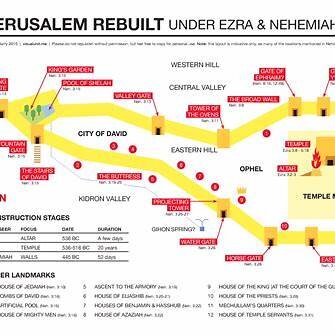


Homiletics for Group and Administrative Leaders
Nehemiah 6–10
Below is an in-depth homiletical treatment of Nehemiah 6–10, shaped in the spirit of a full homiletics worksheet and expanded for group leaders and administrative leaders. I have also included extra biblical references, theological observations, leadership applications, and a few visual aids above to help situate the text. The map images are useful because Nehemiah’s ministry is not merely devotional or private; it is public, organized, embodied, and tied to the rebuilding of an actual city with gates, towers, and communal gathering spaces. The Doré-style image of Ezra reading the Law also helps frame Nehemiah 8, where rebuilding culminates not merely in infrastructure, but in worship, hearing, repentance, and covenant renewal. The geography and city diagrams are interpretive aids rather than exact final certainties, since the precise placement of every feature in Nehemiah’s Jerusalem remains partly debated.
1. Passage
Nehemiah 6–10
This unit moves through four major scenes:
2. Broad Context
Nehemiah is a post-exilic book. The people have returned from Babylon, yet return from exile is not the same thing as full renewal. The temple has been rebuilt before Nehemiah’s arrival, but the city remains vulnerable, its walls broken, its gates burned, and its people spiritually fragile. Thus Nehemiah’s task is not simply masonry. It is covenant restoration through leadership, courage, order, prayer, Scripture, confession, and obedience.
Nehemiah 6–10 marks a crucial turning point:
This is the movement from construction to consecration.
3. Historical and Redemptive Setting
Nehemiah serves under the Persian Empire, likely during the reign of Artaxerxes I, in the mid-fifth century B.C. The wall’s completion in fifty-two days is presented as astonishing, and the chapter’s closing note emphasizes that surrounding nations recognized that this work had been accomplished with divine help. The city maps commonly used for teaching Nehemiah reflect the longstanding scholarly and devotional effort to locate the gates, towers, and sectors mentioned in the book, though exact reconstructions vary.
Redemptively, this passage sits in the great biblical arc:
The people are back in the land, yet the fullness of promise is still future. Their condition makes plain that a rebuilt wall cannot finally solve the problem of a sinful heart. Nehemiah 8–10 therefore prepares us for the deeper need later answered in Christ: not merely external reform, but inward renewal by God’s grace.
4. Literary Structure of Nehemiah 6–10
A useful teaching outline is this:
I. Perseverance in the Work Despite Opposition — Nehemiah 6
II. Stewardship After the Work Is Finished — Nehemiah 7
III. Renewal Through the Word of God — Nehemiah 8
IV. Repentance Through Remembering God’s Faithfulness — Nehemiah 9
V. Recommitment Through Covenant Obedience — Nehemiah 10
This is a deeply pastoral leadership flow:
5. Text Idea / Central Truth
God strengthens His people to finish His work, gather around His Word, confess their sin, and renew their obedience in covenant faithfulness.
Or more briefly:
God’s true restoration of His people includes protection, order, Scripture, repentance, worship, and obedience.
6. Fallen Condition Focus
The passage addresses several recurring human problems:
For leaders, the text especially exposes the temptation to settle for:
7. Purpose Statement for Preaching / Teaching
To call God’s people, and especially their leaders, to persevere in God’s work, center community life on God’s Word, lead in repentance, and pursue visible covenant faithfulness.
8. Key Words and Themes
A. Opposition
Nehemiah 6 displays opposition in more refined form. The enemies no longer merely mock. They scheme, lure, accuse, and spiritualize deception.
B. Discernment
Nehemiah must distinguish between a genuine warning and a false prophecy, between faithful concern and manipulative pressure.
C. Completion
The wall is finished, but the story is not. Completion of a task is never the same thing as completion of God’s purpose.
D. Reading and Understanding
In Nehemiah 8, the people do not merely hear the Law recited. The Levites help them understand it.
E. Confession
Nehemiah 9 is one of Scripture’s great confessional prayers, rehearsing God’s covenant faithfulness against Israel’s repeated rebellion.
F. Covenant Renewal
Nehemiah 10 moves from general repentance to specific commitments.
9. Exegetical and Homiletical Outline
I. God’s servants must finish God’s work without yielding to distraction, intimidation, or deceptive counsel
Nehemiah 6:1–14
A. The enemies try to lure Nehemiah away from his assignment (6:1–4)
Sanballat and Geshem invite Nehemiah to meet them in the plain of Ono. It sounds diplomatic, but Nehemiah sees through it: “they intended to do me harm.” He answers with one of Scripture’s great leadership declarations:
“I am doing a great work and I cannot come down.”
This is not arrogance. It is clarity. Nehemiah knows that a leader who comes down from the wall for every pressure, invitation, accusation, or opportunity will never finish the work God assigned.
Leadership principle
A leader must distinguish between:
Not every meeting deserves attendance.
Not every request deserves compliance.
Not every open door is from God.
B. The enemies move from invitation to accusation (6:5–9)
The fifth time, the message comes as an open letter accusing Nehemiah of rebellion and ambition. This is public slander meant to destabilize confidence and provoke fear.
Nehemiah’s response is striking:
This is the rhythm of faithful leadership:
C. The enemies weaponize false religion (6:10–14)
Shemaiah pretends spiritual concern and urges Nehemiah to hide in the temple. This sounds devout. It sounds urgent. It even sounds protective. But it is false counsel.
Nehemiah discerns several things:
This is one of the most important leadership lessons in the passage: not all religious language is faithful counsel.
A leader must ask:
Cross references
Homiletical thrust
Leaders must not come down from the work because of pressure from below, noise from outside, or counterfeit spirituality from within.
Application for group leaders
You cannot shepherd a group well if you are governed by:
Application for administrative leaders
Administrative leadership often invites “Ono moments”:
You need sanctified discernment to say, “I am doing a great work and cannot come down.”
II. God’s work must move from completion to stewardship and ordered guardianship
Nehemiah 6:15–7:73
A. The wall is finished, and even the nations recognize God’s hand (6:15–16)
The wall is completed in fifty-two days. The point is not merely speed. The point is that the accomplishment reveals God’s aid.
True ministry success should direct observers not primarily to human competence, but to divine help.
B. Yet opposition remains after visible success (6:17–19)
Even after the wall is finished, compromised loyalties remain. Nobles in Judah correspond with Tobiah, report Nehemiah’s words to him, and carry Tobiah’s words back.
This is profoundly realistic. Completion of a project does not end relational complexity. Sometimes the greatest vulnerability comes after the victory.
C. Nehemiah organizes protection, responsibility, and population stability (7:1–4)
He appoints:
Hanani and Hananiah are highlighted because they are faithful and fear God more than many.
This matters immensely for leaders. Nehemiah does not say:
“The wall is done, now relax.”
He says, in effect:
“The wall is done, now guard what has been built.”
Leadership principle
What God helps you build, you must also steward.
D. The genealogical register matters (7:5–73)
To modern readers, lists can feel anticlimactic. But in covenant history, this register means:
This is not bureaucratic deadness. It is covenant accountability.
Cross references
Homiletical thrust
The completion of visible ministry must be followed by faithful stewardship, ordered leadership, and vigilant guardianship.
Application for group leaders
A good group is not sustained merely by a strong opening or emotional gathering. It requires:
Application for administrative leaders
Systems are not unspiritual.
Policies are not necessarily cold.
Registers, procedures, access points, and delegated oversight can be expressions of wisdom and stewardship.
Nehemiah teaches that godly administration is part of godly restoration.
III. The renewal of God’s people begins when the Word of God is read, heard, explained, and obeyed
Nehemiah 8:1–18
The image of Ezra reading the Law has endured in Christian imagination because this chapter is one of the clearest biblical pictures of public Scripture-centered renewal. Doré’s well-known rendering captures that public, elevated, solemn moment, even though it is an artistic interpretation rather than a historical photograph.
A. The people gather with holy hunger for the Word (8:1–3)
“All the people gathered as one man.”
They tell Ezra to bring the Book of the Law.
This is remarkable. The people are not coerced into attendance merely by official order. There is communal desire. Restoration has reached the point where the people want the Word.
Leadership principle
One of the clearest evidences of grace in a community is renewed appetite for God’s Word.
B. The reading of the Word is public, central, and reverent (8:4–6)
Ezra stands on a wooden platform made for the purpose. He opens the book in the sight of all. The people stand. They answer “Amen, Amen,” lift their hands, bow, and worship.
There is both structure and response:
This is not chaotic spirituality. It is ordered worship shaped by the Word.
C. The Word must be understood, not merely recited (8:7–8)
The Levites “gave the sense, so that the people understood the reading.”
This is one of the strongest texts for expository ministry and teaching ministry. The aim is not mere reading, nor emotional effect alone, but understanding.
For leaders
A faithful teacher does not merely say true things.
A faithful teacher helps people understand what God has said.
D. The Word wounds before it heals (8:9–12)
The people weep when they hear the Law. God’s Word reveals their distance from holiness. Yet Nehemiah, Ezra, and the Levites tell them not to mourn on that holy day, but to rejoice, eat, drink, share, and celebrate, “for the joy of the Lord is your strength.”
Important here:
This is neither sentimental religion nor crushing legalism. It is repentance met by grace.
E. Obedience follows understanding (8:13–18)
When leaders keep studying, they discover the Feast of Booths command and immediately organize obedience.
They do not merely admire the law.
They arrange their lives around it.
And the result is “very great rejoicing.”
Cross references
Homiletical thrust
God’s people are renewed when His Word is publicly honored, rightly explained, deeply felt, and concretely obeyed.
Application for group leaders
Do not reduce group time to:
Gather people around the Book.
Application for administrative leaders
Administrators can either protect or suffocate Word-centered ministry.
Ask:
IV. The people of God are restored through confession that remembers both their sin and God’s steadfast faithfulness
Nehemiah 9:1–37
Nehemiah 9 is one of the great theological prayers of the Bible. It is long because memory matters. Repentance is deepened when people remember who God is and what He has done.
A. Confession is humble, public, and Scripture-shaped (9:1–5)
The people gather with fasting, sackcloth, and dust. They separate from foreigners in covenantal distinctiveness, stand, confess sins, and worship.
This is serious repentance. It is not performative shame. It is humble return to God.
B. True confession begins with God, not self (9:5–8)
The prayer begins with praise:
Repentance that begins with the self often becomes self-absorption.
Repentance that begins with God becomes worshipful realism.
C. The prayer rehearses redemptive history (9:9–31)
The prayer walks through:
The repeated pattern is unmistakable:
This is covenant history as confession.
D. The central emphasis: God is righteous and merciful; we are stubborn and sinful (9:32–37)
The prayer does not excuse sin.
It does not blame circumstances.
It does not revise history in self-defense.
It says, in effect:
This is mature confession.
Cross references
Homiletical thrust
Real repentance is strengthened by remembering the greatness of God, the faithfulness of His mercies, and the truth about our sin.
Application for group leaders
Help people move beyond shallow confession such as:
Lead with Scripture toward honest naming of sin, grace, and need.
Application for administrative leaders
Organizations, ministries, and churches can sin institutionally:
Corporate repentance is not weakness.
It is health.
V. Covenant renewal becomes visible when repentance takes practical form in committed obedience
Nehemiah 9:38–10:39
A. The people bind themselves with a covenant (9:38–10:29)
After confession comes commitment. Leaders, Levites, priests, gatekeepers, singers, temple servants, and families enter into a sworn obligation.
This is not salvation by vow.
It is repentance expressing itself through accountable obedience.
B. Their commitments are specific (10:30–39)
They address:
The final line is especially powerful:
“We will not neglect the house of our God.”
This is practical covenant fidelity.
Why these specifics matter
Because vague spirituality produces little transformation.
If repentance never reaches:
then it remains mostly sentimental.
Cross references
Homiletical thrust
Renewal is proven not by emotional intensity alone but by covenant-shaped, concrete obedience.
Application for group leaders
Ask not only:
Application for administrative leaders
Administrative leaders often shape the practical obedience of a ministry:
A ministry’s calendar and financial structure reveal its theology more honestly than its slogans.
10. Major Leadership Themes for Group and Administrative Leaders
A. Discernment in leadership
Nehemiah 6 teaches leaders to discern:
Not every spiritual voice is faithful.
B. Integrity under pressure
Nehemiah refuses secretive self-protection. He will not save himself through disobedience.
For leaders, character matters more than image.
C. Completion is not enough
Many leaders are good at launching or building. Nehemiah shows that wise leaders also:
D. Scripture-centered renewal
Nehemiah 8 teaches that the center of leadership is not charisma, but the Word of God understood and obeyed.
E. Corporate repentance
Nehemiah 9 shows that leaders must sometimes guide communities through truth-telling, grief, and confession.
F. Practical covenant fidelity
Nehemiah 10 reminds us that leadership must translate conviction into systems, habits, and commitments.
11. Christological Fulfillment
A faithful homiletic should not end with Nehemiah as mere moral example. Nehemiah is admirable, but he is not ultimate.
A. Nehemiah points beyond himself
He is:
Yet he cannot change hearts finally.
B. Christ is the greater Restorer
Jesus does what Nehemiah could only foreshadow.
C. The greater gathering
Nehemiah 8 gathers returned exiles before the Law.
Christ gathers redeemed sinners before Himself in grace and truth.
D. The deeper wall and the better city
Jerusalem’s wall protected a vulnerable people.
In Christ, God prepares an everlasting city whose security no enemy can breach (Hebrews 11:10; Revelation 21).
12. Suggested Big Idea for Teaching
When God restores His people, He does more than help them finish a task; He calls them to live as a holy, ordered, Word-shaped, repentant, obedient community.
13. Suggested Sermon / Lesson Outline
Title:
From Finished Walls to Renewed Hearts
Proposition:
God restores His people by enabling them to persevere through opposition, gather around His Word, confess their sins, and commit themselves to faithful obedience.
Interrogative:
How does God restore His people after the work is finished?
Transition:
In Nehemiah 6–10, we see five marks of God’s restoring work among His people.
I. God restores His people by giving leaders courage to resist distraction and deception (6:1–14)
II. God restores His people by moving them from accomplishment to stewardship (6:15–7:73)
III. God restores His people by placing His Word at the center of communal life (8:1–18)
IV. God restores His people by leading them into honest confession and remembrance (9:1–37)
V. God restores His people by producing concrete covenant obedience (9:38–10:39)
14. Detailed Application Questions
For group leaders
For administrative leaders
For all leaders
15. Homiletical Observations on Key Verses
Nehemiah 6:3
“I am doing a great work and I cannot come down.”
This is not self-importance. It is vocational focus.
The phrase is useful for leaders when stated humbly:
Nehemiah 6:9
“But now, O God, strengthen my hands.”
A model of immediate leadership prayer:
Nehemiah 7:2
“He was a more faithful and God-fearing man than many.”
Leadership appointment is not merely about competence.
Faithfulness and fear of God remain central qualifications.
Nehemiah 8:8
“They read from the book… clearly, and they gave the sense.”
This verse is foundational for exposition:
Nehemiah 8:10
“The joy of the LORD is your strength.”
Not superficial cheerfulness.
Not denial of conviction.
Rather, covenant joy rooted in the Lord Himself becomes sustaining strength.
Nehemiah 9:17
“You are a God ready to forgive, gracious and merciful, slow to anger and abounding in steadfast love.”
This is the theological center of repentance: God’s mercy is greater than our rebellion.
Nehemiah 10:39
“We will not neglect the house of our God.”
A succinct covenant resolve that can still challenge leaders today:
16. Teaching Notes by Chapter
Nehemiah 6 — The leader under siege
Opposition matures into psychological and spiritual warfare. This chapter is invaluable for teaching leaders how the enemy often shifts methods:
Nehemiah 7 — The city under stewardship
The wall is not the end. This chapter teaches institutional wisdom: securing access, appointing personnel, maintaining records, and preparing for sustainable communal life.
Nehemiah 8 — The people under the Word
This is one of the finest texts for:
Nehemiah 9 — The congregation in confession
This chapter is ideal for teaching:
Nehemiah 10 — The covenant in practice
This chapter teaches that spiritual renewal must alter:
17. Extra Biblical References for Enrichment
Here are additional passages that pair especially well with Nehemiah 6–10:
On perseverance in assigned work
On discernment and false counsel
On worship shaped by the Word
On confession and repentance
On covenant obedience
18. A Possible Full-Length Teaching Conclusion
Nehemiah 6–10 shows us that the people of God are not restored merely when the visible crisis is solved. Jerusalem’s wall could stand while the people remained spiritually weak. Therefore God does not stop at construction. He leads His people onward into order, worship, understanding, confession, and covenant obedience.
This is a needed word for leaders. Many can help build. Fewer can help a people become holy. Many can finish projects. Fewer can lead communities beneath the searching light of God’s Word. Many can celebrate visible success. Fewer can guide a people into repentance, joy, and enduring faithfulness.
Nehemiah refuses to come down from the wall, but he also refuses to stop with the wall. He knows that God’s work is not finally masonry, administration, or even morale. God’s aim is a people who hear His Word, confess their sin, rejoice in His mercy, and order their lives around His covenant.
And here the text presses on us with holy force. Have we confused ministry accomplishment with spiritual renewal? Have we mistaken attendance for hunger, structure for faithfulness, emotion for repentance, and good intentions for obedience? Nehemiah 6–10 calls us higher.
For the group leader, it says: center your people on the Book.
For the administrative leader, it says: build systems that serve holiness.
For every servant of God, it says: do not come down from the work, but do not stop with the work either. Press on until the people of God are gathered, instructed, humbled, gladdened, and committed afresh to the Lord.
And beyond Nehemiah, the text turns our eyes to Christ, the greater Restorer, who does not merely rebuild ruined places but raises the spiritually dead, gathers the scattered, fulfills the covenant, and forms a people for His own possession. In Him, the wall becomes a sign, the reading becomes a foretaste, the confession becomes a longing, and the covenant renewal becomes a shadow of the better covenant sealed in His blood.
So let leaders labor with courage.
Let teachers open the Book with clarity.
Let communities confess with honesty.
Let worshipers rejoice with holy joy.
Let the people of God say with renewed seriousness:
We will not neglect the house of our God.
19. Concise Homiletics Worksheet Version
Text
Nehemiah 6–10
Subject
God restores His people after the wall is finished.
Complement
He restores them through perseverance, order, Scripture, confession, and covenant obedience.
Central Idea
God’s restoration of His people includes not only finishing the work, but renewing the community through His Word and leading them into repentance and faithful obedience.
Purpose
To move leaders and God’s people to persevere in assigned work, submit to Scripture, confess sin honestly, and practice concrete obedience.
Fallen Condition Focus
God’s people are prone to distraction, fear, superficial success, shallow spirituality, and disobedience.
Interrogative
How does God restore His people after the work is completed?
Transition
Nehemiah 6–10 reveals five ways God restores His people.
Main Points
Christ Connection
Jesus Christ is the greater Restorer who not only builds and gathers God’s people, but secures inward renewal through the new covenant and the gift of the Spirit.
20. Suggested Discussion Questions for Leaders
BSF-Style Homiletics Worksheet
Nehemiah 6–10
For Group and Administrative Leaders
1. Passage
Nehemiah 6:1–10:39
2. Historical Setting
Nehemiah ministered during the post-exilic period after the Jews had returned from Babylonian captivity. Though the temple had already been rebuilt, Jerusalem remained vulnerable because its walls were broken down and its gates burned. Nehemiah, burdened by the reproach of the city and the spiritual fragility of the people, was raised up by God to lead both physical rebuilding and communal renewal.
By the time we arrive at Nehemiah 6–10, the wall is nearing completion, but external opposition and internal weakness still threaten the people. These chapters reveal that God’s work is never merely about finishing a project. God aims to restore a people who are protected, ordered, instructed by His Word, humbled in repentance, and renewed in obedience.
3. Literary Context
Nehemiah 1–5 focuses on the burden, prayer, planning, and rebuilding effort under increasing opposition. Nehemiah 6–10 marks a transition:
This section moves from construction to consecration, from walls rebuilt to hearts examined.
4. Key Verse
Nehemiah 8:10
“Do not grieve, for the joy of the Lord is your strength.”
A second strong key verse for leaders in this section is:
Nehemiah 6:3
“I am doing a great work and I cannot come down.”
Together these verses show both the resolve of faithful leadership and the strength of God-given joy in covenant renewal.
5. Central Truth / Big Idea
God restores His people not only by helping them finish His work, but by gathering them around His Word, leading them into repentance, and renewing them in faithful obedience.
6. Purpose
To call leaders and God’s people to persevere through opposition, steward what God has built, center ministry on His Word, practice honest repentance, and commit to concrete obedience.
7. Fallen Condition Focus
Because of sin, God’s people are prone to:
Leaders especially are tempted to settle for:
8. Text Idea
God’s people must be protected from distraction, ordered in community, shaped by Scripture, humbled in confession, and renewed in obedience if they are to live faithfully before Him.
9. Sermon / Lesson Title
From Finished Walls to Renewed Hearts
Alternative titles:
10. Homiletical Outline
I. Faithful leaders must not be drawn away from God’s work by distraction, intimidation, or false counsel
Nehemiah 6:1–14
Explanation
Sanballat, Geshem, and their allies attempt to stop Nehemiah through repeated invitations, public accusations, and false prophecy. They try diplomacy, rumor, and religious manipulation. Nehemiah refuses to leave the work because he discerns that the invitations are traps. He also rejects false prophetic counsel that would have led him into fear and compromise.
Key truth
A leader who cannot discern distraction will not finish God’s assignment.
Leadership emphasis
Group and administrative leaders must be able to distinguish between:
Application
Supporting references
II. What God helps His people build must be guarded, ordered, and stewarded wisely
Nehemiah 6:15–7:73
Explanation
The wall is completed in fifty-two days, and even the surrounding nations recognize that the work was accomplished with God’s help. Yet completion is not the end. Nehemiah appoints gatekeepers, singers, Levites, and trustworthy officials. He also uses the genealogical register to establish order, identity, and belonging among the returned exiles.
Key truth
Finishing a work is not the same as faithfully stewarding it.
Leadership emphasis
Godly leadership involves both spiritual devotion and administrative wisdom. Order is not unspiritual. Guardrails, roles, records, and trustworthy appointments are part of faithful stewardship.
Application
Supporting references
III. God renews His people when His Word is read, explained, understood, and obeyed
Nehemiah 8:1–18
Explanation
The people gather as one man and ask Ezra to bring the Book of the Law. Ezra reads publicly, the people respond with reverence, and the Levites explain the meaning so the people understand. The Word first brings conviction and weeping, but then it produces joy, obedience, and celebration as the people rediscover and keep the Feast of Booths.
Key truth
Spiritual renewal begins when God’s people are gathered under the clear and understandable proclamation of His Word.
Leadership emphasis
Leaders must not merely expose people to Scripture; they must help them understand it. Explanation is part of ministry. Clarity is part of faithfulness.
Application
Supporting references
IV. The people of God are restored through confession that remembers both their sin and God’s steadfast mercy
Nehemiah 9:1–37
Explanation
The people gather in fasting, humility, separation, confession, and worship. The Levites lead a great prayer that recounts God’s works from creation, Abraham, Egypt, the wilderness, conquest, rebellion, and repeated deliverance. The prayer highlights the contrast between God’s covenant faithfulness and Israel’s stubborn sin.
Key truth
Repentance grows deeper when God’s people remember who God is and tell the truth about themselves.
Leadership emphasis
Healthy leadership does not avoid confession. It helps communities remember grace honestly and face sin truthfully.
Application
Supporting references
V. Genuine renewal is proven through specific and practical covenant obedience
Nehemiah 9:38–10:39
Explanation
The people make a binding covenant and commit themselves to obey God in concrete ways. Their commitments address marriage, Sabbath keeping, financial stewardship, offerings, firstfruits, temple support, and the worship life of the community. The final declaration summarizes the chapter: “We will not neglect the house of our God.”
Key truth
Repentance that never reaches practice is incomplete.
Leadership emphasis
Faithfulness must become visible in schedules, relationships, giving, worship, and priorities. Leaders help translate conviction into structure and practice.
Application
Supporting references
11. Subject and Complement
Subject:
How does God restore His people after the wall is finished?
Complement:
He restores them by preserving them through opposition, ordering them in stewardship, centering them on His Word, leading them in confession, and renewing them in practical obedience.
12. Main Doctrine
God’s covenant faithfulness sustains and reforms His people through His Word, His mercy, and His call to obedient holiness.
13. Christ Connection
Nehemiah is not merely an example of strong leadership; he is also a shadow pointing beyond himself.
Thus Nehemiah 6–10 prepares us to see that outward reform cannot finally save a people. God’s people need a greater Restorer who can transform not merely the city, but the heart.
Supporting Christ-centered references:
14. Practical Application for Group Leaders
Personal
Ministry
Character
15. Practical Application for Administrative Leaders
Stewardship
Leadership
Ministry Formation
16. Discussion Questions
17. Summary Statement
Nehemiah 6–10 teaches that God’s restoring work among His people includes courage against opposition, stewardship after success, renewal through Scripture, repentance through remembering grace, and obedience expressed in practical covenant faithfulness.
Teaching Manuscript
For Group and Administrative Leaders
Nehemiah 6–10
Title: From Finished Walls to Renewed Hearts
Brothers and sisters, and especially those entrusted with the care of God’s people in groups, ministries, and administrative service, Nehemiah 6–10 stands before us as a mighty word of restoration. It is a passage that teaches us that the work of God cannot be reduced to visible accomplishment. It is possible to finish a wall and still need renewal. It is possible to organize a city and still need repentance. It is possible to gather publicly and still need understanding. It is possible to feel sorrow and still need covenant obedience.
That is why this section is so powerful. It shows us that when God restores His people, He does not stop at construction. He moves from the wall to the heart, from the gate to the conscience, from the register to the covenant, from the public square to the inner life of obedience.
I. Leaders must not come down from the work God has assigned them
In chapter 6, Nehemiah faces a new level of opposition. His enemies no longer rely only on mockery. They turn to strategy. They invite him to come meet them. It sounds reasonable. It sounds diplomatic. It sounds as though perhaps tensions could be eased and mutual understanding reached. But Nehemiah sees the truth. They mean to harm him.
So he responds with one of the finest declarations of leadership resolve in all Scripture: “I am doing a great work and I cannot come down.”
Those words matter deeply for leaders. They remind us that leadership requires clarity. If a leader is unable to discern the difference between what is merely loud and what is truly important, he will be ruled by pressure. If every accusation commands his attention, if every invitation becomes a priority, if every urgent voice gets access to the center of his ministry, he will never finish what God assigned him to do.
Group leaders need this word. Administrative leaders need it even more than they sometimes realize. There are always “Ono” invitations in ministry. There are meetings that do not need to happen, demands that do not deserve compliance, crises inflated by fear, and requests that are less about faithfulness than about control. Nehemiah teaches us that holy leadership sometimes says no, not because the leader is proud, but because the assignment is sacred.
Then the enemies escalate. They send slander. They accuse Nehemiah of rebellion and ambition. This too is common in leadership. When distraction fails, reputation attacks often follow. But Nehemiah does not unravel. He answers briefly, truthfully, and prayerfully: “O God, strengthen my hands.”
This is leadership discipline: truth on the lips, prayer in the heart, steadiness in the work.
Then comes the most subtle attack of all: false prophecy. A man named Shemaiah presents what sounds like spiritual concern. He tells Nehemiah to hide in the temple for safety. But Nehemiah perceives that this is no true word from God. It is fear wearing religious clothing. It is compromise dressed as prudence.
This is a needed warning for all leaders. Not every spiritual-sounding message is faithful. Not every urgent religious appeal is from God. Leaders must test counsel by Scripture, by righteousness, by the fear of God, and by whether it calls us toward faithfulness or toward panic.
So chapter 6 teaches this first great leadership lesson: do not come down from God’s work because of distraction, fear, slander, or counterfeit spirituality.
II. When the visible work is finished, stewardship begins
The wall is completed in fifty-two days. That fact alone is astonishing. But Scripture’s emphasis is not only on the speed of the accomplishment. The deeper point is that the surrounding nations recognize that this work has been accomplished with the help of God.
That is what faithful ministry should do. It should not merely impress people with human competence. It should bear the marks of divine help.
Yet the text does not allow us to stop and celebrate too easily. Even after the wall is complete, relational danger remains. Correspondence with Tobiah continues. Compromised loyalties still exist. Nehemiah knows that visible success does not eliminate hidden vulnerability.
Then chapter 7 opens and teaches something many leaders need to hear: the wall being finished does not mean the work is over. Nehemiah appoints gatekeepers, singers, Levites, and faithful overseers. He establishes structures. He secures the city. He makes careful use of the genealogical register.
Some readers are tempted to rush past such details. But leaders should not. These verses remind us that order is holy when it serves God’s purposes. Stewardship is spiritual when it protects the people of God and preserves the integrity of the work.
Administrative leaders in particular should take heart here. Scripture does not despise ordered oversight. Systems can be acts of love. Policies can be instruments of holiness. Gates, records, responsibilities, and trustworthy appointments are not distractions from spiritual work. They are often part of spiritual work.
Group leaders also learn here that what is built must be guarded. A strong start is not enough. A meaningful discussion is not enough. A moving season is not enough. Faithful ministry requires continuity, reliability, and watchfulness.
In short, chapter 7 says: if God helps you build something, do not fail to steward it.
III. The center of renewal is the Word of God
Then in chapter 8, the whole scene shifts. The people gather together as one man. They ask Ezra to bring the Book of the Law. That request is itself an evidence of grace. Hunger for God’s Word is one of the clearest marks of spiritual renewal.
Ezra reads. He stands on a platform. The book is opened in public view. The people stand. They answer “Amen, Amen.” They lift their hands. They bow their heads. Reverence fills the gathering.
Yet the chapter does not stop with public reading. The Levites move among the people and help them understand. This detail is crucial. Scripture is not being treated as a mystical object merely to be displayed. It is being read for understanding.
This is a defining lesson for leaders who teach. It is not enough to quote Scripture. It is not enough to mention the text and then drift into ideas. Faithful ministry explains the Word so that people understand what God has said. Reading matters. Clarity matters. Sense matters.
And what happens when the people understand? They begin to weep. The Word exposes them. It reveals their distance from God’s holiness. It shows them their need. But then Nehemiah, Ezra, and the Levites guide them further. They are told not to remain in grief on this holy day, but to rejoice, to feast, to share with those who have nothing prepared, because the joy of the Lord is their strength.
What a picture of biblical renewal. The Word wounds, but not to destroy. It convicts, but not to leave the people hopeless. It humbles, but then it leads to joy in God’s mercy.
This is a needed pattern in ministry. Some gatherings aim only at emotion. Some teaching aims only at information. But Nehemiah 8 shows the fuller pattern: hearing, understanding, conviction, joy, obedience.
And indeed, obedience follows. The people continue studying and discover that the Feast of Booths should be observed. They act on what they learn. They do not merely admire the command. They keep it.
So chapter 8 teaches leaders that renewal begins when God’s people are gathered under His Word, helped to understand it, led through conviction, and called into joyful obedience.
IV. Repentance deepens when God’s people remember His faithfulness
If chapter 8 is the great chapter of public Scripture, chapter 9 is the great chapter of public confession. The people gather with fasting, sackcloth, and dust on their heads. They separate themselves, stand, confess sins, and worship the Lord.
Then comes one of the longest and richest prayers in Scripture. It begins not with the people’s failure, but with God’s greatness. “You are the Lord, You alone.” The prayer moves through creation, Abraham, Egypt, the Red Sea, Sinai, wilderness provision, conquest, rebellion, prophetic warning, discipline, and mercy.
Again and again, the contrast is plain: God is faithful. The people are stubborn. God is righteous. The people are rebellious. God is merciful. The people are forgetful.
This is mature repentance. It does not minimize sin. It does not excuse disobedience. It does not present the people as victims of mere circumstance. It tells the truth. But it tells the truth in the light of God’s covenant mercy.
This is essential for leaders. Some communities have no language for confession. They know how to celebrate, but not how to repent. Others know how to wallow in shame, but not how to remember grace. Nehemiah 9 gives the better way. Start with God’s greatness. Recall His works. Tell the truth about sin. Acknowledge His justice. Appeal to His mercy.
Group leaders need to know how to help people speak honestly before God. Administrative leaders need to know that organizations, ministries, and churches also need repentance. Structures do not remove the need for humility. Public ministry is not an excuse to hide public sin.
Repentance is not weakness. It is one of the clearest evidences of life.
V. Renewal becomes credible when it becomes practical
Then at last the people make a covenant. They bind themselves with an oath. And their commitments are not vague. They are specific. They concern marriage, Sabbath keeping, temple support, offerings, firstfruits, and tithes. Their repentance reaches their calendars, their households, their economics, and their worship.
This too is indispensable for leaders. We live in an age that often mistakes emotional intensity for spiritual depth. But Nehemiah 10 reminds us that real renewal takes form in habits, practices, and visible commitments.
What good is confession that never changes conduct? What good is hearing the Word if money, time, family life, and worship remain untouched? What good is a moving gathering if the house of God is still neglected?
The final declaration of the chapter is one of the strongest covenant statements in the book: “We will not neglect the house of our God.”
That sentence should ring in the ears of every leader. We will not neglect worship. We will not neglect stewardship. We will not neglect God’s gathered people. We will not neglect the honor of the Lord in the practical ordering of life.
Group leaders can apply this by helping people move from reflection to response. Administrative leaders can apply it by ensuring that budgets, schedules, staffing patterns, and ministry priorities reflect the actual importance of God’s work rather than merely verbal agreement with it.
VI. Christ is the greater Restorer
We must not end by making Nehemiah merely an example of grit, organization, and courage. He is those things, but he is more than that. He is part of the larger biblical story that points beyond itself to Christ.
Nehemiah rebuilds the wall, but he cannot finally rebuild the human heart. Ezra reads the Law, but the Law itself cannot produce final inward renewal. The people make vows, but Israel’s history has already shown how fragile human promises are.
Christ is the greater Restorer. He does not merely protect a city; He builds His church. He does not merely read the Word; He is the Word made flesh. He does not merely witness covenant failure; He establishes the new covenant in His blood. He does not merely call people to obedience; He gives His Spirit to write God’s law upon the heart.
Thus Nehemiah 6–10 awakens longing. It shows a people restored outwardly, yet still needing deeper grace. It points us toward the One who can finish the work within us.
Conclusion
So what shall leaders take from Nehemiah 6–10?
Take this: do not come down from the work God has assigned you. Refuse distraction, fear, and false counsel. Then, once the wall is built, do not imagine the work is done. Steward it. Guard it. Order it faithfully.
Above all, put the Word of God at the center. Let the people hear it, understand it, feel its weight, and obey it. Lead them in repentance that tells the truth, and in joy that rests in the mercy of God. Then call them to obedience that can be seen in the actual ordering of life.
For group leaders, this means teaching Scripture with clarity and calling for response. For administrative leaders, this means building structures that serve holiness rather than merely efficiency. For all of us, it means remembering that God is after more than finished walls. He is after renewed hearts.
And by His grace, may we say with Nehemiah’s generation, not as empty words, but as covenant resolve:
We will not neglect the house of our God.
BSF Lesson 25 Expanded Lecture Notes:
Lesson 25 Notes
Nehemiah 6:15–8:18
Completing the Wall – Nehemiah 6:15–7:3
The Final Push – 6:15-19
Mission Accomplished (6:15-16)
In a mere 52 days, less than six months after he spoke to the king, Nehemiah led God’s people to complete the full 2.5-mile (4 km) circumference of Jerusalem’s wall that had laid in ruins for 140 years. Despite enemy taunts, threats, and evil scheming, the Israelites placed their full trust in the Lord, their leaders, and the unity of their community. The swift, dedicated work overcame worldly odds, bearing testimony to God’s power and sovereignty. God’s support of this prayer-fueled work struck fear in Israel’s enemies and sapped their confidence. Perhaps they thought that if God could bring such stunning success to a construction project, He would rebuild Israel into a powerful and threatening nation.1
Focus Verse
“Day after day, from the first day to the last, Ezra read from the Book of the Law of God. They celebrated the festival for seven days, and on the eighth day, in accordance with the regulation, there was an assembly.”
(Nehemiah 8:18)
Outline
Engage
What are your first thoughts, feelings, and actions when you have successfully accomplished a significant task or reached a monumental goal? Do you feel relief? Exhaustion? Do you exclaim, “I’m glad that’s over. I’m never doing that again!”? Are you filled with confidence and start looking to the next horizon or a new frontier? What do you do to celebrate? To whom do you show appreciation for helping you along the way?
Overcoming nearly every sort of obstacle, the Israelites rallied in unity, faith, and renewed trust in God and one another as they worked to complete the protective wall surrounding their beloved Jerusalem. This marked the beginning of a new era in the promised land. Prayerfully propelled by God’s power, provision, and their personal persistence, the people Nehemiah led now set their sights on rebuilding and cementing their community of faith. God’s people entered another chapter revealing His faithfulness and sovereignty. They longed to hear God’s law, and understanding what God had revealed ignited corporate celebration for who He is, all He had done, and all He promised. God’s Word and sincere worship unite His people.
Bible Study Fellowship | 303
Seeds of Discord (6:17-19)
Though defeated, God’s prowling and crouching enemies cling to futile hope.2 Throughout Nehemiah’s building campaign, his foes’ previous efforts of taunting, violence, lies, and entrapment had failed. Now Israel’s enemies attempted to sow misinformation among the Jewish community through family ties. Tobiah the Ammonite had married the daughter of a returned exile, Shekaniah. Tobiah’s son Jehohanan married a Jewish woman—Meshullam’s daughter. Shekaniah’s son, Shemaiah, and Meshullam helped rebuild the wall.3 These ties appear to have given Tobiah an influential foothold among some of Israel’s nobility. Tobiah’s rebellious seeds and their potential damage likely led Ezra to prophetically warn against marriage with the unfaithful.4 The Israelites’ past failure to obey God’s commands led to their exile, but Ezra’s warning offered an opportunity for the people to choose to obey God and recognize His faithfulness despite their sin.
Despite Tobiah’s intimidating letters to Nehemiah and the people’s praise of Tobiah, Nehemiah steadfastly refused to bow to enemy pressure. God’s servant remained determinedly committed to the work God had commissioned him to do.
Protecting the City – 7:1-3
With the wall completed, Nehemiah’s next priority was to maintain protection from opposition at the city’s door. He chose men of integrity to oversee the necessary role of watchfulness. Nehemiah’s brother, Hanani, who originally brought him the news of Jerusalem’s state earlier in the year,5 and Hananiah, the citadel’s commander, had proven themselves trustworthy. Integrity and faithfulness are the backbone of godly leadership.6 Character matters.
Involving the gatekeepers, musicians, and Levites7 in the guarding of Jerusalem’s wall likely revealed Nehemiah’s priority to protect the reestablishment of regular worship. The gatekeepers, who typically guarded the temple gates,8 had been instructed to not open the city gates until the sun was hot. Normally, city gates would open at dawn. This precaution may have been a security measure against a surprise attack. The limited hours also may have been necessary because the city did not yet have an adequate workforce to watch the gates at normal hours. Regardless, previous threats made caution essential. For godly leaders, trusting God includes acting with discernment and making wise decisions to lead others.
The People Gathered – Nehemiah 7:4-73
God’s Call to Count – 7:4-5
Nehemiah had overseen the wall’s reconstruction and the protection of the city gates. He turned to face his next challenge—repopulation. A godly and diligent leader, Nehemiah listened to the Lord and organized the work to accomplish God’s redemptive priorities. The people first rebuilt the temple9 and then the city wall before considering the conditions within the city. Jerusalem had not yet recovered from Babylon’s devastating conquest in 586 BC. Israel’s population was significantly smaller than before the Babylonians attacked, sacked, and conquered the nation. Those who had returned from Babylon had typically settled outside Jerusalem.10
God put the need for a census within Nehemiah’s heart. While this step certainly makes practical sense, Nehemiah did not come up with this plan merely through deep thinking or by consulting trusted associates. He maintained an intimate relationship with God. Consistent prayer guided his obedient response to his Lord. He responded to the Lord by registering the families of Israel. Nehemiah called the tiny nation to assemble. Then he found help from “the genealogical record of those who had been the first to return” from the exile, initiated by Cyrus’s decree more than a century earlier.
Throughout the Bible, genealogies of Israel are all-important. Many Gentiles, such as Ruth, had been incorporated into the nation. Genealogies dated from the time of Joshua provided proof of land inheritance. These records were also carefully preserved in light of the promised lineage of the Messiah.11
A Public Accounting – 7:6-69
The list of households found in Nehemiah is nearly identical to the census recorded by Ezra.12 Several possible reasons help explain the slight discrepancies between the two lists. Nehemiah may have been working from an older list or from Ezra’s list, making corrections or updates to account for births, deaths, or people who had arrived after the first returnees. Perhaps scribal errors needed correction. Regardless, this edited and possibly imperfect manmade list sits within God’s perfect Word to remind us of how God preserves His Word and knows all His people. He gathers them in saving faith—secure in His presence for all eternity.13
Nehemiah’s roster consisted of nine categories, highlighting diversity within this unified remnant.14
Bible Study Fellowship | 305
The Final Tally (7:66-69)
Like Ezra’s census, Nehemiah’s registry accounts for the Israelites, servants, singers, and animals. The total of 49,942 heads of household, male and female slaves, and male and female singers certainly represented a major decline from Judah’s population before the exile. Many Jews chose to remain in Babylon and adapt to life there. Nehemiah led this faithful remnant that returned to the promised land and would continue to build a new life of faith centered around a rebuilt Jerusalem.
Temple Provision – 7:70-73
The People Gave (7:70-72)
The temple work depended on the generosity of the people who benefitted from the service that pointed them to God. Nehemiah, Jerusalem’s governor, led the way and set the example, donating 50 bowls, 530 garments, and nearly 19 pounds (8.4 kg) of gold to support the temple work. The heads of families and rest of the community responded abundantly. With more detail than Ezra provided, the total addition to the temple treasury was nearly 770 pounds (nearly 350 kg) of gold and more than 2½ tons of silver, estimated by some to be about $7 million in today’s currency.
The People Returned (7:73)
Because Israel suffered significant losses in Babylon’s conquest and many remained in exile, Jerusalem’s population, like the temple, existed as a shadow of its former self. Many exiles who did return and contributed to the wall’s rehabilitation did not live in Jerusalem but returned to their hometowns when the work was completed. At this time, Jerusalem remained underpopulated. While the census began to address this challenge, Nehemiah would start bringing people into the city in chapter 11.
The People Celebrated – Nehemiah 8
God’s Word plays a critical role in reorientating His people’s priorities to know and surrender to Him. In Nehemiah 8–10, Israel’s faithful remnant intently listened, took to heart, and responded to the Book of the Law of God. Ezra again entered the scene—nearly 13 years after his arrival in 458 BC. With the wall built and the temple established and funded, the Mosaic law took its rightful place at the center of Jewish life. The law God gave His people defined the foundation for living faithfully before Him. As the narrative shifts from a first-person to third-person account, Nehemiah’s care for the hearts of his people stands out in the second half of the book.
Ezra Read the Law – 8:1-8
Unity that is centered on God and His Word powerfully binds a community. In apparent spontaneity, the people came together desiring to better know and understand the God who had delivered them from exile and empowered them to successfully rebuild the wall around the Holy City. They likely sought to hear the Pentateuch, which consists of the first five books of the Old Testament in today’s Bible. Deuteronomy, in particular, may have been the book most people wanted to hear.17
Ezra received permission from the Persian ruler Artaxerxes,18 but more importantly, authorization to teach the law to the people came from God Himself.19 Men, women, and children (“others who could understand”) listened to Ezra. Surrounded and supported by community leaders and elevated on a high wooden platform so all could see and hear, Ezra read and taught God’s Word to his attentive audience for a full six hours.
Most people in Nehemiah’s day could not read for themselves, which made public reading imperative so all could understand God’s Word. Intentional teaching of the law had likely been missing from the regular spiritual diet of the Jews since their exile. This spiritually starved nation hungrily craved the necessary nourishment of God’s Word.
Standing and in unison, the people responded in praise with the resounding “Amen!” of corporate agreement. They took to heart all they had heard. They humbly bowed and offered further worship to their great God. To assure complete understanding among all who gathered, the Levites roamed the crowd to explain Ezra’s exhortation. This was especially important with Aramaic as the primary language spoken in Jerusalem, while the law was written in Hebrew. God’s Word did not fall on deaf ears, distracted minds, or cold hearts. At this moment, God’s people soaked, steeped, and simmered in every drop of God’s precious Word to understand it completely.20
The People Responded – 8:9-12
Great Sorrow (8:9)
The reading of God’s Word elicited deep grief because the law revealed the people’s sin and God’s condemnation of their sin. They wept because they realized the many wasted years of their lives. They and their families had missed God’s blessings while living outside of His will through willful ignorance. They had ignored God and His commands. The people recognized their need to repent. Nehemiah, Ezra, and the Levites understood God’s grace to sinful people.
Greater Joy (8:10-12)
At the same time the people grieved, their spiritual leaders reminded them they would be strengthened by God’s holy joy through their repentance and experience freedom in His forgiveness. On this Sabbath day, reserved for the Lord and designed to center on Him, Nehemiah led the call to celebrate with great joy. The people not only heard but appropriately understood, took to heart, and responded to God’s holy and precious Word. Nehemiah’s call to “go and enjoy choice food and sweet drinks” did not promote self-congratulatory acts of indulgence but invited remembrance of God’s sweet provision for all His community21 and the great banquet yet to come.22
Bible Study Fellowship | 307
A Great Celebration – 8:13-18
A Festival (8:13-15)
Nehemiah arranged for Ezra to teach the family leaders and the Levites so they could explain God’s Word to the spiritually ravenous people. These men and Ezra discovered Moses’s instructions about the Feast of Tabernacles written in God’s law. Also known as the Feast of Booths, the occasion commemorated God’s gift of the abundant land along with rest and joy in Him.23
Great Joy (8:16-17)
God designed the Feast of Tabernacles to remind the people how He faithfully had guided their ancestors as they wandered in the wilderness during the days of Moses. They constructed temporary shelters of tents and booths as a reminder of their nomadic days when God’s people followed the tabernacle, the Lord’s movable shelter at the center of the Jewish community.24
Created to Worship and Flourish
The Doctrine of Humanity—Creation and Purpose
God had a purpose for Israel. His chosen people had received God’s law, the privilege of knowing who God is, and the responsibility to carry His message to the world. Israel experienced their highest and best purpose as a nation when they yielded to God and sought Him wholeheartedly. They suffered horrendous consequences when they rebelled and refused to repent.
God made all people in His image—designed for eternal fellowship with Him.1 An inner sense of our eternality and desire for a purpose beyond mere survival rises from the very core of every person.2 Only God can satisfy the deepest yearnings of the human heart.3 Sin broke our fellowship with God and represents humanity’s greatest tragedy. Through Christ alone, our fellowship with God and our highest purpose can be restored. Glorifying God and walking with Him is life’s most enduring treasure.
To dismiss God’s purpose means living for our own purposes—controlled by selfishness. Stripped to its essence, living apart from God becomes survival of the fittest. Any perceived benevolence from God becomes transactional rather than sacrificial. With this mindset, the enduring question behind everything becomes, “What’s in it for me?”
To embrace God’s purpose requires seeking and walking with Him. Life’s highest honor and greatest joy comes through God’s provision, not human effort. God equips every believer, whom He saves from slavery to sin, to flourish in this life and for eternity.4 Surrender to God means trusting His faithfulness and sufficiency. A Christian can thrive spiritually even amid intense suffering.5 Resiliency in life comes when your daily experience fulfills the purpose for which God created you. The wisest and most fulfilling pursuit of your life is to know and walk with God.
308 | Lesson 25
Along with Passover and Pentecost, this seven-day festival also celebrated the land’s harvest, gathering all Jewish men to Jerusalem.
The former exiles’ joyous, historic celebration commemorated God’s protection from their enemies, the completion of the Jerusalem wall, and the people’s rededication to God’s Word. Like a second exodus, their freedom from Babylon mirrored their entry into the promised land under Joshua after their Egyptian bondage and wandering in the wilderness. While the Festival of the Tabernacles certainly had been celebrated between the days of Joshua and Nehemiah,25 the festival probably was not conducted regularly or with the same passion Nehemiah and Ezra witnessed. The great joy may be compared to the people’s glee expressed when Hezekiah26 and Josiah27 renewed the Passover celebration.
Daily Bread (8:18)
Through Moses, God commanded the Israelites to read the law every sabbatical or seventh year.28 Daily reading was not required. This festival, however, marked a renewal of intentional, regular worship and rededication to God’s will for His people. Living faithfully for God requires hearing, knowing, and understanding God’s Word. Ezra prayerfully read and explained the law. The people listened to God’s Word, grieved their sin, rejoiced over God’s loving provision, and worshipped their Lord.
Nehemiah and Ezra led the community of faith to spiritual rejuvenation. As in the past, commitment to God would not guarantee the people an easy path or perfect future. Yet God would remain faithful to His people. He would continue to patiently and persistently call them to remain faithful to Him. Only as God’s people abide in Him can they aptly bear a vibrant witness to the world. God’s Word and sincere worship unite His people.
Take to Heart
Hold Fast
Led, empowered, and equipped by God, the returned exiles of Judah completed Jerusalem’s wall in a mere 7½ weeks! Despite oppressive opposition surrounding them and with a finite number of workers, Nehemiah led God’s people to put their trust in God and the leadership He provided. The wall protected the Holy City and the precious temple that was dedicated to God. The foundation to rebuild a community of faith had been established.
After accounting for all the households, servants, singers, and livestock, the people gave sacrificially to support the rebuilt temple. Attention then turned to God’s Word. As a united body of believers, the people listened intently as Ezra exhorted and the Levites helped explain the Book of the Law of God. As God’s Word exposed their sinful hearts and rebellion against God, the people wept over their inborne depravity. But Nehemiah highlighted God’s grace that is embedded in His Word. He encouraged the people not to mourn but to rejoice and celebrate God’s goodness and love for them.
Continuing to feast on God’s Word like the daily manna in the wilderness, the people remembered the approaching Feast of Tabernacles. In joyful obedience to God’s Word, the freed exiles gathered branches, built temporary shelters, and remembered God’s faithful deliverance of their ancestors from Egyptian bondage. This season of persevering faith provided another stepping stone in the story of salvation leading to the Messiah to come. Jesus Christ provides ultimate freedom from sin’s presence and introduces the perfect and pure fellowship with God that will dominate the eternal heavenly city to come.
Apply It
The restoration of Jerusalem’s wall by God’s people illustrates the life of a faithful Christian today. The Bible reveals how God made a way to restore the spiritual vitality that humanity lost following Adam and Eve’s Fall in the garden.29 Only faith in Christ brings hope to our desperate situation and calls us back into relationship with God.30 Christians still encounter God’s enemies and must protect their hearts and minds against fierce spiritual battles.31 God equips believers through the indwelling Holy Spirit and32 with His full armor33 to sufficiently fend off the enemy’s schemes and attacks. How do you face your battles? We cannot stand strong in our own strength. When we trust in, obey, and worship God, we find Him faithful—no matter what we face in this world.
God prompted Nehemiah to list the people who reinhabited Jerusalem under Zerubbabel. God’s people are not a nameless throng to Him; He intimately knows each one. Revelation confirms that the Lamb’s Book of Life records every one of God’s children.34 God wants us to share His heart as we travel through this world that often seems crowded with faces and names. How actively do you invest your life in people? Can you pray for your neighbors by name? When you meet someone who looks or lives differently than you do, what helps you recognize their deepest needs and respond appropriately? Only God knows who truly belongs to Him, but He calls us to focus beyond ourselves and share His love with others.
God’s Word deeply impacted the Israelites who took God’s law to heart. With their sin exposed, they turned to God in repentance and experienced overwhelming joy as they committed to walk in God’s ways. The Holy Spirit exposes our sin, not to overwhelm us with hopeless shame but to call us to experience God’s grace and forgiveness. How do you respond when God reveals your sin? Acknowledging specific sin and experiencing God’s forgiveness demonstrate the Holy Spirit’s work within us. What helps you view repentance as God’s gracious gift?35
While believers await Jesus’s return, they continue to draw close to God, eagerly listening to Him speak through His Word. The Bible records Jesus’s finished work on earth and promises eternal life to all who trust Him for salvation. These truths do not represent dead facts but life-giving hope for God’s people. Jesus has come and will return to establish the new heaven and new earth with His eternal people in resounding glory! Let us rejoice and be glad in Him! This reality is worth celebrating today and forever!
Footnotes / References
Nehemiah 6:15–19
The Wall Completed, Yet the Threat Remains
Nehemiah 6:15–16 — The Completion of the Wall
The text says, “So the wall was finished”. The Hebrew verb is וַתִּשְׁלַם (vattishlam), from the root שׁלם (sh-l-m), a rich root associated with completeness, wholeness, and peace. This is not merely the report of a building project ending; it is the declaration that what was broken has now been brought to a state of completion. The narrative is making a theological statement: under God’s providence, what had long stood as a symbol of disgrace is now restored.
The date marker—the twenty-fifth day of Elul—grounds the event in history. Keil & Delitzsch argues that the reference to fifty-two days should be accepted as stated and not stretched into a much longer reconstruction period. The commentary notes that this was not necessarily the building of an entirely new city wall from nothing, but the urgent repair of breaches, gates, and damaged sectors using material already at hand from Jerusalem’s ruins. That helps explain how the work, though still astonishing, could be completed so rapidly.
The enemies’ reaction is deeply important. Nehemiah 6:16 says they “fell greatly in their own esteem” or lost confidence. Bible.org notes that the phrase reflects an idiom tied to public honor and self-perception—effectively, they “lost face.” Their fear did not come merely from Israel’s labor capacity; it came because “they perceived that this work had been accomplished by our God.” The wall is thus not only a fortification; it is a visible apologetic for divine action.
This is theologically significant. The wall is not credited finally to Nehemiah’s administrative genius, though he clearly possessed it. Nor is it attributed merely to the people’s discipline, though they showed remarkable unity. The final cause is God. That emphasis guards readers from reducing Nehemiah to a leadership manual. He is a leader, yes, but a leader whose success is inseparable from prayer, covenant identity, and divine aid.
Nehemiah 6:17–19 — The Enemy Inside the Community
Even after the wall is finished, the opposition does not disappear. It changes form. Earlier the enemy mocked, threatened, and plotted violence. Now it works through relationships, correspondence, and compromised loyalties.
Bible.org notes that Tobiah appears to have gained influence among the Judean nobility through marriage alliances. That is why the nobles keep reporting Tobiah’s “good deeds” to Nehemiah while simultaneously passing Nehemiah’s words back to Tobiah. The external foe has found an internal network.
This is one of the most sobering lessons in the chapter: sometimes the most dangerous threat to covenant faithfulness is not open hostility but divided allegiance. The wall may be rebuilt, but if the nobles are emotionally and politically entangled with God’s enemies, the community remains fragile.
There is also an important pastoral principle here. Nehemiah does not confuse outward progress with inward security. A finished wall does not equal a finished battle. A church may have buildings, a ministry may have momentum, a family may appear outwardly stable—and yet compromise may still be at work within the gates.
Nehemiah 7:1–73
The City Secured and the People Counted
Nehemiah 7:1–3 — The Need for Watchfulness
Now that the wall stands, Nehemiah turns immediately to governance and security. The text names gatekeepers, singers, and Levites, which is striking. Protection is not merely military; it is also liturgical and covenantal. The city must be guarded because worship must be guarded.
Hanani and Hananiah are appointed because they are described as faithful. Character precedes office. Nehemiah’s concern is not simply competence, but trustworthiness. This matches a recurring biblical pattern: stewardship in God’s community cannot be reduced to technical skill.
The instruction not to open the gates until the sun is hot is also significant. It shows that faith is not recklessness. Trust in God includes prudent measures. The wall is a gift from God, but it still requires vigilant administration. Spiritual maturity never pits prayer against wisdom.
Nehemiah 7:4–5 — God Puts It Into Nehemiah’s Heart
Verse 5 is especially important: “My God put it into my heart”. This statement reveals how Nehemiah understands leadership. The census is not presented merely as a practical idea; it is a providential prompting. The repopulation of Jerusalem is part of God’s redemptive order.
The city is described as “wide and large, but the people within it were few.” This is more than urban description. It is a spiritual picture. The walls are up, but the covenant community still needs to inhabit the city meaningfully. Restoration is incomplete if structures exist without a people living faithfully within them.
That principle still carries weight. It is possible to rebuild systems without rebuilding souls. Nehemiah understands that covenant life requires not only defended space but also a gathered, ordered, identified people.
Nehemiah 7:6–69 — The Genealogical Register
Modern readers often move too quickly through lists, but in Scripture genealogies are never mere filler. They bear witness to memory, identity, inheritance, and promise. In postexilic Judah, names mattered because covenant continuity mattered.
Your notes rightly connect this to land inheritance and the messianic line. The register testifies that the returned exiles are not a random population cluster. They are the continuation of a covenant people. Their history did not end in Babylon. God preserved a remnant.
The small differences between Ezra 2 and Nehemiah 7 have long been noted. Your source material already observed possibilities such as scribal updating, different source lists, births, deaths, and later arrivals. That kind of explanation fits the overall picture well. More importantly, the theological point of the list remains intact: God knows His people individually and corporately.
There is also a striking contrast in verses 61–65, where some cannot prove their ancestry, especially among those claiming priestly descent. This is not bureaucratic coldness. It is covenant seriousness. The priesthood is not self-claimed. Holiness is not casual. Sacred service requires recognized legitimacy.
That concern is especially sharp in a postexilic setting. If the community is being rebuilt around temple, law, and worship, then the lines of priestly service cannot be treated lightly. The underlying principle is that closeness to holy things never authorizes carelessness.
Nehemiah 7:70–73 — Generosity and Settlement
The people give. Nehemiah gives. The heads of families give. This offering reveals that restoration is not just physical presence but sacrificial participation. The people support the temple because covenant life requires tangible commitment.
Theologically, giving here is not fundraising detached from worship. It is an act of alignment. They are investing in the center of Israel’s covenant life. Their treasure follows their renewed identity.
Verse 73 closes with a quiet but important note: all Israel lived in their towns. The phrase “all Israel” is not claiming that every individual Israelite on earth had returned; rather, it reflects covenant solidarity. Even as a remnant, they are addressed as the people of God.
Nehemiah 8:1–8
The Centrality of the Word
Here the narrative reaches its spiritual summit. The wall is finished in chapter 6, the city is ordered in chapter 7, but the true center of restoration appears in chapter 8: the public reading of the Law.
Nehemiah 8:1 — “As One Man”
The people gather “as one man”. This unity is not manufactured by sentiment; it is created by a shared desire to hear the Word of God. That matters immensely. Biblical unity is strongest where God’s people gather under divine revelation.
Ezra is asked to bring “the Book of the Law of Moses.” The people are not asking for entertainment, novelty, or morale-boosting rhetoric. They want the covenant text. Their hunger itself is a sign of grace.
Nehemiah 8:2–3 — Men, Women, and All Who Could Understand
The text repeatedly stresses understanding. This is not bare ritual hearing. The assembly includes all who can comprehend. The reading lasts from morning until midday. This is not hurried devotion. The people stand in sustained attentiveness before the Word.
That public setting is crucial in an age when literacy was limited. Bible.org highlights that many in the community could not read for themselves, which made public reading and explanation essential to covenant formation.
Nehemiah 8:4–6 — Ezra Opens the Scroll
When Ezra opens the book, the people stand. Their posture signals reverence. Verse 6 says Ezra blessed “the LORD, the great God.” In Hebrew, יְהוָה הָאֱלֹהִים הַגָּדוֹל (YHWH ha-Elohim ha-gadol). The title magnifies divine majesty before the Word is unfolded.
The people answer “Amen, Amen.” The Hebrew אָמֵן (amen) does not merely mean “end of prayer”; it expresses firm assent—“truly,” “so be it,” “it is sure.” Their lifted hands, bowed heads, and prostration display a total-body response to God’s revelation. Worship is not detached from Scripture; it rises out of Scripture.
Nehemiah 8:7–8 — Explanation and Understanding
Verse 8 is one of the great biblical texts on exposition. The Levites help the people understand. The verse says they read “distinctly” or “with interpretation” and gave the sense.
The Hebrew wording is dense here. The verb often translated “clearly” or “distinctly” is linked to the idea of making something plain or explicit. The phrase וְשׂוֹם שֶׂכֶל (vesom sekhel) conveys giving insight, setting forth understanding, or supplying the sense. The result clause makes the purpose unmistakable: “they understood the reading.”
Bible.org’s treatment of Nehemiah 8 emphasizes precisely this pattern: public reading, explanation, and then response in repentance, joy, obedience, and worship.
This is enormously instructive. The goal of biblical ministry is not mere recitation, nor mere emotion, nor mere data transfer. It is intelligible proclamation that leads the people to understand what God has said.
Nehemiah 8:9–12
Sorrow, Joy, and the Grace of God
When the people understand the Law, they begin to weep. This is what Scripture does when the heart is exposed. The Law reveals sin not as abstraction but as lived rebellion. Bible.org notes that spiritual renewal always involves repentance, because the more God’s holiness shines into the heart, the more clearly human sin is seen.
But the leaders immediately redirect the people: “This day is holy to the LORD your God; do not mourn or weep.” This is not a denial of conviction. It is a pastoral ordering of it. There is a time for grief, and chapter 9 will show deeper corporate confession. But this particular day, in the setting of covenant renewal and festival holiness, is to be marked by joy in divine mercy.
Then comes the famous line: “the joy of the LORD is your strength.” The Hebrew is כִּי־חֶדְוַת יְהוָה הִיא מָעֻזְּכֶם (ki khedvat YHWH hi ma‘uzzekhem).
So the sense is deeper than emotional uplift. The joy that comes from the Lord—or the joy rooted in the Lord—is the community’s fortress. Their strength is not self-confidence. It is joy grounded in covenant mercy.
Bible.org captures this well by noting that true renewal includes repentance, but that the clouds of repentance must give way to the sunlight of forgiven joy. God wounds in order to heal.
The command to eat rich food, drink sweet drinks, and send portions to those who have nothing prepared shows that holiness is not opposed to feasting. Indeed, covenant holiness includes generosity. No one is to be left outside the joy of the day. Repentance does not make God’s people stingy; it makes them generous.
Nehemiah 8:13–18
Rediscovery, Obedience, and Feast
On the second day, the leaders return to the text and discover instructions regarding the Feast of Booths. This is a beautiful picture of continuing discipleship: first the public assembly, then deeper instruction, then obedient implementation.
The Feast of Booths, or Tabernacles, looks backward and forward at once. It recalls wilderness dependence, when Israel dwelt in temporary shelters under God’s care. It also celebrates harvest, God’s present provision in the land. Thus it binds memory and gratitude together.
Verse 17 says the people made booths and celebrated with very great rejoicing. Bible.org notes that their obedience led to joy and that the week culminated in sustained attention to the Law. This was not a festival replacing Scripture; it was a festival saturated by Scripture.
Verse 18 closes the section with daily reading from the book of the Law. This is a fitting climax. The wall may protect the city externally, but the Word of God forms the people internally. That is the true restoration taking place.
Theological Summary
Nehemiah 6:15–8:18 presents a threefold movement.
First, God completes what His people could never secure alone. The wall stands because God strengthened the work.
Second, God knows and orders His people. The census is not administrative trivia; it is covenant identity under divine remembrance.
Third, God restores His people by His Word. The climax of the narrative is not architecture but Scripture. The people are renewed when the Law is read, explained, understood, obeyed, and celebrated.
In Hebrew terms, the passage moves from completion (shalam), to understanding (sekhel), to joy as stronghold (khedvat YHWH… ma‘oz). God repairs the city, reconstitutes the people, and re-centers them on Himself.
Nehemiah 8:9–12
Sorrow, Joy, and the Grace of God
When the people understand the Law, they begin to weep. This is what Scripture does when the heart is exposed. The Law reveals sin not as abstraction but as lived rebellion. Bible.org notes that spiritual renewal always involves repentance, because the more God’s holiness shines into the heart, the more clearly human sin is seen.
But the leaders immediately redirect the people: “This day is holy to the LORD your God; do not mourn or weep.” This is not a denial of conviction. It is a pastoral ordering of it. There is a time for grief, and chapter 9 will show deeper corporate confession. But this particular day, in the setting of covenant renewal and festival holiness, is to be marked by joy in divine mercy.
Then comes the famous line: “the joy of the LORD is your strength.” The Hebrew is כִּי־חֶדְוַת יְהוָה הִיא מָעֻזְּכֶם (ki khedvat YHWH hi ma‘uzzekhem).
So the sense is deeper than emotional uplift. The joy that comes from the Lord—or the joy rooted in the Lord—is the community’s fortress. Their strength is not self-confidence. It is joy grounded in covenant mercy.
Bible.org captures this well by noting that true renewal includes repentance, but that the clouds of repentance must give way to the sunlight of forgiven joy. God wounds in order to heal.
The command to eat rich food, drink sweet drinks, and send portions to those who have nothing prepared shows that holiness is not opposed to feasting. Indeed, covenant holiness includes generosity. No one is to be left outside the joy of the day. Repentance does not make God’s people stingy; it makes them generous.
Nehemiah 8:13–18
Rediscovery, Obedience, and Feast
On the second day, the leaders return to the text and discover instructions regarding the Feast of Booths. This is a beautiful picture of continuing discipleship: first the public assembly, then deeper instruction, then obedient implementation.
The Feast of Booths, or Tabernacles, looks backward and forward at once. It recalls wilderness dependence, when Israel dwelt in temporary shelters under God’s care. It also celebrates harvest, God’s present provision in the land. Thus it binds memory and gratitude together.
Verse 17 says the people made booths and celebrated with very great rejoicing. Bible.org notes that their obedience led to joy and that the week culminated in sustained attention to the Law. This was not a festival replacing Scripture; it was a festival saturated by Scripture.
Verse 18 closes the section with daily reading from the book of the Law. This is a fitting climax. The wall may protect the city externally, but the Word of God forms the people internally. That is the true restoration taking place.
Theological Summary
Nehemiah 6:15–8:18 presents a threefold movement.
First, God completes what His people could never secure alone. The wall stands because God strengthened the work.
Second, God knows and orders His people. The census is not administrative trivia; it is covenant identity under divine remembrance.
Third, God restores His people by His Word. The climax of the narrative is not architecture but Scripture. The people are renewed when the Law is read, explained, understood, obeyed, and celebrated.
In Hebrew terms, the passage moves from completion (shalam), to understanding (sekhel), to joy as stronghold (khedvat YHWH… ma‘oz). God repairs the city, reconstitutes the people, and re-centers them on Himself.
Nehemiah 8:18
“Day by day, from the first day to the last day, he read from the Book of the Law of God.”
The chapter ends where true renewal must end: with ongoing Scripture. The feast is not detached from the Word; it is saturated by it.
Bible.org stresses that chapter 8 presents four marks of spiritual renewal related to God’s Word, and daily reading stands as the continuing frame of the people’s life.
This is the climax of the whole section:
The deepest restoration in Nehemiah 6–8 is not architectural. It is theological and spiritual.
Application
A people restored by God must remain a people ruled by God’s Word.
Major theological themes in Nehemiah 6:15–8:18
1. God completes what His people cannot complete alone
The wall is finished, but the text insists the enemies knew it was done with God’s help. Human effort is real, but divine aid is decisive.
2. External restoration does not eliminate internal danger
Tobiah’s letters and alliances show that compromise can remain after outward success.
3. Godly leadership combines trust and prudence
Nehemiah prays, appoints faithful men, and establishes guarded practices at the gates.
4. God knows His people personally
The register in chapter 7 teaches covenant memory, continuity, and identity.
5. The Word of God is the center of renewal
Chapter 8 is the spiritual summit: Scripture is read, explained, understood, obeyed, and celebrated.
6. Conviction is meant to lead to joy
The people weep, but they are led into holy gladness because divine grace is stronger than their ruin.
Teaching outline you can use directly
Nehemiah 6:15–19 — Finish does not mean final rest
Nehemiah 7:1–73 — A restored city needs a restored people
Nehemiah 8:1–18 — The true center of restoration is God’s Word
Condensed pastoral takeaway
Nehemiah 6:15–8:18 teaches that God’s work is not complete when walls are raised. It is complete only when a people are gathered, ordered, humbled, instructed, and joyfully obedient before Him. The wall protects Jerusalem, but the Word restores Israel.
Lesson 25 Cross References:
Nehemiah 6 Cross References
Nehemiah 6:1–4
Sanballat, Tobiah, Geshem try to lure Nehemiah away from the work
Key themes: opposition, distraction, perseverance, discernment, staying focused on God’s assignment
Cross references:
A strong thematic parallel is Nehemiah’s repeated answer: “I am doing a great work and cannot come down”. This echoes:
Nehemiah 6:5–9
The open letter of slander and false accusation
Key themes: false reports, fear tactics, public shaming, prayer in crisis
Cross references:
For Nehemiah’s short prayer in v. 9, “Now therefore, O God, strengthen my hands”:
Nehemiah 6:10–14
Shemaiah’s false prophecy and Nehemiah’s discernment
Key themes: false spiritual counsel, fear masquerading as wisdom, holiness, discernment, refusing sin
Cross references:
For Nehemiah’s refusal to flee in fear:
Nehemiah 6:15–16
The wall is finished in fifty-two days
Key themes: God’s help, completion, testimony before the nations, enemies humbled
Cross references:
For enemies perceiving that the work was of God:
Nehemiah 6:17–19
Tobiah’s influence and compromise among the nobles
Key themes: divided loyalties, compromise, internal threat, unholy alliances
Cross references:
Nehemiah 7 Cross References
Nehemiah 7:1–3
Gatekeepers, singers, Levites appointed; Jerusalem secured
Key themes: order, stewardship, vigilance, trustworthy leadership, security
Cross references:
For Hanani and Hananiah as trustworthy men:
Nehemiah 7:4–5
The city was large but sparsely populated; God puts it in Nehemiah’s heart
Key themes: divine prompting, wise administration, covenant community
Cross references:
Nehemiah 7:6–73
Register of the returned exiles
This list parallels Ezra 2, so nearly the entire section cross-references:
Specific ideas within the list
Those unable to prove genealogy (Nehemiah 7:61–65)
Waiting for priest with Urim and Thummim (Nehemiah 7:65)
Generous giving to the work (Nehemiah 7:70–72)
“All Israel” settled in their towns (Nehemiah 7:73)
Nehemiah 8 Cross References
Nehemiah 8:1–3
The people gather as one to hear the Book of the Law
Key themes: hunger for Scripture, unity, public reading, covenant renewal
Cross references:
For the water gate and public assembly:
Nehemiah 8:4
Ezra stands on a wooden platform made for the purpose
Key themes: ordered worship, reverence for God’s word, visibility of Scripture
Cross references:
Nehemiah 8:5–6
The people stand; Ezra blesses the Lord; the people answer “Amen” and worship
Key themes: reverence, worship, assent to God’s word, bodily response
Cross references:
Nehemiah 8:7–8
Levites help the people understand the Law
Key themes: exposition, teaching, clarity, understanding Scripture
Cross references:
This is one of the strongest Old Testament pictures of expository ministry.
Nehemiah 8:9–12
The people weep, but are told not to mourn; “the joy of the Lord is your strength”
Key themes: conviction, repentance, grace, holy joy, shared celebration, caring for those in need
Cross references:
For sharing food with those who have nothing prepared:
For “the joy of the Lord is your strength”:
Nehemiah 8:13–15
Discovery of the Feast of Booths in the Law
Key themes: rediscovery, obedience, covenant remembrance, pilgrimage, temporary dwelling
Cross references:
For gathering branches:
Nehemiah 8:16–18
The people keep the Feast of Booths with great gladness
Key themes: obedience, restoration, covenant memory, joy in rediscovered truth
Cross references:
For “since the days of Joshua son of Nun … they had not done so”:
For daily reading from the Book of the Law:
Strong Chapter-Level Cross Reference Summary
Nehemiah 6
Best parallels:
Nehemiah 7
Best parallels:
Nehemiah 8
Best parallels:
If You Want a Ready-to-Teach Version
Here is a simpler teaching outline of the central cross references:
Nehemiah 6
Nehemiah 7
Nehemiah 8
BSF Lesson 25 Lecture Summary:
Bible Study: People of the Promise – Exile and Return, Lesson 25 (March 15, 2026)
Main Topics Discussed
1. Encouragement and Remaining Steadfast
2. Fortification Against Worldly Opposition
3. Completion of Jerusalem’s Wall (Nehemiah 6:15 – 7:3)
4. Census and Purity (Nehemiah 7:4-73)
5. Reading and Responding to the Law (Nehemiah 8:1-12)
6. Celebration and Dedication (Nehemiah 8:13-18)
7. Worship and Unity (Nehemiah 6:15 – 8:18)
Additional Prompts and Action Items
Lesson 25 Lecture Summary
BSF Study: People of the Promise – Exile and Return
Date of Lecture: Not specified
Date of Summary: March 15, 2026
Bible Passage: Nehemiah 6:15 – 8:18
Main Topics Discussed
1. Introduction: Adversity in Service and God’s Faithfulness
2. Division 1: God’s People Thrive in His Plans Despite Opposition
(Nehemiah 6:15 – 7:3)
a. Completion of the Wall and Intimidation Overcome
b. Establishing Security and Worship
c. Godly Leadership and Integrity
d. Principle and Points of Reflection
3. Division 2: God’s People Thrive in God’s Word
(Nehemiah 7:4 – 8:18)
a. Overcoming Human Challenges – Repopulating Jerusalem
b. Diversity and Meticulous Organization
c. Responding Generously for the Temple
d. The Power of God’s Word: National Reading and Revival
e. Understanding and Repentance
f. Rediscovering and Keeping the Feast of Booths (Sukkot)
g. Principle and Points of Reflection
Action Items
Personal Reflection
Leadership Application
Worship Practice
Repentance & Community Renewal
Apply in Service
Follow-up Points and Upcoming Content
Future Study
Questions for Ongoing Reflection
Encouragement to Connect
Closing
Summary Prepared by:
BSF Lecture Observer
March 15, 2026
Bible Study Summary: People of the Promise – Exile and Return
Lesson 25: Reading and Responding to the Law (Nehemiah 6–8)
Date: March 15, 2026
Main Topics Discussed
1. Reflections on Accomplishing Major Tasks
2. The Completion of Jerusalem’s Wall (Nehemiah 6:15–7:3)
3. Census and Repopulation of Jerusalem (Nehemiah 7:4–73)
4. The Public Reading of God’s Law and Spiritual Renewal (Nehemiah 8)
5. Core Doctrines and Application
Humanity, Purpose, and Sin
Living Celebratively and Vigilantly
Action Items
Personal Reflection
Community Engagement
Spiritual Disciplines
Leadership Application
Follow-up
Next Lesson Preview
Ongoing Focus
Encouragement
Noteworthy Dates, Figures, and Key Details
Concluding Summary
Faithful leadership, unity in community, commitment to God’s Word, and joyful obedience kept the people focused through adversity and success alike.
Repentance, celebration, and sacrificial giving marked the people’s response to God’s grace.
The events in Nehemiah serve as both a historical record and a blueprint for living as God’s people today—marked by repentance, worship, and hope in God’s ultimate deliverance through Jesus Christ.
Bible Study: People of the Promise – Exile and Return, Lesson 25
(March 15, 2026)
Main Topics Discussed
1. Encouragement and Remaining Steadfast
2. Fortification Against Worldly Opposition
3. Completion of Jerusalem’s Wall (Nehemiah 6:15 – 7:3)
4. Census and Purity (Nehemiah 7:4-73)
5. Reading and Responding to the Law (Nehemiah 8:1-12)
6. Celebration and Dedication (Nehemiah 8:13-18)
7. Worship and Unity (Nehemiah 6:15 – 8:18)
Additional Prompts and Action Items
Lesson 25 Expanded Exposition
Nehemiah 6:15–8:18
God’s People Flourish Through God’s Help, God’s Order, and God’s Word
Nehemiah 6:15–8:18 is one of the great turning points in the book. Up to this point, the narrative has centered heavily on conflict, rebuilding, opposition, and leadership under pressure. But here the emphasis shifts. The wall is completed, the city is secured, the people are counted, and then, most importantly, the covenant community is re-centered under the Word of God. In other words, this section is not merely about construction, but about restoration. It is not only about stones being set back in place, but about a people being set back in order before their God.
The broad pattern is deeply theological:
This means the climax of the passage is not the wall in chapter 6, but the Law in chapter 8.
I. Completing the Wall – Nehemiah 6:15–7:3
Nehemiah 6:15–16 — Mission Accomplished by the Help of God
The text opens with remarkable simplicity:
“So the wall was finished on the twenty-fifth day of the month Elul, in fifty-two days” (Neh. 6:15).
The Hebrew verb translated “was finished” is וַתִּשְׁלַם (vattishlam), from the root שׁלם (sh-l-m), which carries the sense of completeness, wholeness, fulfillment, or being brought to completion. It is related to the broader semantic family behind shalom, not merely peace in the thin sense of absence of conflict, but wholeness, soundness, and fullness. That matters here. The wall is not merely “done”; Jerusalem’s disgrace has been answered by a sign of restored stability.
Commentators often note the astonishing nature of the timeline. Fifty-two days for completing such a project sounds extraordinary, especially considering the state of the ruins and the constant pressure from enemies. Yet the narrative wants the reader to feel that astonishment. The speed of completion magnifies the reality that this was no ordinary human success story. It was, as the next verse declares, a work accomplished “with the help of our God.”
The date marker also gives the text historical concreteness. This is not presented as mythic recollection or symbolic memory, but as historical covenant testimony. The month Elul falls late in the Hebrew calendar year, just before the spiritually significant seventh month. That is important because the completion of the wall becomes the providential prelude to the national spiritual renewal in chapter 8.
Verse 16 records the response of the enemies:
“When all our enemies heard of it, all the nations surrounding us were afraid and fell greatly in their own esteem, for they recognized that this work had been accomplished with the help of our God.”
The phrase “fell greatly in their own esteem” reflects humiliation and collapse of confidence. The enemies had spent the preceding chapters mocking the Jews, belittling their strength, questioning the viability of the project, and threatening violent interruption. But in the end, their psychological warfare rebounds upon themselves. They lose face. They are reduced. They are forced to acknowledge divine involvement.
This is one of the great theological reversals of the book: those who sought to inspire fear become fearful; those who were mocked become vindicated; those who seemed weak are shown to be upheld by God.
Expositional significance
This teaches that when God establishes a work, its success becomes a witness not only to His people but also to His enemies. The wall was a defensive structure, but it was also an apologetic sign. It testified that Israel’s God had not abandoned His covenant people.
Application
Many believers labor for long periods under criticism, delay, and pressure, wondering whether their obedience matters. Nehemiah 6 reminds us that God may allow prolonged opposition, but He does not surrender His purposes to it. The completion of the work comes in God’s timing, and when it comes, even opponents may be forced to acknowledge His hand.
Nehemiah 6:17–19 — Seeds of Discord After Visible Success
Just when the reader might expect celebration to continue uninterrupted, the narrative introduces a sober reminder: the completion of the wall did not end the conflict.
Tobiah remains active. The nobles of Judah continue corresponding with him. The threat is no longer merely external and military; it becomes internal and relational. This is often how spiritual compromise works. When open hostility fails, subtle infiltration remains.
The passage explains that Tobiah had marriage ties among the Jewish community. Those alliances gave him a foothold among the nobles, and the nobles became functionally compromised by divided loyalty. They reported Tobiah’s “good deeds” to Nehemiah and then reported Nehemiah’s words back to Tobiah. In effect, they acted as a communication bridge between the covenant leader and the covenant enemy.
This is deeply troubling. The wall may be rebuilt, but the heart of the community is still vulnerable.
Theologically, the passage warns that external restoration does not automatically equal internal faithfulness. A ministry may look healthy outwardly while hidden loyalties erode its strength from within. A city may have walls, but if its leaders admire the wrong people, danger remains.
The repeated mention of Tobiah’s letters “to make me afraid” highlights a continuing theme in Nehemiah: fear is one of the enemy’s favorite weapons. The assault is as much spiritual and emotional as political.
Hebrew and theological note
The repeated logic of opposition in Nehemiah revolves around fear versus faithfulness. The enemies want Nehemiah to act out of dread, but Nehemiah consistently responds with prayer, discernment, and steadfastness. Fear distorts judgment; faith stabilizes it.
Application
Not every threat to God’s people arrives with a sword. Some threats arrive with flattery, family ties, social influence, and the language of reasonableness. Discernment is therefore essential after every victory.
Nehemiah 7:1–3 — Protecting the City and Preserving Worship
With the wall finished and the doors set in place, Nehemiah turns immediately to matters of security and administration.
The text names gatekeepers, singers, and Levites. That grouping is striking. At first glance, one might expect soldiers, guards, and officers. But the inclusion of singers and Levites signals that Jerusalem is not merely a fortified city; it is a worshiping city. Its security exists to support covenant life before God.
The gatekeepers had a practical function, but throughout Israel’s history they were also closely associated with guarding holy boundaries. The restored community is to be protected physically and spiritually. Nehemiah understands that what is at stake is not only urban order but sacred life.
Then we meet two appointed leaders:
Hananiah is described as “a more faithful and God-fearing man than many.” This is one of the book’s clearest statements about qualifications for leadership. The primary criteria are not charisma, talent, or social influence, but faithfulness and fear of God.
The Hebrew concept behind “fear of God” refers not to mere terror, but reverent submission, moral seriousness, and life lived consciously before God’s presence. A God-fearing leader is one whose private life is governed by divine reality.
Nehemiah also orders that the city gates not be opened until the sun is hot. Normally gates would open earlier. This delay suggests prudence against surprise attack. It shows that trust in God does not eliminate wise precaution. Faith is not carelessness. Prayerful leadership still uses means, foresight, and disciplined structure.
Expositional significance
Nehemiah does not see administrative wisdom as separate from spiritual obedience. Protecting the city is part of serving the covenant community. Wise governance can be an act of faith.
Application
Believers sometimes imagine a false choice between spiritual dependence and practical wisdom. Nehemiah rejects that divide. Godly leadership is prayerful, discerning, and organized.
II. The People Gathered – Nehemiah 7:4–73
Nehemiah 7:4–5 — God’s Call to Count
The city is described as large and spacious, but the people within it are few, and the houses had not yet been rebuilt. This is a vivid picture of incomplete restoration. The wall stands, but Jerusalem is still underpopulated. The outward frame exists, but the inner life is not yet full.
Then Nehemiah says:
“My God put it into my heart…”
This phrase is crucial. The census is not presented merely as a practical administrative measure, though it certainly is practical. It is also a divine prompting. Nehemiah’s planning is Spirit-governed planning.
The Hebrew word for “heart” (לֵב, lev) in the Old Testament often refers not just to emotions, but to the center of thought, will, resolve, and moral direction. So when Nehemiah says God put it into his heart, he means that God directed his inner deliberation, intention, and judgment.
This is a beautiful picture of leadership under providence. Nehemiah is not passive, nor is he self-sufficient. He acts decisively, but attributes the initiative to God.
Why the census matters
Genealogies in the Bible are never pointless filler. In this context they serve several purposes:
In exile, identity had been threatened. In restoration, identity must be reaffirmed.
Application
A restored community must know who it is. God’s people are not a faceless mass. They are a named covenant people, known by God and called into ordered belonging.
Nehemiah 7:6–69 — A Public Accounting of the Returned Community
The long list that follows parallels Ezra 2 in many respects. Some numerical differences appear between the two accounts, and commentators have proposed various explanations: updated records, scribal transmission differences, variant source documents, or different methods of reckoning. But the central theological meaning remains unchanged: God preserved a remnant and brought them back.
The list’s very existence is significant. It tells us that restoration is not vague spirituality. It is concrete, historical, embodied covenant continuity. God’s people have names, families, towns, offices, and callings.
Nehemiah’s register includes several categories:
Each category contributes to the picture of a diverse but unified remnant.
Priests and purity
Especially significant are those who claimed priestly descent but could not prove their genealogy. They were excluded from priestly privileges until their legitimacy could be confirmed.
This highlights a major biblical principle: holiness is not casual. Sacred office is not self-assumed. Covenant worship requires ordered integrity. The purity of the priesthood mattered because Israel’s worship before God mattered.
The mention of Urim and Thummim recalls older priestly means of sacred discernment and underscores how seriously these matters were taken.
Expositional significance
The postexilic community could not afford to treat identity and holiness as optional. If they were to be reestablished as the people of God, worship and office needed to be handled with care.
Application
Modern believers do not live under the old covenant priesthood, but the principle remains: service before God is holy work. The community of faith should not treat spiritual calling, doctrine, or worship carelessly.
Nehemiah 7:70–73 — Generosity for the House of God
After the census comes giving. This order matters. Once the people are identified, they are also called to participate. Covenant belonging leads to sacrificial contribution.
Nehemiah leads by example. The leaders and the people give gold, silver, garments, and resources for temple ministry. The restored community is not merely receiving blessing; it is investing in worship.
This generosity echoes earlier moments in Israel’s history, especially the giving for the tabernacle in the days of Moses. In both cases, redeemed people respond to God’s grace by contributing to the place where His presence and worship are central among them.
The amounts listed are considerable, especially given the remnant’s reduced numbers and limited power. Their generosity is therefore not a sign of abundance alone, but of priority. They gave because the worship of God mattered more than private accumulation.
Application
Where God’s people are renewed, generosity follows. Stinginess and spiritual vitality do not live comfortably together.
III. The People Celebrated – Nehemiah 8
Nehemiah 8 is the theological summit of the section. Up to this point, the book has shown us a people building, defending, organizing, and accounting. But here they become what the whole restoration has been aiming toward: a people gathered under the Word of God.
Nehemiah 8:1–8 — Ezra Reads the Law
Unity around the Word
The people gather “as one man” at the square before the Water Gate. This is one of the most beautiful expressions of covenant unity in the Old Testament. Their unity is not rooted in personality, politics, or emotion, but in a shared hunger to hear God speak.
They ask Ezra to bring “the Book of the Law of Moses.” This is remarkable. The people do not need to be coerced into hearing Scripture. They desire it. Hunger for the Word is itself evidence of grace.
The audience
Men, women, and all who could understand are present. The repeated emphasis on understanding shows that the goal is not bare ritual exposure, but comprehension. Scripture is to be heard meaningfully.
The duration
Ezra reads from early morning until midday, roughly six hours. That fact alone testifies to the seriousness of the occasion. The people’s attentiveness shows deep spiritual appetite.
The platform and the posture
Ezra stands on a wooden platform made for the purpose. The arrangement enables visibility and audibility, but it also symbolizes the public centrality of the Word.
When Ezra opens the book, the people stand. Their standing expresses reverence. Then Ezra blesses “the LORD, the great God,” and the people answer, “Amen, Amen.”
The Hebrew אָמֵן (amen) carries the sense of firmness, certainty, truth, and wholehearted assent. The doubled response suggests not empty liturgical habit but full corporate agreement: “Yes, it is true. Yes, let it be so.”
They lift their hands, bow their heads, and worship with faces to the ground. This is embodied reverence. Scripture is not treated as mere information but as divine address.
Explanation and understanding
The Levites help the people understand the Law. This is one of the Bible’s clearest portraits of expository ministry.
Nehemiah 8:8 says they read from the book clearly and gave the sense so that the people understood the reading.
The phrase וְשׂוֹם שֶׂכֶל (vesom sekhel) suggests imparting insight, giving understanding, making the meaning plain. The goal is understanding. The ministry of the Word involves reading, explanation, and response.
Some interpreters also note the probable language factor: many in the community likely spoke Aramaic more naturally after the exile, while the Law was written in Hebrew. Whether through translation, interpretation, or explanatory teaching, the point remains that God’s Word must be understood.
Application
The church must never be content merely to mention Scripture. The aim is faithful reading and clear explanation so that God’s people understand His Word.
Nehemiah 8:9–12 — The People Responded: Great Sorrow and Greater Joy
When the people hear and understand the Law, they weep. This is the natural result of divine truth entering the conscience. The Law exposes sin, reveals neglect, and confronts a people with their long history of disobedience.
This grief is not evidence of failure in the reading. It is evidence of success. The Word has penetrated.
But Nehemiah, Ezra, and the Levites say:
“This day is holy to the LORD your God; do not mourn or weep.”
This is not a denial of conviction. Rather, it is a pastoral redirection. The day of holy assembly, in this setting of covenant restoration, is not to terminate in despair. Conviction is meant to lead to mercy, not hopelessness.
Then comes the famous line:
“Do not grieve, for the joy of the LORD is your strength.”
The Hebrew phrase is rich:
This means more than “be happy.” The Lord’s joy is the people’s stronghold. Joy rooted in God, given by God, and centered on God becomes a fortress for the soul. Their strength will not come from denial of sin, but from confidence in divine mercy.
Nehemiah’s command to eat rich food, drink sweet drink, and send portions to those who have nothing prepared shows that holiness includes generosity and communal celebration. No one is to be excluded from covenant joy.
The people go away rejoicing because they understood the words that were declared to them. Their joy is understanding-born joy. It is not sentimental excitement detached from truth. It is joy grounded in revelation and grace.
Application
True repentance does not end in despair. It ends in the joy of forgiven sinners who have been brought back into fellowship with God.
Nehemiah 8:13–18 — Rediscovering and Keeping the Feast of Booths
On the next day, leaders gather again to study more carefully. They discover the instructions regarding the Feast of Booths, also called the Feast of Tabernacles.
This feast commemorated Israel’s wilderness journey, when the people lived in temporary shelters and depended daily on God’s provision. It also celebrated harvest and life in the land. Thus, it was both retrospective and celebratory: remembering dependence and rejoicing in provision.
The people obey by gathering branches and making booths. Their obedience is immediate and joyful. The text says there was very great rejoicing.
The statement that nothing like this had happened since the days of Joshua is best understood not as denying every observance of the feast in the intervening centuries, but as emphasizing the unusual fullness, intensity, and joy of this celebration.
The feast becomes especially fitting at this moment in Nehemiah. The returned exiles are, in a sense, reliving a new exodus. Just as God once brought Israel out of Egypt into the land, so now He has brought a remnant out of Babylon and restored them to covenant life in Jerusalem.
Finally, verse 18 says Ezra read from the Book of the Law of God day by day throughout the feast. That closes the section beautifully. The feast is not detached from the Word; it is saturated by it. Celebration and revelation belong together.
Application
God often renews His people not by inventing something new, but by bringing them back to neglected truths and long-forgotten obedience.
Theological Themes in Nehemiah 6:15–8:18
1. God’s help is decisive
The wall is finished because God upheld the work. Human effort matters, but divine aid is the decisive cause.
2. Visible success does not remove the need for discernment
The wall may stand, but compromise can still spread through personal loyalties and internal influence.
3. Godly leadership requires faithfulness and fear of God
Hananiah’s example shows that character is foundational for leadership among God’s people.
4. God knows His people individually and orders them corporately
The census is not administrative clutter. It is covenant memory and identity.
5. The Word of God is the center of renewal
The climax of the whole section is the public reading, explanation, understanding, and joyful obedience to the Law.
6. Conviction leads to joy, not despair
The grief produced by the Law is real, but it is not the end. The joy of the Lord becomes the strength of a repentant people.
7. Worship, obedience, and remembrance belong together
The Feast of Booths shows that faithful worship is both rooted in memory and expressed in present obedience.
Expanded Pastoral Takeaway
Nehemiah 6:15–8:18 teaches that God’s work among His people is not complete when defenses are raised or projects are finished. His work reaches its true goal when a people are gathered before Him, ordered in holiness, instructed by His Word, pierced by conviction, restored by grace, and united in joyful obedience.
The wall around Jerusalem mattered. But the Law in the center of the people mattered more.
That remains true now. The church can have structures, programs, systems, and visible accomplishments. But unless it is a people gathered around God’s Word, humbled by truth, strengthened by grace, and shaped by reverent worship, it has missed the heart of renewal.
BSF Lesson 25 Questions:
Reading and Responding to the Law
Nehemiah 6:15–8:18
Lesson 25 Questions
First Day: Read the Lesson 24 Notes.
The notes and lecture fortify the truth of the passage for understanding and application to daily life.
1. In what ways did the lecture encourage you and help you encourage others to remain steadfast in the Lord’s work?
The lecture encouraged me by showing that steadfastness in the Lord’s work does not mean the absence of opposition; rather, it means continuing faithfully in the midst of opposition because God is present, sovereign, and actively strengthening His people. In Nehemiah 4:1–6:14, the people faced ridicule, fear, exhaustion, injustice, false accusations, and personal danger, yet the work continued because Nehemiah consistently turned first to God in prayer and then acted with wisdom, courage, and practical obedience. That deeply encourages me because it reminds me that difficulty is not necessarily a sign that I am outside of God’s will. Sometimes resistance is evidence that the work matters. The lecture helped me see that when God calls His people to a task, He also provides the endurance, discernment, and protection needed to carry it through.
One especially encouraging truth was the repeated pattern in Nehemiah’s leadership: pray, trust, act, and persevere. When Sanballat and Tobiah mocked the builders, Nehemiah did not collapse under insult or retaliate in the flesh; he prayed and the people kept working “with all their heart” (Nehemiah 4:6). When the threat escalated from taunts to violence, the people again prayed and posted a guard. When fear spread among the workers, Nehemiah strengthened them spiritually by reminding them of the greatness of God and physically by arranging practical defenses. That pattern helps me because it teaches that steadfastness is not passive stubbornness. It is active dependence on God expressed in faithful obedience. The Lord does not call His people to panic, nor does He call them to carelessness. He calls them to prayerful resolve.
The lecture also encouraged me by presenting suffering and hardship within the larger doctrine of suffering. The notes explain that suffering entered the world through sin, yet God still accomplishes His purposes through suffering. That perspective helps me remain steadfast because it reframes hardship. Instead of asking only, “Why is this happening?” I am encouraged to ask, “How might God be using this to sanctify me, strengthen others, and glorify Himself?” Nehemiah’s story shows that opposition can become a means of spiritual maturity. The enemies intended to weaken God’s people, but God used the trial to deepen their dependence on Him, unify their hearts, and display His faithfulness. That reminds me that trials do not have the final word. God does.
Another way the lecture encouraged me was through Nehemiah’s discernment. He recognized lies, manipulation, intimidation, and false spirituality for what they were. Whether it was the invitation to meet at Ono or the deceptive counsel to hide in the temple, Nehemiah stayed focused on what God had actually called him to do. That is encouraging because it reminds me that steadfastness also requires spiritual clarity. Not every opportunity is from God. Not every fearful thought is true. Not every urgent request deserves my attention. To remain steadfast, I must know God’s Word well enough to reject what is false and cling to what is true.
The lecture also helped me encourage others because it gives a practical model for how to strengthen people when they are weary. Nehemiah did not shame the frightened workers. He listened, understood the danger, and responded with both compassion and action. That teaches me to encourage others by reminding them of God’s character, helping them take wise next steps, and standing beside them in the struggle. I can encourage others to remain steadfast by pointing them to the truth that the battle belongs to the Lord, that opposition is not unusual in God’s work, and that God often does His deepest shaping through adversity. I can remind them that discouragement, fatigue, and fear are real, but they do not have to rule us.
The internal conflict in Nehemiah 5 also gave me a way to encourage others. Steadfastness in the Lord’s work is not only about surviving attacks from outside; it is also about preserving love, justice, and unity within God’s people. Nehemiah confronted greed and oppression among the nobles because internal sin threatened the mission just as surely as external enemies. That reminds me that encouraging others in the Lord’s work includes calling for compassion, generosity, and integrity. Sometimes the best encouragement is not merely saying, “Keep going,” but helping people realign with God’s ways so that the community can flourish together.
Most of all, the lecture encouraged me by showing that steadfastness rests on God’s greatness, not my strength. The notes emphasize that believers overcome fear not because they are strong but because God is mighty. That truth is freeing. I do not need to be fearless in myself; I need to remember the Lord who is “great and awesome” and trust Him. I can encourage others with that same hope. When people feel weak, overwhelmed, or outnumbered, I can remind them that God fights for His people, God sees every scheme of the enemy, God strengthens weary hands, and God finishes what He purposes.
So, the lecture encouraged me to remain steadfast by teaching me to expect opposition, answer it with prayer, reject fear, act wisely, care for others, discern deception, and keep my eyes on God’s purposes. It also helped me encourage others by giving me language and example to remind them that faithful work is never wasted, that hardship can be used by God, and that the Lord who called us is the Lord who sustains us.
2. What portions of the notes helped fortify your awareness of and defenses against worldly opposition to your faith?
The portions of the notes that most fortified my awareness of and defenses against worldly opposition to my faith were the sections describing the enemies’ changing tactics in Nehemiah 4–6 and the application section that explained how believers should respond. Those parts made it clear that opposition to God’s work often does not remain in one form. It can begin with ridicule, grow into intimidation, develop into discouragement, and then become deception or direct attack. That helped sharpen my awareness because it reminded me that worldly opposition is often strategic, layered, and spiritual at its root, even when it appears merely human on the surface.
First, the section on taunts of opposition in Nehemiah 4:1–3 helped me recognize how the world often attacks faith through mockery. Sanballat and Tobiah used ridicule to weaken the people’s resolve and make obedience seem foolish. Their words were meant to demean, demoralize, and defeat. That fortifies my awareness because worldly opposition still works this way today. Faithfulness to Christ is often mocked as weak, outdated, naïve, or extreme. The notes helped me see that such ridicule is not harmless; it is one of the enemy’s tools. At the same time, Nehemiah’s response strengthened my defense: he took the matter to God in prayer rather than letting the insults define him. That reminds me that prayer is one of the first defenses against a hostile culture.
Second, the section on facing fear in Nehemiah 4:7–14 was especially strengthening because it showed that opposition often escalates from words to threats. The enemies moved from ridicule to plots of violence, and fear began to spread among God’s people. The notes listed the people’s very human concerns: their strength was failing, the task seemed too big, the threat was real, and the enemy was everywhere. That helped me because it honestly describes how opposition feels. Sometimes the greatest danger is not the attack itself but the fear it produces in the hearts of believers. My defenses are strengthened here by Nehemiah’s example: the people prayed, set a guard, and remembered that God was with them. This taught me that defending my faith includes both spiritual dependence and practical watchfulness.
Another deeply fortifying portion was the Doctrine of Suffering section. It explained that suffering is part of life in a fallen world, but God can still accomplish His purposes through it. That helps defend my faith against worldly opposition because one of the enemy’s great lies is that hardship means God has abandoned me or that obedience is not worth it. The notes corrected that lie by reminding me that suffering does not cancel God’s purposes; often it becomes the setting in which His purposes are revealed. Jesus Himself suffered to overcome suffering, and believers endure hardship with hope because the Lord walks with them. That perspective strengthens my defenses because it keeps opposition from shaking my trust in God’s goodness.
The section on fortification of faith in Nehemiah 4:13–14 also strongly equipped me. Nehemiah fortified the vulnerable places physically, but he also fortified the people spiritually by telling them not to be afraid and to remember the Lord, who is great and awesome. That helps me understand that defending against worldly opposition is not only about avoiding harm; it is about strengthening what is weak. Spiritually, I need to identify exposed areas in my life where fear, compromise, distraction, or exhaustion make me vulnerable. The notes also connected this to Ephesians 6:10–13, reminding believers to put on the full armor of God. That is one of the clearest defenses against worldly opposition: truth, righteousness, peace, faith, salvation, and the Word of God.
The section in Nehemiah 5 on internal conflict also sharpened my awareness. The notes show that opposition is not always external. Sometimes the greatest threat to God’s people comes from selfishness, greed, lack of empathy, and disunity within the community of faith. That was fortifying because it reminded me that worldly ways can infiltrate the hearts of believers if we are not watchful. Defending my faith means not only resisting mockery from outside but also resisting sin within. Nehemiah’s righteous response to exploitation among the Jews shows that holiness, compassion, and justice are necessary defenses if God’s people are to remain strong.
The section on standing firm in faith in Nehemiah 6:1–14 may have helped me most of all. Here the enemy shifted from open hostility to deception. Sanballat and his allies tried to lure Nehemiah away from his work through repeated invitations, false accusations, and a fake prophetic warning. This section fortified my awareness because it showed that worldly opposition is not always loud and obvious. Sometimes it comes disguised as concern, compromise, opportunity, or even religious language. Nehemiah’s discernment was crucial. He knew the invitation to Ono was a trap. He rejected the false report meant to frighten him. He refused to hide in the temple because doing so would have been cowardly and sinful. This teaches me that one of the strongest defenses against opposition is discernment rooted in truth. I must know God’s Word well enough to recognize when something that sounds persuasive is actually false.
Finally, the Apply It section most directly fortified my defenses. It laid out a clear strategy: first pray, second put off fear and trust God’s purposes, third be practical, watchful, and prepared, and then stand in the armor of God without giving way. That portion was especially helpful because it moved from explanation to action. It reminded me to reject thoughts not rooted in God’s truth, fill my mind with Scripture, pray honestly for help, and stand with other believers. Those are practical defenses against worldly opposition. The world pressures believers to compromise, fear, isolate, and conform. God’s answer is prayer, truth, community, courage, and steadfast obedience.
Overall, the notes fortified my awareness by showing me the many faces of opposition—mockery, fear, suffering, injustice, lies, distraction, and deception. They fortified my defenses by pointing me again and again to prayer, truth, discernment, courage, practical wisdom, compassion, and the armor of God. Most importantly, they reminded me that I do not stand against worldly opposition in my own strength. I stand in the strength of the Lord, who is greater than every enemy and faithful to sustain His people.
Second Day: Read Nehemiah 6:15–7:3.
The Israelites completed Jerusalem’s wall.
3. a. How did Nehemiah’s enemies respond when they learned Jerusalem’s wall was completed with
God’s help?
When Nehemiah’s enemies learned that Jerusalem’s wall had been completed, they responded with fear, humiliation, and diminished confidence. Nehemiah 6:16 says that all the surrounding nations were afraid and “fell greatly in their own esteem,” because they recognized that the work had been accomplished with the help of God. The enemies who had mocked the Jews, questioned their strength, and tried to stop the work were forced to admit that this success could not be explained merely by human effort. God’s hand was visible in the speed, unity, perseverance, and success of the rebuilding.
This reaction is significant because the enemies had spent much of the earlier chapters trying to discourage and intimidate God’s people. Yet when the wall stood complete, their taunts were silenced by the evidence of divine faithfulness. Their fear showed that even the opponents of God’s people could see that the Lord had empowered the work.
At the same time, their response was not one of repentance. Though their confidence was shaken, they did not truly turn to God. Instead, some of them continued trying to exert influence and pressure through secret ties and correspondence, especially through Tobiah’s connections with the Jewish nobles.
When Nehemiah’s enemies learned that the wall was completed with God’s help, they experienced a dramatic reversal of fortune. All the surrounding nations became afraid and “fell greatly in their own esteem,” (Neh 6:15–16) losing the confidence that had sustained their earlier mockery and opposition.
This response represented a stark contrast to their initial reaction. Earlier, when Sanballat heard the construction had begun, he became angry and enraged, jeering at the Jews and dismissing them as “feeble,” (Neh 4:1–3) while Tobiah mocked their efforts by claiming that even a fox could collapse their wall. (Neh 4:1–3) Throughout the building process, the enemies launched three major incidents of opposition and threats designed to intimidate Nehemiah and slow or stop the rebuilding project.[1]
Yet the completion shattered their confidence entirely. The enemies were forced to acknowledge what Nehemiah had known all along—that the work had been accomplished with God’s help.[2] The wall’s completion in fifty-two days completely rattled and unnerved the enemies[3] who had expected the project to fail. All the Judeans realized that God had helped them complete the wall while their enemies lost their self-confidence.[4]
This transformation demonstrates how divine assistance vindicated Nehemiah’s unwavering determination despite relentless opposition, converting the enemies’ contempt into fear and acknowledgment of God’s power working through His people.
[1] Gary V. Smith, Ezra-Nehemiah & Esther, Cornerstone Biblical Commentary (Carol Stream, IL: Tyndale House Publishers, Inc., 2010), 5b:153.
[2] Keith N. Schoville, Ezra-Nehemiah, The College Press NIV Commentary (Joplin, MO: College Press, 2001), 199.
[3] J. Daniel Hays and J. Scott Duvall, eds., The Baker Illustrated Bible Handbook (Grand Rapids, MI: Baker Books, 2011), 238.
[4] Louis Goldberg, “Nehemiah,” in Evangelical Commentary on the Bible, Baker Reference Library (Grand Rapids, MI: Baker Book House, 1995), 3:317.
b. What do you learn from these verses about the persistence of the enemies of God’s people? (See also Nehemiah 4–5.)
These verses teach that the enemies of God’s people are often persistent, adaptable, and relentless. When one tactic fails, they try another. In Nehemiah 4, the enemies used mockery, threats, and fear. In Nehemiah 5, internal struggles such as injustice and exploitation threatened the unity of the people. In Nehemiah 6, the enemies tried deception, false accusations, intimidation, entrapment, and psychological pressure. Then, even after the wall was finished, they continued their efforts through relationships, political connections, and private communication.
This shows that opposition to God’s work does not always disappear when one victory is won. The completion of the wall did not mean the end of the conflict. Instead, the opposition shifted from open attack to more subtle influence. Tobiah’s network among the nobles demonstrates that some of the most dangerous threats can come not only from outside the community, but also through compromised loyalties within it.
These verses also show that the enemies of God’s people often aim at more than stopping a project. They seek to produce fear, discouragement, distraction, compromise, and disunity. Their goal is to weaken faith and derail obedience.
What stands out most is that opposition is persistent, but so is God’s faithfulness. Though the enemies kept returning with new strategies, Nehemiah consistently met them with prayer, discernment, courage, and practical wisdom. The persistence of evil is real, but it is never greater than the sustaining power of God.
The enemies of God’s people demonstrated relentless persistence despite mounting evidence of their failure. When Sanballat first learned of the wall’s construction, he became angry and enraged, publicly mocking the Jews as “feeble” (Neh 4:1–5)—yet this ridicule failed to stop the work. As progress continued and the breaches began closing, the opposition intensified, with multiple hostile groups plotting together to fight against Jerusalem (Neh 4:7–9). Rather than accepting defeat, the enemies devised a more violent strategy, planning to attack the workers and halt construction (Neh 4:11).
When physical intimidation proved ineffective, the enemies shifted tactics, repeatedly summoning Nehemiah to meet them under false pretenses, sending messengers four times in the same manner (Neh 6:1–16). Sanballat then escalated to spreading rumors through an open letter, falsely accusing Nehemiah of planning rebellion and seeking kingship (Neh 6:1–16). Even after the wall neared completion, hired prophets were deployed to frighten Nehemiah and damage his reputation[1].
What emerges is a pattern of adaptive opposition—enemies continuously modified their approach when previous tactics failed. Even after the wall’s completion, Tobiah maintained opposition through family connections and economic leverage within Judah, continuing to send threatening letters[1]. The enemies employed various strategies including public taunting, mockery, threats, false accusations, and attempts to sow confusion and demoralization[1].
This persistence reveals that opposition to God’s work is not easily discouraged by initial setbacks. The enemies’ refusal to accept failure—despite clear evidence that God empowered the project—demonstrates how determined resistance to God’s purposes can be. Yet their sustained efforts ultimately proved futile, as all the surrounding nations became afraid and fell greatly in their own esteem when they perceived the work had been accomplished with God’s help (Neh 6:15–7:3).
[1] Brian J. Tabb, “Editorial: Dealing with Criticism: Lessons from Nehemiah,” Themelios (2023), 48:3:494.
c. How has the Lord led you to respond to enemy attacks in your life?
The Lord leads His people to respond to enemy attacks with prayer, steadiness, discernment, and trust rather than panic or compromise. Nehemiah models this beautifully. He did not ignore the attacks, but neither did he allow them to control him. He repeatedly brought his situation before God, stayed focused on the work God had given him, and refused to surrender to fear.
In my own life, this passage teaches me that enemy attacks should drive me closer to God, not farther into anxiety. The Lord often leads His people to respond by:
This passage also reminds me that some attacks are obvious, while others are subtle. Sometimes the enemy works through discouragement, fear, delay, criticism, relational strain, or temptation to give up. The Lord leads His people to stand firm by remembering that the battle is not won through human strength alone, but by His help. Like Nehemiah, I am reminded to ask God to strengthen my hands, guard my heart, and keep me faithful.
4. What was Nehemiah’s next step after the wall was rebuilt? Why was this important?
After the wall was rebuilt, Nehemiah’s next step was to secure and organize Jerusalem. According to Nehemiah 7:1–3, he set up the doors and appointed gatekeepers, singers, and Levites. He also put trustworthy men in charge of the city, specifically Hanani and Hananiah, and established instructions for when the gates should be opened and guarded.
This was important for several reasons.
First, the wall itself was not enough; it had to be protected. A rebuilt wall without watchfulness would leave the city vulnerable. Nehemiah understood that after victory came the responsibility of stewardship. The people could not become careless.
Second, these measures were important because Jerusalem was still in danger. The enemies had not disappeared, and the city was still underpopulated. Opening the gates only when the sun was hot was a wise precaution against surprise attack. Organizing residents to guard their own areas also ensured that the community participated in the protection of the city.
Third, this step was important because Nehemiah was not only protecting a city; he was protecting a community of worship. The appointment of gatekeepers, singers, and Levites shows that worship and security were closely connected. Jerusalem’s restoration was not merely political or architectural. It was spiritual. The city had to be guarded so that the worship of God could flourish.
Finally, this step shows that godly leadership thinks beyond immediate accomplishment. Nehemiah did not stop at finishing the wall. He looked ahead to what was needed for long-term faithfulness, order, safety, and worship. He understood that preserving what God had rebuilt was just as important as rebuilding it.
After completing the walls and replacing the gates, Nehemiah repopulated the sparsely inhabited city and initiated necessary reforms along with reorganizing the temple and city[1]. He established procedures to maintain the city’s security and made plans to repopulate Jerusalem, ensuring that priests, Levites, gatekeepers, and temple servants were present in the city[2].
This transition from construction to consolidation was crucial for several reasons. The wall existed not as an end in itself but ultimately to serve a spiritual purpose—enabling praise and thanksgiving to God[2]. Jerusalem was intended as a place of worship, and the community celebrated the wall’s dedication with joy, with priests and Levites purifying themselves and the people, the gates, and the wall before offering sacrifices and praising the Lord in song[2].
Beyond spiritual renewal, the proper observance of Jewish law and ceremony required maintaining accurate genealogical records and lists of tribes, families, and localities, ensuring the right parties served at the altar—necessitating a corrected register of family names[3]. The security of the returned Jewish community remained far from assured[1], making these administrative and religious structures essential for long-term stability.
Nehemiah’s next steps transformed the wall from a mere defensive structure into the foundation for a restored community—one grounded in both practical governance and covenant faithfulness to God.
[1] R. Norman Whybray, The Good Life in the Old Testament (London; New York: T&T Clark, 2002), 118–119.
[2] Thomas R. Schreiner, The King in His Beauty: A Biblical Theology of the Old and New Testaments (Grand Rapids, MI: Baker Academic, 2013), 215.
[3] J. Wilson Harper, ed., The Books of Ezra, Nehemiah and Esther, The Temple Bible (London; Philadelphia: J. M. Dent & Co.; J. B. Lippincott Co., 1902), xxv.
5. a. Why was integrity an important quality for the men in charge of Jerusalem?
Integrity was an important quality for the men in charge of Jerusalem because the city needed leaders who could be trusted with responsibility, protection, and spiritual stewardship. Nehemiah appointed Hanani and Hananiah because they were reliable, and Hananiah is specifically described as a man of greater faithfulness and fear of God than many others.
This mattered because Jerusalem was at a fragile point in its restoration. The wall was finished, but opposition remained. The city still needed protection, order, and wise leadership. Men without integrity could have been careless, compromised, self-serving, or easily influenced by fear or outside pressure. But men of integrity would act faithfully even when no one was watching.
Integrity was especially important because leadership in Jerusalem was not merely administrative. These leaders were helping protect the city where God’s people lived and worshiped. Their decisions affected the safety, unity, and spiritual health of the community. Since the enemies had already shown themselves persistent and deceptive, only trustworthy leaders could help preserve what God had restored.
Integrity also mattered because godly leadership must reflect God’s character. A leader who fears God and lives faithfully gives stability to others. In a community seeking renewal, leadership without integrity would undermine everything Nehemiah had worked to build.
Integrity was essential for Jerusalem’s leaders because the community faced a critical transition from construction to governance, requiring officials who would prioritize the people’s welfare over personal gain.
When appointing those responsible for the city’s oversight, Nehemiah deliberately selected partners with moral integrity and spiritual commitment—people who “feared God” rather than those who pleased others, and colleagues who were utterly trustworthy and not corrupted by materialistic ambitions.[1] This deliberate choice reflected a deeper concern: how a leader treated others remained the true measure of his profession.[2]
Nehemiah himself modeled this integrity throughout his governorship. When confronted with the problem of wealthy citizens charging the poor outrageous interest on loans, Nehemiah defended his own conduct during his 12-year tenure as governor—unlike his predecessors, he had not governed out of greed, instead placing the building of the wall and the welfare of the people above his personal interests and comfort.[3] During his 12-year tenure, neither Nehemiah nor his kinsmen ever ate the governor’s food allowance, demonstrating that Nehemiah was not greedy or desirous of increasing his own wealth at the expense of the less fortunate.[3]
The importance of this quality extended beyond individual virtue. Nehemiah renounced his perquisites as governor “because of the fear of God” and “because the servitude was heavy upon this people.”[2] Leaders with integrity provided assurance that the restored community would be governed justly, preventing the exploitation that had characterized previous administrations and enabling the people to trust those entrusted with authority over them.
[1] Raymond Brown, The Message of Nehemiah: God’s Servant in a Time of Change, ed. J. A. Motyer and Derek Tidball, The Bible Speaks Today (England: Inter-Varsity Press, 1998), 24.
[2] Derek Kidner, Ezra and Nehemiah: An Introduction and Commentary, Tyndale Old Testament Commentaries (Downers Grove, IL: InterVarsity Press, 1979), 12:26.
[3] Jim George, A Leader After God’s Own Heart: 15 Ways to Lead with Strength (Eugene, OR: Harvest House Publishers, 2012). [See here, here, here.]
b. How does this motivate you to be a trusted person of integrity?
Integrity was an important quality for the men in charge of Jerusalem because the city needed leaders who could be trusted with responsibility, protection, and spiritual stewardship. Nehemiah appointed Hanani and Hananiah because they were reliable, and Hananiah is specifically described as a man of greater faithfulness and fear of God than many others.
This mattered because Jerusalem was at a fragile point in its restoration. The wall was finished, but opposition remained. The city still needed protection, order, and wise leadership. Men without integrity could have been careless, compromised, self-serving, or easily influenced by fear or outside pressure. But men of integrity would act faithfully even when no one was watching.
Integrity was especially important because leadership in Jerusalem was not merely administrative. These leaders were helping protect the city where God’s people lived and worshiped. Their decisions affected the safety, unity, and spiritual health of the community. Since the enemies had already shown themselves persistent and deceptive, only trustworthy leaders could help preserve what God had restored.
Integrity also mattered because godly leadership must reflect God’s character. A leader who fears God and lives faithfully gives stability to others. In a community seeking renewal, leadership without integrity would undermine everything Nehemiah had worked to build.
Third Day: Read Nehemiah 7:4-73.
Nehemiah ordered a census of the people. (This list is nearly identical to the count in Ezra 2.)
6. a. Why was it important for Nehemiah to call for a registration of his fellow Jews?
It was important for Nehemiah to call for a registration because Jerusalem had been physically rebuilt, but it still needed to be socially, spiritually, and administratively reestablished. Nehemiah 7:4 says the city was large, but the people in it were few, and the houses had not yet been rebuilt. The wall was finished, yet the community inside the wall still needed order, identity, and repopulation.
The registration mattered for several reasons.
First, it helped with repopulation and security. A defended city without enough inhabitants could not function well or remain strong. Nehemiah needed to know who the people were and how the community was organized so Jerusalem could be strengthened from within.
Second, it preserved covenant identity. This was not just a population count. It reminded the returned exiles that they were not a random collection of survivors but the continuing people of God. Their names, families, towns, and roles connected them to Israel’s history and to God’s covenant promises.
Third, it mattered for inheritance, service, and order. In Israel, genealogies were important for matters such as land rights, priestly service, tribal identity, and communal responsibility. The census helped clarify who belonged where and who served in what capacity.
Fourth, it was important because it showed that God knows His people personally. The long list may seem repetitive to modern readers, but it reveals that the restored community mattered to God in detail. He had not forgotten His people during the exile, and now they were being publicly recognized as part of His restored remnant.
So Nehemiah’s census was both practical and spiritual. It was about rebuilding not only a city, but a covenant people.
Jerusalem remained sparsely populated despite its size, leaving it vulnerable to foreign threats and internal instability.[1] A census served multiple strategic purposes in addressing this vulnerability.
First, Nehemiah sought to repopulate the city with individuals of verifiable Hebrew heritage, requiring families to prove their lineage through registration.[1] This wasn’t simply about increasing numbers—it was about ensuring cultural and religious continuity. The broader goal extended beyond physical defenses to reestablishing Jerusalem as a vibrant center of Jewish culture and religious purity, with Nehemiah shifting his focus from walls to the people’s spiritual integrity and development.[1]
Second, Nehemiah used official census records to determine who should live in Jerusalem as part of preparing the city’s interior for repair and population.[2] Rather than conducting an entirely new census from scratch, he located the genealogical record of those who had first returned, using this original listing that specified clan origins to aid his process.[1]
The registration was fundamentally about establishing legitimate community membership—distinguishing authentic members of the covenant community from outsiders. Nehemiah made clear that this repopulation initiative came from God,[1] framing it not as an arbitrary administrative measure but as a divinely directed effort to restore Jerusalem’s identity as the Holy City. By verifying genealogical claims, Nehemiah ensured that those who would inhabit and lead the restored community possessed legitimate standing within the Jewish nation.
[1] Knute Larson and Kathy Dahlen, Holman Old Testament Commentary – Ezra, Nehemiah, Esther, ed. Max Anders (Broadman & Holman Publishers., 2005), 208.
[2] Martha Bergen, Ezra & Nehemiah, Shepherd’s Notes (Nashville, TN: Holman Reference, 1999), 72.
b. What guidance did Nehemiah receive in developing his census?
Nehemiah received divine guidance in developing the census. Nehemiah 7:5 says, “My God put it into my heart” to assemble the nobles, officials, and people for registration by genealogy. This means the idea was not merely a human administrative strategy, even though it was wise and practical. Nehemiah understood that God was directing his heart and judgment.
This is important because it shows how Nehemiah led. He did not act independently of God, nor did he treat organization as something outside spiritual life. He was a practical leader, but his practical decisions were shaped by prayer and divine prompting.
He also received help through existing genealogical records. The verse says he found the book of genealogy of those who had first come up. This connected his census to the earlier return recorded in Ezra 2. In other words, Nehemiah was guided both by God’s inward direction and by God’s providential preservation of historical records.
So Nehemiah’s guidance came in two ways:
This teaches that God often guides His people through both inward conviction and outward means.
Nehemiah attributed the census initiative directly to God, recognizing that God gave him the idea to gather leaders and people for enrollment.[1] This divine direction was crucial because while census-taking itself was permitted in Scripture, the motive behind it mattered greatly—David had sinned by conducting a census rooted in military confidence rather than trust in God, whereas Nehemiah’s godly motive was to complete Jerusalem’s restoration as God had promised through the prophets, preparing for Israel’s ultimate hope in the coming Messiah.[1]
In the patriarchal context of Jewish society, Nehemiah conducted the enrollment through genealogy, and his discovery of the genealogical record from the first returnees under Sheshbazzar served two purposes: it indicated how many families had ancestral roots in Jerusalem, and it identified places throughout the region where the original returnees had settled.[1] One key purpose of the census was determining which families could verify their status as full-blooded Jews, and Nehemiah used a census list closely related to the one found in Ezra 2 to help establish Jewish identity.[2]
As Nehemiah contemplated the empty spaces within the city walls, the thought came to him that by taking a census he might facilitate transferring inhabitants from the country districts into the capital, which would strengthen Jerusalem and reduce its desolate appearance—the census would reveal population proportions and identify which rural areas could afford to lose inhabitants.[3] This methodical approach transformed abstract demographic needs into a structured, divinely-guided plan for restoration.
[1] Andrew E. Steinmann, Ezra and Nehemiah, Concordia Commentary (Saint Louis, MO: Concordia Publishing House, 2010), 498.
[2] Martha Bergen, Ezra & Nehemiah, Shepherd’s Notes (Nashville, TN: Holman Reference, 1999), 73.
[3] H. D. M. Spence-Jones, ed., Nehemiah, The Pulpit Commentary (London; New York: Funk & Wagnalls Company, 1909), 72.
7. a. What do the groupings in the list show you?
The groupings in the list show that the restored community was ordered, diverse, purposeful, and covenantally connected. This was not a shapeless crowd. It was a people with families, responsibilities, roles, and lines of service.
The list includes:
These groupings show several important truths.
First, they show that God values order. The restored people were carefully identified and organized. Their community life was not chaotic. It was structured.
Second, they show that many kinds of people were needed. Not everyone had the same role, but every group contributed to the life of the covenant community. Some served in leadership, some in worship, some in guarding, some in practical support. The people of God flourish when different callings work together.
Third, they show that identity mattered. Family lines, tribal belonging, priestly descent, and town connections were all significant. This reinforced continuity with Israel’s past and God’s covenant promises.
Fourth, they show that spiritual life involves both worship and ordinary community structure. The list includes not only obviously sacred roles like priests and Levites, but also gatekeepers, servants, and families. This reminds us that God’s people are built through both formal ministry and faithful daily life.
Finally, the groupings show that God’s remnant was real, visible, and preserved. Even after judgment and exile, God had kept a people for Himself.
The groupings in the census list reveal the structural composition of the restored community. The list begins with lay leaders (twelve men in Nehemiah’s version, likely symbolizing the reconstitution of all Israel), followed by the broader lay population, then religious personnel arranged in descending order—priests, Levites, singers, gatekeepers, temple servants, and Solomon’s servants.[1]
The categorization by clans and religious function, particularly the prominence given to priests, Levites, musicians, gatekeepers, and temple servants, highlights the spiritual significance of the early return to Jerusalem.[2] This ordering demonstrates that the restored community was not primarily a military or economic enterprise but fundamentally a religious one, with institutional worship at its center.
The comprehensive nature of the list—including laypeople, religious officials, community servants (both male and female), and even livestock—indicates a return of the whole people.[1] Being recorded in the genealogical records was extremely important, as those not found in these records might face exclusion from the community.[3] The purpose of the list was to establish the community’s relationship to the past in order to ensure its authenticity in the present, so that Jerusalem could then be reestablished as the political and religious center.[4]
The groupings also reveal social stratification: the assembly included all socioeconomic levels, from nobles to common people.[2] Over eight thousand of the more than forty thousand returnees settled in villages such as Bethlehem, Anathoth, and Bethel, while the remaining families presumably settled in Jerusalem itself.[2] This distribution shows how the restored community was geographically dispersed yet unified through genealogical connection and shared religious identity.
[1] William J. Dumbrell, The Faith of Israel: A Theological Survey of the Old Testament (Grand Rapids, MI: Baker Academic, 2002), 313.
[2] Jim Edlin, Ezra and Nehemiah: A Commentary in the Wesleyan Tradition, ed. Alex Varughese, Roger Hahn, and George Lyons, New Beacon Bible Commentary (Kansas City, MO: Beacon Hill Press, 2017), 185–186.
[3] Johanna W. H. van Wijk-Bos, Ezra, Nehemiah, and Esther, ed. Patrick D. Miller and David L. Bartlett, Westminster Bible Companion (Louisville, KY: Westminster John Knox Press, 1998), 10.
[4] Philip A. Noss and Kenneth J. Thomas, A Handbook on Ezra and Nehemiah, ed. Paul Clarke et al., United Bible Societies’ Handbooks (New York: United Bible Societies, 2005), 387.
b. How do verses 63-65 indicate the desire for purity in the spiritual life of the people?
Verses 63–65 indicate the desire for purity because they show that the people took priestly identity and sacred service seriously. Some men claimed descent from the priestly line of Aaron, but because they could not prove their genealogy, they were excluded from the priesthood until the matter could be properly resolved.
This reveals several things about the people’s desire for purity.
First, it shows that they did not want to treat worship carelessly. Even though these men may have sincerely believed they belonged to the priestly line, sincerity alone was not enough. In matters of holy service, there had to be recognized legitimacy.
Second, it shows that the community wanted to preserve the purity of worship and leadership. Since priests served in especially sacred roles, uncertainty could not simply be ignored. The people understood that closeness to holy things required holiness, order, and accountability.
Third, it demonstrates that after the exile, the people were trying to avoid the kinds of compromises that had contributed to earlier judgment. They were learning that covenant life required obedience not only in broad attitudes, but also in specific details.
Fourth, the restriction placed on these men until a priest could consult by Urim and Thummim shows that the people wanted clarity before restoring them to priestly privileges. They were willing to wait rather than act hastily in sacred matters.
These verses teach that spiritual purity involves reverence, patience, and submission to God’s standards. The people wanted their restored spiritual life to be marked by holiness, not carelessness.
Verses 63–65 demonstrate that spiritual purity was understood as foundational to the community’s relationship with God. Over six hundred people could not demonstrate Israelite ancestry, and several priests similarly lacked clearly documented lineage and were consequently barred from priestly service as ritually unclean.[1]
The exclusion of these priests reveals how seriously the community took the integrity of worship. The inability to verify priests’ cultic legitimacy endangered the entire community, since only officiating priests in a state of purity could protect the sanctity and efficacy of offerings, with the entire system depending on priests’ cultic purity as they facilitated atonement and reconciliation between God and Israel.[2] The governor prohibited these questionable priests from consuming the most sacred food until a priest with Urim and Thummim could arise to make a final determination. (Neh 7:63–65)
This action was not motivated by ethnic exclusivism but by theological conviction. The desire to maintain a “pure” priesthood stemmed from passion to obey covenant obligations against worshiping other gods—a necessary precaution against syncretistic infiltration that had historically compromised Israel’s faith and contributed to Babylonian exile.[1] People from other faiths who committed themselves unreservedly to worshiping the only true God were permitted to do so, but there was no room for compromising alliances with other religions.[1]
The verses thus illustrate that spiritual purity—particularly among those leading worship—was essential to preserving the community’s covenant faithfulness and preventing the religious corruption that had previously devastated the nation.
[1] Raymond Brown, The Message of Nehemiah: God’s Servant in a Time of Change, ed. J. A. Motyer and Derek Tidball, The Bible Speaks Today (England: Inter-Varsity Press, 1998), 124.
[2] Tamara Cohn Eskenazi, Ezra: A New Translation with Introduction and Commentary, ed. John J. Collins, Anchor Yale Bible (New Haven; London: Yale University Press, 2023), 14a:180.
8. a. What part has your family lineage played in your spiritual life?
Family lineage can play a very meaningful role in spiritual life because it often shapes a person’s first experiences of faith, worship, values, and identity. A family may pass down habits of prayer, knowledge of Scripture, reverence for God, and examples of faithfulness. In that sense, lineage can be a gift and a spiritual foundation.
At the same time, Nehemiah 7 reminds us that while lineage matters, personal faith and obedience still matter deeply. Being connected to a covenant family was important in Israel, but every generation still had to respond to God with faithfulness. Family heritage could support spiritual life, but it could not replace genuine devotion.
In personal reflection, family lineage may have played a role by:
For some, family lineage may be a source of deep encouragement because they were raised in a faithful home. For others, it may highlight brokenness, absence, or spiritual need, making God’s grace even more evident in drawing them to Himself. Either way, God is able to work through or beyond family history to call people into His covenant family.
So family lineage can influence spiritual life significantly, but the most important reality is that God calls each person to know Him, trust Him, and walk faithfully before Him.
b. In what roles do you serve your church community? How is God stirring you to serve?
This question invites personal reflection, but Nehemiah 7 helps frame the answer beautifully. The chapter reminds us that God’s people serve in many different roles, and every role matters. Some are visible, like leaders or teachers; others are less public, like servants, gatekeepers, or supporters of worship. What matters is faithfulness in the part God gives.
A person may serve the church community in roles such as:
God may be stirring someone to serve more deeply by:
Nehemiah 7 teaches that the community of God flourishes when people embrace their God-given place within it. Not everyone is called to the same work, but everyone is called to serve in some way. The question is not whether a role seems large or small, but whether it is offered faithfully to God.
For personal application, this passage encourages me to ask:
Concise Summary
Nehemiah called for registration because Jerusalem needed order, repopulation, identity, and covenant continuity after the wall was rebuilt. God guided him by putting the plan into his heart and by providing genealogical records. The groupings in the list show that God’s people were diverse, organized, and united in different roles of service. Verses 63–65 reveal the community’s desire for spiritual purity, especially in matters of priestly service and worship. Family lineage can shape spiritual life through heritage, influence, and example, though each person must still respond to God personally. The chapter also encourages believers to serve their church community faithfully in whatever role God provides.
Fourth Day: Read Nehemiah 8:1-12.
The people listened to a reading of the law.
9. a. Describe the people’s actions and responses in these verses.
The people’s actions and responses in Nehemiah 8:1–12 reveal unity, hunger for God’s Word, reverence, understanding, conviction, and joy.
First, the people gathered together as one man at the square before the Water Gate. This shows remarkable unity. They were not scattered in spirit or divided in purpose. They came together with a shared desire to hear from God.
Second, they asked Ezra to bring the Book of the Law of Moses. This is significant because the initiative came from the people. They wanted to hear God’s Word. Their gathering was not merely formal or traditional; it reflected spiritual hunger.
Third, they listened attentively from early morning until midday. Men, women, and all who could understand stood there for hours while the law was read. Their attentiveness shows seriousness, endurance, and deep respect for what was being read.
Fourth, when Ezra opened the book, all the people stood up. This physical response expressed reverence for God and His Word. Then Ezra blessed the Lord, the great God, and the people answered, “Amen, Amen,” while lifting up their hands. After this, they bowed down and worshiped the Lord with their faces to the ground. These actions show wholehearted agreement, humility, worship, and submission.
Fifth, as the Levites helped the people understand the meaning of the law, the people were moved deeply. Once they understood what God had said, they began to weep. Their tears showed conviction of sin, sorrow over disobedience, and awareness of how far they and their nation had wandered from God’s commands.
Finally, after Nehemiah, Ezra, and the Levites instructed them not to grieve but to rejoice, the people responded with celebration. They ate, drank, shared with others, and rejoiced greatly because they had understood the words declared to them. Their grief gave way to joy because they realized both the holiness of God’s Word and the grace of God extended to them.
So the scene moves from gathering, to hearing, to worshiping, to weeping, and then to rejoicing. It is a beautiful picture of how God’s Word works in the hearts of His people.
The people’s response to hearing the law unfolded in two distinct emotional movements. When they heard and understood the Law, they began to weep.[1] As the people listened to the words of the Law, they began weeping, apparently realizing how far they had strayed from the divine standards within it.[2] When the law was made clear to the people, many realized how badly they had been violating it, and they were overcome with shame, grief, and fear.[2]
However, the leaders redirected this sorrow toward celebration. The leaders (including Nehemiah, Ezra, and the Levites) rebuked the people for their tears, saying “This day is holy to the LORD your God; do not mourn nor weep.”[1] There is a proper time for grief and a proper time for joy, and while the reading of the law had convicted the people of their sin, this was also a time to celebrate God’s goodness.[2]
The leaders then commanded a festive response. Nehemiah told them to “Go your way, eat the fat, drink the sweet, and send portions to those for whom nothing is prepared; for this day is holy to our LORD.”[1] The finest of food and drinks were to be shared with people too poor to prepare the best for themselves.[2] The Levites quieted all the people, saying “Be still, for the day is holy; do not be grieved.”[1]
The leaders prevailed upon the people, who “went their way to eat and drink, to send portions [to those who didn’t have any] and rejoice greatly, because they understood the words that were declared to them.”[1] The passage emphasizes not only an understanding of the Law, but identifies this understanding as the cause for the joyful celebration.[1]
[1] Mark Roberts and Lloyd J. Ogilvie, Ezra, Nehemiah, Esther, The Preacher’s Commentary Series (Nashville, TN: Thomas Nelson Inc, 1993), 11:234–235.
[2] Douglas Redford, The History of Israel, Standard Reference Library: Old Testament (Cincinnati, OH: Standard Publishing, 2008), 2:285–286.
b. What do you find most interesting or compelling about this scene?
The people’s actions and responses in Nehemiah 8:1–12 reveal unity, hunger for God’s Word, reverence, understanding, conviction, and joy.
First, the people gathered together as one man at the square before the Water Gate. This shows remarkable unity. They were not scattered in spirit or divided in purpose. They came together with a shared desire to hear from God.
Second, they asked Ezra to bring the Book of the Law of Moses. This is significant because the initiative came from the people. They wanted to hear God’s Word. Their gathering was not merely formal or traditional; it reflected spiritual hunger.
Third, they listened attentively from early morning until midday. Men, women, and all who could understand stood there for hours while the law was read. Their attentiveness shows seriousness, endurance, and deep respect for what was being read.
Fourth, when Ezra opened the book, all the people stood up. This physical response expressed reverence for God and His Word. Then Ezra blessed the Lord, the great God, and the people answered, “Amen, Amen,” while lifting up their hands. After this, they bowed down and worshiped the Lord with their faces to the ground. These actions show wholehearted agreement, humility, worship, and submission.
Fifth, as the Levites helped the people understand the meaning of the law, the people were moved deeply. Once they understood what God had said, they began to weep. Their tears showed conviction of sin, sorrow over disobedience, and awareness of how far they and their nation had wandered from God’s commands.
Finally, after Nehemiah, Ezra, and the Levites instructed them not to grieve but to rejoice, the people responded with celebration. They ate, drank, shared with others, and rejoiced greatly because they had understood the words declared to them. Their grief gave way to joy because they realized both the holiness of God’s Word and the grace of God extended to them.
So the scene moves from gathering, to hearing, to worshiping, to weeping, and then to rejoicing. It is a beautiful picture of how God’s Word works in the hearts of His people.
10. a. What qualities do you find in the leadership of Ezra, the Levites, Nehemiah, and other leaders on
this day the law was read?
The leadership shown by Ezra, the Levites, Nehemiah, and the other leaders on this day reflects many godly qualities.
First, they showed reverence for God and His Word. Ezra did not treat the law casually. He stood before the people, opened the book with solemnity, and blessed the Lord, the great God. The leaders understood that this was not merely a public reading event; it was a sacred encounter between God and His people.
Second, they showed clarity and commitment to understanding. The Levites moved among the people and helped them understand the law. This shows patience, teaching ability, and pastoral concern. They did not assume that hearing alone was enough. They wanted the people to grasp the meaning.
Third, they showed humility and service. The leaders were not drawing attention to themselves. Their role was to make God’s Word central and accessible. This is a mark of godly leadership: pointing people to God rather than to self.
Fourth, they showed spiritual sensitivity. When the people began to weep, the leaders understood both the seriousness of conviction and the need for grace. They did not dismiss the people’s sorrow, but neither did they leave them there. They wisely guided the people from conviction to joy.
Fifth, they showed unity in leadership. Ezra, Nehemiah, and the Levites worked together. There was no sense of rivalry or confusion. Each fulfilled his role in harmony with the others for the good of the people and the glory of God.
Sixth, they showed pastoral wisdom. They knew that this holy day was not meant to end in despair, so they called the people to rejoice in the Lord. Their leadership balanced truth and grace, conviction and comfort, holiness and joy.
Seventh, they showed faithfulness. They gave themselves to the reading, explanation, and application of God’s Word. They did not substitute human ideas for divine revelation. They led by centering the community on what God had said.
The leadership demonstrated several interconnected qualities that transformed a moment of conviction into spiritual renewal. Thirteen Levites scattered among the crowd read from the Law and explained it so people would understand more fully[1], revealing their commitment to making divine instruction accessible rather than exclusive. The Levites helped people understand by paraphrasing or translating from Hebrew to Aramaic[2], showing pedagogical skill and cultural awareness.
Ezra displayed both spiritual authority and humility. Before reading, Ezra gave praise to God, and the people expressed wholehearted agreement by raising their hands, shouting “Amen,” and bowing with their faces to the ground[1]. Rather than claiming credit for the people’s response, he positioned himself as a conduit for God’s Word.
The most striking quality was emotional intelligence combined with spiritual conviction. When the people heard and understood the Law, many began to weep, but Nehemiah, Ezra, and the Levites encouraged them not to do so[1]. Rather than dismissing the people’s sorrow as inappropriate, the Jewish leaders urged citizens to celebrate with the best of food and drink and to share freely, noting that “the joy of the LORD is your strength”[1]. This reframing—acknowledging grief while redirecting toward joy—demonstrated pastoral wisdom.
The people remained attentive through six hours of reading because their reformation could only be attained through obedient response to God’s revelation[3]. The leaders understood that lasting change required both intellectual understanding and emotional engagement, creating space for conviction while ultimately pointing toward celebration of God’s grace.
[1] Martha Bergen, Ezra & Nehemiah, Shepherd’s Notes (Nashville, TN: Holman Reference, 1999), 75–76.
[2] Amy Balogh and Matthew J. McMains, “Ezra, Leader of the Exiles, Son of Seraiah,” in The Lexham Bible Dictionary, ed. John D. Barry et al. (Bellingham, WA: Lexham Press, 2016). [See here.]
[3] Tiberius Rata, Ezra-Nehemiah: A Mentor Commentary, Mentor Commentaries (Ross-shire, Scotland: Mentor, 2010), 33–34.
b. Why was this God-glorifying leadership important?
This God-glorifying leadership was important because the people needed more than information; they needed spiritual guidance that would rightly lead them into truth, repentance, worship, and joy.
First, it was important because without such leadership, the people might have heard the law without understanding it. The public reading alone was powerful, but the explanation given by the Levites helped ensure that the Word was accessible and meaningful. This preserved the people from confusion and helped them respond rightly.
Second, it was important because the people were at a crucial moment in their restoration. The wall had been rebuilt, but now the community needed spiritual renewal. God-glorifying leadership helped move the people from outward restoration to inward transformation.
Third, it was important because conviction without wise leadership can lead to despair. The people wept when they understood the law. Ezra, Nehemiah, and the Levites did not suppress conviction, but they directed it toward God’s grace. They taught the people that holiness and joy belong together, and that repentance opens the door to renewed fellowship with God.
Fourth, it was important because this kind of leadership made God, not human personality, the center of the day. The leaders used their gifts and roles to magnify the Lord and His Word. That is why the leadership was God-glorifying: it served the people by exalting God.
Finally, it was important because the health of the whole community depended on it. A people returning from exile needed trustworthy leaders who would handle God’s Word faithfully. Their leadership helped establish patterns of worship, teaching, and obedience that would shape the future of the nation.
God-glorifying leadership serves the foundational purpose of making known God’s glory by leading others to flourish according to His design.[1] The leadership demonstrated by Ezra, Nehemiah, and the Levites on the day the Law was read exemplified this purpose in several critical ways.
First, their leadership redirected human attention away from themselves and toward God’s Word and God’s character. Rather than positioning themselves as the source of authority, they facilitated the people’s direct encounter with God’s revelation. Spiritual leaders were historically noted for their ability to teach and communicate God’s will—the prophets applied the Law, and priests were called to teach.[2] By making the Law comprehensible through explanation and translation, these leaders enabled the people to understand and respond to God Himself.
Second, their leadership reflected divine character through their own conduct and choices. Leaders must be faithful to reflect God’s glory through their own lives, revealing His nature and character for His renown.[1] When Nehemiah and the Levites reframed the people’s grief into celebration, they demonstrated wisdom, compassion, and spiritual maturity—qualities that mirror God’s own character.
Third, their approach prioritized transformation over mere accomplishment. Why and how leaders lead is much more important than what they lead, and as leaders are developed, they must be trained that the motivation and methods of their leadership are critically important.[1] By ensuring the people understood the Law deeply enough to experience both conviction and joy, these leaders fostered genuine spiritual renewal rather than superficial compliance.
This leadership mattered because it positioned the community’s restoration not as a human achievement but as a response to God’s revealed will—making His glory, not human success, the ultimate measure of their work.
[1] Eric Geiger and Kevin Peck, Designed to Lead: The Church and Leadership Development (Nashville, TN: B&H Publishing Group, 2016), 62, 66–67.
[2] A. D. Clarke, “Leadership,” in New Dictionary of Biblical Theology, ed. T. Desmond Alexander and Brian S. Rosner (Downers Grove, IL: InterVarsity Press, 2000), 638.
11. a. In what ways have reading, understanding, and applying God’s Word brought joy to your life?
Reading, understanding, and applying God’s Word brings joy because it draws a person into greater fellowship with God, deeper clarity, stronger hope, and renewed peace.
First, reading God’s Word brings joy because it reminds me who God is. Scripture reveals His character—His holiness, faithfulness, mercy, wisdom, and love. To know more of God is itself a source of joy.
Second, understanding God’s Word brings joy because truth gives clarity. In times of confusion, uncertainty, or spiritual struggle, the Word gives direction. It steadies the heart and mind. There is joy in knowing that God has spoken and that His truth is trustworthy.
Third, applying God’s Word brings joy because obedience leads to deeper peace and spiritual strength. Even when obedience is difficult, it produces the joy of walking in step with God rather than resisting Him.
Fourth, God’s Word brings joy by exposing sin and then pointing to grace. Like the people in Nehemiah 8, conviction may bring sorrow at first, but when that sorrow leads to repentance and renewed fellowship with God, it becomes a pathway to joy. The joy of the Lord truly becomes strength.
Fifth, Scripture brings joy by nourishing hope. It reminds me of God’s promises, His past faithfulness, and His future purposes. In this way, the Word not only addresses the present moment but lifts the eyes to eternal realities.
So the joy that comes through God’s Word is not shallow happiness. It is deeper, steadier, and rooted in truth, grace, and communion with God.
b. How might you make God’s Word more accessible to those around you?
God’s Word can be made more accessible to those around me by helping others hear it clearly, understand it simply, and encounter it personally.
One way is by sharing Scripture directly in conversation, encouragement, teaching, or prayer. People need exposure to God’s Word itself, not just my opinions about it.
Another way is by explaining it clearly and patiently, much like the Levites did in Nehemiah 8. That may mean helping someone understand the meaning of a passage, its context, or how it applies to life today. Accessibility often grows when we remove unnecessary confusion.
It also means using language that is understandable. Just as the Levites likely helped bridge the gap between the Hebrew text and the people’s common speech, believers today can make Scripture more accessible by speaking about it in ways others can grasp without compromising the truth.
Another important way is by living it out visibly. A life shaped by God’s Word makes its truth more credible and compelling to others. When people see humility, faithfulness, love, and integrity flowing from Scripture, the Word becomes more tangible.
It may also involve practical steps such as:
Most importantly, making God’s Word accessible requires prayer. Only God can truly open hearts and minds. So helping others access Scripture involves both faithful effort and dependence on the Holy Spirit.
Concise Summary
In Nehemiah 8:1–12, the people gathered in unity, listened attentively to the law, stood in reverence, worshiped, wept in conviction, and then rejoiced in understanding and grace. The scene is compelling because it shows the transforming power of God’s Word in a spiritually hungry community. Ezra, Nehemiah, and the Levites demonstrated reverence, clarity, humility, unity, pastoral wisdom, and faithfulness. Their leadership was important because it helped the people understand God’s Word and respond rightly with repentance and joy. Reading, understanding, and applying Scripture brings joy through fellowship with God, clarity, peace, obedience, and hope. God’s Word can be made more accessible to others by sharing it clearly, explaining it patiently, living it out faithfully, and helping people engage it in understandable ways.
Fifth Day: Read Nehemiah 8:13-18.
The people responded with celebration.
12.a. What did the people discover in the law, and what did they do about it?
The people discovered in the law that God had commanded Israel to celebrate the Feast of Booths or Feast of Tabernacles during the seventh month. As Ezra continued teaching the leaders, Levites, and heads of families, they found written in the Law of Moses that the Israelites were to live in temporary shelters made from branches during this feast.
Once they discovered this command, they responded in immediate obedience. They proclaimed the instruction throughout their towns and in Jerusalem, gathered branches from olive trees, wild olive trees, myrtles, palms, and other leafy trees, and made booths on their roofs, in their courtyards, in the temple courts, and in the public squares. In other words, they did not merely hear the command and admire it; they acted on it.
Their response shows several important things.
First, it shows that the people were no longer content with outward religious form. They wanted to align their lives with what God had actually said.
Second, it shows that true revival produces obedience. The reading of the law in verses 1–12 had already brought conviction, grief, joy, and worship. Now, in verses 13–18, it brings practical action. The people moved from hearing to doing.
Third, it shows that rediscovering neglected truth can lead to renewed celebration. They realized that something God had commanded had been overlooked or not fully practiced, and instead of resisting correction, they embraced it with joy.
So what they discovered was God’s command concerning the Feast of Booths, and what they did was obey it wholeheartedly by gathering materials, building booths, celebrating the feast, and continuing to listen to God’s Word daily.
When the people heard the words of the law, they wept[1]—a response that reveals what they discovered through this encounter with Scripture. The community’s understanding of the law prompted reactions of both celebration and repentance, marking the profound effect that the Torah’s words had on the people[2]. The tears suggest the people recognized how far they had strayed from God’s standards and requirements.
Rather than allowing grief to dominate, the leadership redirected their response. Nehemiah, Ezra, and the Levites told the people that the day was holy and instructed them to eat the finest foods, drink sweet beverages, and send portions to those without provisions, because “the joy of the LORD is your strength”[1]. This reorientation transformed sorrow into celebration.
Following the initial reading and emotional response, Ezra recited a confessional prayer that led to the people and their representatives signing a pledge consisting of a series of precise obligations[2]. The discovery of God’s law thus catalyzed concrete action—the community committed themselves through a written covenant to walk according to what they had learned.
The people’s response demonstrates that encountering God’s Word produced both conviction and commitment. They didn’t merely acknowledge their failures; they moved toward restoration by celebrating God’s grace and binding themselves to obedience through a formal covenant. This progression from tears to joy to covenant action shows how understanding Scripture should lead to transformed living.
[1] Jonathan Underwood, Ronald G. Davis, and Ronald L. Nickelson, eds., The KJV Standard Lesson Commentary, 2002–2003 (Cincinatti, OH: Standard Publishing, 2002), 395.
[2] Johanna W. H. van Wijk-Bos, Ezra, Nehemiah, and Esther, ed. Patrick D. Miller and David L. Bartlett, Westminster Bible Companion (Louisville, KY: Westminster John Knox Press, 1998), 70.
b. Read Leviticus 23:33-44. What did this celebration commemorate? Why might it have been especially significant at this specific time?
According to Leviticus 23:33–44, the Feast of Booths commemorated God’s faithfulness in leading and sustaining Israel during their wilderness journey after the Exodus from Egypt. God commanded His people to live in booths for seven days so future generations would remember that He made the Israelites dwell in temporary shelters when He brought them out of Egypt. It was a memorial of dependence, provision, guidance, and covenant care.
This celebration also took place at harvest time, so it was not only a remembrance of wilderness dependence but also a joyful acknowledgment of God’s present provision in the land. It joined memory and gratitude together. The people remembered that God had carried their ancestors through uncertainty, and they rejoiced that He was still providing for them.
It was especially significant at this specific time for several reasons.
First, the returned exiles had just experienced a kind of new exodus. Just as God had once brought Israel out of Egypt and into the land, He had now brought a remnant back from Babylon to Jerusalem. Their return from exile echoed the earlier story of deliverance, making the feast especially fitting.
Second, the wall had just been rebuilt, and the people were being spiritually renewed through the reading of the law. Celebrating the Feast of Booths reminded them that their security did not ultimately come from the wall, but from God. Even in temporary shelters, God had been faithful to His people. This would have been a powerful lesson just as they were beginning to feel the stability of restored Jerusalem.
Third, it was significant because the people had just been convicted by the Word and restored to joy. The feast gave them a God-ordained way to express that joy through worship, remembrance, obedience, and community celebration.
Fourth, it reminded them that they were still a people dependent on God. Even though they were back in the land and the wall was completed, they were not to place their confidence in structures, traditions, or their own efforts. The booths symbolized humility, dependence, and gratitude.
So this feast commemorated God’s faithful provision during the wilderness years, and at this moment it was especially meaningful because the returned exiles themselves were experiencing renewed identity, restored worship, and fresh dependence on the God who had once again brought them home.
The Feast of Booths commemorated God’s guidance through the wilderness following Israel’s exodus from Egypt and His provision during their travels.[1] By dwelling in booths for seven days, each generation would know that God had made the people dwell in booths when bringing them out of Egypt. (Lev 23:33–44)
This celebration held extraordinary significance at the moment when the returned exiles discovered it through studying the Law with Ezra. Since the feast celebrated the Lord’s guidance during the wilderness wanderings after Israel’s redemption from Egypt, it was appropriate to commemorate this deliverance once again after the nation was rescued from exile in Babylon.[2] The parallels were striking: just as their ancestors had experienced God’s protection and provision in the wilderness before entering the Promised Land, the post-exilic community now experienced restoration after captivity.
The celebration stressed that the people’s observance mirrored that of the escaped slaves from Egypt, and as in the wilderness long ago, in their current circumstances too the people could count on God’s protection and celebrate God’s kindness.[3] After the exile, the leaders of Jerusalem in Nehemiah’s time studied the Torah with Ezra and discovered that the word commanded them to keep the Feast of Booths. The whole company that had returned from exile built temporary shelters and lived in them. From the days of Joshua son of Nun until that day, the Israelites had not celebrated it like this, and their joy was very great—the people in Nehemiah’s day rejoiced in their return to the land in the same way as the Israelites had rejoiced in entering the land in Joshua’s day.[1]
[1] John D. Currid, “Feasts and Festivals,” in Dictionary of the New Testament Use of the Old Testament, ed. G. K. Beale et al. (Grand Rapids, MI: Baker Academic: A Division of Baker Publishing Group, 2023), 255.
[2] Tabletalk Magazine, June 2010: The New Calvinism (Lake Mary, FL: Ligonier Ministries, 2010), 46.
[3] Johanna W. H. van Wijk-Bos, Ezra, Nehemiah, and Esther, ed. Patrick D. Miller and David L. Bartlett, Westminster Bible Companion (Louisville, KY: Westminster John Knox Press, 1998), 78.
13. What does verse 18 reveal about dedication to God’s Word?
Verse 18 reveals that dedication to God’s Word is ongoing, intentional, joyful, and central to the life of God’s people. It says that Ezra read from the Book of the Law of God day by day, from the first day to the last day of the feast. This means that even during a time of celebration, God’s Word remained at the center.
Several truths stand out from this verse.
First, dedication to God’s Word is consistent. The reading was not limited to a single emotional moment. The people did not simply have one powerful experience and move on. They continued listening day after day. This shows that spiritual renewal is sustained through repeated exposure to God’s truth.
Second, dedication to God’s Word is woven into worship and celebration. The feast did not replace Scripture; it was saturated by Scripture. The people rejoiced, but their joy remained anchored in what God had spoken. This teaches that genuine worship is strengthened, not diminished, by regular attention to the Word.
Third, dedication to God’s Word is communal. The reading took place in the gathered life of the people. This reminds us that Scripture is not only for private devotion but also for the shaping of the whole covenant community.
Fourth, verse 18 shows that dedication to God’s Word includes hearing and responding. The people were not passive listeners. The entire context of Nehemiah 8 shows that they heard, understood, obeyed, celebrated, and continued under the instruction of the law. Dedication to God’s Word is not merely possession of Scripture, but continual engagement with it.
Finally, this verse reveals that the people’s renewed life was being built around God’s revelation. The wall protected the city, but the Word shaped the people. That is true dedication: giving God’s Word an ongoing place of authority, nourishment, and delight.
Verse 18 records that “Day after day, from the first day to the last, Ezra read from the Book of the Law of God.”[1] This sustained commitment to Scripture reveals several dimensions of genuine dedication to God’s Word.
The daily, continuous reading demonstrates that engagement with Scripture was not a one-time event but an ongoing practice woven into the community’s life. The people’s obedience to the law by observing the Feast of Tabernacles led to even more interest in the law, with Ezra reading from the Book of the Law day by day from the first day to the last day.[2] This progression shows how studying God’s Word cultivates deeper hunger for it rather than satisfying it.
The reading fulfilled the command in Deuteronomy 31:12–13 that the Law be read at the Feast of Tabernacles so people can listen and learn to fear the Lord and follow all the words of the law, with children who do not know the law hearing it and learning to fear the Lord.[3] The extended reading across the entire festival week underscores that spiritual formation requires sustained attention and repetition—not merely a single exposure.
One effect of the continued study of Scripture is that it helps adjust traditions according to the divine standard.[3] The daily reading allowed the community to discover neglected aspects of God’s law and realign their practices accordingly. When the people celebrated the feast with new understanding and a new sense of obedience, it gave them great joy, demonstrating that obedience to God as a community brings God’s blessing and great joy.[3] Verse 18 thus reveals that dedication to God’s Word involves consistent, deliberate engagement that transforms both understanding and practice.
[1] Got Questions Ministries, Got Questions? Bible Questions Answered (Bellingham, WA: Logos Bible Software, 2002–2013). [See here.]
[2] Robert D. Bell, The Theological Messages of the Old Testament Books (Greenville, SC: Bob Jones University Press, 2010), 184.
[3] Mervin Breneman, Ezra, Nehemiah, Esther, The New American Commentary (Nashville: Broadman & Holman Publishers, 1993), 230.
14. In what ways do you celebrate God’s provision and His gift of salvation through His Son, Jesus Christ?
God’s provision and His gift of salvation through Jesus Christ can be celebrated in many ways, both personally and communally.
One way is through worship and thanksgiving. Praising God in prayer, song, and gathered worship is one of the clearest ways to celebrate His goodness. Just as Israel rejoiced in God’s faithfulness, believers today celebrate by giving thanks for grace, forgiveness, daily provision, and eternal hope in Christ.
Another way is through remembering the gospel intentionally. Christians celebrate salvation by reflecting on the death and resurrection of Jesus, by participating in the Lord’s Supper, by reading Scripture that recounts God’s saving work, and by rehearsing His promises in prayer and testimony. Remembering is a form of celebration because it honors what God has done.
Celebration also happens through joyful obedience. In Nehemiah 8, celebration was not separate from obedience; it flowed from it. In the same way, one of the best ways to celebrate God’s salvation is to live in grateful submission to Him. Obedience becomes a response of love, not mere duty.
God’s provision can also be celebrated through generosity. Since God has given abundantly, believers can celebrate His goodness by sharing with others, caring for those in need, and supporting the work of God. In Nehemiah 8, the people were told to send portions to those who had nothing prepared. Gratitude naturally overflows into giving.
Another way is through community and shared joy. God’s people celebrate together when they gather for worship, encourage one another, tell stories of God’s faithfulness, and rejoice in answered prayer and spiritual growth. Celebration is deepened when it is shared.
On a personal level, celebrating God’s gift of salvation through Christ may include:
Most deeply, believers celebrate God’s salvation by living with the awareness that Jesus Christ is the greater and final deliverer. The Feast of Booths looked back to God’s provision in the wilderness; Christians look to Christ, who provides not only daily care but eternal rescue from sin and death. To celebrate Him is to rejoice that God has not merely sustained us for a season, but has redeemed us forever.
Concise Summary
The people discovered in the law that they were commanded to celebrate the Feast of Booths, and they responded with immediate, joyful obedience by gathering branches, building booths, and observing the feast. According to Leviticus 23:33–44, this celebration commemorated God’s faithfulness in sustaining Israel during the wilderness journey after the Exodus. It was especially significant at this time because the returned exiles were experiencing a kind of new exodus, renewed dependence on God, and spiritual restoration through His Word. Verse 18 shows that dedication to God’s Word is ongoing, intentional, central to worship, and meant to shape the whole community. Believers today celebrate God’s provision and salvation through Jesus Christ by worship, thanksgiving, remembering the gospel, joyful obedience, generosity, and shared community praise.
Sixth Day: Review Nehemiah 6:15–8:18.
God’s Word and sincere worship unite His people.
15. How does your worship of God and devotion to His Word bring you closer to Him and His people?
Worship of God and devotion to His Word bring me closer to Him because they keep my heart centered on who He is rather than on my circumstances. In Nehemiah 6:15–8:18, the people were not truly renewed simply because the wall was finished; they were renewed when they gathered before God, listened to His Word, understood it, responded with repentance, and then rejoiced in His goodness. That shows me that real closeness to God comes when I approach Him with reverence, humility, and a willingness to hear and obey.
God’s Word brings me closer to Him by revealing His character, exposing my sin, correcting my thinking, and reminding me of His grace. Like the people in Nehemiah 8, I can be convicted when I see where my life does not align with His truth, but that conviction is meant to lead me into deeper fellowship, repentance, and joy. The joy of the Lord becomes my strength when I remember that He speaks not to condemn His people hopelessly, but to restore them to Himself.
Worship also brings me closer to God because it moves my heart from distraction to devotion. When I praise Him, thank Him, and remember His faithfulness, my focus shifts away from myself and back to His greatness. Worship helps me love God not only with my mind, through understanding His Word, but also with my whole heart in reverence and gratitude.
At the same time, worship and devotion to God’s Word bring me closer to His people. In Nehemiah 8, the people gathered “as one man,” listened together, worshiped together, wept together, and rejoiced together. God’s Word united them because it gave them a shared foundation, a shared understanding, and a shared response. In the same way, when believers gather around Scripture and sincere worship, they are drawn together in truth, humility, and grace. The Word reminds us that we belong to God and to one another.
This also means that devotion to God’s Word shapes how I relate to others. It teaches me to be more humble, forgiving, patient, and encouraging. Worship softens my heart, and Scripture directs my life, so that I can participate more faithfully in the life of the community God has given me.
So, worship and devotion to God’s Word bring me closer to God by deepening my reverence, repentance, joy, and obedience, and they bring me closer to His people by uniting us in truth, grace, and shared praise. God’s Word and sincere worship do not isolate His people; they bind them together in His presence.
Homiletics for Group and Administrative Leaders: Nehemiah 6:15–8:18
Below is an in-depth homiletics treatment for Group and Administrative Leaders on Nehemiah 6:15–8:18, shaped in the same worksheet-style spirit as your earlier Nehemiah material and expanded with extra cross references, leadership application, and visual context. The images above help frame the setting: Jerusalem’s wall tradition, a reconstruction map of the city and gates, and an illustration of Ezra reading the Law to the assembled people.
Homiletics for Group and Administrative Leaders
Nehemiah 6:15–8:18
Text
Nehemiah 6:15–8:18
Suggested Sermon Title
When the Wall Is Finished but the Work Is Not
Alternate Titles
Built Walls, Open Bibles, Renewed Hearts
From Completion to Consecration
The Joy of the Lord in the Life of God’s People
Leadership Beyond Construction
Big Idea
Godly leaders understand that the completion of visible work must lead to the deeper work of spiritual formation, biblical renewal, holy worship, and obedient celebration.
Fallen Condition Focus
People often mistake external success for full spiritual health. Leaders may celebrate completed tasks while neglecting the deeper need for worship, understanding, repentance, joy, and ongoing obedience to God’s Word.
Purpose Statement
To call group and administrative leaders to move beyond merely finishing projects and toward cultivating communities shaped by God’s Word, humble worship, shared joy, and obedient response.
Key Verse
Nehemiah 8:10 — “Do not grieve, for the joy of the Lord is your strength.”
That verse does not dismiss sorrow. It redirects sorrow into covenant confidence. The people are broken by the Word, yet they are not left broken without hope. The same God who convicts also restores, nourishes, and strengthens His people.
I. Historical and Literary Context
Nehemiah 1–6 has largely focused on burden, planning, opposition, perseverance, injustice, discernment, and completion. The wall has been rebuilt under pressure. Enemies have mocked, threatened, lied, and schemed. Internal sin has been confronted. Nehemiah has refused distraction and compromise. Then, in 6:15, the wall is finally finished.
But the text does not end with masonry. It moves from construction to consecration, from protection to population, and from infrastructure to instruction.
That movement is essential.
A city with walls but no holiness is still in danger.
A people with security but no Scripture are still vulnerable.
A completed project without covenant renewal is not full restoration.
Nehemiah 6:15–7:73 prepares the community structurally and covenantally, while Nehemiah 8 brings the people under the public reading and explanation of the Law. The result is worship, weeping, rejoicing, and obedience. In other words, the passage shows that godly leadership must care not only about getting something built, but about helping a people become what God calls them to be.
For group leaders and administrative leaders, this passage is especially rich because it addresses three crucial realities:
II. Homiletical Outline
I. God’s work completed should lead leaders to recognize His hand, not their pride
Nehemiah 6:15–19
II. God’s people must be ordered with wisdom, holiness, and stewardship
Nehemiah 7:1–73
III. God’s Word must be read clearly, heard reverently, and applied faithfully
Nehemiah 8:1–8
IV. God’s conviction should lead not to despair but to strengthened joy in Him
Nehemiah 8:9–12
V. God’s people must respond to His Word with obedient celebration
Nehemiah 8:13–18
III. Exposition and Homiletical Development
I. God’s work completed should lead leaders to recognize His hand, not their pride
Nehemiah 6:15–19
“The wall was finished in fifty-two days.”
That statement is brief, but thunderous.
Fifty-two days is not merely a logistical achievement. It is a testimony to divine help, prayerful persistence, organized labor, and courageous leadership under constant pressure. The enemies respond with fear and loss of confidence because they perceive what has happened:
“This work had been accomplished with the help of our God.”
That sentence is one of the interpretive keys of the whole book.
Nehemiah led.
The people labored.
Plans were made.
Guards were posted.
Conflicts were faced.
But the final explanation is theological: God helped them.
Leadership Insight
This is one of the most important lessons for leaders after visible success. The completion of the wall creates a dangerous moment. Success can tempt leaders to:
But Nehemiah 6:16 corrects all such pride. The work is completed, and even the enemies know the decisive factor was not merely human efficiency but divine assistance.
Yet Opposition Does Not Vanish
Verses 17–19 remind us that finished walls do not mean finished warfare. Nobles of Judah continue corresponding with Tobiah. There are divided loyalties, compromised relationships, and internal vulnerabilities. Some are impressed with Tobiah and report favorably about him, while also reporting Nehemiah’s words back to him. Tobiah continues sending letters to make Nehemiah afraid.
So even after completion:
Leadership Principle
A finished project is not the same as a finished battle.
Leaders must not assume that because one phase of work is complete, all dangers are over. In fact, some dangers become more subtle after success than during struggle.
Application for Group and Administrative Leaders
When a ministry event succeeds, a system launches, a budget stabilizes, a team fills, or a major initiative concludes:
Cross References
Memorable Line
When the wall is finished, the first duty of the leader is worship, not self-congratulation.
II. God’s people must be ordered with wisdom, holiness, and stewardship
Nehemiah 7:1–73
Once the wall is built and doors are set, Nehemiah immediately turns to stewardship. This is not anticlimactic. It is what mature leadership does.
He appoints gatekeepers, singers, and Levites. He places Hanani and Hananiah in charge of Jerusalem because Hananiah was “a more faithful and God-fearing man than many.” Then he establishes security instructions: the gates should not be opened too early, and guards should be stationed in assigned posts.
Notice the Leadership Priorities
Nehemiah does not say:
“The wall is up; my job is done.”
Instead he asks:
How will this city be guarded?
Who will lead it?
How will worship be maintained?
How will responsibility be distributed?
How will the people be organized?
This is deeply important for administrative leadership. The passage shows that faithful administration is not opposed to spirituality. It is one of the ways spirituality becomes durable in communal life.
A. Personnel Matter
Gatekeepers, singers, Levites, leaders, and families all matter. God’s people require structure. There are practical and sacred responsibilities, and both are named.
That means leaders must think about:
B. Character Matters More Than Mere Competence
Hananiah is commended for faithfulness and the fear of God. Those are leadership qualifications of deep significance. Skills matter, but character determines whether skill becomes a blessing or a danger.
Many organizations are impressed first by charisma, speed, intelligence, or assertiveness. Nehemiah is impressed by faithfulness and reverence.
C. Population and Covenant Identity Matter
Nehemiah says the city was large and spacious, but the people within it were few, and houses had not yet been rebuilt. So God puts it into his heart to assemble the nobles, officials, and people and to find the genealogical record.
At first glance, the long register may feel administrative and dry. But in truth, it is covenantal and pastoral. Names matter. Families matter. belonging matters. Heritage matters. The returned exiles are not anonymous labor units. They are the people of God.
The register says, in effect:
D. Generosity Matters
The chapter closes with gifts given for the work. Leaders, nobles, priests, and people contribute. Restoration is not carried by one heroic figure alone. It becomes a shared offering.
Leadership Principle
Godly leaders do not merely inspire moments; they establish faithful order for long-term flourishing.
Application for Group Leaders
In small groups, ministry teams, classes, and discipleship environments:
Application for Administrative Leaders
This chapter is a treasure for administrative leadership:
Cross References
Memorable Line
Walls protect a city, but faithful people sustain it.
III. God’s Word must be read clearly, heard reverently, and applied faithfully
Nehemiah 8:1–8
Chapter 8 is one of the great scenes in all Scripture.
“All the people gathered as one man into the square before the Water Gate.”
Notice the unity. This is not coerced attendance. The people themselves tell Ezra to bring the Book of the Law of Moses. There is hunger for the Word.
That alone is powerful. True renewal is not merely leaders forcing structure on an unwilling people. It is a community stirred to desire the voice of God.
A. The Gathering Around the Word
Men, women, and all who could understand are present. This is covenantal public worship. The people gather not around spectacle, novelty, or entertainment, but around revelation.
Ezra reads from early morning until midday. The people are attentive. That detail is astonishing in a culture trained by brevity and distraction. It shows that when hearts are awakened, time spent hearing God is not treated as unbearable burden.
B. The Word Is Honored
Ezra stands on a wooden platform made for the purpose. This does not exalt the man above the people in pride; it elevates the Word so the people can hear. When Ezra opens the Book, all the people stand. He blesses the Lord, and the people answer, “Amen, Amen,” lifting their hands, bowing their heads, and worshiping with faces to the ground.
This is reverence.
The physicality matters:
The Word is not handled casually. The people understand they are encountering the self-disclosure of the living God.
C. The Word Is Explained
The Levites help the people understand the Law. Verse 8 is crucial:
“They read from the book, from the Law of God, clearly, and they gave the sense, so that the people understood the reading.”
This is one of the clearest biblical foundations for exposition.
Not merely reading.
Not merely emotion.
Not merely ceremony.
But reading, clarity, sense, understanding.
This Is the Heart of Homiletics
A preacher, teacher, or leader is not called merely to speak impressively. He is called to help people understand the Word of God.
The task includes:
Leadership Principle
The central task of spiritual leadership is not novelty but clarity around God’s Word.
Application for Group Leaders
Ask:
Application for Administrative Leaders
Even administrative leaders must learn from this. Every system, schedule, communication strategy, and ministry structure should support—not replace—the centrality of God’s Word.
Administrative excellence that sidelines Scripture is elegant emptiness.
Administrative support that strengthens biblical ministry becomes holy service.
Cross References
Memorable Line
Revival does not begin when people hear a clever leader; it begins when they understand God’s Word.
IV. God’s conviction should lead not to despair but to strengthened joy in Him
Nehemiah 8:9–12
As the people hear the Law, they begin to weep. Why? Because the Word reveals both the holiness of God and the condition of the heart. Genuine hearing brings conviction.
This is deeply instructive. Scripture rightly heard will often wound before it heals. It exposes. It pierces. It lays bare. It shows where covenant life has failed.
But Nehemiah, Ezra, and the Levites tell the people:
“This day is holy to the Lord your God; do not mourn or weep.”
Then comes the great word:
“Go your way. Eat the fat and drink sweet wine and send portions to anyone who has nothing ready, for this day is holy to our Lord. And do not be grieved, for the joy of the Lord is your strength.”
A. Holy Conviction Is Not the Same as Hopeless Condemnation
The people’s tears are appropriate, but they are not the end of the scene. This is not a day for remaining crushed. Why? Because the holy God who speaks is also the covenant God who restores.
The leaders guide the people from:
This is wise pastoral leadership.
B. Joy Is Not Frivolity
“The joy of the Lord is your strength” does not mean shallow happiness or emotional denial. It means that the people’s sustaining strength is found in God Himself—in His covenant mercy, His presence, His goodness, His faithfulness, and His redemptive purpose.
This joy is:
C. Joy Leads to Generosity
They are told to send portions to those who have nothing ready. Joy in God becomes shared provision. Celebration becomes communal care.
That matters for leaders. A healthy community does not celebrate in isolation while others go without. Holy joy overflows outward.
Leadership Principle
Faithful leaders do not leave people merely convicted; they shepherd them into the strengthening joy of God’s grace.
Application for Group Leaders
Application for Administrative Leaders
Administrative cultures can become sterile, anxious, and perpetually urgent. This passage reminds leaders that communities need holy joy, shared provision, and spiritually intelligent celebration.
A team can be efficient and yet joyless.
A ministry can be active and yet emotionally starved.
A church can be orthodox and yet cold.
Godly leadership must make room for the strengthening joy of the Lord.
Cross References
Memorable Line
The God who breaks us by His truth also strengthens us by His joy.
V. God’s people must respond to His Word with obedient celebration
Nehemiah 8:13–18
On the second day, leaders, heads of fathers’ houses, priests, and Levites gather to study the words of the Law more deeply. This is leadership worth noticing: leaders come back for more understanding.
Then they discover in the Law the command regarding the Feast of Booths. The people are to gather branches and make booths, and the feast is to be observed as written.
A. Discovery Leads to Obedience
They find what God said, and they do it.
That is simple, but profound. So much leadership failure comes from the gap between knowing and doing. Here, the people respond quickly and concretely. They go out, gather branches, make booths, and celebrate.
B. The Feast of Booths Matters
This feast remembered God’s care in the wilderness. It trained Israel to remember:
How fitting after the rebuilding of Jerusalem’s walls.
They now live in a restored city, yet they are told to dwell in temporary shelters for a feast. Why? So they will not confuse restored stability with self-sufficiency. The feast teaches them that even in a city with walls, they still live by grace.
C. There Is Great Gladness
The text says there was very great rejoicing, and day by day Ezra read from the Book of the Law of God. Celebration and Scripture remain together.
This is crucial.
Biblical celebration is not an escape from truth.
It is a response to truth.
It is not mere festivity.
It is obedient joy.
Leadership Principle
Mature leaders help people turn biblical understanding into embodied obedience and communal celebration.
Application for Group Leaders
Do not stop with discussion. Ask:
Application for Administrative Leaders
Leaders often excel at policies, plans, and completion metrics. But this text says leadership must also cultivate:
Cross References
Memorable Line
The right response to discovered truth is not admiration alone, but obedience with rejoicing.
IV. Major Leadership Themes for Group and Administrative Leaders
A. Finishing the project is not the end of leadership
Nehemiah 6:15 could have been a natural ending, but the narrative continues because completed tasks do not equal completed formation.
Leaders must ask:
B. Order is not unspiritual
Nehemiah 7 is full of names, roles, assignments, and guard posts. None of that is a distraction from the work of God. It is part of it.
Good administration can be an act of love.
Clear roles can protect peace.
Order can make worship sustainable.
C. Scripture must remain central
The most powerful scene in the section is not the finished wall but the opened Book.
Leaders may be tempted to prioritize what is measurable, visible, or urgent. Nehemiah 8 reminds us that the greatest need of God’s people is still the understandable Word of God.
D. Conviction and joy belong together
Strong leadership does not choose between truth and comfort. It brings people through truth into grace-filled joy.
E. Obedience must become communal rhythm
The Feast of Booths is not a private devotional act but a shared practice. Communities are formed by repeated, embodied obedience.
V. Full Homiletics Worksheet Style Development
Passage
Nehemiah 6:15–8:18
Subject
What should leaders do after God grants visible success?
Complement
They should order the people wisely, center them on God’s Word, shepherd them through conviction into joy, and lead them into obedient celebration.
Exegetical Idea
After the wall is completed with God’s help, Nehemiah orders the community, and Ezra leads the people in a clear public reading of the Law, producing reverence, understanding, conviction, joy, and obedience.
Theological Idea
God does not restore His people merely by giving them external security, but by gathering them under His Word and shaping them into a joyful, obedient covenant community.
Homiletical Idea
Godly leaders know that the completion of visible work must lead to the deeper work of biblical renewal and obedient worship.
Purpose
To challenge leaders not to stop at successful outcomes, but to pursue communities marked by faithfulness, clarity, joy, and obedience to God’s Word.
Interrogative
How should group and administrative leaders respond when God brings visible progress and completion?
Transition
They must respond in five ways.
I. By giving God the glory and staying discerning after success
6:15–19
II. By ordering God’s people with wise stewardship
7:1–73
III. By centering the community on the clear reading of God’s Word
8:1–8
IV. By shepherding conviction into the joy of the Lord
8:9–12
V. By leading people into obedient remembrance and celebration
8:13–18
VI. Detailed Leadership Application
For Group Leaders
1. Do not confuse activity with maturity
A group may be busy and still spiritually shallow. Like Nehemiah, you must move from task completion to spiritual depth.
2. Keep the Word central
Do not allow discussion, personality, or logistics to eclipse Scripture. Read it. Explain it. Apply it.
3. Help people feel the text rightly
Some texts comfort. Some convict. Some expose. Some summon joy. Lead people through those responses faithfully.
4. Build rhythms of remembrance
Healthy groups remember God’s faithfulness. They celebrate obediently, not merely emotionally.
5. Know your people by name
Nehemiah 7 reminds us that real ministry is personal. Names are not details to God. Neither should they be to us.
For Administrative Leaders
1. Build systems that serve spiritual ends
Systems are not ultimate, but they matter greatly. Your structures should make faithfulness easier, not harder.
2. Appoint trustworthy people
Do not confuse talent with trustworthiness. Faithful, God-fearing people are indispensable.
3. Protect the ministry after the milestone
Post-completion seasons are vulnerable seasons. What has been built must be stewarded.
4. Support biblical ministry tangibly
Administrative excellence should lift up the public ministry of the Word, not crowd it out.
5. Make room for holy joy
Healthy organizations are not only secure and efficient; they also know how to rejoice in God and care for those in need.
VII. Christ-Centered Fulfillment
This passage ultimately points beyond Nehemiah and Ezra.
Nehemiah helps secure the city.
Christ secures His people forever.
Ezra reads the Law clearly.
Christ is the incarnate Word.
The people gather as one to hear.
In Christ, God gathers a redeemed people from every tribe and tongue.
The people weep under the Law.
In Christ, conviction is met with grace and new life.
The people celebrate booths, remembering God’s presence in pilgrimage.
In Christ, God tabernacles among us, and one day He will dwell fully with His people forever.
Christ-centered references
Christological emphasis
Nehemiah gives us a rebuilt city and restored public order.
Ezra gives us the opened Book.
Jesus gives us the true and final restoration: the presence of God, the fulfillment of the Word, the joy of salvation, and the promise of everlasting dwelling with Him.
VIII. Suggested Sermon Introduction
There are moments in leadership when something visible is finally finished. The event is over. The campaign concludes. The building is complete. The process launches. The wall stands. And in that moment, leaders may be tempted to believe the deepest work is done.
But Nehemiah 6:15–8:18 teaches the opposite. The wall is finished in 6:15, yet the real center of the passage comes later when the Book is opened in chapter 8. Why? Because God’s goal is never merely a completed structure. It is a formed people. A protected city is good. A people shaped by God’s Word is better. External restoration matters. Internal renewal matters more.
IX. Suggested Sermon Conclusion
Group leaders and administrative leaders alike need this passage because it teaches us what to do after success. Give glory to God. Stay discerning. Put faithful people in place. Center the community on Scripture. Lead people through conviction into joy. And respond to God’s Word with practical obedience.
The wall was finished.
But the work of God was not.
The gates were set.
But the people still needed the Book.
The city was safer.
But the hearts of the people still needed shaping.
And so it is with us.
The Lord does not merely want our projects completed.
He wants His people renewed.
X. Four Discussion / Application Questions
XI. Short Leader’s Charge
Build well.
Order wisely.
Read clearly.
Explain faithfully.
Shepherd gently.
Rejoice deeply.
Obey promptly.
And when the wall is finished, open the Book.
BSF Lesson 24 Expanded Lecture Notes:
Lesson 24 Notes
Nehemiah 4:1–6:14
Facing Foes, Fear, and Fortification – Nehemiah 4
Focus Verse
“So we rebuilt the wall till all of it reached half its height, for the people worked with all their heart.”
(Nehemiah 4:6)
Outline
Engage
Any good and significant work encounters challenges. Pressing deadlines, changing priorities, and shortfalls in people and provisions are pitfalls that often arise between planning and completing a project. Serial setbacks lead many to believe the journey is impossible and the project insurmountable. Others embrace challenges as opportunities that stimulate and invigorate growth.
Genuine work for God faces even greater opposition that can make a task, project, or calling seem like a lashing tempest. Satan, a motivated spiritual enemy, fuels his forces with countless evil schemes and debilitating strategies at his disposal. Fallen humans can also launch a rogue wave of strident opposition. The enemy’s undercover work grows from an ominous ripple to a raging tsunami with an unseen undertow, attempting to drag victims into an overpowering sea. However, the battle belongs to the Lord. In His hands, currents that come against God’s faithful people become catalysts for growth and sanctification. Enduring work for the Lord requires our prayerful planning and His protection. As we turn to God, He equips, encourages, motivates, and matures those who steadfastly trust Him through trials and tribulation. Victory is assured, and the glory is His.
Bible Study Fellowship | 291
Facing Foes – 4:1-6
Taunts of Opposition (4:1-3)
As the Israelites dispersed and undertook their work assignments throughout the perimeter of Jerusalem, opposition to their efforts began to intensify. When Sanballat heard that Nehemiah received Persian approval, authorization, and accompaniment to rebuild the wall of Jerusalem, he became disturbed.1 With the restoration well underway, the Samaritan’s frustration turned to anger. As rebuilding progressed, opposition to the project intensified.
At this point, with Tobiah of Ammon beside him, Sanballat deployed ridiculing taunts as weapons designed to demean, demoralize, and defeat the Israelites. The enemy’s auditory arrows targeted the Israelites’ hearts with a staccato of five questions concerning their strength, will, and faith alongside their enormous task. In conspiratorial harmony, Tobiah joined the ridicule by exclaiming, “Even a fox climbing up on it would break down their wall of stones!”
History reveals that these taunts were feeble. Mere words could not halt God’s work. Archaeological evidence indicates that the 2.5-mile (4 km) completed wall may have been up to 9 feet (2.7 m) thick.
Appeal to God (4:4-5)
When scorned, Nehemiah turned to God in prayer. Similar to prayers of deliverance with which he was likely familiar,2 Nehemiah opened his prayer by expressing honest vulnerability. He represented a despised people—not only in this current circumstance but throughout history.3 Nehemiah recognized God’s power and cried out to Him, asking that He would turn the enemies’ insults back on their heads. Rather than take matters into his own hands, Nehemiah understood and trusted that vengeance and judgment rightfully belong to the Lord.4
The People’s Response (4:6)
The Israelites realized that the project was the Lord’s and He had blessed their efforts, so they returned to the task at hand. Righteous purpose fuels faithful people with supernatural power and patience against enemy taunts. This wall’s rebuilding took place not for the nation’s pride but for the glory of the God they worshipped and served. Motivated by a determined leader, inspired by an eternal God, and unified for His glory, “the people worked with all their heart.” The Israelites rebuilt the entire circuit to half of the finished height.
Facing Fear – 4:7-14
Battle Lines (4:7-9)
When the enemies found that their words fell far short of dissuading the Jews, who were making significant progress, they raised the stakes. With frustration progressing from anger to fury, they plotted and threatened violence.
Nehemiah had received King Artaxerxes’s permission, provision, and protection to rebuild Jerusalem’s wall when Nehemiah was in the Persian city of Susa.5 That city sat a distant 1,100 miles (1,770 km) away from the current conflict, a 55-day journey. Israel’s opponents also surrounded the city, with Sanballat’s Samaritans to the north, the Arabs to the south, the Ammonites to the east, and the Ashdodites to the west. Israel’s enemies thought they had the distinct advantage.
In reality, the true advantage fell to Nehemiah. God is always on the side of His people. Reliance on God is essential in every threatening circumstance. As before, Nehemiah acted spiritually and practically. The people turned to God in prayer and posted a 24-hour guard to address the threat of attack.
The People’s Response (4:10-12)
Fear is a powerful force. Anxiety can erode a faithful person’s peace and confidence even when we know that God is on our side and we are doing His work.
Having already achieved half of their material victory, the physical and spiritual seeds planted by the enemy appeared to have taken root. The task was difficult. Their enemy was real. Israel was outnumbered and surrounded. Though back in their promised land, the devastating ruin and rubble still overwhelmed God’s beloved people.
Earlier, when the temple was rebuilt, opposition in every form took a toll on Israel’s momentum.6 Not in complaint but with full transparency, the people here laid out their concerns:
God’s Purposes in Life’s Hardships
The Doctrine of Suffering
In the Fall,1 humanity surrendered lordship of our lives to the evil one by choosing to sin—and with sin suffering came into the world. Rebellion against God resulted in separation from Him and brought incalculable pain to creation. Whether persecution, poverty, wars, famine, abuse, neglect, or disease, suffering’s groan of despair is now as natural to the world as childbirth.
We see from the experiences of Nehemiah and the people of Israel that suffering has been as consistent and freshly rotten throughout history as it is today. Taunts, threats of violence, selfishness, indifference, hunger, bullying, isolation, and scheming emerge as vividly today as they did during Jerusalem’s days of rehabilitation. Suffering comes as a consequence of sin’s presence in our world, but God can accomplish His purposes through our suffering. Whether a means of discipline or a call to prayer, suffering offers an opportunity to seek God and draw close to Him.
Discounting the doctrine of suffering requires ignoring the reality and result of sin in our lives. Whether a direct result of personal sin or an indirect result of sinful humanity, from a worldly perspective the inevitable and pervasive pain around us seems unfair and pointless.
Coming to terms with suffering’s source and solution requires living in the hope only Jesus provides. Jesus Christ, humanity’s Lord and Savior, suffered to overcome suffering. Jesus bore the pain of sin and death to conquer sin and death. All who believe in Him can live steadied by certain hope. One day there will be no more pain and loss, only glory in His presence. Meanwhile, believers continue to suffer, but we are not alone. Our loving, compassionate, and empathetic Lord walks with His children through our darkest valleys. And while we wait for His promised deliverance, we trust the purposes God intends, even if we do not fully understand His ways. Will you trust God’s purposes in the hardest challenge you face today?
Bible Study Fellowship | 293
The strenuous manual labor required to rebuild the wall took a physical toll on the people, and verbal attacks added mental anguish. Despite impressive progress, the project still awaited completion. Threats lingered—difficult to forget. God’s people faced the clear anger of their enemies, who wanted the project to fail. Meanwhile, fellow Jews living near Jerusalem also became targets of harassment. Drudgery, doubts, and threats of death naturally bred thoughts of despair and defeat.
Fortification of Faith (4:13-14)
God-honoring leaders empathize and take action when their people fall into despair. Whether by encouragement, correction, counsel, or provision, a faithful leader takes the initiative. Responding to the deep, heart-rending concerns of his fellow Jews, Nehemiah bolstered them with physical and spiritual fortification.
Physically, Nehemiah wisely reinforced the exposed portions of the wall with families armed “with their swords, spears and bows.” Spiritually, after surveying the surroundings, Nehemiah reminded everyone to not be afraid and remember that God was on their side.7 The Lord would be their strength in the battle as they protected His Holy City.
Nehemiah practiced in words and actions what the apostle Paul would profess centuries later to all believers in his letter to the Ephesians: “Finally, be strong in the Lord and in his mighty power. Put on the full armor of God, so that you can take your stand against the devil’s schemes. For our struggle is not against flesh and blood, but against the rulers, against the authorities, against the powers of this dark world and against the spiritual forces of evil in the heavenly realms.”8
Facing Fortification – 4:15-23
From Collapse to Confidence (4:15)
Nehemiah clearly trusted God and His sovereignty. Behind the wise and calculated planning and amid the fear, stress, and exhaustion of the laborers, God had frustrated the enemy’s plot in answer to prayer. Confidence that God is with us builds momentum to accomplish His work. Reminded of God’s power and presence, the Israelites resumed their assigned work on the wall.
Spreading Responsibility (4:16-20)
Although God is behind His work, He also requires our practical steps. Nehemiah moved the men forward with a workable plan. Half the men labored on the wall while the other half defended the city. Even those who were building worked with an armed weapon at their side. However, despite all the precautions, their finite manpower spread the workforce thin, leaving them vulnerable. Nehemiah would rally the people as needed with a trumpet blast as a traditional call to arms.9 Through it all, the battle belonged to the Lord, who would fight for His people.10
Working with Diligence (4:21-23)
Constant work requires constant watchfulness. Nehemiah understood that each moment counted. Every workday brought his people closer to finishing a protective wall that allowed the city to become fully inhabited. The work was important and urgent.
To assure the fastest possible completion of the wall, Nehemiah required every worker to stay inside the city walls at night and remain armed, rather than returning home. Setting an example for the others, Nehemiah and his staff did not even change clothes. They remained on alert—always prepared to meet the enemy.
294 | Lesson 24
Unity of the Community – Nehemiah 5
Conviction of Need – 5:1-13
The Appeal of the Needy (5:1-5)
Nehemiah’s attention turned to an internal conflict that threatened division among the people. Many of the Jews found themselves in desperate circumstances. Poverty and a lack of empathy from the more well-to-do nobles and officials threatened the unity of the people. The fact that the work on the wall had removed able-bodied people from their fields and vocations exacerbated the issue. This produced hardship for those who struggled to have enough to meet their basic needs even in the best of circumstances. Certainly, the selfish traits of fallen humanity had become a problem.
The returning Jews had populated the region surrounding Jerusalem, leaving insufficient land to provide food and other needed resources. The constant burden of taxes to the Persian king further complicated the matter. Instead of those with more means generously helping those in need, the wealthy profited from the distress of others. Those without enough to live on were forced to mortgage their homes and their inherited land. Those who already had money even took Jewish daughters and sons as slaves in lieu of payment. This desperate situation seemed impossible to resolve.
The Righteous Admonition (5:6-11)
The intolerable discord and sinful greed threatened Jewish solidarity and faithfulness to their own flesh and blood11 and offended God.12 The slavery of their own people reflected humanity’s slavery to sin.13
Unlike his enemies’ anger when their sinful scheming failed, Nehemiah’s response reflected righteous anger. Nehemiah channeled his anger into a redeeming course of action. As Jerusalem’s governor, he would ease the financial burdens of the needy while upholding generosity and social responsibility. When the time came, his confrontation with Jewish nobility was met by their convicted silence.
Not only were the more wealthy Israelites harming their own, they offered a poor witness to the surrounding people. This defied God’s intent for His people to bear a holy witness to the world.14 Avoiding hypocrisy, Nehemiah even implicated himself as one who was charging interest, giving him credibility in commanding the return of property and prior proceeds. Nehemiah called out a disregard of God’s ways and a lack of concern for fellow Israelites. Especially in a time likened to war, God’s people needed to be conduits of grace to one another. In the spirit of the Sabbath year and the Year of Jubilee, Nehemiah commanded general amnesty rather than a return of the investment.15
The Righteous Response (5:12-13)
Nehemiah’s charge resonated with his audience. They fully agreed. Nehemiah summoned the priests to cement the agreement of the nobles and officials in an oath. His shaking the folds of his robe illustrated the curse that should follow any breaking of their vow, further compelling their commitment.
Setting the Example – 5:14-19
Breaking the Precedent (5:14-16)
Nehemiah proved he was not a worldly governor but a godly one. Apparently, previous administrations received the right and privilege to extract food and funds from the people for their personal use. Nehemiah declined such privileges, though he had every right to claim them. While his people suffered, he certainly could not justify living in luxury. Nehemiah’s righteous actions demonstrated his unwavering focus on the work to be done over any advantage to be gained. Nehemiah remained committed to his God and his mission to build the wall of the city of God.
Practicing Hospitality (5:17-19)
Governing a region included hosting visiting dignitaries. As a witness to unbelievers, Nehemiah reflected God’s generosity with gracious hospitality. The bountiful provision afforded to his guests from this earthly kingdom reflected the great banquet awaiting God’s people in the new kingdom to come. On that day, struggles will cease and all who believe in the Savior will be welcome at the table.16 Nehemiah looked forward to this and called on God to remember the righteous care and service he rendered to God’s people.
Bible Study Fellowship | 295
Standing Firm in Faith – Nehemiah 6:1-14
Response to a Scheme – 6:1-9
A New Tactic (6:1-4)
Nehemiah’s enemies resorted to entrapment when their angry taunts and threats of war failed. With false humility, the Arab Geshem joined Sanballat and Tobiah in proposing a meeting. The suggested summit site—Ono—was hardly a neutral location. Near Sanballat’s Samaria, Ono provided an ideal place to capture or kill the Jewish leader. Humanity’s manipulative deceit manifests the deceit perfected by Satan, the master of lies.17
Nehemiah recognized the obvious scheming behind this request. With the wall nearing completion, the gates’ installation would soon close off the best access for an enemy attack on Jerusalem. Nehemiah did not directly decline the invitation. Instead, he pointed to the work at hand. He would not pause his responsibility. Four consecutive invitations were met with the same reply.
Open and Idle Threat (6:5-9)
Nehemiah received a fifth letter, which was unsealed. This likely meant Sanballat wanted the lies and innuendo within to become public knowledge. Perhaps the Samaritan wanted these false claims to circulate or sow confusion among the Israelites. Nehemiah vigorously denied the claims.
296 | Lesson 24
Nehemiah recognized the language of lies22 and exposed his enemies’ deceit. “Nothing like what you are saying is happening,” the Jewish governor replied. “You are just making it up out of your head.” Nehemiah surmised Sanballat would abandon this phase of his plot. He continued to trust God and prayed for strength.
A Plot to Kill – 6:10-14
Attempted taunts, threats, and entrapment failed, so Nehemiah’s enemies launched a final attack to thwart his progress. Proclaiming false commitment to protect Nehemiah’s life, an alleged prophet named Shemaiah invited Nehemiah to Jerusalem’s temple to take refuge. Accepting the invitation would have drawn Nehemiah away from supervising the work on the wall and certainly would have made him vulnerable to abduction or assassination.
Nehemiah easily saw through Shemaiah’s deceptive invitation. He knew immediately that Tobiah and Sanballat had hired Shemaiah to prophesy against him. Perhaps the schemers thought a meeting at the temple would have fooled Nehemiah into believing the supposed prophet’s motives were pure. Instead, Nehemiah, a righteous man of God, understood that the proposal misused holy ground. In blunt refusal, Nehemiah responded that seeking refuge in the temple would be selfish, cowardly, and sinful.
Throughout the rebuilding project entrusted to him, Nehemiah turned to God, asking Him to remember his enemies’ actions. Nehemiah’s mention of other prophets who attempted to deceive him confirms the layers of unrelenting opposition he endured. Nehemiah fervently understood his work, leadership, and encouragement would be impossible without complete dependence on God. In response to His people’s pleas, the Lord would provide the method, means, and might to get the job done. God’s enemies always oppose His purposes. Enduring work for the Lord requires our prayerful planning and His protection. God goes with His people and fights for them as they diligently work for His cause.
Take to Heart
Hold Fast
Nehemiah secured permission and delegated the workforce to rebuild Jerusalem’s wall. Even so, Nehemiah faced external and internal challenges as he sought God’s purposes. First, a Samaritan administrator’s anger manifested into ugly taunts and violent threats. Always dependent on prayer, Nehemiah turned to God. He wisely prepared his people with plans to protect themselves from the Satan-induced schemes of their enemies and encouragement to continue working. Always on the prowl, Satan wants to devour God’s people and thwart God’s plans.23
The next threat came from within the camp of God’s people. The desperation of the poor and the apathy of the wealthy put the Israelites’ unity in peril. With compassion and conviction, Nehemiah boldly, clearly, and sacrificially addressed the crisis and turned the people’s attention back to God and the important task of building the wall.
Bible Study Fellowship | 297
Finally, Nehemiah addressed a personal threat. Spurning dubious invitations to lure him away from Jerusalem or seek safety in the temple, the Jewish leader remained focused on his God and the responsibility entrusted to him. Nehemiah’s faith in God never wavered. As he consistently and constantly trusted the Lord, Nehemiah steadfastly led his people in accomplishing a significant project to protect God’s people and glorify God. Nehemiah never prioritized his personal safety. Because he bowed before God on His throne, Nehemiah compassionately, obediently, courageously, wisely, and boldly served God’s people in righteousness.
Apply It
Because the world hated Him, Jesus warned the disciples, and us, that His people would also be hated.24 All true work for God will receive opposition. When you overcome the scorn of others, be prepared for further direct attack on your work for God. Through both stealth and direct attack, Satan will try to make you fear continuing to obey God. Nehemiah’s strategy for victory demonstrates what we should do.
First, pray.
Second, put off fear25 and trust God’s purposes.26
Third, be practical.
Expect attack, being watchful and prepared for strikes from every side. Do not give the enemy any opportunities.27 Take your weapons—the belt of truth, the helmet of assured salvation, the breastplate of righteousness, shoes of peace, the sword of the Spirit (the Bible), and the shield of faith.28 Stand and do not give way until the work God has entrusted to you is finished. As you do this, you cannot be overcome, for God has promised to bring you through.
God enabled Nehemiah, a man of prayer, to discern sinful schemes and Satan’s lies. A believer’s strategy remains the same today. Satan’s unscrupulous methods know no bounds. You may hear the enemy’s whispers:
Reject any thought not rooted in God’s truth. Allow His Word to shed light into your life and your world. Fill your mind with Scripture and listen to music that exalts God. Recite and believe what is true about God. Pray honestly and humbly for God’s help. Stand with others who look to God for strength. Believers overcome fear not because they are strong but because God is mighty.29 What fearful thought is God asking you to entrust to Him today?
How do you treat those in need or peril? Do you turn away, claiming their problem is not your concern? How do you model generosity toward those in need and hospitality toward your neighbors? When injustice pierces your heart, how do you redirect your righteous anger? Nehemiah responded to every need with diligent prayer, a soft and empathetic heart, and bold action. God’s ways and the welfare of others mattered more than his own comfort or ease. Nehemiah gave astounding witness to those around him and to us today. How might your biggest problem be God’s plan for you to show His glory to others? In what ways might you serve God and His people and experience His blessings—a fruitful, flourishing life of joyful obedience?
Footnotes / References
Extremely In-Depth Biblical Exposition of Lesson 24 Notes
Nehemiah 4:1–6:14
In the Original Hebrew
I. Context and Literary Setting
The passage in your lesson notes centers on a crisis of covenant faithfulness in the middle of covenant restoration. The returned exiles are back in the land, but return alone is not restoration. The city is still vulnerable, the people are still threatened, and the covenant community is still spiritually exposed. Thus Nehemiah 4–6 is not merely a record of construction logistics. It is a revelation of how the people of God must live when they are called to build in hostile territory.
The structure of the section is striking:
This progression matters. The enemy’s work moves from ridicule, to fear, to economic fracture, to personal entrapment, to religious deception. In other words, the opposition does not remain static. It adapts. That is one reason your lesson text rightly emphasizes that genuine work for God encounters intensified resistance.
The Hebrew narrative style reinforces this. Nehemiah is full of terse action, repeated verbs, sharp contrasts, and prayer woven into crisis. The book does not linger in abstraction. It moves. It labors. It resists. It prays. It rebuilds.
II. Facing Foes, Fear, and Fortification – Nehemiah 4
A. Facing Foes – Nehemiah 4:1–6
1. The anger of Sanballat and the rhetoric of contempt
Nehemiah 4 opens with hostile reaction:
וַיְהִי כַאֲשֶׁר שָׁמַע סַנְבַלַּט כִּי־אֲנַחְנוּ בוֹנִים אֶת־הַחוֹמָה וַיִּחַר לוֹ וַיִּכְעַס הַרְבֵּה
Vayehi ka’asher shama Sanballat ki-anachnu bonim et-haḥomah vayichar lo vayich’as harbeh
“And it happened, when Sanballat heard that we were rebuilding the wall, he burned with anger and was greatly enraged.”
Two Hebrew expressions deserve close attention.
וַיִּחַר לוֹ (vayichar lo) — “it burned to him”
This comes from the verb חָרָה (charah), “to burn,” often used for anger. The image is of heat rising, of wrath kindled like fire. Opposition here is not mild irritation. It is inflamed hostility.
וַיִּכְעַס הַרְבֵּה (vayich’as harbeh) — “he became very angry”
The doubling of anger language intensifies the emotional atmosphere. The enemies of God’s work are not neutral observers. They are provoked by restoration.
Your lesson notes rightly describe intensifying opposition. The Hebrew supports that directly. The wall is not merely stonework. It represents restored order, renewed identity, and covenant continuity. Therefore the enemies react not only to architecture, but to theology embodied in stone.
2. Mockery as a weapon
Sanballat’s speech is composed of scornful questions:
מָה הַיְּהוּדִים הָאֲמֵלָלִים עֹשִׂים
Mah haYehudim ha’amelalim osim
“What are these feeble Jews doing?”
The adjective אֲמֵלָלִים (’amelalim) carries the sense of weak, miserable, enfeebled, withered. It is not merely a comment on physical strength. It is a rhetorical attempt to define identity. Mockery always tries to rename God’s people according to apparent weakness rather than divine calling.
His further questions continue the assault:
The verb יְחַיּוּ (yechayyu) — “will they bring to life” — is especially vivid. The enemy sneers at the thought of dead, burned stones being restored. But that irony is profound. Throughout Scripture, God specializes in bringing life from ruin. The enemy mocks resurrection patterns because he cannot comprehend grace.
Tobiah’s addition is even more cutting:
גַּם אֲשֶׁר־הֵם בּוֹנִים אִם־יַעֲלֶה שׁוּעָל וּפָרַץ חוֹמַת אַבְנֵיהֶם
“Even what they are building—if a fox goes up on it, he will break down their stone wall!”
The image is ridicule by minimization. Not a battering ram. Not an army. A fox.
This is how contempt works. It does not argue seriously. It trivializes. It shrinks faithful labor into absurdity.
Your lesson text says these taunts were designed to “demean, demoralize, and defeat.” That is exactly right. The Hebrew rhetoric is psychological warfare.
3. Nehemiah’s prayer: appeal to divine justice
Nehemiah responds not first with strategy, but with prayer:
שְׁמַע אֱלֹהֵינוּ כִּי־הָיִינוּ בוּזָה
Shema Eloheinu ki-hayinu buzah
“Hear, our God, for we have become despised.”
The noun בּוּזָה (buzah) means contempt, scorn, shame. Nehemiah does not pretend indifference. He names the reproach plainly before God. Biblical prayer is not stoic. It is honest covenant speech.
He continues:
וְהָשֵׁב חֶרְפָּתָם אֶל־רֹאשָׁם
Vehashev cherpatam el-rosham
“Turn back their reproach upon their own head.”
The noun חֶרְפָּה (cherpah) means reproach, insult, disgrace. This is a judicial prayer. Nehemiah is asking God to return the shameful intent of the enemy back upon the enemy. This is not petty revenge; it is an appeal for moral order under divine rule.
Then comes:
וְאַל־תְּכַס עַל־עֲוֹנָם וְחַטָּאתָם מִלְּפָנֶיךָ אַל־תִּמָּח
“Do not cover their iniquity, and let not their sin be blotted out from before You.”
This language is severe, but it fits covenantal conflict. Their sin is not accidental discourtesy. It is active opposition to the work of God. The closing reason is decisive:
כִּי הִכְעִיסוּ לְנֶגֶד הַבּוֹנִים
“for they have provoked [You] before the builders.”
The verb הִכְעִיסוּ (hik’isu) often means to provoke to anger. The key point is that insulting the builders is treated as provoking God Himself. Why? Because this is God’s city, God’s people, and God’s work.
That is one of the great theological pillars of the chapter: opposition to faithful covenant work is never merely horizontal.
4. The people’s response: wholehearted labor
Then comes the triumphant summary:
וַנִּבְנֶה אֶת־הַחוֹמָה וַתִּקָּשֵׁר כָּל־הַחוֹמָה עַד־חֶצְיָהּ וַיְהִי לֵב לָעָם לַעֲשׂוֹת
Vannivneh et-haḥomah vattikkasher kol-haḥomah ad-chetsyah vayhi lev la’am la’asot
“So we rebuilt the wall, and all the wall was joined together to half its height, for the people had a heart to work.”
This final clause is central:
וַיְהִי לֵב לָעָם לַעֲשׂוֹת
“the people had a heart to do/work.”
The word לֵב (lev) in Hebrew means more than emotion. It includes mind, will, intention, inner person, resolve. So the sense is not that they merely “felt inspired,” but that the inner core of the community was aligned toward obedient action.
This matches your lesson phrase “worked with all their heart.” In Hebrew thought, heart is the command center of faithful action.
Also note the verb וַתִּקָּשֵׁר (vattikkasher) — “was joined together.” The wall is being knit together physically because the people are being knit together spiritually. Community and construction advance together.
B. Facing Fear – Nehemiah 4:7–14
1. Opposition escalates from speech to conspiracy
The text says the enemies became enraged because the breaches were beginning to close:
כִּי־הֵחֵלּוּ הַפְּרֻצִים לְהִסָּתֵם
“for the gaps had begun to be closed.”
The wall is no longer symbolic aspiration. It is becoming real. Therefore:
וַיִּקְשְׁרוּ כֻלָּם יַחְדָּו
vayiqsheru kullam yaḥdav
“They all conspired together.”
The verb קָשַׁר (qashar) means to conspire, bind together in treachery. Evil here is communal and coordinated. The enemies gather in false unity against the true unity of God’s people.
Their goal:
לָבוֹא לְהִלָּחֵם בִּירוּשָׁלַ͏ִם וְלַעֲשׂוֹת לוֹ תּוֹעָה
“To come and fight against Jerusalem and cause confusion in it.”
The last phrase can carry the sense of disturbance, confusion, turmoil. The enemy’s method is not only destruction but destabilization.
That harmonizes with your lesson text: threats, harassment, fear, surrounding pressure. The Hebrew portrays enemy strategy as both outward and psychological.
2. Prayer and guard: spiritual dependence joined to practical wisdom
Nehemiah writes:
וַנִּתְפַּלֵּל אֶל־אֱלֹהֵינוּ וַנַּעֲמִיד מִשְׁמָר עֲלֵיהֶם
Vannitpallel el-Eloheinu vanna’amid mishmar aleihem
“We prayed to our God and set a guard against them.”
This is one of the most balanced leadership statements in Scripture.
Prayer is not passivity. Guarding is not unbelief. Faithful leadership does both.
Your lesson notes rightly emphasize that Nehemiah acted spiritually and practically. The Hebrew makes that pairing explicit and inseparable.
3. The language of discouragement
Judah then speaks:
כָּשַׁל כֹּחַ הַסַּבָּל
kashal koach hassabbal
“The strength of the burden-bearer is failing.”
The verb כָּשַׁל (kashal) means to stumble, totter, fail. Their strength is not simply reduced; it is buckling.
Then:
וְהֶעָפָר הַרְבֵּה
“and there is much rubble.”
The problem is not imagined. Discouragement often grows in conditions of real exhaustion.
Then the confession:
וַאֲנַחְנוּ לֹא נוּכַל לִבְנוֹת בַּחוֹמָה
“And we are not able to rebuild the wall.”
This is the voice of perceived impossibility.
Fear deepens as enemies say they will come suddenly and kill them, and nearby Jews repeat warnings “ten times,” a Hebrew idiom for repeated insistence.
This aligns with your lesson’s careful observation that the people’s concerns were openly voiced: strength waning, task overwhelming, threat imminent, enemy everywhere. The Hebrew atmosphere is one of cumulative pressure.
4. Fortification of faith
Nehemiah responds by stationing people in the lowest exposed places:
בַּמְּקֹמוֹת הַתַּחְתִּיִּם… בַּצְּחִחִיִּם
“in the lowest places… in the exposed/open places.”
The military realism matters. Leadership does not deny vulnerability. It identifies it.
Then he says:
אַל־תִּירְאוּ מִפְּנֵיהֶם
Al-tire’u mipneihem
“Do not be afraid of them.”
The verb יָרֵא (yare’) means fear, dread, revere depending on context. Here the people are commanded not to grant ultimate emotional rule to their enemies.
Instead:
אֶת־אֲדֹנָי הַגָּדוֹל וְהַנּוֹרָא זְכֹרוּ
Et-Adonai haggadol vehannora zechoru
“Remember the Lord, great and fearsome.”
The word זְכֹרוּ (zechoru) — “remember!” — is not mental recollection alone. In biblical theology, remembrance is covenantal reorientation. To remember the Lord is to reorder perception around His character.
הַגָּדוֹל וְהַנּוֹרָא
“great and awesome/fearsome”
This language echoes Deuteronomy and covenantal formulations about Yahweh. Their fear of the enemy must be displaced by awe before God.
Then Nehemiah says:
וְהִלָּחֲמוּ עַל־אֲחֵיכֶם בְּנֵיכֶם וּבְנֹתֵיכֶם נְשֵׁיכֶם וּבָתֵּיכֶם
“Fight for your brothers, your sons, your daughters, your wives, and your houses.”
This is not a contradiction to trust in God. It is the outworking of trust in embodied responsibility. Faith here is not escapist spirituality. It is courageous covenant action.
Your lesson notes spoke of physical and spiritual fortification. That is precisely the force of the Hebrew: armed readiness and theological remembrance fused together.
C. Facing Fortification – Nehemiah 4:15–23
1. God frustrates the plot
The text says:
וַיָּפֶר הָאֱלֹהִים אֶת־עֲצָתָם
Vayyafer haElohim et-atsatam
“God frustrated their plan.”
The verb פָּרַר (parar) means to break, frustrate, nullify. The enemies planned; God dissolved. Here the lesson’s emphasis is exactly right: behind all practical means, God Himself overturned the scheme.
Notice the sequence. The people prayed, guarded, feared, were exhorted, armed, and returned to work—but the narrator attributes the frustration of the plot to God. This guards against self-congratulation. Means matter, but sovereignty rules.
2. Division of labor and military readiness
From that day half the servants worked and half held weapons. The text lists:
This concrete detail reminds us that faithfulness in a fallen world requires preparedness. The builders also carry burdens with one hand working and the other holding a weapon.
That is one of the most memorable images in Nehemiah, and it functions as enacted theology. The people must build and defend simultaneously. Until God’s purposes are consummated, kingdom labor in a hostile world is never free from vigilance.
3. “Our God will fight for us”
Nehemiah says:
אֱלֹהֵינוּ יִלָּחֶם לָנוּ
Eloheinu yillachem lanu
“Our God will fight for us.”
This sentence reverberates with Exodus theology. It is covenant-war language. The verb לָחַם (laḥam) is “to fight, wage war.” The point is not that the people do nothing, but that their action is derivative, subordinate, and dependent. Their confidence rests finally not in swords but in the covenant God.
4. Diligence and urgency
The latter verses portray unrelenting alertness. No one removes clothing; everyone remains prepared. The sense is one of compressed urgency. The wall must be completed. Delay invites danger.
Your lesson text presents this as constant watchfulness in service of an urgent holy task. The Hebrew narrative gives exactly that impression. The city is unfinished, and unfinished obedience leaves openings.
III. Unity of the Community – Nehemiah 5
This chapter is crucial because it reveals that the greatest threat is not always outside the wall. Sometimes the most destructive breach is in the ethics of the covenant community itself.
A. Conviction of Need – 5:1–13
1. The great outcry
The chapter opens:
וַתְּהִי צַעֲקַת הָעָם וּנְשֵׁיהֶם גְּדוֹלָה
Vattehi tsa’aqat ha’am unesheihem gedolah
“There was a great outcry of the people and of their wives.”
The noun צַעֲקָה (tse’aqah / tsa’aqah) is often associated with cry under oppression. It is the kind of cry that Scripture expects God to hear. This is not mild complaint. It is distress calling for justice.
The cry is “against their Jewish brothers.” That detail is devastating. The threat is fraternal exploitation.
2. Economic distress in covenant terms
The people describe lack of grain, mortgaged fields, taxes, and children being enslaved. The climax is especially painful:
וְאֵין לְאֵל יָדֵנוּ
Ve’ein le’el yadenu
“It is not in the power of our hand.”
The idiom means they have no power to remedy the situation. They are trapped.
And yet:
וּשְׂדֹתֵינוּ וּכְרָמֵינוּ לַאֲחֵרִים
“Our fields and vineyards belong to others.”
Inheritance, livelihood, and family continuity are all threatened. This is not merely bad economics. It is covenant disorder.
Your lesson text rightly links this to lack of empathy, greed, and fractured unity. In Hebrew covenant perspective, such oppression is an assault on the brotherhood of Israel under God.
3. Nehemiah’s righteous anger
Nehemiah says:
וַיִּחַר לִי מְאֹד
vayichar li me’od
“I was very angry.”
Again the burning anger idiom appears. But here anger is righteous because it responds to injustice rather than resisting God’s work. The text then says:
וַיִּמָּלֵךְ לִבִּי עָלַי
vayyimmalekh libbi alai
“My heart took counsel within me,” or “I consulted with myself.”
This is a remarkable phrase. Nehemiah does not react impulsively. He feels strongly, then deliberates inwardly. Holy leadership joins moral fire with self-governed wisdom.
Then he contends with the nobles:
מַשָּׁא אִישׁ־בְּאָחִיו אַתֶּם נֹשִׁים
“You are exacting interest, each from his brother.”
The offense is sharpened by אָח (ach) — brother. Exploitation among covenant kin is morally intolerable because it denies shared belonging before God.
4. The fear of God and public witness
Nehemiah asks:
הֲלוֹא בְּיִרְאַת אֱלֹהֵינוּ תֵּלֵכוּ
Halo be-yir’at Eloheinu telekhu
“Should you not walk in the fear of our God?”
יִרְאָה (yir’ah) — fear, reverence
This is covenant reverence that shapes ethical life. It is not private piety alone. It governs lending, property, slavery, and compassion.
Then he adds concern for reproach from the nations:
מֵחֶרְפַּת הַגּוֹיִם אוֹיְבֵינוּ
“because of the reproach of the nations, our enemies.”
The moral failure of God’s people damages the witness of God’s name before watching outsiders. This is exactly what your lesson notes stress: internal injustice offered a poor witness to surrounding peoples.
5. Repentance through restitution
Nehemiah commands:
הָשִׁיבוּ נָא לָהֶם
Hashivu na lahem
“Restore to them, please.”
The verb שׁוּב (shuv) in causative force here means return, restore. Biblical repentance is not merely emotional regret. It seeks restoration.
He calls for the return of:
This is repentance with economic substance.
The nobles answer:
נָשִׁיב וּמֵהֶם לֹא נְבַקֵּשׁ
“We will restore, and from them we will demand nothing.”
Nehemiah then binds this by oath before the priests and dramatizes the curse by shaking out the fold of his garment:
כָּכָה יְנַעֵר הָאֱלֹהִים
“Thus may God shake out…”
The gesture is symbolic judgment. Break covenant, be cast out.
Your lesson notes capture this well as righteous admonition leading to righteous response. In Hebrew terms, justice is restored through public repentance and covenant accountability.
B. Setting the Example – 5:14–19
1. Nehemiah’s refusal of exploitative privilege
Nehemiah states that former governors laid heavy burdens on the people:
הִכְבִּידוּ עַל־הָעָם
“They made it heavy upon the people.”
The root כָּבֵד (kaved) means heavy, weighty. Leadership can either bear burdens or add them. Former rulers increased the weight of the people’s suffering.
But Nehemiah says:
וְאֶת־לֶחֶם הַפֶּחָה לֹא אָכַלְתִּי
“I did not eat the food allowance of the governor.”
Why?
מִפְּנֵי יִרְאַת אֱלֹהִים
Mipnei yir’at Elohim
“because of the fear of God.”
Again fear of God is not abstraction. It governs public office, finances, appetite, and entitlement.
This is one of the great ethical notes in the book. Nehemiah rejects lawful privilege for the sake of covenant solidarity. He will not enrich himself while the people struggle.
2. Hospitality as covenant witness
Nehemiah also describes his table, with many fed at his expense, including Jews, officials, and visitors from nations around them.
This generosity is not political vanity. It is godly stewardship. His prayer at the end:
זָכְרָה־לִּי אֱלֹהַי לְטוֹבָה
Zokhrah-li Elohai letovah
“Remember me, my God, for good.”
The verb זָכַר (zakhar) — remember — is covenantal. Nehemiah is not asking God to recall forgotten data. He is asking God to regard him in covenant favor.
Your lesson text sees in this a reflection of divine generosity and future banquet imagery. While that goes beyond the immediate historical scene, it is theologically fitting. Nehemiah’s open-handedness does mirror the abundance of God toward His people.
IV. Standing Firm in Faith – Nehemiah 6:1–14
A. Response to a Scheme – 6:1–9
1. A new tactic: entrapment through false diplomacy
The enemies hear that the wall is rebuilt, though the doors are not yet set in the gates. This detail matters. The city is near security, but not yet sealed. Opposition therefore becomes urgent.
They send:
לְכָה וְנִוָּעֲדָה יַחְדָּו
Lekhah venivva’adah yaḥdav
“Come, let us meet together.”
On the surface this sounds conciliatory. But Nehemiah says:
וְהֵמָּה חֹשְׁבִים לַעֲשׂוֹת לִי רָעָה
“They were planning to do me harm.”
The verb חָשַׁב (chashav) means devise, reckon, plan. Evil is here strategic, not impulsive.
Nehemiah replies:
מְלָאכָה גְדוֹלָה אֲנִי עֹשֶׂה וְלֹא אוּכַל לָרֶדֶת
Melakhah gedolah ani oseh velo ukhal laredet
“I am doing a great work, and I cannot come down.”
This is one of the great leadership declarations of Scripture.
מְלָאכָה גְדוֹלָה — “a great work”
The greatness lies not merely in size but in divine assignment.
לָרֶדֶת — “to come down”
Geographically, yes. But spiritually and vocationally, Nehemiah refuses descent from calling into distraction. He will not leave holy labor for a deadly detour.
This matches your lesson perfectly: he does not directly engage their manipulation but points to the work entrusted to him.
2. Public slander
The fifth message comes in an open letter. The accusations are political:
Nehemiah answers plainly:
לֹא נִהְיָה כַּדְּבָרִים הָאֵלֶּה
“No such things as you say have been done.”
Then:
כִּי מִלִּבְּךָ אַתָּה בוֹדָאם
Ki מילבך attah vode’am
“For from your own heart you are inventing them.”
The verb בָּדָא (bada’) means to invent, fabricate. The source of the accusation is not evidence but the deceitful imagination of the accuser.
Then Nehemiah discerns their intention:
כִּי כֻלָּם מְיָרְאִים אוֹתָנוּ
“For all of them wanted to make us afraid.”
The goal of lies is paralysis. Fear is one of the enemy’s main tools because it can stop work without lifting a sword.
Nehemiah’s response is brief and piercing:
וְעַתָּה חַזֵּק אֶת־יָדָי
Ve’attah ḥazzeq et-yadai
“But now, strengthen my hands.”
The idiom “strengthen my hands” means empower me for action, steady me for labor. He does not ask first for vindication, but for continuing strength to finish.
That is a powerful pastoral model. In slander, he prays not mainly, “Destroy them,” but “Strengthen me.”
B. A Plot to Kill – 6:10–14
1. Religious manipulation
Nehemiah goes to Shemaiah, who says they should meet in the house of God, inside the temple, because men are coming to kill Nehemiah by night.
This is deception clothed in sanctity. The danger is not only physical but religious. If Nehemiah sins in fear, his moral authority collapses.
Nehemiah answers:
הַאִישׁ כָּמוֹנִי יִבְרָח
Ha’ish kamoni yivraḥ
“Should a man like me flee?”
Then:
וּמִי כָמוֹנִי אֲשֶׁר־יָבוֹא אֶל־הַהֵיכָל וָחָי
“And who is there like me who would go into the temple and live?”
This likely reflects the impropriety of his entering a restricted sacred space for unlawful self-preservation. His refusal is theological and moral.
Then the text says:
וָאַכִירָה וְהִנֵּה לֹא אֱלֹהִים שְׁלָחוֹ
Va’akirah vehinneh lo Elohim shelacho
“I discerned, and behold, God had not sent him.”
וָאַכִירָה (va’akirah) — “I recognized/discerned”
This is spiritual discernment, not naïveté. Nehemiah sees through pious language to corrupt motive.
The purpose of the false prophecy was:
לְמַעַן אִירָא וְאֶעֱשֶׂה כֵּן וְחָטָאתִי
“So that I would be afraid and act thus and sin.”
That is a stunning sentence. Fear is not neutral. It can become the doorway to disobedience. The trap was not only to scare Nehemiah, but to make him sin under pressure.
Then:
וְהָיָה לָהֶם לְשֵׁם רָע
“and it would be for them an evil report/name,”
meaning his sin would provide grounds to disgrace him.
This corresponds exactly to your lesson’s emphasis: the scheme aimed to remove him from the work, ruin his witness, and perhaps destroy him.
2. Prayer for divine remembrance
Nehemiah closes with prayer:
זָכְרָה אֱלֹהַי לְטוֹבִיָּה וּלְסַנְבַלַּט
“Remember, my God, Tobiah and Sanballat…”
And he mentions Noadiah and the rest of the prophets who tried to frighten him.
Again, remember is judicial-covenantal language. Nehemiah places the matter before God, not in resignation but in confidence that divine judgment sees what human eyes may miss.
V. Major Hebrew Theological Themes in the Provided Text
1. Opposition to God’s work intensifies as progress becomes visible
In Hebrew narrative logic, opposition rises not when the project is imagined, but when it begins to succeed. As the breaches close, hostility increases. This is a vital biblical principle. Faithful obedience often provokes fiercest resistance when it nears visible fruit.
2. The heart is central
In 4:6 the people have לֵב (lev) to work. In 6:8 Sanballat invents lies out of his לֵב. One heart is yielded to God’s purpose; another generates deceit. In Hebrew anthropology, outward action flows from inward orientation.
3. Fear is one of the enemy’s chief instruments
Repeatedly the enemies seek to make the people afraid. Whether by threat, rumor, slander, or false prophecy, fear is used to stop obedience. But the antidote is not self-confidence. It is remembrance of the Lord.
4. Prayer is woven into action, not set against it
Nehemiah’s prayers are short, sharp, and frequent. He prays before the king, in the face of mockery, amid slander, under threat. Prayer in Nehemiah is battlefield communion, not ceremonial ornament.
5. The fear of God corrects lesser fears
The phrase יִרְאַת אֱלֹהִים (yir’at Elohim) explains Nehemiah’s ethics in chapter 5 and undergirds courage elsewhere. Proper fear displaces improper fear. Reverence for God frees one from slavery to human pressure.
6. Covenant restoration must include social righteousness
A rebuilt wall without just treatment of the poor would be hollow victory. Nehemiah 5 proves that external strength cannot compensate for internal unrighteousness. A holy city requires a holy people.
7. Discernment is necessary because evil often disguises itself
In chapter 4 evil mocks. In chapter 5 it exploits. In chapter 6 it flatters, slanders, and prophesies falsely. The enemy shifts costumes. God’s servant must discern not only open hostility, but sanctified-sounding deceit.
VI. Pastoral and Practical Exposition of the Lesson Text
Your provided lesson text emphasizes several pastoral truths, and each is deeply grounded in the Hebrew of Nehemiah 4–6.
A. “Enduring work for the Lord requires our prayerful planning and His protection”
This is exactly the rhythm of chapter 4. The Hebrew does not allow a false split between dependence and diligence.
A lazy spirituality that only prays, or a self-sufficient activism that only plans, both fail the pattern of Nehemiah.
B. “The battle belongs to the Lord”
This is not sentimental language in the text. It is covenant-war theology. אֱלֹהֵינוּ יִלָּחֶם לָנוּ—“Our God will fight for us.” Yet this divine fighting does not nullify human responsibility. God fights for a people who remain at their posts.
C. “Fear is a powerful force”
The Hebrew absolutely confirms this. The enemies’ strategies repeatedly aim at fear. But fear in Nehemiah is not overcome by denial. It is overcome through:
D. “The next threat came from within the camp”
Chapter 5 is perhaps even more sobering than chapter 4. External enemies can be faced with guards and weapons. Internal greed is more corrosive because it masquerades as normal economic behavior while destroying covenant unity. Nehemiah understands that the wall cannot truly protect a people who consume one another from within.
E. “Nehemiah never prioritized his personal safety”
This is visible in chapter 6. He refuses to “come down” from the work. He refuses the trap of self-protective disobedience. He refuses even religiously framed cowardice. This is not reckless machismo. It is covenant steadfastness.
VII. Synthesis: What the Hebrew Text Says to the Soul
Nehemiah 4–6 teaches that whenever God’s people undertake serious obedience, they should expect at least four forms of resistance:
But the same passage also reveals God’s pattern for endurance:
In the Hebrew texture of this passage, faith is not airy sentiment. It has hands, weapons, sweat, tears, and watchfulness. It is communal, ethical, courageous, and God-dependent.
The wall rises because the people have lev, heart, to work. The poor are restored because the fear of God confronts greed. Nehemiah stands because he discerns lies and refuses to descend from his calling. Through it all, God overturns plots, strengthens hands, and preserves His purposes.
Thus your lesson text is deeply faithful to the passage’s thrust:
God’s enemies oppose His purposes, but enduring work for the Lord advances through prayerful dependence, practical wisdom, covenant faithfulness, and unwavering trust in God’s protecting power.
The Prophet Nehemiah:
Nehemiah lived during the mid-fifth century BC in Susa, the Persian palace of King Artaxerxes1, arriving around 445 BC according to many scholars1. He served as a court official and twice as governor of Judah, most famously overseeing the reconstruction of Jerusalem’s walls2.
What makes Nehemiah distinctive is his multifaceted leadership role. Though not formally a king, prophet, or priest, he operated with characteristics of all three—innovating building projects, repopulating the city, and catalyzing spiritual renewal1. His ministry paralleled prophetic work: he communicated God’s revelation to the people, interceded for them to return to the Mosaic covenant, and addressed social injustice with the same intensity as the great prophets3.
A central theological concern for Nehemiah was separation and purity, symbolized by the rebuilt walls that marked a boundary between Judaism and paganism2. He confronted intermarriage, managed temple services, and enforced Sabbath observance2. Nehemiah embodied the integration of faith and action—urging trust in God while simultaneously calling people to rebuild walls and defend themselves2.
Throughout his account, Nehemiah emerges as a deeply pious figure, fasting and praying when learning of Jerusalem’s destruction, and offering spontaneous prayers during urgent moments2. His defining motivation was service to God, viewing himself fundamentally as God’s servant in whatever capacity was needed1. As an administrator, he combined single-minded purpose, attention to detail, willingness to delegate, and dependence on God4.
Nehemiah’s establishment and defense of the Jerusalem community against external opposition and religious compromise proved historically decisive—this community preserved the Old Testament and maintained the Jewish people as instruments in God’s redemptive plan, ultimately enabling Christ’s coming4.
The book of Nehemiah:
The book of Nehemiah recounts the rebuilding of Jerusalem’s city walls1, covering approximately 13 years in Jerusalem’s turbulent history2 beginning around 445 BC when the Persian king sent Nehemiah, his Jewish cupbearer, to oversee this reconstruction3.
The narrative divides into distinct phases. After reporting that the wall lay in ruins, Nehemiah travels to Jerusalem to rebuild it3, and despite harassment from enemies, he rallied the people to complete the wall in less than two months1. Nehemiah then remained as Persian governor of Jerusalem for the next 12 years, leading the people in several important religious reforms1. After the wall’s restoration, Nehemiah focused on restoring the Jewish people, with Ezra the priest reading God’s law and the people responding by confessing sin and drafting a covenant outlining basic community rules3.
Ezra and Nehemiah clearly belong together and constitute a follow-on from the books of Chronicles4. Unlike Ezra, whose focus was on spiritual reform and adherence to God’s law, Nehemiah’s task was much more administrative and practical2. By making Ezra and Nehemiah contemporaries, the narrator portrays them as partners who redefined the postexilic community—Ezra through teaching Torah and Nehemiah through constructing city walls5.
Nehemiah 1–7 and 13 read like extracts from Nehemiah’s diary, while chapters 8–12 read like official records he incorporated into his memoirs4. Nehemiah emerges as a man of great courage and tenacity, a faithful and effective leader, a prayerful man with skills in administration, motivation, and issuing rebuke2. The book tells simultaneously the story of literal rebuilding of Jerusalem and the spiritual building up of God’s covenant people—Nehemiah through God built walls; God through Nehemiah built saints4.
BSF Lesson 24 Cross References:
Cross References for Nehemiah 4
Nehemiah 4:1–3 — Opposition, Mockery, and Scorn
“Sanballat… was angry… mocked the Jews.”
Cross references
Related thematic parallels
Nehemiah 4:4–5 — Imprecatory Prayer Against Enemies
“Hear, O our God, for we are despised…”
Cross references
Related theology
Nehemiah 4:6 — The People Worked Wholeheartedly
“For the people had a mind to work.”
Cross references
Nehemiah 4:7–8 — Conspiracy to Fight Jerusalem
Enemies unite to hinder the work.
Cross references
Nehemiah 4:9 — Prayer and Watchfulness
“We prayed to our God and set a guard…”
Cross references
Important theological pairing
This verse beautifully joins:
See also:
Nehemiah 4:10 — Discouragement and Weariness
“The strength of the laborers is failing…”
Cross references
Nehemiah 4:11–12 — Threats, Fear, and Repeated Warnings
“They will not know or see till we come among them…”
Cross references
Nehemiah 4:13–14 — Arm Yourselves; Remember the Lord
“Do not be afraid… Remember the Lord, great and awesome…”
Cross references
On fighting for family and household
Nehemiah 4:15 — God Frustrates the Enemy’s Plan
“God had brought their plot to nothing.”
Cross references
Nehemiah 4:16–18 — Building with One Hand, Weapon in the Other
Balanced labor and readiness
Cross references
Nehemiah 4:19–20 — Rally at the Trumpet; God Will Fight
“Our God will fight for us.”
Cross references
Nehemiah 4:21–23 — Perseverance, Vigilance, and Sacrificial Readiness
No one took off clothes except for washing / remained alert
Cross references
Cross References for Nehemiah 5
Nehemiah 5:1–5 — Outcry of the Poor, Debt, Hunger, and Oppression
Economic hardship among the covenant people
Cross references
On children sold into servitude
Nehemiah 5:6–8 — Nehemiah Rebukes the Nobles
“We… have redeemed our Jewish brothers… but you even sell your brothers…”
Cross references
Nehemiah 5:9 — Walk in the Fear of God
“Ought you not to walk in the fear of our God?”
Cross references
Concerning witness before enemies
Nehemiah 5:10–11 — Restore What Was Taken
Return fields, vineyards, houses, and interest
Cross references
Nehemiah 5:12–13 — Oath, Accountability, and Symbolic Warning
The nobles agree to restore; Nehemiah shakes out the fold of his garment
Cross references
Nehemiah 5:14–19 — Nehemiah’s Generous Leadership
He refused the governor’s food allowance and cared for many at his table
Cross references on refusing burden and exploitative privilege
“Because of the fear of God”
“Remember me, O my God, for good”
Cross References for Nehemiah 6
Nehemiah 6:1–4 — The Invitation to Ono and Discernment Against Distraction
“Come, let us meet together…” but they intended harm
Cross references
“I am doing a great work and cannot come down”
Nehemiah 6:5–9 — False Accusation and Slander
Open letter alleging rebellion and self-exaltation
Cross references
Nehemiah’s response in prayer
Nehemiah 6:10–14 — False Prophecy and Spiritual Manipulation
Shemaiah urges Nehemiah to hide in the temple
Cross references on false prophets
On not entering the sanctuary unlawfully
On courage and integrity
“Remember Tobiah and Sanballat…”
Nehemiah 6:15–16 — The Wall Finished in Fifty-Two Days
“This work had been accomplished with the help of our God.”
Cross references
Enemies recognize God’s hand
Nehemiah 6:17–19 — Compromise, Alliances, and Divided Loyalties
Nobles of Judah correspond with Tobiah because of marriage ties
Cross references
On people speaking well of dangerous men
On intimidation by letters
Chapter-Level Thematic Cross References
Major theme of Nehemiah 4 — Opposition to God’s Work
Major theme of Nehemiah 5 — Justice, Mercy, and Internal Reform
Major theme of Nehemiah 6 — Discernment, Perseverance, and Completion
Key Verse Clusters for Teaching or Preaching
Nehemiah 4:9
Prayer + guarding
Nehemiah 4:14
Do not fear; remember the Lord
Nehemiah 5:9
Fear of God in social ethics
Nehemiah 6:3
Focused on the great work
Nehemiah 6:16
The work was accomplished with God’s help
Concise Cross-Reference Map by Verse
Nehemiah 4
Nehemiah 5
Nehemiah 6
BSF Lesson 24 Lecture Summary:
BSF Study: People of the Promise, Exile and Return
Lecture 24 — March 13, 2026
Overview
Lecture 24 of the BSF (Bible Study Fellowship) series, “People of the Promise: Exile and Return,” delved into Nehemiah chapters 4–6, focusing on the rebuilding of Jerusalem’s wall amid intense opposition, internal social injustice, and personal attacks. The session drew important parallels to both communal and personal restoration projects, underlining the faithfulness and sufficiency of God in the face of adversity.
Main Topics Discussed
1. Personal Illustration: Restoration Projects and Vision
2. Historical/Scriptural Context: The Return from Exile
3. Division 1: Responding to External Opposition (Nehemiah 4)
4. Division 2: Responding to Internal Oppression (Nehemiah 5)
5. Division 3: Responding to Personal Attacks (Nehemiah 6:1–14)
Key Principles and Summary Lessons
Action Items
Follow-up
End of Lecture 24 Summary — March 13, 2026
Bible Study Fellowship – People of the Promise: Exile and Return
Lesson 24 Notes
Date: March 13, 2026
Title: Encountering the Opposition
Focus Passage: Nehemiah 4
Focus Verse: Nehemiah 4:6 – “So we rebuilt the wall till all of it reached half its height, for the people worked with all their heart.”
1. Main Topics Discussed
A. The Nature of Opposition to God’s Work
B. Division 1: Facing Foes, Fear, and Fortification (Nehemiah 4)
1. Facing Foes: Taunts and Ridicule (vv. 1-6)
2. Facing Fear: Threats Escalate (vv. 7-14)
3. Facing Fortification: Vigilance and Faith (vv. 15-23)
C. The Doctrine of Suffering
D. Division 2: Internal Crisis—Poverty and Injustice (Nehemiah 5)
1. Economic Hardship
2. Nehemiah’s Righteous Response (vv. 6-11)
3. Godly Leadership (vv. 14-19)
E. Division 3: Standing Firm in Faith (Nehemiah 6:1–14)
1. Schemes of Entrapment (vv. 1-9)
2. Plot to Kill Nehemiah (vv. 10-14)
F. Summary Applications
2. Action Items
3. Follow-Up
Bible Study Fellowship
People of the Promise: Exile and Return
Lesson 24 Notes – Encountering the Opposition
Main Topics Discussed
1. Preparation and Context
2. Seeking God’s Direction and Service (Q1–2)
3. Facing and Responding to Opposition (Nehemiah 4:1–6) (Q3–5)
4. Escalating Threats and Practical Solutions (Nehemiah 4:7–23) (Q6–8)
5. Internal Crisis and Godly Leadership (Nehemiah 5) (Q9–11)
6. Persistent Opposition and Prayerful Perseverance (Nehemiah 6:1–14) (Q12–14)
7. Lesson Conclusion and Reflection (Nehemiah 4:1, 6:14 and Homiletics)
Action Items / Follow-Ups
Relevant Dates:
Today’s date: March 13th, 2026
Relevant Scripture chapters and verses are specified under each daily study section.
BSF Lesson 24 Questions:
Encountering the Opposition
Nehemiah 4:1–6:14
Lesson 24 Questions
First Day: Read the Lesson 23 Notes.
The notes and lecture fortify the truth of the passage for understanding and application to daily life.
1. How did the lecture help you understand your need to seek God’s direction and practical provision in serving others?
The lecture helped me see that serving others faithfully requires both spiritual dependence on God and practical obedience in the real world. Nehemiah did not respond to Jerusalem’s brokenness with emotion alone. He mourned, fasted, and prayed, which shows that true service begins by seeking God’s heart, God’s will, and God’s timing. Before Nehemiah ever spoke to the king, he first spoke to God. That reminds me that when I see a need in the lives of others, my first response should not simply be activity, but prayerful surrender.
At the same time, the lecture made clear that seeking God’s direction does not mean waiting passively. Nehemiah prayed specifically, remembered God’s promises, and then asked boldly for what was needed. He sought permission, protection, materials, and a plan. This showed me that serving others in a God-honoring way includes trusting God for practical provision as much as spiritual wisdom. God’s guidance is not abstract. He often directs His people through specific opportunities, relationships, resources, and responsibilities.
The lecture also deepened my understanding that God places burdens on our hearts for a reason. Nehemiah’s grief over Jerusalem was not wasted emotion; it became the beginning of a God-given mission. That challenges me to ask whether the burdens I carry may actually be invitations from God to serve. Rather than ignoring brokenness or feeling overwhelmed by it, I need to bring it before the Lord and ask Him how He wants me to respond.
Most importantly, the lecture showed me that service is never ultimately sustained by my own strength. Nehemiah’s courage before the king, his wisdom in surveying the city, and his leadership in organizing the people all came from God’s hand upon him. That teaches me that if I am going to serve others well, I must continually seek God’s direction in prayer and trust Him to provide what I lack, whether that is wisdom, courage, favor, resources, or endurance.
2. How did the notes unpack believers’ responsibility to glorify God through serving His people?
The notes unpacked this responsibility by showing that Nehemiah’s mission was never merely about rebuilding a wall; it was about restoring a people to live in a way that honored God. Jerusalem’s security mattered because worship in the temple and covenant life among God’s people mattered. In that sense, serving God’s people was directly connected to glorifying God. Nehemiah understood that helping the people was part of honoring the Lord whose name was bound to Jerusalem.
The notes also showed that glorifying God through service begins with identification and compassion. Even though Nehemiah lived in a place of influence and comfort, he did not distance himself from the suffering of God’s people. He grieved with them, prayed for them, and acted for their good. That teaches believers that serving God’s people is not optional or secondary. If we love God, we must care about the condition of His people.
Another important point in the notes is that glorifying God through service requires humility, sacrifice, and leadership shaped by obedience. Nehemiah did not serve for personal advancement or recognition. He served because he was devoted to God’s purposes. His prayer, courage, planning, and perseverance all reveal that glorifying God is not merely about what we say in worship, but how we labor for the good of others. Believers glorify God when they use their position, gifts, influence, and resources to strengthen His people.
The notes on chapter 3 especially helped unpack this truth by showing the variety of people involved in the work. Priests, officials, craftsmen, families, and even daughters all took part. This demonstrates that glorifying God through service is a shared calling for the whole community of faith. God is honored when His people work together in unity, each doing their assigned part. No role is too small when the work is for God’s glory.
Finally, the notes emphasized that believers glorify God through service because He is the one who rebuilds, restores, and unifies His people. Our service is participation in His work. That means the goal is not self-importance, but God’s honor. When believers serve His people with prayer, faith, courage, humility, and obedience, they bear witness that God is faithful, powerful, and worthy of devotion. In that way, serving His people becomes an act of worship and a testimony to His glory.
Second Day: Read Nehemiah 4:1-6.
Nehemiah and the Jewish workers faced opposition as they rebuilt Jerusalem’s wall.
3. a. How did Nehemiah’s enemies try to discourage the wall builders with their taunting questions?
Nehemiah’s enemies tried to discourage the wall builders through ridicule, contempt, and public mockery. In Nehemiah 4:1–3, Sanballat and Tobiah did not simply question the project itself; they attacked the people’s strength, ability, motives, and chances of success. Their taunting questions were designed to make the Jews feel weak and foolish. By asking things like whether the Jews could really restore the wall, finish it in a day, or bring burned stones back to life, the enemies sought to plant doubt and humiliation in the hearts of the workers.
Tobiah’s remark that even a fox climbing on the wall would break it down added another layer of mockery. The purpose was not honest evaluation but discouragement. Their words were intended to make the builders question whether their work mattered, whether it would hold, and whether they were capable of completing what God had set before them. This shows that opposition often begins with an attack on confidence and faith before it becomes physical.
Sanballat’s taunting took the form of rhetorical questions designed to undermine the builders’ confidence: he questioned whether the Jews were capable of restoring the wall, whether they would perform sacrifices, whether they could finish in a single day, and whether they could revive burned stones from rubble heaps (Neh 4:1–6). By questioning whether those damaged stones could serve any useful purpose again, Sanballat mocked the quality of their work1. Tobiah joined in by sarcastically claiming the wall was so weak that even a fox walking on it would break it down (Neh 4:1–6).
These enemies attempted to discourage Nehemiah and his workers through ridicule, hoping he would abandon the ill-conceived project1. Much of the opposition consisted of psychological warfare, with ridicule often being sufficient to stifle the spirit and work of those involved2.
Rather than succumbing to discouragement, Nehemiah refused to give up and instead prayed that God would stop those who opposed His will for Jerusalem1. The builders continued their work, and the wall was joined together to half its height because the people were determined to work (Neh 4:1–6). Nehemiah’s response demonstrates that facing mockery with prayer and perseverance—rather than abandonment—proves the more effective path forward when opposition arises against God’s purposes.
b. What similar taunts do you hear against believers in the world today?
Similar taunts against believers today often come in the form of ridicule toward faith, obedience, and biblical conviction. Christians may hear things like:
These taunts often try to make believers feel intellectually naïve, morally backward, or socially powerless. Just as Nehemiah’s enemies mocked the builders’ work, the world often mocks the believer’s calling, suggesting that obedience to God is foolish or ineffective. The goal is often the same: to weaken resolve, create self-doubt, and pressure God’s people into giving up or compromising.
Based on my general knowledge, modern taunts against believers often mirror ancient patterns of mockery—attacking the credibility, relevance, and viability of Christian faith itself.
Contemporary believers face ridicule questioning whether faith is intellectually defensible in a scientific age, whether the Bible can be trusted given historical scholarship, and whether Christianity remains culturally viable as secularism advances. Skeptics mock the “weakness” of Christian morality, suggesting that faith-based ethics are outdated or insufficient for modern problems. There’s also mockery directed at the visible church—its failures, scandals, and inconsistencies—used to suggest that Christianity cannot “rebuild” its credibility or influence.
Social media amplifies these taunts through dismissive language: believers are caricatured as anti-intellectual, bigoted, or naive. The underlying message parallels Sanballat’s mockery—that the Christian enterprise is fundamentally broken and cannot be restored. Some taunts specifically target Christian conviction on sexuality, religious liberty, and truth claims, suggesting these positions are indefensible relics.
Perhaps most insidious are the subtle taunts embedded in cultural messaging: that Christian witness is irrelevant to “real” problems, that faith belongs in private life only, or that believers are on the “wrong side of history.” These psychological attacks aim to erode confidence and motivation, much as Sanballat’s ridicule targeted the wall builders’ resolve.
What distinguishes effective Christian response—as Nehemiah modeled—is refusing to be distracted by mockery, maintaining focus on God’s purposes through prayer and perseverance, and continuing the work despite opposition rather than abandoning it under pressure.
4. What do you learn from Nehemiah’s response to his enemies’ persecution?
Nehemiah’s response teaches me that persecution should first drive God’s people to prayer rather than panic. Instead of arguing with his enemies or retaliating in his own strength, Nehemiah turned immediately to God. He brought the contempt and injustice before the Lord, showing that faithful leaders do not have to pretend opposition does not hurt. They can honestly lay it before God and trust Him to deal with it.
I also learn that Nehemiah did not allow persecution to distract him from the mission. He prayed, but he and the people kept building. That is a powerful example of spiritual maturity. Nehemiah neither ignored the attack nor became consumed by it. He entrusted the matter to God and continued the work. His response shows both dependence and determination.
Finally, Nehemiah’s response teaches that when believers are mocked for doing God’s will, they must remember that the work belongs to God. If He has called us to it, then human scorn does not have the final word. Nehemiah’s confidence was not in the approval of men but in the justice and power of God.
Prayer formed the cornerstone of Nehemiah’s problem-solving approach.1 When ridicule threatened the builders’ resolve, Nehemiah didn’t respond with defensive arguments or counterattacks—instead, he and his fellow workers prayed and continued making great progress on the wall.2 This reveals a fundamental principle: spiritual opposition requires spiritual weapons before practical ones.
Nehemiah’s prayer itself demonstrates decisive leadership. When facing Sanballat’s demoralizing attack, he immediately asked God for help, praying severely that Sanballat and his cohorts would be taken captive and judged for their sins.1 In opposing the Jews, Sanballat was actually opposing God; God had already pronounced judgment on Israel’s enemies, and Nehemiah prayed according to God’s will to deliver Jerusalem from her enemies, invoking God’s promise to Abraham regarding those who curse His people.1
Equally important, Nehemiah balanced prayer with practical action. He called on his people to trust in God while also preparing them for war, arming his workers and posting a guard.2 When psychological warfare began affecting the people, Nehemiah posted guards with weapons at weak points and encouraged the rest to keep working, telling them they need not fear because a greater Power than any human enemy would care for them.3
The result demonstrates the power of this integrated response: When enemies found out construction had started and publicly ridiculed the project seeking to discourage workers, Nehemiah and his fellow workers responded by praying and continuing to make great progress.2 Opposition didn’t halt the work—it accelerated it through faith-driven perseverance.
5. a. How did the people respond to the altercation with their enemies and Nehemiah’s response?
The people responded by continuing the work with unity and resolve. Nehemiah 4:6 says, “So we rebuilt the wall till all of it reached half its height, for the people worked with all their heart.” Instead of allowing the taunts to stop them, they pressed on. This reveals that Nehemiah’s prayerful leadership strengthened the people rather than weakening them.
Their response shows that the builders were not ruled by the voices of the enemy. They chose perseverance over discouragement. Rather than retreating in fear or shame, they recommitted themselves to the task God had given them. Their unity was especially important. They did not fracture under pressure. They worked together with shared purpose and wholehearted devotion.
5. a. How did the people respond to the altercation with their enemies and Nehemiah’s response?
The people responded by building the wall, joining it together to half its height because they possessed the determination to work. (Neh 4:4–6) This collective commitment emerged directly from Nehemiah’s leadership and prayer. Nehemiah’s spiritual conviction had influenced the entire group of workers—they not only prayed together but also took practical precautions to protect themselves from attack.1
The people’s response revealed a transformation from initial vulnerability to unified action. When the builders realized how dangerous their labor had become, they began to believe the taunting words of Sanballat and Tobiah, making the completion seem uncertain and the opposition appear insurmountable.2 However, Nehemiah’s example of combining prayer with decisive action reversed this discouragement. Nehemiah, along with the people, responded immediately and clearly with prayer and precaution, trust and good management.3
Rather than abandoning the work, the people rallied around Nehemiah’s leadership model. He wisely organized the guards according to families for mutual encouragement, then called the leaders and workers together and encouraged them to trust God, who was powerful to deliver, and to defend their families.3 This organizational structure—placing families together strategically—transformed fear into solidarity.
The people’s determination intensified despite mounting pressure. Nehemiah divided the workforce, equipping half the men with armor and weapons and posting them at strategic points, while some kept their weapons in their hands even while carrying building materials.3 The workers accepted this dual responsibility—construction and defense—demonstrating their commitment had deepened rather than wavered under opposition.
b. Where do you find encouragement and motivation in the face of persecution?
I find encouragement and motivation in the truth that God sees, God knows, and God strengthens His people. Like Nehemiah, I am reminded that opposition does not mean God has abandoned the work; often it confirms that the work matters. When believers face criticism or persecution, they can remember that they are not serving for human approval but for God’s glory.
I also find encouragement in prayer and in God’s Word. Prayer reminds me that I am not carrying the burden alone, and Scripture reminds me that God has always sustained His people through opposition. Passages that speak of God’s faithfulness, Christ’s endurance, and the hope of final victory strengthen my heart when the world pushes back against faith.
In addition, I find encouragement in the community of believers. Just as the people in Nehemiah worked together, Christians today are strengthened by standing side by side with others who trust God. Shared faith, mutual prayer, and encouragement from other believers help sustain courage when persecution feels heavy.
Most of all, I find motivation in Jesus Christ. He endured rejection, mockery, and suffering, yet remained faithful to the Father’s will. When I remember His example, I am reminded that faithful obedience is always worth the cost.
Based on my general knowledge, this is a deeply personal question that will differ for each believer, but several biblical and theological foundations consistently provide encouragement when facing persecution.
God’s presence and promises form the primary source. Believers find strength in Scripture’s repeated assurance that God never abandons His people—that He walks with them through suffering and ultimately vindicates His purposes. Jesus promised His disciples that persecution would come, but also that He would be with them always and that the Holy Spirit would empower their witness. This transforms persecution from meaningless suffering into purposeful participation in Christ’s redemptive work.
The example of persecuted believers throughout history and in the present day provides concrete encouragement. Witnessing others maintain faith under pressure demonstrates that endurance is possible and that God’s grace proves sufficient. The early church’s joy amid imprisonment, martyrs’ steadfastness, and contemporary believers’ courage all testify that something transcendent sustains faith when external circumstances would logically produce despair.
Community and accountability matter significantly. Nehemiah’s workers found encouragement through collective action and mutual support—families positioned together, leaders speaking encouragement, shared purpose binding them. Similarly, local church communities provide essential support during persecution, reminding isolated believers they’re part of something larger than themselves.
Clarity about ultimate victory anchors hope. Persecution is real and costly, but Scripture assures believers that God’s kingdom will ultimately triumph, that injustice will be judged, and that faithfulness now produces eternal reward. This eschatological perspective reframes temporary suffering as insignificant compared to coming glory.
Finally, direct prayer and worship often provide the most immediate encouragement—turning to God in honest conversation about fear and doubt, then encountering His peace that transcends understanding.
Third Day: Read Nehemiah 4:7-23.
Israel’s enemies threatened violence, spreading fear among the Jews.
6. a. From verses 7-15, describe the following:
The enemies’ reaction to the progress of building the wall
The enemies reacted with growing anger, frustration, and conspiracy when they saw that the work on the wall was advancing and that the gaps were beginning to be closed. Sanballat, Tobiah, the Arabs, the Ammonites, and the Ashdodites were no longer content merely to mock the Jews. Their opposition intensified into a coordinated plan to fight against Jerusalem and stir up trouble in the city. This shows that the enemies became more aggressive as God’s work moved closer to success. The progress of the wall threatened their influence and exposed their hostility, so they turned from ridicule to threats of violence.
The opposition alliance—comprising Sanballat from the north, Arabs from the south, Ammonites from the east, and Ashdodites from the west—became infuriated when they witnessed the speed of construction and the substantial progress toward completing the wall.1 Realizing that their insults were not achieving the desired effect, the alliance plotted to physically assault the Jews.2
The Jewish people’s response to the threat
The Jewish people responded with a mixture of faith and fear. On one hand, they prayed to God and sought His help, which showed that they knew their dependence was on Him. On the other hand, fear spread among them as the danger became more serious. The workers grew discouraged, saying their strength was giving out, the rubble was too much, and the task felt impossible. They were also deeply troubled by reports that enemies might attack suddenly and kill them while they worked. So their response included both trust in God and very real anxiety under pressure.
The workers faced relentless discouragement from three sources: some of their own number became overwhelmed at the enormity of the task, their adversaries issued menacing threats of surprise attack and murder, and Jews living near the enemies repeatedly warned them of impending assault from all directions.3 Exhaustion, fear, and incessant harassment were affecting God’s people.3
Nehemiah’s solution
Nehemiah’s solution was both spiritual and practical. First, he led the people to pray to God, showing that their first line of defense was dependence on the Lord. Then he acted wisely by setting a guard day and night because of the threat. He stationed people by families in the exposed places behind the lowest points of the wall, arming them with swords, spears, and bows. Nehemiah also encouraged the people with truth, telling them not to be afraid and to remember the Lord, who is great and awesome. He reminded them that they were fighting for their brothers, sons, daughters, wives, and homes. In this way, Nehemiah strengthened both their faith and their readiness.
Nehemiah addressed the situation in three ways: he improved the defense of the walls, thought seriously about the problems, and spoke words of reassurance to the nobles, officials, and people.3 He wisely organized the guards according to families for mutual encouragement, then called the leaders and workers together and encouraged them to trust God, who is powerful to deliver, and to defend their families.4
The people’s response to Nehemiah
The people responded to Nehemiah’s leadership by returning to the work with renewed courage and readiness. Once the enemies realized their plot had been discovered and that God had frustrated it, the workers resumed building. They did not quit. Instead, they accepted Nehemiah’s plan and labored with greater vigilance. The people were strengthened by his encouragement and his practical leadership, and they continued the mission despite the danger. Their response shows that godly leadership can steady fearful people and help them move forward in faith and obedience.
After Nehemiah galvanized them into action and reminded them of God’s greatness, the people returned to the wall, each to his own work.3 Nehemiah subsequently divided the workforce, equipping half the men with armor and weapons at strategic points, while some kept their weapons in hand even while carrying building materials.4 The people’s determination intensified—they accepted dual responsibility for both construction and defense.
b. Describe similar threatening activity and responses today in your world, community, or family.
Similar threatening activity today often appears through intimidation, pressure, and fear rather than open warfare. In the world, believers may face ridicule for biblical convictions, pressure to stay silent about truth, hostility toward Christian morals, or even threats to jobs, reputation, and relationships if they stand firm. In communities, this can look like social rejection, division, gossip, bullying, online attacks, or opposition to anything openly connected to God’s Word. In families, threatening activity may appear more quietly through conflict, manipulation, anger, resentment, financial strain, addiction, or spiritual discouragement that makes people feel worn down and fearful.
The responses today are often very similar to what happened in Nehemiah 4. People can become discouraged, overwhelmed, and tired. Fear can spread quickly when problems seem to come from every side. Some may feel too weak to keep going, while others may be tempted to give up, stay silent, or withdraw. Yet faithful responses also remain the same. God’s people still need to pray first, depend on the Lord, stay watchful, and take wise practical steps. In a family, that may mean praying together, setting healthy boundaries, speaking truth with love, and refusing to let fear rule the home. In a community, it may mean standing together, encouraging one another, and continuing to do what is right even when opposition grows. In the wider world, it means remembering that God is still sovereign, remaining faithful in obedience, and trusting Him to strengthen His people for the work He has given them.
7. From verses 16-23, how do practical measures and dependence on God weave together to accomplish His work?
From verses 16–23, practical measures and dependence on God are woven together beautifully because Nehemiah did not treat them as opposites. The people trusted God completely, yet they also acted with wisdom, discipline, and readiness. Half of the men worked while the other half stood guard. Builders carried materials with one hand and held a weapon with the other. A trumpeter stayed near Nehemiah so the people could rally quickly if danger came. The workers stayed in Jerusalem at night and remained prepared at all times. These were careful, practical measures that protected the people and supported the work.
At the same time, Nehemiah made it clear that their true confidence was not in swords, numbers, or strategy, but in God. In verse 20 he said, “Our God will fight for us.” That statement shows the balance of the whole passage. The people worked hard, planned wisely, and stayed alert, but they believed that success and protection ultimately came from the Lord. Their labor was necessary, but God was their defender.
This teaches that accomplishing God’s work requires both faithful dependence and responsible action. Believers are not called to choose between prayer and preparation, trust and effort, or faith and wisdom. Instead, we are called to pray, trust God, and then act obediently with the resources and opportunities He provides. In daily life, this means seeking God in prayer while also taking practical steps to protect, serve, organize, and persevere. God often works through those practical acts of obedience as His people rely fully on Him.
Nehemiah and his followers took wise, practical steps to protect themselves and continue the wall construction, demonstrating they believed they bore responsibility for their own efforts while God would handle what remained beyond human capacity. Rather than passively waiting for divine intervention, they actively worked.[1]
The practical measures reveal sophisticated organization. Half the workforce performed construction while the other half carried weapons—spears, shields, bows, and armor.[2] Those handling materials worked with one hand while gripping a weapon in the other, and builders kept swords at their sides.[2] Nehemiah established a communication system with a trumpet bearer stationed at his side, enabling rapid coordination if threats materialized.[3] The entire leadership—including Nehemiah, his brothers, his servants, and guards—maintained constant readiness, keeping weapons accessible even during essential activities like obtaining water.[2]
Yet these preparations never functioned independently from faith. Hard work combined with trusting prayers to God, confident assurance of God’s frustration of enemy plans, and faith that God would fight for them.[1] The work continued from dawn until stars appeared, with half the men holding spears throughout.[2] When Nehemiah assured the workers that “our God will fight for us,” he invoked earlier occasions when God fought for Israel.[2]
A delicate balance proved essential—depending entirely on human effort would be wrong, but expecting God to magically solve problems without human participation would be equally mistaken.[1] The people believed God would work through their efforts, sovereignly controlling circumstances and spiritual forces while they labored faithfully.[1] This integration of diligent preparation with dependent prayer demonstrates that accomplishing God’s work requires both human initiative and divine empowerment working in concert.
[1] Gary V. Smith, Ezra-Nehemiah & Esther, Cornerstone Biblical Commentary (Carol Stream, IL: Tyndale House Publishers, Inc., 2010), 5b:137.
[2] Mervin Breneman, Ezra, Nehemiah, Esther, The New American Commentary (Nashville: Broadman & Holman Publishers, 1993), 198–199.
[3] Life Application Bible Notes (Tyndale, 2007), 750.
8. a. How does Nehemiah set an example of servant leadership in his handling of the enemy threat?
Nehemiah sets an example of servant leadership by putting God’s people, God’s mission, and God’s honor above his own comfort. He did not ignore the danger, panic under pressure, or abandon the work. Instead, he responded in ways that protected, strengthened, and encouraged the people he was leading.
First, Nehemiah led with prayerful dependence on God. He did not act as though the burden rested on his wisdom alone. He sought the Lord and reminded the people that their ultimate security came from God. This shows that servant leadership begins with humility and trust rather than self-reliance.
Second, he led with practical wisdom. Nehemiah organized guards, stationed families in vulnerable places, armed the workers, and created a plan for communication through the trumpet. He did not simply tell the people to have faith; he took thoughtful steps to care for them. This demonstrates that servant leaders do not just inspire people spiritually, but also take responsibility for their protection and well-being.
Third, Nehemiah led with encouragement and courage. He told the people not to be afraid and called them to remember the Lord, who is great and awesome. He lifted their eyes above the threat and reminded them why the work mattered. A servant leader strengthens others when fear threatens to weaken them.
Finally, Nehemiah led by personal example. He stayed engaged in the work, remained watchful, and shared in the sacrifices required. He did not ask the people to endure what he himself would avoid. That is a key mark of servant leadership: leading from among the people, not above them.
Overall, Nehemiah shows that servant leadership is prayerful, courageous, practical, protective, and selfless. He served the people by helping them continue God’s work faithfully in the face of danger.
Nehemiah demonstrated servant leadership by refusing to exempt himself from the hardships his workers endured—he and his fellow leaders stayed with the workers who camped in Jerusalem, which undoubtedly spurred the people on in their commitment.[1] Rather than directing from a position of comfort, he shared their burden.
His leadership skill appeared in how he responded to surrounding enemies and discouraged people: he took action by positioning armed guards at the wall’s weakest points and assigning each man to defend his own family’s section, which encouraged them to fight for their loved ones.[2] This personal stake transformed abstract duty into concrete motivation.
When confronted with a discouraged populace and menacing neighbors, Nehemiah gathered the people fully armed and positioned them where enemies could see their strength and readiness, then delivered a rousing speech calling them to keep their focus on God, who is “great and awesome.”[1] He combined visible confidence with spiritual perspective.
His organizational strategy accomplished two purposes: despondent men working in small groups around the wall gained encouragement when assembled into a large, armed group under his strong leadership, and the marshaled forces sent a visual message to observers that the group was ready to defend itself.[3] Nehemiah understood that morale and perception matter in leadership.
Most significantly, Nehemiah, his brothers, his servants, and the guards who followed him never removed their clothes except for washing[1]—they maintained constant readiness alongside their workers, demonstrating that servant leadership means bearing the same risks and sacrifices you ask of others.
[1] Mark Roberts and Lloyd J. Ogilvie, Ezra, Nehemiah, Esther, The Preacher’s Commentary Series (Nashville, TN: Thomas Nelson Inc, 1993), 11:195–197.
[2] Carl R. Anderson, “Nehemiah,” in KJV Study Bible (WORDsearch, 2012). [See here.]
[3] Keith N. Schoville, Ezra-Nehemiah, The College Press NIV Commentary (Joplin, MO: College Press, 2001), 175–176.
b. How might you display this kind of godly witness and leadership in your daily life?
I can display this kind of godly witness and leadership in my daily life by choosing to be prayerful, steady, and others-focused when problems arise. Like Nehemiah, I need to begin with dependence on God rather than reacting only out of fear, frustration, or emotion. That means bringing challenges to the Lord first, asking for wisdom, courage, and discernment before I respond. Whether the issue is in my home, work, church, or community, godly leadership starts with trusting God.
I can also display this kind of leadership by taking practical responsibility for the needs around me. Nehemiah did not only pray; he made plans, encouraged the people, and helped protect them. In daily life, that may mean stepping into hard conversations instead of avoiding them, helping create peace in tense situations, supporting those who are discouraged, or taking initiative when something needs to be done. Godly leadership is not always public or dramatic. Often it is shown in quiet faithfulness, wise action, and a willingness to serve.
Another way I can show this witness is by being an encourager in the face of fear. Nehemiah reminded the people to remember the Lord. In the same way, I can point others back to God’s truth when they feel overwhelmed. I can speak hope instead of panic, truth instead of negativity, and faith instead of defeat. That kind of witness is especially important in families, workplaces, and churches where others may be looking for someone steady in difficult moments.
Finally, I can display this leadership by being willing to share in the burden instead of standing at a distance. Nehemiah did not ask the people to do what he would not do himself. In my life, that means serving with humility, not acting above others, and being willing to sacrifice comfort for the good of those God has placed around me. A godly witness is seen when I serve faithfully, trust God openly, and lead in a way that reflects His character rather than seeking my own advantage.
Fourth Day: Read Nehemiah 5.
While the wall was being built, Nehemiah faced an outcry from his people.
9. a. What problem did the people raise to Nehemiah?
The people raised a serious internal problem of injustice and oppression among the Jews themselves. Many of the poorer families were suffering from hunger, debt, and financial hardship while the wall was being built. Because of famine, taxes, and lack of resources, some had mortgaged their fields, vineyards, and homes just to get food. Others had borrowed money to pay the king’s taxes.
The crisis became even more painful because some of the wealthy Jews were taking advantage of their fellow Israelites by charging interest and forcing their sons and daughters into slavery when debts could not be paid. So the people’s outcry was not mainly about the enemy outside the wall, but about economic oppression, lack of compassion, and exploitation within the covenant community. This threatened both their unity and their faithfulness to God.
The people and their wives raised a serious outcry against their Jewish brothers (Neh 5:1–5), but the complaint centered on interconnected economic hardships rather than a single problem.
Some complained they had large families but lacked sufficient grain to survive, while others had mortgaged their fields, vineyards, and houses to purchase grain during the famine (Neh 5:1–5). A third group had borrowed money to pay the king’s tax on their agricultural property (Neh 5:1–5).
The core injustice involved enslavement resulting from debt. Though the complainants shared the same flesh and blood as their wealthy neighbors, they were forced to enslave their own sons and daughters to pay debts, and some daughters had already been enslaved while their fields and vineyards had passed into other hands (Neh 5:1–5).
The underlying cause was systemic exploitation. Judah’s poverty stemmed from two sources: the province was cut off from neighboring trade due to hostility, suspending normal commercial activity1, and Nehemiah’s demands that farmers remain in Jerusalem rebuilding the wall made farming impossible1. However, the complaint was directed not at Nehemiah but against wealthy Jewish brothers who exploited the situation for personal enrichment1.
Wealthy merchants took advantage of the poor by forcing them to borrow money for grain and requiring them to mortgage property as loan security, sacrificing workers’ well-being to achieve their own prosperity2.
b. What was the potential larger problem?
The potential larger problem was that this internal injustice could have destroyed the unity, witness, and spiritual health of God’s people while they were trying to do God’s work. The issue was bigger than money alone. If the wealthy continued oppressing the poor, the community would become divided from within, and the rebuilding of the wall could be undermined by bitterness, discouragement, and broken trust.
It also created a deeper spiritual problem because God’s people were failing to treat one another according to His law. Instead of reflecting God’s compassion, justice, and covenant faithfulness, they were acting like the nations around them. This meant their behavior dishonored God and damaged their witness before their enemies. So the larger danger was not only social and economic collapse, but also moral failure, covenant unfaithfulness, and a weakened testimony to the glory of God.
The larger problem extended beyond immediate economic hardship to the deterioration of the Jewish community itself. The foundational ethical principles embedded in Torah—prohibitions against exploiting fellow Israelites and provisions ensuring economic survival during hardship—had largely eroded in postexilic Judea.1
Wealthy Jews were systematically taking advantage of their own people1, which threatened the social fabric holding the returned exiles together. This internal conflict posed a threat not only to the rebuilding project but to the unity of the community itself—a pattern historically destructive, as societal mistreatment had originally torn the nation apart when Jeroboam led the northern tribes to secede.2
The widening gap between rich and poor mirrored a crisis from centuries earlier, when similar economic inequality had contributed to Israel’s downfall.3 Oppression of the weak by the strong had been one of the primary reasons for the exile itself.4 The irony was profound: the Jews had been redeemed from exile only to be enslaved by their own brothers.4
The situation was compounded by the powerlessness of the afflicted—having already lost their fields and vineyards, they possessed no means to extricate themselves or redeem their enslaved children.1 Without intervention, the economic exploitation threatened to fracture the community along class lines, potentially undoing the spiritual and political restoration that the wall-building symbolized. The crisis demanded that Nehemiah address not just external threats but the internal moral collapse that could destroy the rebuilt community from within.
10. a. In what ways did Nehemiah apply compassion, humility, wisdom, and maturity in how he
addressed the crisis? How did the nobles and officials respond?
Nehemiah applied compassion by taking the people’s suffering seriously. He did not dismiss the cries of the poor or treat their hardship as unimportant compared to the wall project. He listened to their outcry and recognized the pain, injustice, and desperation behind it. This showed that he cared not only about completing the work, but also about the well-being of the people doing it.
He showed humility in the way he approached the crisis because he did not act with selfish pride or distance himself from the issue. He examined the matter carefully and even included himself when speaking about lending practices, which gave credibility to his rebuke. Rather than presenting himself as untouched by the problem, he spoke as someone accountable before God.
Nehemiah used wisdom by not reacting in uncontrolled anger, even though he was deeply upset. Scripture says he first pondered the matter in his mind before confronting the nobles and officials. He addressed the issue directly, but in an orderly and strategic way. He called a large public assembly, exposed the sin clearly, appealed to the fear of God, and connected their actions to the damage it caused among God’s people and before surrounding nations. He also proposed a concrete solution: the return of fields, vineyards, homes, and the cancellation of interest.
He showed maturity by aiming for restoration rather than revenge. His goal was not merely to shame the nobles, but to bring the community back into obedience, justice, and unity. He reinforced the seriousness of the matter by having the priests witness the agreement and by calling for an oath, showing that real repentance should be public, accountable, and lasting.
The nobles and officials responded positively. They did not argue against Nehemiah’s rebuke. Instead, they agreed to restore what they had taken and to require nothing more from the people. Their response showed conviction and submission, at least in that moment, and Nehemiah secured their promise with an oath so that their words would be matched by action.
Nehemiah’s anger at the injustice was immediate and genuine—he was infuriated when confronted with the exploitation of vulnerable people by those in power.[1] Yet his response demonstrated remarkable maturity. Rather than acting impulsively on his righteous indignation, he paused to reflect, allowing his emotions to settle so he could see the situation clearly and develop a thoughtful course of action.[2]
His approach combined multiple dimensions of wisdom and compassion. He reframed the conflict as a community problem rather than a class struggle[3], and he demonstrated how the wealthy leaders’ actions harmed the entire community, focusing on shared interests rather than positions.[3] Nehemiah confronted the nobles privately first, then brought them before a public gathering where the people could judge their actions.[4] This strategy was both diplomatic and empowering—he wisely allowed the group to judge, recognizing he needed their cooperation to complete the wall.[4]
Nehemiah’s confidence to challenge the elites stemmed from his alignment with God’s heart—he knew his position reflected divine concern for the vulnerable.[1] He appealed to their sense of human justice, divine approval, and the shame their actions brought on God’s people.[4] He confronted them directly, asking, “Shouldn’t you walk in the fear of our God?”[1]
The nobles’ response was decisive. Stunned into silence, they promised to stop their exploitation and do as Nehemiah commanded.[1] Recognizing that oral promises fade easily, Nehemiah required them to swear an oath before priests, creating an official record.[3] Nehemiah’s own refusal to accept his rightful governor’s allowance had already established his credibility, and his practical wisdom inspired confidence in his proposal.[4]
[1] Dan Reiland and John C. Maxwell, Confident Leader! Become One, Stay One (Nashville, TN: Thomas Nelson, 2023), 165.
[2] Gene A. Getz, “Nehemiah,” in The Bible Knowledge Commentary: An Exposition of the Scriptures, ed. J. F. Walvoord and R. B. Zuck (Wheaton, IL: Victor Books, 1985), 1:683.
[3] Gary M. Burge and Andrew E. Hill, eds., The Baker Illustrated Bible Commentary (Grand Rapids, MI: Baker Books, 2012), 430.
[4] Gary V. Smith, Ezra-Nehemiah & Esther, Cornerstone Biblical Commentary (Carol Stream, IL: Tyndale House Publishers, Inc., 2010), 5b:146–147.
b. How might you respond better when confronted with your own wrongdoing? (See also Proverbs 28:13; Isaiah 55:7; and James 4:6-8.)
I might respond better when confronted with my own wrongdoing by choosing humility, honesty, and repentance instead of defensiveness. My natural tendency can be to explain myself, minimize the issue, or focus on how I was misunderstood. But these passages remind me that God honors a different response. Proverbs 28:13 teaches that the one who conceals sin does not prosper, but the one who confesses and renounces it finds mercy. That means I should not hide, excuse, or justify my sin. I should name it truthfully before God and others.
Isaiah 55:7 shows that true repentance involves more than feeling bad. It means forsaking wicked ways and turning back to the Lord, trusting in His compassion and abundant pardon. So when confronted, I should not only admit wrong but also seek real change in my actions, attitudes, and patterns.
James 4:6–8 reminds me that God gives grace to the humble. If I humble myself, submit to God, resist the devil, and draw near to the Lord, He will draw near to me. That encourages me to see correction not merely as something painful or embarrassing, but as an opportunity to be restored and brought closer to God.
A better response, then, would be to listen carefully, resist pride, confess specifically, ask forgiveness where needed, and take practical steps to turn away from the wrong. Instead of treating correction as an attack, I should receive it as one of the ways God refines my heart and leads me into greater obedience.
11. a. What godly values did Nehemiah demonstrate by refusing certain advantages as governor?
Nehemiah demonstrated selflessness, integrity, compassion, reverence for God, and sacrificial leadership by refusing certain advantages as governor. Although he had the right to receive food allowances and other benefits from the people, he chose not to burden them further. This showed that he was not motivated by personal comfort, status, or gain. Instead, he placed the needs of God’s people above his own privileges.
He also demonstrated compassion because he understood the people were already suffering under hardship. To take more from them in that moment would have increased their burden. His refusal showed that godly leadership cares for people rather than exploiting them.
Nehemiah showed integrity by living consistently with the values he called others to follow. He did not rebuke greed in others while quietly benefiting from his position himself. His life matched his message.
He also displayed the fear of God, which the passage specifically highlights. Nehemiah acted differently from previous governors because he was accountable to the Lord. His leadership was shaped by reverence for God rather than entitlement.
Finally, he modeled servant leadership and generosity. Rather than using authority for personal advantage, he used it to serve, protect, and strengthen others. This reveals a godly leader as someone who willingly gives up legitimate rights when doing so better honors God and blesses His people.
Nehemiah refused the governor’s food allowance despite his legal right to claim it, motivated by reverence for God rather than personal advantage.[1] This decision reflected several interconnected godly values.
Prioritizing God’s authority over personal rights. Though Persian law permitted him to exploit his position, Nehemiah answered to a higher Authority and lived by God’s ethical principles because of his reverent fear of God.[1] His life was dominated by God’s lordship, which determined his actions—he was ruled by love for God rather than by love of money or material accumulation.[1]
Genuine concern for people’s welfare. Nehemiah’s conscience prevented him from laying additional burdens on the Jewish people,[2] who were already economically fragile. Sensitive to their struggles against surrounding enemies, aware of their dangerously low morale, and knowing they barely had enough food to survive while he demanded their time for wall reconstruction, Nehemiah refused to add to their hardship.[2]
Integrity in financial dealings. Rather than acquiring land or exploiting vulnerable people—which he could have done—Nehemiah came to rebuild the wall, not to grow wealthy; he and his servants came to work, choosing honesty and ethical conduct in all financial matters.[1]
Solidarity with those he led. By rejecting the food allotted to him as governor so as not to burden the people, and by viewing his labor as performed on behalf of the people,[3] Nehemiah demonstrated that servant leadership means sharing sacrifice rather than exploiting position.
[1] Michael Youssef, God, Help Me Rebuild My Broken World: Fortifying Your Faith in Difficult Times (Eugene, OR: Harvest House Publishers, 2016). [See here, here, here, here, here.]
[2] Gene A. Getz, Hope Under Construction: Insights Into the Life of Nehemiah, Men of Purpose Series (Nashville, TN.: Serendipity House, 2004), 73.
[3] Israel Loken, Ezra & Nehemiah, Evangelical Exegetical Commentary (Bellingham, WA: Lexham Press, 2011). [See here.]
b. How might you apply these lessons to your life? (See also John 13:14-15; 1 Corinthians 9:19-22.)
I can apply these lessons to my life by choosing to serve others rather than use my position, rights, or opportunities mainly for myself. Nehemiah had legitimate privileges as governor, yet he gave them up for the good of the people. That challenges me to ask not only what I am allowed to do, but what would best honor God and help others. In daily life, this may mean giving up comfort, convenience, recognition, or personal advantage so that I can better care for my family, church, coworkers, or community.
I can also apply these lessons by leading with humility and example. In John 13:14–15, Jesus washed His disciples’ feet and told them to do as He had done for them. That means godly leadership is not about being served, but about serving. If I want to reflect Christ, I should be willing to do lowly, unnoticed, or inconvenient acts of love. Real spiritual leadership often looks like patience, sacrifice, quiet faithfulness, and practical care.
Another way to apply this is by living with integrity and compassion. Nehemiah did not ask others to live sacrificially while he lived selfishly. His life matched his words. In my own life, I should seek to be consistent, treating people fairly, avoiding selfish gain, and being sensitive to the burdens others are carrying. Instead of asking, “How can this benefit me?” I should ask, “How can I use what God has given me to bless others?”
Finally, I can apply these lessons by remembering that all authority, influence, and resources are trusts from God. Whether in my home, workplace, church, or community, I am called to use what I have in a way that reflects the heart of Christ. When I choose service over status and sacrifice over self-promotion, I give a clearer witness to God’s love and glorify Him through the way I live.
Prioritizing God’s authority over personal advantage. Just as Nehemiah feared God more than he desired material gain, followers of Christ are called to submit to God’s lordship in financial and personal decisions, allowing reverence for God to shape choices about money and power.
Genuine concern for others’ welfare. Nehemiah refused comfort that would burden struggling people. Similarly, John 13:14-15 shows Jesus washing his disciples’ feet—the lowest servant task—and instructing them to do likewise, demonstrating that love for others should motivate how we use our position and resources.
Integrity in how we use authority. Whether in leadership, employment, or relationships, the principle involves using legitimate power and privilege ethically rather than exploiting available advantages.
Solidarity with those we serve. Nehemiah shared the people’s sacrifice rather than exempting himself. This reflects the servant leadership model Christ demonstrated and commanded his followers to emulate.
Fifth Day: Read Nehemiah 6:1-14.
Nehemiah received invitations to meet with his detractors.
12. a. In verses 1-9, what next step did Nehemiah’s enemies take to hamper the rebuilding efforts?
In verses 1–9, Nehemiah’s enemies took the next step of trying to distract, lure, and intimidate him personally in order to stop the rebuilding work. Since mockery and threats had not succeeded, Sanballat, Tobiah, Geshem, and the others shifted to a more targeted strategy. They repeatedly invited Nehemiah to meet them in the plain of Ono, but their real intention was to harm him. Their goal was to pull him away from Jerusalem and away from the work.
When Nehemiah refused, they escalated again by sending an open letter filled with false accusations and slander. They claimed that Nehemiah and the Jews were planning to rebel, that Nehemiah intended to make himself king, and that prophets were supposedly proclaiming this about him. This was meant to frighten him, damage his reputation, and pressure him into stopping the work.
So the next step the enemies took was to move from public opposition against the people to a personal campaign of deception, entrapment, and intimidation against Nehemiah himself. Their aim was to create fear and confusion so that the rebuilding efforts would be hindered or stopped.
When Nehemiah’s enemies learned the wall was nearly complete with no remaining breaches, they escalated their strategy. After initial diplomatic overtures failed, Sanballat sent an open letter for the fifth time (Neh 6:1–9)—a significant tactical shift from private correspondence to public accusation.
The letter was unsealed, meaning officials could read and spread its contents along the way, transforming the communication from private correspondence into public propaganda.[1] The letter accused Nehemiah and the Jews of planning rebellion, claiming Nehemiah intended to become king and had even commissioned prophets to proclaim him as ruler in Jerusalem. (Neh 6:1–9)
This represented a deliberate escalation in psychological warfare. The accusations functioned as a fear tactic designed to panic Nehemiah, since if such rumors circulated widely, Persian authorities would eventually learn of the supposed rebellion and the Jerusalem community would face serious consequences.[2] Though this accusation echoed earlier charges, the letter itself was propaganda intended to incite Nehemiah rather than express genuine concern about rebellion against the Persian king.[1]
Nehemiah recognized that his enemies’ underlying goal was to paralyze him with fear and halt the project.[1] However, Nehemiah abandoned diplomatic courtesy in his response, calling Sanballat’s bluff by flatly stating that fabricated lies would not intimidate him, confident in his relationship with King Artaxerxes and knowing Sanballat possessed no actual evidence.[1]
[1] Andrew E. Steinmann, Ezra and Nehemiah, Concordia Commentary (Saint Louis, MO: Concordia Publishing House, 2010), 464.
[2] Gary V. Smith, Ezra-Nehemiah & Esther, Cornerstone Biblical Commentary (Carol Stream, IL: Tyndale House Publishers, Inc., 2010), 5b:154.
b. How did Nehemiah address this challenge, and what do you learn from this?
Nehemiah addressed this challenge with discernment, focus, truthfulness, and prayer. He recognized that the invitations were not sincere and that his enemies intended to harm him, so he refused to leave the work. Instead of being drawn into distraction, he answered firmly, “I am carrying on a great project and cannot go down.” This shows that Nehemiah understood both his calling and the enemy’s strategy. He would not let manipulation pull him away from what God had entrusted to him.
When the enemies escalated to false accusations and slander, Nehemiah did not panic or become controlled by fear. He answered the lies directly and truthfully, saying that the claims were made up. At the same time, he did not waste himself trying to please or appease his enemies. He brought the matter before God in prayer, asking the Lord to strengthen his hands. That response reveals both confidence in God and emotional steadiness under pressure.
From this I learn that not every invitation deserves acceptance, and not every accusation deserves anxious overreaction. Sometimes faithfulness means refusing distraction and staying focused on the work God has given me to do. I also learn that spiritual opposition often comes through deception, pressure, and fear, so I need discernment as well as courage. Finally, Nehemiah teaches me that when I am challenged unfairly, I should respond with truth, stay rooted in my God-given purpose, and depend on God for strength rather than letting opposition control my actions.
Nehemiah recognized his enemies’ true intentions and refused to be deceived by their overtures of peace, understanding they sought to harm him[1]. Rather than accepting their invitations to meet, he responded by emphasizing his commitment to the significant work before him, asking why he should abandon the project to meet with them[1].
When Sanballat and Geshem persisted with the same request four times, Nehemiah remained equally persistent in his refusal, demonstrating unwavering commitment to completing the wall[2]. He refused to compromise or relent simply to silence his opponents, maintaining absolute inflexibility on this matter[2]. When Sanballat made a fifth attempt through an open letter accusing Nehemiah and the Jews of planning rebellion[2], Nehemiah recognized this as a fear tactic designed to panic him, knowing that if such rumors reached Persian authorities, Jerusalem’s people would face serious trouble[2].
The lessons from Nehemiah’s response are significant. He understood that his calling was sufficiently important to warrant complete focus, leaving no room for distractions[1]. The wall-building work mattered not because the world considered it significant, but because God’s name and God’s people were at stake—the walls would protect those whom God had redeemed[1]. Nehemiah’s uncompromising determination to pursue God’s will distinguished him; he refused to negotiate or discuss compromises with those opposing God’s purposes[2]. Rather than responding defensively to accusations, Nehemiah demonstrated courage by brushing aside the malicious rumors, turning to urgent prayer for God’s strengthening[3].
[1] James M. Hamilton Jr. et al., Exalting Jesus in Ezra-Nehemiah (Nashville, TN: Holman Reference, 2014), 137–138.
[2] Gary V. Smith, Ezra-Nehemiah & Esther, Cornerstone Biblical Commentary (Carol Stream, IL: Tyndale House Publishers, Inc., 2010), 5b:154.
[3] Derek Kidner, Ezra and Nehemiah: An Introduction and Commentary, Tyndale Old Testament Commentaries (Downers Grove, IL: InterVarsity Press, 1979), 12:108.
13. From verses 10-14, why might Nehemiah have rejected the offer for supposed safety?
Nehemiah likely rejected the offer for supposed safety because he recognized that it was deceptive, dishonoring to God, and intended to trap him in sin. In verses 10–14, Shemaiah urged Nehemiah to hide inside the temple, but Nehemiah discerned that this message was not truly from God. He understood that Tobiah and Sanballat had hired Shemaiah to frighten him.
One reason Nehemiah rejected the offer was that it would have shown fear and cowardice instead of faith. He believed that as the leader of the people and the servant God had appointed, he could not abandon his post and run in panic. To do so would have weakened the people and damaged his example before them.
Another reason was that entering the temple in that way would have been sinful and improper. Nehemiah was not a priest, and he understood that using a holy place as a hiding place for self-protection would be a misuse of what God had set apart. So the issue was not only personal safety, but obedience to God.
He also saw that this was part of a plan to ruin his reputation. If he acted in fear and disobedience, his enemies would have grounds to accuse and disgrace him. Their goal was not really to protect him but to discredit him and hinder God’s work.
From Nehemiah’s response, we learn that believers must not accept every offer of “safety” if it requires compromise, disobedience, or abandonment of God’s calling. True wisdom is not simply choosing what feels safest, but choosing what is faithful.
Nehemiah rejected Shemaiah’s offer of supposed safety in the temple for several interconnected reasons rooted in both practical wisdom and religious conviction.
Legal and Religious Boundaries
As a non-priest, Nehemiah was not permitted by law to enter the temple sanctuary, and doing so would desecrate its sanctity.[1] Nehemiah feared unlawfully entering the holy place restricted to priests more than he feared mortal enemies, since entering was forbidden on penalty of death.[2] Beyond legal stipulations, Nehemiah believed that direct contact with the divine sphere when in an unprepared state would lead to death.[2] For Nehemiah, violating God’s law was a greater threat than any assassination plot.
Protecting His Leadership and Reputation
Nehemiah understood the consequences of following Shemaiah’s fabrication—he would have committed a grievous and cowardly public sin, and his reputation would have been ruined, making it difficult for the discredited governor to continue to be supported by the people.[3] Nehemiah’s response was based on his clear sense of self—could a man responsible to both God and the king think of personal safety in the face of a threat? To follow such a course would have weakened his public image and destroyed his ability to lead.[2]
Discerning False Prophecy
Shemaiah’s proposal that he enter the temple and transgress God’s law was enough for Nehemiah to see through the deception—it was a ruse to get him to make a fool of himself before the entire community.[2] Rather than seeking refuge, Nehemiah entrusted his safety to God through prayer.
[1] Hannah K. Harrington, The Books of Ezra and Nehemiah, ed. E. J. Young et al., New International Commentary on the Old and New Testament (Grand Rapids, MI: William B. Eerdmans Publishing Company, 2022), 337.
[2] Keith N. Schoville, Ezra-Nehemiah, The College Press NIV Commentary (Joplin, MO: College Press, 2001), 196–197.
[3] Andrew E. Steinmann, Ezra and Nehemiah, Concordia Commentary (Saint Louis, MO: Concordia Publishing House, 2010), 466.
14. a. In what ways did Nehemiah consistently rely on God as he faced his challenges?
Nehemiah consistently relied on God by turning to Him in prayer, trust, discernment, courage, and perseverance throughout every challenge he faced. From the beginning, when he heard about Jerusalem’s condition, he responded with mourning, fasting, and prayer. When opposition arose from enemies, he again brought the matter before God rather than relying only on his own strength or reacting in panic.
He also relied on God by trusting in God’s sovereignty and provision. Nehemiah believed that the success of the work would come from the Lord, not merely from human effort. Even when he made practical plans, posted guards, or organized the people, his confidence remained in God’s help and protection. He repeatedly reminded the people to remember the Lord and declared that God would fight for them.
Nehemiah relied on God through discernment as well. In chapter 6, he recognized that the invitations, accusations, and false prophecy against him were not from God. That kind of spiritual clarity came from living close to the Lord. He was not easily manipulated because his heart was anchored in God’s truth.
He also showed dependence on God by asking Him for strength in moments of pressure. When slander and intimidation came, Nehemiah prayed, “Now strengthen my hands.” That brief prayer shows a life trained to look upward in every moment of need.
Overall, Nehemiah’s example shows that relying on God means more than saying we trust Him. It means seeking Him first, listening carefully, obeying faithfully, praying continually, and continuing the work with confidence that He is the one who sustains, directs, and defends His people.
Nehemiah’s consistent practice was to cry out to God in times of need[1], establishing prayer as his foundational response to every challenge. Rather than relying on his own resources or political position, he turned to God repeatedly throughout his mission.
When facing military threats, Nehemiah posted guards, prayed for God’s help, developed an emergency warning system, and kept working[1]—demonstrating that dependence on God did not mean passivity. This was practical prayer by a person who relied on God but who kept on giving his or her best efforts to the task at hand[2]. When enemies sent false accusations designed to frighten him, Nehemiah simply prayed, “Now strengthen my hands,” and kept on[2].
When Nehemiah faced opposition or distractions, he stayed focused on God, His Word, and His call to rebuild the wall[3]. Rather than being swayed by setbacks or discouraged by obstacles, he maintained unwavering conviction that God had ordained the work. He waited on God, following His leading in his heart. He sought God in prayer. He refused to be distracted from following God step by step[3].
Fundamentally, Nehemiah exhibited an important perspective on everything that was happening: God is in control. God is God and we are not. The results aren’t up to us—they rest in God’s hand. Our only responsibility is to follow God step by step[3]. He consistently depended on God for wisdom and for blessing on his work[1], recognizing that his role was obedience while God’s role was ensuring success.
[1] New Living Translation Study Bible (Carol Stream, IL: Tyndale House Publishers, Inc., 2008). [See here, here, here.]
[2] Lawrence O. Richards, The Teacher’s Commentary (Wheaton, IL: Victor Books, 1987), 309.
[3] Wayne A. Barber, Eddie Rasnake, and Richard L. Shepherd, Learning Life Principles from the Kings of the Old Testament, Following God Series (Chattanooga, TN: AMG Publishers, 1998), 205–206.
b. What does it look like to apply these principles and practices to your life?
Applying these principles and practices to my life looks like making prayer my first response, obedience my steady path, and trust in God my foundation when challenges arise. Like Nehemiah, I need to bring burdens, opposition, and decisions before the Lord instead of carrying them only in my own thoughts. That means praying not just in major crises, but continually—asking for wisdom, strength, favor, discernment, and courage in everyday situations.
It also means learning to combine dependence on God with practical faithfulness. Nehemiah trusted God, yet he also planned, acted, and persevered. In my life, that may mean praying over my family while also having hard conversations, asking God for provision while also working diligently, or seeking His guidance while taking the next obedient step in front of me. Trusting God does not mean becoming passive. It means moving forward in faith while relying on His help.
Another important part is practicing discernment. Nehemiah did not accept every invitation or believe every message simply because it sounded urgent or spiritual. Applying that to my life means testing motives, comparing things to God’s Word, and being careful not to let fear, distraction, or manipulation pull me away from what God has called me to do. Sometimes faithfulness looks like saying no to things that would weaken focus or compromise obedience.
These principles also call me to live with courage and steadiness under pressure. Nehemiah faced mockery, threats, injustice, and deceit, yet he kept returning to God and continuing the work. In my life, that means I should not let criticism, fear, discouragement, or spiritual opposition control my decisions. Instead, I should remember who God is, stand on His truth, and keep doing what is right.
Finally, applying these truths means developing a heart that sees all of life as lived before God. Whether I am leading, serving, enduring difficulty, or making choices others never see, I am called to live with reverence, integrity, and faith. A life shaped by Nehemiah’s example is a life that prays honestly, works faithfully, resists fear, serves humbly, and trusts that God will strengthen my hands for whatever He has called me to do.
Making prayer your first response rather than your last resort. Nehemiah’s instinct was to pray before acting, seeking God’s wisdom and strength at the outset of challenges rather than turning to prayer only after other strategies failed. This reflects a posture of dependence on God as the primary source of guidance.
Combining prayer with diligent effort. Nehemiah did not pray passively; he prayed while posting guards, developing strategies, and working hard. This demonstrates that trusting God does not eliminate personal responsibility—both prayer and action work together.
Maintaining focus on God’s calling despite opposition and distraction. Nehemiah refused to be diverted by threats, false accusations, or invitations to compromise. This suggests that clarity about God’s purpose provides stability when circumstances become difficult.
Recognizing God’s sovereignty over outcomes. Nehemiah understood that his responsibility was obedience and faithfulness, while God’s responsibility was ensuring success. This perspective reduces anxiety about results and redirects energy toward faithful action.
Seeking God’s strength for each step. Rather than relying on accumulated confidence or past victories, Nehemiah continually asked God to strengthen him, acknowledging ongoing dependence.
Sixth Day: Review Nehemiah 4:1–6:14.
Enduring work for the Lord requires our prayerful planning and His protection.
15. Which attributes of Nehemiah would you like to see more of in your life as you serve others?
The attributes of Nehemiah I would like to see more of in my life are prayerful dependence, courage, discernment, compassion, perseverance, and servant-hearted leadership.
First, I would like to grow in prayerful dependence on God. Nehemiah’s first instinct in every challenge was to turn to the Lord. Whether he faced bad news, opposition, injustice, or personal attacks, he responded with prayer. I want that same reflex in my own life so that I seek God before reacting in fear, frustration, or self-reliance.
Second, I want more of Nehemiah’s courage. He was not careless, but he was bold. He was willing to face powerful enemies, difficult conversations, and heavy responsibility because he trusted God. I would like to grow in that kind of courage so that I can obey God even when service is costly, uncomfortable, or opposed.
Third, I want greater discernment. Nehemiah recognized when opposition was open and when it was disguised. He was not easily manipulated by false offers, rumors, or fear. I want to be more grounded in God’s truth so I can recognize distractions, resist deception, and stay focused on what God has actually called me to do.
I would also like to grow in compassion. Nehemiah cared deeply about the suffering of God’s people. He did not only focus on the project; he cared about the people doing the work. I want to serve others with that same heart, noticing burdens, listening to cries for help, and responding with both kindness and action.
Another attribute I want more of is perseverance. Nehemiah continued the work despite ridicule, threats, fear, and internal conflict. He did not quit when things became hard. I want that same steadiness so I can remain faithful over time and not lose heart when service becomes draining or difficult.
Finally, I want to reflect more of his servant-hearted leadership. Nehemiah used his position to strengthen others, not to benefit himself. He led by example, took responsibility, and put God’s mission and the people’s welfare above personal comfort. That kind of leadership reflects humility and godly character, and I would like to see that more fully in my own daily life as I serve others.
Overall, Nehemiah’s life reminds me that serving others well requires a heart that is close to God, steady under pressure, compassionate toward people, and faithful in the work God gives.
Nehemiah embodied a constellation of attributes that emerge through his words and actions throughout his mission. These qualities reveal a leader shaped by deep conviction about God’s purposes and his responsibility to serve both God and the community.
Prayer and Faith as Foundation
Nehemiah grounded his entire service in prayer, which provided the power to accomplish God’s will.1 He possessed unshaken confidence in God, declaring “The God of heaven, He will prosper us” and “Our God shall fight for us,” recognizing that “the good hand of my God was upon me.”2 This wasn’t passive trust but active reliance—he combined prayer with strategic planning and decisive action.
Servant Leadership and Integrity
Unlike other leaders, Nehemiah prioritized the welfare of his people before his own interests, even underwriting government expenses from his own resources rather than taxing the people.3 He demonstrated integrity both in his accountability to the Persian government and in his dealings with local people, carefully selecting trustworthy individuals like Hananiah for positions of responsibility to avoid accusations of nepotism and corruption.4
Courageous Confrontation
Nehemiah responded to external opposition by posting guards and praying for God’s help, while also confronting internal conflict from community members who abused the poor, married foreigners, or neglected tithing and Sabbath observance—his courage and prayer enabling him to address these problems successfully.1 God’s will became the rule of his life, and he insisted it should govern those under his authority as well.2
Practical Wisdom and Determination
Nehemiah practiced careful planning before acting, demonstrated discretion through his nighttime inspection of the walls, delegated authority to capable people, and refused to allow opposition to deter him from his objectives.3 These qualities—combined with his compassion for his people and his unwavering conviction that he was fulfilling God’s calling—made him a transformative leader whose example continues to instruct those seeking to serve God and others faithfully.
Homiletics for Group and Administrative Leaders: Nehemiah 4:1–6:14
Below is an in-depth homiletics treatment for Group and Administrative Leaders on Nehemiah 4:1-6:14. The images above depict remains and reconstructions associated with Jerusalem’s ancient wall tradition and locations tied to Nehemiah’s rebuilding account, which can help frame the physical and strategic setting of the passage.
Homiletics for Group and Administrative Leaders
Nehemiah 4:1-6:14
Text
Nehemiah 4:1-6:14
Suggested Sermon Title
Leading the Work of God Under Pressure
Alternate Titles
Built with a Trowel, Guarded with a Sword
How Godly Leaders Endure Opposition, Injustice, and Distraction
Prayerful Leadership in a Hostile World
Big Idea
Godly leaders advance God’s work by combining prayer, courage, integrity, vigilance, and focus, even when facing ridicule, threats, internal conflict, and deceptive distraction.
Fallen Condition Focus
Leaders and servants of God are often vulnerable to fear, discouragement, compromise, mission drift, people-pleasing, and fatigue when opposition rises from outside and disorder grows from within.
Purpose Statement
To call group leaders, ministry leaders, and administrative leaders to serve faithfully like Nehemiah: praying first, organizing wisely, confronting injustice courageously, and refusing distractions that would hinder the work of God.
Key Verse
Nehemiah 6:3 – “I am doing a great work and cannot come down.”
That line is the heartbeat of the whole unit. It is not arrogance. It is clarity. Nehemiah knows the assignment God has given him, and because he knows it, he cannot be lured away by intimidation, slander, or false spirituality.
1. Historical and Literary Context
Nehemiah 1-3 established the burden, the call, the king’s permission, the inspection of the wall, and the organized beginning of reconstruction. By chapter 4, the work is underway. As soon as visible progress begins, opposition intensifies. This is often the pattern in ministry and leadership: when intention becomes action, resistance becomes visible.
These chapters reveal that leadership is not merely inspirational. It is spiritual, strategic, moral, and administrative. Nehemiah is not only a man of prayer. He is also a planner, organizer, communicator, reformer, and protector. The passage moves through four escalating leadership pressures:
For leaders, this is invaluable because the text does not romanticize service. It shows that godly leadership must withstand both enemies at the gate and problems in the house.
Historically, Nehemiah’s work belongs to the Persian period, after the exile, when Jerusalem remained vulnerable and its walls broken. Archaeological discussion around wall remains in the City of David has often been connected to the period and memory of Nehemiah’s rebuilding efforts, underscoring how central the city wall was to security, identity, and covenant hope.
2. Homiletical Outline
I. When leaders are mocked, they must answer with prayerful perseverance
Nehemiah 4:1-6
II. When leaders are threatened, they must combine faith and vigilance
Nehemiah 4:7-23
III. When leaders face internal injustice, they must confront sin with integrity
Nehemiah 5:1-19
IV. When leaders are distracted, slandered, and manipulated, they must stay focused on God’s work
Nehemiah 6:1-14
3. Exposition and Homiletical Development
I. When leaders are mocked, they must answer with prayerful perseverance
Nehemiah 4:1-6
Sanballat and Tobiah respond to the rebuilding with anger and contempt. Their strategy begins with mockery. They ridicule the Jews publicly:
Tobiah adds the sneer that even a fox climbing the wall would break it down.
Leadership Insight
Opposition often begins with contempt before it becomes coercion. Enemies first try to make the work look foolish. They aim to weaken morale before they ever strike physically.
For group and administrative leaders, ridicule may come through:
The enemy understands something many leaders forget: discouragement can damage a team before any actual defeat occurs.
Nehemiah’s Response
Nehemiah does not answer the mockers directly. He prays. He takes the insult to God. The prayer in 4:4-5 is severe because the issue is not personal ego but covenant rebellion against God’s people and God’s work.
Then verse 6 gives the outcome:
“So we built the wall… for the people had a mind to work.”
That is one of the great leadership lines in Scripture.
Prayer did not replace labor. Prayer protected labor.
Faith did not eliminate action. Faith energized action.
Nehemiah did not let criticism redefine the mission.
Leadership Principle
Healthy leaders do not let mockery become the loudest voice in the room.
Ministry Application
For administrative leaders:
For group leaders:
Cross References
Homiletical Emphasis
There are seasons when leadership requires holy deafness. Not deafness to counsel, but deafness to contempt. Nehemiah hears enough to know opposition is real, but not so much that it controls his spirit.
Memorable Line
A leader who answers every insult will soon have no strength left for the assignment.
II. When leaders are threatened, they must combine faith and vigilance
Nehemiah 4:7-23
Mockery gives way to conspiracy. Sanballat, Tobiah, the Arabs, Ammonites, and Ashdodites become angry that repairs are advancing and gaps are closing. Notice the turning point: progress intensifies opposition.
Verse 8
“They all plotted together to come and fight against Jerusalem and to cause confusion in it.”
Confusion is itself a weapon. Disorder weakens resolve. Fear scatters concentration. Panic harms execution.
Nehemiah’s Twofold Response
Verse 9 is a leadership jewel:
“And we prayed to our God and set a guard.”
This is one of the clearest biblical models of spiritual realism:
Nehemiah is no fatalist. He does not say, “If God wants the wall built, we need do nothing.” Nor is he a secular strategist who only increases security and never seeks the Lord. He weds dependence and discipline.
The Crisis Deepens
The people of Judah say:
Then the threat report grows:
This is classic pressure on leaders:
Nehemiah’s Leadership Actions
He responds with several wise measures:
1. He positions people by families – v.13
He places them in the lowest and most exposed places with swords, spears, and bows.
This is practical leadership. He identifies vulnerabilities and stations people accordingly.
2. He addresses fear directly – v.14
“Do not be afraid of them. Remember the Lord, who is great and awesome.”
Notice the order:
Then he says:
“Fight for your brothers, your sons, your daughters, your wives, and your homes.”
This is motivation rooted in covenant responsibility.
3. He adapts operations – vv.15-23
Half labor, half guard. Workers carry tools and weapons. Builders work armed. Trumpet communication is established. The workforce is kept close. Night security remains active.
This is superb administrative leadership:
Leadership Principle
Faithful leadership is not careless. Trusting God does not forbid preparation; it demands wise stewardship.
Application for Group and Administrative Leaders
In ministry or organization life, this looks like:
A leader is not less spiritual because he or she uses structure. Nehemiah shows that order can be an expression of faithfulness.
Cross References
Leadership Lesson
Leaders often fail in one of two directions:
Nehemiah refuses both errors.
Memorable Line
Prayer is not a substitute for vigilance, and vigilance is not a substitute for prayer.
III. When leaders face internal injustice, they must confront sin with integrity
Nehemiah 5:1-19
Chapter 5 is crucial because the greatest threat now comes from within. This is often the hardest leadership challenge. External opposition can unify a team; internal injustice can corrode it from the inside.
The people cry out because of famine, taxation, debt, and the mortgaging of fields, vineyards, and houses. Some are even forced to enslave their sons and daughters.
The Core Issue
The nobles and officials are exploiting their own brothers.
This is not merely an economic problem. It is a covenant breach. The people who are rebuilding the city of God are simultaneously violating the character of God.
Nehemiah’s First Reaction
Verse 6:
“I was very angry.”
This is righteous anger. He is not angry because administration has become difficult. He is angry because the vulnerable are being crushed.
Then verse 7 says:
“I took counsel with myself.”
This is a beautiful leadership detail. He feels deeply, but he does not react impulsively. He reflects before confronting. He thinks before he speaks. He governs his anger so his anger can serve justice instead of pride.
What Nehemiah Does
1. He confronts the nobles and officials
He directly names the sin: exacting interest from their brothers.
2. He calls a great assembly
This creates public accountability appropriate to the public harm.
3. He grounds his rebuke morally and theologically
He appeals to:
4. He demands concrete repentance
“Restore to them this very day…”
Not vague regret. Actual restitution.
5. He secures public agreement
The priests are called. An oath is made. Nehemiah dramatizes the seriousness with symbolic action.
Why This Matters for Leaders
A ministry or organization can look successful externally while rotting internally. Walls may rise while people suffer. Programs may expand while injustice spreads. Nehemiah shows that godly leadership is not measured merely by visible output. It is measured by whether the work reflects God’s righteousness.
Nehemiah’s Personal Example – vv.14-19
He refuses to exploit the governor’s allowance as previous governors did. He does not take what he could lawfully claim because of the burden on the people. He feeds many at his table yet does not demand the food allowance.
This is leadership by costly restraint.
Leadership Principle
True leaders do not use people to build the work; they serve people while building the work.
Application for Administrative Leaders
Ask:
For church, school, nonprofit, or ministry administration, chapter 5 warns against:
Application for Group Leaders
Ask:
Cross References
Homiletical Emphasis
A broken wall is dangerous, but a broken community is worse.
Memorable Line
The work of God must never be built by methods that deny the character of God.
IV. When leaders are distracted, slandered, and manipulated, they must stay focused on God’s work
Nehemiah 6:1-14
The wall is nearly finished. The doors remain, but the breaches are closed. Again, progress provokes escalation.
Sanballat and Geshem send for Nehemiah:
“Come and let us meet together…”
The text immediately tells us their intent:
“They intended to do me harm.”
A. The Temptation of Distraction – vv.1-4
They invite him four times. Nehemiah gives the same answer:
“I am doing a great work and cannot come down.”
This is one of the finest statements of leadership focus in Scripture.
Not every meeting is obedience.
Not every request deserves access.
Not every opportunity is from God.
Leaders must discern the difference between availability and faithfulness.
B. The Weapon of Slander – vv.5-9
The fifth message is an open letter accusing Nehemiah of rebellion and ambition, claiming he intends to become king and that prophets are proclaiming him in Jerusalem.
This is political and reputational warfare. The letter is “open,” meaning it is designed to spread fear publicly.
Nehemiah answers briefly:
“No such things as you say have been done, for you are inventing them out of your own mind.”
Then again he prays:
“But now, O God, strengthen my hands.”
This is a remarkable model. He does not become consumed with endless image management. He tells the truth, rejects the lie, and returns to prayer.
C. The Danger of Spiritual Manipulation – vv.10-14
Shemaiah tells Nehemiah to hide in the temple because men are coming to kill him.
It sounds spiritual. It sounds urgent. It sounds protective.
But Nehemiah discerns the deceit.
Why does he refuse?
1. It would be cowardly
“Should such a man as I run away?”
He does not mean leaders never retreat strategically. He means he will not abandon his God-given post out of manipulated fear.
2. It would be unlawful
Nehemiah is not authorized to enter the temple in that way. Preserving his life by disobeying God would be false safety.
3. It would destroy his witness
His enemies wanted him to sin so they could discredit him.
This is vital: sometimes the enemy does not need to kill a leader if he can compromise him.
Leadership Principle
Leaders must not only resist obvious threats; they must also discern subtle deception clothed in urgency, spirituality, and concern.
Application
For group and administrative leaders:
Cross References
Homiletical Emphasis
The enemy in chapter 4 says, “Stop the work.”
The enemy in chapter 5 corrupts the work from within.
The enemy in chapter 6 says, “Come down from the work.”
Different strategies, same aim.
Memorable Line
What ridicule could not stop, distraction tried to divert; what threats could not destroy, deceit tried to corrupt.
4. Major Leadership Themes for Group and Administrative Leaders
A. Prayer is the first instinct of faithful leadership
Nehemiah repeatedly turns to God:
Leaders who only pray at the beginning of a project are not yet praying like Nehemiah. He prays through the work.
Reference: Philippians 4:6-7; Colossians 4:2
B. Leadership requires courageous clarity
Nehemiah knows what he is doing and why. Clarity protects leaders from distraction.
Without clarity:
With clarity:
Reference: Luke 9:51; John 17:4
C. Good administration is spiritual work
Security planning, worker placement, communication systems, and resource equity are not secular interruptions to ministry. In Nehemiah, they are part of holy stewardship.
Reference: 1 Corinthians 14:40; Titus 1:5
D. Internal justice matters as much as external progress
Chapter 5 shows that efficient systems without righteousness are a betrayal of God’s work.
Reference: Amos 5:21-24; James 3:17
E. Integrity is a leader’s shield
Nehemiah’s refusal to exploit the people gives moral force to his rebuke. A compromised leader cannot effectively call others to holiness.
Reference: 1 Timothy 3:1-7; 1 Peter 5:2-3
F. Discernment is essential
Not all threats are loud. Some arrive as invitations, rumors, or pious counsel.
Reference: Hebrews 5:14; 1 John 4:1
5. A Full Preaching/Teaching Outline
Introduction
Every leader eventually discovers that good intentions do not eliminate opposition. The moment the work begins to matter, resistance appears. In Nehemiah 4:1-6:14, the servant of God faces pressure from every direction: ridicule from outside, fear among the workers, injustice among the people, and deception aimed at his own soul. Yet the work continues because Nehemiah leads with prayer, courage, integrity, and focus.
Proposition
If we are to lead God’s people faithfully, we must learn to endure pressure without abandoning prayer, righteousness, or mission.
Movement 1
The enemy mocks the work, but Nehemiah answers with prayer and perseverance
Key phrase: Keep building.
Movement 2
The enemy threatens violence, but Nehemiah answers with prayer and vigilance
Key phrase: Pray and post a guard.
Movement 3
The community suffers injustice, and Nehemiah confronts sin with courage
Key phrase: Put the house in order.
Movement 4
The enemy shifts to distraction, slander, and false prophecy, but Nehemiah stays focused
Key phrase: Do not come down.
Conclusion
The wall rises because Nehemiah does not separate spirituality from leadership. He prays, plans, confronts, guards, discerns, and endures. Group and administrative leaders today need the same grace. God’s work still faces mockery, pressure, injustice, and distraction. The answer is still the same: remember the Lord, strengthen your hands, and do not come down from the great work He has given you.
6. Detailed Application for Group Leaders
1. Lead people through discouragement
When morale dips, do not merely repeat tasks. Recast the vision. Remind the group why the work matters.
2. Build structures that protect people
Healthy groups need:
3. Address relational injustice early
If resentment, favoritism, or exploitation is tolerated, the whole group weakens.
4. Learn to say no
Not every demand is a calling. Great work requires great refusal.
5. Stay morally credible
Your example may preach louder than your instruction.
7. Detailed Application for Administrative Leaders
1. Administration is discipleship when done faithfully
Budgets, schedules, staffing, workflows, and oversight can all reflect the character of God.
2. Protect the mission from both chaos and bureaucracy
Nehemiah is organized without becoming lifeless. He is strategic without becoming controlling.
3. Confront inequity
Any system that overburdens the weak for the comfort of the strong must be reformed.
4. Anticipate opposition
Wise leaders do not act paranoid, but they do act prepared.
5. Guard against mission drift
Some of the greatest threats to leadership are not open enemies but unnecessary diversions.
8. Christ-Centered Fulfillment
Nehemiah is not Christ, but he points beyond himself.
Nehemiah rebuilt a wall.
Christ builds a people.
Nehemiah confronted economic injustice.
Christ proclaims good news to the poor and liberation to the oppressed.
Nehemiah refused to come down from the work.
Christ set His face toward Jerusalem and endured the cross.
Nehemiah strengthened hands for earthly rebuilding.
Christ strengthens His church for kingdom labor.
Christological Cross References
9. Suggested Illustrations
Illustration 1: The Construction Site
A construction team cannot succeed by inspiration alone. It needs plans, tools, safety measures, communication, and perseverance. So too in ministry: prayer and practical wisdom are not competitors.
Illustration 2: Open Doors as Distractions
Not every open door is from God. Some are simply detours. Nehemiah teaches leaders to test invitations by mission, not ego.
Illustration 3: Internal Corrosion
A bridge may look impressive from a distance, but hidden rust can cause collapse. Chapter 5 is the rust chapter. Leaders must inspect internal integrity, not only external progress.
10. Key Words and Concepts
Reproach / Mockery
Public shaming aimed at weakening resolve.
Guard
Visible protective action rooted in wise stewardship.
Fear of God
The moral center of leadership that protects from abusing power.
Strengthen my hands
A prayer for renewed capacity, courage, and endurance.
Great work
The God-given assignment that must not be abandoned.
11. Discussion Questions for Leaders
12. Condensed Homiletics Worksheet Version
Passage
Nehemiah 4:1-6:14
Subject
How godly leaders respond to opposition, injustice, and distraction.
Complement
Godly leaders respond through prayer, vigilance, integrity, and focus.
Big Idea
Godly leaders must remain prayerful, courageous, just, and focused if they are to complete the work God has given them.
Purpose
To exhort leaders to endure pressure without compromising mission or character.
Interrogative
How should God’s leaders respond when the work faces mockery, threat, internal disorder, and deception?
Transition
They must respond in four ways.
I. With prayerful perseverance in the face of mockery
4:1-6
II. With faithful vigilance in the face of threat
4:7-23
III. With courageous integrity in the face of internal injustice
5:1-19
IV. With steadfast focus in the face of distraction and deceit
6:1-14
13. Closing Exhortation
For group leaders and administrative leaders alike, Nehemiah 4:1-6:14 teaches that leadership is not proven in easy seasons. It is proven when ridicule rises, when fear spreads, when internal wrong must be confronted, and when deceptive voices try to lure the leader off the wall.
The call of this passage is plain:
Pray when mocked.
Stand watch when threatened.
Do justice when others exploit.
Refuse to come down when distractions multiply.
And above all, remember the Lord, who is great and awesome.
Nehemiah exemplifies godly leadership, as God used him to lead and consolidate the people during a critical period in their history.1 The search results reveal several interconnected leadership qualities that emerge from his response to opposition and internal challenges.
Balancing Strength with Compassion
The essential qualities of leadership are strength and love.2 Although naturally a sturdy extrovert, Nehemiah balanced strength with love while fighting for Israel’s spiritual existence, demonstrating emotional tenderness alongside moral strength toward discouraged, fearful, vulnerable, and deprived people.2 He sympathized with people’s feelings, listened to their problems, joined them in the work, shared his own resources generously, and displayed love and tactfulness in presenting his project, encouraging workers, assigning work near their homes, and resolving conflicts.1
Strategic Planning Combined with Faith
Nehemiah combined prayer and careful planning, praying four months before presenting his project to the king and seeking God’s wisdom throughout, while also carefully planning his strategy and evaluating situations before decisions.1 He called for both faith and action, reminding people of God’s strength while preparing them to fight.3
Adaptive Leadership Under Pressure
Nehemiah demonstrated sensitive adaptability, regarding problems as creative opportunities rather than deterrents; when workers became despondent, he emerged with a comprehensive five-point plan including protection squads, spiritual reminders, division of labor, mobile defense brigades, and twenty-four-hour security.2 He responded to opposition with resolute faith, prayer, and measured resistance—defending against attack while continuing work rather than escalating conflict or overreacting.4
Spiritual Impact Through Leadership
Nehemiah’s emphasis on God’s Word, worship, humility, repentance, faith, and recommitment played a key role in community renewal, with his insistence on written decisions, obedience to God’s Word, and vigilance in holy living proving vital for continued renewal.1
Application Questions for Role Specific Development Breakout
Nehemiah 4:1–6:14
Role-specific follow-up prompts
If you want a few simple follow-up prompts for discussion, these could help:
By God’s grace, I hope these serve the breakout well. See you tomorrow.
Here are application questions for your Role Specific Development breakout on Nehemiah’s leadership during opposition (Neh 4:1–6:14):
For Leaders Facing External Opposition
For Leaders Managing Internal Discouragement
For Leaders Making Difficult Decisions
[1] Gary M. Burge and Andrew E. Hill, eds., The Baker Illustrated Bible Commentary (Grand Rapids, MI: Baker Books, 2012), 427–428.
[2] Raymond Brown, The Message of Nehemiah: God’s Servant in a Time of Change, ed. J. A. Motyer and Derek Tidball, The Bible Speaks Today (England: Inter-Varsity Press, 1998), 71.
[3] Earl D. Radmacher, Ronald Barclay Allen, and H. Wayne House, Nelson’s New Illustrated Bible Commentary (Nashville: T. Nelson Publishers, 1999), 589.
[4] Craig McAndrews, Soul Purpose Inc.: The Practical Guide to Living Your Faith at Work (Brenham, TX: Lucid Books, 2018). [See here, here, here.]
Theme: God restores His people through prayerful leadership, repentance, and unified work.
Book of Nehemiah
The events occur during the Persian period after the Babylonian exile. Jerusalem had been destroyed by Babylon in 586 BC, but several waves of Jews returned under Persian decree.
Major phases of return:
| Leader | Focus | Scripture |
|---|---|---|
| Zerubbabel | Temple rebuilt | Ezra 1–6 |
| Ezra | Spiritual reform | Ezra 7–10 |
| Nehemiah | Wall rebuilt | Nehemiah 1–13 |
Nehemiah served the Persian king.
Artaxerxes I
He ruled the Persian Empire when Nehemiah served as cupbearer.
Around 445 BC
Nehemiah continues the story begun in:
Book of Ezra
Ezra focused on spiritual restoration, while Nehemiah emphasizes physical restoration and leadership reform.
Together they show:
| Section | Passage | Theme |
|---|---|---|
| Nehemiah learns of Jerusalem’s distress | 1:1-4 | Burden for God’s people |
| Prayer of confession and appeal | 1:5-11 | Repentance and covenant faith |
| Nehemiah before the king | 2:1-8 | God opens the door |
| Inspection of Jerusalem | 2:9-16 | Strategic preparation |
| Call to rebuild | 2:17-20 | Vision and leadership |
| Organized rebuilding | 3:1-32 | Unity in God’s work |
Hebrew: תְּפִלָּה (tefillah)
Meaning: Petition, intercession, worshipful appeal.
Prayer drives the entire book.
Hebrew: חֶסֶד (chesed)
Meaning:
Used in Nehemiah’s prayer (1:5).
Hebrew: בָּנָה (banah)
Meaning:
The rebuilding of the wall symbolizes restoration of God’s people.
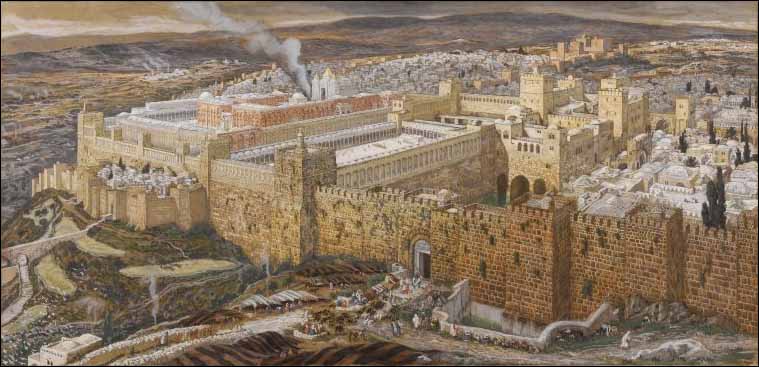


4
Nehemiah hears devastating news.
Jerusalem’s:
Walls were essential in ancient cities.
Without them a city had:
Cross reference:
Psalm 137
“If I forget you, Jerusalem, may my right hand forget its skill.”
The exiles still longed for their homeland.
Nehemiah does four things:
True leadership begins with burdened hearts.
Cross reference:
Lamentations
Jeremiah also wept over Jerusalem.
Nehemiah prays one of the greatest prayers in Scripture.
Structure of the prayer:
| Section | Verses |
|---|---|
| Praise | 5 |
| Confession | 6–7 |
| Covenant reminder | 8–9 |
| Petition | 10–11 |
God described as:
Cross reference:
Deuteronomy 7:9
“Know therefore that the Lord your God is God; he is the faithful God…”
Nehemiah includes himself.
Notice the phrase:
“I and my father’s house have sinned.”
Biblical leaders identify with the sins of their people.
Cross references:
Daniel 9:4–19
Ezra 9:5–15
Both contain national confessions.
Nehemiah reminds God of His promise.
Reference:
Leviticus 26:33-45
God promised:
Nehemiah asks for favor with the king.
His position:
Cupbearer
Responsibilities included:
This role provided direct access to power.
Cross reference:
Proverbs 21:1
“The king’s heart is in the hand of the Lord.”


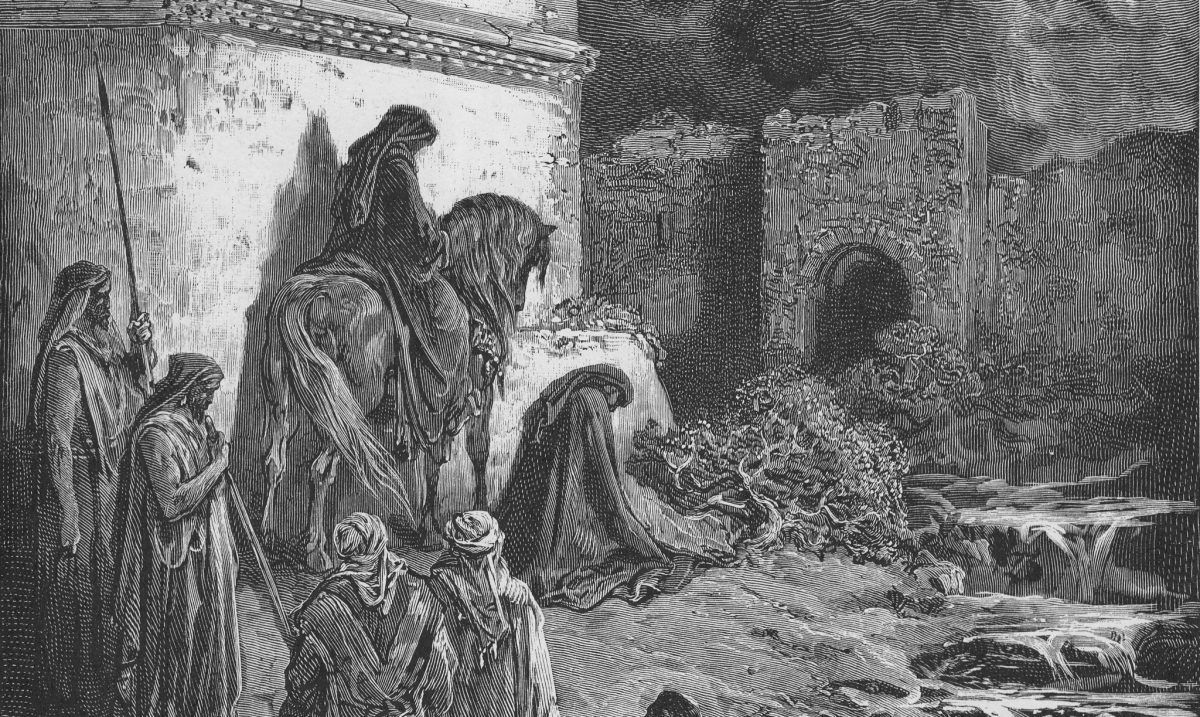
4
Four months pass between chapters 1 and 2.
Nehemiah appears sad before the king.
This was dangerous.
Persian kings expected servants to appear joyful.
The king asks:
“Why is your face sad?”
Before answering, Nehemiah prays.
This is a silent prayer in crisis.
Lesson:
Leaders live in continuous dependence on God.
Cross reference:
1 Thessalonians 5:17
“Pray without ceasing.”
Nehemiah asks for:
The king grants everything.
Verse 8 explains why:
“Because the gracious hand of my God was on me.”
This phrase appears repeatedly in Ezra-Nehemiah.
Enemies appear immediately:
Sanballat
Tobiah
They represent surrounding political forces threatened by Jewish restoration.
This theme continues throughout the book.
Cross reference:
Ephesians 6:12
God’s work always faces opposition.
Nehemiah inspects the wall at night.
Leadership lesson:
Vision requires:
He gathers information before announcing the plan.
Nehemiah challenges the people.
“Come, let us rebuild the wall.”
Notice leadership language:
“Let us.”
Not:
“Go rebuild.”
Opponents ridicule the project.
Common attacks:
But Nehemiah responds:
“The God of heaven will give us success.”



Chapter 3 lists builders.
At first glance it seems like a genealogy.
But it reveals something profound.
God’s work is accomplished through community.
Jerusalem’s wall included many gates.
Important gates include:
| Gate | Meaning |
|---|---|
| Sheep Gate | Sacrificial animals |
| Fish Gate | Trade |
| Old Gate | Historical entrance |
| Valley Gate | Southern valley |
| Dung Gate | Waste disposal |
| Fountain Gate | Water access |
| Water Gate | Public reading of law |
| Horse Gate | Military entrance |
| East Gate | Temple approach |
        North
      [Sheep Gate]
          |
[Fish Gate]---[Old Gate]
          |
West ---- City ---- East
          |
[Valley Gate]
          |
[Dung Gate]
          |
[Fountain Gate]
Spiritual leaders helped rebuild.
Cross reference:
1 Peter 5:2
Shepherds must lead by example.
Many worked near their homes.
Example:
Nehemiah 3:23
People rebuild near their houses.
Application:
God often calls us to serve where we live.
The nobles of Tekoa refused to work.
This reminds us:
Not everyone joins God’s mission.
Cross reference:
Matthew 7:13
Some reject God’s path.
Builders included:
God uses all vocations.
Cross reference:
1 Corinthians 12
The body has many parts.
Before rebuilding begins:
Nehemiah prays.
Lesson:
Spiritual success begins with dependence on God.
Cross reference:
James 5:16
Nehemiah cared deeply about God’s people.
Biblical leadership begins with compassion.
Example:
Jesus Christ
Matthew 9:36
He had compassion on the crowds.
Nehemiah had influence with the king.
God positioned him strategically.
Cross reference:
Esther
Esther also used her position for God’s people.
Chapter 3 shows cooperation.
Everyone participates.
Cross reference:
Ecclesiastes 4:12
A cord of three strands is not quickly broken.
Nehemiah foreshadows Christ in several ways.
| Nehemiah | Christ |
|---|---|
| Burden for Jerusalem | Jesus wept over Jerusalem |
| Intercedes for people | Christ intercedes for believers |
| Leads restoration | Christ restores humanity |
Cross reference:
Luke 19:41
Jesus wept over Jerusalem.
Major decisions should begin with prayer.
Ask:
What burden has God placed on your heart?
God rarely works through individuals alone.
Every spiritual movement faces resistance.
Nehemiah 2:20
“The God of heaven will give us success. We his servants will start rebuilding.”
God restores broken communities through prayerful leaders and unified people who trust His sovereign hand.
“Rebuilding the Walls”
God places a burden on His servant.
Spiritual restoration begins with repentance.
God opens doors for faithful servants.
Leadership inspires courage.
God’s mission requires everyone.
BSF Lesson 23 Expanded Lecture Notes:
Lesson 23 Notes
Nehemiah 1–3
Overview of Nehemiah
Timing
Following starts and stops in Israel’s rebuilding of Jerusalem, God appointed and anointed Nehemiah to lead His people. God raised up Nehemiah to plan and complete the rebuilding of the city’s protective wall and lead the people in covenantal devotion to God. Regular worship at Jerusalem’s temple depended upon the security of the city. Nehemiah entered Jerusalem as part of the third and final wave of former exiles in 444 BC. The initial returning remnant had been back in Judea for more than 90 years, two decades longer than their Babylonian exile.
Focus Verse
“Then I said to them, ‘You see the trouble we are in: Jerusalem lies in ruins, and its gates have been burned with fire. Come, let us rebuild the wall of Jerusalem, and we will no longer be in disgrace.’” (Nehemiah 2:17)
Outline
Engage
This world’s permeating darkness and perpetual brokenness leave us in an unending pursuit of damage control. An illicit thought, a martyr’s death, a broken relationship, an unconscionable war, a natural disaster, a seemingly unbreakable addiction, or the devastating consequences of an unwise choice can open the gates of mourning, remorse, and despair. We might ask, “What’s the purpose in all of this? How can I survive in this messed-up world?”
For a person of faith, hope is never lost. How do you respond when challenges flatten you? What sends you to your knees before God in raw desperation? How does your heart break when you see others suffer or malign God? Darkness may seem to leave us paralyzed in hopelessness but also provides an opportunity to turn to the Light. God rebuilds and transforms His people, unifying them in prayerful obedience. Trusting God leads to bold requests and courageous actions grounded in His sufficiency and power.
Bible Study Fellowship | 279
Zerubbabel and Joshua the high priest led the first 50,000 exiles to Judah in 538 BC.1 They worked on rebuilding the temple until they were stalled by opposition for 16 years. The prophets Haggai and Zechariah preached and encouraged the people, who set their hands to work again. They finished the temple in 515 BC.
After these events, Ezra the priest arrived in Jerusalem with a second group in 458 BC.2 The people had not returned to idolatry, but the priests, rulers, and common people who settled in Jerusalem had intermarried with the surrounding Gentiles.
Circumstances in Jerusalem remained very discouraging in 445 BC, where this lesson begins. Although the temple had been rebuilt and worship reinstituted, Jerusalem’s wall, gates, and city remained in ruins. Neighboring nations constantly harassed and oppressed the disheartened remnant living in and around Jerusalem. Wealthier Jews shackled the poor into debt and slavery.3 Commerce encroached upon Sabbath observance and other God-given obligations of God’s people.4 Ezra the priest rallied the people to reestablish God-glorifying civil, social, and religious lives. God also called Nehemiah to specific tasks.
The book bearing Nehemiah’s name tells the story of his call and service to both God and his own generation. The events within this book’s pages cover approximately 13 years of Nehemiah’s leadership, from 444–432 BC, before he returned to Persia as promised. Nehemiah likely made several journeys between Persian capitals and Jerusalem during his governorship and beyond.
Purpose and Themes
With Nehemiah as the central figure, this book alternates between first- and third-person accounts. Theologians debate whether Nehemiah wrote as the book’s sole author or coauthored it with Ezra. In fact, the Hebrew Bible considers Ezra and Nehemiah as one book. Today the book of Nehemiah is considered a sequel to Ezra. Key themes of Nehemiah include the power of prayer; the nature of leadership; God’s purpose, provision, and protection of His people; God’s mercy and faithfulness to His people; and the necessity of worship in a believer’s life of faith.
Who Is Nehemiah?
His role: Nehemiah, whose name means “Yahweh has comforted,” served as cupbearer to Persian king Artaxerxes. Appointed governor of Judah, Nehemiah was tasked to lead God’s people to rebuild Jerusalem and the city’s wall.
His message: God leads His people to trust Him as they accomplish His will and withstand the enemy’s persecution and schemes.
Image to remember: City wall
280 | Lesson 23
Nehemiah’s Prayer – Nehemiah 1
News from Home – 1:1-4
The book opens in late 445 BC with Nehemiah living in Susa, located southwest of present-day Iran, about 150 miles (about 240 km) north of the Persian Gulf. King Artaxerxes, the world’s most powerful king at that time, made his royal winter home there.
Nehemiah, a Jew born in exile, had earned the Persian king’s significant trust and served as his cupbearer.5 This most honorable and sought-after role involved tasting all of this king’s wine before he drank, protecting him from treasonous poisoning. Always in the company of the king, the carefully selected cupbearer held a position of intimacy and influence.
It is unknown whether Nehemiah’s brother Hanani and his comrades had returned to Jerusalem with the earlier waves of exiles or resided in Persia. Either way, they brought troubling news to the king’s cupbearer. The “Jewish remnant”—faithful, covenant-keeping Jewish believers—had become disgraced, discouraged, and demoralized. The city’s wall and gates remained dilapidated and destroyed following Nebuchadnezzar’s devastating attack 140 years earlier.6 Perhaps earlier reconstruction attempts had never begun or had been thwarted by a previous king’s decree.7 The broken-down wall and burned gates left inhabitants vulnerable to attack and plunder by surrounding hostile neighbors. Only the newly restored temple stood amid the ruins of God’s chosen city.
Nehemiah’s high position in the Persian court did not diminish his identification with his fellow people of faith. His comfortable circumstances only amplified his misery as he remembered Israel and Jerusalem as God’s gifts to His people. In deep mourning, Nehemiah began to pray day and night.
Appeal to God – 1:5-11
God’s people must always be people of prayer, but bad news heightens urgency. The state of Nehemiah’s true homeland and people weighed heavily on his heart. After several days, he found words to articulate his heart’s cry to the Lord. His prayer fell into a four-fold pattern of connection, confession, claim, and call.
Connection (1:5-6a)
Prayer brings connection with a personal God. Nehemiah recognized God as the all-powerful God of heaven and also as a living being who actually listens, as a man might bend down to hear his little child’s request. Our covenant-keeping God is a Father who loves steadfastly and desires His people’s love in return. God’s people express their love through obedience to Him.
Confession (1:6b-7)
In inclusive humility, Nehemiah recognized that as sinners, neither he nor his people deserved God’s grace or help. Instead of complaint, self-pity, or blame, Nehemiah acknowledged the basic underlying cause of this trouble. The rebellious people had ignored God and His law and remained outside the sphere of His blessing. God’s “commands, decrees and laws” rise as the centerpiece of this prayer and are prominent throughout the books of Ezra and Nehemiah.8
Claim (1:8-9)
Remembering God’s promises and humbly pleading for God’s grace, Nehemiah stretched to lay hold of those promises. Nehemiah recalled Moses, who had called on God and remembered His promises after God rightfully judged His people’s sin.9 In faithful and full agreement with his sovereign Lord, Nehemiah acknowledged God’s decree to scatter His disobedient people10 and bless their obedience.11 Nehemiah leveraged that promise. Exile had scattered God’s disobedient people, but repentance would bring promised restoration.12 Nehemiah’s reference to the “farthest horizon” casts vision beyond the return of God’s people to Jerusalem. Nehemiah reminds us that God’s people will one day gather with everlasting joy in the new Jerusalem.13
Call (1:10-11)
Nehemiah’s prayer incorporated a specific call to the Lord, not a vague request. Nehemiah asked God to give him favor with King Artaxerxes so something might be done for God’s people. He remembered God’s redeeming power and strength. As a secular king’s cupbearer but also Holy God’s faithful servant, Nehemiah asked the Lord to bless those who honored His great name.
The heart behind Nehemiah’s humble appeal echoes throughout Scripture. Faithful leaders share his concern for God’s people.14 Most importantly, Nehemiah’s selfless intercession foreshadowed Jesus Christ’s intercession for His people before God the Father.15
Bible Study Fellowship | 281
Nehemiah’s Mission – Nehemiah 2–3
Appeal to the King – 2:1-10
Distress (2:1-3)
Four months after hearing about Jerusalem’s sorry state, Nehemiah could no longer hide his disquieted spirit from the king. Perhaps his role as cupbearer required him to be positive and encouraging. When the king noticed and inquired about his servant’s dour countenance, fear gripped Nehemiah. He may have worried his request would seem disloyal or even put his life at risk. After all, Artaxerxes had once been lured into halting work in Jerusalem.16 Rather than cower or invent an excuse, Nehemiah laid out his respectful yet bold request. While maintaining his loyalty, Nehemiah honestly and transparently revealed the source of his grief: his ancestral home remained in ruins.
Request (2:4-5)
The king asked what his servant desired, indicating a high level of trust and respect for Nehemiah. Nehemiah demonstrated trust and respect for his Lord. He lifted a silent, urgent prayer for God’s guidance. Like Isaiah responding to the temple vision more than 300 years earlier,17 the honorable Nehemiah requested to be sent to Judah to help rebuild the holy capital.
Documentation (2:6-9)
The queen’s presence suggests the matter may have included her influence and approval. The king endorsed Nehemiah’s request, asking only when he might return to his duties in Persia. Like Daniel decades before, it is likely the faithful Nehemiah provided invaluable service and profound, godly witness to a secular king.
Years of serving the king prepared Nehemiah. He understood the necessary documentation and supplies needed to navigate toward Judah. Probably aware of previously ill-gotten decrees that had halted work,18 Nehemiah sought official letters to confirm passage and materials for his rebuilding efforts. Artaxerxes had earlier shown Ezra generosity regarding the temple’s reconstruction.19 Now he not only granted Nehemiah’s request but provided an armed escort for the journey. God clearly displayed His sovereignty over all His creation, as He had earlier through the generosity of Cyrus20 and Darius.21 God wove Artaxerxes’s imperial authority into His divine plan.
Hostility (2:10)
God’s blessing almost always encounters opposition. Sanballat likely came from the Beth Horon region near Jerusalem22 and later became governor of Samaria. He and his ally, Tobiah of the Ammonites, longtime enemies of Israel,23 could not stand for a potential rival power to rise in the region. These two men emerged as prime antagonists of the Israelites’ efforts.
Appeal to the People – 2:11-20
Secret Inspection (2:11-16)
Until he arrived in Jerusalem in early 444 BC, Nehemiah relied on trusted third-person accounts of Jerusalem’s condition. Now he wisely sought to survey the damage firsthand to discern what would be required to rehabilitate the city’s wall.
Called to Hard Things
The Doctrine of the Cross for a Believer
Like the heroes of faith before him—Ezekiel, Daniel, Ezra, Esther, Haggai, and Zechariah—Nehemiah discovered firsthand that a life of faith is not easy. Nehemiah’s burden included leading the rehabilitation of Jerusalem’s wall and gates and stoking the faith of God’s people. Jesus later articulated His own burden of full obedience on His way to His death. “Whoever wants to be my disciple,” He declared, “must deny themselves and take up their cross daily and follow me.”1
God calls every believer in every age to surrender their personal plans and seek His perfect will. Before, during, and after Jesus’s days on earth, faithful men and women displayed personal sacrifice, unwavering devotion, and humble service to the sovereign, eternal God. God calls His people to seek His will and follow His lead, even when doing so involves difficulties or challenges. This is how believers deny themselves and take up Jesus’s cross.
The refusal to take up one’s cross reveals faulty faith, if not unbelief. Making comfort our primary pursuit may seem appealing. However, rejecting sacrifice means living for one’s personal kingdom rather than God’s eternal one. Putting ourselves first exhibits the sin of idolatry. A life dominated by self-interest stands on shifting sand rather than the unwavering rock of faith that Jesus offers.
To carry the cross of faith is to embrace holy, eternal vision. A true believer who lives a humble, sacrificial, God-first life possesses enduring joy, even amid life’s struggles. Persecution comes with belief and indicates that the believer is progressing along God’s righteous path. Hardship and suffering are never easy. However, any loss on earth for Christ’s sake is worth the eternal gain.
Bible Study Fellowship | 283
Likely traveling by donkey, Nehemiah primarily surveyed the southern and eastern portions of the wall designed to protect the City of David, the oldest portion of Jerusalem. Nehemiah’s three nights of surveillance revealed the Fountain Gate area too heavily damaged to pass through. This may have been the location of the Pool of Siloam,24 where Jesus would give sight to a blind man. Nehemiah did not allow the rubble to become a stumbling block to his God-ordained mission.
Appeal and Reply (2:17-18)
Like an athletic coach imploring a team facing a formidable opponent, Nehemiah laid four truths before Jerusalem’s community leaders, officials, priests, and nobles.
As if stepping onto an athletic field with unquenchable confidence, the people replied, “Let us start rebuilding.” And they began to work. The people responded to Nehemiah’s bold leadership with courageous confidence, embracing a new season.
Similarly, Jesus Christ builds His Church by redeeming people ruined by sin. The gift of faith in Jesus Christ lifts us from darkness and shame, bringing His people together as the body of Christ.25 We come to Jesus broken, and He rebuilds our lives in Him, through Him, and for Him.
Facing the Enemy (2:19-20)
God’s enemies see only what the world sees. Blind to God and His ways, Sanballat, Tobiah, and another foe, Gesham the Arab, mocked the Israelites and accused them of rebellion against the king. Though he had proactively attained royal approval, Nehemiah pointed to his divine authority, not the royal edict. “The God of heaven will give us success,” Nehemiah declared. The gates of hell cannot overcome the Church;26 neither can God’s enemies defeat His sovereign purposes on earth.
Delegating the Work – 3
Nehemiah designed, delegated, and distributed the people’s work. They responded to their leader’s charge in unity, believing God would bless them with success. Systematically focused on the wall’s gates where enemies would most likely attack, Nehemiah’s plan moved counter-clockwise. He began and ended at the Sheep Gate on the north side of the city.27 Incredibly, and against significant opposition, Nehemiah completed the wall-building project within 52 days.
Sheep Gate (3:1-2)
Fittingly, the high priest set the example for the people, providing both physical and spiritual rehabilitation. Eliashib and his priests assumed responsibility for the Sheep Gate, near the temple and the Pool of Bethesda.28 It is likely the sheep destined for sacrifice entered the city through this gate. The priests worked on the wall toward the Tower of the Hundred and the Tower of Hananel. The Tower of the Hundred may have been headquarters for a centurion with 100 men. The tower’s height of 100 cubits or 100 steps could also have contributed to its name. The Tower of Hananel, which stood in the northernmost part of the city, probably was “the citadel by the temple” mentioned in Nehemiah 2:8.
Fish Gate (3:3-5)
One of the main entrances in the days of the First Temple,29 the next gate may also have been known as the Ephraim Gate.30 In the northwest corner of the city, this gate was likely near the fish market. Some of the workers named in these verses also appear in Ezra 2 and Nehemiah 7, suggesting this project was one within a series. Perhaps resenting Nehemiah’s leadership or manual labor, Tekoa’s nobles refused to work. However, these men did not represent all associated with Tekoa, as some also worked near the Water Gate (3:27).
Jeshanah Gate (3:6-12)
The next section, on the west side, highlights the diverse workers, gifts, and talents within the city, including goldsmiths, perfume-makers, and administrators. The work also reveals the project’s personal stake as workers such as Jedaiah “made repairs opposite his house.” This reclamation became a family affair, shown by Shallum, who received help from his daughters.
Valley and Dung Gates (3:13-14)
The wall reconstruction assignments continued southward to the Valley Gate on the southwestern side. Next came the Dung Gate, the opening toward the city dump at the southern tip of the wall complex.
Fountain Gate (3:15-16)
The assignments continued to the east wall, which suffered the most severe damage. This explains why so many worked between the Fountain Gate and Water Gate, which opened to the Gihon Spring—the primary water source outside the city wall. This wall protected the City of David, the part of the city originally occupied by King David up to the Temple Mount. The House of the Heroes might have been the armory where David housed his mighty warriors.31
Levites and Priests (3:17-27)
Nehemiah’s rehabilitation project not only attended to physical repair but also spiritual reformation. Shoulder-to-shoulder, Jerusalem’s spiritual leaders did their part to provide a hedge of protection for the people God had entrusted to their care. The upper palace was Solomon’s palace, higher up the hill from David’s original palace. The hill of Ophel was the beginning of the hill that led to the temple, the primary concern of the first returnees.
Above the Horse Gate (3:28-32)
As the work assignments closed the loop back to the Sheep Gate, we are reminded of the proximity of the workers’ living quarters and their primary vocations. God called His people outside of their comfort zones—their homes and their crafts—to become unified in a common and holy cause. Believers are strengthened when they minister side by side.
All the names listed in this chapter, in God’s perfect Word, for posterity and eternity, were woven into the fabric of the community of the rebuilt Jerusalem. These lists also prefigure how all God’s people are woven into the fabric of the new Jerusalem to come as kingdom ambassadors.
The Jewish remnant faced not only external opposition but also internal hurdles in completing their work. The people who had lived under the yoke of exile for 70 years were still not fully liberated in their homeland as they faced humiliation, frustration, and persecution from neighboring peoples. Even rebuilding required approval from a Persian power. God’s people desperately needed His hope, blessing, and strength to rebuild the city devoted to Him. Led by Nehemiah and blessed by God, this community of believers saw beyond their struggle as God continued to refine their faith. God rebuilds and transforms His people, unifying them in prayerful obedience.
Bible Study Fellowship | 285
Take to Heart
Hold Fast
Nehemiah remained faithful to God while humbly serving a secular king. News from Jerusalem revealed his primary and ultimate devotion to the eternal King and His people. Word of the decrepit state of his beloved and defenseless city sent Nehemiah into mourning. Unable to restrain his emotions any longer, Nehemiah appealed to his Persian king, who granted permission, provision, and passage to rehabilitate a nation and a people.
Facing persistent opposition only emboldened Nehemiah’s resolve as he inspected the extensive damage. He mapped and delegated the workload, recruiting a diverse yet unified workforce to rebuild Jerusalem’s wall. Every stone presented a burden and also an opportunity for countless countrymen and women to rebuild a new life in faith.
Apply It
Though born in exile, Nehemiah’s heart belonged to Jerusalem, reflecting his faith and devotion to the one true God. Distance and favorable circumstances could not shield him from the devastating news of Jerusalem’s vulnerable and debilitating condition. Faith and trust in God led Nehemiah to deep mourning, committed prayer, and bold action. How does the physical and spiritual state of the world impact you? We must not allow our own comfort to blind us to the needs around us. How do you respond to brokenness that abounds at global, national, local, neighborhood, and personal levels? God deliberately positions His people where they can represent Him. Consider where God has placed you. What burden has God placed on your heart? How will you follow His lead and take action?
Often we find God’s answer to our prayers or the painfully obvious choice in front us troubling. God’s calls on our lives often begin with a burden we cannot shake. Nehemiah recognized the problem but knew opposition awaited him. He drew on God’s strength, a king’s permission, and a community of faith to courageously forge forward and tackle a daunting task. Regardless of our circumstances, we experience God’s overcoming power when we trust Him, obey His will, and abide in Him.32 How has God opened your eyes and moved within you to recognize a specific need or issue? What fears do you need to surrender to God to boldly go forward in His power? What difficult conversations should you bravely initiate? From what sins do you need to repent as you step out for God? Whom is God calling you to forgive? People who work for God learn to trust Him for what seems impossible. God charts a course for His children that challenges their faith and proves His faithfulness.
God longs to redeem us from our old way of life and open our eyes to His plans for us. While we often desire to know and understand the full details of God’s plans for our lives, obeying Him usually means trusting Him for the next right step forward. What intentional next step will you take to follow God’s lead? How has God positioned you to meet a need you perceive? When we abide in Christ, life will be constantly challenging but eternally rewarding. Following God is worth whatever the cost. God gives immeasurable joy, even in dark times.
Expanded Expositional Biblical Commentary on Lesson 23 Notes
Nehemiah 1–3
With Original Hebrew and Greek Insights
Introduction to Nehemiah 1–3
The opening chapters of Nehemiah bring us to one of Scripture’s clearest portraits of godly burden, covenant prayer, courageous leadership, and communal rebuilding. The text is not merely about ancient stones, broken gates, and Persian decrees. It is about the covenant God who restores what sin, judgment, and ruin have broken. Jerusalem’s walls were shattered, but more than masonry had fallen. The people’s confidence, dignity, security, and visible testimony among the nations had also been reduced to rubble.
Nehemiah enters this scene not first as a builder, but as a mourner; not first as a governor, but as an intercessor; not first as an organizer, but as a servant of the living God. That order matters. In biblical theology, true rebuilding begins in prayer before it appears in policy, and in repentance before it appears in public achievement.
Theologically, Nehemiah 1–3 sits at the intersection of several great themes:
The notes you provided rightly emphasize that God rebuilds and transforms His people, unifying them in prayerful obedience. That theme is the spine of these chapters.
Overview of Nehemiah
Timing and Historical Setting
The events unfold after the return from exile had already begun. The first return under Zerubbabel and Joshua focused on rebuilding the temple. The second return under Ezra emphasized spiritual and covenant reform. Now the third phase under Nehemiah addresses Jerusalem’s walls and civic stability.
This is significant because in biblical thought, the temple and the city belong together. Worship required a protected covenant community. Jerusalem was not merely a population center; it was the earthly center of redemptive memory, covenant identity, and future hope.
The Hebrew word often associated with Jerusalem’s condition is tied to ruin, desolation, or waste places. In Nehemiah 2:17, the city is described as lying in “ruins.” The Hebrew term is חָרֵב / חָרְבָּה (charev / chorbah), conveying devastation, waste, desolation. This is not cosmetic damage. It is covenant shame made visible.
The people had returned geographically, but restoration was still incomplete socially, spiritually, economically, and politically. That tension matters. One may be back in the land and yet still feel the long shadow of exile.
Focus Verse: Nehemiah 2:17
“Then I said to them, ‘You see the trouble we are in: Jerusalem lies in ruins, and its gates have been burned with fire. Come, let us rebuild the wall of Jerusalem, and we will no longer be in disgrace.’”
This verse is the mission statement of the chapter.
Key Hebrew Terms
1. “Trouble”
The Hebrew is רָעָה (ra’ah), which can mean evil, trouble, distress, calamity. Context determines nuance. Here it points to distress and affliction, not merely inconvenience.
2. “Ruins”
Again, the image is devastation, desolation, wreckage. Jerusalem’s outward state mirrors inward discouragement.
3. “Rebuild”
The Hebrew verb is בָּנָה (banah), “to build, rebuild, establish.” This is a loaded biblical verb. God builds houses, cities, peoples, dynasties, and futures. The opposite is tearing down in judgment.
4. “Disgrace”
The Hebrew noun is חֶרְפָּה (cherpah), meaning reproach, shame, disgrace, scorn. This is theological shame. Jerusalem’s condition reflected not only military defeat but public humiliation among the nations.
This is why Nehemiah is so grieved. The matter is not merely civic embarrassment. It concerns the honor of the God whose name is tied to Jerusalem.
Engage: Brokenness and the Human Condition
Your notes frame this well: the world’s darkness leaves humanity in constant damage control. That is deeply biblical. The broken walls of Jerusalem become a living metaphor for the broken condition of human life under sin.
In Scripture, a city without walls is exposed, unsafe, and vulnerable. Likewise, the fallen soul is spiritually breached. Sin has shattered humanity’s original wholeness. What Nehemiah sees in Jerusalem is, in one sense, what God sees in fallen man: ruin that cannot heal itself.
Yet biblical hope begins precisely there. God is not frightened by rubble.
A useful Hebrew backdrop is שָׁלוֹם (shalom). This word means more than peace in the modern sense. It implies wholeness, completeness, soundness, flourishing, harmony under God. Jerusalem had lost visible shalom. Nehemiah longs for God to restore it.
Purpose and Themes of Nehemiah
The notes identify major themes accurately. We can deepen them.
1. The Power of Prayer
Prayer in Nehemiah is not ornamental; it is infrastructural. The wall is built with stone, but the mission is carried by prayer.
2. The Nature of Leadership
Nehemiah models leadership that is:
3. God’s Purpose, Provision, and Protection
God’s sovereignty is displayed through timing, favor, royal decrees, material provision, and preserved perseverance.
4. Mercy and Faithfulness
Nehemiah’s prayer depends on the fact that God has not abandoned His covenant.
5. Worship and Covenant Life
The wall is not an end in itself. It serves the life of a holy people devoted to God.
Who Is Nehemiah?
The name נְחֶמְיָה (Nechemyah) likely means “Yahweh has comforted” or “Yahweh comforts.” This is fitting. The man whose name speaks comfort becomes God’s instrument of restoration for a broken people.
His Role as Cupbearer
The cupbearer was not merely a servant with a tray. He was a trusted royal officer with access, credibility, and influence. God had placed Nehemiah exactly where he needed to be long before Nehemiah understood why.
This is a recurring biblical pattern. Providence often looks ordinary until the moment of calling arrives.
Nehemiah 1:1–4
News from Home
The narrative begins in Susa, the Persian winter capital. Nehemiah is geographically distant from Jerusalem, yet spiritually bound to it. That contrast is central. He lives in imperial comfort while the covenant city lies in disgrace.
When Hanani reports the condition of the remnant and the city, Nehemiah hears not just bad news but covenant grief.
The Remnant
The idea of the remnant is deeply theological in Scripture. The Hebrew concept behind remnant language is often שְׁאֵרִית (she’erit), meaning what remains, the surviving portion. The remnant is not just the leftover population. It is the preserved people of God, maintained by mercy.
“The wall of Jerusalem is broken down”
The condition of the wall is both literal and symbolic. A broken wall means:
In the ancient world, walls represented order, identity, and protection. Without them, a city was exposed to contempt.
Nehemiah’s Response: Mourning, Weeping, Fasting, Praying
This is critical. He does not begin with outrage alone. He begins with grief before God.
The sequence is instructive:
This is godly burden. He does not rush to fix what he has not first lamented.
A helpful Hebrew concept here is אָבַל (aval), to mourn. Biblical mourning is not weakness; it is spiritual realism. It is the soul’s refusal to make peace with what dishonors God.
Nehemiah 1:5–11
Nehemiah’s Prayer
This is one of the great prayers of Scripture. The structure in your notes is excellent: connection, confession, claim, and call.
1. Connection (1:5–6a)
“O LORD, God of heaven, the great and awesome God, who keeps covenant and steadfast love…”
“LORD”
The divine name is יהוה (YHWH), usually rendered LORD. Nehemiah is not praying to a vague deity but to the covenant God of Israel.
“God of heaven”
This title emphasizes divine sovereignty. In Persian imperial context, it also functions apologetically. The God of Israel is no local tribal deity. He is Lord above emperors.
“Keeps covenant and steadfast love”
The phrase “steadfast love” translates חֶסֶד (chesed), one of the richest words in the Hebrew Bible. It carries the ideas of covenant loyalty, steadfast mercy, faithful love, gracious commitment.
Nehemiah’s confidence rests not in Israel’s consistency but in God’s chesed.
“Let your ear be attentive”
This is anthropomorphic language. God is spirit, but Scripture speaks of His ear, eyes, and hand to communicate His active relational engagement.
Prayer begins with knowing who God is. Nehemiah’s theology fuels his intercession.
2. Confession (1:6b–7)
Nehemiah includes himself in Israel’s guilt:
“I and my father’s house have sinned.”
This is covenant solidarity. He does not speak as though the sins of the people are somebody else’s problem. He prays as one who belongs to them.
Hebrew Insight: “We have acted very corruptly”
The language reflects covenant violation. Sin is not merely rule-breaking; it is relational treachery against the God who redeemed them.
The terms “commands,” “statutes,” and “rules” reflect the richness of Torah language:
This is not random moralism. Israel’s distress is tied to covenant disobedience.
Confession is the turning point of true restoration. No genuine rebuilding occurs where sin is minimized.
3. Claim (1:8–9)
Nehemiah “reminds” God of the word spoken through Moses. This is not because God forgets. It is covenant pleading. Faith lays hold of what God Himself has promised.
This is one of the boldest acts of prayer: not inventing hope, but standing on revealed promise.
The Theology of Exile and Restoration
Nehemiah recognizes both halves:
This is profoundly important. He does not ask for restoration while bypassing God’s holiness. He pleads for mercy through the very covenant framework that explained the judgment.
“If you return to me”
The idea of return is central in Hebrew theology. The verb often used is שׁוּב (shuv), “to return, turn back, repent.” Repentance is not just feeling sorry; it is reorientation toward God.
“I will gather them”
Gathering language anticipates more than post-exilic resettlement. It ultimately points forward to the consummate gathering of God’s people.
Here the Septuagint can help. The Greek verb often used for gather is συνάγω (synagō), to gather together. This term later resonates with New Testament images of God gathering His people in Christ.
4. Call (1:10–11)
Now the prayer becomes specific.
“Give success to your servant today and grant him mercy in the sight of this man.”
Nehemiah does not name Artaxerxes first as a great emperor. He calls him “this man.” That is not disrespect; it is perspective. Before the God of heaven, even the most powerful king is still merely a man.
“Success”
The Hebrew here can carry the idea of prospering, causing to succeed. True success in Scripture is not self-exaltation but God-granted fruitfulness in obedience.
“Mercy” / “Compassion”
The language involves favor, compassion, tenderness. Nehemiah knows that if the king’s heart softens, it will be because God moved it.
This fits Proverbs’ theology that the king’s heart is in the Lord’s hand.
Christological Reflection on Nehemiah’s Prayer
Your notes rightly say Nehemiah foreshadows Christ’s intercession.
That is a deeply sound observation.
Nehemiah:
Christ does this in infinitely greater measure.
In New Testament Greek, Christ is the one who always lives to intercede — ἐντυγχάνειν (entynchanein), to intercede, appeal, petition. Nehemiah’s prayer is a shadow; Christ’s priestly ministry is the substance.
Nehemiah 2:1–3
Distress Before the King
Four months pass. That delay matters. Nehemiah is not impulsive. He has prayed long before he speaks.
When the king notices his sadness, Nehemiah is “very much afraid.” This is realistic. Ancient kings were not safe conversational partners. Royal courts were dangerous places.
Yet the fear of man does not silence the mission of God.
“Why should my face not be sad?”
This is holy honesty. Nehemiah neither manipulates nor conceals. He respectfully tells the truth.
His grief centers on:
Burial places mattered profoundly in the ancient world. This is not mere nostalgia. It is identity, covenant memory, and sacred inheritance.
Nehemiah 2:4–5
The Silent Prayer and Bold Request
Before he answers, Nehemiah prays. This is one of the most beautiful moments in the chapter. It is a quick prayer, likely silent, perhaps no more than a breath of dependence.
This teaches that prayer is not confined to long devotions alone. The soul trained in prayer can cry to God in a moment.
Then comes the request:
“Send me to Judah… that I may rebuild it.”
“Send me”
This echoes the prophetic pattern. Your notes link Isaiah 6:8, and that is apt.
The Hebrew verb שָׁלַח (shalach) means to send, dispatch, commission. In Scripture, being sent is never merely geographical. It is vocational and theological.
Nehemiah is not chasing ambition. He is answering burden under providence.
Nehemiah 2:6–9
Documentation, Provision, and Providence
Nehemiah asks for:
This is godly planning, not unbelief. Faith does not oppose preparation.
The repeated biblical pattern is clear: those who trust God also count the cost, seek wisdom, and prepare carefully.
“The good hand of my God was upon me”
This is one of the great interpretive keys of Ezra-Nehemiah. The true cause behind royal favor is divine providence.
The Hebrew imagery of God’s hand often signifies power, guidance, and intervention. God’s hand is not passive. It governs events.
The pagan empire imagines itself in charge, yet the covenant God is directing the story.
Nehemiah 2:10
Hostility
As soon as God’s work advances, opposition rises.
Sanballat and Tobiah are “greatly displeased” that someone had come to seek the welfare of the people of Israel.
That phrase matters: to seek the welfare. The Hebrew behind welfare often resonates with טוֹב (tov), goodness, well-being, benefit.
The enemies of God’s people are troubled by the prospect of their good.
This remains true spiritually. There are always powers that prefer God’s people weak, divided, ashamed, and exposed.
Nehemiah 2:11–16
Secret Inspection
Nehemiah arrives, waits three days, then goes out by night. This is wise leadership.
He does not begin with public speeches. He first assesses the damage.
This models discernment:
The ruined areas around the Fountain Gate and the valley underscore just how bad the situation is. Yet Nehemiah continues.
This is spiritually significant. God’s servants must not be immobilized by the scale of ruin.
Nehemiah 2:17–18
Appeal to the People
This is the turning point from hidden burden to communal mission.
Nehemiah lays out:
This is masterful spiritual leadership. He names reality honestly but frames it inside God’s gracious action.
“Come, let us rebuild”
Leadership here is not “you go do it.” It is “let us.” Nehemiah leads from within the people, not above them as a detached manager.
“The hand of my God”
Again the source is divine. Nehemiah does not motivate the people by self-confidence but by God-confidence.
The response is immediate:
“Let us rise up and build.”
The Hebrew idea of rising up conveys resolve. Courage has awakened.
New Testament Connection: Christ Builds His Church
Your notes beautifully connect this with Christ building His Church.
In Greek, Jesus says:
“I will build my church” — οἰκοδομήσω (oikodomēsō), “I will build.”
This verb is the construction verb of edification, building up, establishing. Christ is the true and greater builder.
As Nehemiah rebuilt Jerusalem’s wall, Christ builds a redeemed people:
Nehemiah 2:19–20
Facing the Enemy
The mockery intensifies. Sanballat, Tobiah, and Geshem accuse the people of rebellion.
This is a common tactic of opposition:
Nehemiah does not collapse under slander.
His reply is glorious:
“The God of heaven will make us prosper, and we his servants will arise and build.”
Key Features of His Response
He does not:
He does:
“We his servants”
The identity of the workers is more important than the opinion of the mockers.
“Will make us prosper”
Again, success is assigned to God, not human adequacy.
Nehemiah 3
Delegating the Work
Nehemiah 3 is often skimmed because it is full of names, locations, and gates. But that is a mistake. This chapter is theological gold.
It reveals:
Names matter because people matter. God records laborers, not just leaders.
Sheep Gate (3:1–2)
The chapter begins with priests. This is fitting. Spiritual leaders engage the work first.
The Sheep Gate likely served sacrificial traffic near the temple. That makes this gate rich in symbolism.
Hebrew and Christological Significance
The sacrificial system points forward to the Lamb of God. The place where sheep entered the city becomes a fitting beginning for restoration.
The New Testament Greek word for lamb, ἀμνός (amnos), as in “Behold, the Lamb of God,” resonates typologically here. What Nehemiah’s city required physically, Christ fulfills sacrificially.
The priests also consecrate their section. The Hebrew verb קָדַשׁ (qadash) means to make holy, set apart. This indicates that building is not merely practical labor; it is sacred service.
Fish Gate (3:3–5)
Here other families and groups work. But notably, the nobles of Tekoa do not put their shoulders to the work.
This detail matters. Not all within the covenant community respond with equal humility.
The image of not putting one’s “shoulder” to the work evokes stubbornness and refusal. Scripture often uses neck and shoulder imagery for submission or resistance.
Yet the work continues. God’s mission is not canceled by the pride of a few.
Jeshanah Gate (3:6–12)
This section highlights the diversity of the workers:
This is a beautiful display of covenant cooperation. People serve not only according to profession but according to calling.
The repeated note that many repaired “opposite his house” reveals something powerful: restoration becomes personal when the breach is near your own dwelling.
That remains true spiritually. People labor most urgently where they feel the weight of the breach.
Valley Gate and Dung Gate (3:13–14)
These locations may sound unglamorous, but they matter.
The Valley Gate speaks of vulnerability and movement through lower ground.
The Dung Gate reminds us that restoration includes dealing with refuse, waste, impurity. A holy city must have ordered removal of corruption.
Spiritually, rebuilding requires not only constructing what is good but removing what defiles.
This has rich New Testament parallels in sanctification. God does not simply decorate old corruption. He cleanses it.
Fountain Gate (3:15–16)
This area near the water source is vital. Water in biblical theology consistently signifies life, cleansing, provision, and divine blessing.
The Gihon/Siloam area later resonates with messianic overtones through Jesus’ ministry.
Theologically, protecting the water source is protecting life itself.
There is a spiritual principle here: communities must guard their sources of life and worship. What sustains the people must be defended.
Levites and Priests (3:17–27)
The spiritual leaders help repair the wall. This is important because ministry is not detached from communal need.
The Levites do not say, “Our concern is only temple ritual.” They participate in the broader protection and restoration of the people.
This shows the falsehood of separating worship from embodied covenant life.
The people of God need:
All of it belongs together.
Above the Horse Gate (3:28–32)
As the list moves toward completion, the repetition itself becomes a theological statement. Section by section, name by name, labor by labor, God is weaving a people into unified action.
This chapter is one of Scripture’s clearest demonstrations that ordinary faithfulness is memorable before God.
Many of these names would be forgotten by history were it not for God’s Word. Yet God recorded them. That is deeply encouraging. Kingdom labor is never invisible to the Lord.
Theological Themes from Nehemiah 3
1. God Works Through Ordered Community
This is not chaotic enthusiasm. It is organized cooperation.
2. Every Person Has a Place
The chapter honors varied callings, capacities, and assignments.
3. Holiness and Practicality Belong Together
Priests consecrate gates; workers lift stones. Sacred and ordinary meet.
4. Unity Is Built Around Shared Mission
The people are not united by sentiment alone but by obedience.
5. God Remembers the Names of the Faithful
The chapter is a monument to covenant memory.
Called to Hard Things
The Doctrine of the Cross for the Believer
Your inserted doctrinal section is deeply fitting.
Jesus’ words in Luke 9:23 use powerful Greek:
This is the New Testament fulfillment of the pattern we see in Nehemiah:
Nehemiah is not carrying Christ’s atoning cross, of course. Only Christ does that. But he models the costly obedience that characterizes those who trust God.
Take to Heart
Hold Fast
Nehemiah remained faithful in a secular environment. That is profoundly relevant. He was not a priest in Jerusalem at the outset. He was a servant in Persia. Yet his heart remained tied to God’s kingdom.
This reminds believers that location does not nullify vocation. One may serve God faithfully in exile-like conditions.
The notes say that every stone was both burden and opportunity. That is beautifully put. The same is true spiritually:
Apply It
Spiritual and Practical Exhortation
The application section rightly presses the reader personally. The text is not asking only, “What happened in Jerusalem?” but also:
A helpful Hebrew concept here is אָמַן (aman), the root behind faithfulness, firmness, trustworthiness. Faith is not vague optimism. It is steady reliance on God that produces obedience.
Likewise, in the New Testament, faith is πίστις (pistis), trust, faith, fidelity. True faith is not abstraction. It leans, acts, obeys, endures.
Nehemiah teaches that when God places a burden on the heart, the answer is not passive despair but prayerful obedience.
Summary of Major Hebrew and Greek Terms
Hebrew
Greek
Final Expositional Conclusion
Nehemiah 1–3 teaches that God restores His people through burdened hearts, covenant prayer, courageous obedience, wise planning, shared labor, and persevering faith. The ruined walls of Jerusalem were not beyond recovery because the covenant God had not abandoned His purposes.
Nehemiah begins on his knees, rises with a commission, speaks with courage, plans with wisdom, and mobilizes a people to labor in unity. In that, he becomes both a model of faithful leadership and a shadow of the greater Restorer to come.
Ultimately, these chapters point beyond Jerusalem’s stones to Jesus Christ. He is the greater Nehemiah who leaves the place of glory, enters the place of ruin, identifies with His people, intercedes for them, and builds a redeemed community that no enemy can finally overthrow.
The message of Nehemiah 1–3 is therefore not merely:
“Rebuild the wall.”
It is:
Trust the covenant God who rebuilds ruined people for His glory.
BSF Lesson 23 Cross References:
Cross References for Nehemiah 1–3
Nehemiah 1 — Nehemiah’s Prayer for Jerusalem
Nehemiah 1:1
“The words of Nehemiah the son of Hacaliah…”
Cross References
Nehemiah 1:2
Hanani reports concerning Jerusalem
Cross References
Nehemiah 1:3
The wall broken down and gates burned
Cross References
Nehemiah 1:4
Nehemiah mourns, fasts, and prays
Cross References
Nehemiah 1:5
Prayer acknowledging God’s covenant
Cross References
Nehemiah 1:6
Confession of Israel’s sins
Cross References
Nehemiah 1:7
Israel acted corruptly
Cross References
Nehemiah 1:8
Remember the word given to Moses
Cross References
Nehemiah 1:9
Promise of restoration
Cross References
Nehemiah 1:10
God redeemed His people
Cross References
Nehemiah 1:11
Cupbearer to the king
Cross References
Nehemiah 2 — The King Sends Nehemiah
Nehemiah 2:1
Before King Artaxerxes
Cross References
Nehemiah 2:2
Fear before the king
Cross References
Nehemiah 2:3
Jerusalem the city of ancestors
Cross References
Nehemiah 2:4
Nehemiah prays before answering
Cross References
Nehemiah 2:5
Request to rebuild Jerusalem
Cross References
Nehemiah 2:6
Time granted by the king
Cross References
Nehemiah 2:7–8
Letters and timber granted
Cross References
Nehemiah 2:9–10
Opposition from enemies
Cross References
Nehemiah 2:11–16
Nehemiah inspects the walls
Cross References
Nehemiah 2:17–18
Call to rebuild
Cross References
Nehemiah 2:19–20
Mockery and opposition
Cross References
Nehemiah 3 — Rebuilding the Wall
Nehemiah 3 contains many specific names and gates, but the themes and structures connect to several other biblical passages.
Nehemiah 3:1
The Sheep Gate rebuilt by priests
Cross References
Nehemiah 3:3
The Fish Gate
Cross References
Nehemiah 3:6
Old Gate
Cross References
Nehemiah 3:13
Valley Gate
Cross References
Nehemiah 3:14
Dung Gate
Cross References
Nehemiah 3:15
Fountain Gate
Cross References
Nehemiah 3:26
Water Gate
Cross References
Nehemiah 3:28
Horse Gate
Cross References
Nehemiah 3:31
Miphkad Gate
Cross References
Major Thematic Cross References
1. Prayer for National Restoration
2. The Decree to Rebuild Jerusalem
3. Opposition to God’s Work
4. Rebuilding Jerusalem
5. Unity in Building God’s Work
Summary
Nehemiah 1–3 connects with several major biblical themes:
The chapters form the beginning of Israel’s post-exilic restoration, linking earlier prophecy (Moses, Jeremiah, Daniel) with the physical rebuilding of Jerusalem and the spiritual renewal that follows later in Nehemiah and Ezra.
BSF Lesson 23 Lecture Summary:
Bible Study: People of the Promise – Exile and Return
Lesson 23: Call to the Wall (Nehemiah 2:17)
Date: March 6, 2026
Table of Contents
1. Introduction and Opening Reflection
2. Main Topics Discussed
A. Overview of Nehemiah and Historical Setting
B. Nehemiah’s Prayer and Preparation (Nehemiah 1)
C. Nehemiah’s Mission, Leadership, and Community Mobilization (Nehemiah 2–3)
1. Appeal to the King (Nehemiah 2:1–10)
2. Facing Opposition (Nehemiah 2:10, 19–20)
3. Inspection and Mobilization (Nehemiah 2:11–18)
4. Organizing the Work (Nehemiah 3)
D. Spiritual Themes and the Doctrine of the Cross
E. Application and Challenging Reflections
3. Action Items
4. Follow-up
Lesson 23 Lecture Summary
BSF Study: People of the Promise — Exile and Return
Date: March 6th, 2026
Main Topics Discussed
1. The Mystery and Costliness of God’s Plans for Believers
2. The Example of Nehemiah: Costly Faith and Transformation (Nehemiah 1:1–2:9)
3. God Transforms His Remnant in Jerusalem (Nehemiah 2:10–3:32)
Key Lessons & Principles
Action Items
Follow-up Points & Future Meetings/Mentions
Main Topics Discussed
1. Reflection on Previous Lesson and Introduction to New Study
2. Nehemiah’s News and Initial Response (Nehemiah Chapter 1)
3. Nehemiah’s Request to the King and Initial Steps (Nehemiah 2:1–10)
4. Inspecting the Walls and Mobilizing the Community (Nehemiah 2:11–20)
5. Delegation and Unity in Rebuilding (Nehemiah Chapter 3)
6. Review and Leadership Takeaways (Nehemiah Chapters 1–3)
7. Group Application and Next Steps
Action Items & Follow-Ups
Notable Dates and Scriptural References
This study offers a comprehensive look at the themes of leadership, faithfulness, unity, and practical spirituality as modeled by Nehemiah and invites deep personal and communal application.
BSF Lesson 23 Questions:
Call to the Wall
Nehemiah 1–3
Lesson 23 Questions
First Day: Read the Lesson 22 Notes.
The notes and lecture fortify the truth of the passage for understanding and application to daily life.
1. How did the lecture help you anticipate and appreciate the coming kingdom of God?
The lecture helped me anticipate and appreciate the coming kingdom of God by lifting my eyes above the noise, disorder, and unfinished grief of this present world and fastening them upon the sure and sovereign finale God Himself has declared. Zechariah 12–14 does not leave the believer wandering in fog, as though history were an endless tangle of violence, rebellion, and sorrow without resolution. Rather, the lecture strengthened the heart by showing that all of history is moving toward the visible, righteous, triumphant reign of Jesus Christ. The kingdom of God is not a vague religious sentiment, nor merely an inward private comfort. It is the certain culmination of God’s redemptive purposes in Christ.
What especially deepened my appreciation was the way the notes emphasized that Zechariah’s prophecy gives one of the most explicit revelations of the end times in all of Scripture. That matters because it reminds us that God is not silent about the end of the story. He has spoken. He has declared that “The Lord will be king over the whole earth” (Zechariah 14:9). That promise carries immense weight. In a world where earthly kingdoms rise and fall, where rulers boast and nations rage, God announces that a day is coming when every counterfeit claim to ultimate authority will be silenced beneath the rightful rule of Christ.
The lecture also helped me appreciate the kingdom by showing its Christ-centered character. The coming kingdom is not merely about prophetic events, geopolitical upheaval, or the defeat of hostile nations. At its heart, it is about the person and work of Jesus Christ. The notes beautifully emphasize that Jesus came first to redeem sinners and will return to bring the world to God’s intended grand finale. Thus the kingdom is not detached from the cross. The One who will reign visibly as King is the same One who was pierced, rejected, and slain for sinners. That truth gives the kingdom a holy tenderness. The coming reign of Christ is not cold power; it is the victorious reign of the crucified and risen Messiah.
The notes also helped me appreciate the kingdom by highlighting the repeated phrase “on that day.” This refrain echoes throughout Zechariah 12–14 and signals the great day of the Lord. That phrase carries both solemnity and hope. It is solemn because it announces divine intervention in judgment. It is hopeful because it means evil will not reign forever. The lecture therefore taught me that the kingdom comes not as a human achievement, but as God’s decisive answer to sin, rebellion, and chaos.
This strengthened my anticipation because it clarified that history is not cyclical drift; it is divinely directed movement. God is bringing all things toward the day when Christ returns, the Mount of Olives is touched by His feet, Jerusalem is elevated, the nations are judged, the remnant is delivered, and holiness permeates every aspect of life. Such truth makes the believer long, not merely for escape from the world’s pain, but for the arrival of the King who will set all things right.
Another way the lecture deepened my appreciation was by showing the global scope of the kingdom. The notes make clear that the nations gather against Jerusalem, but they also make clear that people from former enemy nations will one day come up to worship the Lord and celebrate the Feast of Tabernacles. This is profoundly beautiful. The kingdom of God is not a narrow tribal dream. It is the worldwide reign of Christ over all peoples. The nations that once opposed Him will either face judgment or join in worship. This reveals the breathtaking reach of God’s redemptive purposes.
The lecture further enriched my anticipation by emphasizing the kingdom as both future certainty and present orientation. The notes explicitly state that God’s kingdom is “both now and not yet—inaugurated but not fully consummated.” That is a vital theological truth. It means Christ reigns now in sovereign authority, and His people surrender to Him now in faith and obedience, even while we await the day His reign is manifested openly over the whole earth. This guards us from two opposite errors: treating the kingdom as entirely future and therefore irrelevant to daily life, or treating it as fully present and therefore forgetting the glorious consummation still to come.
In this way, the lecture helped me not only anticipate the coming kingdom, but also appreciate its practical implications. If Christ will one day reign visibly over every aspect of life, then I must not confine Him to isolated corners of my existence now. The notes make this point with great force when they describe the bells of the horses and the cooking pots being inscribed “Holy to the Lord.” In God’s kingdom, the sacred and the ordinary are no longer artificially separated. Everyday life is permeated with holiness. That vision makes me appreciate the kingdom not merely as a future spectacle, but as the pattern for present surrender.
The lecture also helped me by framing the kingdom as the answer to the aching longing for completion, finale, and resolution. Those opening words from the notes are deeply human. We all long for the final note, the final healing, the final justice, the final peace. The world cannot provide that resolution. But God can, and God will. The kingdom of God means the world’s unfinished agonies will not remain unfinished forever. Christ will eradicate evil and reign as King forever.
In theological terms, the lecture strengthened my grasp of divine kingship. The Hebrew concept of God’s reign runs throughout the Old Testament, and here Zechariah announces its climactic earthly manifestation in Messiah’s rule. The kingdom is not merely about territory; it is about the absolute sovereignty of the Lord revealed in righteousness, worship, judgment, and peace. The notes point us to this when they declare that “there will be one Lord, and his name the only name.” Every rival throne, every false god, every rebellious power, and every idolatrous loyalty will collapse before Him.
So the lecture helped me anticipate the kingdom by making it vivid, Christ-centered, holy, global, certain, and deeply relevant. It helped me appreciate that the coming kingdom is not a marginal doctrine for speculative debate, but the blazing hope of the church. It tells us where history is going, who will rule at the end, how evil will be answered, and why believers can endure the present age with steady confidence.
In short, the lecture taught me to long not merely for relief, but for the King Himself.
2. In what ways did the notes bolster your understanding of the balance between God’s judgment and restoration?
The notes greatly bolstered my understanding of the balance between God’s judgment and restoration by showing that in Zechariah 12–14 these two themes are not opposites competing against one another, but complementary expressions of God’s holy and faithful character. God’s judgment reveals His righteousness; God’s restoration reveals His mercy. Both are necessary if we are to understand Him rightly.
One of the clearest ways the notes strengthened this balance was by emphasizing the repeated phrase “on that day.” This phrase consistently points to the day of the Lord, which the notes explain is a technical term associated with judgment and ultimately with God’s final judgment. Yet the same day that brings judgment also brings blessing, deliverance, cleansing, and kingdom glory. Thus, the text itself refuses any shallow or one-sided view of God. He is not merely a God who comforts without confronting sin, nor merely a God who judges without redeeming a people for Himself. He does both, perfectly and righteously.
The notes first highlight judgment in the picture of all nations gathering against Jerusalem. This is not a minor conflict but an unprecedented global assault. The enemies of God and His people gather for war, stirred by forces of evil and yet fitting into God’s greater purpose. That alone sharpened my understanding that divine judgment is not reactionary or accidental. God is never outmaneuvered by evil. Even the rebellion of the nations falls beneath His sovereign design. He permits His enemies to gather, not because He has lost control, but because He is bringing them to judgment.
At the same time, the notes also show restoration operating within that same context. Though Jerusalem is besieged, God keeps His watchful eye upon Judah. Though enemies gain initial success, they do not have final victory. God supernaturally strengthens His people and personally intervenes on their behalf. So judgment falls upon the nations, but deliverance comes to the remnant. This reveals a profound biblical balance: God judges the wicked while preserving His people.
The notes also bolstered my understanding by explaining the mystery of Jewish unbelief and the future spiritual restoration of Israel. This section is especially important because it shows that restoration begins not with external rescue alone, but with inward repentance. God pours out a spirit of grace and supplication, and the people look on the One they have pierced and mourn. Here the notes beautifully connect God’s restorative work to the piercing of Christ. This is no shallow restoration, no mere political recovery. It is spiritual cleansing through repentance and grace.
That section helped me see that restoration does not cancel the seriousness of sin. Quite the contrary—it magnifies it. The people mourn because they finally understand the enormity of their offense against God’s Messiah. Their sorrow is deep because their sin is deep. Yet this same sorrow becomes the doorway to cleansing. The notes explicitly say that godly sorrow leads to repentance and salvation. That truth is essential. Restoration in Scripture is not sentimental. It is holy. It passes through conviction, mourning, and cleansing.
The notes then deepen this balance further by describing the fountain opened for cleansing in Zechariah 13:1. This image is glorious. On the one hand, it reminds us that impurity is real, guilt is real, and sin requires cleansing. On the other hand, it announces that God Himself has provided what sinners need. The fountain flows because Christ died. Thus restoration is not achieved by minimizing judgment, but by satisfying justice in the sacrificial death of the Shepherd.
This brought the balance into even sharper focus for me when the notes discussed Zechariah 13:7–9 and the death of the Shepherd. Here we are told that God Himself awakened the sword against His Shepherd. Human wickedness crucified Christ, yet God sovereignly purposed the sacrifice. This is perhaps the deepest place where judgment and restoration meet. The Son bears judgment so that the people may be restored. The cross is the blazing center where God’s wrath against sin and God’s mercy toward sinners meet without contradiction.
The notes also strengthened my understanding by showing that God’s judgment falls not only on external enemies but also on false religion, idolatry, and impurity within the covenant people. Zechariah 13:2–6 depicts a cleansing from false prophecy and idolatrous corruption. This reveals that restoration is not merely rescue from outside threats; it is purification from internal uncleanness. God restores by removing what defiles.
Then, in Zechariah 14, the notes help us see the grander balance on a global scale. The city suffers. Jerusalem is plundered. The people endure great distress. Yet the Lord enters the battle. He comes with His holy ones. He stands on the Mount of Olives. He judges the nations. He delivers His people. He establishes His reign. In other words, judgment is not the end of the story; restoration is not possible without judgment; and both serve the revelation of God’s glory.
This balance became even clearer to me in the section describing life in God’s kingdom. Former enemies come to worship. The Feast of Tabernacles is celebrated. Holiness permeates ordinary life. This is restoration in its fullness. Yet it comes only after rebellion is judged, impurity is cleansed, and the enemies of God are overthrown. The lesson is unmistakable: peace without righteousness is false peace, and restoration without judgment would leave evil untouched.
The doctrine section on God’s sovereign reign over all was especially helpful here. It reminded me that God reigns at all times, and that His kingdom is both present and future. This means that the balance between judgment and restoration is not merely a distant end-times concern; it shapes how we live now. God’s present rule calls me to surrender to Him today, while His future kingdom assures me that all wrongs will one day be fully answered. I do not need to pretend evil is small, because God does not pretend. I do not need to despair when evil seems to win, because God has already declared its end.
The notes also helped me understand that judgment and restoration reveal the fullness of God’s character. If we only speak of judgment, we may portray God as severe without mercy. If we only speak of restoration, we may portray Him as indulgent without holiness. But Zechariah 12–14 refuses both distortions. God judges because He is holy. God restores because He is gracious. He overthrows evil because He is righteous. He cleanses sinners because He is merciful. He does not compromise either attribute.
Practically, this balance matters immensely for daily life. It teaches me to take sin seriously, because God does. It teaches me to hope in grace confidently, because God gives it. It teaches me that sorrow over sin is not opposed to joy, but often the path into deeper joy. It teaches me that when the world appears upside down, judgment has not vanished and restoration has not failed—both are moving toward their appointed fulfillment under the hand of God.
It also humbles me. The notes make clear that all people share responsibility for piercing Christ through sin. That means I cannot read these chapters as though they concern only “those wicked nations” or only “Israel’s failure.” I too need cleansing. I too depend upon the fountain opened by Christ’s death. And I too await the day when holiness will pervade all things.
So the notes bolstered my understanding by showing that God’s judgment and restoration are held together in perfect harmony in Christ. He judges proud nations, false religion, rebellion, and sin. He restores the repentant, cleanses the defiled, saves the remnant, and establishes a kingdom of holiness and peace. Judgment removes what opposes God. Restoration renews what belongs to Him.
In the end, the balance is not merely theological—it is deeply personal and gloriously hopeful. The God who will judge all evil is the same God who opens a fountain for cleansing. The King who returns in power is the same Shepherd who was struck. And the Lord who reigns over all the earth is the same Lord who even now calls sinners to repentance and faith.
That is why Zechariah’s vision is so powerful: it teaches us to tremble, to repent, to hope, and to worship.
Second Day: Read Nehemiah 1.
Nehemiah, a Jewish cupbearer to the Persian king, received and responded to news from Jerusalem.
3. Describe the news Nehemiah heard from Jerusalem and his response.
Nehemiah received deeply distressing news concerning the condition of Jerusalem and the Jewish remnant living there. Hanani and the men with him reported that the survivors in the province were in great trouble and disgrace. Jerusalem’s wall remained broken down, and its gates had been burned with fire (Nehemiah 1:3). This meant far more than physical ruin. In the ancient world, a city without walls was exposed, vulnerable, humiliated, and defenseless. The report revealed not only civic collapse but covenant shame. The visible condition of Jerusalem reflected the lingering wounds of exile, judgment, and unfinished restoration.
The Hebrew text intensifies this picture. The word for their “trouble” carries the sense of distress, calamity, and affliction. The word for “disgrace” points to reproach and shame. Thus, Nehemiah did not hear a mere construction update. He heard that God’s covenant city remained in a condition of vulnerability and humiliation before the watching nations.
Nehemiah’s response is one of the clearest pictures in Scripture of a godly heart. He says, “When I heard these things, I sat down and wept. For some days I mourned and fasted and prayed before the God of heaven” (Nehemiah 1:4). His reaction was not detached, political, or merely strategic. It was spiritual and deeply personal.
His response unfolded in several ways:
First, he sat down. This suggests the weight of the news struck him with force. He was not lightly troubled; he was overwhelmed.
Second, he wept. His tears reveal genuine love for God’s people and God’s city. Though he lived in relative comfort in Susa and held a position of prestige in the Persian court, his heart remained bound to the welfare of Jerusalem.
Third, he mourned for days. This was not a passing emotional moment. It was sustained grief. The brokenness of Jerusalem entered his soul.
Fourth, he fasted. Fasting in Scripture often accompanies urgent dependence, repentance, and earnest seeking of God. Nehemiah’s burden was so deep that it affected his bodily life.
Fifth, he prayed before the God of heaven. This is where the greatness of Nehemiah truly shines. He did not stop at sorrow. He carried his sorrow into the presence of God. His tears became intercession. His grief became prayer. His burden became obedience.
This is important because Nehemiah’s first instinct was not to complain, blame, or rush into action without seeking the Lord. He began where all true restoration begins: before God. Before he became a builder, he became an intercessor. Before he touched the wall, he bowed his heart.
4. a. In his prayer, what did Nehemiah say about the following?
God’s character: Nehemiah begins by magnifying who God is. He addresses Him as: “LORD, the God of heaven, the great and awesome God, who keeps his covenant of love with those who love him and keep his commandments” (Nehemiah 1:5).
This tells us several important truths about God’s character.
God is sovereign. Calling Him the “God of heaven” declares His rule over all things, including earthly kings and empires. Artaxerxes may sit on Persia’s throne, but the Lord rules heaven and earth.
God is great and awesome. Nehemiah approaches God with reverence, not casualness. The Lord is majestic, holy, and worthy of fear-filled worship.
God is covenant-keeping. Nehemiah speaks of the God who “keeps his covenant.” This is crucial. Israel had failed, but God had not. The Lord remains faithful to His Word.
God is steadfast in love. The phrase “covenant of love” reflects the great Old Testament idea of God’s steadfast mercy, His loyal covenant love. God is not cold or mechanical. He is faithful in holy love.
God is attentive. Nehemiah asks God to let His ear be attentive and His eyes open. This shows Nehemiah believed God hears, sees, and responds.
In short, Nehemiah’s prayer reveals a God who is exalted yet near, holy yet merciful, sovereign yet attentive, and unwavering in covenant faithfulness.
God’s people: Nehemiah speaks of God’s people with humility, sorrow, and solidarity. He confesses, “I confess the sins we Israelites, including myself and my father’s family, have committed against you” (Nehemiah 1:6).
He says several things about God’s people.
They are sinful. Nehemiah does not deny or soften Israel’s guilt. He openly acknowledges that they have acted wickedly and have not obeyed God’s commands, decrees, and laws.
They are covenant people. Even in their failure, Nehemiah still identifies them as the Lord’s servants and the people God redeemed by His great strength and mighty hand (Nehemiah 1:10).
They are scattered and needy. Their present condition reflects both judgment and vulnerability.
They are still beloved by God. Nehemiah prays because he believes God has not abandoned them.
Perhaps most strikingly, Nehemiah includes himself among them. Though personally godly and geographically removed from Jerusalem’s immediate failings, he says, in effect, “We have sinned.” This reveals covenant identification. He does not stand above the people in self-righteousness. He stands among them in confession.
God’s promises: Nehemiah grounds his prayer in the promises God made through Moses. He recalls that God had warned Israel that disobedience would bring scattering among the nations, but repentance would bring restoration (Nehemiah 1:8-9).
Thus Nehemiah recognizes two sides of God’s promises:
God’s promises include judgment for disobedience. The exile and the disgrace of Jerusalem were not random events. They were the outworking of covenant warnings.
God’s promises also include restoration for repentance. Nehemiah clings to the promise that if God’s people return to Him and obey His commands, He will gather them again, even from the farthest horizon, and bring them to the place He has chosen for His Name.
This is a wonderful model of biblical prayer. Nehemiah does not invent hope out of sentiment. He lays hold of revealed promise. He prays according to God’s Word. His confidence rests not in emotion or optimism, but in the faithfulness of God.
Nehemiah’s desire: Nehemiah’s desire is clear: he longs for God to show mercy to His people and to grant him favor before the king so he may become an instrument of restoration.
He asks God to “give your servant success today by granting him favor in the presence of this man” (Nehemiah 1:11). That request shows that Nehemiah’s desire was not self-advancement, comfort, or security. He wanted to be used by God for the good of Jerusalem and the honor of God’s name.
His desire is therefore:
He wanted the Lord to move, and he was willing to be part of the answer.
b. What does Nehemiah’s prayer say about his relationship with God and God’s people? Why is this important?
Nehemiah’s prayer reveals that he had a deep, reverent, and personal relationship with God. He knew who God was. He knew God’s covenant Word. He trusted God’s faithfulness. He believed God hears prayer. He approached the Lord with humility, reverence, confession, and bold dependence.
His relationship with God was not superficial. It was not built on ritual alone. It was rooted in covenant knowledge, trust, and submission. Nehemiah knew how to come before the Lord honestly. He did not hide sin, deny pain, or pretend strength. He brought the true condition of the people and of his own heart before God.
His prayer also reveals a profound relationship with God’s people. Though far from Jerusalem, he loved them deeply. Though he had position in Persia, he did not detach himself from their suffering. Though he could have seen their failures as “their problem,” he identified with them in confession and concern.
This is important for several reasons.
First, it shows that love for God and love for God’s people belong together. A person cannot claim to love the Lord while remaining indifferent to the spiritual and practical condition of His people.
Second, it shows that true spiritual leadership begins with identification, not distance. Nehemiah does not accuse from afar; he intercedes from within. He bears the burden of the people in prayer.
Third, it shows that prayer is an expression of relationship. Nehemiah’s prayer is not formal religious language detached from life. It is the cry of a servant who knows his God.
Fourth, it shows that restoration begins with humility. Nehemiah’s willingness to confess sin and seek God demonstrates that renewal is never built on pride.
This matters deeply for believers today. If we want to serve God’s people well, we must know God deeply, love His people sincerely, and pray with humility and biblical conviction.
5. Describe your confidence, desire, and motivation to seek God and serve His people. (See also John 15:5-17.) What might you ask God to change?
My confidence to seek God and serve His people must never rest in my own strength, wisdom, or consistency. According to John 15:5, Jesus says, “Apart from me you can do nothing.” That means my confidence is not self-confidence but Christ-confidence. I can come to God because of His grace, His covenant faithfulness, and my union with Christ. I can serve His people not because I am sufficient in myself, but because Christ is the true Vine and I am only a branch. Any fruit that lasts comes from abiding in Him.
My desire to seek God and serve His people should be shaped by love. In John 15:9-17, Jesus ties abiding, obedience, joy, and love together. He calls His disciples to remain in His love and to love one another as He has loved them. That means serving God’s people is not merely duty; it is the overflow of communion with Christ. The more deeply I abide in Him, the more I should desire the good, growth, restoration, and encouragement of His people.
My motivation, then, must be threefold.
First, I am motivated by the glory of God. Nehemiah was grieved because Jerusalem’s condition reflected reproach. Likewise, I should care about what brings honor or dishonor to the name of God.
Second, I am motivated by love for God’s people. Their burdens should matter to me. Their spiritual health should matter to me. Their pain should not be invisible to me.
Third, I am motivated by the grace of Christ. Jesus did not remain distant from my brokenness. He came near, interceded, gave Himself for me, and continues to sustain me. Therefore, I should be willing to serve others sacrificially.
If I were to ask God to change something in me, I would ask Him to change whatever makes me content with distance, comfort, passivity, or self-protection. I would ask Him to give me:
I would ask God to change any coldness in my heart that sees brokenness without weeping, hears need without praying, or senses calling without obeying.
Like Nehemiah, I want to be the kind of servant who not only recognizes ruin but also carries it to God in prayer and then rises in faith to do the work God gives. And according to John 15, that kind of life is only possible when I remain in Christ, receive from Christ, obey Christ, and bear fruit through Christ.
Third Day: Read Nehemiah 2:1-10.
Nehemiah sought and received permission to rebuild Jerusalem’s wall and gates.
6. What prompted Nehemiah to make his request to Artaxerxes? Why was Nehemiah afraid?
What prompted Nehemiah to make his request to Artaxerxes was the deep and abiding burden laid upon his heart by the grievous report from Jerusalem. The news had not faded with time. It had ripened into prayer, fasting, sorrow, and holy resolve. For four months Nehemiah had carried the ruins of Jerusalem in his soul. The broken wall, the burned gates, the disgrace of the remnant, and the reproach that hung over God’s city remained before him like a wound that would not close. Thus, when Nehemiah appeared before Artaxerxes in Nehemiah 2, his countenance could no longer conceal the grief within him.
The text shows that the king noticed something different in Nehemiah’s face. This is significant. A cupbearer was expected to serve in the royal court with composure, steadiness, and pleasantness. He was not merely a household servant; he was a trusted official whose demeanor reflected the order and confidence of the throne he served. Yet Nehemiah’s sorrow had grown too deep to mask. The burden he carried before the God of heaven now showed itself before the king of Persia.
In this moment, Nehemiah’s request was prompted by a providential opening. God, who had heard Nehemiah’s prayer in chapter 1, now opened the door in chapter 2 through the king’s question: “What is it you want?” Before Nehemiah ever spoke to Artaxerxes, God had already gone before him. The king’s inquiry was not accidental; it was the Lord’s providential summons to step forward in faith.
Nehemiah was afraid for several reasons.
First, he was afraid because ancient kings were not safe men to disappoint or trouble. Persian monarchs possessed sweeping power, and displeasing them could bring severe consequences. The presence of fear here reminds us that biblical faith is not the absence of trembling, but obedience in the midst of it.
Second, Nehemiah may have feared that his sadness would be interpreted as disloyalty, ingratitude, or even hidden unrest. In royal courts, unusual behavior was often treated suspiciously. A sorrowful servant in the king’s presence could be seen as dangerous, disrespectful, or unstable.
Third, Nehemiah had reason to fear because Artaxerxes had previously been drawn into stopping the rebuilding work in Jerusalem. Ezra 4:7–24 records that opposition from enemies had led to an official decree halting the effort. So Nehemiah was not asking a neutral king about an unknown matter. He was approaching the very ruler whose authority had once been used to stop the work. That made the request all the more perilous.
Fourth, Nehemiah feared because true obedience often leads us into situations where the outcome lies utterly beyond our control. He had prayed, fasted, and prepared, but at last he had to speak. This is where faith becomes costly. He could not remain forever in secret prayer; he now had to place his burden into words before an earthly throne.
Yet here lies the beauty of the passage: Nehemiah’s fear did not silence him. He felt the danger, yet he moved forward. He did not deny his fear, but neither did he bow to it. Instead, he spoke with reverence, honesty, and courage. His fear drove him not into retreat, but into greater dependence on God.
Thus Nehemiah was prompted by grief sanctified through prayer, and he was afraid because he stood in a dangerous place before a powerful king, asking permission concerning a previously disputed matter. But God had prepared both the man and the moment.
7. a. Describe the wisdom of Nehemiah’s practical request in verses 7-9. (See also Ezra 4:7-24.)
Nehemiah’s request in verses 7–9 is striking for its practical wisdom. He was not merely a man of burden and prayer; he was also a man of foresight, planning, and godly prudence. This is one of the most valuable lessons in the passage: spiritual devotion and practical preparation are not enemies. In Nehemiah, they walk hand in hand.
After the king granted permission for Nehemiah to go, Nehemiah did not stop with a general blessing and vague intent. He wisely requested specific provisions necessary to fulfill the mission.
First, he asked for letters to the governors of Trans-Euphrates so that he might have safe passage until he arrived in Judah. This was wise because travel through imperial territories required recognized authority. Jerusalem was not just a religious destination; it was a politically sensitive location. Nehemiah understood that without official documentation, he could face delay, suspicion, or obstruction from regional officials.
Second, he asked for a letter to Asaph, keeper of the king’s forest, so that timber could be provided for the gates of the citadel by the temple, for the city wall, and for the residence he would occupy. This too was profoundly wise. Walls and gates are not built from good intentions alone. They require materials, labor, and resources. Nehemiah knew that if God had called him to build, then he must think concretely about what building required.
Third, Nehemiah accepted the officers of the army and cavalry that the king sent with him. This armed escort provided visible protection and official backing. In a region where enemies already opposed the welfare of Jerusalem, such support mattered greatly.
This wisdom becomes even more evident in light of Ezra 4:7–24. That earlier passage shows that enemies had written accusations to the Persian throne, portraying Jerusalem as rebellious and dangerous. Their opposition succeeded in obtaining a royal decree to halt the rebuilding work. Nehemiah clearly understood this history. He knew that informal intentions would not be enough. The mission needed clear authorization that could not easily be overturned by local hostility.
So the wisdom of Nehemiah’s request can be seen in several ways:
Nehemiah’s approach is therefore an example of sanctified wisdom. He prayed like everything depended on God and planned like obedience required responsible action. He did not presume upon the Lord by neglecting ordinary means. Rather, he recognized that God often works through practical arrangements, lawful authority, and careful preparation.
In this, Nehemiah is a marvelous example of the biblical union between dependence and diligence.
b. Why are practical provisions a wise and necessary consideration when following God’s will?
Practical provisions are a wise and necessary consideration when following God’s will because God’s will is not usually carried out in abstraction. The Lord often calls His people to real tasks in the real world, and those tasks require means, structure, timing, and stewardship.
To put it plainly, obedience needs legs. A call from God does not eliminate the need for planning; it gives planning its holy purpose.
There are several reasons this matters.
First, practical provisions honor the reality of God’s created order. God is not a God of confusion. He works through means as well as miracles. He feeds with bread, heals with means, builds through laborers, and sustains ministry through ordered provision. To consider practical needs is not to lack faith. It is to take seriously the real nature of the work God has assigned.
Second, practical provisions demonstrate stewardship. If God entrusts a mission, then wisdom asks what is needed to carry it out faithfully. That includes time, materials, permissions, people, and protection. A person who claims to follow God’s will while ignoring these realities may confuse spiritual excitement with faithful obedience.
Third, practical preparation protects the work from unnecessary failure. Nehemiah’s foresight prevented needless delay and strengthened the likelihood of success. Many efforts falter not because God failed to provide guidance, but because His servants failed to count the cost, prepare wisely, or anticipate opposition.
Fourth, practical provisions testify that faith is not recklessness. Scripture never presents spiritual maturity as careless impulsiveness. Rather, wisdom is a mark of godliness. Jesus Himself taught the principle of counting the cost. The servant of God is not meant to drift into duty unprepared when preparation is possible.
Fifth, practical provisions allow the people of God to labor with greater confidence and unity. When provision is clear, authority is established, and resources are secured, the work can proceed without confusion or constant crisis. In this way, wise preparation becomes a gift to the wider community.
This truth applies not only to wall-building in Nehemiah’s day, but to ministry, family life, teaching, church service, missions, counseling, leadership, and every other arena of faithful Christian labor. A burden from God should move us to pray, yes—but also to think, prepare, seek counsel, and gather what is needed.
Thus practical provisions are wise because obedience is embodied. God’s will is not less spiritual when it becomes logistical. Quite the opposite: careful preparation may itself be an act of worship.
8. a. What protection and strength did Nehemiah possess as he began his mission?
Nehemiah possessed both divine and earthly protection as he began his mission, yet the text makes clear that the deepest source of his strength was not imperial support, but the gracious hand of God.
First and greatest, Nehemiah possessed the favor of God. This is the fountainhead of everything else. He himself says that the king granted his requests “because the gracious hand of my God was on me” (Nehemiah 2:8). This is the true key to the passage. The decisive force behind the king’s permission, the letters, the timber, and the military escort was not merely Nehemiah’s skill, though he had skill; nor merely the king’s mood, though the king was favorable. It was God’s hand.
The imagery of God’s hand in Scripture often points to power, guidance, providence, and active intervention. Nehemiah was therefore strengthened by divine sovereignty. He was not entering the work alone. The God of heaven had gone before him.
Second, Nehemiah possessed the fruit of prayer. He entered this mission having already spent months mourning, fasting, and praying. His outer journey was upheld by an inner life of dependence. This gave him spiritual steadiness. He had wrestled with the burden before God long before he faced opposition from men.
Third, Nehemiah possessed royal permission and authority. Artaxerxes had approved his journey. This meant the mission now had legal standing within the empire. In a region filled with suspicion and hostility, that mattered greatly.
Fourth, he possessed official documentation. The letters to the governors and to Asaph were not mere paperwork. They were shields against interference and instruments of access and provision.
Fifth, he possessed material provision. Timber for gates, walls, and residence meant the mission was not starting empty-handed. God had supplied what the task required.
Sixth, he possessed military protection. The officers and cavalry sent with him provided visible security. This would help guard him on the journey and make clear to observers that his mission carried royal backing.
Seventh, he possessed clarity of calling. This is a profound strength. Nehemiah knew why he was going. He was not wandering in uncertainty. God had placed a burden upon him, and now the path was opening. That sense of divine calling strengthened him inwardly even before the physical wall was rebuilt.
Thus Nehemiah began his mission with prayer-forged conviction, God-given favor, royal authorization, practical provision, and military protection. But above all these stood the gracious hand of God, without which every other support would have been empty.
b. On what strength do you rely when undertaking work for God?
When undertaking work for God, I must rely first and foremost on the strength of God Himself, not upon my own wisdom, discipline, experience, or energy. Nehemiah’s story reminds us that while practical provisions matter greatly, the deepest strength of the servant of God is always the Lord’s gracious hand.
This truth is illuminated beautifully by John 15:5, where Jesus says, “I am the vine; you are the branches… apart from me you can do nothing.” That statement sweeps away every illusion of self-sufficiency. Whatever gifts, opportunities, education, plans, or resources I may possess, none of them can produce lasting spiritual fruit apart from abiding in Christ.
Therefore, the strength on which I must rely includes several things.
First, I rely on the presence of God. The servant of God never works alone. The Lord who calls also accompanies. Without His presence, the labor becomes empty motion.
Second, I rely on the Word of God. God’s truth steadies the mind, shapes the heart, and clarifies the path. Nehemiah prayed from God’s promises, and likewise all Christian service must be rooted in revealed truth rather than personal impulse.
Third, I rely on prayerful dependence. Prayer is not the preliminary exercise before the “real work” begins. It is part of the work itself. The person who serves without prayer may still be active, but he is no longer leaning in the right direction.
Fourth, I rely on the power of Christ. The New Testament repeatedly teaches that strength for ministry comes not from the flesh, but from union with Christ, the indwelling Spirit, and the grace of God. If fruit is borne, Christ bears it through His servants.
Fifth, I rely on the strength of the people of God. Nehemiah did not rebuild alone. God often strengthens His servants through community, wise counsel, shared labor, and the prayers of fellow believers. There is no glory in pretending independence where God has provided fellowship.
Sixth, I rely on God’s faithfulness in weakness. Often the work of God is undertaken with trembling, inadequacy, and uncertainty. In such moments, I must remember that God delights to display His sufficiency through weak servants who trust Him.
If I am honest, there are always temptations to rely on lesser strengths: preparation without prayer, skill without surrender, planning without abiding, knowledge without humility, or activity without communion. But Nehemiah calls me back to a better path. Yes, I should prepare wisely. Yes, I should gather what is needed. Yes, I should act boldly. But beneath and above all of that, I must rest in the strength of the Lord.
The only strength that can sustain God’s work is the strength that comes from God.
Fourth Day: Read Nehemiah 2:11-20.
Nehemiah inspected Jerusalem’s wall before encouraging the people to start rebuilding.
9. a. What might have led Nehemiah to survey the state of Jerusalem’s wall at night?
When Nehemiah arrived in Jerusalem, he did not immediately gather the people for speeches, announcements, or plans of action. Instead, after resting for three days, he quietly rose in the night and set out with only a few trusted companions to examine the city’s broken defenses (Nehemiah 2:12–13). This decision reveals both wisdom and spiritual discernment.
Several reasons may have led Nehemiah to conduct his inspection at night.
First, secrecy protected the mission from early opposition. As we have already seen in Nehemiah 2:10, enemies such as Sanballat and Tobiah were already displeased that someone had come to seek the welfare of Israel. These men represented entrenched political interests and regional hostility toward a strengthened Jerusalem. If Nehemiah had publicly surveyed the walls by day, word would likely have spread immediately, giving opponents time to organize resistance before the work even began. By inspecting the ruins under the cover of darkness, Nehemiah prevented unnecessary alarm and preserved the element of strategic awareness.
Second, night allowed Nehemiah to observe honestly without interruption. Leadership often requires moments of quiet assessment before public action. In the stillness of night, Nehemiah could move thoughtfully along the broken walls, examining the devastation firsthand without the distraction of crowds or commentary. He could allow the reality of the situation to impress itself fully upon his mind and heart.
Third, Nehemiah sought to understand the task personally before asking others to undertake it. The broken stones, burned gates, and impassable rubble were not abstract concepts to him. By walking among them himself, Nehemiah gained clarity. Wise leaders do not assign burdens they have never examined.
Fourth, the nighttime survey reflects humble leadership rather than self-display. Nehemiah was not interested in appearing impressive before the people. He did not begin with grand proclamations of vision. Instead, he quietly examined the reality before God and prepared himself for the work ahead.
The passage tells us that Nehemiah traveled along the Valley Gate, past the Dragon Spring and the Dung Gate, observing the collapsed walls and burned gates. At one point, the rubble was so great that his mount could not pass through (Nehemiah 2:14). The devastation was severe. Yet even as Nehemiah encountered impassable ruins, the rubble did not discourage him. Instead, it strengthened his resolve.
There is also a spiritual dimension to this moment. Throughout Scripture, the night often symbolizes reflection, watchfulness, and communion with God. In Hebrew thought, night can be a time of quiet meditation before the Lord. The psalmist speaks of remembering God “in the watches of the night.” Though Nehemiah’s inspection was practical, it was also deeply spiritual. The broken walls he saw were not merely civic structures—they represented the wounded dignity of God’s people.
Thus, Nehemiah’s nighttime survey was an act of wisdom, humility, strategy, and prayerful reflection. He understood that the work of restoration begins with seeing clearly what is broken.
b. How does it help God’s people to understand the scope of a task before beginning work on it?
Understanding the scope of a task before beginning work is an essential expression of wisdom and faithful stewardship. Nehemiah’s careful inspection shows that godly zeal must be accompanied by thoughtful understanding.
First, clear understanding prevents unrealistic expectations. When people begin a task without understanding its true scale, discouragement can quickly follow. Nehemiah did not want the people to discover halfway through the work that the destruction was worse than expected. By seeing the ruins firsthand, he could prepare both himself and the community for the magnitude of the effort.
Second, understanding the task helps establish a realistic plan. The rebuilding of Jerusalem’s wall was not a vague aspiration. It required organized labor, strategic delegation, materials, and coordinated effort. Only by surveying the damage could Nehemiah determine where repairs were most urgent and how the work should be distributed among the people.
Third, clarity strengthens unity. When people understand the mission before them, they can work together with shared purpose. Confusion divides effort, but understanding unites it. Nehemiah’s later assignment of specific sections of the wall to particular families and groups in chapter 3 reflects this careful preparation.
Fourth, knowing the scope of the work encourages perseverance. When difficulties arise, people who understand the task are less likely to abandon it in frustration. They entered the mission knowing it would be challenging.
Fifth, this principle reflects a broader biblical wisdom. Jesus later taught a similar lesson in Luke 14:28 when He asked, “Suppose one of you wants to build a tower. Won’t you first sit down and estimate the cost?” Faithfulness does not reject planning. Rather, it honors God by approaching His work thoughtfully.
Thus, understanding the scope of a task allows God’s people to work with wisdom, unity, perseverance, and clarity. It transforms enthusiasm into purposeful obedience.
10. a. In what ways did Nehemiah encourage the people to start rebuilding?
After surveying the wall, Nehemiah gathered the leaders, officials, priests, and nobles of Jerusalem. What follows in Nehemiah 2:17–18 is a masterclass in spiritual leadership. Nehemiah encouraged the people through truth, vision, testimony, and confidence in God.
First, he acknowledged the problem honestly. Nehemiah did not pretend the situation was better than it was. He said, “You see the trouble we are in: Jerusalem lies in ruins, and its gates have been burned with fire.” Leadership that denies reality cannot inspire meaningful action. By naming the brokenness openly, Nehemiah invited the people to face the truth together.
Second, he cast a hopeful vision. Nehemiah called them to rebuild the wall so that they would no longer live in disgrace. The Hebrew word for disgrace conveys reproach and humiliation. By rebuilding the wall, the people could restore their dignity and witness among the nations.
Third, he testified to God’s favor. Nehemiah told the people about the gracious hand of God that had been upon him and about the king’s supportive words. This was critical. The project was not merely Nehemiah’s personal idea; it was evidence of God’s providence at work.
Fourth, he invited participation rather than commanding obedience. Nehemiah did not say, “You must rebuild.” Instead, he said, “Come, let us rebuild.” This language creates shared ownership. The work belonged to the whole community.
Fifth, he inspired confidence in God’s provision. By explaining the king’s approval and God’s favor, Nehemiah reassured the people that they were not alone in the task.
The result was immediate and remarkable. The people replied, “Let us start rebuilding.” And they began the good work.
Encouragement, when rooted in truth and faith, has the power to awaken courage in the hearts of God’s people.
b. What helps you move forward on a new endeavor or into a new season of life?
Moving forward into a new endeavor or season of life often requires the same elements we see in Nehemiah’s story.
First, clarity of calling provides direction. When a person senses that God has placed a burden or responsibility upon their heart, that conviction can sustain them even when the path is uncertain.
Second, confidence in God’s presence strengthens the heart. When we remember that the Lord goes before us and walks beside us, we are less likely to be paralyzed by fear.
Third, prayer and dependence on God provide spiritual grounding. New seasons often bring unfamiliar challenges. Prayer anchors the soul in God’s wisdom and strength.
Fourth, encouragement from others can be a powerful catalyst. Just as Nehemiah’s testimony encouraged the people of Jerusalem, the words and prayers of fellow believers often help us step forward with courage.
Fifth, small acts of obedience help overcome hesitation. The first step may not feel dramatic, but it begins the journey.
In my own life, moving forward often requires remembering that the Lord’s purposes are greater than my fears. God rarely reveals the entire road ahead. Instead, He invites His people to trust Him for the next faithful step.
c. How can you encourage others when facing a challenging task together?
Encouraging others during a difficult task requires intentional leadership and sincere care.
First, speak truthfully about the challenge. People respect honesty. Acknowledging difficulty shows that their concerns are understood.
Second, remind others of God’s faithfulness. Testimony about how God has provided in the past strengthens faith for the present.
Third, emphasize shared purpose. Using language like “we” and “us” reinforces the sense that the task belongs to the whole community.
Fourth, celebrate progress. Even small victories can renew energy and motivation.
Fifth, offer prayer and support. Encouragement is not merely motivational speech; it includes spiritual intercession.
Sixth, lead by example. When people see a leader laboring faithfully, they are more willing to continue.
Encouragement is not merely emotional comfort. It is the strengthening of another person’s courage through truth, presence, and shared commitment.
11. a. In what ways did Nehemiah build strength and confidence in the face of opposition? (See also
Nehemiah 2:10.)
Opposition arose almost immediately. Sanballat, Tobiah, and later Geshem mocked the effort and accused the Jews of rebellion. Yet Nehemiah responded with remarkable clarity and confidence.
First, he grounded the mission in God’s sovereignty. Nehemiah declared, “The God of heaven will give us success.” This shifted the focus away from human opposition and toward divine authority.
Second, he affirmed the identity of the people as God’s servants. Their work was not merely civic improvement; it was service to the Lord.
Third, he refused to grant legitimacy to the accusations. Nehemiah reminded the opponents that they had no share, claim, or historic right in Jerusalem. Their opposition did not determine the legitimacy of the work.
Fourth, he continued the mission without distraction. Rather than engaging in endless argument, Nehemiah pressed forward with the task.
Nehemiah’s strength came from his confidence that God’s purposes cannot be overturned by human hostility.
b. How does opposition impact the way you profess and practice your faith?
Opposition can test the sincerity of faith, but it can also deepen it.
When opposition arises, it often exposes whether our confidence rests in comfort or in God. If faith exists only when circumstances are easy, then it has shallow roots. But when believers continue to trust and obey God despite criticism, misunderstanding, or hardship, their faith grows stronger.
Opposition can also clarify priorities. It forces believers to decide whether pleasing God matters more than pleasing people.
At the same time, opposition should not lead to bitterness or fear. Instead, it can become an opportunity to demonstrate patience, humility, courage, and reliance on God.
For me personally, opposition reminds me that following Christ was never promised to be easy. Jesus Himself warned that His followers would face resistance. Yet He also promised that His presence would sustain them.
Thus opposition does not silence faith—it refines it. It reminds believers that the work they undertake ultimately belongs not to them, but to the God of heaven who gives success.
Fifth Day: Read Nehemiah 3.
Nehemiah delegated the work on the wall to all the people.
12. How did Nehemiah’s delegation of work assignments develop unity and leverage diversity?
Nehemiah chapter 3 may appear at first glance to be a simple list of names and construction assignments, yet it is one of the most remarkable portraits of covenant community found in the Old Testament. Beneath the surface of the text lies a profound lesson in leadership, unity, and the diversity of God’s people working together toward a shared mission.
Nehemiah’s delegation of work assignments developed unity in several key ways.
First, he organized the work so that every family and group had a defined place in the mission. The wall of Jerusalem was not rebuilt by one heroic leader but by many ordinary people laboring together. Each section of the wall was assigned to a specific group—families, craftsmen, priests, merchants, rulers, and temple servants. By giving each group responsibility for a portion of the wall, Nehemiah ensured that everyone had ownership of the task. This structure fostered unity because the people were not passive observers; they were participants.
Second, many workers repaired the portion of the wall “opposite their house.” This detail appears repeatedly in the chapter. The wisdom of this arrangement is evident. When people work to repair what directly affects their own homes and families, motivation increases. Their labor is no longer abstract. It becomes personal. By linking responsibility to proximity, Nehemiah created a natural investment in the success of the project.
Third, the delegation reflected both organization and cooperation. Nehemiah’s plan moved systematically around the wall, often described as moving counterclockwise beginning with the Sheep Gate. This structure ensured that the entire project progressed cohesively rather than chaotically.
Fourth, Nehemiah leveraged the diversity of the community. The workers included:
This diversity demonstrates that the rebuilding of Jerusalem was not limited to professional builders. Craftsmen who normally worked with metals or perfumes laid stones and set beams. Leaders accustomed to governing engaged in manual labor. Even families participated together.
This reflects a powerful principle found throughout Scripture: God accomplishes His work through a community of varied gifts and callings.
The Hebrew concept behind community labor here echoes the idea of עֲבוֹדָה (avodah), which can mean both work and service. The rebuilding of the wall was not merely construction—it was an act of service to God and His people.
The New Testament later echoes this same principle. The Greek word οἰκοδομή (oikodomē), meaning “building” or “edification,” is used to describe the spiritual building up of the church. Just as Jerusalem’s wall required many hands and skills, the body of Christ grows through the diverse contributions of believers.
Thus Nehemiah’s delegation produced unity by giving everyone a place in the mission and leveraged diversity by allowing people of different backgrounds and skills to contribute meaningfully to the work of restoration.
13. What significance do you see in work assignments being given to priests, Levites, and temple servants at the beginning and throughout the project (3:1-2, 17, 20, 22, 28)?
The repeated participation of priests, Levites, and temple servants throughout Nehemiah 3 carries deep theological significance.
First, their involvement demonstrated that the rebuilding of the wall was not merely a civic project but a spiritual mission. Jerusalem was not just another city. It was the covenant center of Israel’s worship and identity. The temple stood there as the place where God had caused His Name to dwell. The wall, therefore, protected not only the population but the life of worship itself.
When the priests began the work at the Sheep Gate (Nehemiah 3:1), the symbolism is profound. The Sheep Gate was likely the entrance through which sacrificial animals were brought into the city toward the temple. The priests not only repaired the gate but also consecrated it, using the Hebrew verb קָדַשׁ (qadash), meaning “to set apart as holy.” This act declared that the rebuilding was sacred work.
Second, the participation of spiritual leaders set a powerful example. When the high priest Eliashib and his fellow priests began the work, they demonstrated humility and commitment. They did not remain in the temple while others labored outside. Instead, they joined the physical work of rebuilding. Their example likely encouraged the wider community to follow.
Third, their involvement reminded the people that spiritual renewal and communal restoration must go together. The first return under Zerubbabel rebuilt the temple. Ezra emphasized the teaching of the Law. Now Nehemiah addressed the physical security of the city. All three aspects—worship, obedience, and protection—were necessary for the flourishing of God’s people.
Fourth, their participation symbolized the integration of sacred and ordinary life. In the Old Testament, priests served in temple rituals, but here they are laying stones and rebuilding gates. This reveals that the service of God extends beyond liturgical duties into the practical needs of the community.
The New Testament echoes this principle through the doctrine of the priesthood of all believers. In Greek, believers are described as a βασίλειον ἱεράτευμα (basileion hierateuma), a royal priesthood. The work of God’s kingdom involves both spiritual devotion and practical service.
Thus the involvement of priests and Levites reminds us that God’s work cannot be divided into sacred and secular compartments. When God’s people rebuild what is broken, every aspect of life becomes an offering of service.
14. a. How does this chapter highlight the importance of a community of faith that is united and focused
on God?
Nehemiah 3 highlights the power of a unified community of faith in several remarkable ways.
First, the chapter reveals the collective nature of God’s work. The rebuilding of Jerusalem’s wall was not the achievement of one extraordinary individual but the shared labor of many faithful people. The repeated phrase “next to him” or “after him” appears throughout the chapter, emphasizing cooperation and continuity. Each group worked alongside the next, forming a chain of effort that encircled the city.
Second, the unity of the community reflects shared devotion to God’s purposes. These workers were not merely pursuing personal gain. They were participating in the restoration of the city that bore God’s name. Their unity was rooted in their shared identity as the covenant people of the Lord.
Third, the chapter demonstrates that God’s mission transcends social divisions. Leaders and laborers, priests and merchants, craftsmen and families all worked side by side. The diversity of the participants did not weaken the mission; it strengthened it.
Fourth, the chapter reveals how individual faithfulness contributes to collective strength. Each person repaired only a portion of the wall, yet when all the portions were joined together, the city was restored. This illustrates a profound spiritual principle: the faithfulness of individuals builds the strength of the whole community.
The Hebrew worldview often emphasizes the communal nature of covenant life. Israel was not merely a collection of individuals but a people bound together in relationship with God and one another. Nehemiah 3 shows what happens when that covenant community acts in unity.
The New Testament mirrors this idea through the image of the church as the body of Christ. The apostle Paul explains that many members form one body, each contributing different gifts but serving one purpose.
Thus Nehemiah 3 demonstrates that when God’s people unite around His purposes, even daunting tasks become possible.
b. In what ways does this inspire you in your role in your local church and ministries?
Nehemiah 3 offers powerful inspiration for anyone serving within a local church or ministry.
First, the chapter reminds me that every role in God’s work matters. Some individuals in Nehemiah 3 repaired gates, others repaired sections of the wall, and still others assisted their families. None of these roles was insignificant. In the same way, every act of service in the church—whether teaching, hospitality, leadership, administration, or prayer—contributes to the building up of the body of Christ.
Second, the chapter encourages faithful participation rather than passive observation. The people of Jerusalem did not stand back waiting for others to rebuild the wall. They took responsibility for their portion of the work. Likewise, ministry in the church flourishes when believers embrace their calling to serve rather than remaining spectators.
Third, the chapter highlights the beauty of diverse gifts working together. The church contains people with different abilities, backgrounds, and experiences. When these gifts are unified under Christ’s leadership, the church becomes a powerful witness to God’s grace.
Fourth, Nehemiah 3 reminds me that God notices faithful service. The names recorded in this chapter may seem obscure to human readers, yet they were preserved in Scripture for generations. This teaches that God values the quiet faithfulness of His servants.
Finally, this chapter inspires humility. The wall was rebuilt not by personal ambition but by shared devotion. The same principle applies in ministry today. When believers work together with humility, unity, and dependence on God, the work of the kingdom advances.
In this way, Nehemiah 3 reminds us that the rebuilding of Jerusalem was not only about stones and gates. It was about a community of faith united around the purposes of God. That same unity remains essential for the church today as it continues the work of building lives, restoring hope, and proclaiming the glory of God.
Sixth Day: Review Nehemiah 1–3.
God rebuilds and transforms His people, unifying them in prayerful obedience.
15. What strengths of Nehemiah’s leadership do you desire for God to build in you, and how will you pray accordingly?
As we step back and review Nehemiah chapters 1–3, we see that Nehemiah’s leadership was not built on charisma, status, or personal ambition. Instead, it grew out of a heart shaped by prayer, humility, wisdom, courage, and devotion to the purposes of God. His leadership emerged not from self-confidence but from a profound reliance upon the Lord.
There are several strengths in Nehemiah’s leadership that I would desire for God to cultivate more deeply within my own life.
A Heart Burdened for God’s People
The first strength is a heart that truly feels the burdens of God’s people.
When Nehemiah heard the report of Jerusalem’s broken walls, he did not treat it as distant news. He sat down, wept, mourned, fasted, and prayed. His heart was moved by the condition of the people and the dishonor brought upon God’s city.
The Hebrew language used in Nehemiah 1 reveals deep emotional engagement. The mourning Nehemiah experienced reflects the verb אָבַל (aval), which expresses grief associated with loss or devastation. His sorrow was not superficial. It reflected genuine covenant concern.
I desire for God to cultivate in me this same sensitivity—to care deeply about the spiritual health of God’s people, the witness of the church, and the brokenness of the world around me. Too often comfort dulls compassion. Nehemiah’s example reminds us that leadership begins with a heart that refuses to ignore brokenness.
My prayer, therefore, would be something like this:
“Lord, give me a heart that is moved by what moves You. Let me not become comfortable with brokenness or indifferent to the needs of Your people. Teach me to mourn where mourning is needed and to bring those burdens faithfully before You in prayer.”
A Life Rooted in Prayer
A second strength of Nehemiah’s leadership is his deep reliance on prayer.
Before Nehemiah ever approached the king, he spent months in prayer and fasting. His leadership was born not in a planning meeting but in communion with God.
The structure of his prayer in Nehemiah 1 reveals spiritual maturity. He begins with worship, acknowledging the greatness of God. He then moves to confession, recognizing the sin of the people. Next he recalls God’s promises, grounding his hope in covenant truth. Finally, he presents a specific request.
This pattern reflects the posture of a servant who knows that true success comes not from human strategy alone but from divine guidance.
In Hebrew thought, prayer is often connected with the verb פָּלַל (palal), meaning to intercede or appeal. Nehemiah’s prayer is not passive meditation; it is active intercession.
I desire for God to deepen my own life of prayer in the same way. It is easy to become busy with responsibilities while neglecting the spiritual foundation that sustains them.
My prayer might be:
“Lord, teach me to seek You first. Before planning, before speaking, before acting—draw me into Your presence. Let my leadership flow from communion with You rather than from my own strength.”
Courage in the Face of Fear
A third strength I see in Nehemiah is courage rooted in faith.
When Nehemiah stood before Artaxerxes, he was afraid. The text explicitly says, “I was very much afraid.” Yet he did not allow fear to silence obedience.
This is a powerful reminder that courage does not mean the absence of fear. Rather, courage is the decision to trust God even when fear is present.
Nehemiah’s courage rested on his confidence in the sovereignty of God. He believed that the Lord who heard his prayers could also move the heart of the king.
The Scriptures repeatedly affirm that the hearts of rulers are under God’s authority. In Hebrew thought, the king’s heart is like water channels directed by the Lord.
I desire to grow in this kind of courage—the courage to step forward when God opens a door, even when uncertainty remains.
My prayer might be:
“Lord, when fear rises within me, remind me that You are sovereign over every circumstance. Give me the courage to act in obedience even when the outcome is unknown.”
Wisdom and Practical Planning
Another strength of Nehemiah’s leadership is his practical wisdom.
Nehemiah prayed deeply, but he also planned carefully. When the king asked what he needed, Nehemiah already knew:
This reveals that faith does not eliminate the need for preparation. Instead, preparation becomes an expression of faithful stewardship.
The Hebrew concept of wisdom, חָכְמָה (chokmah), often includes practical skill and insight for living rightly within God’s created order. Nehemiah embodied this wisdom by combining spiritual devotion with thoughtful planning.
In my own life, I would desire for God to develop greater wisdom so that I can lead responsibly and thoughtfully.
My prayer might be:
“Lord, grant me wisdom in the responsibilities You give me. Help me think clearly, plan carefully, and act faithfully. Let my decisions reflect both dependence on You and responsible stewardship.”
The Ability to Inspire and Unite Others
A fifth strength of Nehemiah’s leadership is his ability to unite people around a shared mission.
After inspecting the wall, Nehemiah did not approach the people with condemnation or despair. Instead, he spoke with honesty and hope:
“You see the trouble we are in… Come, let us rebuild the wall.”
Notice the language: “let us.”
Nehemiah invited the people into the mission rather than presenting himself as the hero of the story. He also testified about God’s gracious hand upon him and the king’s support.
As a result, the people responded with enthusiasm: “Let us start rebuilding.”
This kind of leadership transforms discouragement into determination.
The New Testament reflects a similar idea through the Greek word οἰκοδομή (oikodomē), meaning building up or edification. The church is strengthened when believers encourage one another toward faithful action.
I desire to grow in this ability to encourage others—to help people see God’s work not as an impossible burden but as an opportunity to participate in His purposes.
My prayer might be:
“Lord, help me encourage others with truth and hope. Teach me to speak words that strengthen faith and inspire obedience.”
Confidence in God During Opposition
Finally, Nehemiah displayed remarkable confidence in God when facing opposition.
When enemies mocked the project, Nehemiah did not become defensive or discouraged. Instead, he declared:
“The God of heaven will give us success.”
This statement reflects profound theological clarity. Nehemiah understood that the ultimate success of the mission did not depend on human approval but on God’s purposes.
Opposition did not surprise him, nor did it derail his commitment. Instead, it reinforced his reliance on God.
The Greek New Testament later echoes this principle in the promise that the gates of hell will not prevail against the church. God’s purposes cannot ultimately be stopped by human resistance.
I desire for God to strengthen this same confidence in my life so that opposition does not produce discouragement but deeper trust.
My prayer might be:
“Lord, when opposition comes, help me remember that Your purposes cannot be defeated. Strengthen my faith so that I continue serving You with confidence and humility.”
Homiletics for Group and Administrative Leaders: Nehemiah 1–3
Nehemiah 1–3
A homiletical reflection on Nehemiah 1–3 reveals a powerful message for those who lead groups, ministries, and communities of faith.
These chapters demonstrate that God rebuilds His people through prayerful leaders, courageous action, and unified communities.
A possible homiletical outline might look like this:
1. The Burden of Leadership (Nehemiah 1:1–4)
True leadership begins with a burden. Nehemiah hears the news of Jerusalem’s devastation and allows it to move his heart. Leaders who ignore brokenness cannot guide restoration.
Application: Leaders must remain spiritually sensitive to the needs of God’s people.
2. The Foundation of Prayer (Nehemiah 1:5–11)
Nehemiah responds to the crisis with prayer. His prayer acknowledges God’s character, confesses sin, remembers God’s promises, and asks for divine help.
Application: Prayer must remain the foundation of all ministry.
3. The Courage to Act (Nehemiah 2:1–10)
After months of prayer, Nehemiah approaches the king with courage. God grants favor and provides the resources needed for the mission.
Application: Faith requires action when God opens the door.
4. The Wisdom to Prepare (Nehemiah 2:11–16)
Nehemiah carefully surveys the damage before beginning the work. Wise leadership seeks understanding before making decisions.
Application: Godly leadership combines faith with thoughtful preparation.
5. The Power of Unity (Nehemiah 2:17–3:32)
The people of Jerusalem unite to rebuild the wall. Families, priests, craftsmen, and leaders work together toward a shared purpose.
Application: The work of God advances when His people labor together in unity.
6. The Confidence to Persevere (Nehemiah 2:19–20)
Opposition arises, but Nehemiah responds with faith in God’s sovereignty.
Application: Leaders must remain steadfast even when facing criticism or resistance.
Final Reflection
Nehemiah 1–3 reveals that God rebuilds what is broken through leaders who pray, people who unite, and faith that perseveres. The story of Nehemiah is not merely about the restoration of a wall—it is about the restoration of a people whose hope rests in the God of heaven.
For leaders today, the message is clear:
God still calls His people to see the broken places, pray with humility, lead with wisdom, and labor together in faith.
When God’s people unite in prayerful obedience, the ruins of yesterday can become the foundations of tomorrow.
Lesson 22 Notes
Zechariah, Chapter 12 through Chapter 14
Context for Zechariah, Chapter 12 through Chapter 14
Zechariah’s prophecy offers the most explicit revelation of end times found in the Old Testament and perhaps the entire Bible. Chapters 9–11 look to events now in the past but also anticipate a more terrible judgment and more glorious deliverance to come.1 By contrast, Zechariah’s final chapters primarily contain prophecy not yet fulfilled and future to us.
The repetition of certain phrases within these chapters helps us discern the main emphasis of Zechariah’s prophecy. “On that day” appears repeatedly throughout this section and reflects the phrase “the day of the Lord” used elsewhere in Scripture.2 This technical term indicates a period of judgment, ultimately escalating to God’s final judgment. These prophecies also focus decidedly on Jerusalem, which is mentioned more than 20 times in these three chapters. The day of the Lord will result in God’s glory, bringing great blessings associated with the fullness of His kingdom. This overt emphasis makes a purely spiritual fulfillment seem unlikely. Jerusalem—David’s capital city and the site of Jesus’s death and ascension—is heralded as the place to which Jesus will return.
Not all Bible commentators agree about how to interpret these chapters. All attempts to interpret prophecy encounter difficulties. Therefore, as we study passages we will fully understand only when we reach heaven, we seek to avoid dogmatism regarding a particular viewpoint. Much included in Zechariah’s final chapters has not yet happened historically. While some see these events as primarily symbolic, BSF humbly recognizes the obvious relationship to Israel’s future. This presents a reasonable interpretation amid the great mosaic of biblical prophecies.
Focus Verse
“The Lord will be king over the whole earth. On that day there will be one Lord, and his name the only name.”
Zechariah, Chapter 14, Verse 9
Outline
Engage
Completion. Finale. Resolution. These are strong words. We like distinct conclusions that solve problems and answer questions. While movies and TV shows partly satisfy this longing, the disarray evident in the world lingers without the resounding final note we long to hear. But God’s Word answers deep questions that resonate within humanity, revealing God’s sovereign design and orchestration of human history. God set the world in motion and will settle things in His way and time. Between earth’s beginning and end, God sent His Son into the world He created. Jesus Christ became a man to redeem sinners and will return to bring this world to the grand finale God intends.
The person and work of Jesus Christ threads humanity’s long trek with needed purpose. God’s Son became a man to die for sinners, providing a solution for the sin that robbed people of joyous communion with God. As faltering humans who tread through this fallen world, the promise of Jesus’s return infuses the chaos around us with needed perspective. Truth about Jesus’s second coming fills both the Old and New Testaments. Zechariah prophesied with amazing clarity about the rightful rule of King Jesus, who will reenter this world with resounding finality. God’s final note will indeed sound with clarity and resolution. In the end, God will conquer His enemies and deliver His people from this world’s folly. Jesus Christ will eradicate evil and reign as King forever. We trust God’s character and purposes while we await His glorious finale.
Bible Study Fellowship | 267
The Supernatural Conquest in Jerusalem — Zechariah, Chapter 12, Verses 1–9
Besieged by All Nations — Zechariah, Chapter 12, Verses 1–3
Zechariah again introduces his text with the words, “A prophecy: The word of the Lord concerning Israel.” He will announce the worst suffering in Israel’s history and unprecedented tribulation over the whole earth. Before launching into revelation about the future, Zechariah first confirms his source of authority—the Lord of history. He lauds the Creator, who laid the earth’s foundations and formed the human spirit. The verbs used here in the original text do not appear in past tense but in present participle form, indicating continuous action. By this, God indicates He not only created the world but holds it together. He not only formed the human spirit but sustains everything by His powerful word.3
The God who worked in the past remains active in the present and holds the future in His mighty hands. God is as powerful and engaged with humanity today as He was in the past and will be at the end of time.
Through Zechariah, God announced a future day when all the nations will gather for battle against Judah and Jerusalem. Never in history has such a global assault been mounted against Israel. This parallels other prophecies pointing to a great final battle known as Armageddon. Fueled by the Antichrist and Satan, the peoples of the earth will gather, fitting precisely into God’s grander purposes.4 The kings of all the earth will unite to oppose God and His people. Can we envision such a global war? In some ways, we should not be surprised. Warfare has plagued humanity throughout history, despite supposed advancement. This will continue until the end of time. In truth, God allows His enemies to gather to accomplish His own purposes—their judgment.5 Jerusalem will become a cup that makes peoples stagger and an immovable rock poised to injure her enemies.
References (as listed in the notes):
Bible Study Fellowship | 268
Shielded by God — Zechariah, Chapter 12, Verses 4–9
Despite global battle forces aligned against Jerusalem, God will keep a watchful eye over Judah and intervene on behalf of His people. Though Israel experienced God’s judgment because of the people’s sin,6 the tables will turn. Israel’s enemies will experience initial success7 but fall. Judged by God, the confederated armies will be rendered defenseless, seized by confusion, panic, and madness. God will give His people victory in two ways. First, He will empower Israel with supernatural strength. Second, God will secure triumph by personally overcoming the enemy. The victory God brings accomplishes His ordained purpose.
References (as listed in the notes):
6. Israel’s past judgment: Deuteronomy, Chapter 28, Verses 25–28; Obadiah, Verse 16
7. Initial success: Zechariah, Chapter 14, Verse 2
The Spiritual Cleansing of Israel — Zechariah, Chapter 12, Verse 10 through Chapter 13, Verse 9
The Mystery of Jewish Unbelief
God will gloriously deliver His people in their darkest hour. God’s strength will bring victory over the massive and fierce opposition gathered to destroy them. However, God’s conquest over human hearts, hardened against Him throughout history, yields even greater glory. Restoration with God begins with repentance before God.
Israel’s hardness of heart and moral blindness concerning Jesus, their promised Messiah, represents one of history’s greatest mysteries. Chosen among all nations to receive God’s law, promises, and revelation of Himself, Israel’s refusal to accept Jesus Christ appears baffling. However, this did not surprise God.8 Jewish sin and rejection of God in the Old Testament culminated in crucifying their own God-given Messiah. From that time on, most of the Jewish nation has regarded faith in Christ as irreconcilable with faith in God.
Gentiles (non-Jews), however, owe much to the Jews. Jesus was a Jew, and individual Jewish believers wrote most of the New Testament. In Romans 9–11, Paul explained that Israel’s rejection opened the way for Gentiles to receive salvation. The story recorded in Acts, as well as Paul’s own ministry, shifted from unbelieving Jews to believing Gentiles.
Jesus said, “Jerusalem will be trampled on by the Gentiles until the times of the Gentiles are fulfilled.”9 Paul prophesied in Romans 11:25-26 that willful blindness, with few exceptions, would continue to characterize the Jewish people regarding Christ. Paul also predicted that the natural “branches” previously removed (Israel) would be grafted back in by God and then all Israel could be saved.10
Paul’s personal experience foreshadows the time described in Zechariah 12:10. The spiritual restoration God promised for Israel has not yet happened but awaits an amazing outpouring of His lavish grace.
References (as listed in the notes):
8. Israel’s rejection prophesied: Isaiah, Chapter 6, Verses 9–12
9. Trampled by Gentiles: Luke, Chapter 21, Verse 24
10. Grafted branches: Romans, Chapter 11, Verses 17–24
Bible Study Fellowship | 269
Sorrow — Zechariah, Chapter 12, Verses 10–14
God said, “I will pour out on the house of David and the inhabitants of Jerusalem a spirit of grace and supplication.” Satan, the “god of this age,” has so blinded fallen people that, without God’s enabling, they cannot perceive the heinousness of their past and present sins against God.11 God pours out His Spirit upon the earth to reveal Christ to sinners.12 God’s Spirit convicts the world of being “wrong about sin and righteousness and judgment.”13 All who repent and turn to God do so because they have responded to the “spirit of grace and supplication.” Human repentance comes as a gift of God’s kindness.14
God pours out His grace, but individuals are responsible for their response. True repentance requires looking to Christ on His cross with full awareness that our own sins placed Him there. Along with the Jews, all people share responsibility for piercing Jesus’s side and contributing to the sins Jesus bore when He died. Zechariah prophesied a day, described by the prophet Isaiah, when the Israelites will recognize that Jesus was pierced for their transgressions, crushed for their iniquities, and bore the punishment that would bring them peace.15 God will pour His grace upon His people, awakening their hearts to their grievous part in nailing Jesus to the cross.
This Spirit-given realization will bring deep and pervasive mourning throughout Israel. Rather than personal grief, they will weep regarding the painful reality their nation imposed on their Savior. They will realize that they not only rejected the Messiah whom God promised and sent, but they put Him to death. Zechariah compares the weeping to the sorrow experienced when King Josiah died in battle at Hadad Rimmon.16 This mourning will penetrate every layer of Jewish society, from King David’s royal family to the prophets, priests, and “all the rest of the clans and their wives.” Yet, the depth of their sin and sorrow will yield immense love and humble gratitude.
Generally, people view deep sorrow and paralyzing grief negatively. However, the gravity of personal and societal offense against God represents heavy truth that must be borne. The weightiness of sin helps us realize how much we need the Savior whom God has provided. The world tolerates a brand of sorrow that leaves people without a viable solution. However, godly sorrow leads to repentance and salvation—expressions of God’s grace.17
References (as listed in the notes):
11. Blinded: Second Corinthians, Chapter 4, Verses 3–4
12. Holy Spirit poured out: Acts, Chapter 2; Romans, Chapter 6 through Chapter 8
13. Holy Spirit’s conviction: John, Chapter 16, Verses 8–11
14. God’s kindness in repentance: Romans, Chapter 2, Verse 4
15. Jesus the sin-bearer: Isaiah, Chapter 53, Verse 5; John, Chapter 19, Verses 34–37
16. Weeping over Josiah: Second Chronicles, Chapter 35, Verses 20–25
17. Godly sorrow: Second Corinthians, Chapter 7, Verse 10
Cleansing — Zechariah, Chapter 13, Verses 1–9
From Sin — Zechariah, Chapter 13, Verse 1
“On that day” God will open a fountain to cleanse His people from sin and impurity.18 That cleansing fountain began to flow when Jesus died on the cross. Available not just to Jews but to the world, anyone who looks to Jesus for salvation is cleansed from their burden of sin. This cleansing, while available and offered to all, must be received personally. The sacrificial system God ordained before Jesus died anticipated what Jesus would accomplish. Today, people who find salvation in Christ look to His death and resurrection to receive salvation. In a coming day, God will awaken Israelites to look to Jesus and find the life He died to give.
From False Religion — Zechariah, Chapter 13, Verses 2–6
God will also cleanse Israel from idolatry and false religion. The pervasive spiritual awakening in the nation will cause false prophets to cover their tracks, claiming to be farmers and formulating excuses for injuries received through idolatrous self-mutilation. False prophets will seek to distance themselves from their formerly exalted status. Even their parents will reject their own sons and their audacious lies.
References (as listed in the notes):
18. Cleansing: Ezekiel, Chapter 36, Verses 24–25; John, Chapter 19, Verse 34
Bible Study Fellowship | 270
Through the Death of the Shepherd — Zechariah, Chapter 13, Verses 7–9
These verses directly relate to Israel’s Shepherd—the Lord Jesus Christ. God intentionally offered His Son, “the man who is close to me,” as the necessary sacrifice for humanity’s sin. Jesus entered the world—fully God and fully man—representing God and all humanity.19
While Israel will repent in great sorrow for slaying their Savior, God Himself awakened the sword to strike the Shepherd and scatter the sheep. God refrained from delivering His Son from the cross. Isaiah 53:10 states that “it was the Lord’s will to crush him and cause him to suffer.” The Lord laid the iniquity of us all on His own Son.20 God intentionally willed Christ’s death even though human wickedness put Him on the cross.21 After Israel rejected their Messiah, God scattered the people of Israel all over the world, propelled by the Romans’ destruction of Jerusalem in AD 70.
Verses 8-9 point to death of many and the preservation of some—the one-third who are refined like silver.22 God struck and scattered the majority but will gather those who receive forgiveness through Christ’s sacrifice. These people will call upon the Lord, and He will answer them. They are His people, and He is their God.
References (as listed in the notes):
19. Jesus, fully God and fully man: John, Chapter 10, Verses 34–38; John, Chapter 14, Verses 6–7; Philippians, Chapter 2, Verses 5–8; Colossians, Chapter 2, Verse 9
20. Bearing iniquity: Isaiah, Chapter 53, Verse 6
21. God’s plan and human wickedness: Acts, Chapter 2, Verse 23
22. Believing remnant: Isaiah, Chapter 6, Verse 13
The Second Coming of the Messiah — Zechariah, Chapter 14
Zechariah explains events preceding and accompanying the Lord’s return to earth. All nations will gather, inflicting suffering upon Jerusalem and Judah yet sparing a remnant. The Lord, accompanied by His holy ones, will descend to fight against the gathered nations, with His feet standing upon the Mount of Olives. Christ will reign as King, bringing judgment against His enemies and deliverance to His people.
The Day of the Lord — Zechariah, Chapter 14, Verses 1–8
The Lord Enters the Battle — Zechariah, Chapter 14, Verses 1–3
The opening words of the chapter portray Jerusalem experiencing painful defeat at the hands of wicked enemies. The day of the Lord, foretold throughout Scripture, incorporates the suffering of God’s own people and the judgment of their enemies. As the city is plundered and the people ravaged, the Lord will intervene, fighting the nations to uphold His people and all that is right.
The Lord Returns to Earth — Zechariah, Chapter 14, Verses 4–8
Returning as He ascended,23 Jesus will plant His feet on the Mount of Olives east of Jerusalem and split the mountain in two from east to west. Like the days of the earthquake under King Uzziah, this terrible calamity will cause people to flee. The Lord will come, bringing His holy ones with Him. Strange natural phenomena will characterize the Lord’s return. Natural sources of light will withdraw from earth.24 However, the light of the Lord’s radiant glory will shine, making day and night the same. The earth’s topography will also change. Flowing waters will unite the Dead Sea with the Mediterranean Sea.25 Israel will no longer suffer drought but have ample water to produce abundant fruitfulness.
References (as listed in the notes):
23. Jesus ascends: Acts, Chapter 1, Verses 9–12
24. Changes in the sky: Isaiah, Chapter 13, Verse 10; Isaiah, Chapter 24, Verse 23; Joel, Chapter 3, Verse 15; Mark, Chapter 13, Verses 24–25; Revelation, Chapter 22, Verse 5
25. Flowing water: Ezekiel, Chapter 47, Verses 1–12; Joel, Chapter 3, Verse 18; Nahum, Chapter 1, Verse 5
Bible Study Fellowship | 271
Jesus Crowned as King — Zechariah, Chapter 14, Verses 9–11
The Lord Is King — Zechariah, Chapter 14, Verse 9
The Messiah will reign in person to govern the world as God intended. No human governmental system or leader has ever led like Jesus will. He will put down unrighteousness, and people will thrive under His benevolent rule. No other religious system or false god will compete for the devotion of the people on earth: “On that day there will be one Lord, and his name the only name.” Divine glory will shine throughout the earth, and every knee will bow before Jesus Christ, the King.26
Jerusalem Is Elevated — Zechariah, Chapter 14, Verses 10–11
The hill country of Israel will become a plain, and the city of Jerusalem will rise to an exalted position. As capital for God’s governmental rule of the world, this city will be lifted high, easily visible and approachable by all.
Reference (as listed in the notes):
26. Every knee will bow: Philippians, Chapter 2, Verses 10–11
Judgment Upon the Nations — Zechariah, Chapter 14, Verses 12–15
Jesus’s return will bring deliverance for His people and judgment against His enemies. The Lord’s presence will bring a deadly plague upon those who fought against God. While they are standing, rotting flesh will overtake their eyes and tongues. Seized by panic, they will attack one another. Their livestock will similarly suffer. The God who gives life in grace withdraws life in righteous judgment. Judah will fight a battle, and God’s people will gather wealth from the nations.
Life in God’s Kingdom — Zechariah, Chapter 14, Verses 16–21
Jerusalem will emerge, not merely as a site of extraordinary splendor, but as a place of joyful worship. People from formerly enemy nations will enter Jerusalem to celebrate the Feast of Tabernacles.27 This feast remembers the time God’s people dwelt in tents, sustained by the Lord’s hand and led by His light and presence. This feast represents the glorious climax of all Israel’s feasts, celebrating Christ’s redemption and the reconciliation of every tribe and nation with resulting peace (shalom).28
God’s holy presence and purity will permeate every aspect of life in His kingdom. The bells of the horses and every cooking pot in Jerusalem will be deemed as “holy to the Lord.” Formerly, that phrase was engraved on a golden plate on the high priest’s turban.29 In God’s kingdom, the sacred and the secular will so intertwine that every element of daily life will reflect the Lord’s holy purposes. Everything that opposes God will be removed; everything that remains will reflect the beauty of God’s holiness.
Zechariah’s entire book points to Christ. His visions portray God’s purposes. His admonitions call people to humble themselves before God. Jesus Christ, the promised Messiah, came into the world, forsaken by His own people but delivering life and hope to all who turn to Him. Jesus came, and He will return. People from all nations, even the nation that most flagrantly rejected Him, will see His splendor and bow in worship. God’s enemies will fall, facing the judgment their sin deserves. Through it all, God shows grace to the remnant who turn to Him in faith. Jesus Christ will eradicate evil and reign as King forever. While Christ’s future blessings bring intrigue, His present invitation to run to Him in repentance beckons us. Jesus rightfully rules everything He has created. We await the day He returns to showcase His righteousness and reign without rival.
References (as listed in the notes):
27. Feast of Tabernacles: Leviticus, Chapter 23, Verses 33–36; Numbers, Chapter 29, Verses 12–38; Deuteronomy, Chapter 16, Verses 13–17; John, Chapter 7, Verses 37–38; John, Chapter 8, Verse 12
28. Nations worshipping with Israel: Isaiah, Chapter 2, Verses 2–4; Isaiah, Chapter 19, Verses 23–25
29. Holy to the Lord: Exodus, Chapter 28, Verse 36; Exodus, Chapter 39, Verses 30–31
Bible Study Fellowship | 272
Take to Heart
Hold Fast
Zechariah’s final chapters detail Israel’s rejection of and later return to Christ. At the end of the age, nations will proudly gather to obliterate Jerusalem. However, their opposition against God and His people will bring a conclusion they do not expect. Ransacking Jerusalem and abusing its people, these proud armies will glibly assume themselves powerful. Christ will return in glory, bringing judgment to all who oppose Him and deliverance to all who put their faith in Him.
Christ’s spectacular deliverance will bring mournful repentance to the people of Israel, who will realize their sins against their promised Messiah. The fountain opened at Christ’s cross will pour forth cleansing and restoration to this nation. Even today, anyone who turns to Christ for salvation receives eternal life. The Lord will establish His kingdom in Jerusalem, delivering blessings and governing the world in righteousness. Holiness will permeate every part of life in God’s kingdom. Zechariah’s prophetic account of the Lord’s return gives people hope. God’s promised finale and resolution will happen, just as He has declared. God’s people eagerly await that day, sharing the good news of salvation and celebrating Jesus’s rightful place as eternity’s King.
God’s Sovereign Reign over All
The Doctrine of the Kingdom of God
At all times, God reigns over everything. His sovereign rule and rightful reign continue throughout history and culminate when Jesus Christ returns. God established His rule over creation and all earthly kingdoms.1 He promised David that a coming King would reign forever.2 God’s people surrender to His rule today and await Christ’s return to establish His kingdom on earth.3 God’s kingdom is both now and not yet—inaugurated but not fully consummated. Zechariah’s description of God’s coming kingdom anticipates Christ’s return and recognition as King of Kings and Lord of Lords.4
Those who fail to recognize and anticipate God’s kingdom live entrenched in this world’s flawed kingdom, which opposes God and will one day perish. This world builds its promises on deception and cannot deliver the fulfillment it offers. In a world consumed by pain, only in Christ can anyone find lasting security. Without God’s kingdom as a certainty, this world’s fleeting glimpses of pleasure fade fast and leave us empty.
God calls His people to seek a kingdom beyond what they can touch, taste, and control. Eternity’s King will be ignored and rejected by the stream of humanity. However, those who see Christ for who He is recognize His rule and reign, not as a confining reality or distant dream, but as a source of life and hope. The rule Christ will one day assume on earth directs the humble posture of those who surrender to Him now. Does Christ rule your daily decisions and life choices? The King who rules eternity graciously calls us to worship and surrender to Him today.
References (as listed in the notes):
Bible Study Fellowship | 273
Apply It
People often view prophecies as cloudy, distant possibilities with little impact on daily life. Old Testament prophets are rarely studied, and their predictions are often dismissed as too difficult. What difference do Zechariah’s promises about Christ’s return make in your life today? Consider the clarity God provides about the seeming chaos in the world. When evil seems to win, how are you helped to know that God will overcome His enemies and establish righteousness as normal? Biblical prophecy does not teach that believers will escape suffering in this world. However, no matter what we face or who seems invincible, God’s rule and reign remain certain. God’s truth about the future offers hope for today. We cannot graph or chart exactly when God will intervene or what He will do. However, God has set a day when His proud enemies will fall, and He will fulfill every promise He has made. How will you rest in God while living in a world that seems upside down?
While God will eventually vanquish evil and rule without rival, believers can yield to God’s Spirit and surrender to Him today. In the new Jerusalem, God’s purity will so permeate life that cooking utensils and horses’ bells will be viewed as holy. Every aspect of your life can be rightly surrendered to God, starting now. How can you give God glory in tasks you view as menial? Our speech, relationships, cooking, shopping, budgeting, driving, recreation, and every other part of life gain beauty and purpose when surrendered to God. Do you relegate God to big decisions or seek Him in the ordinary moments of daily life? God will establish His rule unmistakably on a future day but also longs for our unhindered surrender now. In this life some things seem big and other things seem small. However, God displays His glory in all situations. The God who thunders in the heavens also displays glorious colors in wildflowers no one may ever see. How will you seek God’s presence and pleasure in every area of your life?
“The Lord will be king over the whole earth. On that day there will be one Lord, and his name the only name,” Zechariah boldly declares. God must awaken our dead hearts and deceived minds to comprehend who He is. When you look at Christ, do you recognize your own sin and the powerful redemption He has accomplished? How does His cleansing from sin, impurity, idolatry, and every other worthless thing impact your life? We walk through this crippled world firmly gripped by eternity’s Savior and King. He holds us fast and carries us through. And one day, we will dwell with Him forever, freed from sin’s curse and able to praise Him as He deserves. Is Jesus Christ the one Lord and only name that captures your passion? Aligning our lives with eternity’s posture represents wisdom. Until Jesus comes to reign as He deserves, we offer Him ourselves. Hallelujah! For our Lord God Almighty reigns!
Lesson 22 Notes — Expositional Commentary
Zechariah, Chapter 12 through Chapter 14
In the voice of the Reverend Jeremy Derby, written in a Tolkien-inspired style
A Word Before We Enter the High Passes
There are portions of Holy Writ that feel like well-worn roads—familiar hills and kindly valleys where a traveler may walk with steady breath. And then there are passages like Zechariah, Chapter 12 through Chapter 14: high mountains under sharp starlight, where the air is thin and the horizons vast, and the traveler must lift his eyes beyond the smoke of the present age to the far-off banners of the King.
These chapters are not given to satisfy curiosity, as if prophecy were a lantern for idle speculation. They are given to steady the soul. They are given to teach God’s people how to stand when the world shakes, how to hope when the nations rage, and how to cling to Christ when the present hour seems like twilight—uncertain, dim, and full of rumor.
The refrain “on that day” is the tolling bell through these chapters—warning and promise mingled: a day of holy judgment and holy rescue, a day when the Lord Himself draws near in mighty clarity, and history’s wandering story reaches its appointed resolution.
Focus Verse
“The Lord will be king over the whole earth. On that day there will be one Lord, and his name the only name.”
Zechariah, Chapter 14, Verse 9
Exposition
This is the crown of the chapter, and in many ways the crown of the whole prophetic panorama: the world is not drifting; it is being led. The Kingdom is not a hopeful metaphor; it is a coming reality. The Lord’s reign will not be localized to the hidden corners of private faith, but made manifest over the whole earth. And the fractured chorus of rival allegiances—every counterfeit lord, every idol enthroned in human desire—will be silenced by one Name.
This verse does not merely describe authority; it describes purity. One Lord. One Name. In a world that multiplies objects of devotion, God gathers all worship to Himself.
Context for Zechariah, Chapter 12 through Chapter 14
“Completion. Finale. Resolution.”
There is something in the human heart that aches for an ending that is truly an ending—an ending that is not merely the last scene, but the right scene. We sense that the world’s disarray is not the way it ought to be. And Scripture agrees with that ache: the world is fallen, fractured, and full of war against God; but the story is moving toward a conclusion God Himself will write.
The notes rightly press this: God’s Word does not leave the universe as a riddle without an answer. God set the world in motion, and God will settle it in His way and time. And between the beginning and the end stands the decisive hinge of history: the coming of Jesus Christ—first in humility to redeem, then in glory to reign.
The repeated phrases as divine signposts
A pastoral caution about prophecy
The notes model a needed humility: prophecy can be difficult, and faithful interpreters have differed. Yet humility must not become vagueness. Where the text is clear, we stand firmly; where the text is mysterious, we stand reverently. The point is not to master a chart—rather, to be mastered by hope, holiness, and trust.
The Supernatural Conquest in Jerusalem
Zechariah, Chapter 12, Verses 1–9
Zechariah, Chapter 12, Verses 1–3 — Besieged by All Nations
1) The “prophecy” begins with the Lord of history
Zechariah announces: “A prophecy: The word of the Lord concerning Israel.” Before the storm breaks, God establishes the ground beneath our feet. He names Himself as Creator—He who formed earth and spirit. The notes highlight something profound: the language portrays God not only as the One who made all things, but who sustains all things—echoing truths like Nehemiah, Chapter 9, Verse 6, Colossians, Chapter 1, Verse 17, and Hebrews, Chapter 1, Verse 3.
This matters because the coming conflict is so vast it might tempt the reader to believe history is out of control. God says, in effect: I am not merely the beginning of the story; I am the One holding it together even now.
2) The nations gather—yet they gather into God’s purpose
Zechariah speaks of a day when the nations come against Judah and Jerusalem. This resembles the final convulsions Scripture elsewhere describes as a climactic conflict (for example: Joel, Chapter 3, Verses 2 and 9–12; Revelation, Chapter 16, Verses 12–16; Revelation, Chapter 19, Verse 19).
This is sobering: the world’s rebellion becomes concentrated. The hatred of God becomes organized. Yet the prophecy insists on a deeper sovereignty: God allows His enemies to gather to accomplish His purpose—namely, their judgment and His glory (as the notes connect to Zechariah, Chapter 12, Verse 9).
3) Jerusalem becomes a “cup” and an “immovable rock”
The imagery is fierce and almost paradoxical:
The nations come with a confident cruelty; they leave with shattered strength.
Zechariah, Chapter 12, Verses 4–9 — Shielded by God
1) God’s watchful eye and decisive intervention
The notes emphasize the reversal: once Israel suffered judgment for sin (see Deuteronomy, Chapter 28, Verses 25–28, and Obadiah, Verse 16), but here the tables turn. There may be an initial success of enemies (Zechariah, Chapter 14, Verse 2), but the end is determined: God’s people are not ultimately abandoned.
2) Two-fold deliverance: empowerment and divine conquest
God gives victory in two ways:
This is essential theology: God’s deliverance is not merely moral encouragement. It is power—real power—exercised according to His ordained purposes.
Pastoral application
Beloved, the world often looks strongest right before it falls. Empires appear invincible until the hour God withdraws His patience and speaks the final word. The people of God are not called to deny danger; they are called to refuse despair.
The Spiritual Cleansing of Israel
Zechariah, Chapter 12, Verse 10 through Zechariah, Chapter 13, Verse 9
The Mystery of Jewish Unbelief
The notes call this a mystery—and it is. Israel was chosen to receive law, promise, and revelation, yet the Messiah came and was rejected. Scripture foretold such hardness (for example, Isaiah, Chapter 6, Verses 9–12). Yet God’s purposes were not defeated; rather, Israel’s rejection opened a gospel door to the nations (as Paul explores in Romans 9–11).
Two prophetic anchors are highlighted:
This is not merely a political statement; it is a theological declaration: God’s covenant faithfulness is not fragile.
Zechariah, Chapter 12, Verses 10–14 — Sorrow
1) The Spirit of grace and supplication
God Himself says He will pour out “a spirit of grace and supplication.” This is the beginning of restoration: God acts first. The notes connect this to the spiritual reality that fallen humanity is blinded (Second Corinthians, Chapter 4, Verses 3–4). Illumination requires divine mercy.
So God pours out His Spirit—echoing the great outpouring motifs seen in Acts, Chapter 2 and the Spirit’s transforming work in Romans, Chapter 6 through Chapter 8. The Spirit convicts (John, Chapter 16, Verses 8–11). Repentance itself is treated not as human heroism, but as a grace-enabled turning—God’s kindness leading to repentance (Romans, Chapter 2, Verse 4).
2) Looking upon the Pierced One: repentance that is personal
Zechariah’s prophecy of recognition aligns with the suffering servant picture:
The notes press a piercing truth: true repentance is not abstract regret. It is looking to Christ with a sober recognition that my sin helped place Him there. This is a holy sorrow.
3) A national mourning that reaches every household
The sorrow described is communal and comprehensive—every clan, every household, even husbands and wives. Zechariah likens the mourning to grief over Josiah (Second Chronicles, Chapter 35, Verses 20–25). This is grief with weight.
Yet the notes wisely correct a worldly misunderstanding: sorrow is not always an enemy. There is a sorrow that destroys, but there is also godly sorrow that leads to salvation (Second Corinthians, Chapter 7, Verse 10).
Pastoral application
The world offers sorrow without cleansing—wounds without healing. But the gospel offers sorrow unto life. It breaks the heart to remake it. It brings mourning that becomes the doorway to joy.
Zechariah, Chapter 13, Verses 1–9 — Cleansing
Zechariah, Chapter 13, Verse 1 — Cleansing from sin
“On that day” a fountain is opened. This is one of the most tender images in prophetic Scripture: a cleansing that flows, not a cleansing that must be mined. The notes connect it to cleansing promises like Ezekiel, Chapter 36, Verses 24–25, and again to the cross-sign in John, Chapter 19, Verse 34.
The fountain began to flow at Calvary. It is offered to the world, yet received personally. The salvation is not merely national, not merely cultural—each soul must drink.
Zechariah, Chapter 13, Verses 2–6 — Cleansing from false religion
Repentance does not stop with forgiveness; it continues into purification. Idols fall. False prophets lose their glamour. In the wake of true awakening, deception becomes shameful. Even family ties will not shield lies. That is how thorough holiness becomes when God moves: the people of God begin to hate what once enthralled them.
Zechariah, Chapter 13, Verses 7–9 — Through the death of the Shepherd
This is holy ground.
God speaks of the Shepherd—“the man who is close to me.” The notes rightly connect this to the mystery of Christ: fully God and fully man (for example: John, Chapter 10, Verses 34–38; John, Chapter 14, Verses 6–7; Philippians, Chapter 2, Verses 5–8; Colossians, Chapter 2, Verse 9).
And then comes the staggering truth: though human wickedness crucified Christ, God’s sovereign purpose was at work. The suffering servant theme is explicit:
Israel scattered after rejecting Messiah—historically intensified through the Roman destruction of Jerusalem in AD 70, as the notes mention. Yet Zechariah also sees refining: many fall, but a remnant is purified like silver (echoed in Isaiah, Chapter 6, Verse 13).
Pastoral application
God’s salvation is not shallow mercy. It is refining mercy. He does not merely spare; He sanctifies. The fire that burns away pride and idolatry is the same fire that proves we belong to Him.
The Second Coming of the Messiah
Zechariah, Chapter 14
Zechariah now speaks of events preceding and accompanying the Lord’s return: nations gather, Jerusalem suffers, a remnant remains, and then the Lord comes.
This is not God sending another messenger; it is the Lord Himself descending in kingly finality.
Zechariah, Chapter 14, Verses 1–3 — The Lord enters the battle
The chapter begins with Jerusalem plundered, suffering under wicked hands. This is the “day of the Lord” pattern: suffering is real, evil is permitted a moment, and then God intervenes. Judgment does not arrive as mere consequence; it arrives as divine action—God upholding what is right.
Pastoral application
There are times when the people of God feel like they are losing. Zechariah does not deny that feeling; he insists it is not the final chapter. The King is not late. He is deliberate.
Zechariah, Chapter 14, Verses 4–8 — The Lord returns to earth
1) Return in the manner of ascension
The notes connect this to Christ’s ascension:
Christ returns personally. The Mount of Olives becomes the stage of divine arrival. The mountain splits; people flee; the earth itself reacts, as it did in the days of Uzziah’s earthquake (as your notes allude).
2) Cosmic and earthly transformation
The return is marked by strange phenomena—light withdrawing and yet divine glory shining. The notes gather biblical parallels:
And waters flow, reshaping fruitfulness—echoing:
This is creation being reordered for kingdom life.
Pastoral application
The return of Christ is not merely a theological sentence. It is the restoration of the world. It is the healing of lands and the straightening of what sin bent crooked.
Zechariah, Chapter 14, Verses 9–11 — Jesus crowned as King
Here stands the focus verse again: Zechariah, Chapter 14, Verse 9.
Christ reigns as God intended. He governs not as fragile human rulers govern—half-truths, compromises, vanity—but in perfect righteousness. And in that day, rival gods and rival systems lose their claim.
The notes connect this universal recognition to the confession that every knee bows:
Jerusalem is elevated, visible, approachable—capital of a world made new.
Pastoral application
Many treat holiness as narrow and confining. Zechariah portrays holiness as the air of the kingdom—life as it was meant to be.
Zechariah, Chapter 14, Verses 12–15 — Judgment upon the nations
The language is dreadful. Flesh rots, panic spreads, enemies devour one another. This is not cruelty for cruelty’s sake; it is justice unveiled. The God who gives life may withdraw it. Judgment is not God “losing control.” It is God asserting rightful control.
Pastoral application
We must not domesticate God. Mercy is real, but so is justice. If we erase judgment, we make the cross unintelligible. The Savior saves us from something real.
Zechariah, Chapter 14, Verses 16–21 — Life in God’s kingdom
1) Worship replaces war
Former enemies come to worship, celebrating the Feast of Tabernacles—linked in your notes to:
This feast remembers God’s sustaining presence in wilderness fragility. Now the wilderness is behind; the presence is kingly, visible, and enduring.
The nations worship with Israel (as your notes connect):
2) Holiness saturates ordinary life
Even bells and cooking pots become “holy to the Lord”—echoing priestly holiness:
This is one of the loveliest truths in all Scripture: in the kingdom, there is no divided life—no sacred corner and secular corner. Everything belongs. Everything shines.
Pastoral application
Beloved, this is not only future. It is an invitation now. The kingdom is “now and not yet.” If Christ is King, then the “small” things—speech, budgets, errands, meals, work tasks—become altars. Holiness is not merely for temples; it is for kitchens, roads, and marketplaces.
Take to Heart — Hold Fast
Zechariah’s final chapters show a world that gathers in arrogance and learns too late that it has gathered against the living God. Christ returns. Judgment falls. Deliverance rises. Israel mourns and repents. A fountain cleanses. A kingdom descends into the ordinary details of life.
Prophecy, then, is not mere prediction. It is steadfast hope.
God’s Sovereign Reign over All
The Doctrine of the Kingdom of God
The notes rightly summarize: God reigns at all times and culminates His reign when Jesus returns. Scripture anchors this:
The kingdom is inaugurated but not consummated. Therefore the believer lives like a citizen of a coming city while walking through a fading one.
Pastoral application
If you live as though this world is final, you will treat its losses as ultimate tragedies and its pleasures as ultimate treasures. But if Christ is King, then even suffering becomes temporary, and even joy becomes a foretaste.
Apply It — Expositional Application
1) Prophecy is meant to shape daily faith
Zechariah gives clarity about chaos: evil is not eternal. God will overcome His enemies and establish righteousness as normal.
2) Prophecy does not promise an easy road
The text does not teach escape from suffering. It teaches certainty in suffering: God’s reign remains sure.
3) Holiness is not reserved for “big decisions”
In the kingdom, pots and bells become holy. So now, you can begin: your speech, relationships, work, shopping, budgeting, driving—each can be surrendered.
4) The final question is worship
The focus verse asks for allegiance: is Christ the One Lord and only Name in your heart?
Closing Benediction in Tolkien’s Key
So then, dear pilgrims of the King: do not fear the gathering of the nations, nor the dark councils of the proud, nor the thunder of coming days. For above the tumult sits the Lord of history—He who formed the earth and sustains the spirit, He who was pierced and yet lives, He who will return and place His feet upon the Mount, and He who will be King over all the earth.
And when that Day arrives—when every counterfeit crown is cast down—there will be one Lord, and His Name the only Name. Until then: hold fast. The fountain has been opened. The Shepherd has been struck for our salvation. The King is coming.
Hallelujah—for the Lord God Almighty reigns.
Zechariah, Chapter 12 — The Lord Defends Jerusalem and Opens Mourning
Zechariah, Chapter 12, Verse 1 — The Oracle Begins: Creator-King Speaks
Zechariah, Chapter 12, Verse 2 — Jerusalem as a Cup of Reeling
Zechariah, Chapter 12, Verse 3 — A Heavy Stone for All Peoples
Zechariah, Chapter 12, Verse 4 — Panic on Horses, Madness on Riders
Zechariah, Chapter 12, Verse 5 — Judah’s Leaders See Strength in the LORD
Zechariah, Chapter 12, Verse 6 — Like Firepot Among Wood
Zechariah, Chapter 12, Verse 7 — Salvation First for Tents of Judah
Zechariah, Chapter 12, Verse 8 — Weak Like David, House of David Like God’s Messenger
Zechariah, Chapter 12, Verse 9 — Determined Destruction of Attacking Nations
Zechariah, Chapter 12, Verse 10 — Spirit of Grace; Looking on the Pierced One
Zechariah, Chapter 12, Verse 11 — Mourning Like Hadad-Rimmon
Zechariah, Chapter 12, Verse 12 — The Land Mourns, Clan by Clan
Zechariah, Chapter 12, Verse 13 — Priestly/Levitical Lines Also Mourn
Zechariah, Chapter 12, Verse 14 — All Remaining Clans; Wives Apart
Zechariah, Chapter 13 — The Fountain and the Struck Shepherd
Zechariah, Chapter 13, Verse 1 — A Fountain Opened for Cleansing
Zechariah, Chapter 13, Verse 2 — Idols Removed; Unclean Spirit Gone
Zechariah, Chapter 13, Verse 3 — False Prophet Judged Even by Parents
Zechariah, Chapter 13, Verse 4 — Prophets Ashamed; Hairy Mantle Discarded
Zechariah, Chapter 13, Verse 5 — “I am a farmer”
Zechariah, Chapter 13, Verse 6 — Wounds “between your hands”
Zechariah, Chapter 13, Verse 7 — Sword Awake Against My Shepherd
Zechariah, Chapter 13, Verse 8 — Two-Thirds Cut Off; One-Third Left
Zechariah, Chapter 13, Verse 9 — Refined Like Silver; “They are My people”
Zechariah, Chapter 14 — The Day of the LORD and the King on the Earth
Zechariah, Chapter 14, Verse 1 — “A day is coming for the LORD”
Zechariah, Chapter 14, Verse 2 — Nations Gather; City Taken; Remnant Left
Zechariah, Chapter 14, Verse 3 — The LORD Goes Out to Fight
Zechariah, Chapter 14, Verse 4 — Feet on the Mount of Olives; Mountain Split
Zechariah, Chapter 14, Verse 5 — Flight Through the Valley; The LORD Comes
Zechariah, Chapter 14, Verse 6 — No Normal Light
Zechariah, Chapter 14, Verse 7 — One Unique Day Known to the LORD
Zechariah, Chapter 14, Verse 8 — Living Waters Flow
Zechariah, Chapter 14, Verse 9 — The LORD King Over All the Earth
Zechariah, Chapter 14, Verse 10 — Land Flattened; Jerusalem Raised
Zechariah, Chapter 14, Verse 11 — Jerusalem Secure; No More Curse/Devastation
Zechariah, Chapter 14, Verse 12 — Plague on the Attackers
Zechariah, Chapter 14, Verse 13 — Great Panic from the LORD; They Strike Each Other
Zechariah, Chapter 14, Verse 14 — Judah Also Fights; Wealth Gathered
Zechariah, Chapter 14, Verse 15 — Plague on Animals Too
Zechariah, Chapter 14, Verse 16 — Survivors Go Up to Worship the King
Zechariah, Chapter 14, Verse 17 — No Worship, No Rain
Zechariah, Chapter 14, Verse 18 — Egypt Example: Withholding Rain/Plague
Zechariah, Chapter 14, Verse 19 — This is the Punishment for Not Keeping the Feast
Zechariah, Chapter 14, Verse 20 — “Holy to the LORD” on Bells of Horses
Zechariah, Chapter 14, Verse 21 — Every Pot Holy; No Canaanite in the House
BSF Lesson 22 Cross References:
Below is a comprehensive cross-reference guide for Zechariah Chapters 12–14, organized by chapter and major theme. These references include Old Testament prophetic parallels, New Testament fulfillment passages, and doctrinal connections (Kingdom, Day of the Lord, Messiah, cleansing, remnant, final judgment, and restoration).
This is not merely a list of similar verses—it is a theological map showing how Zechariah 12–14 threads through the whole canon of Scripture.
📜 Cross References for Zechariah 12
🔹 Zechariah 12:1
The LORD stretches out the heavens, lays the earth’s foundation, forms the human spirit
Creation & Sovereignty
🔹 Zechariah 12:2–3
Jerusalem a cup of staggering; heavy stone to the nations
Jerusalem as focal point of judgment
🔹 Zechariah 12:4–9
God strikes enemies with panic; defends Judah; destroys attacking nations
Divine warrior theme
🔹 Zechariah 12:10
“They will look on Me whom they pierced”
Messianic Fulfillment
🔹 Zechariah 12:11–14
National mourning; grief like Josiah’s death
📜 Cross References for Zechariah 13
🔹 Zechariah 13:1
Fountain opened for sin and impurity
Cleansing and Atonement
🔹 Zechariah 13:2–6
Removal of idols and false prophets
🔹 Zechariah 13:7
“Strike the shepherd”
Messianic Fulfillment
🔹 Zechariah 13:8–9
Remnant refined like silver
📜 Cross References for Zechariah 14
🔹 Zechariah 14:1–2
Day of the LORD; nations gather; Jerusalem attacked
🔹 Zechariah 14:3
The LORD fights for His people
🔹 Zechariah 14:4
Mount of Olives splits; Lord returns
🔹 Zechariah 14:5
The LORD comes with holy ones
🔹 Zechariah 14:6–7
Unusual light; unique day
🔹 Zechariah 14:8
Living waters flow from Jerusalem
🔹 Zechariah 14:9
The LORD King over all the earth
🔹 Zechariah 14:10–11
Jerusalem elevated and secure
🔹 Zechariah 14:12–15
Plague on enemies; divine judgment
🔹 Zechariah 14:16–19
Nations worship; Feast of Tabernacles observed
🔹 Zechariah 14:20–21
“Holy to the LORD” on everything
🔎 Major Theological Themes Cross-Referenced
1. The Day of the LORD
Isaiah 13; Isaiah 34; Joel 2–3; Amos 5:18; 2 Peter 3:10; Revelation 16
2. The Pierced Messiah
Psalm 22; Isaiah 53; John 19; Revelation 1:7
3. The Remnant
Isaiah 6:13; Romans 9–11; Romans 11:5
4. The Kingdom of God
2 Samuel 7:16; Daniel 7:14; Matthew 6:10; Revelation 11:15
5. Final Judgment of the Nations
Ezekiel 38–39; Joel 3; Matthew 25:31–46; Revelation 19
6. New Creation / Living Water
Ezekiel 47; Isaiah 60; Revelation 21–22
📖 Canonical Arc of Zechariah 12–14
These chapters connect:
Creation (Genesis 1)
→ Covenant (2 Samuel 7)
→ Suffering Servant (Isaiah 53)
→ Pierced Messiah (John 19)
→ Church Age & Partial Hardening (Romans 11)
→ Final Battle (Revelation 16, 19)
→ New Creation (Revelation 21–22)
Zechariah 12–14 stands as one of the most interconnected prophetic sections in all Scripture.
Date: February 27, 2026
Topic: Zechariah Chapters 12–14: Resolution and Christ’s Return
The study of Zechariah 12–14 offers a powerful vision of the future, addressing our deep longing for resolution through the promise of Christ’s return and eternal reign.
Key Takeaway: Jesus Christ will return to judge the world and reign over his people forever.
Believers are invited to live in light of this hope—mourning sin, treasuring Christ’s sacrifice, standing firm in faith amidst troubles, and daily acknowledging the present and future kingship of Jesus.
Date: February 27, 2026
Focus Verse: Zechariah 14:9
“The LORD will be King over the whole earth. On that day there will be one LORD, and His name the only name.”
Concluding Acclamation:
“Hallelujah, for our Lord God Almighty reigns.”
Lesson Concluded. See you next week!
Bible Study Fellowship — People of the Promise: Exile and Return
Lesson 22: The Promise of the Coming Victory
(Focus: Zechariah chapters 12–14)
This lesson is structured to guide a thorough exploration of Zechariah’s closing chapters, preparing participants to reflect on themes of prophetic victory, national and personal repentance, and the future fulfillment of God’s promises, culminating in the reign of Christ as king.
📖 HOMILETICS: ZECHARIAH 12–14
Title: The Pierced King and the Holy Kingdom
Text: Zechariah 12–14
Theme: God will defend Jerusalem, cleanse His people, judge the nations, and establish His holy kingdom under the reign of the pierced and victorious King.
Dominant Idea (Big Idea): The Lord whom Israel pierced will return in power, defeat evil, purify His people, and reign as King over all the earth.
I. THE SIEGE AND THE SOVEREIGN DEFENSE (12:1–9)
A. The Divine Author of History (12:1)
B. Jerusalem: A Cup of Trembling (12:2–3)
C. Divine Protection of Judah (12:4–9)
Homiletical Movement:
From vulnerability → to supernatural empowerment.
II. THE PIERCED ONE AND NATIONAL REPENTANCE (12:10–14)
A. The Spirit Poured Out (12:10a)
B. “They Shall Look Upon Me Whom They Have Pierced” (12:10b)
C. Deep Individual Repentance (12:11–14)
Christological Fulfillment:
John 19:37; Revelation 1:7.
Homiletical Movement:
From blindness → to brokenness → to belief.
III. THE FOUNTAIN OF CLEANSING (13:1–6)
A. A Fountain Opened (13:1)
B. Idolatry Removed (13:2)
C. Purified Speech and Identity (13:3–6)
Theological Focus:
Cleansing precedes kingdom glory.
IV. THE STRICKEN SHEPHERD AND REFINED REMNANT (13:7–9)
A. “Strike the Shepherd” (13:7)
B. Two-Thirds Cut Off (13:8)
C. The Refined Third (13:9)
Homiletical Movement:
From scattering → to refining → to covenant renewal.
V. THE DAY OF THE LORD AND THE COMING KING (14:1–15)
A. The Siege Intensifies (14:1–2)
B. The LORD Goes Forth (14:3)
C. Mount of Olives Split (14:4)
D. Unique Day (14:6–7)
E. Living Waters Flow (14:8)
F. “The LORD Shall Be King Over All the Earth” (14:9)
VI. UNIVERSAL WORSHIP AND TOTAL HOLINESS (14:16–21)
A. Nations Come to Worship (14:16)
B. Judgment for Refusal (14:17–19)
C. Holiness Everywhere (14:20–21)
Homiletical Climax:
From temple holiness → to universal holiness.
📝 HOMILETICS WORKSHEET
(Completed for Zechariah 12–14)
1. BOOK CONTEXT
Author: Zechariah
Date: ca. 520–518 BC
Historical Setting: Post-exilic Judah during temple rebuilding.
Purpose: Encourage covenant faithfulness and reveal future Messianic hope.
Chapters 12–14 form the eschatological climax of Zechariah’s prophecy.
2. LITERARY CONTEXT
Second “burden” (12:1).
Apocalyptic-prophetic genre.
Highly symbolic, yet deeply Messianic and covenantal.
3. STRUCTURE OF THE PASSAGE
I. Siege and Divine Defense (12:1–9)
II. Pierced One and Repentance (12:10–14)
III. Cleansing Fountain (13:1–6)
IV. Stricken Shepherd (13:7–9)
V. Day of the LORD (14:1–15)
VI. Universal Kingdom (14:16–21)
4. KEY WORDS & THEMES
5. THEOLOGICAL THEMES
6. CHRISTOLOGICAL FULFILLMENT
7. CENTRAL PROPOSITION (BIG IDEA)
The Messiah who was pierced will return in power to judge evil, cleanse His people, and reign as holy King over all the earth.
8. PURPOSE STATEMENT
To call God’s people to repentance, perseverance, and hope in the coming reign of Christ.
9. SERMON OUTLINE (Concise Form)
Title: The Pierced King and the Holy Kingdom
10. APPLICATIONS
📜 FINAL SYNTHESIS
Zechariah 12–14 forms one of the most sweeping Messianic prophecies in Scripture:
It is Good Friday, Pentecost, Armageddon, and the New Creation woven into one prophetic tapestry.
Professor Derby, this passage proclaims what your heart has so often taught your students:
The Shepherd was struck.
The King was pierced.
But the Lord shall be King over all the earth.
And in that day, even the bells of the horses shall ring with holiness.
“Dear children, let us not love with words or tongue but with actions and in truth.”
—1 John 3:18
By The Reverend Professor Jeremy Derby, in the spirit and cadence of Tolkien
Beloved friends, gather near and incline your hearts, for we stand upon the shores of a sea whose waters are deep and ancient. The Apostle John—elder, shepherd, and last living witness of the Incarnate Word—writes not as a theoretician but as one who leaned upon the breast of Christ and heard the heartbeat of eternity.
When he says, “Dear children,” he speaks as a father in the faith, not merely instructing but imploring. The Greek text reads:
Teknía, mē agapōmen logō mēde tē glōssē, alla en ergō kai alētheia.
In these words there is no thunder of Sinai, no blaze of apocalyptic imagery—only a quiet yet immovable command: love must be embodied.
John does not rebuke love of speech; he rebukes love that never leaves the lips.
For words alone are wind.
Truth enacted is covenant.
The word John employs is agapē—that holy and self-giving love that finds its origin not in human desire but in the eternal being of God (cf. 1 John 4:8). This love is not sentiment. It is not mere affection. It is covenantal action rooted in truth.
To love “with words or tongue” is not inherently sinful. For God Himself spoke the world into being. But words divorced from action become hollow echoes.
James, brother of our Lord, likewise declared:
“Faith by itself, if it does not have works, is dead.” (James 2:17)
Thus John’s admonition echoes the broader apostolic witness. Love that does not incarnate itself becomes illusion.
Consider the parable of the Good Samaritan (Luke 10:25–37). The priest and Levite likely possessed orthodox speech. They could articulate Torah. Yet the Samaritan—despised and foreign—embodied mercy. His love was not linguistic. It was sacrificial.
So too must ours be.


4
The pattern of Christian love is the Incarnation.
“For God so loved the world…” (John 3:16)
He did not merely declare affection. He descended. He took flesh. He bore wounds.
The washing of the disciples’ feet (John 13) stands as emblem. The Lord of Glory girded Himself with a towel.
Love stooped.
Love served.
Love bled.
The early Church Father Ignatius of Antioch wrote that faith and love are inseparable realities in the life of the believer (Ignatius, Letter to the Ephesians). Love is not accessory; it is identity.
Theologian Anders Nygren, in Agape and Eros (1953), distinguished Christian agapē from worldly eros. Agapē gives without seeking return. It is unmotivated by gain. It flows from God’s character.
Thus John’s exhortation is not moralism—it is ontology.
If God is love, then those born of God must act in love.
John adds a second qualifier: “in truth.”
Love divorced from truth becomes sentimentality. Truth without love becomes cruelty.
The Greek word alētheia carries the sense of unveiled reality. Love must align with what is real, not what is convenient.
Dietrich Bonhoeffer, in The Cost of Discipleship (1937), warned against “cheap grace”—forgiveness without repentance, community without confession, love without obedience.
So too cheap love exists: kind words without sacrifice.
Truth-love requires courage.
It requires:
In 1 John 3, the Apostle contrasts Cain and Christ. Cain hated and murdered. Christ laid down His life.
Hatred destroys life.
Love gives it.
Love in action is not always grand.
It may be:
C.S. Lewis observed that humility is not thinking less of yourself but thinking of yourself less (Mere Christianity, 1952).
True love shifts focus outward.
In our age of speech—tweets, posts, proclamations—the temptation is strong to equate expression with obedience.
But John reminds us: proclamation is not proof.
The early Christians astonished Rome not by rhetoric but by action.
Tertullian recorded pagan astonishment:
“See how they love one another.”
They cared for widows, rescued abandoned infants, tended plague victims.
Their love was tangible.
Modern scholarship confirms that Christian charity in the Roman Empire contributed significantly to its growth (Stark, 1996, The Rise of Christianity).
Love enacted became apologetic.
Thus, the Church’s credibility today depends not merely on doctrinal precision but on lived compassion.
Why then do we so often fail?
Yet Christ did not measure love by convenience.
He measured it by cross.
The Epistle of John confronts hypocrisy directly. If one sees a brother in need and closes his heart, how can God’s love abide in him? (1 John 3:17)
Love must cost something.
For leaders—whether in church, academy, or enterprise—this verse carries particular weight.
Leadership speech is abundant.
Vision statements abound.
Yet love in truth demands:
Without truth, leadership becomes manipulation.
Without action, love becomes branding.
Let us return to the heart of the matter.
John does not command emotional intensity.
He commands obedience.
Love enacted is evidence of regeneration.
It assures the heart before God (1 John 3:19).
Thus love is both ethical and evidential.
It confirms that we belong to Him.
Beloved friends, the world grows weary of proclamations.
It longs for incarnation.
Let us therefore not love with tongue only, but with hands extended, feet moving, resources given, time surrendered, and truth upheld.
For in such love, the world glimpses Christ.
This devotional on 1 John 3:18 emphasizes that Christian love must be demonstrated through actions aligned with truth, not merely spoken words. Drawing from biblical examples like the Good Samaritan and Jesus washing the disciples’ feet, the reflection highlights incarnational love—sacrificial, practical, and rooted in reality.
Key themes:
The devotional concludes with four reflection questions encouraging practical application and cites four scholarly sources supporting theological and historical insights on Christian love.
“Dear friends, since God so loved us, we also ought to love one another.
No one has ever seen God; but if we love one another, God lives in us and his love is made complete in us.”
—1 John 4:11–12 (NIV)
Beloved friends—mishpachah of the covenant—there are words in Holy Scripture that are not thunder, nor trumpet, nor blazing chariot; they are candlelight. They do not shake mountains. They warm rooms. Yet by such light empires are quietly undone and hearts remade.
The Apostle John, aged and weathered, does not command armies in this epistle. He writes as a father. The Greek text begins tenderly:
Ἀγαπητοί (Agapētoi) — Beloved ones.
Not soldiers. Not subjects. Beloved.
And from that word flows the logic of heaven:
“Since God so loved us…”
The word for love here is not sentiment, not mere affection. It is ἀγάπη (agapē)—the self-giving, covenantal, sacrificial love that does not arise because of worthiness but flows from the very character of God.
The Apostle does not say, “Because we are lovable.”
He says, “Because God loved us.”
And thus begins the chain of grace.
John’s argument is theological before it is ethical.
He does not begin with “Love one another.”
He begins with “Since God so loved us.”
The command is rooted in revelation.
The Greek verb in verse 11:
οὕτως ἠγάπησεν (houtōs ēgapēsen)
“Thus” or “in this manner He loved.”
John has just described that manner:
“He sent His Son as an atoning sacrifice for our sins.” (1 John 4:10)
This love is:
As scholars such as I. Howard Marshall note, John grounds Christian love not in moral aspiration but in divine action (Marshall, The Epistles of John, 1978).
We love because He loved first.
The imperative flows from the indicative.
John then declares:
“No one has ever seen God.”
This echoes John 1:18:
“No one has ever seen God, but the one and only Son… has made Him known.”
God is invisible.
Transcendent.
Beyond sight and containment.
And yet John makes a startling claim:
If we love one another,
God lives in us.
The Greek:
μένει (menei) — abides, dwells, remains.
This is not fleeting presence.
It is indwelling permanence.
Thus love becomes the visible manifestation of the invisible God.
We do not see Him with eyes.
We perceive Him through agapē.
John writes:
“His love is made complete in us.”
Greek:
τετελειωμένη (teteleiōmenē) — perfected, brought to its intended goal.
God’s love is not incomplete in Himself.
But its purpose reaches fulfillment when it flows through redeemed humanity.
The circuit closes.
From God → to us → through us → to others.
Love withheld interrupts that current.
Love given completes it.
As N.T. Wright observes, the Christian community becomes the embodied demonstration of God’s covenant love in the world (Wright, The Early Christian Letters, 2004).
Let us walk more deeply.
God does not merely love.
God is love (1 John 4:8).
This is ontological language.
Love is not an attribute added to Him.
It is essential to His being.
As Thomas Aquinas wrote, God’s love is identical with His essence (Aquinas, Summa Theologica).
Thus when we love, we participate in divine character.
Love flows outward.
The Trinity itself is eternal relational love:
Thus Christian love mirrors Trinitarian life.
John gives a test.
You cannot claim to love God and hate your brother (1 John 4:20).
Love is not mystical abstraction.
It is relational obedience.
If love is the manifestation of God’s indwelling presence, then the church becomes visible theology.
The world asks:
“Where is God?”
John answers:
Look at the love among believers.
Tertullian recorded that early Christians were known by their love (Tertullian, Apology).
In a violent empire, love was revolutionary.
It remains so.
But let us not romanticize.
To love is costly.
It requires:
Agapē is not warmth of feeling.
It is decision of will.
As Dietrich Bonhoeffer wrote, Christian love is not based on the worth of the other person but on Christ’s love for them (Bonhoeffer, Life Together, 1939).
Later in this chapter John writes:
“Perfect love casts out fear.” (1 John 4:18)
Fear isolates.
Love connects.
Fear builds walls.
Love builds tables.
A fearful church becomes defensive.
A loving church becomes radiant.
We cannot see God.
But we can see love embodied.
Christ is the incarnation of divine love.
And the church is the ongoing embodiment of that love.
We become living epistles.
Marshall, I. H. (1978). The Epistles of John. Eerdmans.
Wright, N. T. (2004). The Early Christian Letters for Everyone. Westminster John Knox Press.
Aquinas, T. Summa Theologica.
Bonhoeffer, D. (1939). Life Together. Harper & Row.
Beloved,
God has loved you first.
Not because you were radiant,
but to make you radiant.
His love now dwells in you.
Do not imprison it.
Let it flow.
For when we love one another,
the invisible God becomes visible.
And His love reaches its appointed end.
Shalom and steadfast grace be upon you.
1 John 4:11–12 teaches that Christian love is rooted in God’s prior love for us. We love not to earn God’s favor, but because He has already demonstrated sacrificial love through Christ. Although God is invisible, His presence becomes visible through believers loving one another. Love is not emotional sentiment but covenantal, sacrificial action.
BSF Lesson 21 Questions:
The Promise of the Coming King
Zechariah 9–11
Lesson 21 Questions
First Day: Read the Lesson 20 Notes.
The notes and lecture fortify the truth of the passage for understanding and application to daily life.
1. What truth from the lecture helped you better understand what living for God looks like?
The central truth that emerges from Zechariah 7–8 is this:
Living for God is not measured by ritual performance but by transformed hearts that reflect His character in daily life.
This truth is the beating heart of the passage.
🔍 Exegetical Foundation
In Zechariah 7:5, the Lord asks:
“When you fasted and mourned… was it really for Me that you fasted?”
In Hebrew:
הֲצוֹם צַמְתֻּנִי אָנִי?
haṣôm ṣamtuni ʾānî?
“Did you fast for Me — truly Me?”
The repetition intensifies the question. God is not confused. He is exposing motive.
The people had fasted for seventy years. Their external discipline was consistent. Their hearts were not.
Living for God, then, is not about duration of devotion, but direction of devotion.
🧠 Theological Clarification
The lecture clarified something profoundly important:
God is not impressed with religious continuity if it lacks relational sincerity.
This echoes earlier prophetic revelation:
Religion that serves self-interest is still self-worship.
Living for God looks like:
It is profoundly relational.
🔥 What Living for God Actually Looks Like
Zechariah 8 expands this vision.
God says:
“Love truth and peace.” (8:19)
Hebrew:
אֱמֶת וְשָׁלוֹם אֱהָבוּ
ʾemet wəšālôm ʾehābû
“Truth and shalom — love them.”
Living for God is not loving religious experiences.
It is loving truth (integrity, reliability, covenant faithfulness)
and shalom (wholeness, relational peace, flourishing).
Living for God means:
It is active obedience rooted in covenant loyalty.
🌱 Practical Understanding
The lecture helped clarify this:
Living for God is not vague spirituality.
It is:
It moves from:
Checklist Christianity → Covenant Christianity
External observance → Internal surrender
Performance → Presence
Living for God means God is actually the One I am trying to please.
2. How did the notes challenge you regarding something in your life that feels empty or mechanical?
This is where Zechariah becomes uncomfortable — and therefore holy.
🪞 The Mirror of Zechariah 7
God did not answer the fast question immediately.
He asked:
“Whom were you really serving?”
The challenge of the notes confronts this tendency:
We prefer systems we can control.
It is easier to:
than to:
Mechanical religion protects ego.
Transforming faith threatens it.
💔 The Empty Places
The notes challenge areas such as:
Zechariah exposes religious autopilot.
The people fasted “for seventy years.”
That longevity did not equal purity of motive.
The chilling implication:
I can do something spiritual for decades and still be serving myself.
⚖️ The Hard Question
The Spirit presses:
Where is my faith habitual but not heartfelt?
Examples might include:
Mechanical spirituality often hides in respectable routines.
🌄 The Hope Within the Rebuke
Zechariah 8 does not leave us condemned.
It offers promise:
God delights to turn mourning into joy.
He does not merely strip empty religion away.
He replaces it with relational presence.
He says:
“I will return to Zion and dwell in Jerusalem.” (8:3)
The heart of transformation is not self-improvement.
It is divine indwelling.
Mechanical religion feels empty because it is human-powered.
Vibrant faith is Spirit-powered.
🌊 The Deeper Invitation
The notes challenge us to ask:
Empty religion measures.
Living faith yields.
Empty religion mourns past losses.
Living faith celebrates promised restoration.
🕊 Final Synthesis
What truth clarified living for God?
Living for God is wholehearted covenant loyalty that expresses itself in justice, mercy, truth, and peace — not ritual precision.
How did the notes challenge mechanical emptiness?
They revealed that religious activity can mask self-centered motive and that God desires relational surrender, not controllable systems.
🔎 A Closing Reflection
Zechariah 7–8 moves from:
Fasts → Feasts
Mourning → Joy
External Ritual → Internal Renewal
Exile → Presence
Curse → Blessing
The great danger is not abandoning religion.
The great danger is perfecting empty religion.
God calls people out of empty religion into vibrant relationship.
And when hearts are transformed,
streets fill with laughter,
nations seek the Lord,
and truth and peace are loved.
That is what living for God looks like.
Second Day: Read Zechariah 9
3. a. From 9:1–8, how did God reveal His grace as He foretold the fate of Israel and its neighbors?
In Zechariah 9:1–8, the Lord reveals grace in a way that may surprise us: He shows grace not by denying judgment exists, but by making judgment serve His holy purposes—and by guarding His people in the midst of it.
Grace revealed in at least five clear ways:
1) Grace in God’s sovereign restraint
God foretells sweeping devastation over the surrounding cities—Hadrak, Damascus, Hamath, Tyre, Sidon, and the Philistine coastlands. Yet the prophecy climaxes with the Lord’s decisive boundary line:
Grace here is not the absence of war; it is the presence of God standing between His people and the devourer.
2) Grace in God’s protection of His dwelling
The Lord promises that His house (His temple, His worship, His covenant presence among His people) will not be abandoned.
3) Grace in God’s discrimination between the guilty and the guarded
Tyre’s pride, Philistia’s violence, and the nations’ idolatry are not treated as “morally neutral.” God acts as Judge—but Israel is spared in the prophecy. That is not favoritism; it is covenant mercy.
4) Grace in God’s power to preserve His people even under pagan kings
Your notes capture the key truth: Alexander’s campaign becomes an instrument in the Lord’s hand. The Lord’s grace is shown in this: God is not dependent on godly rulers to protect His people. He can steer even the chariots of the ungodly to accomplish His purposes.
5) Grace in God’s promise of a future without oppression
Verse 8 also contains a horizon beyond Alexander:
Summary: God’s grace in 9:1–8 is revealed in protection, restraint, covenant mercy, and a promised future—even while judgment falls on proud and violent nations.
3. b. How has God shown you grace when walking through a troubling time?
I’ll answer this the way I often counsel students and congregants: God’s grace in trouble usually comes in forms that don’t look flashy, but they are unmistakably divine once you see them.
Here are common “grace signatures” that match Zechariah 9:8:
If your troubling season felt like a “campaign” marching through your landscape, grace often looks like this: God kept the enemy from taking the temple—He preserved your faith, your conscience, your integrity, your love, your ability to pray, your willingness to hope.
That is not small grace. That is encamped grace.
3. c. Read Psalm 91. What truth about God in this psalm encourages you?
Psalm 91 is the Psalm of the sheltering God—the God who does not merely watch from far off but draws near as refuge.
Here are truths from Psalm 91 that directly harmonize with Zechariah 9:8:
Encouraging truths from Psalm 91
1) God is a dwelling place, not only a rescuer
2) God’s protection is personal and intentional
3) God’s care includes both seen and unseen dangers
4) God commands protection—He delegates angels
5) God promises presence in trouble
4. a. List truths about Jesus from verse 9 and tell how each relates to you.
Zechariah 9:9 is a jewel-box verse—each facet tells a truth about Christ.
Truths about Jesus in Zechariah 9:9 (with personal connection)
1) “Your King comes to you” — Jesus is a pursuing King
2) “Righteous” (צַדִּיק, ṣaddîq) — Jesus is morally perfect
3) “Having salvation / saving / victorious” (וְנוֹשָׁע, wə-nōshaʿ) — Jesus is not merely wise; He rescues
4) “Humble” (עָנִי, ʿānî) — Jesus comes low to lift the low
5) “Riding on a donkey” — Jesus comes in peace before He comes in conquest
4. b. Verse 9 points to Jesus’s first coming, and verse 10 foretells His return. What critical differences do you see in His two advents?
Zechariah sets two mountain peaks side-by-side: humility and universality; peace offered and peace enforced.
Critical differences between the two advents
1) Posture: Humble arrival vs Royal dominion
2) Primary mission: Salvation purchased vs Kingdom established
3) Scope: Local entry into Jerusalem vs Worldwide reign
4) The nature of peace
In short:
In the first coming, He arrives as the suffering Servant-King.
In the second, He returns as the reigning Warrior-King—the One who finally ends oppression.
5. Which verses or phrases from 9:11–17 encourage you to trust God as your protector and deliverer?
Zechariah 9:11–17 is a fortress of promises. Here are the strongest “trust-anchors” within it:
Trust-anchors in 9:11–17
1) “By the blood of My covenant with you…” (9:11)
Your deliverance rests on covenant faithfulness, not mood, not luck, not human strength.
2) “I will free your prisoners from the waterless pit” (9:11)
God specializes in rescue from places that cannot rescue you back.
3) “Prisoners of hope” (אֲסִירֵי הַתִּקְוָה, ʾasîrê ha-tiqvāh) (9:12)
This phrase teaches you what to call yourself in the dark: not “abandoned,” not “doomed,” but hope-bound.
4) “I will encamp… / the LORD will appear over them…” (9:8; 9:14)
God does not merely send help—He shows up. Protection is personal.
5) “The LORD their God will save them in that day as a shepherd saves his flock” (9:16)
This is not cold deliverance. It is shepherd deliverance—careful, intimate, protective.
6) “They shall be like the jewels of a crown” (9:16)
God’s salvation is not just survival—it is honor. You are not rescued as debris; you are rescued as treasure.
Third Day: Read Zechariah 10
The Lord Promised to Care for His People
6. What promises and warnings are given in verses 1–3?
Zechariah 10:1–3 is built like a doorway with two hinges: promise and warning. The Lord promises true provision—and warns against false sources of guidance and leadership.
Promises in 10:1
Promise 1: God Himself gives what His people truly need.
In Hebrew, the command is direct and dependent:
This is covenant care language. Rain is not a mere weather report; it is life—harvest, stability, bread, future.
Promise 2: The LORD is the Maker of storms and the Giver of growth.
He is not merely permitting provision. He is crafting it—a God who forms clouds and answers prayer in tangible ways.
Warnings in 10:2
Warning 1: False spiritual sources produce emptiness.
Hebrew is sharp:
Warning 2: Counterfeit guidance produces wandering and affliction.
It is not neutral to consult false voices. It doesn’t merely “misinform”; it scatters.
Warnings in 10:3
Warning 3: God’s anger burns against corrupt shepherds.
The Lord identifies the true problem: when leaders and spiritual guides distort truth, the flock suffers. God will not treat predatory leadership as a small matter.
Promise 3 (embedded in 10:3): God will visit His flock and restore care.
That’s a shepherd promise: God Himself will come near, inspect, rescue, reorder.
7. a. What descriptive phrases from verse 4 point to Christ, and what does each phrase reveal about Him?
Zechariah 10:4 is like a compact Messianic hymn. It gives four images—each heavy with meaning.
The verse says, in essence: “From Judah… from him… from him…”—meaning the source of stability and authority for the people of God is not an idol, not a diviner, not a corrupt shepherd, but the LORD’s chosen Ruler—ultimately fulfilled in Christ.
Phrase 1: “The cornerstone”
Hebrew idea: פִּנָּה (pinnāh) — cornerstone.
What it reveals about Christ:
Jesus is the foundation and alignment of God’s people. He is the stone by which everything true is measured.
For you: When life feels crooked, you don’t merely need encouragement—you need alignment. Christ is the cornerstone who makes the wall true.
Phrase 2: “The tent peg”
Hebrew: יָתֵד (yātēd) — peg/stake.
What it reveals about Christ:
He secures what would otherwise collapse. A tent peg is not glamorous—but it is everything when storms come.
For you: Christ is the One who can bear the load you cannot. He holds fast when your hands shake.
Phrase 3: “The battle bow”
Hebrew: קֶשֶׁת מִלְחָמָה (qeshet milḥāmāh) — bow of war.
What it reveals about Christ:
He is not only gentle Shepherd; He is defender and victor. He fights for His people in righteousness.
This does not mean Christians become violent; it means our King is not weak. He is able to defeat oppression, lies, and the enemies of God’s purposes.
For you: When you feel outmatched—by fear, temptation, injustice—Christ is not merely sympathetic. He is mighty.
Phrase 4: “From him shall come every ruler” (or “every oppressor/driver”)
Hebrew: מִמֶּנּוּ יֵצֵא כָּל־נֹגֵשׂ (mimmennû yētsēʾ kol-nōgēs).
This phrase is dense and debated in nuance, but the theological truth shines: legitimate authority is derivative, not ultimate.
What it reveals about Christ:
Christ is the source of rightful authority. Kings rise and fall, but sovereignty belongs to Him.
For you: When leadership in the world disappoints (and it often does), you remember: the real throne is not up for election. Christ reigns.
7. b. List several promises God made to His people (Judah and Ephraim) in verses 5–12.
Verses 5–12 overflow with “I will” mercy. Here are several clear promises:
Promises in Zechariah 10:5–12
8. a. Circle each time “I” is used in verses 5–12. What lessons do you learn about God’s relationship with His people and how He orders their circumstances?
If you circle the “I” statements, you will feel the pulse of the passage. God is not distant; He is the main Actor.
Lessons from the repeated “I”
1) God’s relationship with His people is personal and active.
He does not outsource their redemption. He says “I will… I will… I will…”
2) God’s care is comprehensive:
3) God orders circumstances with purpose, not randomness.
Even scattering and regathering are under His hand. Even when they are “sown among the peoples” (10:9), He remains the Lord of the field.
4) God’s “I” means your story is not ultimately about human power.
This chapter is a rebuke to fear-driven living. If God says “I will,” then our calling is to respond in faith and obedience.
8. b. How is God strengthening you to stand for Him or rejoice despite difficulty?
Let me answer this pastorally, the way I’d speak to a weary saint who still shows up.
God often strengthens us in three layers, and Zechariah 10 touches all three:
1) Strengthening by re-centering your dependence
“Ask rain from the LORD” (10:1) teaches you to return to prayer—especially when you’d rather rely on control, speed, or self-protection.
A sign of strength: You pray first—not last.
2) Strengthening by removing false supports
The chapter exposes teraphim and diviners (10:2). God often strengthens us by stripping away counterfeit comforts so that we learn the stability of Christ the “peg.”
A sign of strength: You begin to see which voices scatter your peace—and you stop feeding them.
3) Strengthening by giving endurance that surprises you
“I will strengthen… I will save… I will bring them back…” (10:6).
Sometimes God’s strengthening does not feel like adrenaline. It feels like steady resolve:
A sign of strength: You are still walking “in His name” (10:12), even with tears in your eyes.
And if joy feels distant, remember Zech 10:7—God restores joy not as denial of hardship, but as the fruit of renewed trust.
Fourth and Fifth Days: Read Zechariah 11
9. How does the poetry in verses 1–3 reveal trouble awaiting the Israelites?
Zechariah 11:1–3 opens not with explanation but with imagery—towering forests falling, leaders wailing, devastation echoing across the land.
The poetry reveals trouble in at least three ways:
1) The Collapse of Strength and Glory
“Open your doors, O Lebanon, that the fire may devour your cedars!” (11:1)
The cedars of Lebanon symbolized majesty, strength, and national pride. When cedars burn, it is not a small fire—it is civilization shaken.
The imagery sweeps geographically across Israel. This is total upheaval.
2) Leaders Wailing in Despair
“The shepherds wail…” (11:3)
Shepherds represent rulers and spiritual leaders. Their wailing signals not just grief—but failed stewardship.
3) Roaring Lions
“The sound of the roaring of lions…” (11:3)
The lion here symbolizes devouring power—foreign conquest and internal collapse.
Historically, this foreshadows Rome’s destruction of Jerusalem in AD 70. The temple fell. The city burned. The leadership fractured. The land groaned.
The poetry tells us this:
When a nation rejects its Shepherd, its cedars eventually fall.
10. How does God refer to Israel in verse 4?
In Zechariah 11:4, the Lord commands:
“Shepherd the flock doomed to slaughter.”
Hebrew:
רְעֵה אֶת־צֹאן הַהֲרֵגָה (rəʿeh ʾet-ṣōʾn ha-hărēgāh)
Literally: “Shepherd the flock of slaughter.”
This is devastating language.
Israel is not described as majestic sheep, nor even wandering sheep—but sheep destined for destruction because of persistent rejection.
Yet note the tenderness embedded in the command:
God still says, “Shepherd them.”
Even doomed sheep receive care from the Good Shepherd before judgment falls.
11. a. From verse 5, what accusations did God make against Israel’s false shepherds?
Verse 5 is a scathing indictment:
“Their buyers slaughter them and go unpunished… their own shepherds have no pity on them.”
Accusations include:
This echoes Jeremiah 2:13—Israel forsook the fountain of living waters and dug broken cisterns.
It also foreshadows Jesus’ condemnation of corrupt leaders (Matthew 23).
11. b. From verse 6, how would God respond to the flock—the people of Israel? Why?
Verse 6 says:
“I will no longer have pity… I will hand everyone over to his neighbor and to his king.”
God withdraws protective mercy.
Why?
Because they rejected the Shepherd (see Zech 11:8) and ultimately rejected Christ (Matthew 16:21; John 10:1–19).
In John 10, Jesus declares Himself the Good Shepherd. Yet many reject Him. Rejection of the Shepherd results in vulnerability to wolves.
This is not arbitrary wrath. It is judicial consequence.
When people reject living water (Jeremiah 2:13), they experience the dryness of their own cisterns.
12. From verses 7–9, describe how God led Zechariah to portray himself as the shepherd of God’s people.
Zechariah becomes a living parable.
He takes two staffs:
He shepherds the flock faithfully.
But three shepherds are removed (v. 8). Whether priestly, prophetic, and royal leaders—or symbolic of corrupt authority—God shows removal of failed leadership.
Then comes the tragic mutual rejection:
“My soul grew impatient with them, and they also detested me.” (11:8)
The shepherd offers care. The flock responds with disdain.
Verse 9 shows the tragic declaration:
“I will not be your shepherd.”
This is dramatic symbolism of Christ’s rejection.
13. From verses 10–11 and 14, what did the breaking of the two staffs signify?
Breaking of Favor (v. 10–11)
Breaking Favor symbolizes:
It marks Israel’s severed experience of protective grace because they rejected the Shepherd.
Breaking of Union (v. 14)
Breaking Union symbolizes:
When the Shepherd is rejected, protection collapses and unity fractures.
This was visibly fulfilled in:
14. a. From verses 12–13, what did Israel believe the Good Shepherd was worth?
Thirty pieces of silver.
Hebrew:
שְׁלֹשִׁים כָּסֶף (shəlōshîm kāsef)
In Exodus 21:32, thirty pieces of silver was the price of a slave.
In Matthew 26:14–16, Judas betrays Jesus for thirty pieces of silver.
This is staggering prophetic alignment.
Israel valued the Shepherd at slave-price.
They weighed the Son of God—and found Him worth a servant’s compensation.
The silver is thrown to the potter in the house of the Lord—a scene Matthew connects directly to Judas’ betrayal.
14. b. When have you been tempted to detest God, undervalue the Good Shepherd, or exchange Christ for worldly gain?
This question pierces.
We may not sell Christ for literal silver, but we are tempted to:
Every time we treat Christ as secondary to ambition, security, reputation, or pleasure, we are tempted toward thirty pieces of silver.
But grace restores what silver cannot buy.
15. a. Verses 15–16 refer to the Antichrist. What do these verses reveal about his power, cruelty, and destruction?
Zechariah now portrays a “foolish shepherd.”
Characteristics:
This is exploitative leadership at its worst.
This shepherd:
Revelation 13–18 describes this final global oppressor—an Antichrist figure who devastates nations and persecutes the faithful.
The foolish shepherd consumes rather than protects.
15. b. What do you learn about God from His response to this foolish, powerful leader in verse 17?
Verse 17:
“Woe to the worthless shepherd…”
God pronounces judgment.
The arm (strength) will wither.
The right eye (vision/insight) will be darkened.
Lesson about God:
The Shepherd rejected will ultimately reign.
Sixth Day: Review Zechariah 9–11
16. How did this lesson call you to trust God, even while living in a world that opposes Him?
Beloved, Zechariah 9–11 does not offer shallow comfort. It offers something stronger: sovereign certainty. It calls us to trust God not because circumstances are calm—but because God is King.
Let us walk through the arc of these chapters and see how they summon our trust.
1. Trust God When Nations Rage (Zechariah 9:1–8)
Chapter 9 begins not with Israel’s comfort, but with the march of Alexander the Great—a pagan conqueror sweeping through the Near East.
And yet, what do we see?
The lesson:
History is not chaotic; it is choreographed.
Empires rise and fall, but they never outrun divine decree.
Living in a world that opposes God can feel like standing in the path of armies. Yet Zechariah 9 reminds us:
The Lord can steer even godless rulers to accomplish His purposes.
This calls us to trust when:
God was not dethroned by Alexander.
He was not dethroned by Rome in AD 70.
He is not dethroned now.
2. Trust God When the King Comes in Humility (Zechariah 9:9–10)
Zechariah then unveils the King:
The Hebrew word for humble, עָנִי (ʿānî), can also mean afflicted or lowly. The Messiah does not arrive like Alexander—with chariots and bloodshed. He arrives gently.
And yet, the very next verse speaks of worldwide dominion and the removal of war.
The lesson:
God’s greatest victories often begin in forms that look like weakness.
Living in a world that opposes Christ, we are tempted to ask:
But Zechariah shows us that the donkey leads to the throne. The cross leads to the crown.
This calls us to trust when obedience looks costly.
3. Trust God When Idols Whisper (Zechariah 10:1–3)
Zechariah 10 warns against teraphim—household gods that speak vanity.
We live in an age filled with modern teraphim:
They promise rain—but produce drought.
The Lord says:
“Ask rain from the LORD.”
The lesson:
Trust God not only in war and suffering—but in daily dependence.
He alone sends the rain.
4. Trust God When the Shepherd Is Rejected (Zechariah 11:4–14)
Zechariah 11 is the hardest chapter. The Shepherd is valued at thirty pieces of silver—slave price.
The people detest Him.
The leaders exploit the flock.
The staffs of Favor and Union are broken.
And yet…
The rejection of the Shepherd does not undo His identity.
He remains the Shepherd.
Living in a world that mocks Christ, undervalues Him, and commodifies Him, this chapter calls us to a deep loyalty.
It asks:
Will you price Christ cheaply?
Or will you treasure Him above silver?
Trusting God here means believing that Christ’s worth does not diminish when the crowd sneers.
5. Trust God When Foolish Shepherds Rise (Zechariah 11:15–17)
The foolish shepherd devours the flock. This anticipates Rome, corrupt leadership, and ultimately the Antichrist.
The world often elevates power without mercy.
But the final word is not the foolish shepherd’s cruelty.
The final word is:
“Woe to the worthless shepherd…”
God judges oppressive power.
The lesson:
Trust God when evil leadership seems unstoppable. Its strength will wither; its eye will darken.
The Great Arc: From Rejected Shepherd to Reigning King
Zechariah 9–11 moves from:
And yet the book does not end here. It moves toward chapters 12–14—toward restoration and final victory.
The rejected Shepherd will return as conquering King.
This calls us to trust in three powerful ways:
1. Trust God’s Sovereignty Over History
Nothing in Zechariah happens accidentally.
Alexander’s campaign.
Rome’s destruction.
The betrayal for thirty silver coins.
The rise of cruel rulers.
All fall within divine foreknowledge and purpose.
Therefore:
Your life is not random either.
The same God who names cities before they fall orders your steps before they unfold.
2. Trust God’s Timing
Verse 9 and verse 10 sit side by side—yet centuries separate them.
We live in that valley.
The King has come.
The King has not yet fully reigned.
Trusting God means living in the tension of the “already” and the “not yet.”
Faith is not denial of delay.
It is confidence in fulfillment.
3. Trust God’s Character
Throughout these chapters, we see:
Even in judgment, His actions are purposeful.
He is never cruel.
He is never surprised.
He is never unjust.
When living in a world that opposes Him, the greatest anchor is not understanding events—but knowing His character.
Personal Reflection
How does this lesson call me to trust God?
It calls me to:
It reminds me that even when the Shepherd seems rejected, He is not dethroned.
It reminds me that when the world prices Him cheaply, heaven crowns Him eternally.
It reminds me that my allegiance is not to prevailing trends, but to the reigning Christ.
Final Encouragement
Beloved, we do not live in a neutral world. We live in a world that:
But Zechariah 9–11 declares:
The King has come.
The Shepherd was rejected.
The covenant stands.
The foolish shepherd will fall.
And the rejected Christ will reign.
So trust Him.
Trust Him when cedars burn.
Trust Him when silver glitters.
Trust Him when idols whisper.
Trust Him when leaders fail.
Trust Him when the valley between verses 9 and 10 feels long.
For the One who rode in humility will return in glory.
And the Shepherd who was sold will soon sit enthroned.
BSF Lesson 21 Lecture Summary:
BSF Lesson 21 Summary
Date of Lesson: February 18, 2026
Study: People of the Exile and Return
Scripture Focus: Zechariah Chapters 9-11
Produced by: Bible Study Fellowship
Main Topics Discussed
1. The Drama of the World and the Assurance of God’s Plan
2. Overview of Zechariah and Structure of Study
3. Detailed Division Summaries
I. The Tale of Two Conquerors (Zechariah 9)
II. The List of God’s Promises (Zechariah 10)
III. The Response of Two Shepherds (Zechariah 11)
Key Insights & Themes
Personal Application & Reflection
Action Items
Follow-up
Closing Summary
Bible Study Fellowship
People of the Promise: Exile and Return
Lesson 21: The Promise of the Coming King
Date: February 18th, 2026
Focus Passage: Zechariah 9–11, with references to Zechariah 12–14
Main Topics Discussed
1. The Certainty of God’s Promises and Sovereignty
2. Structure and Content of Zechariah Chapters 9–14
3. Division 2: The Coming of the True King — Zechariah 9
4. The Rejection of the Good Shepherd — Zechariah 11
5. The Shepherd from Judah and Restoration Promised — Zechariah 10
6. Reflections and Application
Action Items
Follow-Up
Summary Statement
Zechariah 9–11 reveals a grand sweep of God’s sovereignty, the humble and conquering roles of the Messiah, and the tragic consequences of Israel’s rejection. Even still, God’s purposes march forward—culminating in a hope-filled future when Christ’s unrivaled reign brings salvation and restoration. Believers are exhorted to trust, reflect, and live anchored in this sure and coming hope.
Bible Study Summary: People of the Promise – Exile and Return, Lesson 21: The Promise of the Coming King
Date: February 18th, 2026
Main Topics Discussed
1. Lesson Structure and Approach
2. Key Questions for Reflection
Detailed Outline by Study Days
First Day: Foundations and Reflection
Second Day: Zechariah 9 – Prophecy and Grace
Third Day: Zechariah 10 – God’s Care and Promises
Fourth & Fifth Day: Zechariah 11 – Rejection and Judgment
Sixth Day: Review and Application
Additional Notes for Leaders
Action Items / Follow-ups
Key Dates & Scriptural References Recap:
This lesson urges participants to recognize God’s ongoing sovereignty, His grace amidst judgment, and the ultimate fulfillment of His promises in Christ, especially in times of rejection, uncertainty, or opposition.
BSF Lesson 21 Cross References:
Below is a high-coverage cross-reference map for Zechariah 9–11 (not every conceivable echo, but the major Scripture-to-Scripture links most commonly used in careful exposition). I’ve organized it chapter-by-chapter and by verse range so you can plug it directly into lesson notes, teaching, or sermon prep.
Zechariah 9 — The Coming King, Judgment on Nations, Salvation for Zion
Zech 9:1–8 — Judgment march through Syria/Philistia; protection for God’s house
Zech 9:9 — The humble King riding a donkey
Zech 9:10 — Worldwide peace; end of war implements
Zech 9:11–12 — Covenant blood; prisoners released; “stronghold”
Zech 9:13–17 — Zion strengthened; the LORD saves like a shepherd; “jewels in a crown”
Zechariah 10 — True Shepherd vs False Shepherds; Regathering and Strength
Zech 10:1–2 — Ask rain from the LORD; idols/teraphim deceive
Zech 10:3 — LORD’s anger at shepherds; He visits His flock
Zech 10:4 — From Judah: cornerstone, tent peg, battle bow, ruler
Zech 10:5–7 — Victory, rejoicing, strengthening Judah/Joseph
Zech 10:8–12 — Whistle/signal; regather from distant lands; pass through seas; strike waves
Zechariah 11 — Rejected Shepherd, 30 Pieces of Silver, Worthless Shepherd
Zech 11:1–3 — Lament over devastation (cedars of Lebanon, oaks of Bashan, thickets of Jordan)
Zech 11:4–6 — “Flock doomed to slaughter”; no pity; buyers/sellers unpunished
Zech 11:7–9 — Two staffs (Favor/Grace & Union); shepherding then rejection
Zech 11:10–11 — Break “Favor” (covenant annulled); “the afflicted of the flock” understand
Zech 11:12–13 — Wages: 30 pieces of silver; “throw to the potter” in the house of the LORD
Zech 11:14 — Break “Union” (brotherhood Judah/Israel)
Zech 11:15–17 — Worthless/foolish shepherd; judgment on his arm and eye
High-Value Thematic Cross-References Across Zech 9–11
1) Messiah as King (humble first coming; triumphant rule)
2) Messiah as Shepherd (rejected yet saving)
3) Covenant / blood / redemption
4) Regathering & restoration of Israel
5) Judgment on nations & divine warrior
BSF Lesson 21 Expanded lecture Notes:
Lesson 21 Notes
Zechariah 9–11
Introduction to Zechariah 9–14
The last chapters of Zechariah differ in style from the rest of the book.
Zechariah’s final chapters contain some of the most remarkable prophecies ever penned. Like scenes from Revelation, these passages may seem confusing or difficult to understand. However, the overall message builds through each section and culminates in God’s panorama of world events, accomplishing His ultimate purposes for humanity. We can celebrate the wonder and work of the Lord Jesus Christ, the Messiah, who came to earth to die for sinners. He will return to judge evil and establish His eternal reign.
This prophetic portion of Zechariah’s book clearly presents two distinct sections. Each identifies the revelation as **“the word of the Lord.”**¹ These verses begin with the Hebrew word massa, often translated as “burden” or “oracle.” We will cover Zechariah’s final five chapters in two lessons:
Old Testament prophecies often present events with more immediate fulfillment as signposts pointing to a greater, more ultimate fulfillment in the distant future. Historic scenes overlap with those still future to us. As we look back on past events God foretold, we recognize His yet-to-be-fulfilled promises remain just as certain.
Zechariah 9–14 moves through scenes from:
Upheaval in the heavens and on earth will bring catastrophic results on the day of God’s judgment. Yet, these chapters conclude by describing the exquisitely beautiful time when Christ rules the world and His glorious holiness bathes everything with His radiance. World history is moving toward God’s ordained conclusion.
Focus Verse
“The Lord their God will save his people on that day as a shepherd saves his flock. They will sparkle in his land like jewels in a crown.”
(Zechariah 9:16)
Outline
Engage
Promises about God’s glorious finale to human history fill the pages of Scripture. To earthbound, time-oriented people, today’s reality may seem disconnected from God’s revelation for the future. Do you believe God actively works today and also holds the future firmly in His grasp?
History, today’s headlines, and tomorrow’s hope rest on the same immovable foundation—God Himself. Biblical prophecy reveals essential details about God’s unfolding plans. The prophets struggled to comprehend what God disclosed, and so do we. However, fulfilled prophecy offers undeniable evidence that God orchestrates humanity’s story to accomplish His eternal purpose. We can confidently entrust to God what we cannot understand and what has not yet unfolded. He has proven Himself trustworthy.
The final chapters of Zechariah shift to prophecy that foretold events now recorded in history alongside future events not yet experienced. Ultimately, everything that has happened and will happen rests within God’s sovereign control and points to His Son, the Messiah—the Lord Jesus Christ. Israel’s past, present, and future sit within God’s purposeful plan. He did not forsake His compassion for sinners, even when His own people rejected their long-awaited Messiah.
Jesus Christ, the rejected Shepherd, will reign and rule eternally as conquering King. God intervenes both to preserve and judge in accordance with His perfect will. The promised Messiah came once and will return. While we cannot interpret today’s turmoil with perfect clarity, we can rest on God’s sovereignty with absolute assurance.
The Coming of the True King – Zechariah 9
The Siege of an Earthly King – 9:1–8
Scholars recognize this passage as an amazingly accurate prophecy given nearly 200 years before the events were historically fulfilled. The Greek conqueror Alexander the Great led a victorious conquest of Palestine that aligns with the details of Zechariah’s prophecy.
Alexander lived only 32 years (356–323 BC). He became king at age 20 and extended his empire’s borders through a bloody campaign from the north (Damascus) to the south (Gaza). He overthrew the Persian Empire yet miraculously spared Israel from bloodthirsty aggression. God used the proud and godless Alexander as His instrument to punish the nations surrounding Israel while showing grace to His people.
God made Jerusalem an oasis of peace surrounded by devastation. God works on behalf of His people.³ Verses 1–4 express God’s judgment against cities in Syria—Hadrak, Damascus, Hamath, Tyre, and Sidon. Damascus was first to surrender to Alexander. Other cities also yielded, but Tyre’s fall remains particularly noteworthy.
Deemed impregnable, many prophets wrote of Tyre’s idolatry, extravagant luxury, and wickedness.⁴ Proclamations against Tyre’s ruler seem to typify Satan himself.⁵ Despite other nations’ failed attempts to conquer the city, Alexander bridged the shallow channel between the mainland and the island of Tyre, conquering the city in an epic battle. Tyre’s demise remains a striking monument to the detailed fulfillment of all God’s prophecies.
Alexander’s brutal path swept swiftly eastward. Zechariah listed the proud cities of Gaza and the seacoast of Philistia that fell prey to Alexander’s march. Ashkelon, Gaza, Ekron, and Ashdod collapsed. God promised to take the blood from the mouths and forbidden meat from the teeth of peoples known for idolatrous sacrifices. The Philistines, Israel’s frequent rivals, lost their identity and became absorbed into other nations.
Alexander’s next stop would have been Jerusalem, but God had other plans. Zechariah prophesied that God would encamp around His temple, guarding it against marauding forces.
The Jewish historian Josephus relates Alexander’s interactions with Jaddua, Jerusalem’s high priest.⁶ Jaddua refused Alexander’s request for provisions and called upon the people to pray for God to protect the city from the infuriated tyrant. Emboldened through a vision, Jaddua and all the priests, clad in their priestly robes, courageously went out to meet Alexander. Upon seeing the priestly throng emerging from Jerusalem, Alexander saluted the high priest, having been warned by God to pass over the city.
While some scholars doubt this account, the fact that Alexander spared Jerusalem remains an amazing testament to God’s overruling care for His people.
Does God accomplish His purposes through people, rulers, kings, and kingdoms who do not acknowledge Him? Yes! When Habakkuk asked God the same question, God revealed that the godless Chaldeans would serve as His instrument of judgment.⁷ Similarly, God used Alexander, a ruthless conqueror, to punish enemy nations, yet He spared His people from destruction.
God’s work through this human king foreshadows a coming day of greater judgment for God’s enemies and greater deliverance for God’s people. Jesus Christ, eternity’s King, will return to exercise His wrath against His enemies and save His own people.
The end of verse 8 declares that an oppressor will never again overrun God’s people. This promise awaits fulfillment, anticipating Christ’s unrivaled rule in a future day. This verse offers a segue to the next two verses, which clearly describe the work and worth of the Messiah.
The Conquest of a Heavenly King – 9:9–17
Zechariah’s prophecy moves forward in time to the coming of Jerusalem’s Messiah and King. The miraculous rescue Israel experienced during the time of Alexander the Great foreshadows God’s last and greatest deliverance, not only for Israel but also for every nation of the world. A divine conqueror will vanquish evil and reign forever. The promises merge Christ’s first coming (9:9) and His glorious return (9:10). Like much Old Testament prophecy, Christ’s first and second advents rise like two mountains. Seen from a distance, the valley of time separating these two important events is not clearly visible.
Messiah’s First Advent (9:9)
God called the people of Zion and Jerusalem to rejoice and prepare for happy news. Zechariah offered hope, announcing the coming King and describing His work and character. We can read his words and know that God has fulfilled this glorious promise.
Zechariah told Israel, “Your king comes to you.” Humanity’s King left heaven’s throne to bring salvation and victory to His people on earth. Jesus, the promised Messiah and King, rightly reigns and rules over everything. He is just and righteous, unlike any earthly king the world has ever known.
Fully God and yet human, Jesus came to Zion—the hill upon which Jerusalem stands. He was born in Israel, not another nation. Endowed with salvation, He came ready and able to bring salvation to people enslaved by sin. Zechariah declared joyful news: this King comes to bring unstoppable victory.
The character of Israel’s King stands in stark contrast to Alexander the Great, the brutal warrior who ruled by power and bloodshed. In His first coming, Jesus did not arrive on a white stallion like Alexander but humbly entered Jerusalem riding a donkey. Jesus Christ came to earth in lowliness and submission to His Father. He did not come flaunting the world’s riches or leveraging worldly power. Gentle Jesus came to die in the place of sinners, condemned by the world but highly exalted by God.
Messiah’s Second Advent (9:10)
Centuries lie between the history recorded in verse 9 and the future return of Christ the King described in verse 10. Not only separated in time, these two presentations of the Messiah differ greatly in their purpose and posture.
In His first advent, the Prince of Peace brought peace between God and man through His death and resurrection. When Christ returns, He will reign as King and bring peace to the entire earth. This verse describes an end of war—the removal of chariots, warhorses, and battle bows. Under Christ’s reign, peace “will extend from sea to sea and from the River [likely the Euphrates] to the ends of the earth.”⁸
Hope for Israel (9:11–17)
Christ’s return will accomplish two things with absolute certainty: He will bring salvation to His people and judgment to His enemies. Prophetically, these verses speak of Christ’s second coming. Historically, they also relate to the Maccabean rebellion against Greece, which took place between the times of the Old and New Testaments. The Roman Catholic Bible records these events in books Protestants refer to as the Apocrypha.⁹
Jewish people suffered terribly under the infamous King Antiochus IV Epiphanes. The Maccabees led a heroic revolt that prefigured God’s final deliverance at Armageddon when Christ returns.
Antiochus Epiphanes committed acts of such atrocity and blatant blasphemy that the prophet Daniel presented him as a type of the last world dictator, the Antichrist.¹⁰ Antiochus Epiphanes attempted to substitute Greek customs for the Jewish faith, even deliberately sacrificing a sow to Jupiter on the sacred sacrificial altar in the Jerusalem temple. This and other similar despicable acts infuriated the Jews, prompting the Maccabees to lead their successful revolt. These heroes who fought with full conviction to uphold God’s cause experienced His power and deliverance.
Key phrases pledging God’s grace to His covenant people who were held as prisoners open this passage of Zechariah. God promised to deliver them from “the waterless pit” and rouse the sons of Zion against the sons of Greece. God called His people “prisoners of hope” and called on them to return to their fortress, the stronghold of His certain character and promises. Throughout the ages, God’s people live filled with hope in a world that attempts to hold them captive.
The remainder of this chapter promises the Lord’s presence and power with His people. They would destroy their enemies with supernatural courage and power to fight. The grand language here points to a more glorious victory than the Maccabean Revolt.
Verse 16 says:
“The Lord their God will save his people on that day as a shepherd saves his flock.”
One day, the nations of the world will gather in solidarity—prepared to wage war against God Himself.¹¹ The Lord will return, sounding His trumpet as He vanquishes His enemies and shields His people in their glorious salvation for all eternity.
The Lord Jesus Christ: Risen, Reigning, Returning
The Doctrine of God the Son
Zechariah’s final passage (chapters 12–14) presents incredible prophecies about the work of the Messiah, the Lord Jesus Christ. But first, Zechariah 9–11 highlights Jesus’s humble servanthood as the shepherd of His people and His powerful role as the conquering king who will judge evil and rule without rival.
The second person of the Trinity, Jesus has always existed. He took on human form when He came to earth. Born in a lowly stable, He lived a sinless life and died a sacrificial death to offer salvation to all who receive Him as Savior. Fulfilling biblical symbolism and prophecy, Jesus Christ stands as the centerpiece of God’s redemptive plan for humanity.
Though rejected by His own people when He came to earth, Jesus will return and be recognized by everyone. God the Father, Son, and Holy Spirit share attributes and authority, working together in the world and the lives of God’s people. From eternity past, through the end times, and into eternity future, God’s work through His Son accomplishes everything His perfect plan ordains.
Failure to recognize the person and work of Jesus, God’s Son, means living without the stabilizing and essential truth of who He is. Apart from Jesus, God remains only a distant deity. Our own sinfulness and the world’s brokenness exist without any hope beyond frail and failing human solutions. Without Jesus’s incarnation and sacrificial death, people remain perilously entrapped by sin and stuck in cycles of despair.
Jesus Christ is not one choice among many possible solutions to the world’s biggest problem. In fact, only Jesus can solve humanity’s crisis of sin and society’s brokenness. God Himself has orchestrated His plan for the world and eternity through His Son—humanity’s Savior.
God calls His people to enthrone Jesus in their hearts and lives. They await the day their Savior descends again to earth and rightfully assumes the kingship that has been His all along.
Is Jesus the King of your heart? How will you surrender to and worship Him today?
The Promises of Restoration – Zechariah 10
The Shepherd from Judah – 10:1–4
Faithful Provider Versus Unfaithful Shepherds (10:1–3)
God promised care and provision for His people, blessing them with springtime rain and thunderstorms that brought abundant harvests. By contrast, God promised His wrath against the idols that deceived His people and the false shepherds who oppressed them. This indictment points to Israel’s false prophets and priests but also anticipates deceptive leaders in their future. Christ brings blessing to His people and judgment against those who harm them.
The Shepherd Described (10:4)
Ultimately, all God’s promises to bless His people and judge His enemies rest on Jesus Christ, the promised Messiah born from the tribe of Judah. This powerpacked verse contains four key words describing the Messiah’s work:
The Victory of God’s People – 10:5–12
Victory and Rejoicing (10:5–7)
Fighting in God’s strength, Israel’s soldiers would prevail. Because of His compassion, God promised to strengthen the house of Judah and save the tribes of Joseph. Their victory in battle would bring great rejoicing.
Regathering and Protection (10:8–12)
On His signal, God will regather the scattered Israelites from distant lands. This prophecy points to end times. Today, most Jewish people remain dispersed in many lands. However, one day God will rekindle faith among His chosen people and restore them as He has promised.¹⁶
The Rejection of the Good Shepherd – Zechariah 11
God’s past deliverances of His people pointed forward in time to the Messiah’s first advent. Despite Israel’s inexpressible privileges,¹⁷ Zechariah 11 unveils their utter rejection of the very Messiah in whom their future prosperity and glory were vested. Therefore, judgment comes in keeping with Israel’s crimes.
In this chapter, God casts Israel off as “the flock marked for slaughter” who will suffer until Messiah returns.
The Shepherd’s Wail – 11:1–3
The first three verses of chapter 11 portray devastating ruin. This exceptionally beautiful poetry offers imagery and dramatic movement describing a scene of vast calamity. From the cedars of Lebanon to the thick forest of the Jordan, all suffer and weep in despair.
This terrible calamity seems to describe Jerusalem’s destruction in AD 70, carrying through to recent times, with the traditional Jewish state dissolved and its people enduring rampant suffering.
The True Shepherd Rejected – 11:4–14
This passage reveals the cause of Israel’s desolation: God’s people rejected their true Shepherd.
Here, God called Zechariah to symbolically portray the person, work, and rejection of Christ as the Good Shepherd.¹⁸ God commanded him to take two staffs: Favor and Union. God instructed Zechariah, as a shepherd, to feed His flock but later break both staffs to symbolize God’s breaking of His covenant with His people.
Not spared by their own shepherds and without God’s pity, the Israelites became a “flock marked for slaughter.”
The false shepherds portrayed in verse 5 did not pity the sheep. They hypocritically claimed God had made them rich. Verses 8–9 speak of three shepherds who rejected the Messiah. While more than 40 explanations exist to identify these shepherds, they might represent three classes of leaders who also caused the people to detest or reject the Messiah.¹⁹
Jesus also spoke against Israel’s shepherds (priests, elders, teachers of the law) who perverted justice and caused destruction.²⁰ In a short period of time, most of the Israelites sinned by following false shepherds and rejecting their true Shepherd.
Israel’s rejection of the Messiah brought devastating results. God led Zechariah to break the staff called Favor, representing the severing of His covenant to protect Israel due to the widespread rejection of His Son.
For the price of 30 pieces of silver, the flock abandoned their Shepherd.²¹ The Shepherd’s second staff, called Union, was also broken, representing the loss of His people’s outward community.
The ruin and destruction brought by the Romans in AD 70 continues even today.²²
The Worthless Shepherd Raised Up – 11:15–17
Zechariah identified the evil shepherd who replaced Israel’s wise King and Shepherd. This “foolish shepherd” would wreak havoc on God’s people. Instead of being lovingly fed, guided, guarded, and unified, the flock would be torn and devoured by the wicked shepherd for his own pleasure.
The unspeakable atrocities of the Romans in AD 70, Hitler, and others verify this truth. Revelation 13–18 describes the future Antichrist who will oppress the entire world until Christ returns and then fall at God’s command.
Israel’s rejection of the Messiah brings grave trouble to the nation. However, God’s purposes beyond tragedy offer needed hope to a people in peril. Jesus Christ, the rejected Shepherd, will reign and rule eternally as conquering King. We await His day with expectancy and hope.
Take to Heart
Hold Fast
Zechariah foretold a Messianic King who would deliver and bless Israel. He predicted historic fulfillments in Israel’s future. Israel’s King and Shepherd would come humbly the first time but will return to fulfill God’s promises with glory and finality.
God promises to judge His enemies and restore His people. Despite the glorious promises for their future, Israel would reject their Good Shepherd, bringing grievous results. God will break His covenant with His people and sever the family bond between Judah and Israel. A foolish shepherd will arise to devour God’s people but eventually fall by God’s hand.
The final chapters of Zechariah will reveal God’s gracious plan for Israel, beyond the tragedy brought by their rejection of Christ. God continues to extend His gracious offer of salvation until judgment falls at His determined time on those who reject Him.
Apply It
God’s purposes remain constantly at work at every point in history. Often, unexpected trauma and conflict seem to rule the present. Zechariah’s prophecy helps us trust God’s steadfast, purposeful control even when catastrophe seems to upend our lives.
The siege of Alexander the Great, the Maccabean Revolt, Israel’s rejection of Christ, and Rome’s destruction of Jerusalem in AD 70 certainly raised questions to those looking on. God promises even more painful events before Christ returns. Today’s crises can equally confuse us. This passage helps us trust that God is working when chaos seems to triumph.
How has God used a painful interruption to forward His greater plan in your life?
God is always doing more than we can perceive. His purposes cannot be derailed by the strongest opposition this world contrives. While we would prefer an obstacle-free path, He often takes us through tough times to solidify our grip on His unswerving faithfulness.
What helps you trust God when your world falls apart?
God works in our lives to prove His faithfulness, enabling us to trust Him with the future.
God’s people, the Israelites, anticipated the Messiah’s arrival but rejected Jesus. This refusal to receive God’s own Son seems upside down and backward. Yet, within the rejecting crowd, God preserved a remnant who placed their faith in His Son.
We live in a world that masterfully rejects or ignores Christ. This banter of human opinion cannot be trusted as a test for the truth. God calls to Himself a people who wholeheartedly accept what the world predominantly rejects.
What helps you stand on God’s truth while surrounded by a world that promotes “a better way”?
How willing are you to live out of step with the world when God’s truth fills your heart and mind?
As believers anchored in Christ, God shows us how to live for Him among those who uphold worthless things as their anchor for life.
How is God enabling you to stand for Him and with Christ in a world that opposes what you value?
God holds marvelous things in store for His people. While we walk on earth, however, standing with God and for Christ presents challenges and yields blessings. God has not promised that our time on earth will be easy. We will not always understand how everything that happens aligns with God’s greater purposes.
The reality we observe often challenges our belief in what God has declared as certain. God calls believers to live with eternity in view. He will resolve what seems murky, in His time.
Faith in God is not idealistic optimism but realistic trust in God’s declared truth.
How will you trust God’s purposes in what does not make sense today?
Footnotes / References (as in the notes)
Expanded Lecture Notes:
Lesson 21 — Zechariah 9–11
Introduction to Zechariah 9–14
1) The “Burden/Oracle” Form (9:1; 12:1)
Zechariah 9–14 begins with the prophetic heading מַשָּׂא (massaʾ)—often rendered “oracle” or “burden.” The term carries the sense of a weighty pronouncement placed upon the prophet to deliver. It is not “light devotional thought”; it is covenantal gravity—history interpreted through God’s sovereign decree.
2) Prophetic Depth Perception
Your notes rightly observe that OT prophecy often shows near and far fulfillments layered together—like two mountain peaks seen from a distance (first and second advent), while the valley of time between them is hidden.
This is why Zechariah can move from:
Zechariah 9 — The Coming of the True King
Zech 9:1–8 — The Siege of an Earthly King (Judgment on Nations; God Guards His House)
9:1
Key phrase: מַשָּׂא דְבַר־יְהוָה (massaʾ dəvar-YHWH) — “Oracle: the word of the LORD.”
This announces: what follows is not opinion, but decree. The geography that follows (Hadrak, Damascus, Hamath…) reads like a marching route. God is not merely predicting history; He is judging and governing it.
Application: God’s sovereignty is not abstract—He governs cities, borders, empires, and routes, and He also governs the “routes” of our lives.
9:2
“Hamath also” is pulled into the same net. God’s judgment is comprehensive.
The prophetic “map” declares: no power cluster is beyond His reach.
9:3
Tyre’s arrogance:
Application: The text quietly asks: What do you pile up “like dust” thinking it will save you?
9:4
Key phrase: וְהִכָּה יְהוָה… בַּיָּם חֵילָהּ (wə-hikkāh YHWH… bayyām ḥêylāh) — “The LORD will strike… her power in the sea.”
Tyre’s identity was maritime. God strikes the idol where it lives—its strength.
Application: God’s judgments are not random; they are targeted exposures of false trust.
9:5
Ashkelon “shall see and fear.”
Fear becomes evangelistic in one sense: the nations learn that Israel’s God is not a tribal deity, but Lord of history.
9:6
The “mixed people” language signals dismantled identity and political disintegration.
9:7
Key phrase: וְהִסִּרֹתִי דָמָיו מִפִּיו (wə-hissîrōtî dāmāyw mippîw) — “I will remove his blood from his mouth.”
This evokes idolatrous sacrificial consumption—God purges defilement and violence.
Application: The LORD’s salvation is not merely rescue; it is cleansing—He saves by removing what destroys.
9:8
Key phrase: וְחָנִיתִי לְבֵיתִי (wə-ḥānîtî lə-bêtî) — “I will encamp around My house.”
God is presented as a divine sentry, placing Himself between His dwelling and the oppressor.
Application: The security of God’s people rests not in their walls but in God’s presence.
Zech 9:9–17 — The Conquest of a Heavenly King (Messiah: First Advent → Second Advent)
9:9
This is one of the clearest Messianic prophecies in the OT.
Key phrases:
Christological fulfillment: The Gospels explicitly apply this to Jesus’ entry (Matt 21; John 12). The donkey is not comedic; it is a royal sign of peaceful kingship—a King who comes not first to crush but to save.
Application: God’s true King conquers by humility before He conquers by power.
9:10
Key phrase: וְדִבֶּר שָׁלוֹם לַגּוֹיִם (wə-dibbēr shālōm laggôyim) — “He will speak peace to the nations.”
This is not merely Israel’s local calm. It is cosmic pacification: war instruments removed, dominion extended.
Prophetic horizon: This points beyond the first advent (peace with God through the cross) to the second advent (peace on earth under Messiah’s reign).
Application: Christ’s peace is both already (reconciliation) and not yet (global shalom).
9:11
Key phrase: בְּדַם בְּרִיתֵךְ (bə-dam bərîtēkh) — “by the blood of your covenant.”
This is covenant theology in a single phrase. God’s rescue is anchored in covenant blood.
Application: Deliverance is never “cheap.” God saves on the basis of covenant faithfulness.
9:12
Key phrase: אֲסִירֵי הַתִּקְוָה (ʾasîrê ha-tiqvāh) — “prisoners of hope.”
This phrase is astonishing: captivity is real, but hope is stronger. God names His people not by what binds them, but by what awaits them.
Application: If you belong to God, your pain may be real, but your identity is “hope-bound.”
9:13–15
War imagery: God “bends” Judah like a bow, and Zion becomes the arrow.
This language has historical echoes (Maccabean conflict) and eschatological resonance (final divine victory). The LORD appears as a divine warrior, shielding and saving.
9:16
Focus Verse terms:
God’s salvation is shepherd-like: personal, protective, intimate. And God’s people become crown-jewels—beauty publicly displayed as evidence of divine favor.
Application: God saves not merely to spare you—He saves to adorn His holiness with redeemed lives.
9:17
The chapter closes in abundance and beauty—grain and new wine, youth flourishing.
This is shalom imagery: life not in survival mode but in flourishing under God’s favor.
Zechariah 10 — The Promises of Restoration
Zech 10:1–4 — The Shepherd from Judah (True Provider vs False Shepherds)
10:1
Key phrase: שַׁאֲלוּ מֵיְהוָה מָטָר (shaʾălû mē-YHWH māṭār) — “Ask rain from the LORD.”
The command confronts a subtle idolatry: trusting systems, gods, or techniques instead of the Provider.
Application: Prayer is a declaration of dependence: “Only You give growth.”
10:2
Key phrase: כִּי הַתְּרָפִים דִּבְּרוּ אָוֶן (kî ha-terāfîm dibbərû ʾāwen) — “For the teraphim speak vanity.”
False spiritual guidance leads to wandering “like sheep” without a shepherd.
Application: When you trust false voices, the fruit is always the same: wandering and weariness.
10:3
Key phrase: עַל־הָרֹעִים חָרָה אַפִּי (ʿal-hā-rōʿîm ḥārāh ʾappî) — “Against the shepherds My anger burns.”
God’s wrath intensifies toward leaders who exploit the flock.
Application: God’s tenderness toward the weak becomes fire against those who harm them.
10:4
Four Messianic images:
The Messiah is foundation (cornerstone), security (peg), victory (battle bow), and governance (true authority).
Application: Christ is not merely comfort—He is structure, stability, defense, and rightful rule.
Zech 10:5–12 — Victory, Regathering, Strengthening
10:5–7
Strength and joy are tied to compassion. God’s restoration isn’t mechanical; it flows from His heart.
10:8
Key phrase: אֶשְׁרְקָה לָהֶם (ʾeshrəqāh lāhem) — “I will whistle/signal for them.”
The Shepherd gathers with a call the scattered can recognize.
Application: God’s call reaches exiles. Distance is not a barrier to His summons.
10:9–12
Regathering from afar, passing through waters—new exodus imagery. God saves in ways that echo His greatest redemption patterns.
Application: Your story may feel unprecedented; God often redeems by repeating His faithful patterns.
Zechariah 11 — The Rejection of the Good Shepherd
Zech 11:1–3 — The Shepherd’s Wail (Devastation Lament)
11:1
Lebanon’s cedars fall. The poem is a funeral song for pride.
11:2
Oaks of Bashan weep. Strong places collapse.
11:3
Key phrase: קוֹל יִלְלַת הָרֹעִים (qōl yillelat hā-rōʿîm) — “the sound of the shepherds’ wailing.”
The leaders wail because their “glory” is destroyed—yet the text implies it is deserved.
Application: When leadership is corrupt, judgment is not merely punitive; it is cleansing for the flock.
Zech 11:4–14 — The True Shepherd Rejected (Two Staffs; 30 Pieces of Silver)
11:4
Key phrase: רְעֵה אֶת־צֹאן הַהֲרֵגָה (rəʿeh ʾet-ṣōʾn ha-hărēgāh) — “Shepherd the flock doomed to slaughter.”
This is sobering: a flock under judgment, yet still addressed by a shepherd—a mercy even in severity.
11:5
Buyers kill and feel no guilt. Religion becomes a fig leaf: “Blessed be the LORD, I am rich.” Hypocrisy sanctifies exploitation.
Application: The most dangerous sin is sin that quotes God while crushing people.
11:6
God withdraws pity: not because He is cruel, but because persistent rebellion has ripened into judgment.
11:7
Two staffs named:
These symbolize covenant favor and covenant unity.
11:8
The “three shepherds” are notoriously debated. What matters most in the text is the collapse of leadership and the mutual loathing between shepherd and flock.
Application: When people reject true shepherding, they often end up with leadership they deserve—until grace intervenes.
11:9
The Shepherd steps back: “I will not shepherd you.” This is terrifying—judgment as abandonment to consequences.
11:10–11
Breaking Noʿam (Favor) signals covenant protection withdrawn. Yet “the afflicted/poor of the flock” understand—often the remnant sees what the majority refuses to see.
11:12
Key phrase: שִׂכְרִי (sikhrî) — “my wages.”
The Shepherd is valued, weighed, assessed—as though the Savior were a laborer for hire.
11:13
Key phrases:
This is the prophetic seed that the Gospel passion narrative harvests: the Messiah is priced cheaply, then cast aside.
Application: The heart of sin is not merely breaking rules; it is undervaluing God.
11:14
Breaking the second staff—unity collapses. Social fracture follows spiritual fracture.
Application: When people sever covenant with God, community fractures—because unity cannot survive without truth.
Zech 11:15–17 — The Worthless Shepherd Raised Up
11:15
The prophet is told to take the gear of a foolish shepherd—symbolic drama: the rejection of the true shepherd results in the rise of the false.
11:16
This shepherd does not seek the lost, heal the injured, or nourish the healthy—he devours.
Application: False shepherding always converts people into fuel for ego.
11:17
Woe and judgment: arm and eye struck—power and perception ruined.
Application: God does not allow predatory leadership to reign forever. Judgment is delayed, not denied.
Theological Synthesis
King + Shepherd = Messiah’s Full Portrait
Zechariah 9–11 forces us to hold two truths together:
Pastoral center:
God’s plan is not threatened by human rejection. The rejection becomes the very path through which redemption is achieved.
Take to Heart
Hold Fast
Apply It
Prayerful Self-Examination
Lesson 21 — Zechariah 9–11
Maximum Expanded Expositional Commentary with Original Hebrew
A Prophetic Tapestry: King, Shepherd, Covenant, and the Loom of History
0) Orientation: Why Zechariah 9–14 Feels Different
A. From Night Visions to Prophetic Oracles
B. Two Headings, Two Great Oracles
Zechariah 9–14 is structured by two formal superscriptions:
So: 9–11 is Oracle 1; 12–14 is Oracle 2.
C. Prophetic “Depth Perception”
Old Testament prophecy often behaves like this:
That matters enormously in Zech 9:
Zechariah 9 — The Coming of the True King
Macro-Structure of Chapter 9
Zech 9:1–8 — The Siege of an Earthly King (Divine Judgment Over Cities)
9:1
מַשָּׂא דְבַר־יְהוָה (massaʾ dəvar-YHWH) — “Oracle: the word of the LORD”
Then: בְּאֶרֶץ חַדְרָךְ (bə-ʾerets ḥadrākh) — “in the land of Hadrach.”
Theological note: The nations are not autonomous chess pieces; they are accountable to the King of heaven.
Application: If God governs routes of empires, He can govern routes of grief, routes of relocation, routes of career, routes of family upheaval. Providence has geography.
9:2
וְגַם חֲמָת תִּגְבָּל בָּהּ (wə-gam ḥămāt tigbāl bāh) — “and Hamath also borders on it”
Lesson: Human boundaries do not restrain divine claims.
9:3
Tyre piles wealth:
Prophetic pattern: When Scripture compares wealth to dust, it is demoting it—saying, “You treat it as god; God treats it as dirt.”
9:4
הִנֵּה אֲדֹנָי יוֹרִשֶׁנָּה (hinneh ʾAdonāy yōrishennāh) — “Behold, the Lord will dispossess her.”
וְהִכָּה בַיָּם חֵילָהּ (wə-hikkāh bayyām ḥêylāh) — “and He will strike her power in the sea.”
Application: God often judges idols in their stronghold. If the idol is control, He shakes control. If it is acclaim, He empties applause. If it is money, He shows its limits.
9:5–6
Philistine cities see and fear; identity collapses.
This isn’t only political—Scripture often treats “national collapse” as the outward sign of inward moral corruption ripening into consequence.
9:7
וְהִסִּרֹתִי דָמָיו מִפִּיו (wə-hissîrōtî dāmāyw mippîw) — “I will remove his blood from his mouth.”
Key pastoral distinction:
God does not merely rescue you from trouble; He rescues you from the impurities that keep birthing trouble.
9:8
וְחָנִיתִי לְבֵיתִי (wə-ḥānîtî lə-bêtî) — “I will encamp around My house.”
And: “no oppressor shall again pass over them” points beyond the immediate horizon to final Messianic security.
Application: The temple in Zechariah’s day was vulnerable—half-built, politically fragile. Yet God says, “My presence is your protection.” That truth remains: the Church is not guarded by relevance, but by the Lord.
Zech 9:9–10 — The King Comes (First Advent and Second Advent)
9:9
This verse is a cathedral of Messianic theology.
גִּילִי מְאֹד (gîlî məʾōd) — “Rejoice greatly”
הָרִיעִי (hārîʿî) — “shout” (jubilation)
הִנֵּה מַלְכֵּךְ יָבֹא לָךְ (hinneh malkēkh yāvō lākh) — “Behold, your King comes to you.”
צַדִּיק (ṣaddîq) — “righteous/just”
וְנוֹשָׁע הוּא (wə-nōshaʿ hûʾ)
עָנִי (ʿānî) — “humble/afflicted/lowly”
וְרֹכֵב עַל־חֲמוֹר (wə-rōkhēv ʿal-ḥămōr) — “riding on a donkey”
NT fulfillment: the Gospels consciously cite/apply this in Jesus’ entry.
Application:
Here is God’s kingship logic: salvation arrives first not by crushing Rome, but by crushing sin—through the cross. The King enters the city not to take life but to give His life.
9:10
וְהִכְרַתִּי רֶכֶב מֵאֶפְרַיִם (wə-hikratî rekev mē-ʾEfrayim) — “I will cut off the chariot from Ephraim”
וְסוּס מִירוּשָׁלִַם (wə-sûs mîrûshālayim) — “and the war-horse from Jerusalem”
War machinery dismantled—peace is not negotiated; it is imposed by righteous reign.
וְדִבֶּר שָׁלוֹם לַגּוֹיִם (wə-dibbēr shālōm laggôyim) — “He will speak peace to the nations.”
וּמָשְׁלוֹ מִיָּם עַד־יָם (û-māšəlō miyyām ʿad-yām) — dominion “from sea to sea.”
This is Psalmic/Davidic universal rule language.
Already/not-yet:
Zech 9:11–17 — Covenant Blood, Prisoners of Hope, Shepherd-Salvation
9:11
גַּם־אַתְּ בְּדַם בְּרִיתֵךְ (gam-ʾat bə-dam bərîtēkh) — “As for you also, by the blood of your covenant…”
Application: When you feel God is distant, the anchor is covenant faithfulness, not your emotions.
9:12
שׁוּבוּ לִבְצָרוֹן אֲסִירֵי הַתִּקְוָה
(shûvû ליבṣārôn ʾasîrê ha-tiqvāh) — “Return to the stronghold, O prisoners of hope.”
Application: Hope can bind you as strongly as fear once did.
9:13–15
God bends Judah like a bow, uses Ephraim, rouses Zion.
There is both historical resonance (intertestamental conflict) and eschatological overtones (final divine intervention). The language swells: trumpet, storm-winds, devouring victory.
Theological note: Zechariah’s God is not merely comforting; He is a warrior for His covenant.
9:16
וְהוֹשִׁיעָם יְהוָה אֱלֹהֵיהֶם בַּיּוֹם הַהוּא
(wə-hōshîʿām YHWH ʾĕlōhêhem bayyôm ha-hûʾ) — “The LORD their God will save them in that day.”
כְּצֹאן עַמּוֹ (kə-ṣōʾn ʿammô) — “as the flock of His people.”
Shepherd-salvation: intimate, protective, personal.
כְּאַבְנֵי־נֵזֶר (kə-ʾavnê-nēzer) — “like crown-stones / jewels of a diadem.”
Application: God does not save to hide you; He saves to make your life a jewel reflecting His light.
9:17
Beauty and abundance close the chapter—grain/wine imagery.
Prophecy ends the battle scene with a banquet scene: judgment leads to shalom.
Zechariah 10 — Promises of Restoration
Macro-Structure of Chapter 10
Zech 10:1–2 — Ask Rain from the LORD; Idols Deceive
10:1
שַׁאֲלוּ מֵיְהוָה מָטָר (shaʾălû mē-YHWH māṭār) — “Ask rain from the LORD.”
YHWH as storm-giver:
יְהוָה עֹשֶׂה חֲזִיזִים (YHWH ʿōseh ḥăzîzîm) — “the LORD makes lightning/storm clouds.”
Application: Prayer is the soul refusing the illusion of self-sufficiency.
10:2
כִּי הַתְּרָפִים דִּבְּרוּ אָוֶן (kî ha-terāfîm dibbərû ʾāwen) — “for the teraphim speak vanity.”
וְהַקֹּסְמִים חָזוּ שֶׁקֶר (wə-ha-qōsəmîm ḥāzû sheqer) — “diviners see a lie.”
וַיִּסְעוּ כְּמוֹ־צֹאן (wayyisʿû kəmō-ṣōʾn) — “they wander like sheep.”
The result of false guidance is always: wandering + vulnerability.
Zech 10:3–4 — God’s Anger at Shepherds; Messiah from Judah
10:3
עַל־הָרֹעִים חָרָה אַפִּי (ʿal-hā-rōʿîm ḥārāh ʾappî) — “My anger burns against the shepherds.”
10:4
Four titles in one verse—dense Messianic portrait:
Application: Christ is not one gift among many; He is the structural center: foundation, security, victory, and rule.
Zech 10:5–12 — Victory and Regathering
10:5
Victory imagery: trampling mud—war reversal and dominance.
10:6
וְרִחַמְתִּים (wə-riḥamtîm) — “I will have compassion on them.”
Restoration flows from divine mercy, not human merit.
10:7
Joy and strengthened hearts: the restored community becomes resilient and glad.
10:8
אֶשְׁרְקָה לָהֶם (ʾeshrəqāh lāhem) — “I will whistle/signal for them.”
10:9–12
New-exodus echoes: passing through seas, striking waves—God repeats redemption motifs, because His character is consistent.
Application: God is not improvising your rescue. He is executing His faithfulness.
Zechariah 11 — The Rejection of the Good Shepherd
Macro-Structure of Chapter 11
Zech 11:1–3 — The Shepherd’s Wail
11:1
Lebanon’s cedars: symbols of majesty toppled.
11:2
Bashan’s oaks fall; the “strong” mourn.
11:3
קוֹל יִלְלַת הָרֹעִים (qōl yillelat hā-rōʿîm) — “sound of shepherds’ wailing”
Corrupt leadership’s “glory” collapses—judgment begins at the top.
Application: God’s discipline is often mercy for the flock.
Zech 11:4–14 — True Shepherd Rejected
11:4
רְעֵה אֶת־צֹאן הַהֲרֵגָה (rəʿeh ʾet-ṣōʾn ha-hărēgāh) — “Shepherd the flock doomed to slaughter.”
11:5
Exploiters kill, feel no guilt, then “bless YHWH” for profit.
This is religious predation: God-language masking greed.
11:6
God withdraws pity—judgment as “letting consequences mature.”
11:7
Two staffs:
These symbolize:
11:8–9
The text portrays mutual disgust: shepherd and flock.
A spiritual principle emerges: rejecting God’s shepherding produces social and moral unraveling.
11:10–11
Breaking Noʿam: covenant protection withdrawn.
Yet “the afflicted/poor of the flock” understand—remnant perception.
11:12
שִׂכְרִי (sikhrî) — “my wages.”
The shepherd is valued like hired labor—this is theological insult: the Shepherd-King is appraised cheaply.
11:13
שְׁלֹשִׁים כָּסֶף (shəlōshîm kāsef) — “thirty pieces of silver.”
A slave-price echo (in Torah valuation logic), signaling contempt.
אֶל־הַיּוֹצֵר (ʾel-ha-yōṣēr) — “to the potter.”
The shepherd’s price is thrown away—rejection dramatized in the house of YHWH.
Messianic line to the Gospels: Judas’ betrayal price and aftermath are intentionally linked.
Application: The essence of sin is not just rule-breaking; it is mis-valuing God—treating the Holy as cheap.
11:14
Breaking Union/Bands: social fracture follows theological fracture.
Principle: When worship collapses, community cannot hold.
Zech 11:15–17 — Worthless Shepherd
11:15–16
The “foolish shepherd” doesn’t seek, heal, sustain—he consumes.
False leadership turns people into resources.
11:17
Woe: arm and eye struck—strength and insight ruined.
God’s judgment dismantles predatory power.
Verse-by-Verse Quick-Reference Table
(For Teaching Notes: each section’s “one-line thrust”)
Deep Application Layer
“Prisoners of Hope” vs “Mechanics of Despair”
Zechariah does not ask us to predict headlines. He asks us to trust the Author of history.
So the daily-life question becomes:
1) Where are you asking “rain” from idols?
2) Where is Jesus “priced” too low in your choices?
3) Where is God calling you to be a “crown-jewel” witness?
Discussion Questions
📖 Homiletics Worksheet – Zechariah 9–11
Theme: The Coming King and the Rejected Shepherd
Big Idea: The humble King will come in peace, be rejected by His people, and yet God’s sovereign plan will prevail.
✦ HISTORICAL & PROPHETIC CONTEXT
Chapters 9–14 shift in tone.
Chapters 1–8 focused on temple restoration (520–518 BC).
Chapters 9–14 look forward prophetically to:
These chapters are often called “Second Zechariah.”
✦ CHAPTER 9 – The Humble King
1. Judgment on Surrounding Nations (9:1–8)
God declares judgment against:
Historical Fulfillment
Many scholars connect this with Alexander the Great’s campaign (332 BC), especially the fall of Tyre.
Tyre trusted in wealth:
“She piled up silver like dust…” (9:3)
Yet:
“The Lord will strip her of her possessions.” (9:4)
Theological Insight
God is sovereign over international politics.
Even pagan conquests serve divine purposes.
Verse 8:
“I will encamp at My house as a guard…”
Despite upheaval, God protects Jerusalem.
2. The Triumphal King (9:9–10)
“Rejoice greatly… your King is coming to you.”
Hebrew:
This is not a warhorse.
It is a symbol of peace.
Fulfillment:
Quoted directly in Matthew 21:5 at Jesus’ Triumphal Entry.
Verse 10:
“He will proclaim peace to the nations.”
The Messiah is:
3. Covenant Deliverance (9:11–17)
“Because of the blood of My covenant…”
This echoes Sinai and anticipates Christ’s blood.
God promises restoration and victory.
Imagery shifts from humility to triumph:
“The LORD will appear over them…” (9:14)
Messiah comes first in humility.
Later in power.
✦ CHAPTER 10 – The True Shepherd
1. Prayer for Rain (10:1–2)
Rain symbolizes covenant blessing.
Yet Israel pursued:
Result:
“The people wander like sheep.”
Hebrew:
צֹאן (tson) – flock
רֹעֶה (ro’eh) – shepherd
Leadership failure caused spiritual drift.
2. God’s Anger Against False Shepherds (10:3)
“My anger burns against the shepherds.”
Leaders are accountable.
God Himself will shepherd His flock.
3. Messianic Cornerstone (10:4)
From Judah will come:
Cornerstone imagery anticipates:
God will restore strength through His chosen ruler.
4. Regathering the People (10:6–12)
God promises:
The gathering anticipates:
✦ CHAPTER 11 – The Rejected Shepherd
1. Lament Over Devastation (11:1–3)
Cedars of Lebanon symbolize leadership and strength.
Destruction imagery likely foreshadows:
2. The Good Shepherd Rejected (11:4–14)
God commands Zechariah to act as a shepherd.
He shepherds a doomed flock.
He carries two staffs:
When rejected, he breaks them.
Symbolism:
3. Thirty Pieces of Silver (11:12–13)
“They weighed out thirty pieces of silver.”
This was the price of a slave (Exodus 21:32).
The LORD says:
“Throw it to the potter.”
Fulfilled in:
Matthew 27:9–10 when Judas returns the silver.
The Messiah is valued at slave price.
4. The Worthless Shepherd (11:15–17)
After rejecting the Good Shepherd,
God permits a foolish shepherd.
This anticipates:
Judgment escalates when grace is rejected.
✦ Literary Flow of 9–11
ChapterFocusMovement9Coming KingHumble → Victorious10True ShepherdRestore → Gather11Rejected ShepherdRejection → Judgment
Trajectory:
Promise → Provision → Rejection → Consequence
✦ Christological Arc
Zechariah 9–11 is one of the most explicitly Messianic sections in the Minor Prophets.
Fulfillments include:
The same King who enters humbly will one day return in power.
✦ Major Theological Themes
✦ Personal Reflection Questions
✦ Homiletical Big Idea
The humble King comes in peace, is rejected at slave price, yet remains sovereign Lord whose kingdom will ultimately prevail.
“For this is the message that you have heard from the beginning, that we should love one another.”
— 1 John 3:11 (ESV)
Beloved friends, there are words that arrive like sudden thunder upon the plain, and there are words that come like the echo of a bell that has been ringing since before the first stone was laid in any earthly city. The apostle John does not present to us a novelty, nor a curious doctrine forged in the heated debates of men. He speaks instead of something ancient—older than Rome, older than Israel’s kings, older even than Sinai’s fire.
“This is the message you heard from the beginning.”
From the beginning.
The phrase carries weight, like the sound of a deep drum in the halls of some ancient keep. John does not say “from last year,” nor “from when you were first baptized,” nor “from when this epistle was written.” He reaches back beyond the present hour, beyond the founding of churches, beyond the ministry of the apostles, into the very heart of God’s redemptive purpose.
And what is this message that echoes from the beginning?
“That we should love one another.”
The simplicity of it is almost scandalous. It does not read like a war strategy. It does not sound like an imperial decree. It is not a technical manual nor a code of law carved upon granite. It is love.
And yet, if the history of Scripture has taught us anything, it is this: love is the most radical command ever uttered in a fallen world.
To understand John’s claim, we must journey backward—back to the garden before the exile, back to the dawn before sin’s shadow stretched long upon the earth.
In the beginning, God created not merely light and land, but relationship. Humanity was formed not for isolation but communion. “It is not good that the man should be alone” (Gen. 2:18). The first “not good” in all of creation is solitude. Before there was sin, there was the divine recognition that love—mutuality—was essential to human flourishing.
The imago Dei—the image of God—implies relational capacity. For God Himself, as Father, Son, and Spirit, exists eternally in communion. Divine love precedes creation. The Triune God does not learn to love; He is love (1 John 4:8). Thus when John writes that the message of love is “from the beginning,” he speaks not merely of apostolic teaching but of the very nature of the God who spoke the worlds into being.
Augustine, in his De Trinitate, describes God as the Lover, the Beloved, and the Love between them—an eternal communion of charity (Augustine, trans. 1991). If humanity is fashioned in this image, then love is not an optional virtue; it is our design.
When Adam and Eve walked together in the cool of the day, they were living icons of relational harmony. To love one another was not yet command—it was instinct.
But then came the fracture.
When John says “from the beginning,” he may also refer to the beginning of Christ’s teaching. In the upper room, our Lord declared:
“A new commandment I give to you, that you love one another: just as I have loved you…” (John 13:34)
New—not in essence, but in measure.
For the command to love had long been known: “You shall love your neighbor as yourself” (Lev. 19:18). Yet Christ elevated it beyond reciprocity. We are to love “as I have loved you.”
That love was not theoretical. It was incarnate.
He loved the weak.
He loved the tax collector.
He loved the zealot.
He loved the doubter.
He loved even the betrayer—washing Judas’s feet before the kiss of treachery.
The cross is not merely an instrument of atonement; it is the revelation of divine love made visible.
The apostle Paul writes, “God shows his love for us in that while we were still sinners, Christ died for us” (Rom. 5:8). Love precedes worthiness.
This is the beginning John recalls—the beginning of redemption’s proclamation.
Immediately after proclaiming love as the message from the beginning, John presents a shadow: “We should not be like Cain…” (1 John 3:12).
Cain stands as the antithesis of love. His jealousy hardened into hatred; hatred ripened into murder. Where love seeks the flourishing of another, envy seeks elimination.
Cain’s act was not born of ignorance but resentment. Abel’s righteousness exposed Cain’s insecurity.
Thus John reminds the church that love is not natural in a fallen world. It is contested ground.
Dietrich Bonhoeffer wrote in Life Together that Christian community is sustained not by human idealism but by Christ’s mediation (Bonhoeffer, 1954). Without Christ, even proximity becomes rivalry.
Cain and Abel were brothers. Proximity does not guarantee love.
The message from the beginning is not that love comes easily—but that it must be chosen.
John’s epistle is deeply concerned with assurance. How shall we know that we have passed from death to life?
“We know that we have passed out of death into life, because we love the brothers” (1 John 3:14).
Love is evidence of resurrection life.
Not doctrinal precision alone.
Not external conformity.
Not spiritual experience.
Love.
Here the apostle offers a terrifying clarity: “Whoever does not love abides in death.”
Love is not sentimental affection. It is sacrificial commitment to the good of another. It is active goodwill rooted in divine transformation.
The Greek word used—agapōmen—derives from agapē, that self-giving love that seeks the other’s good regardless of cost (Brown, 1982).
Thus the test of spiritual vitality is relational posture.
A loveless orthodoxy is hollow.
A loveless church is a contradiction.
A loveless believer remains spiritually inert.
We dwell in an age of fragmentation.
Political divisions.
Cultural hostilities.
Theological disputes.
Social suspicions.
It is easier to signal allegiance than to practice love.
The Johannine command confronts us: love one another.
Not love those who resemble you.
Not love those who vote as you do.
Not love those who benefit you.
Love one another.
Love the difficult.
Love the weary.
Love the misunderstood.
Love the overlooked.
This love is not naïve tolerance; it is Christ-shaped endurance.
As N.T. Wright observes, Christian love is not mere emotion but covenantal loyalty enacted in daily obedience (Wright, 2004).
Love binds community where difference might otherwise divide.
John clarifies the shape of this love in 1 John 3:16:
“By this we know love, that he laid down his life for us, and we ought to lay down our lives for the brothers.”
Love lays down.
It lays down pride.
It lays down vengeance.
It lays down convenience.
It lays down self-protection.
Sometimes it lays down reputation.
Sometimes it lays down resources.
Sometimes it lays down life itself.
But often, more painfully, it lays down the right to be right.
This is the hard road.
Yet in laying down, we find life.
Lest we mistake love for permissiveness, John insists in another epistle: “Let us not love in word or talk but in deed and in truth” (1 John 3:18).
Love divorced from truth becomes sentimentality.
Truth divorced from love becomes cruelty.
The Christian life binds them together.
Christ did not condemn the woman caught in adultery—yet He said, “Go, and sin no more.”
Love confronts without humiliation.
Truth corrects without abandonment.
Jesus declared, “By this all people will know that you are my disciples, if you have love for one another” (John 13:35).
The credibility of the gospel is tethered to visible love.
When the early church cared for plague victims abandoned by others, love bore witness (Stark, 1996). When believers forgave persecutors, love bore witness. When strangers were welcomed as family, love bore witness.
Our age longs for authenticity. Love is apologetic embodied.
Beloved, this is not a new message. It is ancient.
It was whispered in Eden.
It was declared at Sinai.
It was embodied at Calvary.
It was proclaimed by apostles.
It echoes still.
We should love one another.
Not because it is easy.
Not because it is fashionable.
Not because it is profitable.
But because from the beginning, love has been the language of God.
And if we are His children, then love must be our native tongue.
Augustine. (1991). The Trinity (E. Hill, Trans.). New City Press.
Bonhoeffer, D. (1954). Life Together. Harper & Row.
Brown, R. E. (1982). The Epistles of John (Anchor Yale Bible). Yale University Press.
Wright, N. T. (2004). Paul for Everyone: The Prison Letters. Westminster John Knox Press.
Stark, R. (1996). The Rise of Christianity. Princeton University Press.
This devotional explores 1 John 3:11, emphasizing that loving one another is not a new command but rooted in creation, the teaching of Christ, and the character of God. It examines love as evidence of authentic faith, contrasts it with Cain’s hatred, and explains that Christian love is sacrificial, truth-centered, and communal. The devotional calls believers to practice Christ-shaped love in tangible ways and includes reflective questions for personal application.

 Derby Family Ministry